
News
Goldman Sachs No Salve For Oakland Raiders Sheldon Adelson Issues In Las Vegas

The Oakland Raiders Owner Mark Davis has reportedly told the members of the finance and stadium committees of the NFL Owners Group that the organization has a plan to finance the construction of a new stadium with or without Las Vegas Sands CEO Sheldon Adelson. That’s a tall order that, when one starts to think about it, doesn’t really pass the stadium financing smell test. Take a look at why with me (and see the video at Zennie62 on YouTube by Zennie Abraham).
Oakland Raiders: $500 million
Nevada Subsidy $750 million
Stadium Cost Gap 1 $350 million
Total Stadium Cost $1.6 billion
The problem is that without Sheldon Adelson’s help, there’s still a $350 million stadium cost gap that would have to be filled if the total cost was $1.6 billion and not $1.9 billion. Its not enough for the Raiders to say that Goldman Sachs will finance the stadium without Adelson, and because they’re not investors – they’re investment bankers.
Goldman Sachs’s speciality is in bonds and loans for, in this case, the construction of NFL stadiums. If they were to give the $350 million to fill the gap, it would have to be matched by some stadium-related revenue stream that would throw off $350 million over some period of time. Think about this.

Goldman is not going to just say, “Hey Raiders! Here’s $350 million, and don’t worry because you will not have to pay us back!” You believe that’s the case, you’re a fool. What Goldman would want is what Sheldon Adelson wants, and that means a percentage of stadium revenues necessary to raise $350 million.
Where would that come from?
Well, the Raiders have already pledged $500 million from stadium-related revenues and NFL loans. But really that’s just $200 million from the sale of personal seat licenses. So, right off the bat, the Raiders have to shave off $550 million in stadium revenue to help pay for it’s construction. Chances are, naming rights will be about $150 million at best, which gets The Raiders less than halfway to the mark. The remaining gap would have to be filled by luxury box revenue, but when you start to run those numbers, the remaining answer means the Raiders would wind up using all of their luxury box revenue for stadium construction, and nothing would be left over for the team’s use.
Think about it.
Let’s say the proposed Oakland Raiders Las Vegas NFL stadium has 137 luxury boxes, each costing an average of $80,000. Assuming a 100 percent sales rate – all 137 suites – that comes to $10,960,000 a year. Over a 30 year period (the length of the bond issue tied to the Nevada Subsidy of $750 million) that comes to $328 million. So we could use luxury box revenue to fill most of the $350 million gap, or we would wind up using $178 million of that if the Raiders landed a naming rights agreement of $150 million.
That still means The Raiders would use 54 percent of luxury box revenues for stadium construction. And that’s if the stadium manages to cost $1.6 billion – if it went to $1.75 billion or higher, then both naming rights revenues and luxury suite revenues would be entirely used to pay for the stadium’s construction. The Raiders would use 100 percent of both sources – no money for the team.
Mark Davis can’t be happy with that prospect. Moreover, I can’t see how his meeting with the NFL Owners, who know this as well as I do, went so well at all. Davis can’t do this without Adelson or another investor. That group or person is going to want their cut – there’s no avoiding it.
Davis’ only way is by having development around the stadium – but that calls for a new developer and investor. Kind of like Majestic Realty. Remember them? The ones who brought $150 million? Bet Davis wishes he had them back in about now.
Davis should stay in Oakland.


To enlarge your view of this issue, use the slider, magnifying glass icon or full page icon in the lower right corner of the browser window.
To enlarge your view of this issue, use the slider, magnifying glass icon or full page icon in the lower right corner of the browser window.
Black History
HISTORY MADE: Keisha Lance Bottoms Becomes First Black Woman Elected Governor in American History
ATLANTA DAILY WORLD — History has been made in Georgia. Keisha Lance Bottoms, the former mayor of Atlanta, has been elected governor of Georgia, becoming the first Black woman in American history to win the highest executive office in any state.

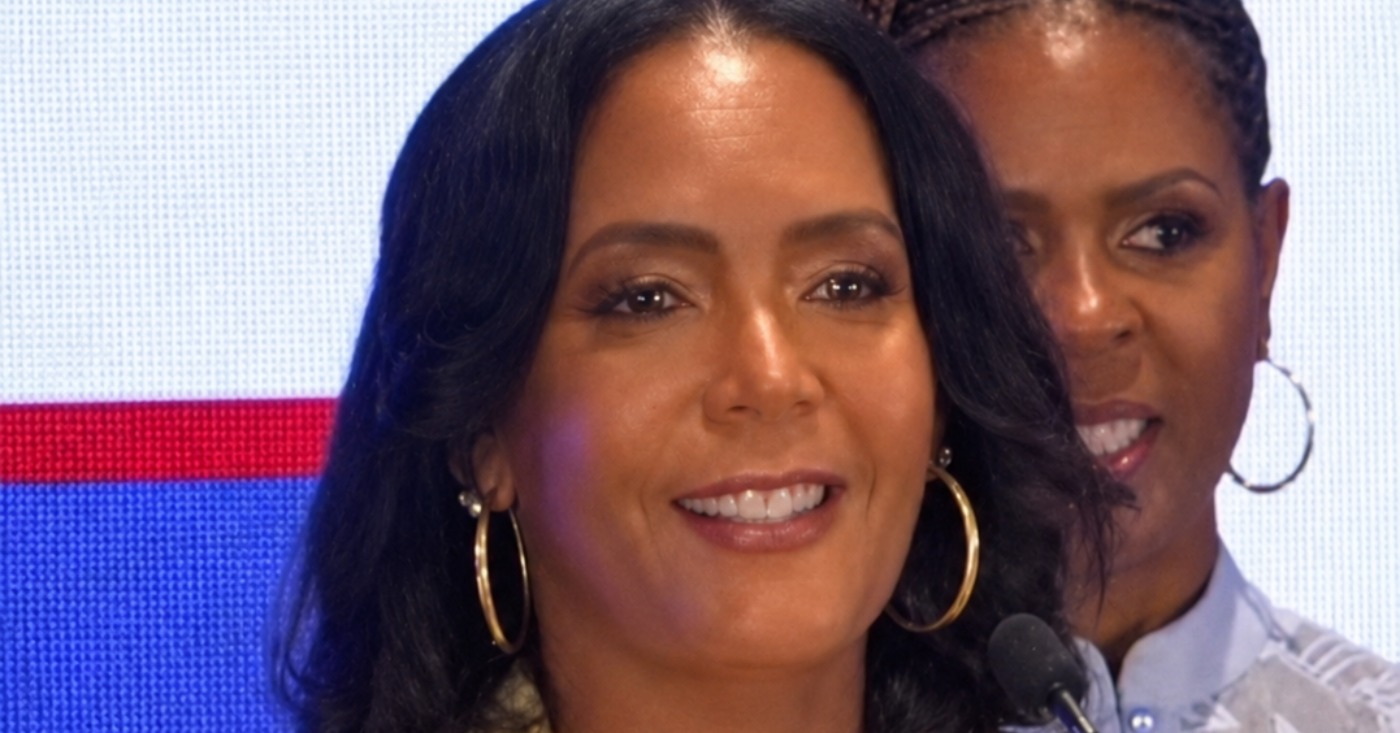
History has been made in Georgia. Keisha Lance Bottoms, the former mayor of Atlanta, has been elected governor of Georgia, becoming the first Black woman in American history to win the highest executive office in any state.
Bottoms’ victory over Republican businessman Rick Jackson represents a defining moment in American politics, breaking a barrier that has stood since the nation’s founding and placing Georgia at the center of a historic political transformation.
For generations, Black women have played a critical role in American democracy, organizing communities, leading movements, mobilizing voters and shaping public policy. Yet despite their contributions, no Black woman had ever been elected governor of a U.S. state.
Until now.
Bottoms’ election also makes her the first woman and first Black person elected governor of Georgia, a state whose political history has been deeply shaped by slavery, segregation, the civil rights movement and the long struggle for equal representation.
Her victory carries particular significance in a state where Black women have been among the most influential forces in voter registration, political organizing and Democratic electoral success.
A fifth-generation Georgian, Bottoms previously served as Atlanta’s 60th mayor from 2018 to 2022. During her administration, she led the city through the COVID-19 pandemic, nationwide protests over racial injustice and a period of significant economic and population growth.
Following her time as mayor, Bottoms served as a senior adviser in President Joe Biden’s administration before returning to Georgia politics to pursue the governorship.
Her campaign focused on expanding access to health care, strengthening public education, increasing wages and addressing the rising cost of living. She also advocated for expanding Medicaid, raising Georgia’s minimum wage to $15 an hour and increasing compensation for teachers and other public employees.
Bottoms faced Jackson, a wealthy health care executive who invested heavily in his campaign and positioned himself as a political outsider. The contest drew national attention as Democrats sought to reclaim the Georgia governor’s office after more than two decades of Republican control.
The historic nature of Bottoms’ victory extends well beyond party politics.
Georgia, once at the center of some of America’s most consequential civil rights battles, has now elected a Black woman to lead its state government. It is a milestone that reflects generations of political participation, organizing and leadership by Black Georgians.
For Atlanta, the moment is especially significant. A former mayor of the city that helped shape the modern civil rights movement will now lead the entire state.
Bottoms’ election opens a new chapter in Georgia’s political history and establishes a milestone that will be remembered far beyond the 2026 election.
For continuing election coverage and results, visit AtlantaDailyWorld.com/election26.



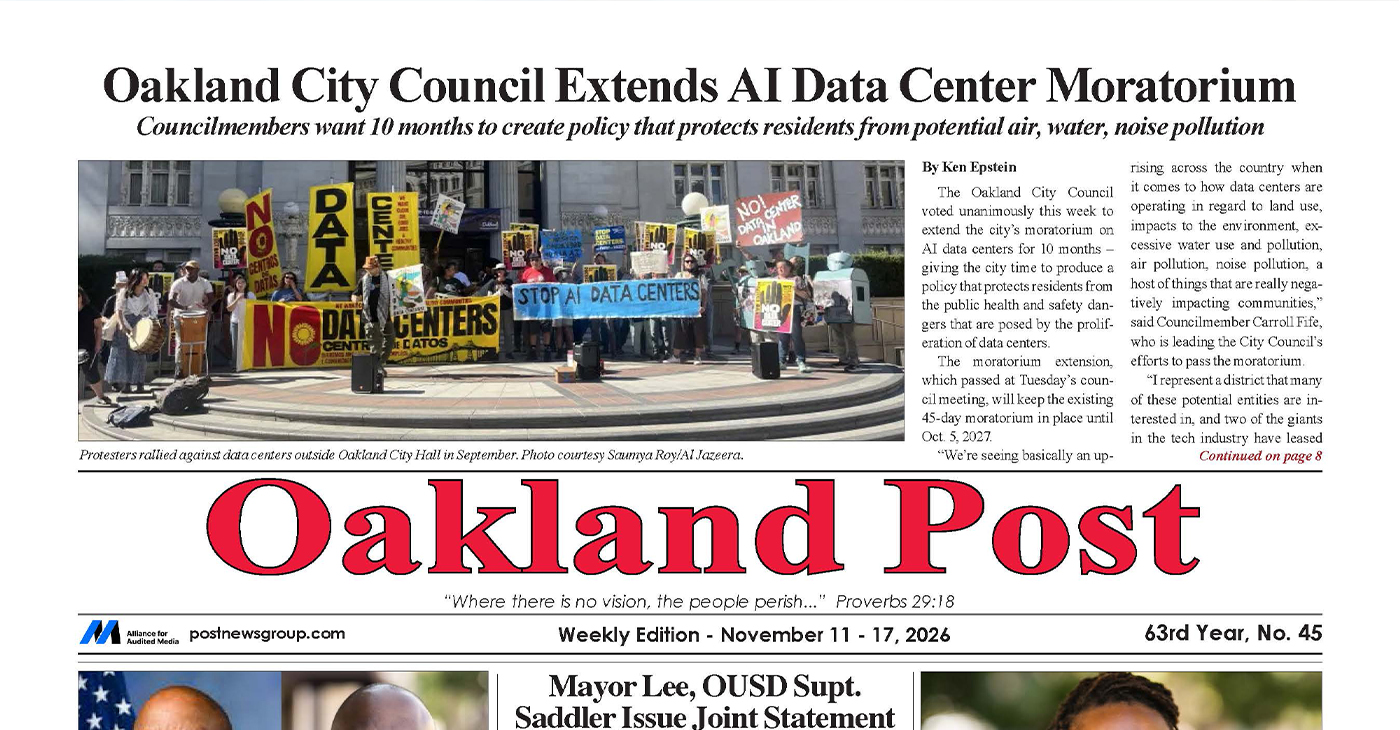
Oakland Post: Week of November 11 -17, 2026

Alameda County Supervisor Miley to Propose Illegal Dumping Ordinance

Oakland City Council Extends AI Data Center Moratorium for 10 Months.

On Veterans Day, U.S. Rep. Simon Demands Answers on Status of Veterans Affairs Clinic, Columbarium Project

OPINION: Mario Juarez’s Courtroom Admissions Raise Questions About Allegations That Fueled Recall of Pamela Price

Hutchinson Concedes: Ballots Still Being Counted in Oakland Board Elections

Mayor Lee and Schools’ Supt. Saddler Issue Joint Statement on Recent ICE Activity in Oakland

Mississippi Congressman Bennie Thompson Congratulates Scott Colom on Historic Victory

Farms to Grow, Inc. Hosts the 8th Annual Sweet Potato Pie Tasting Contest

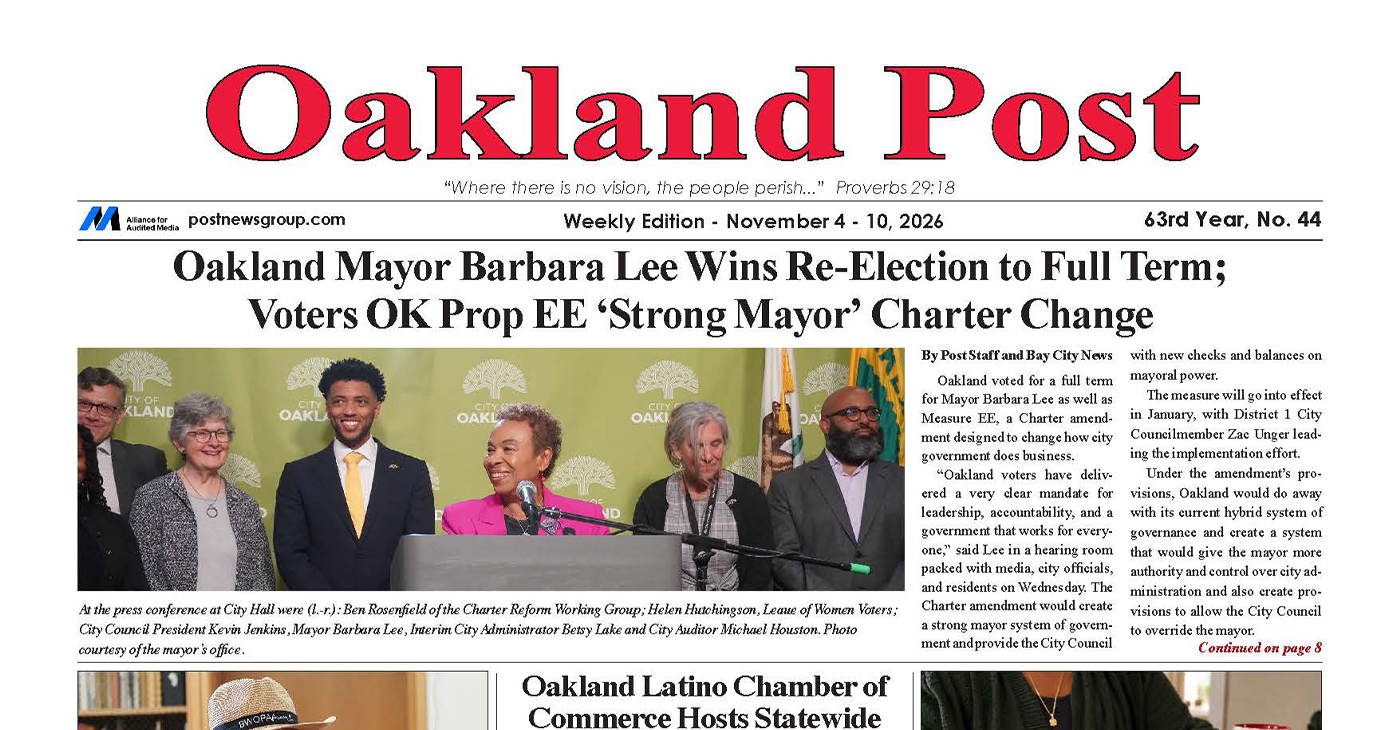
Oakland Post: Week of November 4 – 10, 2026

How the Sandwich Generation Can Help Protect Aging Parents’ Finances

As Progressive Democrats Celebrate ‘Blue Tsunami,’ Oakland Counts Victories

Golden State Valkyries Become Bay Area Legends Winning WNBA Championship on Halloween Night

IN MEMORIAM: Marcia Ann Gillespie, Editor of Essence and Ms. Magazines, Dies at 82

U.S. Rep. John Garamendi Honors local ‘Women of the Year’ at Annual Awards Ceremony

COMMENTARY: Valarie Bachelor and Jennifer Brouhard are Excellent School Board Members and Deserve to Be Reelected

Listening as a Lifeline: A Doula’s Witness to Black Maternal Health

OUSD Receives State Review of District Finances; Outlines Progress Since January

HISTORY MADE: Keisha Lance Bottoms Becomes First Black Woman Elected Governor in American History

Zakiya Jendayi Arrested, Locked Out of Home by Sheriff’s Deputies

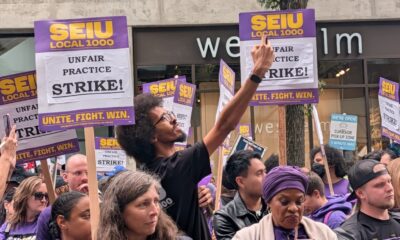
SEIU Local 1000 and State of California Will Continue to Negotiate New Labor Contract
Golden State Valkyries Become Bay Area Legends Winning WNBA Championship on Halloween Night

COMMENTARY: Your California Living Trust Could Be Next: When Evidence Isn’t Enough

Fate of Bay Area Public Transit Hinges on Regional Transit Measure

Oakland Post: Week of September 30 – October 6, 2026

It’s Time to Lose Weight Before the Holidays

Mayor Barbara Lee Holds Special State of the City Address in Deep East Oakland

Democrats, Community Groups Back Measure EE to Change How Oakland Is Governed

Chase Launches Fraud & Scam Prevention Month

Oakland Awarded More than $14 Million in State Funding

The Conversation With Al McFarlane 6/23/26

Media Monday 6/22/26

LIVE! ASK ALMA! — TUES. 6.23.26 7PM EST

Car Buying Secrets: 4 Hidden Checks Before You Sign!

Is This 550 HP Charger Worth YOUR Money? AutoNetwork Review

Celebrating Juneteenth – Frederick Douglass on education and resistance

LIVE! — ASK ALMA! — TUES. 6.19.26 7PM EST

Hyundai Ioniq 5 Parking, Safety, and 360 View #shorts

2025 Ioniq 5 New Wiper & Powerful Performance! #shorts

Electric SUV Range: Is 259 Miles Enough? #shorts

EV Charging: How Fast Can You Charge an Electric Vehicle? #shorts

Biometric Cooling… Messaging Seats…Come on! 2025 Infiniti QX80 Autograph 4WD

Charged Up: Witness the Magic of a Fully Electric Car! #shorts

Range Rover Sport PHEV Included…: See What’s Inside This Luxury SUV! #shorts

Invisible Hood View: Perfect Parking with X-Ray Vision! #shorts
-
 Commentary2 weeks ago
COMMENTARY: Valarie Bachelor and Jennifer Brouhard are Excellent School Board Members and Deserve to Be Reelected
-
 Education2 weeks ago
OUSD Receives State Review of District Finances; Outlines Progress Since January
-
 Black History2 weeks ago
HISTORY MADE: Keisha Lance Bottoms Becomes First Black Woman Elected Governor in American History
-
 Business2 weeks ago
SEIU Local 1000 and State of California Will Continue to Negotiate New Labor Contract
-
 Community2 weeks ago
Golden State Valkyries Become Bay Area Legends Winning WNBA Championship on Halloween Night
-
 Business2 weeks ago
COMMENTARY: Your California Living Trust Could Be Next: When Evidence Isn’t Enough
-
 Business3 weeks ago
Fate of Bay Area Public Transit Hinges on Regional Transit Measure
-
 Community4 weeks ago
It’s Time to Lose Weight Before the Holidays
