
#NNPA BlackPress
From Eggs to Hotels, Prices Soar as Inflation Redefines Daily Life
BLACKPRESSUSA NEWSWIRE — It’s so bad in America that a foreign news organization dug into the pricey details. The Times of London reported that inflation, which began accelerating in 2021, has left American consumers grappling with the most persistent cost increases in decades.


By Stacy M. Brown
Black Press USA Senior National Correspondent
Prices across the United States are about 26% higher than before the COVID-19 pandemic, pushing everything from a weekend hotel stay to a simple cup of coffee out of reach for many families. A budget hotel room in Nashville can now cost $500 for the weekend—without breakfast—and a single cup of coffee can cost $7. Rental cars are also commanding premium rates, with four days in a midsize Toyota Camry easily topping $670.
It’s so bad in America that a foreign news organization dug into the pricey details. The Times of London reported that inflation, which began accelerating in 2021, has left American consumers grappling with the most persistent cost increases in decades. According to NerdWallet data cited in the report, the impact has been felt across every income bracket, fueling a growing sense that even basic experiences are becoming unaffordable.
Travel and Lodging: Soaring Costs
Hotel rates have climbed 24% over the past decade, The Times reported. In Manhattan, the average nightly rate hit a record $417 in September 2024, according to real estate analytics firm CoStar. Miami Beach hotels averaged $283 a night last year, up from $230 in 2019, while Las Vegas rooms rose to $198, up nearly 41% over the same period. Rental car prices surged early in the pandemic and remain high. While rates stabilized over the past year, costs have increased 29% since 2015.
Airfares are technically down 18.5% compared to 2015, but The Times noted that this decline reflects airlines’ “unbundling” services to show lower headline fares while tacking on fees. Southwest Airlines, for example, ended its “bags fly free” policy and now charges $35 for the first checked bag and $45 for the second.
Dining and Groceries: Everyday Pain Points
Eating out has become markedly more expensive, with restaurant prices up 49.3% in the last ten years. Fast food chains have been forced to raise prices due to wage increases, higher energy costs, and supply chain problems. A dozen large Grade A eggs averaged $6.23 in March before dipping to $4.55 by May, according to the Bureau of Labor Statistics. The Waffle House restaurant chain temporarily imposed a 50-cent surcharge per egg. Grocery essentials have spiked in price, The Times reported. Baby wipes that cost $4.99 four years ago now average $6.63, while a unit of dog food jumped from $5.78 to $8.42, according to NielsenIQ.
Lindsay Owens, executive director of the Groundwork Collaborative, said some companies have exploited the situation for profit. “They decided to see if they could pass along all of their rising costs so that their margins wouldn’t be eaten into,” Owens told The Times. “And when they realized that they could, they decided to go for more.”
Entertainment and Theme Parks: A Luxury for the Wealthy
The price of live entertainment has soared. NerdWallet figures show concert and theater tickets are up 39% since 2015. The most recent Broadway season was the priciest on record, averaging $129 per ticket, and top shows often exceed $1,000 a seat. Dolly Parton’s December Las Vegas shows sold out in minutes, with resale prices climbing to $1,600. At Disney parks, costs have risen steeply. A four-day Walt Disney World trip for a family of four, including a Disney hotel, cost $4,266 last year, more than $1,000 from five years earlier, The Wall Street Journal reported.
What Comes Next
While inflation has retreated from its 9% peak in 2022, The Times cautioned that Americans shouldn’t expect relief anytime soon. New tariffs introduced by the Trump administration are expected to drive prices even higher in the months ahead. With costs still climbing, many households are left with tough decisions about which necessities—and experiences—they can continue to afford. “We’re often seeing the highest demand in the luxury space,” Sally French, a NerdWallet finance expert, said. “People want the hotel that’s going to make for an amazing photo… People are spending more on higher-end things they wouldn’t have done in the past.”





#NNPA BlackPress
COMMENTARY: Women of Color Shape Our Past and Future
MINNESOTA SPOKESMAN RECORDER — Every March, Women’s History Month invites us to pause and honor the women whose courage, intellect, and leadership have shaped our world. This year, that invitation feels especially urgent. We are living in a time when history is being rewritten, when DEI is being recast as a threat, and when the stories we choose to uplift matter more than ever. The stories of women of color must be centered, celebrated, and carried forward with intention.


Women of Color Leadership Shapes the Legacy of Women’s History Month
By Dr. Sharon M. Holder | Minnesota Spokesman Recorder
Women’s History Month offers an opportunity to recognize the enduring impact of women of color leadership across history and in the present day. From Harriet Tubman and Shirley Chisholm to today’s leaders in science, politics and culture, women of color continue to shape movements, institutions and communities through courage, collaboration and vision.
Every March, Women’s History Month invites us to pause and honor the women whose courage, intellect, and leadership have shaped our world. This year, that invitation feels especially urgent. We are living in a time when history is being rewritten, when DEI is being recast as a threat, and when the stories we choose to uplift matter more than ever. The stories of women of color must be centered, celebrated, and carried forward with intention.
For centuries, women of color have been architects of progress, even when history tried to confine them to the margins. They have led movements, built institutions, transformed culture, and expanded the boundaries of justice, leadership, and community. Their contributions are not postscripts; they are landmarks. Yet too often, their brilliance has been acknowledged only in hindsight. Women’s History Month offers a chance to correct that imbalance, not only by remembering the past, but by recognizing their leadership unfolding before us.

This legacy lives in Harriet Tubman, whose courage and strategic brilliance transformed the Underground Railroad into one of the boldest freedom operations in American history. In Barbara Jordan, whose moral clarity reshaped the nation’s understanding of justice and constitutional responsibility. In Madam C. J. Walker, expanding both the beauty industry and the economic horizons of Black women. It dances in Josephine Baker, who challenged racism and resisted fascism. In Ida B. Wells and Dolores Huerta, who wielded truth and determination in pursuit of justice. In Chien-Shiung Wu, whose experiments altered science, and Shirley Chisholm, whose political courage expanded the very definition of leadership. These women did more than break barriers; they built new worlds.
A powerful throughline in the leadership of women of color is how they lead: collaboratively, creatively, relationally, and with deep responsibility to community. Their leadership is grounded not in hierarchy but in connection, in the belief that progress is something we build together.
We see this in Kamala Harris, whose presence expands the boundaries of possibility; in Ketanji Brown Jackson; in Oprah Winfrey; and in Toni Morrison, who insisted that the interior lives of Black women are essential to the human story. It resonates in Simone Biles and Serena Williams, redefining strength through excellence and self-belief.
Today, women of color continue to drive breakthroughs in medicine, technology, the arts, politics, and environmental justice. Their leadership appears not only in boardrooms or public office, but in mentorship, advocacy, and the daily navigation of systems never designed for them. The spirit shines in Mae Jemison and Ellen Ochoa; in Michelle Obama; and in the brilliance of Katherine Johnson, Dorothy Vaughan, Mary Jackson, and Christine Darden, whose work helped launch a nation into space.
Celebration is important, but it is not enough. Honoring women of color requires intentional action rooted in equity. It means creating environments where their voices are valued, challenging the biases that shape who is recognized, and ensuring progress is shared.
As we celebrate Women’s History Month, let us honor women of color not as symbols, but as leaders whose work continues to guide us. When we uplift women of color, we honor history and shape the future.
Dr. Sharon M. Holder lives in South Carolina. She holds a PhD/MPhil in Gerontology from the Center for Research on Aging at the University of Southampton, UK; a Master of Science in Gerontology from the Institute of Gerontology at King’s College London, UK; and a Master of Social Work from the Graduate College of Social Work at the University of Houston, Texas.
Dr. Holder discovered her love of poetry at the University of Houston–Downtown, where she published in The Bayou Review and the Anthology of Poetry. Today, she writes poetry as a practice of gratitude alongside her academic research.

#NNPA BlackPress
Woman’s Search for Family’s Roots Leads to Ancestor John T. Ward – A Successful Entrepreneur and Conductor on the Underground Railroad
THE AFRO — For years, she wanted to know more about her ancestor John T. Ward, she said, and her curiosity eventually became an obsession, leading her to become the genealogist for her family. And so, for more than a decade, she set out to trace her family’s roots and discovered a story that would change her life and the way she viewed American history.
By D. Kevin McNeir | Special to The AFRO
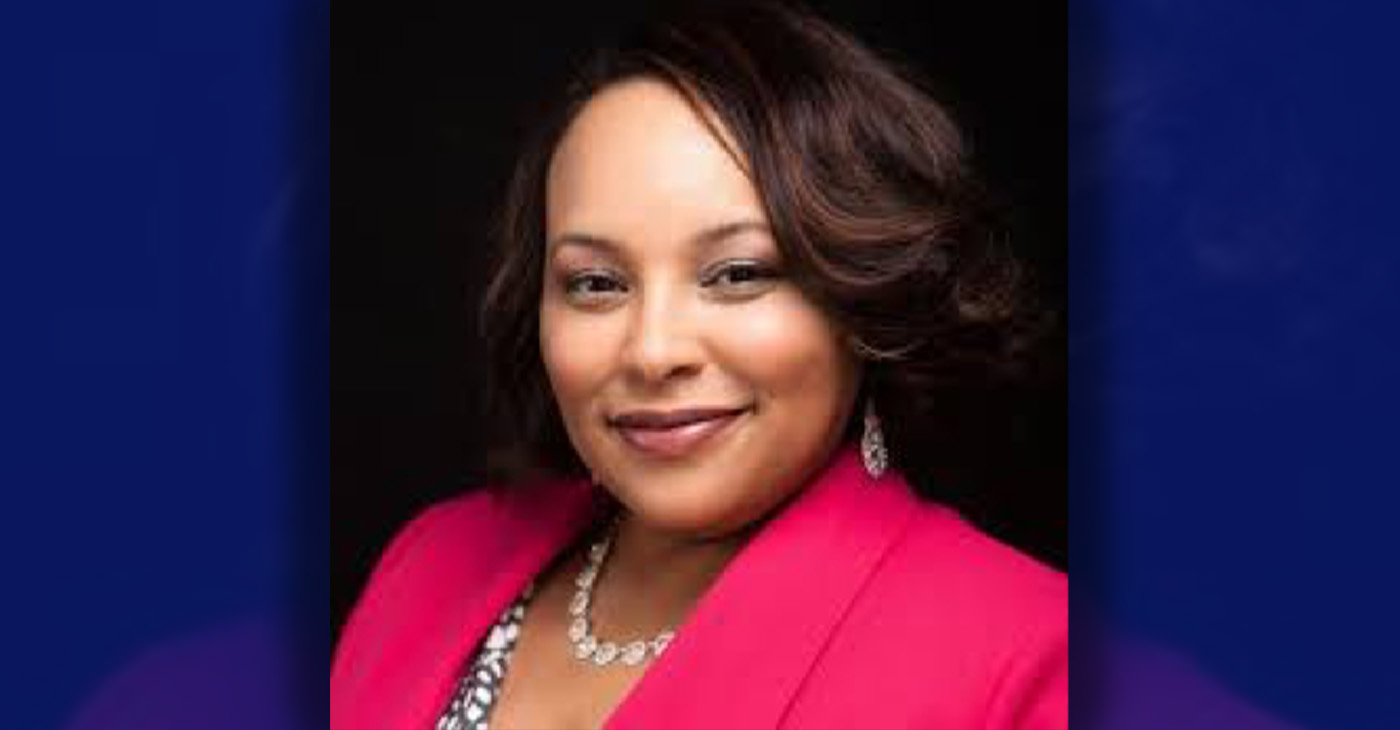
Shanna Ward, the owner of a publishing company and insurance agency located in Columbus, Ohio, said the elders in her family often say she inherited her entrepreneurial spirit from one of their ancestors – a formerly enslaved child from Virginia whose freedom came through manumission in 1827.
For years, she wanted to know more about her ancestor John T. Ward, she said, and her curiosity eventually became an obsession, leading her to become the genealogist for her family. And so, for more than a decade, she set out to trace her family’s roots and discovered a story that would change her life and the way she viewed American history.
John T. Ward would help others secure their freedom and justice in his roles as a conductor on the Underground Railroad, an abolitionist, and political activist. But realizing that economic freedom was essential to his and his family’s survival, he and his son founded the Ward Transfer Line in 1881 (now E.E. Ward Moving) – one of America’s oldest Black-owned businesses. While it has transferred ownership, the business remains in operation today.
Shanna Ward recently published a book about her ancestor, “The Bequest of John T. Ward,” which she hopes can be added to other unheralded tales of Black resistance that occurred during America’s antebellum period.
“Originally, I just wanted to write a 100-page story when I first began digging and was encouraged after I found a copy of a will dated 1827 which included him and was a rare example of a mass manumission,” Shanna Ward said. “Three of the slaves, including John’s grandfather, were given about 294 acres of land in the will, but all the former slaves were supposed to remain on the plantation until their 21st birthday. Some refused to remain. That’s how our family got to Ohio.”
Ward said she learned that newly freed Blacks, including her ancestors in Ohio, had to fend for themselves and often did so with amazing results given the obstacles they faced.
“In those days there were no civil rights organizations, and in local communities, Blacks formed and supported Black-owned businesses, took their own census recordings, and became involved in local politics – all without White involvement,” she said.
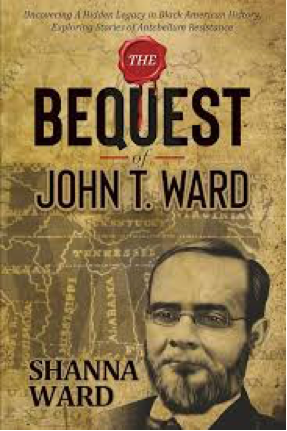
BOOK COVER: The cover of the book “The Bequest of John T. Ward,” written by Shanna Ward about her ancestor who, as a child, was granted his freedom in 1827 and went on to become a successful business owner in Ohio, a political activist, and a conductor on the historic Underground Railroad.
“There is part of Ohio where, during the days of slavery, if you successfully crossed the river you were free,” she said. “That was where Black life began – across the river in freedom. When we understand ourselves as more than property and uncover tales of survival which are the foundation of our legacy, then we can better understand who we are and what our ancestors endured. We are stronger than we are often led to believe.”
Efforts among African Americans to learn their family roots have increased over the past several decades, particularly given the success of the PBS documentary, “Finding Your Roots,” hosted and narrated by Harvard University professor Dr. Henry Louis Gates Jr.
On the show’s website, Gates said he developed the show in 2012 in efforts to continue his quest to “get into the DNA of American culture.”
In each episode, celebrities view ancestral histories and share their emotional experience with viewers. Gates attributes the success of the show to a significant surge in interest among Black Americans in tracing their family roots and a desire to reconnect with ancestral history that was severed by slavery.
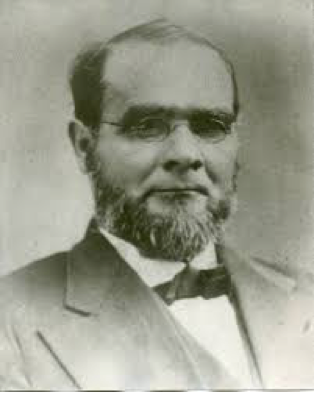
JOHN T. WARD: John T. Ward, the historic patriarch in a family whose roots can be traced to the days of slavery in Virginia, is the subject of a new book written by a member of his proud family, Shanna Ward, called “The Bequest of John T. Ward.”
“Advancements in DNA testing have increased accessibility of records and led to a cultural push to reclaim identity beyond the ‘brick wall’ of 1870,” said Gates who noted that the 1870 U.S. Census represents the first time former slaves were listed by name and, unfortunately, serves as the point where records of their lives often stop and cannot be traced any earlier.
In a recent paper published in the journal “American Anthropologist,” University of Illinois Urbana-Champaign anthropology professor LaKisha David posits that by using genetic genealogy, African Americans now have the real possibility of restoring family narratives that were disrupted, severed and destroyed by institutional slavery.
“For African Americans who have grown up with a sense of ancestral loss and disconnection, this reclamation of family history is deeply humanizing and healing,” she writes. “It replaces the genealogical unknown with tangible knowledge of ancestral histories and kinship ties.
“Identifying African ancestors and living relatives is an act of restorative justice. It is ultimately about (re)claiming the humanity, dignity, and agency of enslaved Africans and their descendants, which is an essential component of repairing the harms of slavery.”
Ward said by uncovering her family’s truth, she has established a platform for education and empowerment for herself, her children, and today’s youth.
“I realized how important it is to pass down our own stories to the next generation,” Ward said. “There’s so much our children need to know about the Underground Railroad, the quilt codes created by Black women, and other examples of unrecorded heroics and bravery exhibited by Black men and women. Their collective efforts led to the end of Jim Crow laws and the securing of equal rights in the U.S. Constitution for African Americans. If you look hard enough, I believe everyone has someone like Harriet Tubman or Frederick Douglass in their family.”
#NNPA BlackPress
Advocates Raise Alarm Over ICE Operation, MOU and Detention Risks in Baltimore County
THE AFRO — “This is highly problematic given many of the charges that land people in county correctional facilities to begin with are for misdemeanors of which they may not even ultimately be proven guilty and convicted,” said Cathryn Ann Paul Jackson, public policy director for We Are CASA. “It results in a subversion of the local criminal justice system as a means to further racial profiling and do ICE’s dirty work.”

By Megan Sayles | AFRO Staff Writer
msayles@afro.com
As U.S. Immigration Customs and Enforcement (ICE) operations intensify nationwide, community organizations have become the eyes and ears of their neighborhoods—monitoring the agency’s presence and alerting residents to protect themselves and their neighbors.
In Baltimore County, nonprofits like We Are CASA have observed a spectrum of enforcement actions.
“We have seen a range of activity, including traffic stops and ICE showing up in neighborhoods or in seeming response to tips,” said Cathryn Ann Paul Jackson, public policy director for We Are CASA. “Beyond actual ICE activity in Baltimore County, we have seen many detentions of Baltimore County residents across the DMV, as community members tend to travel across counties and cities for work.”
We Are CASA, a national nonprofit headquartered in Maryland, is dedicated to empowering and improving the quality of life for working-class Black, Latino, Afro-descendent, Indigenous and immigrant communities. Jackson’s personal connection to this mission led her to the organization. A daughter of immigrants from Guyana and Trinidad, she said she grew up witnessing firsthand how immigration policy can define families’ safety, opportunity and sense of belonging.
She said the locations and times of ICE operations in Baltimore County have varied over time.
“We have consistently seen ICE arrest people at their check-in appointments, which were ironically created as an alternative to detention and are now being abused to trap people into custody,” said Jackson. “For a period of time, we were witnessing a significant amount of arrests along the Baltimore-Washington Parkway by U.S. Park Police, who were using a previously rarely enforced law against driving commercial vehicles on this road as a pretext to profile immigrant drivers, detain them and hand them over to ICE.”
Last fall, Baltimore County entered into a Memorandum of Understanding (MOU) with ICE, removing the locality from the Department of Justice’s (DOJ) sanctuary jurisdictions list and formalizing a policy for notifying ICE before the release of inmates with federal immigration detainers or judge-signed warrants.
The agreement codified an existing practice within the Baltimore County Department of Corrections. The MOU is not a 287(g) agreement, which is a partnership between local law enforcement and ICE to delegate immigration enforcement authority to police officers. Those agreements were banned by the state of Maryland on Feb. 17.
However, Jackson criticized the policy memorialized in the MOU, saying that although it is carefully drafted to avoid legal violations, it effectively allows detention centers to hold people past their court-ordered release so that ICE can take them into custody.
“This is highly problematic given many of the charges that land people in county correctional facilities to begin with are for misdemeanors of which they may not even ultimately be proven guilty and convicted,” said Jackson. “It results in a subversion of the local criminal justice system as a means to further racial profiling and do ICE’s dirty work.”
Baltimore County has said it entered into the MOU in an effort to preserve its access to federal funding. The locality explained its reasoning on a FAQ page about its removal from the DOJ’s sanctuary jurisdictions list.
“Inclusion on DOJ’s list could risk significant federal funding, on which the county and constituents depend,” the entry read. “Signing the MOU ensures that the county avoids risks to federal funding that is used to provide needed services.”
Baltimore County’s removal is not unique, as neither Maryland nor any of its counties appear on the DOJ’s list. Still, community members worry that the county’s MOU with ICE could lead to wrongful detentions and the misidentification of residents.
Immigration detainers are not always confirmation of a person’s immigration status—or lack thereof. They are requests by ICE that can be issued without a judicial determination and do not, on their own, establish a person’s legal status.
“We’re very concerned about errors occurring here in the county because of the amped up nature of this mass deportation push,” said Patterson. “This is a replacement theory-driven immigration policy. That means that at the same time we are importing White South African Afrikaaners—who at one time essentially colonized South Africa and oppressed Black South Africans—we are fast deporting people of color. All of us who are the minority can be mistaken for ‘unlawful immigrants.’”
The recent escalation in Minneapolis has heightened Patterson’s concern. He said the city has effectively been made a battleground.
Patterson said the Baltimore County NAACP wants the public to recognize that ICE operates as a militarized organization, unlike local police. He urged people to consider avoiding areas where ICE is active whenever possible and to exercise caution if they encounter agents. If approached, Patterson stressed that people verify warrants are properly signed and directed at them, assert their right to remain silent and contact an attorney before answering questions or consenting to searches.
He also encouraged residents to notify the Baltimore County NAACP of any encounters with ICE.
“We don’t want to wait for Minnesota in Maryland before speaking out about this,” said Patterson. “We want to equip our people to protect themselves behaviorally, consciously and conscientiously because these things are coming to pass. The imprint is among us and we need, therefore, to be aware.”
WORK FROM HOME
Home-based business with potential monthly income of $10K+ per month. A proven training system and website provided to maximize business effectiveness. Perfect job to earn side and primary income. Contact Lynne for more details: Lynne4npusa@gmail.com 800-334-0540


Financial Wellness and Mental Health: Managing Money Stress in College

Oakland Post: Week of March 11 -17, 2026

Women & Wealth: Tips for Navigating Your Lifelong Financial Journey

COMMENTARY: Women of Color Shape Our Past and Future

Woman’s Search for Family’s Roots Leads to Ancestor John T. Ward – A Successful Entrepreneur and Conductor on the Underground Railroad

Advocates Raise Alarm Over ICE Operation, MOU and Detention Risks in Baltimore County

Pete Buttigieg to Join Mayor Randall Woodfin for Community Town Hall in Birmingham

WATCH: Week One – NNPA’s “Leadership Matters” Video Series

Oakland Post: Week of March 4 – 10, 2026

OP-ED: NNPA Launches 2026 “Leadership Matters” Video Series

PRESS ROOM: PMG and Cranbrook Horizons-Upward Bound Launch Journey Fellowship Cohort 2

Los Angeles Summit Brings Together Leaders to Tackle Poverty and Affordability

Civil Rights TV Launches 24/7 Network Focused on Black History, Education and Equity

REVIEW: The Ultimate Hot Girl Summer Getaway: Sunseeker Resort Florida

COMMENTARY: How You Stop a Prescription Medicine is as Important as How You Start

Book Review: Books on Black History and Black Life for Kids

Community Celebrates Turner Group Construction Company as Collins Drive Becomes Turner Group Drive

California Launches Study on Mileage Tax to Potentially Replace Gas Tax as Republicans Push Back

Discrimination in City Contracts

COMMENTARY: The Biases We Don’t See — Preventing AI-Driven Inequality in Health Care

Black History Events in the East Bay

Post Newspaper Invites NNPA to Join Nationwide Probate Reform Initiative

Art of the African Diaspora Celebrates Legacy and Community at Richmond Art Center

New Bill, the RIDER Safety Act, Would Support Transit Ambassadors and Safety on Public Transit

COMMENTARY: The National Protest Must Be Accompanied with Our Votes

Oakland Post: Week of February 4 – 10, 2026

Oakland Post: Week of February 11 – 17, 2026

Dorothy Lee Bolden: Uniting Domestic Workers

After Don Lemon’s Arrest, Black Officials Raise Concerns About Independent Black Media

Reflecting on Black History Milestones in Birmingham AL

Hyundai Ioniq 5 Parking, Safety, and 360 View #shorts

2025 Ioniq 5 New Wiper & Powerful Performance! #shorts

Electric SUV Range: Is 259 Miles Enough? #shorts

EV Charging: How Fast Can You Charge an Electric Vehicle? #shorts

Biometric Cooling… Messaging Seats…Come on! 2025 Infiniti QX80 Autograph 4WD

Charged Up: Witness the Magic of a Fully Electric Car! #shorts

Range Rover Sport PHEV Included…: See What’s Inside This Luxury SUV! #shorts

Invisible Hood View: Perfect Parking with X-Ray Vision! #shorts

AI Is Reshaping Black Healthcare: Promise, Peril, and the Push for Improved Results in California

ESSAY: Technology and Medicine, a Primary Care Point of View

Sanctuary Cities

The RESISTANCE – FREEDOM NOW

STATE OF THE PEOPLE: Freddie

ECONOMIC BOYCOTT DAY!!!!!

I told You So

-
 #NNPA BlackPress4 weeks ago
Reflecting on Black History Milestones in Birmingham AL
-
 #NNPA BlackPress4 weeks ago
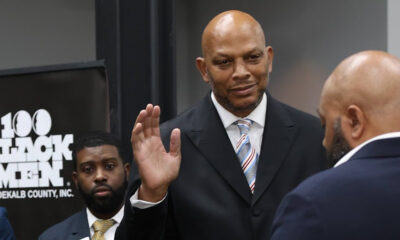
PRESS ROOM: NBA Hall of Fame Nominee Terry Cummings Joins 100 Black Men of DeKalb County to Launch Victory & Values Initiative
-

 #NNPA BlackPress4 weeks ago
U.S. manufacturing rebounds – how foundry services are adapting to rising demand
-
 Activism3 weeks ago
Oakland Post: Week of February 25 – March 3, 2026
-

 #NNPA BlackPress4 weeks ago
OP-ED: One Hundred Years of Black Workers Telling the Truth
-

 #NNPA BlackPress4 weeks ago
Trump’s MAGA Allies are Creating Executive Order Plan to Steal the 2026 Midterms
-

 #NNPA BlackPress4 weeks ago
Advancements in solar technology that are changing the way we power the world
-
 #NNPA BlackPress4 weeks ago
PRESS ROOM: Civil Rights TV Launches in Selma as the World’s First 24/7 Civil Rights Television Network
