
City Government
Food Truckers Take to the Streets Against City Discrimination, Police Harassment

Over 20 Latino-owned food trucks led a mobile march down International Boulevard in Oakland Monday – from 46th Avenue and International to City Hall –disrupting traffic to pressure the city to pass an ordinance to allow them to expand their vending operations past East Oakland.
Currently, mobile merchants are not allowed to operate outside designated zones, mostly in flatland Districts 5, 6 and 7. Mobile vendors say they are feeling increasingly congested by the growing number of trucks and relatively few places to park their trucks for business in these areas.
This, as a result, has hurt their businesses, many of which are family-owned and employ up to 10 workers who are supporting their own families.
They also say that the city’s unwillingness to expand their vending parameters and the use of police to shut down those working outside the currently allowed zone equate to discrimination.
“It’s very saturated here,” said Ezequías Ortiz of Tacos Acapulco. “The city won’t give us permission to work outside and now they’re ticketing businesses that have been here for years.”
The mobile merchant ordinance, which was introduced to the City Council in 2009, has taken six years to get through the City Attorney’s office, city staff, the planning commission and countless public hearings.
The law would expand the merchants’ working zones to certain locations within the entire city of Oakland.
Mobile vendors believe this is the year that City Council will pass the ordinance.
On Monday, several commissaries—established commercial kitchens where food truckers and other food service providers can go to prepare and store food in clean and inspected locations—came together for the action, also calling for an end to what they consider harassment by the city.
According to several merchants, the city has recently been serving more cease and desist letters to mobile restaurants that are as close as a block away from the allowed parameter and often the police show up to shut their restaurants down.
Since the mobile merchant ordinance would nullify these charges, vendors are upset by the city’s stringency and aggression that has recently become more frequent.
Pati Liles, owner of Taquería La Bonita, a family-run mobile restaurant, said police have recently shut down her business three times after receiving complaints from neighbors. Each time, the police showed up within minutes of being called.
“It’s unjust that police are being used to stop people who are doing nothing wrong and are just trying to work,” said Liles. “The police never showed up when my son was hit by a car. We called them and they never showed up.”
Furthermore, Nancy Marcus, administrative assistant for the city of Oakland, has been denying requests to renew special business permits for some of the vendors that have existed in Oakland for over 10 years, say mobile business owners.
The food truckers who took to the street on Monday afternoon view the city’s aggressive behavior as a drive to squelch the businesses of mobile vendors in favor of stores that are renting space.
The mobile vendors face opposition mainly from store vendors who feel they cannot compete with the trucks and carts stationed outside their stores and by neighbors who are afraid of the crowds that would follow food trucks into their neighborhoods.
According to Councilmember Noel Gallo, who has been working with mobile merchants in the Latino community to get the ordinance passed through City Council, the city frequently has failed to ensure that vendors who operate mobile stores are doing so legally and with a permit.
“There’s a lot of illegal trucks competing with restaurants that are paying fees and getting their inspections,” said Gallo in an interview with El Mundo. “It causes everybody to lose business because they can’t compete with unpermitted vendors selling on the corner.”
The new ordinance would only apply to mobile merchants who have a permit to operate in certain zones and in safe and legal ways.
Food truck owner Antonio “Tony” Belayo says the ordinance is simply a matter of keeping business afloat in a city that’s becoming more and more popular to live and work in.
“We don’t want to interfere with restaurants or other vendors. We just want everyone to be happy,” said Belayo. “Mobile merchants are a source of employment in Oakland and it helps many of us support our families.”
“Mobile merchants have always been a vibrant part of this city and form a vital part of Oakland’s economy,” said Araceli “Shelly” Garza, an advocate for the mobile merchants who helped organize the caravan on Monday.
“Since 2009, the city has been telling us that the ordinance is going to finally be scheduled,” said Garza. “People are sick and tired of being put on the back burner.”
At City Hall, Councilmember Gallo promised the crowd that the mobile merchants ordinance would be approved by City Council by the end of the summer.







Activism
Oakland Post: Week of April 1 – 7, 2026
The printed Weekly Edition of the Oakland Post: Week of April 1 – 7, 2026
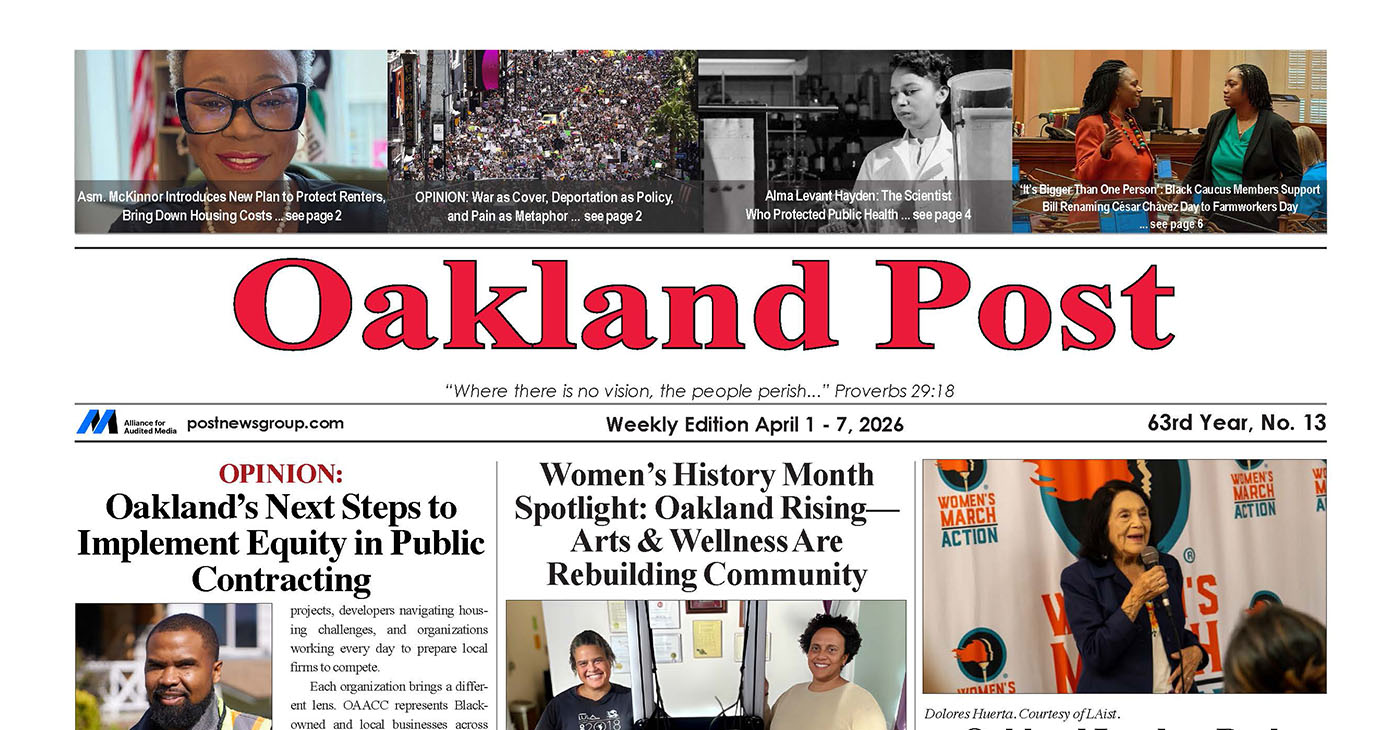
To enlarge your view of this issue, use the slider, magnifying glass icon or full page icon in the lower right corner of the browser window.
Activism
Oakland Post: Week of March 18 – 24, 2026
The printed Weekly Edition of the Oakland Post: Week of March 18 – 24, 2026
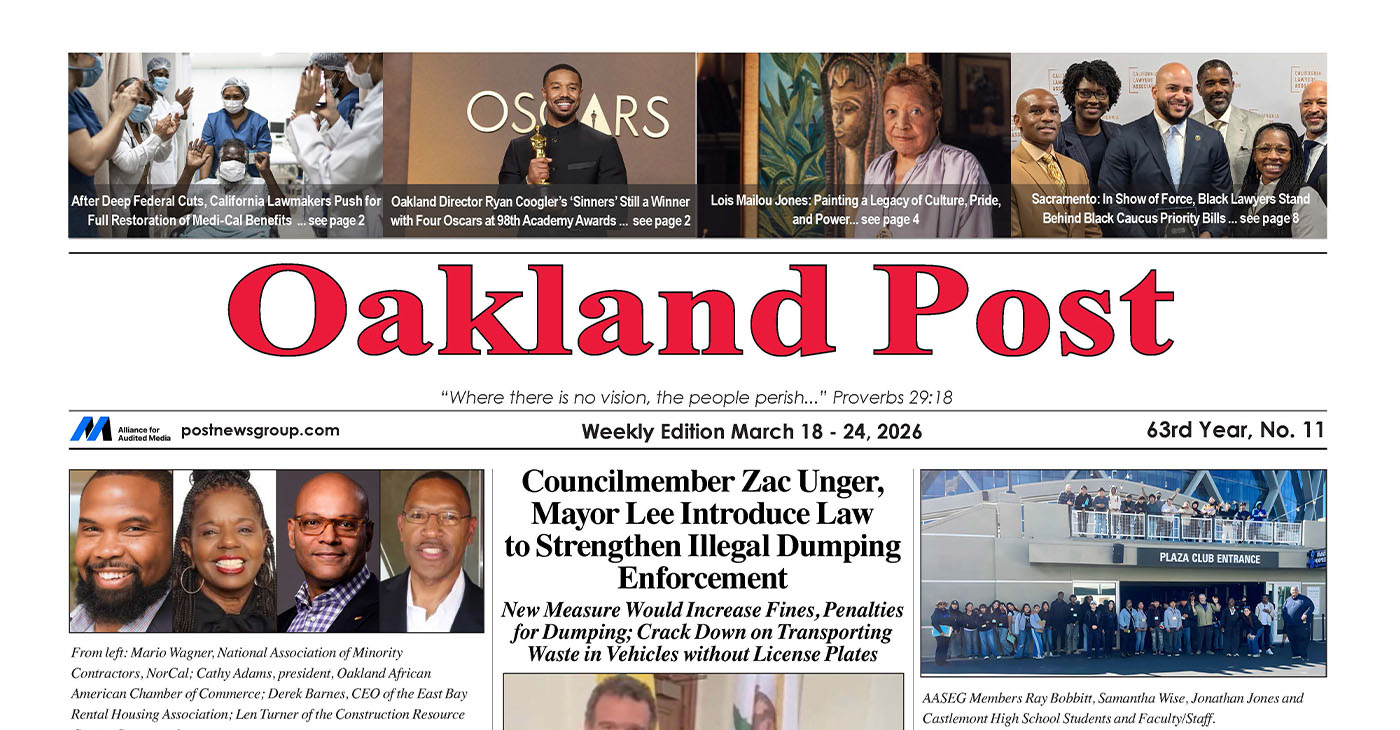
To enlarge your view of this issue, use the slider, magnifying glass icon or full page icon in the lower right corner of the browser window.
Activism
Oakland Post: Week of March 11 -17, 2026
The printed Weekly Edition of the Oakland Post: Week of March 11 – 17, 2026
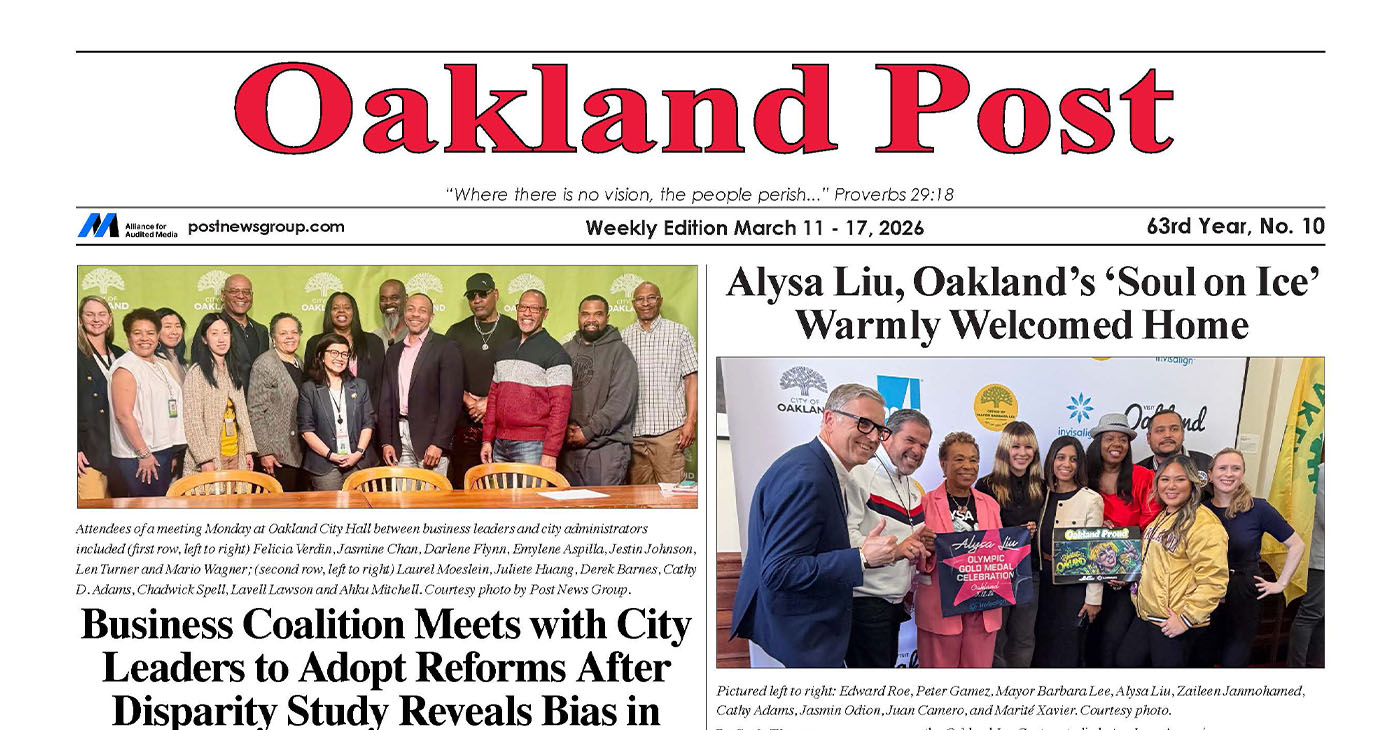
To enlarge your view of this issue, use the slider, magnifying glass icon or full page icon in the lower right corner of the browser window.

WORK FROM HOME
Home-based business with potential monthly income of $10K+ per month. A proven training system and website provided to maximize business effectiveness. Perfect job to earn side and primary income. Contact Lynne for more details: Lynne4npusa@gmail.com 800-334-0540


Oakland Post: Week of April 1 – 7, 2026

Black Artists in America, Installation Three Wraps at the Dixon Gallery and Gardens

Grief, Advocacy, and Education: A Counselor Reflects on Black Maternal Health

Future of Florida’s Black History Museum in Limbo

New Research Shows the Many Benefits of Early Learning

South Hampton K-8 Students Among Top 10 Finalists for Samsung’s ‘Solve for Tomorrow’ Competition

Cuba: No Negotiation with US on the President or Political System

Brooklyn Academy of Music Names Jamaican-Born Tamara McCaw as President

Trinidad & Tobego – U.S. Launches WhatsApp Channel for American Citizens in the Country

Oakland Post: Week of March 18 – 24, 2026

AI Innovation vs. Ethics and Environmental Impact

AI, Web3, and Digital Reparations

What If You Owned Your AI Agent?

Season 7, Episode 3 – January Reporter’s Roundtable 📱

Season 7, Episode 3 – January Reporter’s Roundtable

Reflecting on Black History Milestones in Birmingham AL

Oakland Post: Week of February 25 – March 3, 2026

PRESS ROOM: NBA Hall of Fame Nominee Terry Cummings Joins 100 Black Men of DeKalb County to Launch Victory & Values Initiative

Oakland Post: Week of March 4 – 10, 2026

Trump’s MAGA Allies are Creating Executive Order Plan to Steal the 2026 Midterms

U.S. manufacturing rebounds – how foundry services are adapting to rising demand

Poll Shows Support for Policies That Help Families Afford Child Care

Oakland Post: Week of March 11 -17, 2026

OP-ED: One Hundred Years of Black Workers Telling the Truth

Advancements in solar technology that are changing the way we power the world
Oakland Post: Week of March 18 – 24, 2026

Woman’s Search for Family’s Roots Leads to Ancestor John T. Ward – A Successful Entrepreneur and Conductor on the Underground Railroad

Financial Wellness and Mental Health: Managing Money Stress in College

COMMENTARY: Women of Color Shape Our Past and Future

PRESS ROOM: Civil Rights TV Launches in Selma as the World’s First 24/7 Civil Rights Television Network

Hyundai Ioniq 5 Parking, Safety, and 360 View #shorts

2025 Ioniq 5 New Wiper & Powerful Performance! #shorts

Electric SUV Range: Is 259 Miles Enough? #shorts

EV Charging: How Fast Can You Charge an Electric Vehicle? #shorts

Biometric Cooling… Messaging Seats…Come on! 2025 Infiniti QX80 Autograph 4WD

Charged Up: Witness the Magic of a Fully Electric Car! #shorts

Range Rover Sport PHEV Included…: See What’s Inside This Luxury SUV! #shorts

Invisible Hood View: Perfect Parking with X-Ray Vision! #shorts

AI Is Reshaping Black Healthcare: Promise, Peril, and the Push for Improved Results in California

ESSAY: Technology and Medicine, a Primary Care Point of View

Sanctuary Cities

The RESISTANCE – FREEDOM NOW

STATE OF THE PEOPLE: Freddie

ECONOMIC BOYCOTT DAY!!!!!

I told You So
-
 Activism3 weeks ago
Oakland Post: Week of March 11 -17, 2026
-
 Activism2 weeks ago
Oakland Post: Week of March 18 – 24, 2026
-
 Advice3 weeks ago
Financial Wellness and Mental Health: Managing Money Stress in College
-
 #NNPA BlackPress2 weeks ago
Brooklyn Academy of Music Names Jamaican-Born Tamara McCaw as President
-

 Advice3 weeks ago
Women & Wealth: Tips for Navigating Your Lifelong Financial Journey
-
 #NNPA BlackPress2 weeks ago
Grief, Advocacy, and Education: A Counselor Reflects on Black Maternal Health
-
 #NNPA BlackPress2 weeks ago
New Research Shows the Many Benefits of Early Learning
-
 #NNPA BlackPress2 weeks ago
Black Artists in America, Installation Three Wraps at the Dixon Gallery and Gardens
