
Bay Area
Family of Late Police Captain Pushes for Prosecution of Ex-Fremont City Manager for Embezzlement, Fraud
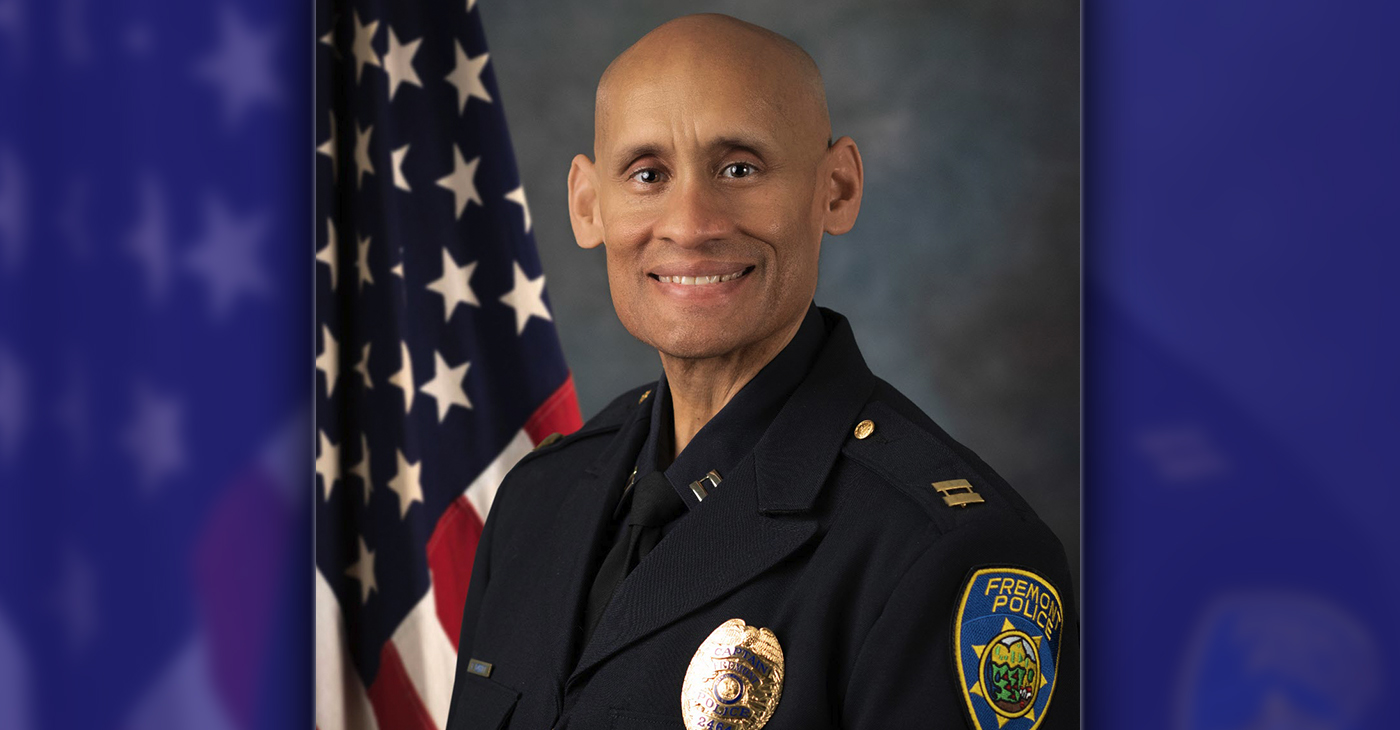
A statement from Bobbitt’s family reads: “Captain Fred “Freddie” Bobbitt was a man of high integrity. He often said that he was willing to risk retaliation for doing the right thing, including confronting government corruption at its highest levels. Captain Bobbitt believed that high-ranking public officials should be held to a higher standard due to the public trust of their positions.”

By Post Staff
The family of late Police Captain Fred “Freddie” Bobbitt is pushing for prosecution of former Fremont City Manager Mark Danaj, who is facing charges of embezzlement and fraud.
Danaj was arraigned on March 9 and his next court date is April 6.
According to Captain Bobbitt’s family members, learning that Danaj was charged with criminal charges was a painful reminder of how Captain Bobbitt had endured retaliation at the hands of Danaj and other city officials. While in his position as Fremont City Manager, Danaj had unsuccessfully attempted to force Bobbitt out of the Fremont Police Department.
A statement from Bobbitt’s family said:
“Captain Fred “Freddie” Bobbitt was a man of high integrity. He often said that he was willing to risk retaliation for doing the right thing, including confronting government corruption at its highest levels. Captain Bobbitt believed that high-ranking public officials should be held to a higher standard due to the public trust of their positions.
“So, we will continue his fight by pushing for prosecution. We are also pursuing the opportunity to testify in front of government bodies regarding the need to fight government corruption in City municipalities, while also highlighting the impact it has on honest employees, and how it affects the community’s trust.”
Before Danaj’s upcoming court date, the District Attorney will face pressure from Bobbitt’s family to prosecute the former City Manager. Between September 2019 and September 2021, Bobbitt had urged the City of Fremont to investigate Danaj for corruption and misuse of his position.
Bobbitt passed away unexpectedly on Feb. 21, 2022, and was honored by the Fremont Police Department, elected officials, and the community during a 2,000-person Memorial Service, along with a 4-mile-long law enforcement funeral procession.
Bobbitt’s family members said that in September 2020, Danaj attempted to use his position to force Bobbitt out of the Fremont Police Department in retaliation for Bobbitt’s calls to investigate Danaj for corruption.
On April 26, 2021, at a Town Hall meeting held by Bobbitt’s supporters to prevent Bobbitt from being forced out, it was revealed that Danaj had been cited for a domestic incident earlier that month.
On Sept. 15, 2021, Danaj was arrested in San Francisco and cited again in a separate domestic violence incident. On Sept. 30, 2021, Danaj abruptly resigned as Fremont City Manager. Many believe that the Fremont City Council may have forced Danaj out after being informed of his numerous criminal incidents, as well as the mounting pressure from Bobbitt’s supporters to investigate Danaj for misusing his position.
In a new set of criminal charges, Danaj was arraigned on March 9, 2022, charged with Felony Embezzlement 504 PC, and Felony Misappropriation of Public Funds 424 PC.
During Danaj’s tenure in Fremont, Bobbitt had challenged Danaj on his mischaracterization of the Police Department and the police union, which some have alleged to have been among the issues that led to the two-year conflict between the two city officials.
In February 2022, the Fremont City Council received a briefing on a binding arbitration decision that ruled in Bobbitt’s favor, which clearly established that Danaj and others had retaliated against Bobbitt.
In September of 2020, Danaj had attempted to push Bobbitt to resign by offering him his full pension, plus a cash payout of approximately $99,900, which is slightly under the $100,000 limit that would have required the City Council’s approval.
After Bobbitt refused to resign, Danaj had Bobbitt removed as the Commander of Patrol, reassigned him to the Animal Shelter, and placed him on a Performance Improvement Plan. The binding arbitration ruling required the City to reinstate Bobbitt as Commander of Patrol and invalidate the Performance Improvement Plan.
Danaj is being represented by Danny O’Malley, brother of Alameda County District Attorney Nancy O’Malley.












Activism
Oakland Post: Week of September 23 – 29, 2026
The printed Weekly Edition of the Oakland Post: Week of September 23 – 29, 2026

To enlarge your view of this issue, use the slider, magnifying glass icon or full page icon in the lower right corner of the browser window.
Activism
Oakland Post: Week of September 16 – 22, 2026
The printed Weekly Edition of the Oakland Post: Week of September 16 – 22, 2026

To enlarge your view of this issue, use the slider, magnifying glass icon or full page icon in the lower right corner of the browser window.
Activism
Oakland Post: Week of September 9 – 15, 2026
The printed Weekly Edition of the Oakland Post: Week of September 9 – 15, 2026

To enlarge your view of this issue, use the slider, magnifying glass icon or full page icon in the lower right corner of the browser window.



Asm. Corey Jackson Announces Launch of 24-Hour Childcare in His District

IN MEMORIAM: The Rev. Leon “Sonny” Clark, Longtime Orange County Pastor and Community Leader, Dies at 72

Poll: Becerra Widens His Lead Over Hilton; Californians Split on Wealth Tax

From Historic Memories to New Possibilities: Oakland Celebrates Coliseum 60

County Office of Education Says OUSD Finances Are Getting Healthier, Materially Stronger

LIVE FREE Sunday Dinner Brings Faith, Fellowship and Civic Conversation to Oakland

Remembering Chauncey Bailey as Student Journalists Face Threats to Truth-Telling

BLACspace Cooperative Invites Bay Area to Experience Oakland’s Black Cultural Ecosystem Through a BLAC Map Tour + Party

In Wake of Death on Doorstep, Williams Chapel Baptist Church Calls for Better Care, Funding for Unhoused

Oakland Centenarian Nuna McKee Honored!

Caribbean Nations Produce Action Plan Calling for UK Reparations Over Slavery

Oakland Post: Week of September 23 – 29, 2026

Doulas Are Helping Black California Moms Navigate Pregnancy–Even as High Mortality Rates Persist

Newsom Signs Addictive Social Media Law to Protect Kids

On Your November Ballot: Prop 38 Would Allocate $8.4 Billion to Immunology and Immunotherapy Funding

Four Candidates, Including Incumbent Barbara Lee, Qualify for Oakland Mayor’s Race

Standoff for Justice: Our Homes Are Worth Fighting For

Oakland Post: Week of August 26 – September 1, 2026

Frontier Airlines’ Return to Oakland Airport Brings Flights, Jobs and Opportunity

Gubernatorial Candidate Steve Hilton Blasts California New Tire Rules; Newsom Hits Back

Chef Sharon Lee Blends Culinary Excellence, Education and Empowerment

Jackie Wright Champions Bay Area Stories, Filmmakers and Cultural Institutions

Big City Mayors Ask for “Yes” Vote on Housing Bond Measure; Conservatives Say “No”

Gov. Newsom’s Latest Appointees Include Sacramento Advocate for Formerly Incarcerated Students; State’s New Tech Chief

Oakland Coliseum Project Opens Door for Small Businesses to Build Bigger

Misnamed ‘Parent’ PAC Seeks to Influence Oakland School Board Elections

Longtime BWOPA Member Brendalyn Goodall Appointed to California Workforce Development Board

Gov. Newsom Signs Law Shielding Immigration Aid Workers From Doxing Threats

Secretary of State Shirley N. Weber Urges Californians to Vote Early as Voter ID Battle Intensifies

From Palestine to Oakland: Seeds for Liberation Examines Shared Struggles for Freedom

The Conversation With Al McFarlane 6/23/26

Media Monday 6/22/26

LIVE! ASK ALMA! — TUES. 6.23.26 7PM EST

Car Buying Secrets: 4 Hidden Checks Before You Sign!

Is This 550 HP Charger Worth YOUR Money? AutoNetwork Review

Celebrating Juneteenth – Frederick Douglass on education and resistance

LIVE! — ASK ALMA! — TUES. 6.19.26 7PM EST

Hyundai Ioniq 5 Parking, Safety, and 360 View #shorts

2025 Ioniq 5 New Wiper & Powerful Performance! #shorts

Electric SUV Range: Is 259 Miles Enough? #shorts

EV Charging: How Fast Can You Charge an Electric Vehicle? #shorts

Biometric Cooling… Messaging Seats…Come on! 2025 Infiniti QX80 Autograph 4WD

Charged Up: Witness the Magic of a Fully Electric Car! #shorts

Range Rover Sport PHEV Included…: See What’s Inside This Luxury SUV! #shorts

Invisible Hood View: Perfect Parking with X-Ray Vision! #shorts
-
 Business4 weeks ago
Chef Sharon Lee Blends Culinary Excellence, Education and Empowerment
-
 Black History4 weeks ago
Jackie Wright Champions Bay Area Stories, Filmmakers and Cultural Institutions
-
 Community4 weeks ago
Big City Mayors Ask for “Yes” Vote on Housing Bond Measure; Conservatives Say “No”
-
 Community2 weeks ago
Misnamed ‘Parent’ PAC Seeks to Influence Oakland School Board Elections
-
 Business4 weeks ago
Longtime BWOPA Member Brendalyn Goodall Appointed to California Workforce Development Board
-
 Community4 weeks ago
Gov. Newsom Signs Law Shielding Immigration Aid Workers From Doxing Threats
-

 Activism3 weeks ago
Oakland Post: Week of September 2 – 8, 2026
-

 Featured4 weeks ago
‘Passing a Law Isn’t The Finish Line’: California Assembly Evaluates Implementation, Results
