
Commentary
ESSAY: California Can Close Its Colorectal Cancer Gap
POST NEWS GROUP — The numbers are stark. From 2014 through 2018, the age-adjusted colorectal cancer incidence rate was 40.2 cases per 100,000 Black Californians, compared with 35.8 among non-Hispanic White Californians. The mortality rate was 25.3 deaths per 100,000 among Black Californians and 17.7 among White Californians—a 43% difference.

Every breakthrough in cancer care carries a promise: earlier detection, better treatment and longer life. California has helped deliver that promise through world-class cancer centers, a statewide cancer registry and major public-health investments. Yet colorectal cancer still exposes a painful divide: Black Californians are more likely to develop the disease and far more likely to die from it than their White neighbors.
The numbers are stark. From 2014 through 2018, the age-adjusted colorectal cancer incidence rate was 40.2 cases per 100,000 Black Californians, compared with 35.8 among non-Hispanic White Californians. The mortality rate was 25.3 deaths per 100,000 among Black Californians and 17.7 among White Californians—a 43% difference.
A later state analysis showed that the incidence gap remained in 2021, at 39.0 versus 35.0 cases per 100,000.
These differences should not be treated as an inevitable consequence of biology. The more revealing explanation lies in what happens—or fails to happen—across the cancer-care continuum: prevention, screening, diagnostic follow-up, treatment and surveillance after treatment.

Colorectal cancer is one of the few cancers that screening can sometimes prevent. Colonoscopy can find and remove precancerous polyps, while stool-based tests can identify people who need further evaluation. The U.S. Preventive Services Task Force recommends screening for average-risk adults from ages 45 through 75, with several acceptable options. But a screening test saves no one if it is never offered, never completed or not followed by a timely colonoscopy after an abnormal result.
California’s cancer-burden report shows both the urgency of the problem and a troubling data gap. Nearly six in 10 colorectal cancers were diagnosed at a regional or distant stage among both Black and White patients from 2009 through 2018. The racial difference in stage was not statistically significant. Yet, the registry report did not include screening information, so it could not show who was offered a test, who completed it or who received the necessary colonoscopy afterward. It also did not assess whether survivors completed recommended follow-up. California can count cancers and deaths, but it cannot yet see every missed opportunity that produced them.
The disparities become clearer after diagnosis. A California Cancer Registry study of nearly 27,000 people with stage I through III colorectal cancer found that Black patients had 39% higher odds of receiving less than guideline-recommended treatment and 78% higher odds of waiting more than 60 days for treatment than White patients. Neighborhood socioeconomic disadvantage explained part of the substandard treatment, but racial differences persisted even after researchers accounted for where patients lived.
Survival reflects the accumulation of these missed opportunities. Among Californians diagnosed from 2009 through 2013, five-year relative survival was 58.8% for Black patients and 65.1% for White patients. After researchers adjusted for age, insurance, neighborhood income, stage, chronic illness and other factors, the survival difference was no longer statistically significant. That does not make the gap less serious. It identifies much of it as potentially preventable: when access, timing and health conditions are unequal, survival will be unequal too.
California already has proof that a better system can work. Kaiser Permanente Northern California built an organized program that identified eligible patients, mailed annual home stool tests to those overdue, offered colonoscopy as an alternative, and tracked abnormal results through follow-up. Screening among Black members rose from about 40% in 2009 to 80% in 2019. Over the same period, their colorectal cancer death rate fell from 54.2 to 20.9 per 100,000, essentially eliminating the Black-White mortality gap within that health system.
The lesson is not that every Californian must join one health plan. It is that equity requires organized care rather than reliance on chance encounters. Mailed screening outreach, patient navigation and guaranteed follow-up colonoscopy should become standard across Medi-Cal, county health systems and community clinics. Health systems should publicly report screening completion; time from a positive stool test to colonoscopy; time from diagnosis to treatment; receipt of guideline-concordant therapy; and completion of post-treatment surveillance—each stratified by race, insurance, and neighborhood.
Transportation, paid time off, bowel-preparation costs, childcare and distrust are not side issues; they determine whether patients can complete care. Community organizations, churches, clinicians and public hospitals should help design outreach from the beginning, not merely deliver messages created elsewhere. Survivors should leave treatment with a clear surveillance plan, navigation support and reminders that do not disappear when active therapy ends.
Closing California’s colorectal cancer gap is achievable. The state has the tests, specialists, data systems and proof of concept. What it needs is the will to connect them. Success should be measured not only by how many cancers we treat, but by how many we prevent, how quickly we act and whether every Californian has an equal opportunity to survive.
About the Authors
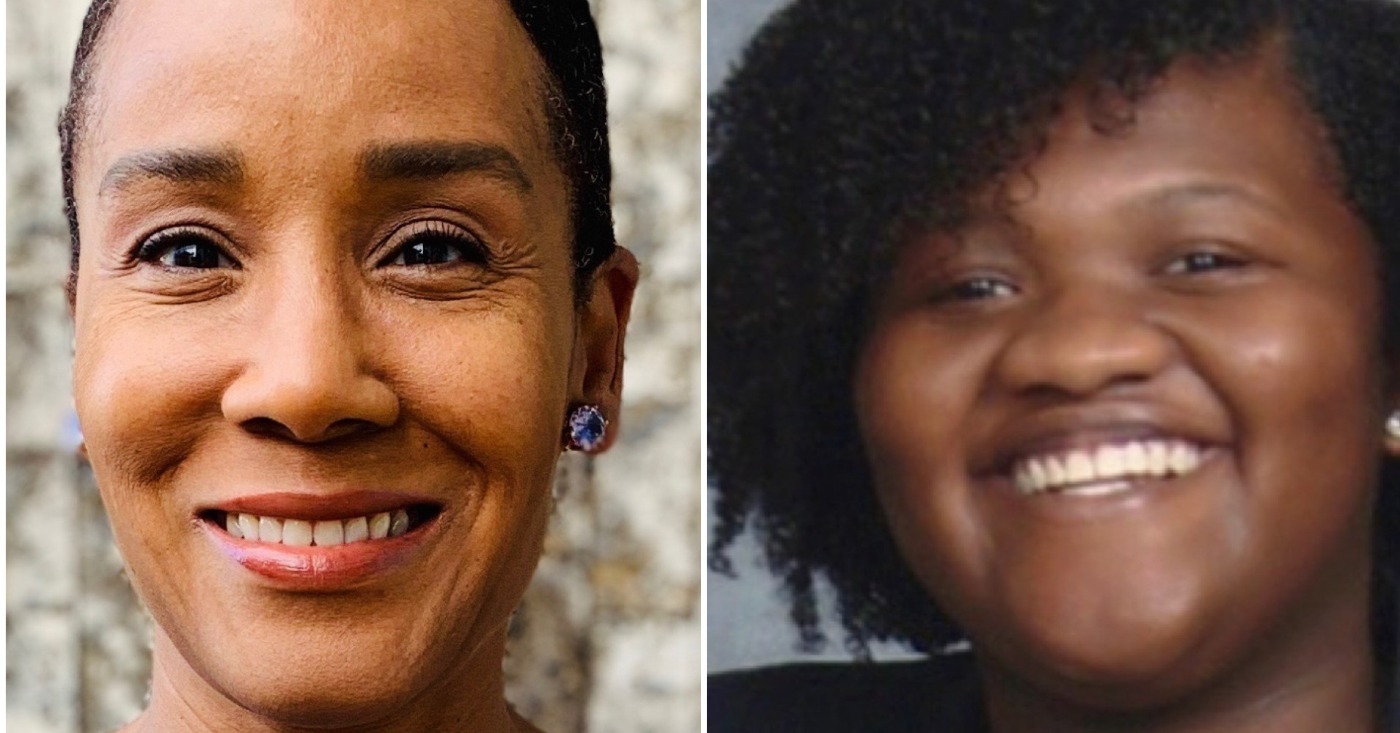
Gracie Ann E. Dinkins, MD, FACS, is a Clinical Assistant Professor of Surgery and Surgery Clerkship Director at the Charles R. Drew University College of Medicine, Department of Surgery. Her mission is to help realize the CDU vision: Excellent health and wellness for all in a world without health disparities.
Sydney Y. K. Brown, MA, is a medical student at the Charles R. Drew University College of Medicine whose work focuses on clinical research, community engagement, and health equity. She is committed to advancing equitable access to high-quality care and improving health outcomes in underserved communities.



Commentary
COMMENTARY: Oakland’s Black Students Have Gained Ground: We Shouldn’t Stop Now
New state data reveals that Black students in the Oakland Unified School District are making academic gains in reading and math at rates significantly faster than their peers statewide. These improvements follow a 2023 decision by board leadership to cancel school closures and instead invest in the Black Thriving Community Schools program. While the district continues to address budget challenges, proponents argue that maintaining these targeted resources is essential to narrowing long-standing achievement gaps. Read more about the specific policies driving these results.
Oakland’s Black students are making faster gains in reading and math than Black students statewide, according to state data released Oct. 15.
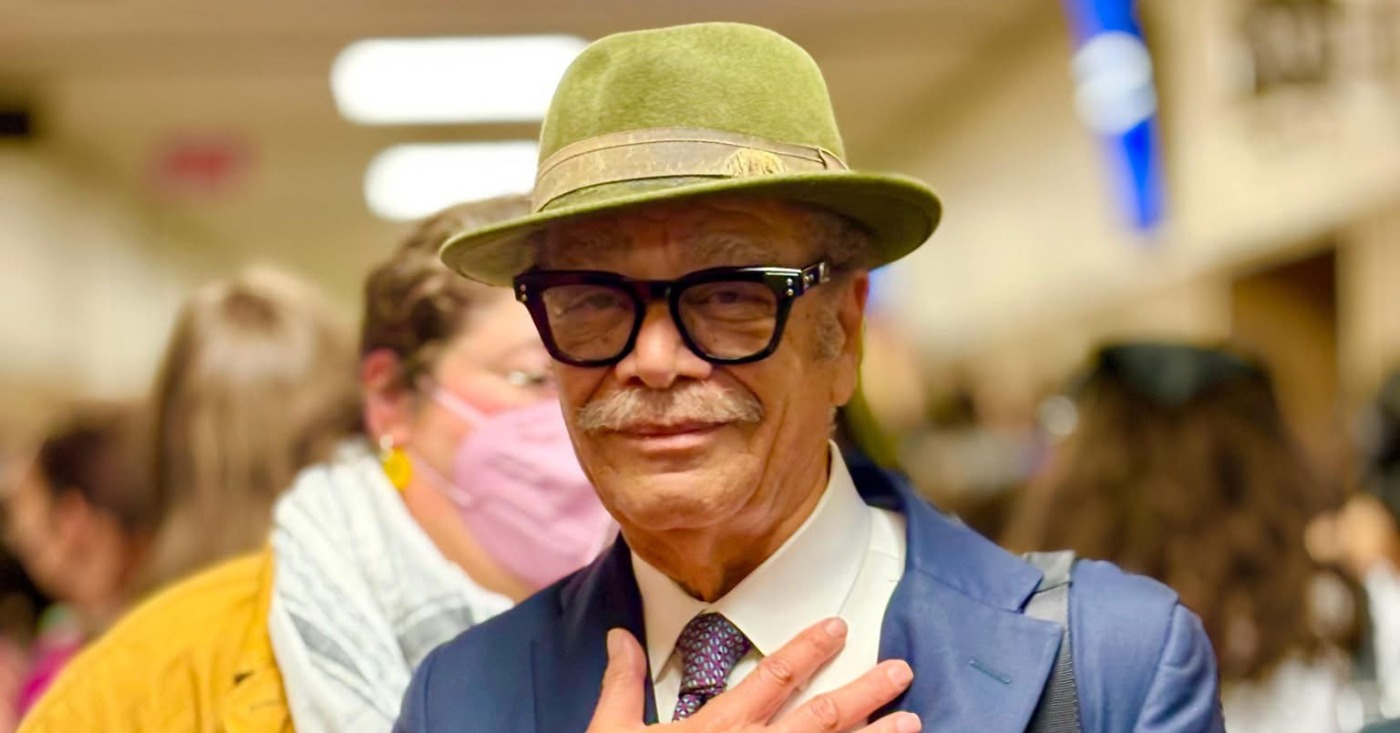
Those gains followed decisions by school board President Jennifer Brouhard and Vice President Valarie Bachelor to keep schools open, invest in Black students and support teachers.
Since 2023, Black students in Oakland Unified School District have gained about 31 points in English and math on the California School Dashboard — roughly three times the statewide English gain and more than twice the math gain. Our students still trail their statewide peers, but they have narrowed that gap by about a third.
In 2022, the previous board voted to close or reduce grades at 11 schools, mostly serving Black and Brown families. A state civil rights investigation later found the plan would have unlawfully discriminated against Black, low-income and disabled students. Brouhard and Bachelor opposed those closures and, after winning election, voted to cancel remaining plans in January 2023.
The board then expanded support through Black Thriving Community Schools, providing additional resources where Black enrollment exceeds 40%, and funded teachers dedicated to Black students and families. Its reparations policy requires schools to develop plans for Black student achievement.
Meanwhile, the district reduced a $100 million budget shortfall to about $30 million without closing schools, cut central office positions and approved its first balanced budget in 22 years. More than 99% of teaching positions were filled when this school year began.
These investments must grow. Black Thriving Community Schools still reach only some students who need them. Every Oakland child deserves a safe, racially just neighborhood school staffed by qualified teachers who can afford to stay.
The opposing slate argues closures should remain an option to address budget pressures. But a Stanford study found closures do not improve district finances because departing families take student funding with them. Other research links closures to lower college attendance and adult earnings. Majority-Black schools nationally are more than three times as likely to close.
Oakland knows the consequences. There is another path. Brouhard and Bachelor have begun moving Oakland in that direction, protecting classroom investments while confronting financial pressures.
Progress deserves continued public support. We cannot afford to reverse course.
About the Author
Walter Riley is a civil rights attorney and longtime community organizer in Oakland.
Black History
From Backyard Grilling to Jack London Square: Jamale Carlyle’s Chicken Wing Success Story
Jamale Carlyle turned a backyard hobby into a flourishing business after using grilling to cope with the loss of his mother and sister. The former corporate executive and CPA transitioned from a twenty-year career in the power industry to selling chicken wings at farmers’ markets in Tracy and Oakland. Following immediate success and viral social media attention, Carlyle opened two permanent storefronts and established a charitable partnership to support local youth. His journey highlights a unique path from internal auditing to community entrepreneurship. Read more.
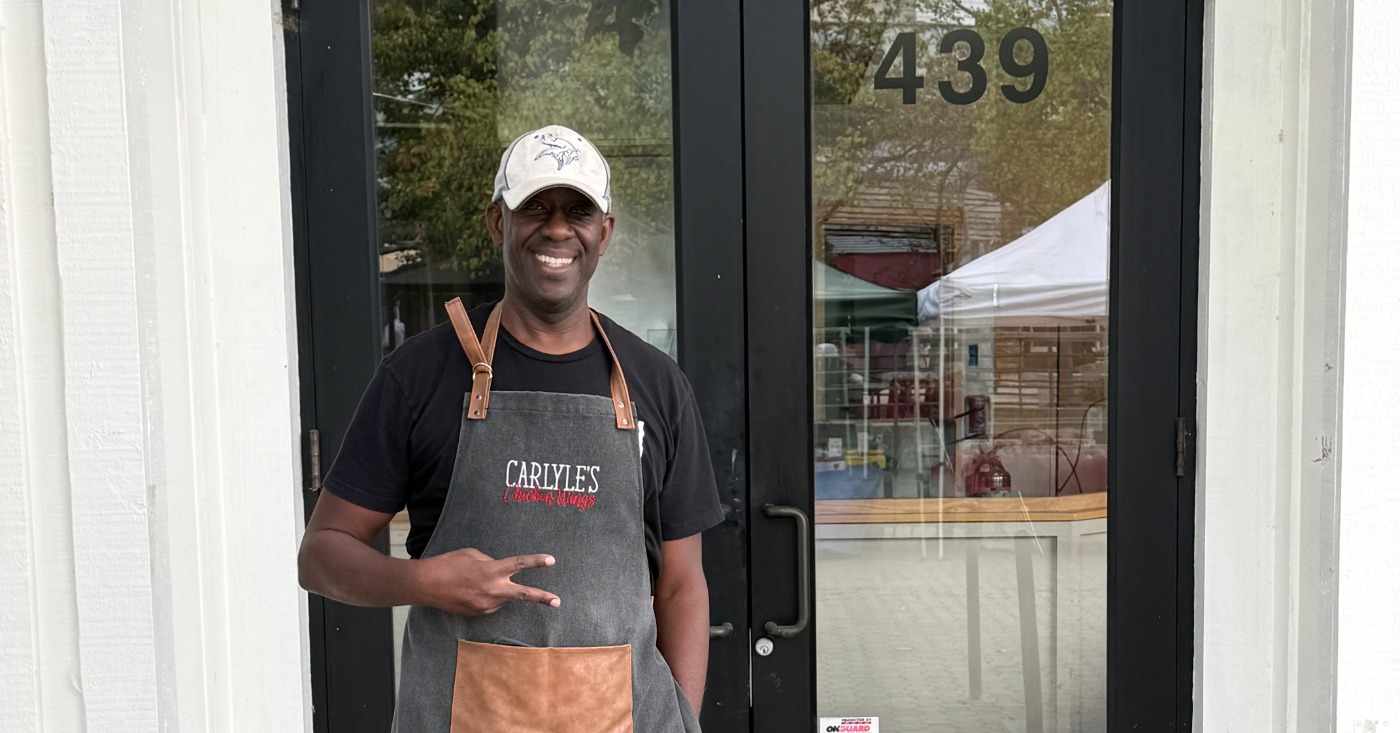
For Jamale Carlyle, what began as a way to cope with personal loss has grown into a thriving chicken wing business with locations in Tracy and Oakland’s Jack London Square.
Raised in Los Angeles, Carlyle remains a southern kid at heart, guided by the values and principles instilled in him growing up. In 2020, he lost his sister, and two months later, his mother passed away. The losses left him grieving half of his immediate family and searching for a way forward.
He turned to God, and to two favorite pastimes: grilling chicken wings and deep sea fishing. Friends who gathered in his backyard encouraged him to turn his chicken wings into a business.
Carlyle had built a successful corporate career before becoming an entrepreneur. An economics graduate of the University of California, Irvine, he earned a master’s degree in accounting from the University of Southern California and became a certified public accountant (CPA).
He spent more than 20 years in the power industry, including working for Edison International in Los Angeles and Boston. He later joined JP Energy Partners in Dallas, helping its team take the company public.
After moving to San Francisco in 2016, Carlyle spent 10 years with Pattern Energy, a wind energy company, where he served as vice president of Internal Audit and took on numerous corporate responsibilities.
But in 2025, grilling became more than a hobby. Carlyle began selling his wings at farmers’ markets, initially dedicating four hours every Saturday. Nervous about his first outing in Tracy, he wondered whether his friends had simply been encouraging. Instead, he sold out on opening day.
He later brought his business to Jack London Square’s Farmers Market, where he again sold out on his first day. As demand grew, he expanded into catering before opening his Tracy storefront in May 2026 and his Jack London Square location in July.
Social media helped fuel the momentum. In Tracy, enthusiastic reviews on the community’s Rants and Raves Facebook page brought customers through the door. His Jack London Square debut also gained traction online, generating approximately 100,000 views on social media on his on opening day.
Still processing the rapid growth, Carlyle describes the business as something that began in his backyard as a stress reliever and became an unexpected calling, and a way of giving back.
“Giving back” has led to a partnership with Mike Jenkins, owner of Oakland Strong, a nonprofit gym known for Olympic style weight lifting and developing national and international champions. After Jenkins visited Carlyle’s store with members of his team, Carlyle returned the visit, and the two began discussing ways to partner to support the community.
“I’m really big on charity. I believe in giving back to the community,” Carlyle said. “I knew before I opened my store, I’d be doing something like this, this is what God wants me to do.”
Their collaboration will introduce the “Oakland Strong Bowl,” featuring 10 dry-rub Cajun wings and a vegetable-rice bowl for $17.99, with $2 from each purchase donated to the Oakland Strong Foundation. The initiative is expected to launch in early November.
“This builds community in Oakland and Jack London Square,” Carlyle said.
Looking ahead, Carlyle plans to expand the menu with chicken thighs, chicken tacos and additional sides. He is also pursuing a liquor license to create a destination where customers can enjoy wings while watching sports.
For now, he is focused on growing his two locations. But with customers embracing his food and his commitment to giving back, Carlyle sees the possibility of bringing his chicken wings to more communities throughout the Bay Area.
Commentary
OPINION: We Can Restore Checks and Balances on Trump
With the presidential administration facing criticism over its handling of healthcare, inflation, and government spending, political observers are shifting their focus toward the upcoming congressional elections to restore institutional checks and balances. Recent data suggests Democrats are within reach of the 218 seats needed for a House majority, while specific Senate races in states like Texas and Michigan remain pivotal. The outcome of these contests will determine the legislative branch’s ability to challenge executive policies on tariffs, taxes, and military engagement. Click to read more.

Rapper Nikki Minaj is the latest high profile political tool of Donald Trump. The president recently remarked on the Afro-Trinidadian singer’s backside, praising her “beautiful ass.”
Is this what passes as an appeal for the Black vote? But Trump is an equal opportunity offender.
At recent rallies, Trump made homo-erotic comments about Republican men and their butts, like when he referred to Ohio Senator John Husted’s as a “pile of muscle.” But shouldn’t Trump be talking about the real issues?
Gas prices are now higher than they were under former President Joe Biden. Inflation is higher than when Trump took office, while he has redecorated the White House and already spent over $200 million on gold filigree. At least 3 million people have been kicked off of Medicaid or Obamacare because of Trump-backed legislation in Congress.
The country needs a change in how Trump does business. We need a strong independent Congress in both the House and Senate that will be our voice to stand up to ideas like a ‘forever war.’ Or tariffs against friend and foe.

This is the important math of the day: Democrats need 218 seats for a majority. Four more needed than their current 214. The latest Cook Report shows Democrats could gain 12-22 House seats.
But you still need the Senate, where Republicans have 53 members and the Dems have 47.
To have control, Dems would need to beat the tie breaker vote cast by VP J.D. Vance. Democrats need to get to 51 and that means four Senate victories on Nov. 3.
Of the key states politicos are watching, North Carolina and Georgia look blue. Can they get two more from toss-up states like Alaska (Mary Peltola?), Maine (Troy Jackson?), or Ohio (Sherrod Brown)? Observers are talking about two races in particular: Texas and Michigan.
In Texas the Talarico/Paxton race is fascinating. State legislator James Talarico is a choir boy compared to Texas Attorney General Ken Paxton—whose rhetoric and record suggest he would be more amoral than Trump.
Then there’s Michigan, where Abdul El-Sayed is running against Mike Rogers.
The Black vote has wavered there, with some high-level Black pols coming out against El-Sayed on Fox News. Trump has also called El-Sayed a “jihadist and a terrorist.”
Born in the U.S., El-Sayed is a highly educated Rhodes Scholar, and a physician. The “model minority” is a terrorist? But like all people of color, he gets othered. Assumptions get made. His skin color and his religion make him a terrorist.
What about local issues like the billionaire tax in California. Prop. 40? I hate direct legislation by propositions because the proposals are usually flawed and can’t be worked out easily—like if legislators actually did their job in the state house.
But taxing billionaires more has to happen on the state and federal level. Prop 40 is a start. Even if it’s one time and goes mostly to health care. It’s a start toward fairness.
Whatever you say. Just vote. Now. Early. Don’t wait.
About the Author
Emil Amok Guillermo is a journalist, commentator and comic monologist. See him on his micro talk show: YouTube.com/@emilamok1



How the Sandwich Generation Can Help Protect Aging Parents’ Finances

As Progressive Democrats Celebrate ‘Blue Tsunami,’ Oakland Counts Victories

Golden State Valkyries Become Bay Area Legends Winning WNBA Championship on Halloween Night

IN MEMORIAM: Marcia Ann Gillespie, Editor of Essence and Ms. Magazines, Dies at 82

U.S. Rep. John Garamendi Honors local ‘Women of the Year’ at Annual Awards Ceremony

Richmond Neighbors Put Pantry Power on the Map

Oakland Latino Chamber of Commerce Hosts Statewide Convention, Generating $3 Million in Economic Impact

HISTORY MADE: Keisha Lance Bottoms Becomes First Black Woman Elected Governor in American History

HISTORY MADE: Keisha Lance Bottoms Becomes First Black Woman Elected Governor in American History

Five Hospitals Said No! Who Will Help Annette Henry Recover?

Oakland NAACP, BWOPA Speak Out Against Alleged Harassment of Black Women Political Leaders

COMMENTARY: Oakland’s Black Students Have Gained Ground: We Shouldn’t Stop Now

From Backyard Grilling to Jack London Square: Jamale Carlyle’s Chicken Wing Success Story

SEIU Local 1000 and State of California Will Continue to Negotiate New Labor Contract

OPINION: We Can Restore Checks and Balances on Trump

COMMENTARY: Valarie Bachelor and Jennifer Brouhard are Excellent School Board Members and Deserve to Be Reelected

Listening as a Lifeline: A Doula’s Witness to Black Maternal Health

OUSD Receives State Review of District Finances; Outlines Progress Since January
HISTORY MADE: Keisha Lance Bottoms Becomes First Black Woman Elected Governor in American History

Zakiya Jendayi Arrested, Locked Out of Home by Sheriff’s Deputies
SEIU Local 1000 and State of California Will Continue to Negotiate New Labor Contract
Golden State Valkyries Become Bay Area Legends Winning WNBA Championship on Halloween Night

COMMENTARY: Your California Living Trust Could Be Next: When Evidence Isn’t Enough

Fate of Bay Area Public Transit Hinges on Regional Transit Measure

Oakland Post: Week of September 30 – October 6, 2026

It’s Time to Lose Weight Before the Holidays

Mayor Barbara Lee Holds Special State of the City Address in Deep East Oakland

Democrats, Community Groups Back Measure EE to Change How Oakland Is Governed

Oakland Awarded More than $14 Million in State Funding

OP-ED: Proposition 44 Would Put a Price on Trust

The Conversation With Al McFarlane 6/23/26

Media Monday 6/22/26

LIVE! ASK ALMA! — TUES. 6.23.26 7PM EST

Car Buying Secrets: 4 Hidden Checks Before You Sign!

Is This 550 HP Charger Worth YOUR Money? AutoNetwork Review

Celebrating Juneteenth – Frederick Douglass on education and resistance

LIVE! — ASK ALMA! — TUES. 6.19.26 7PM EST

Hyundai Ioniq 5 Parking, Safety, and 360 View #shorts

2025 Ioniq 5 New Wiper & Powerful Performance! #shorts

Electric SUV Range: Is 259 Miles Enough? #shorts

EV Charging: How Fast Can You Charge an Electric Vehicle? #shorts

Biometric Cooling… Messaging Seats…Come on! 2025 Infiniti QX80 Autograph 4WD

Charged Up: Witness the Magic of a Fully Electric Car! #shorts

Range Rover Sport PHEV Included…: See What’s Inside This Luxury SUV! #shorts

Invisible Hood View: Perfect Parking with X-Ray Vision! #shorts
-
 Commentary2 weeks ago
COMMENTARY: Valarie Bachelor and Jennifer Brouhard are Excellent School Board Members and Deserve to Be Reelected
-
 Education2 weeks ago
OUSD Receives State Review of District Finances; Outlines Progress Since January
-
 Black History1 week ago
HISTORY MADE: Keisha Lance Bottoms Becomes First Black Woman Elected Governor in American History
-
 Business2 weeks ago
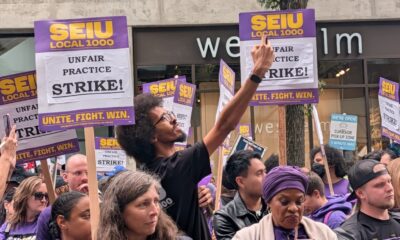
SEIU Local 1000 and State of California Will Continue to Negotiate New Labor Contract
-
 Community1 week ago
Golden State Valkyries Become Bay Area Legends Winning WNBA Championship on Halloween Night
-
 Business2 weeks ago
COMMENTARY: Your California Living Trust Could Be Next: When Evidence Isn’t Enough
-
 Business3 weeks ago
Fate of Bay Area Public Transit Hinges on Regional Transit Measure
-
 Community4 weeks ago
It’s Time to Lose Weight Before the Holidays
