
Activism
Equality California Confronts Persistent Hate, Expands Its Outreach as Need for Support Grows in State
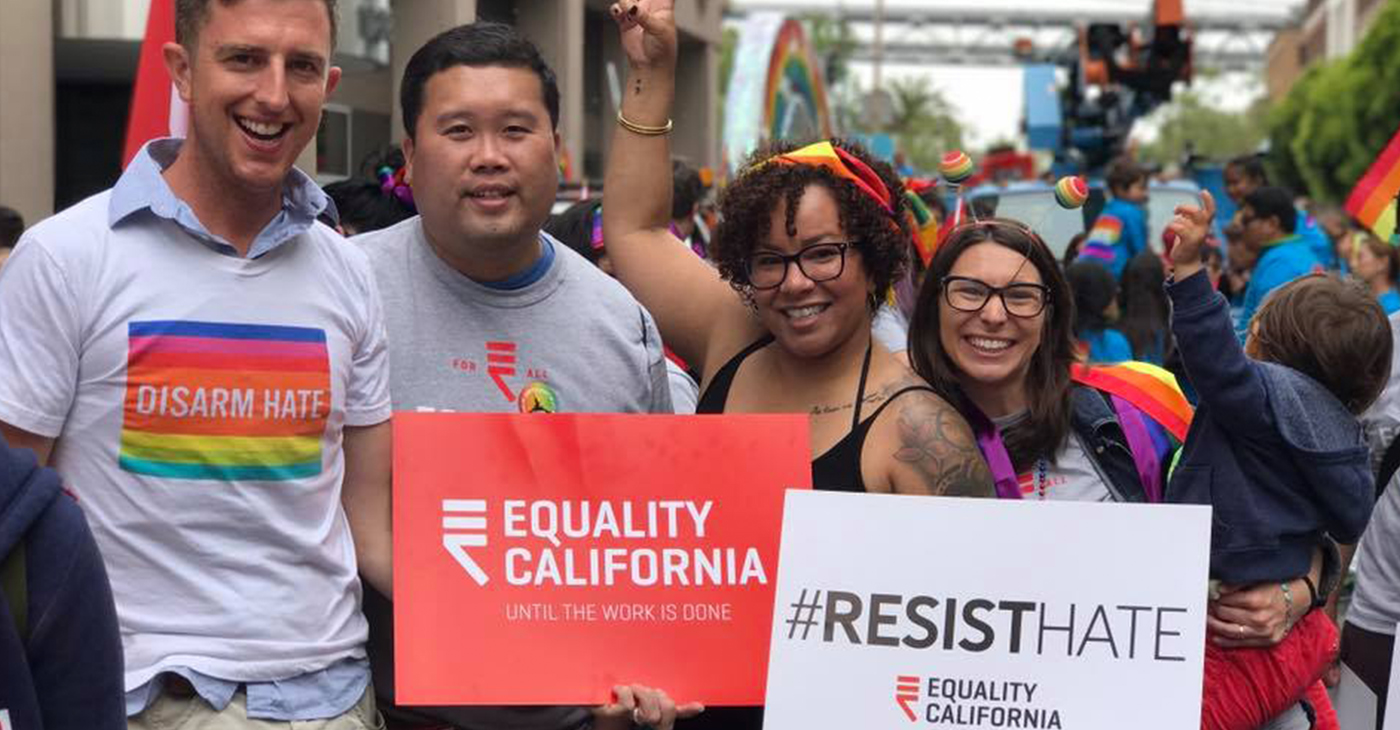
Equality California’s outreach at events like Pride includes connecting community members to resources such as CA vs Hate, a statewide, non-emergency hate crime and incident reporting hotline and online portal created to help counter a more than 50% increase in reported hate crimes in California between 2020 and 2024.

By Joe Kocurek
California Black Media
Even though public attitudes have shifted, advocates say the fight for LGBTQ rights in California remains far from over — a reality Equality California confronts through outreach, policy advocacy and community support.
“I was at Sacramento Pride,” said Erin Arendse, program director for Equality California. “We were setting up and an individual was yelling horrific homophobic slurs at everybody.”
Equality California’s outreach at events like Pride includes connecting community members to resources such as CA vs Hate, a statewide, non-emergency hate crime and incident reporting hotline and online portal created to help counter a more than 50% increase in reported hate crimes in California between 2020 and 2024.
Run by the California Civil Rights Department (CRD) and 211-in partnership with community-based organizations—the hotline and online resource offer confidential, anonymous reporting that is separate from law enforcement and grounded in a trauma-informed, victim-centered approach.
Arendse says after the incident she decided to take her own advice.
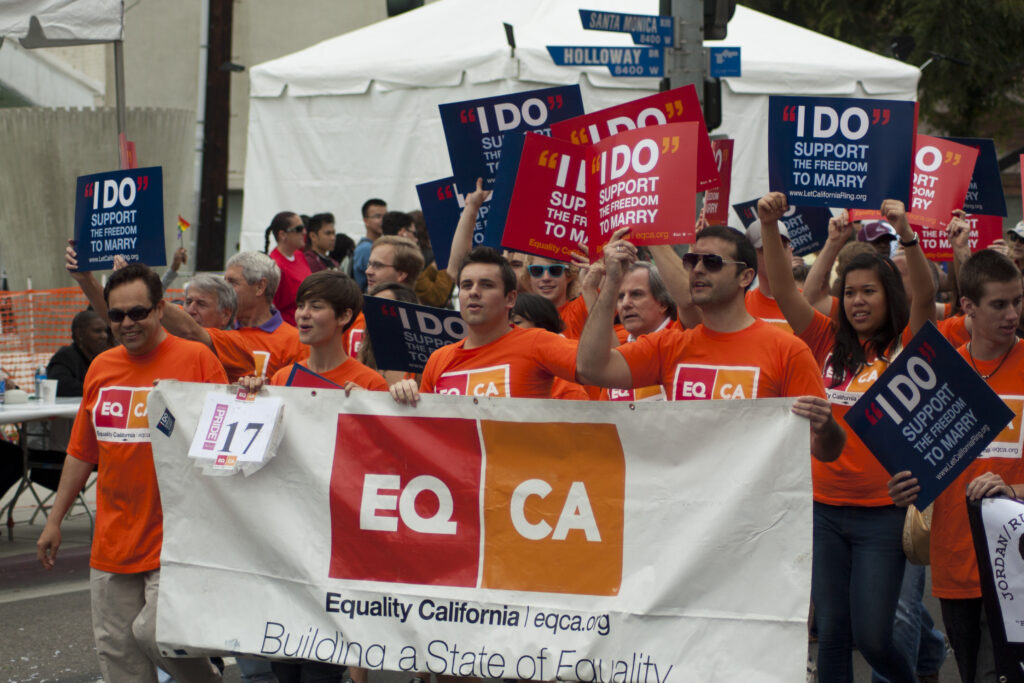
EQCA at the Los Angeles LGBT pride parade in 2011. Photo courtesy of Wiki Commons
“We were literally doing that outreach there,” she said. “So, I pulled CA vs Hate on my phone to report the incident.”
New data from CRD underscores the growing reliance on the program. CA vs Hate received nearly 1,000 reports of hate from across 46 counties in 2025 and has responded to more than 6,800 requests for help since launching in May 2023.
“Everyone deserves support after experiencing hate,” said Business, Consumer Services, and Housing Secretary Tomiquia Moss. “Through CA vs Hate, Californians have a trusted place they can turn to, and thousands of people have already reached out. From mental health counseling to legal assistance, the hotline is a nation-leading example of how we can drive real impact when we work together with our local partners.”

Californians protesting Prop 8, a 2008 ballot measure that would ban same-sex marriages in the state. EQCA would be instrumental in passing Proposition 3 in 2024, which would ensure same-sex couples retained the right to marry. Credit: ID 7261410 © Karin Hildebrand Lau | Dreamstime.com
According to the 2024 California Health Interview Survey from UCLA, nearly 3.1 million Californians ages 12 and over experienced hate acts in the previous year, with 31% reporting unmet support needs. Anonymous reports, including those like Arendse’s, help strengthen data collection and improve prevention and response strategies.
“People have expressed a feeling of empowerment,” she said. “It’s important to be able to say that something happened and to have that recorded and validated.”
Equality California’s work builds on decades of advocacy. In the early 2000s, the organization helped push the marriage equality debate forward by sponsoring legislation and advancing legal protections for same-sex couples, efforts that helped shift public opinion despite initial legislative setbacks.
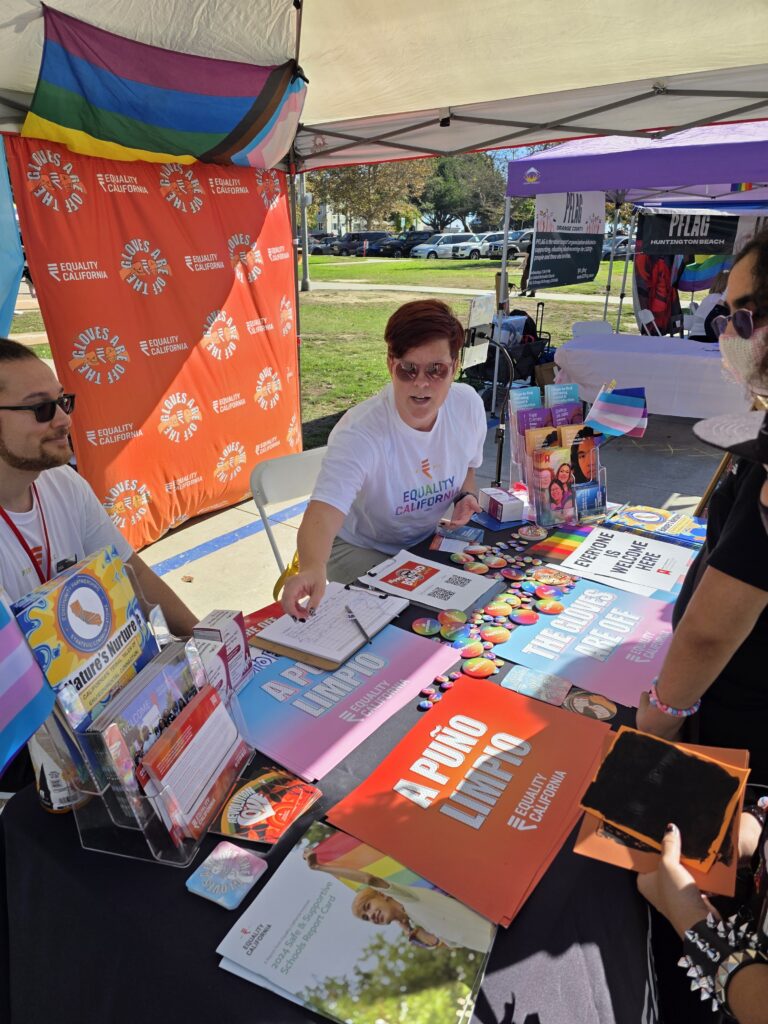
EQCA Instagram Page (@EQCA) promoting CA vs Hate Hotline Photo courtesy of EQCA/
The group has since backed a range of policies, including expanding domestic partnership rights, protecting transgender Californians, improving support for older LGBTQ+ residents, and recognizing LGBTQ+ contributions to the state.
After voters approved Proposition 8 banning same-sex marriage, Equality California led opposition efforts and legal challenges. The issue was ultimately resolved by the U.S. Supreme Court’s 2015 Obergefell v. Hodges decision legalizing same-sex marriage nationwide.
Still, advocates say progress has not been linear.
The 2016 election ushered in a resurgence of anti-LGBTQ rhetoric, prompting Equality California to open a Washington, D.C. office in 2017 to counter federal policy threats. At the local level, tensions have also surfaced.
“A lot of school board meetings were totally overrun by anti-LGBTQ activists and specifically anti-trans organizers who would just say some of the most horrific things,” Arendse said. “A lot of school board trustees just simply were not prepared to deal with that level of vitriol in a school board meeting.”
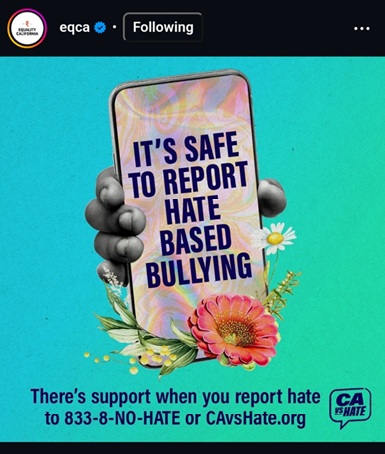
Campaign: EQCA multi-lingual public outreach and education efforts are critical to advancing social justice and creating safer communities for LGBTQ people. Photo courtesy of EQCA
In response, Equality California, which has received support from California’s Stop the Hate Program, has worked with school districts to manage disruptions and protect students, while expanding education and training efforts. The organization has trained more than 5,000 health and human service providers on inclusivity and cultural competency.
Matt Pennon, who has overseen diversity, equity and inclusion programs at both the County and City of San Luis Obispo, said those trainings have had a measurable impact.
“The resounding feedback was ‘Wow, I actually did get something from this,’” Pennon said.
“Even the folks that maybe don’t fully agree said they developed a better sense of respect,” he added. “This is about really highlighting the differences between all of us as humans and how those differences are actually strengths.”
More recently, Equality California has raised concerns about federal policy shifts affecting transgender healthcare access.
“We’re talking access to mental health supports and basic healthcare that everybody deserves that is being blocked just because people are trans or non-binary,” Arendse said.
At the same time, advocates are revisiting past victories to ensure they are protected. After the fall of Roe v. Wade, Equality California moved to safeguard marriage equality at the state level.
“When Roe fell, we knew we had to codify these things into law, because we can’t just rely on a Supreme Court case to protect our rights,” Arendse said.
The organization sponsored a constitutional amendment to enshrine marriage equality into California law. Proposition 3 passed in 2024 with more than 62% voter support.
For Equality California, the arc of progress requires constant attention.
“Fortunately, we have that great protection in place now,” Arendse said. “I can’t believe we’re doing this again, but here we are.”
Get Support After Hate:
California vs Hate is a non-emergency, multilingual hotline and online portal offering confidential support for hate crimes and incidents. Victims and witnesses can get help anonymously by calling 833-8-NO-HATE (833-866-4283), Monday to Friday, 9 a.m.–6 p.m. PT, or online at any time. Anonymous. Confidential. No Police. No ICE.
This story was produced in partnership with CA vs Hate. Join them for the first-ever CA Civil Rights Summit on May 11, 2026. More information at www.cavshate.org/summit.










Activism
Oakland Post: Week of September 23 – 29, 2026
The printed Weekly Edition of the Oakland Post: Week of September 23 – 29, 2026

To enlarge your view of this issue, use the slider, magnifying glass icon or full page icon in the lower right corner of the browser window.
Activism
Oakland Post: Week of September 16 – 22, 2026
The printed Weekly Edition of the Oakland Post: Week of September 16 – 22, 2026

To enlarge your view of this issue, use the slider, magnifying glass icon or full page icon in the lower right corner of the browser window.
Activism
Oakland Post: Week of September 9 – 15, 2026
The printed Weekly Edition of the Oakland Post: Week of September 9 – 15, 2026

To enlarge your view of this issue, use the slider, magnifying glass icon or full page icon in the lower right corner of the browser window.



Asm. Corey Jackson Announces Launch of 24-Hour Childcare in His District

IN MEMORIAM: The Rev. Leon “Sonny” Clark, Longtime Orange County Pastor and Community Leader, Dies at 72

Poll: Becerra Widens His Lead Over Hilton; Californians Split on Wealth Tax

From Historic Memories to New Possibilities: Oakland Celebrates Coliseum 60

County Office of Education Says OUSD Finances Are Getting Healthier, Materially Stronger

LIVE FREE Sunday Dinner Brings Faith, Fellowship and Civic Conversation to Oakland

Remembering Chauncey Bailey as Student Journalists Face Threats to Truth-Telling

BLACspace Cooperative Invites Bay Area to Experience Oakland’s Black Cultural Ecosystem Through a BLAC Map Tour + Party

In Wake of Death on Doorstep, Williams Chapel Baptist Church Calls for Better Care, Funding for Unhoused

Oakland Centenarian Nuna McKee Honored!

Caribbean Nations Produce Action Plan Calling for UK Reparations Over Slavery

Oakland Post: Week of September 23 – 29, 2026

Doulas Are Helping Black California Moms Navigate Pregnancy–Even as High Mortality Rates Persist

Newsom Signs Addictive Social Media Law to Protect Kids

On Your November Ballot: Prop 38 Would Allocate $8.4 Billion to Immunology and Immunotherapy Funding

Standoff for Justice: Our Homes Are Worth Fighting For

Oakland Post: Week of August 26 – September 1, 2026

Frontier Airlines’ Return to Oakland Airport Brings Flights, Jobs and Opportunity

Gubernatorial Candidate Steve Hilton Blasts California New Tire Rules; Newsom Hits Back

Chef Sharon Lee Blends Culinary Excellence, Education and Empowerment

Jackie Wright Champions Bay Area Stories, Filmmakers and Cultural Institutions

Big City Mayors Ask for “Yes” Vote on Housing Bond Measure; Conservatives Say “No”

Oakland Coliseum Project Opens Door for Small Businesses to Build Bigger

Gov. Newsom’s Latest Appointees Include Sacramento Advocate for Formerly Incarcerated Students; State’s New Tech Chief

Misnamed ‘Parent’ PAC Seeks to Influence Oakland School Board Elections

Longtime BWOPA Member Brendalyn Goodall Appointed to California Workforce Development Board

Gov. Newsom Signs Law Shielding Immigration Aid Workers From Doxing Threats

Secretary of State Shirley N. Weber Urges Californians to Vote Early as Voter ID Battle Intensifies

From Palestine to Oakland: Seeds for Liberation Examines Shared Struggles for Freedom

IN MEMORIAM: Dolly Parton Dead at 80 — How She Built a Legacy of Love and Earned Her Place in Black Culture

The Conversation With Al McFarlane 6/23/26

Media Monday 6/22/26

LIVE! ASK ALMA! — TUES. 6.23.26 7PM EST

Car Buying Secrets: 4 Hidden Checks Before You Sign!

Is This 550 HP Charger Worth YOUR Money? AutoNetwork Review

Celebrating Juneteenth – Frederick Douglass on education and resistance

LIVE! — ASK ALMA! — TUES. 6.19.26 7PM EST

Hyundai Ioniq 5 Parking, Safety, and 360 View #shorts

2025 Ioniq 5 New Wiper & Powerful Performance! #shorts

Electric SUV Range: Is 259 Miles Enough? #shorts

EV Charging: How Fast Can You Charge an Electric Vehicle? #shorts

Biometric Cooling… Messaging Seats…Come on! 2025 Infiniti QX80 Autograph 4WD

Charged Up: Witness the Magic of a Fully Electric Car! #shorts

Range Rover Sport PHEV Included…: See What’s Inside This Luxury SUV! #shorts

Invisible Hood View: Perfect Parking with X-Ray Vision! #shorts
-
 Community2 weeks ago
Misnamed ‘Parent’ PAC Seeks to Influence Oakland School Board Elections
-

 Activism3 weeks ago
Oakland Post: Week of September 2 – 8, 2026
-

 Community2 weeks ago
Richmond Tiny House Village Farm & Garden Set to Open Gates on Sept. 26
-

 Black History2 weeks ago
Latest Massacre in Haiti Reveals Cruelty U.S. Deportations
-

 Activism2 weeks ago
Oakland Post: Week of September 9 – 15, 2026
-

 Black History2 weeks ago
OPINION: Nolan Wells’ Death One of Several Signifying Racial Terror Lives on in U.S. South
-

 Community2 weeks ago
Democratic Clubs Interview Candidates for Oakland School Board
-

 Featured2 weeks ago
‘Ready to See These Bills Become Law’: Sen. Weber’s Package of 15 Bills Advance to Gov. Newsom’s Desk
