
Community
End-of-Summer Tech Program for Youth at David Glover Center
Free technology classes designed for youth ages 12 to 19 will resume at the David E. Glover Center on August 14.


Free technology classes designed for youth ages 12 to 19 will resume at the David E. Glover Center on August 14.
The ‘Fundamentals of Technologies’ workshop series is being presented by the Glover Center in collaboration with Proper Technovations. All classes take place at the technology lab in East Oakland and are free to Oakland and East Bay residents. The six-week series begins with an introductory class and is followed by five more classes where participants will learn:
Fundamentals of Flights
Drone Technologies
Drone Operations and Flying
Drone Applications
To enforce the safety of staff and youth, the health hygiene guidelines advised by the County of Alameda Health Dept will be followed.
Snacks, masks, sanitizer, hand-washing, gloves, and other PPE supplies will be provided.
WHEN: Saturdays and Sundays beginning 08/14/21 to 9/19/21.
TIME: 10:30 a.m. – 2:30 p.m.
WHERE: David E. Glover Center
6948 Foothill Blvd, Oakland, CA.










Business
Newsom Signs Addictive Social Media Law to Protect Kids
Newsom said California’s approach focuses on the features that can encourage excessive social media use rather than taking the broader step of banning teenagers from the platforms altogether. He contrasted the measure with restrictions adopted in Australia and Malaysia that prevent teenagers from accessing social media or creating accounts.


Word Count: 391
Gov. Gavin Newsom has signed a new California law targeting addictive social media features that can keep children scrolling, giving the state new authority to restrict how platforms engage young users.
AB 1709, authored by Assemblymember Josh Lowenthal (D-Long Beach) prohibits social media companies from giving children under 16 access to personalized feeds, including “For You” pages, as well as other features designed to maximize screen time, such as infinite scrolling and video autoplay.
The law does not prevent children under 16 from using social media. Instead, platforms must deactivate the covered features for those users.
“This is about actually addressing the problem, the scrolling, the algorithms,” Newsom said Sept. 10 during a bill-signing event in the San Francisco Bay Area.
Newsom said California’s approach focuses on the features that can encourage excessive social media use rather than taking the broader step of banning teenagers from the platforms altogether. He contrasted the measure with restrictions adopted in Australia and Malaysia that prevent teenagers from accessing social media or creating accounts.
The law comes amid growing concerns about the impact of social media on children’s mental health and well-being. California lawmakers have increasingly focused on the design and business practices of technology platforms as part of efforts to protect young users.
AB 1709 is one of 13 youth online safety and privacy laws Newsom signed Sept.10. The package also includes measures regulating AI chatbots, increasing potential penalties for technology companies and establishing additional protections for children using digital services.
Lowenthal said the new rules represent a shift toward greater accountability for technology companies.
“We want oversight. We want accountability. We’re done asking nicely, and we’re demanding that there is a duty of care across these platforms — a duty that puts the wellness of our children ahead of profits,” Lowenthal said.
The law builds on California’s broader effort to regulate children’s online experiences. A separate law, AB 1043, will require users to provide their birth dates when setting up new phones or laptops beginning in January, with device manufacturers required to share users’ ages with apps.
Some youth online safety advocates have supported AB 1709 as a more targeted alternative to outright social media bans. Others have warned that the restrictions could make it harder for some LGBTQ+ young people to find support online and questioned how effectively age requirements can be enforced.

Community
Asm. Isaac Bryan’s Bill Banning California Police From ICE Side Jobs Reaches Newsom’s Desk
The legislation comes as ICE ramps up efforts to recruit law enforcement personnel under the Trump administration. Bryan said the federal agency is offering financial incentives to attract officers, raising concerns about the impact on local law enforcement agencies and the communities they serve.
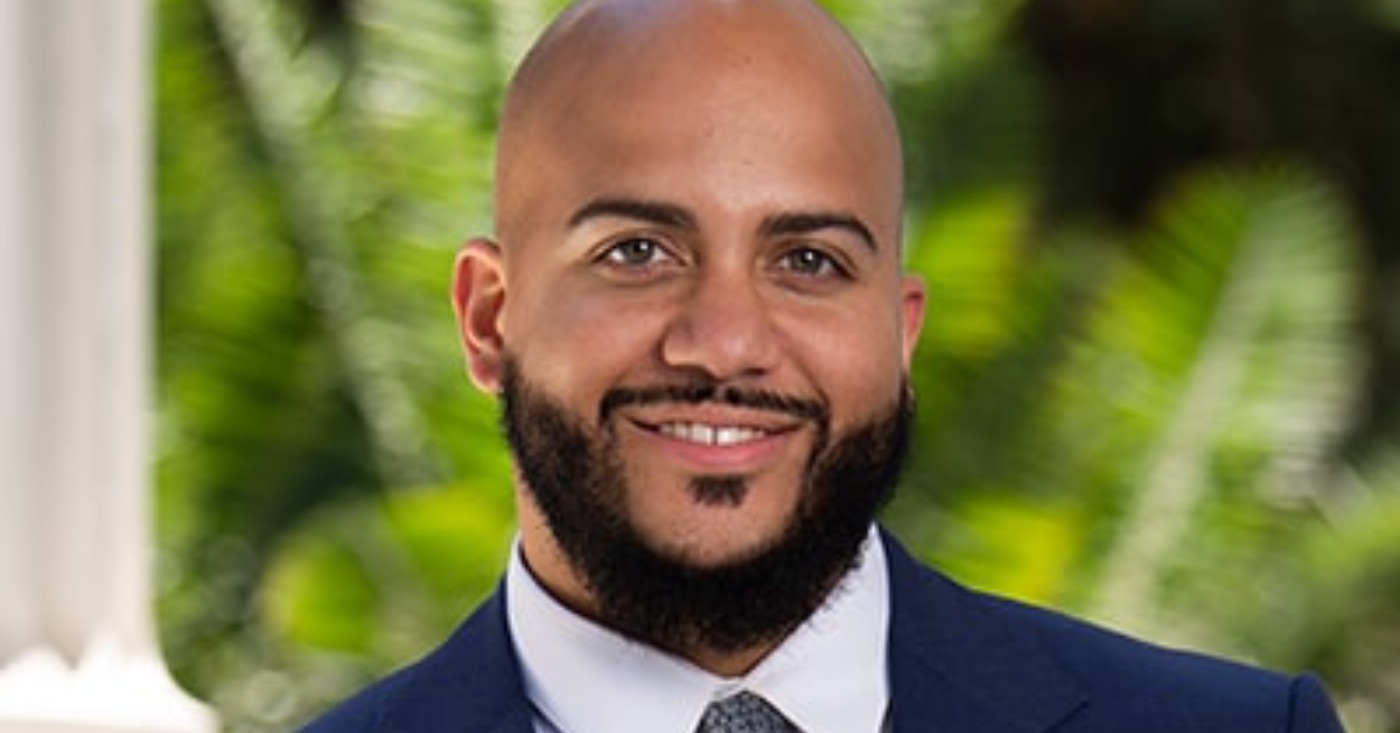
A bill by California Assemblymember Isaac Bryan (D-Ladera Heights) that would prevent state and local police officers from taking second jobs with federal immigration enforcement agencies is headed to Gov. Gavin Newsom after clearing the Legislature.
AB 1537 would bar California peace officers from accepting secondary employment related to immigration enforcement, including work with U.S. Immigration and Customs Enforcement (ICE). The measure also would require officers to report offers for immigration enforcement-related outside employment to their employing agencies.
The legislation comes as ICE ramps up efforts to recruit law enforcement personnel under the Trump administration. Bryan said the federal agency is offering financial incentives to attract officers, raising concerns about the impact on local law enforcement agencies and the communities they serve.
“They are trying to recruit our law enforcement personnel. They are offering these insane bonuses,” Bryan said.
Bryan said he is particularly concerned about efforts to recruit experienced law enforcement personnel while questions have been raised about ICE’s hiring standards.
“They want better skilled, better trained folks because their untrained and uneducated goons go through a very low threshold,” Bryan added.
The legislation would create consequences for California officers who violate its restrictions. Officers who fail to report offers of secondary employment related to immigration enforcement could face decertification as peace officers in California.
Bryan has framed the bill as a measure to establish boundaries between local law enforcement and federal immigration enforcement, particularly as immigration enforcement has become a major source of conflict between the Trump administration and California.
“This is a rogue agency that is harming the American people,” said Bryan. “It should be abolished, but in the meantime, we’ve got to do everything we can to put guardrails around our communities and protect our neighbors.”
AB 1537 previously received approval from the Assembly Public Safety Committee in March before advancing through the Legislature. The bill now awaits Newsom’s decision. The Governor can sign it into law, veto it or allow it to become law without his signature.
Community
Assemblymember LaShae Sharp-Collins’s Bill Would Pause Law Enforcement’s Use of Shock Gloves Pending Study
The device at the center of the debate is known as the G.L.O.V.E., an acronym for Generated Low Output Voltage Emitter. U.S. Immigration and Customs Enforcement awarded a $16.7 million contract for 6,000 pairs of the gloves, which are designed to deliver an electric shock through an officer’s hand.
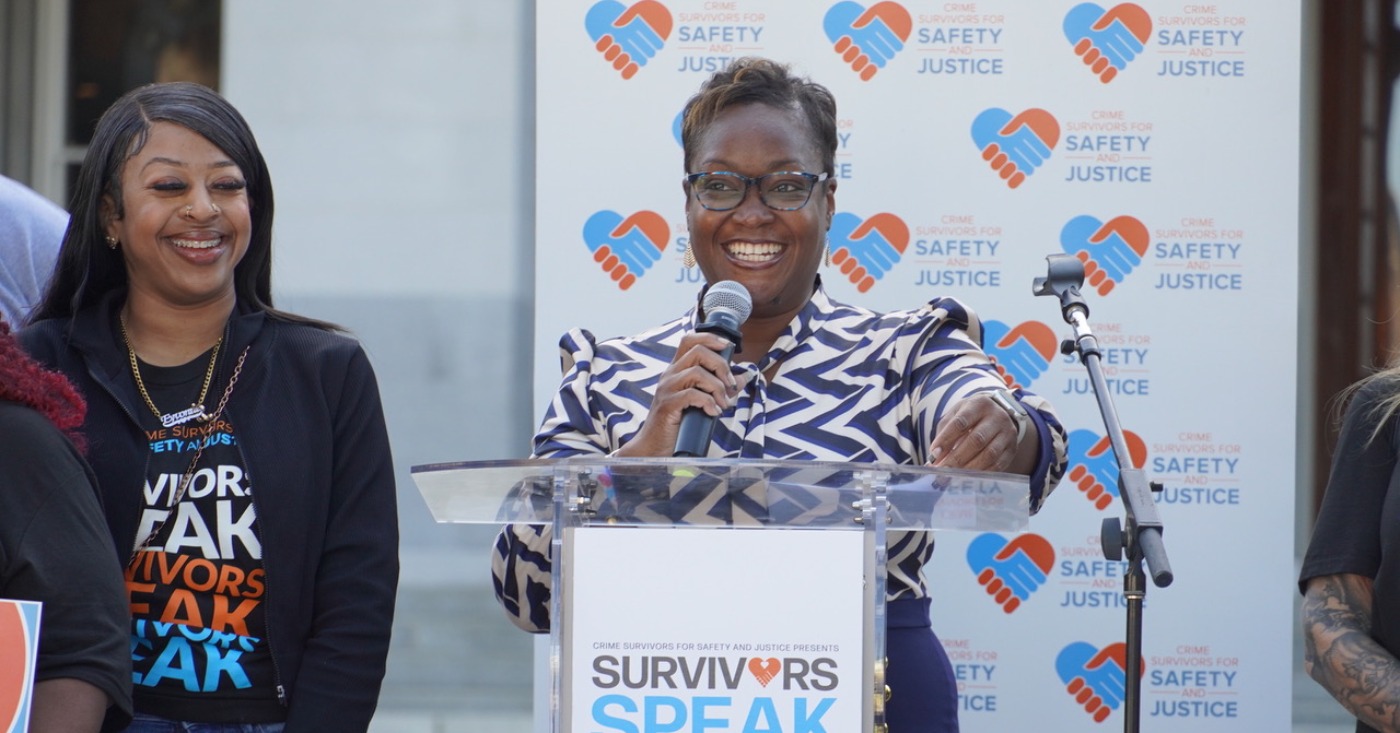
A bill temporarily prohibiting law enforcement agencies from using electric shock gloves in California is awaiting action by Gov. Gavin Newsom.
Assembly Bill (AB) 2760, authored by Assemblymember LaShae Sharp-Collins (D-San Diego), passed the Senate 29-9 on Aug. 31. The Assembly concurred in Senate amendments the same day on a 55-16 vote.
The bill would prohibit state, local and federal law enforcement agencies from using wearable electroshock devices in California until Jan. 1, 2030. It would also bar agencies from using state funds to purchase the devices and require them to update their use-of-force policies accordingly.
Traditional handheld devices, including tasers and stun guns, are exempt.
Newsom has until Sept. 30 to sign or veto the bill. If he takes no action, it will become law without his signature.
Sharp-Collins introduced the measure after reviewing information indicating that the devices could cause serious injury or death if used without adequate safeguards and training.
“AB 2760 draws a line that public safety technology must be proven safe and accountable before it is employed. Not after someone is killed or injured,” said Sharp-Collins, a member of the California Legislative Black Caucus (CLBC).
“Our commitment is to protect our communities, especially the most vulnerable. That is what AB 2760 is about and that is what AB 2760 will do,” Sharp-Collins told her colleagues.
The device at the center of the debate is known as the G.L.O.V.E., an acronym for Generated Low Output Voltage Emitter. U.S. Immigration and Customs Enforcement awarded a $16.7 million contract for 6,000 pairs of the gloves, which are designed to deliver an electric shock through an officer’s hand.
During the Assembly debate, Assemblymember Rhodesia Ransom (D-Stockton), also a CLBC member, thanked law enforcement representatives for helping negotiate amendments to the bill.
“This is something new to us (and) it’s something that absolutely should be studied,” Ransom said. “I appreciate law enforcement for agreeing to work with the legislature to figure out if this is an appropriate tool to be used.”
Neither the Los Angeles County Sheriff’s Department nor the Los Angeles Police Department has reported using electric shock gloves. However, the Santa Monica and El Monte police departments have obtained devices for testing.
The Sacramento County Sheriff’s Office purchased 10 shock gloves as part of a $35,000 acquisition that also included 10 remotely activated shock bands. Sheriff’s officials had been developing training and policies for the devices before AB 2760 advanced.
State Sen. Tony Strickland (R-Huntington Beach) opposed the legislation, arguing that it would unnecessarily force agencies to change their use-of-force policies and could compromise public safety.
“I don’t disagree with the author that the electric shocks are not a great option, but at the end of the day, I think it’s important to understand that we need to give law enforcement the tools they need to keep themselves safe and the community safe,” Strickland said.
Supporters countered that wearable electroshock devices have not been sufficiently studied and could pose particular risks to immigrants, children, older adults and other vulnerable groups.
“People who are Black or Brown could be test subjects for these gloves of torment,” Mark González (D-Los Angeles) said. “I appreciate law enforcement for agreeing to work with the legislature.”



Newsom Signs Addictive Social Media Law to Protect Kids

On Your November Ballot: Prop 38 Would Allocate $8.4 Billion to Immunology and Immunotherapy Funding

Ask California: Golden State Releases New AI Chatbot

Asm. Isaac Bryan’s Bill Banning California Police From ICE Side Jobs Reaches Newsom’s Desk

Assemblymember LaShae Sharp-Collins’s Bill Would Pause Law Enforcement’s Use of Shock Gloves Pending Study

BOOK REVIEW: ‘Laws of Solomon’ Reveals Tender Heart of Former Child Soldier

OPINION: The New American Fear – From 9-11 to AI

Passing for White, Fighting for Black America: The Courage of Walter White

Oakland People’s Arms Embargo Coalition Demands End to Military Shipments Thru Oakland

Barbara Lee Mourns Gloria Steinem, Remembers a Friendship Rooted in Equality

Event Preview: ‘Fashion v. Fascism’ – A Runway Revolution Is Coming to the Bay Area

Two Looming Threats Every Alameda County Elder Should Know About

Oakland Mayor Reads to Children at Bookout Block Party at Marcus Books Store

Tradition Comes to the Streets in 11th Annual Black-Eyed Pea Festival at the Freedom Farmers Market

Attorney General Rob Bonta Continues Opposition to President Trump’s Tariff Regime

Less Affluent School Districts, Including Sacramento City, Face Threat of State Takeover

Car Wash Workers Cope with Lingering Impacts of ICE Raids

ESSAY: California Can Close Its Colorectal Cancer Gap

California Hispanic Chambers of Commerce Unveils: ‘Powering the Future’ Theme for 47th Annual Statewide Convention

Four Candidates, Including Incumbent Barbara Lee, Qualify for Oakland Mayor’s Race

Oakland Post: Week of August 12 – 18, 2026

From Blueprint to Breakthrough: Tackling Affordable Housing in Oakland

Oakland Observes Black August with Block Parties, Film Showings, Workshops

COMMENTARY: Why Local School Tax Measure G1 Will Not Be on the November Ballot

Standoff for Justice: Our Homes Are Worth Fighting For

Returning to Its Roots, the Oakland Black-Eyed Pea Festival Partners with the Freedom Farmers Market Sept. 12

NPRC Scores First Advocacy Victory: David Shaw Finally Gets His Wish to ‘Go Home’

Oakland Post: Week of August 26 – September 1, 2026

Gubernatorial Candidate Steve Hilton Blasts California New Tire Rules; Newsom Hits Back

Frontier Airlines’ Return to Oakland Airport Brings Flights, Jobs and Opportunity

The Conversation With Al McFarlane 6/23/26

Media Monday 6/22/26

LIVE! ASK ALMA! — TUES. 6.23.26 7PM EST

Car Buying Secrets: 4 Hidden Checks Before You Sign!

Is This 550 HP Charger Worth YOUR Money? AutoNetwork Review

Celebrating Juneteenth – Frederick Douglass on education and resistance

LIVE! — ASK ALMA! — TUES. 6.19.26 7PM EST

Hyundai Ioniq 5 Parking, Safety, and 360 View #shorts

2025 Ioniq 5 New Wiper & Powerful Performance! #shorts

Electric SUV Range: Is 259 Miles Enough? #shorts

EV Charging: How Fast Can You Charge an Electric Vehicle? #shorts

Biometric Cooling… Messaging Seats…Come on! 2025 Infiniti QX80 Autograph 4WD

Charged Up: Witness the Magic of a Fully Electric Car! #shorts

Range Rover Sport PHEV Included…: See What’s Inside This Luxury SUV! #shorts

Invisible Hood View: Perfect Parking with X-Ray Vision! #shorts
-
 Commentary4 weeks ago
Standoff for Justice: Our Homes Are Worth Fighting For
-
 Activism4 weeks ago
Oakland Post: Week of August 26 – September 1, 2026
-
 Business3 weeks ago
Gubernatorial Candidate Steve Hilton Blasts California New Tire Rules; Newsom Hits Back
-
 Business3 weeks ago
Frontier Airlines’ Return to Oakland Airport Brings Flights, Jobs and Opportunity
-

 Business3 weeks ago
Chef Sharon Lee Blends Culinary Excellence, Education and Empowerment
-

 Education3 weeks ago
Gov. Newsom’s Latest Appointees Include Sacramento Advocate for Formerly Incarcerated Students; State’s New Tech Chief
-

 Community3 weeks ago
Big City Mayors Ask for “Yes” Vote on Housing Bond Measure; Conservatives Say “No”
-

 Business3 weeks ago
Oakland Coliseum Project Opens Door for Small Businesses to Build Bigger
