
Activism
Dysfunction Plagues Oakland’s Top Cop Search While Crime Rates Rise
Though she has already allocated funds to pay for the search, Mayor Thao said in her KTVU interview that the commission has not agreed on hiring an executive search consultant and has therefore not yet begun the search process. “I am pushing and pressuring them to actually finally agree on a consultant,” she said. “We are waiting for the police commission to actually go and sign with the consultant.”


Thao seeks to boost crime reduction and hire a new chief.
By Ken Epstein
The City of Oakland’s leadership is seeking to beef up police presence in affected neighborhoods as Oakland, along with many other cities across the country, experiences a rising crime wave. Meanwhile, resources are drying up as federal pandemic funding comes to an end.
The city is already increasing enforcement and is moving toward placing more officers and crime prevention personnel on city streets, strengthening the respected Ceasefire crime reduction program, and providing six police academies to bring more officers into the department, according to Mayor Sheng Thao.

Assistant Chief Darren Allison.
In an interview this week with KTVU2, Thao said she is working closely with the Oakland Police Department under the seasoned leadership of 25-year veteran Assistant Chief Darren Allison, while the city searches for a new police chief to replace LeRonne Armstrong, who was fired in February by the mayor.
However, a national search for a new chief is hampered by dysfunction on the city’s powerful Oakland Police Commission, according to many observers.
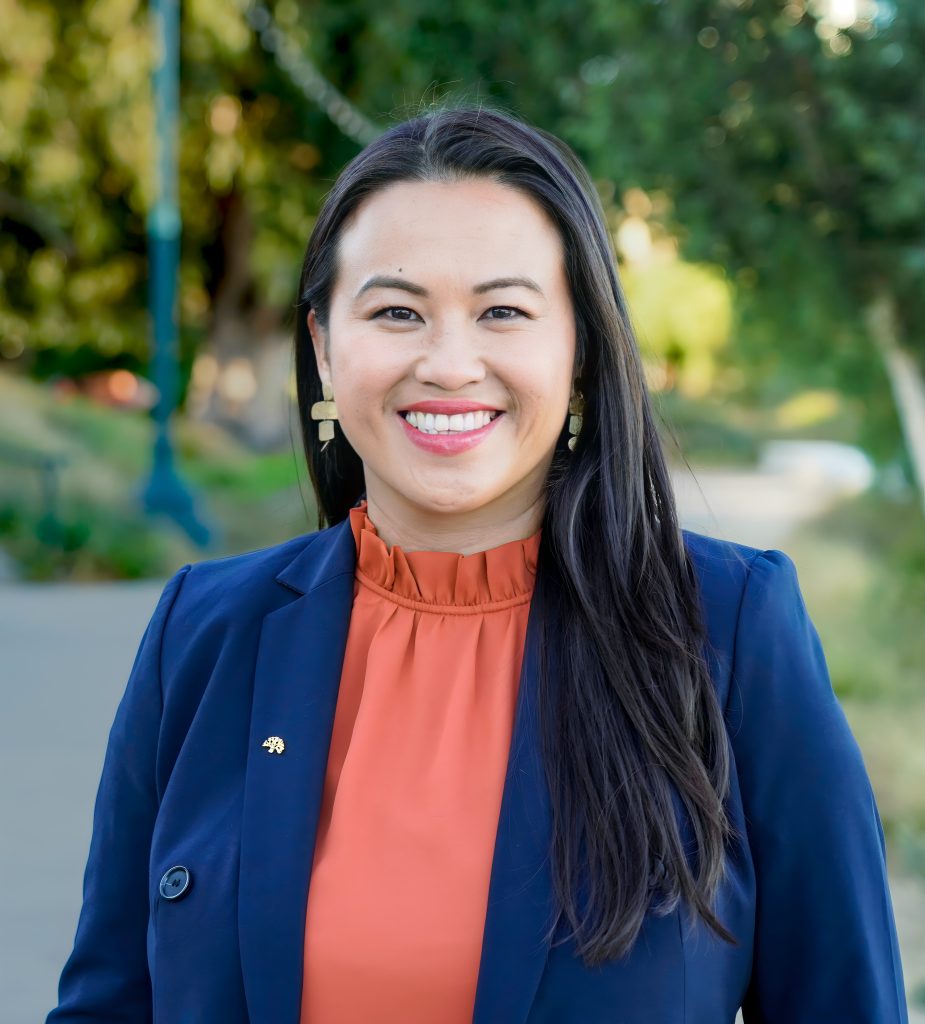
Mayor Sheng Thao
Though she has already allocated funds to pay for the search, Mayor Thao said in her KTVU interview that the commission has not agreed on hiring an executive search consultant and has therefore not yet begun the search process.

“I am pushing and pressuring them to actually finally agree on a consultant,” she said. “We are waiting for the police commission to actually go and sign with the consultant.”
Critics are saying the failure to hire a search consultant and a variety of other issues undermining the functioning of the commission are the responsibility of the commission’s chair, Tyfahra Milele, who they want to step to down.
“I wouldn’t know why they haven’t found a consultant, except that they are inept,” said Rashidah Grinage, a member of the Coalition for Police Accountability, which helped establish and now monitors police commission activities.

Coalition for Police Accountability logo.
In a letter this week to commissioners, Cathy Leonard, president of the Coalition for Police Accountability, detailed 10 concerns about Milele’s leadership.
“If she is allowed to remain as chair … the damage done … will be significant,” the letter said. “Losing the credibility and trust of the community, the city and the federal court may have the effect of prolonging the federal oversight over the police department.”
According to the letter, Milele attended an OPD retreat before Armstrong was fired but did not tell other commissioners.
The letter also stated that the commission did not have the standing to weigh in on the firing of the chief because Milele failed to subpoena records related to the handling and mishandling of an internal OPD case against Sgt. Michael Chung, which was connected to the chief’s firing.
Milele also interfered with the work of the commission’s Inspector General, resulting in an Ethics Commission complaint, the letter said.
According to KTVU, Milele wrote a response saying that the commission is “very actively involved in searching for a new police chief,” and said that “we worked diligently on this paramount assignment, as we have on multiple occasions.”
In a strongly worded press statement, Milele blasted KTVU’s news reporting and her critics, who include members of the Police Commission and police accountability activists, saying, “We are profoundly disappointed by a troubled local TV station’s (reporting) … that repeats inaccurate, malicious assertions and fails to take into account verifiable facts that were made available to the writer of the … screed.”

former Alameda County Chief Assistant District Attorney Terry Wiley.
Backing Milele’s leadership, former Alameda County Chief Assistant District Attorney Terry Wiley, an unsuccessful candidate in November for Alameda County DA, supported her at a May 25 police commission meeting.
“From my viewpoint, I have a very positive view of this commission,” Wiley told the commission. “And I think that her leadership should continue.”
Regina Jackson, currently a member of the police commission and former three-time chair of the commission, wrote a letter to the City Council on June 5 adding her concerns about Milele’s leadership:
“Chair Milele arbitrarily has no responsibility to anyone but herself. The ‘Chair-driven’ protocol she has put in place does not treat commissioners as the code of conduct requires with fairness and equity, it is a clear abuse of power. It is also in direct violation of the very measures LL and S1 which Oakland voters supported.
“It is my professional opinion that Chair Milele has abused power, retaliated against commissioners and has not been accountable or transparent to commissioners or the community. Her chairmanship should be ended as soon as possible.”
In her response to the KTVU report and her critics, Milele wrote, “The extremist attack by an unelected, unaccountable, small group of politically ambitious zealots counters the will of the Oakland electorate and makes flagrantly false allegations. That a controversial local TV outlet, hoping to stop the erosion of its dwindling audience, would simply repeat the libels with a reckless disregard for the truth prompts this response.”
Denying that the commission has failed to move promptly to hire a search firm to find a new police chief, she submitted a detailed timeline of the commission’s efforts to initiate a search, adding that “A vigorous, ongoing search for a new Oakland police chief is and has been underway for months. We don’t understand why the mayor would have said the Commission is not searching for a consultant when as recently as [June 6] the Commission’s search committee met with the City’s HR Department and nominee search firm.”
Milele also accuses her critics of an attempt to seize power. “This is an attempted power grab by a small band of political extremists with a personal agenda that will make the Oakland Police Department still more difficult to reform and continue the seriously mounting crime issues plaguing the good people of Oakland.”
The Oakland Post will continue to follow this story and the response to these issues by city and community leaders.














Activism
Oakland Post: Week of September 16 – 22, 2026
The printed Weekly Edition of the Oakland Post: Week of September 16 – 22, 2026

To enlarge your view of this issue, use the slider, magnifying glass icon or full page icon in the lower right corner of the browser window.
Activism
Oakland Post: Week of September 9 – 15, 2026
The printed Weekly Edition of the Oakland Post: Week of September 9 – 15, 2026

To enlarge your view of this issue, use the slider, magnifying glass icon or full page icon in the lower right corner of the browser window.
Activism
Oakland Post: Week of September 2 – 8, 2026
The printed Weekly Edition of the Oakland Post: Week of September 2 – 8, 2026

To enlarge your view of this issue, use the slider, magnifying glass icon or full page icon in the lower right corner of the browser window.



Doulas Are Helping Black California Moms Navigate Pregnancy–Even as High Mortality Rates Persist

Newsom Signs Addictive Social Media Law to Protect Kids

On Your November Ballot: Prop 38 Would Allocate $8.4 Billion to Immunology and Immunotherapy Funding

Ask California: Golden State Releases New AI Chatbot

Asm. Isaac Bryan’s Bill Banning California Police From ICE Side Jobs Reaches Newsom’s Desk

Assemblymember LaShae Sharp-Collins’s Bill Would Pause Law Enforcement’s Use of Shock Gloves Pending Study

BOOK REVIEW: ‘Laws of Solomon’ Reveals Tender Heart of Former Child Soldier

OPINION: The New American Fear – From 9-11 to AI

Passing for White, Fighting for Black America: The Courage of Walter White

Oakland People’s Arms Embargo Coalition Demands End to Military Shipments Thru Oakland

Barbara Lee Mourns Gloria Steinem, Remembers a Friendship Rooted in Equality

Event Preview: ‘Fashion v. Fascism’ – A Runway Revolution Is Coming to the Bay Area

Two Looming Threats Every Alameda County Elder Should Know About

Oakland Mayor Reads to Children at Bookout Block Party at Marcus Books Store

Tradition Comes to the Streets in 11th Annual Black-Eyed Pea Festival at the Freedom Farmers Market

Less Affluent School Districts, Including Sacramento City, Face Threat of State Takeover

ESSAY: California Can Close Its Colorectal Cancer Gap

California Hispanic Chambers of Commerce Unveils: ‘Powering the Future’ Theme for 47th Annual Statewide Convention

Four Candidates, Including Incumbent Barbara Lee, Qualify for Oakland Mayor’s Race

Oakland Post: Week of August 12 – 18, 2026

From Blueprint to Breakthrough: Tackling Affordable Housing in Oakland

Oakland Observes Black August with Block Parties, Film Showings, Workshops

COMMENTARY: Why Local School Tax Measure G1 Will Not Be on the November Ballot

Standoff for Justice: Our Homes Are Worth Fighting For

Returning to Its Roots, the Oakland Black-Eyed Pea Festival Partners with the Freedom Farmers Market Sept. 12

Oakland Post: Week of August 26 – September 1, 2026

NPRC Scores First Advocacy Victory: David Shaw Finally Gets His Wish to ‘Go Home’

Frontier Airlines’ Return to Oakland Airport Brings Flights, Jobs and Opportunity

Gubernatorial Candidate Steve Hilton Blasts California New Tire Rules; Newsom Hits Back

Chef Sharon Lee Blends Culinary Excellence, Education and Empowerment

The Conversation With Al McFarlane 6/23/26

Media Monday 6/22/26

LIVE! ASK ALMA! — TUES. 6.23.26 7PM EST

Car Buying Secrets: 4 Hidden Checks Before You Sign!

Is This 550 HP Charger Worth YOUR Money? AutoNetwork Review

Celebrating Juneteenth – Frederick Douglass on education and resistance

LIVE! — ASK ALMA! — TUES. 6.19.26 7PM EST

Hyundai Ioniq 5 Parking, Safety, and 360 View #shorts

2025 Ioniq 5 New Wiper & Powerful Performance! #shorts

Electric SUV Range: Is 259 Miles Enough? #shorts

EV Charging: How Fast Can You Charge an Electric Vehicle? #shorts

Biometric Cooling… Messaging Seats…Come on! 2025 Infiniti QX80 Autograph 4WD

Charged Up: Witness the Magic of a Fully Electric Car! #shorts

Range Rover Sport PHEV Included…: See What’s Inside This Luxury SUV! #shorts

Invisible Hood View: Perfect Parking with X-Ray Vision! #shorts
-
 Commentary4 weeks ago
Standoff for Justice: Our Homes Are Worth Fighting For
-
 Activism4 weeks ago
Oakland Post: Week of August 26 – September 1, 2026
-
 Business4 weeks ago
Frontier Airlines’ Return to Oakland Airport Brings Flights, Jobs and Opportunity
-
 Business4 weeks ago
Gubernatorial Candidate Steve Hilton Blasts California New Tire Rules; Newsom Hits Back
-
 Business4 weeks ago
Chef Sharon Lee Blends Culinary Excellence, Education and Empowerment
-

 Community4 weeks ago
Big City Mayors Ask for “Yes” Vote on Housing Bond Measure; Conservatives Say “No”
-

 Education4 weeks ago
Gov. Newsom’s Latest Appointees Include Sacramento Advocate for Formerly Incarcerated Students; State’s New Tech Chief
-

 Black History4 weeks ago
Jackie Wright Champions Bay Area Stories, Filmmakers and Cultural Institutions
