
California Black Media
Doulas & Black Moms: Bridging the Gap Between Mental Treatment and Maternal Care
There is a growing body of evidence that disparities in medical treatment in the United States — compounded over centuries by the legacy of slavery, Jim Crow segregation and prevalence of anti-Black biases — have adversely affected the health of Black women in numerous ways, including the birthing process.

By Aldon Thomas Stiles
California Black Media
There is a growing body of evidence that disparities in medical treatment in the United States — compounded over centuries by the legacy of slavery, Jim Crow segregation and prevalence of anti-Black biases — have adversely affected the health of Black women in numerous ways, including the birthing process.
In June, the tragic and high-profile death of Olympic Gold Medalist and sprinter Tori Bowie during childbirth brought more national attention to the crisis of Black maternal mortality in the United States.
Aware of the discrepancies in treatment as compared to women of other races and terrified by the potential mental health ramifications of those disparities — which can lead to greater fear and anxiety about pregnancy and childbirth — some Black women are seeking alternatives to hospital births.
Black women die at nearly twice the rate of white women during labor, according to data from the National Institutes of Health (NIH).
In July, the U.S. Department of Health and Human Services (HHS) announced that the federal government has launched a civil rights investigation into the treatment of Black expectant mothers at Cedars Sinai Medical Center in Los Angeles.
“Maternal health is a priority for the Biden-Harris Administration and one in which the HHS Office for Civil Rights is working on around the country to ensure equity and equality,” read an emailed statement from HHS to several news outlets.
The federal investigation comes seven years after the 2016 death of a Black woman, Kira Dixon Johnson, who died from internal bleeding following a cesarean section at Cedars Sinai.
Dr. Melissa Frank, director of the Division of Maternal, Child, and Adolescent Health with the Los Angeles County Department of Public Health, stated that she has “lived the disparity” associated with maternal healthcare.
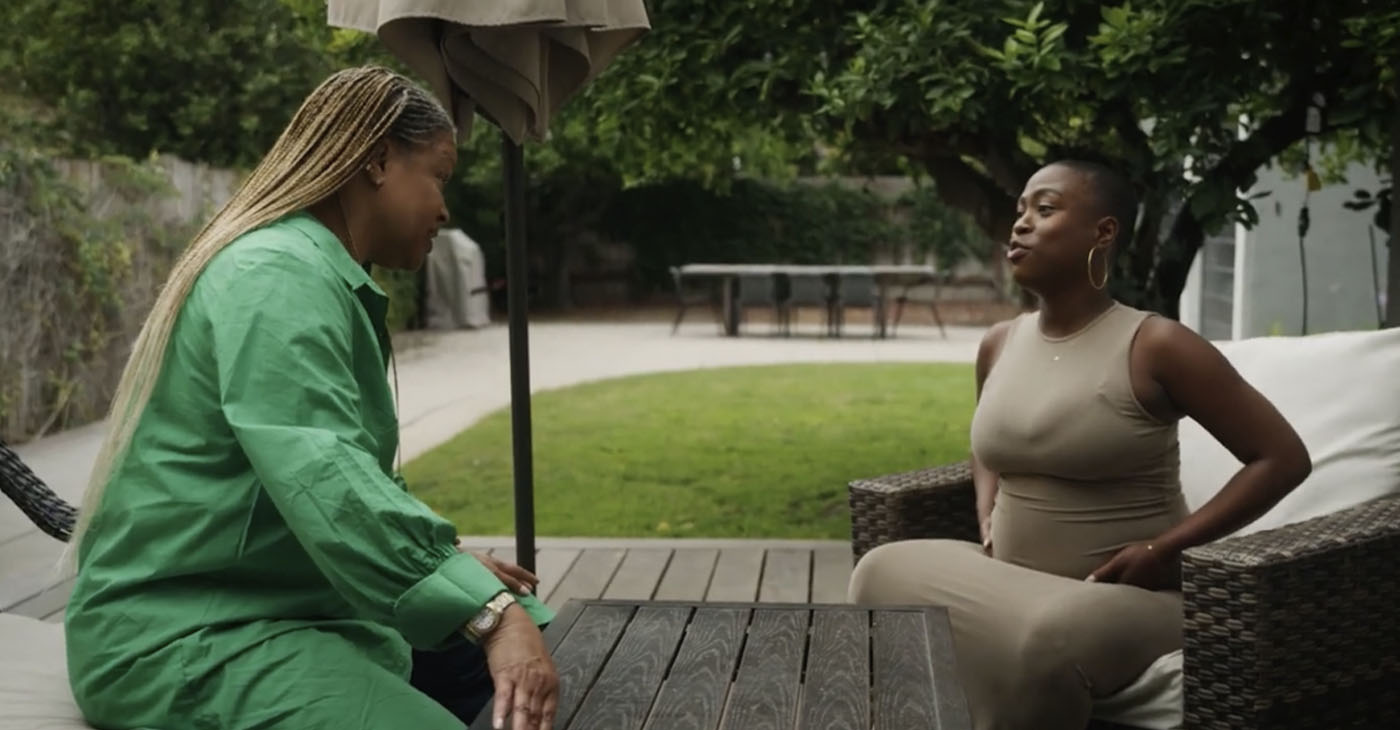
During the delivery of her second daughter, Franklin says she could tell something was wrong and expressed that to hospital staff, “I feel like I’m dying,” but her concerns were largely dismissed.
When the hospital staff finally checked on her, they discovered that her blood pressure was dangerously low to which she responded, “I told y’all!”
According to data from the Centers for Disease Control and Prevention (CDC), in 2021, Black women in the U. S. were more than twice as likely as white women to die due to complications related to maternity and the birthing process.
In California, the risk of death due to pregnancy complications is four to six times higher for Black mothers than any other ethnic group, according to data from the California Health Care Foundation.
Research has indicated that maternal mental health conditions, including prenatal and postpartum anxiety and depression, are the most common complications of pregnancy and childbirth.
According to the American Hospital Association Institute for Diversity and Health Equity, 12.5% of birthing people will suffer from postpartum depression. However, Black women are about 1.6 times more likely to deal with its effects than white women.
Hiring a doula is one solution Black women are using to help address some of the mental health issues associated with the birthing process. A 2013 study by the National Center for Biotechnology Information found that mothers who received support from a doula during childbirth were two times less likely to experience complications.
A doula is a trained professional who provides emotional and physical support to pregnant individuals during pregnancy, childbirth and the postpartum period.
Doulas are not medical professionals and do not deliver babies or provide medical care. Instead, they offer support in the form of physical comfort, emotional well-being, information, and advocacy.
According to another study by the National Center for Biotechnology Information, doula-assisted mothers were 57.5% less likely to suffer from postpartum depression or anxiety. This confirms that having the support of a doula during the birthing process can have a significant positive impact on the mental health of mothers.
The long history of discriminatory care towards Black women in the healthcare system has resulted in another mental health issue: generational trauma.
“When we speak about Black maternal health, we cannot ignore the fact that the foundation of medicine in this country and many of its early principles were deeply rooted in racism,” said Assemblymember Akilah Weber (D-La Mesa), a board-certified obstetrician/gynecologist, and founder and past director of the Pediatric & Adolescent Gynecology Division at Rady Children’s Hospital-San Diego.
“Some of the earliest examples of experimental research relied on these racist concepts. The pain of Black individuals was not only ignored but assumed to not be experienced to the same degree as white individuals.”
Franklin emphasized the importance of culturally competent care for the mental health of Black mothers.
“The support of doulas as alternative birthing spaces gives Black women the opportunity, the choice of giving birth in a way that’s culturally affirming,” said Franklin. This highlights the significance of providing care that is sensitive to the cultural needs and experiences of Black women during the birthing process.
Franklin also pointed out that doulas alone cannot bear the burden of an unfair healthcare system. She emphasized the importance of hospitals employing well trained providers who operate in anti-bias and anti-racism spaces. This can help Black women give birth with “the support of a village.”
California has been taking steps to address healthcare disparities and improve outcomes for Black mothers and birthing individuals. The state introduced various policies and initiatives aimed at making culturally competent care a reality.
For example, the Department of Health Care Services (DHCS) has taken steps to improve access to doula services for expectant mothers. One such initiative is the inclusion of doula services as a preventative care option covered under Medi-Cal. This can help make doula support more accessible and affordable for those who need it.
Los Angeles County Supervisor Holly J. Mitchell has emphasized the importance of doula care in improving pregnancy experiences and birthing outcomes.
In a press release, she stated that “Doula care is shown to improve pregnancy experiences and birthing outcomes. We must increase awareness of doula services for mothers and families across the County and expand our workforce to be more representative of our communities most in need.” This highlights the need for greater awareness and accessibility of doula services, particularly for those in underserved communities.
In the meantime, Dr. Franklin’s advice is to listen to Black women when they express concerns about their health. This means taking their concerns seriously and providing them with the care and support they need.











Activism
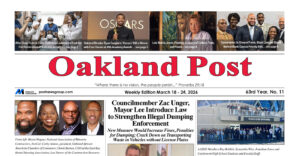
Oakland Post: Week of March 18 – 24, 2026
The printed Weekly Edition of the Oakland Post: Week of March 18 – 24, 2026
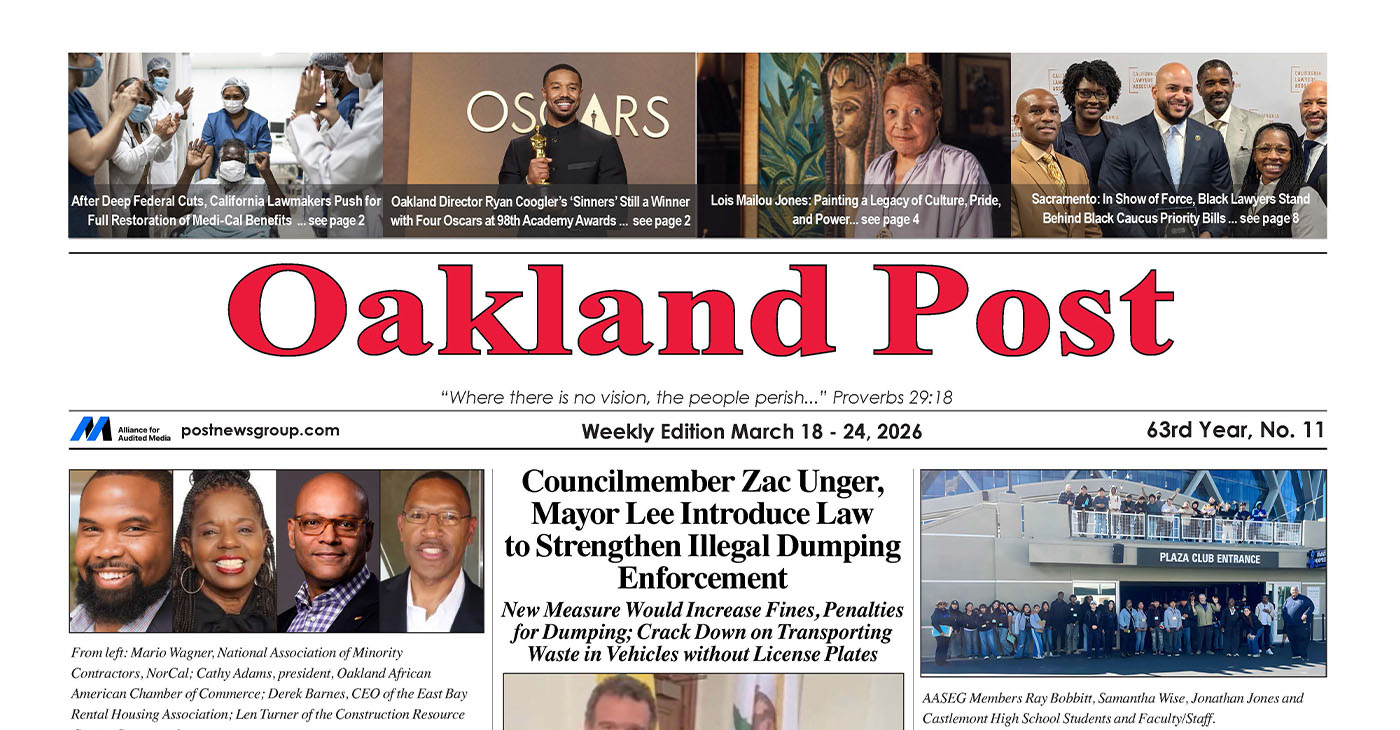
To enlarge your view of this issue, use the slider, magnifying glass icon or full page icon in the lower right corner of the browser window.
Activism
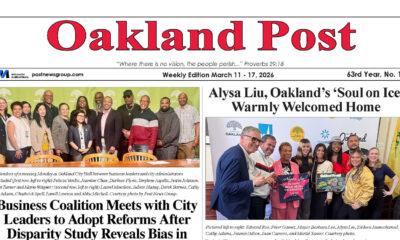
Oakland Post: Week of March 11 -17, 2026
The printed Weekly Edition of the Oakland Post: Week of March 11 – 17, 2026
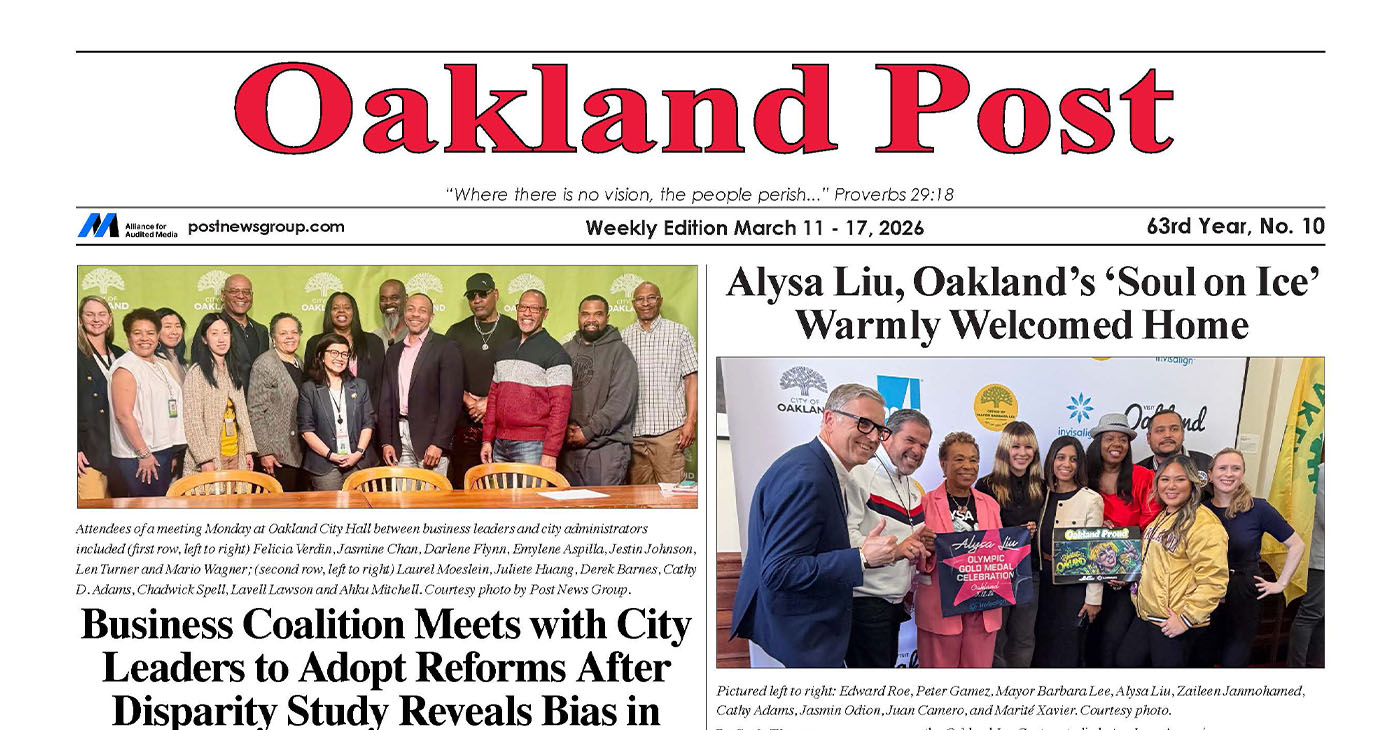
To enlarge your view of this issue, use the slider, magnifying glass icon or full page icon in the lower right corner of the browser window.
Activism
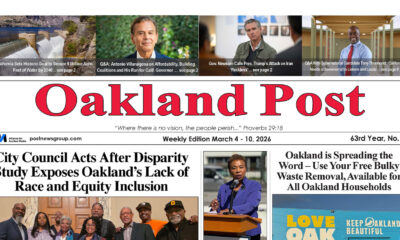
Oakland Post: Week of March 4 – 10, 2026
The printed Weekly Edition of the Oakland Post: Week of March 4 – 10, 2026
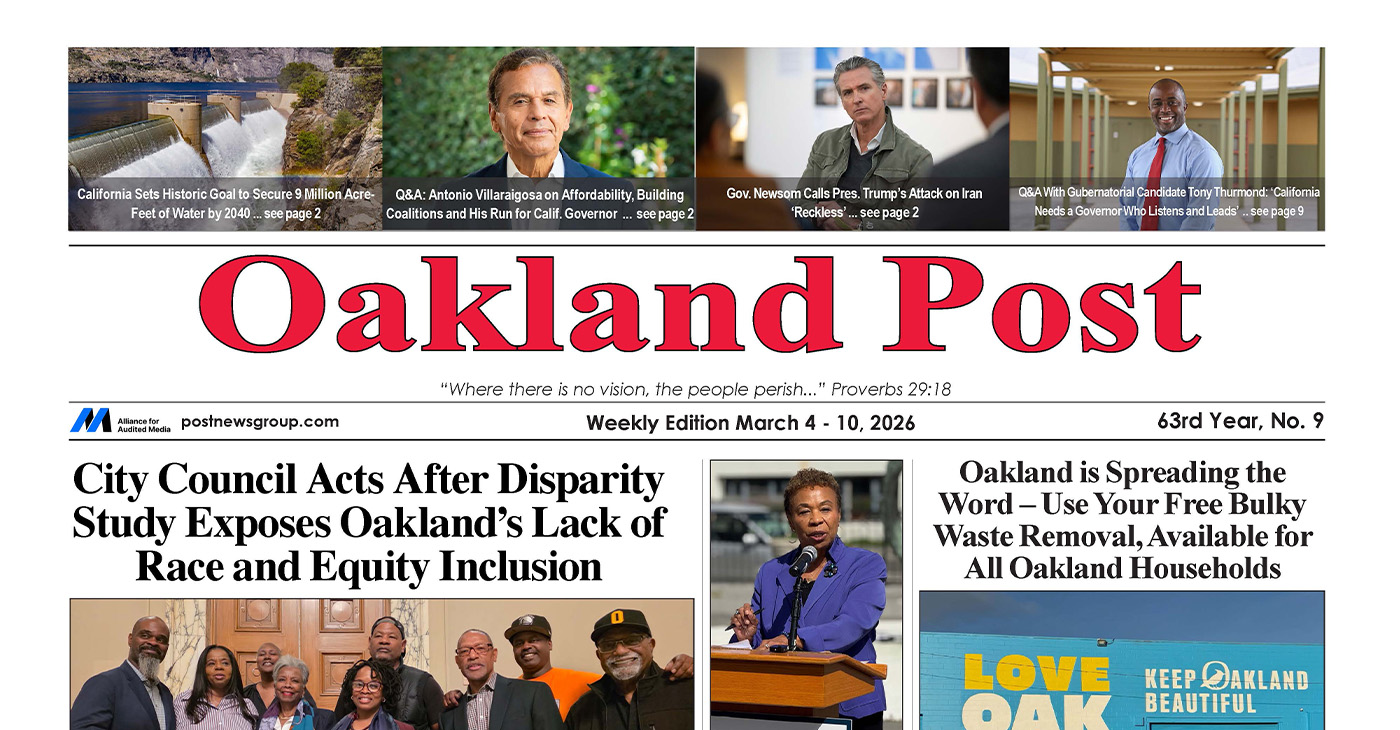
To enlarge your view of this issue, use the slider, magnifying glass icon or full page icon in the lower right corner of the browser window.

WORK FROM HOME
Home-based business with potential monthly income of $10K+ per month. A proven training system and website provided to maximize business effectiveness. Perfect job to earn side and primary income. Contact Lynne for more details: Lynne4npusa@gmail.com 800-334-0540


Black Artists in America, Installation Three Wraps at the Dixon Gallery and Gardens

Grief, Advocacy, and Education: A Counselor Reflects on Black Maternal Health

Future of Florida’s Black History Museum in Limbo

New Research Shows the Many Benefits of Early Learning

South Hampton K-8 Students Among Top 10 Finalists for Samsung’s ‘Solve for Tomorrow’ Competition

Cuba: No Negotiation with US on the President or Political System

Brooklyn Academy of Music Names Jamaican-Born Tamara McCaw as President

Trinidad & Tobego – U.S. Launches WhatsApp Channel for American Citizens in the Country

Oakland Post: Week of March 18 – 24, 2026

AI Innovation vs. Ethics and Environmental Impact

AI, Web3, and Digital Reparations

What If You Owned Your AI Agent?

Season 7, Episode 3 – January Reporter’s Roundtable 📱

Season 7, Episode 3 – January Reporter’s Roundtable

AI, Media, and Power | Part 2, Real-World Impacts and Tradeoffs

Oakland Post: Week of February 11 – 17, 2026

Reflecting on Black History Milestones in Birmingham AL

CITY OF SAN LEANDRO STATE OF CALIFORNIA PUBLIC WORKS DEPARTMENT ENGINEERING DIVISION NOTICE TO BIDDERS FOR ANNUAL STREET OVERLAY/REHABILITATION 2019-21 – PHASE III

Oakland Post: Week of February 18 – 24, 2026

Oakland Post: Week of February 25 – March 3, 2026

PRESS ROOM: NBA Hall of Fame Nominee Terry Cummings Joins 100 Black Men of DeKalb County to Launch Victory & Values Initiative

Trump’s MAGA Allies are Creating Executive Order Plan to Steal the 2026 Midterms

U.S. manufacturing rebounds – how foundry services are adapting to rising demand

Oakland Post: Week of March 4 – 10, 2026

Chase Oakland Community Center Hosts Alley-Oop Accelerator Building Community and Opportunity for Bay Area Entrepreneurs

OP-ED: One Hundred Years of Black Workers Telling the Truth

Poll Shows Support for Policies That Help Families Afford Child Care

Advancements in solar technology that are changing the way we power the world

PRESS ROOM: Civil Rights TV Launches in Selma as the World’s First 24/7 Civil Rights Television Network

Woman’s Search for Family’s Roots Leads to Ancestor John T. Ward – A Successful Entrepreneur and Conductor on the Underground Railroad

Hyundai Ioniq 5 Parking, Safety, and 360 View #shorts

2025 Ioniq 5 New Wiper & Powerful Performance! #shorts

Electric SUV Range: Is 259 Miles Enough? #shorts

EV Charging: How Fast Can You Charge an Electric Vehicle? #shorts

Biometric Cooling… Messaging Seats…Come on! 2025 Infiniti QX80 Autograph 4WD

Charged Up: Witness the Magic of a Fully Electric Car! #shorts

Range Rover Sport PHEV Included…: See What’s Inside This Luxury SUV! #shorts

Invisible Hood View: Perfect Parking with X-Ray Vision! #shorts

AI Is Reshaping Black Healthcare: Promise, Peril, and the Push for Improved Results in California

ESSAY: Technology and Medicine, a Primary Care Point of View

Sanctuary Cities

The RESISTANCE – FREEDOM NOW

STATE OF THE PEOPLE: Freddie

ECONOMIC BOYCOTT DAY!!!!!

I told You So
-
 Activism4 weeks ago
Oakland Post: Week of March 4 – 10, 2026
-
 #NNPA BlackPress3 weeks ago
Woman’s Search for Family’s Roots Leads to Ancestor John T. Ward – A Successful Entrepreneur and Conductor on the Underground Railroad
-

 #NNPA BlackPress4 weeks ago
OP-ED: NNPA Launches 2026 “Leadership Matters” Video Series
-

 #NNPA BlackPress3 weeks ago
Advocates Raise Alarm Over ICE Operation, MOU and Detention Risks in Baltimore County
-

 #NNPA BlackPress3 weeks ago
COMMENTARY: Women of Color Shape Our Past and Future
-

 #NNPA BlackPress3 weeks ago
Pete Buttigieg to Join Mayor Randall Woodfin for Community Town Hall in Birmingham
-
 Activism2 weeks ago
Oakland Post: Week of March 11 -17, 2026
-

 Advice2 weeks ago
Financial Wellness and Mental Health: Managing Money Stress in College
