
Government
County Settles with Nonprofit Trust on Litigation
OAKLAND POST — The County of Marin, the San Geronimo Advocates, and a nonprofit trust that owns the former San Geronimo Golf Course have settled out of court instead pursuing an appeal of the Marin County Superior Court decision regarding the 157-acre property.

By The Oakland Post
The County of Marin, the San Geronimo Advocates, and a nonprofit trust that owns the former San Geronimo Golf Course have settled out of court instead pursuing an appeal of the Marin County Superior Court decision regarding the 157-acre property.
The Trust for Public Land (TPL), which in 2017 bought the course in Marin’s San Geronimo Valley, had intended to sell the property to the County by the end of 2018 once the County arranged its finances. TPL was appealing an October 2018 court ruling that prevented the transaction.
County Counsel Brian Washington said TPL incurred significant expenses in defending the litigation alongside the County. The County has agreed to pay TPL’s share of the attorney fees and costs liability arising from the case and is resolving all outstanding issues with TPL over the purchase and sale agreement. The total compensation is $308,391, and it will be paid from the County’s litigation fund.
Starting in 2017, the County sought to purchase the golf course and preserve it as a park. The motivations were to protect the area’s character, preserve recreation and environmental values, and consider potential long-term public uses subject to the community planning process. The County leased the golf course and contracted with another company to manage golf operations as it worked on fundraising to complete the purchase. However, the Court decision required the County to rescind its purchase agreement. The County no longer has any control over the property and is not participating in any discussions about it, Washington said.

“The County appreciates TPL’s partnership with the County in attempting to acquire the San Geronimo property for park and recreational uses,” Washington said. “This is a fair resolution that allows TPL to move forward.”
A voter initiative aimed on restricting the use of the property will appear on the March 2020 ballot in Marin County. The Marin County Board of Supervisors voted in February 2019 to order the Registrar of Voters to place the initiative on the next statewide ballot. All registered Marin voters will be eligible to cast a vote on the issue. The initiative would amend the San Geronimo Valley Community Plan and the Marin County Development Code to mandate retention of a golf course use as the property’s primary use.
This article originally appeared in the Oakland Post.










Activism
Oakland Post: Week of September 23 – 29, 2026
The printed Weekly Edition of the Oakland Post: Week of September 23 – 29, 2026

To enlarge your view of this issue, use the slider, magnifying glass icon or full page icon in the lower right corner of the browser window.
Business
Newsom Signs Addictive Social Media Law to Protect Kids
Newsom said California’s approach focuses on the features that can encourage excessive social media use rather than taking the broader step of banning teenagers from the platforms altogether. He contrasted the measure with restrictions adopted in Australia and Malaysia that prevent teenagers from accessing social media or creating accounts.


Word Count: 391
Gov. Gavin Newsom has signed a new California law targeting addictive social media features that can keep children scrolling, giving the state new authority to restrict how platforms engage young users.
AB 1709, authored by Assemblymember Josh Lowenthal (D-Long Beach) prohibits social media companies from giving children under 16 access to personalized feeds, including “For You” pages, as well as other features designed to maximize screen time, such as infinite scrolling and video autoplay.
The law does not prevent children under 16 from using social media. Instead, platforms must deactivate the covered features for those users.
“This is about actually addressing the problem, the scrolling, the algorithms,” Newsom said Sept. 10 during a bill-signing event in the San Francisco Bay Area.
Newsom said California’s approach focuses on the features that can encourage excessive social media use rather than taking the broader step of banning teenagers from the platforms altogether. He contrasted the measure with restrictions adopted in Australia and Malaysia that prevent teenagers from accessing social media or creating accounts.
The law comes amid growing concerns about the impact of social media on children’s mental health and well-being. California lawmakers have increasingly focused on the design and business practices of technology platforms as part of efforts to protect young users.
AB 1709 is one of 13 youth online safety and privacy laws Newsom signed Sept.10. The package also includes measures regulating AI chatbots, increasing potential penalties for technology companies and establishing additional protections for children using digital services.
Lowenthal said the new rules represent a shift toward greater accountability for technology companies.
“We want oversight. We want accountability. We’re done asking nicely, and we’re demanding that there is a duty of care across these platforms — a duty that puts the wellness of our children ahead of profits,” Lowenthal said.
The law builds on California’s broader effort to regulate children’s online experiences. A separate law, AB 1043, will require users to provide their birth dates when setting up new phones or laptops beginning in January, with device manufacturers required to share users’ ages with apps.
Some youth online safety advocates have supported AB 1709 as a more targeted alternative to outright social media bans. Others have warned that the restrictions could make it harder for some LGBTQ+ young people to find support online and questioned how effectively age requirements can be enforced.

Featured
On Your November Ballot: Prop 38 Would Allocate $8.4 Billion to Immunology and Immunotherapy Funding
“Yes on 38”, with the tagline “Californians for Life-Saving Immunology Research and Cures,” is leading the campaign for the support side of the proposition.
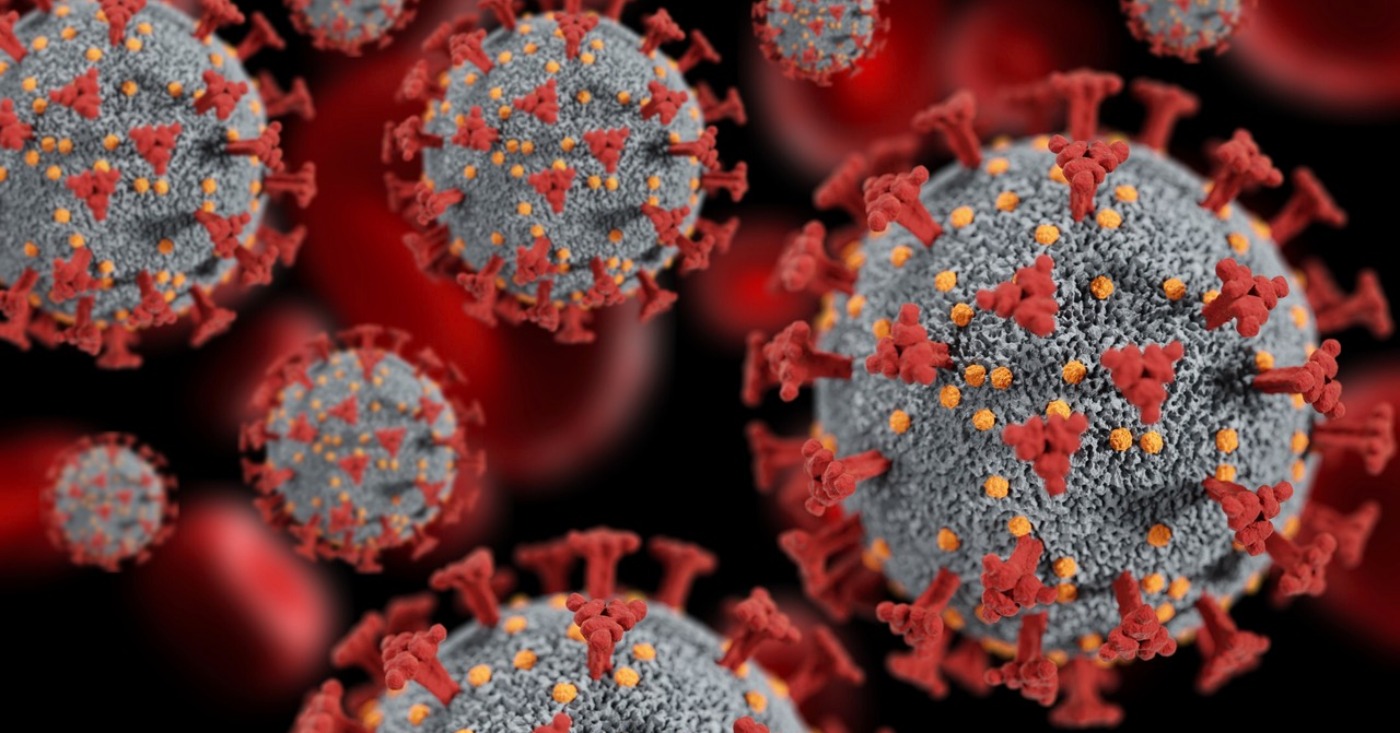
California voters will decide in November whether Proposition (Prop) 38 should authorize substantial state funding for immunology and immunotherapy research.
The initiative would fund immunology and immunotherapy research aimed at harnessing the body’s immune system to develop new treatments, medical procedures and potential cures for diseases such as cancer, Alzheimer’s disease and heart disease.
More specifically, Prop 38, titled the Immunology and Immunotherapy Research Funding Initiative, is split into three main components that would go into effect if passed.
First, the initiative would authorize the state to issue $8.4 billion in general obligation bonds to support immunology and immunotherapy research. At least half of the bond proceeds, or $4.2 billion, would be dedicated exclusively to research.
Additionally, Prop 38 would make it mandatory for the state to enter into an agreement with a qualified nonprofit institute focused and dedicated to researching immunology and immunotherapy within 90 days of the initiative’s effective date. The research institute must be affiliated with the University of California.
The third component mandates that the remaining bond revenue must be directed to California-based public and nonprofit medical institutions through a peer-reviewed grant process.
“Yes on 38”, with the tagline “Californians for Life-Saving Immunology Research and Cures,” is leading the campaign for the support side of the proposition.
Along with the campaign, organizations that have publicly supported the ballot initiative include the California Democratic Party, The ALS Association, Alzheimer’s treatment and advocacy organizations, California Black Health Network, Parkinson Association of Northern California and Reform California among others.
“California has an opportunity to accelerate lifesaving medical breakthroughs. Immunotherapies work differently than traditional treatments. Instead of attacking cells directly, they empower the body’s own immune system to recognize and stop disease. Today, these therapies are already treating certain cancers and chronic conditions — and researchers continue to expand what’s possible. This initiative invests in proven science so cures can move from the lab to patients faster,” said the campaign.
No on Proposition 38 is leading the campaign against the measure, with support from the League of Women Voters of California. Opponents argue that California cannot afford to assume $8.4 billion in debt for medical research that may not produce definitive results. They also object to directing more than half of the bond proceeds — $4.2 billion — to a single qualifying nonprofit research institute, arguing that funding decisions of this magnitude should be made through the state’s regular budget process.
“Medical research can save lives, but Prop 38 is the wrong way to fund it. It would authorize $8.4 billion in borrowing for immunology and immunotherapy research and require the state to make $500 million to $600 million in annual debt payments for about 20 years. Those payments would come from the General Fund, which also pays for schools, health care, and other public services,” the League of Women Voters of California said.
A “yes” vote would authorize $8.4 billion in state bonds to fund immunology and immunotherapy medical research.
A “no” vote would reject the proposed bond funding.



Oakland Post: Week of September 23 – 29, 2026

Doulas Are Helping Black California Moms Navigate Pregnancy–Even as High Mortality Rates Persist

Newsom Signs Addictive Social Media Law to Protect Kids

On Your November Ballot: Prop 38 Would Allocate $8.4 Billion to Immunology and Immunotherapy Funding

Ask California: Golden State Releases New AI Chatbot

Asm. Isaac Bryan’s Bill Banning California Police From ICE Side Jobs Reaches Newsom’s Desk

Assemblymember LaShae Sharp-Collins’s Bill Would Pause Law Enforcement’s Use of Shock Gloves Pending Study

BOOK REVIEW: ‘Laws of Solomon’ Reveals Tender Heart of Former Child Soldier

OPINION: The New American Fear – From 9-11 to AI

Passing for White, Fighting for Black America: The Courage of Walter White

Oakland People’s Arms Embargo Coalition Demands End to Military Shipments Thru Oakland

Barbara Lee Mourns Gloria Steinem, Remembers a Friendship Rooted in Equality

Event Preview: ‘Fashion v. Fascism’ – A Runway Revolution Is Coming to the Bay Area

Two Looming Threats Every Alameda County Elder Should Know About

Oakland Mayor Reads to Children at Bookout Block Party at Marcus Books Store

Less Affluent School Districts, Including Sacramento City, Face Threat of State Takeover

ESSAY: California Can Close Its Colorectal Cancer Gap

California Hispanic Chambers of Commerce Unveils: ‘Powering the Future’ Theme for 47th Annual Statewide Convention

Four Candidates, Including Incumbent Barbara Lee, Qualify for Oakland Mayor’s Race

Oakland Post: Week of August 12 – 18, 2026

From Blueprint to Breakthrough: Tackling Affordable Housing in Oakland

Oakland Observes Black August with Block Parties, Film Showings, Workshops

COMMENTARY: Why Local School Tax Measure G1 Will Not Be on the November Ballot

Standoff for Justice: Our Homes Are Worth Fighting For

Returning to Its Roots, the Oakland Black-Eyed Pea Festival Partners with the Freedom Farmers Market Sept. 12

Oakland Post: Week of August 26 – September 1, 2026

NPRC Scores First Advocacy Victory: David Shaw Finally Gets His Wish to ‘Go Home’

Frontier Airlines’ Return to Oakland Airport Brings Flights, Jobs and Opportunity

Gubernatorial Candidate Steve Hilton Blasts California New Tire Rules; Newsom Hits Back

Chef Sharon Lee Blends Culinary Excellence, Education and Empowerment

The Conversation With Al McFarlane 6/23/26

Media Monday 6/22/26

LIVE! ASK ALMA! — TUES. 6.23.26 7PM EST

Car Buying Secrets: 4 Hidden Checks Before You Sign!

Is This 550 HP Charger Worth YOUR Money? AutoNetwork Review

Celebrating Juneteenth – Frederick Douglass on education and resistance

LIVE! — ASK ALMA! — TUES. 6.19.26 7PM EST

Hyundai Ioniq 5 Parking, Safety, and 360 View #shorts

2025 Ioniq 5 New Wiper & Powerful Performance! #shorts

Electric SUV Range: Is 259 Miles Enough? #shorts

EV Charging: How Fast Can You Charge an Electric Vehicle? #shorts

Biometric Cooling… Messaging Seats…Come on! 2025 Infiniti QX80 Autograph 4WD

Charged Up: Witness the Magic of a Fully Electric Car! #shorts

Range Rover Sport PHEV Included…: See What’s Inside This Luxury SUV! #shorts

Invisible Hood View: Perfect Parking with X-Ray Vision! #shorts
-
 Commentary4 weeks ago
Standoff for Justice: Our Homes Are Worth Fighting For
-
 Activism4 weeks ago
Oakland Post: Week of August 26 – September 1, 2026
-
 Business4 weeks ago
Frontier Airlines’ Return to Oakland Airport Brings Flights, Jobs and Opportunity
-
 Business4 weeks ago
Gubernatorial Candidate Steve Hilton Blasts California New Tire Rules; Newsom Hits Back
-
 Business4 weeks ago
Chef Sharon Lee Blends Culinary Excellence, Education and Empowerment
-

 Community4 weeks ago
Big City Mayors Ask for “Yes” Vote on Housing Bond Measure; Conservatives Say “No”
-

 Black History4 weeks ago
Jackie Wright Champions Bay Area Stories, Filmmakers and Cultural Institutions
-

 Education4 weeks ago
Gov. Newsom’s Latest Appointees Include Sacramento Advocate for Formerly Incarcerated Students; State’s New Tech Chief
