
Bay Area
Community Input Key to Marin City Stormwater Plan: Engagement is crucial element in identifying flood risk reduction solutions
This spring, the Marin City community is invited to share its own ideas and first-hand experiences with flood control specialists tasked with reducing flood risk and related inconveniences for the area. During storm season and high tides, the unincorporated neighborhood near Richardson Bay is regularly impacted by flooding tied to challenging drainage issues. During storm season and high tides, Marin City is regularly impacted by flooding tied to challenging drainage issues. A new stormwater plan will incorporate community feedback, and public meetings begin soon.

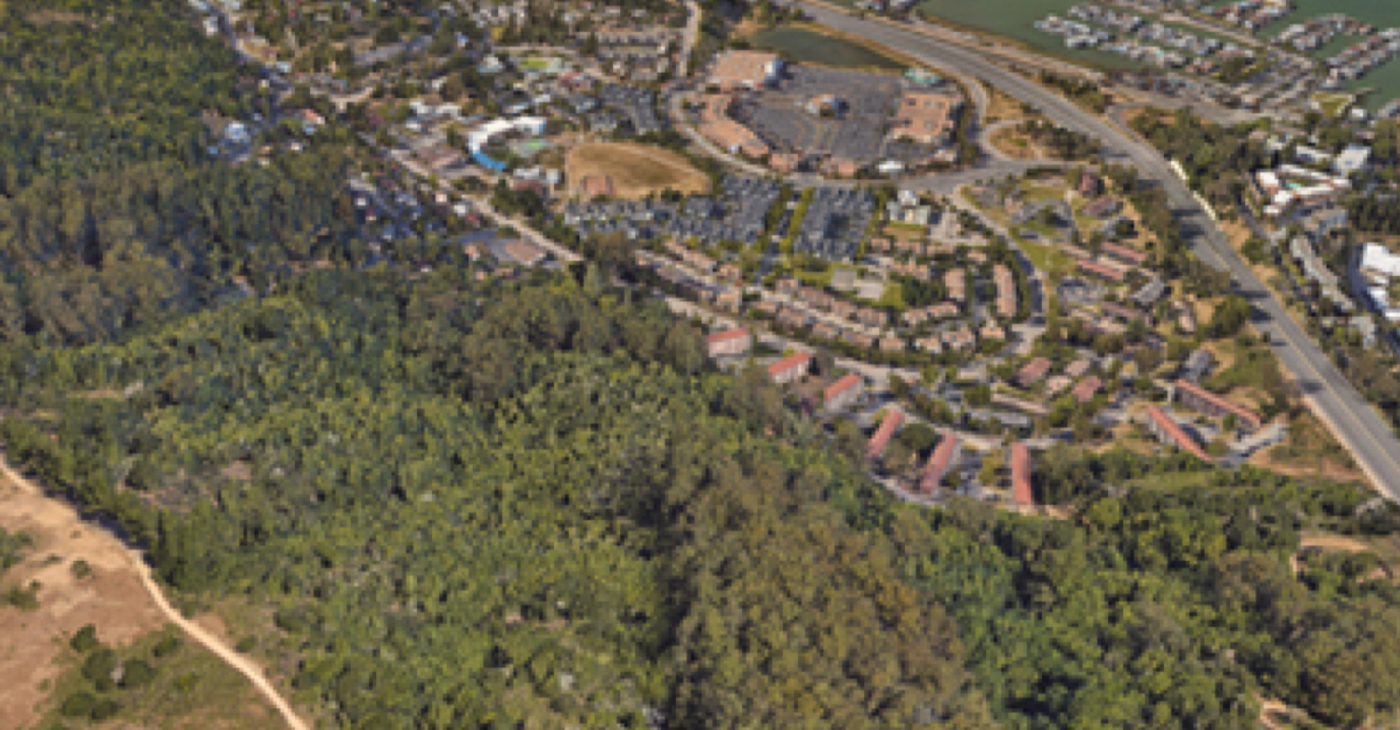
San Rafael, CA – This spring, the Marin City community is invited to share its own ideas and first-hand experiences with flood control specialists tasked with reducing flood risk and related inconveniences for the area. During storm season and high tides, the unincorporated neighborhood near Richardson Bay is regularly impacted by flooding tied to challenging drainage issues.
During storm season and high tides, Marin City is regularly impacted by flooding tied to challenging drainage issues. A new stormwater plan will incorporate community feedback, and public meetings begin soon. (Google Earth photo)
The Marin County Flood Control and Water Conservation District is looking to maximize resident attendance and participation at community meetings as it begins work on its Marin City Stormwater Plan. The first of three community meetings is scheduled for June 1 at a location that has yet to be determined. Meeting information will be made available soon on the Marin Flood District website’s project page.
Meanwhile, a local task force will assure that community interests and concerns are taken into account during the 18-month development of the stormwater plan. The task force was created in collaboration with the Marin City community and includes representatives from the Gateway Shopping Center (which manages the Marin City pond adjacent to southbound Highway 101), the Marin City Community Development Corporation, the Marin City Community Services District, the Sausalito Marin City School District, Caltrans, Coast Miwok Tribal Council of Marin, Federated Indians of Graton Rancheria, Floating Homes Association, the National Park Service Golden Gate National Recreation Area, Marin Water, and Marin County Parks. Residents representing upper and lower watershed property owners, local students, and young people have been invited to the task force as well.

There will be a total of five task force meetings and three community meetings over the 18-month process. The first task force meeting is scheduled for Monday, April 3. Outcomes of the task force meetings and community meetings will be posted on the District website’s project page.
“Public safety and awareness are top priorities, so community engagement is key to the success of the stormwater plan,” said Berenice Davidson, Assistant Director of Marin County Department of Public Works and the District. “The task force is going to ensure that community interests and concerns are being heard and that potential design options are in alignment with that community input. The heightened focus on community engagement is what makes this plan distinct from past studies. By community, we mean property owners, residents, nonprofits and public agencies; collaboration is crucial.”
The geography of the watershed creates complex challenges for developing flood risk reduction measures. During storms, rainfall channels its way from the surrounding Marin Headlands into Marin City and out to Richardson Bay. The densely populated area was built upon wetlands and stormwater runoff can overwhelm the neighborhood’s aging drainage system and lead to localized flooding, particularly when storms and high tides coincide. The flooding can slow or prevent first-responders from assisting people in need and limit residents from accessing essential goods and services.
The Marin City Stormwater Plan will build upon findings from several prior studies, addressing the locations where water flow is hampered, and recommend improvements that reduce flood risk, improve drainage, and maintain public access. Plan completion is targeted for summer 2024.
Once complete, the stormwater plan will provide detailed recommendations for potential projects that could then be implemented by local or state agencies. The plan would also be used as a basis for grant funding applications and associated environmental review requirements.
The estimated $785,000 cost of the plan is funded by the District’s Flood Control Zone 3 (Richardson Bay) budget. The District plans to coordinate with Caltrans as it develops its sea level rise project for State Route 1 and U.S. Highway 101 between the Manzanita Park & Ride lot (owned by Caltrans) and Marin City.
For updates on the Marin City Stormwater Plan, please check the project webpage regularly for new information.













Activism
Oakland Post: Week of September 16 – 22, 2026
The printed Weekly Edition of the Oakland Post: Week of September 16 – 22, 2026

To enlarge your view of this issue, use the slider, magnifying glass icon or full page icon in the lower right corner of the browser window.
Activism
Oakland Post: Week of September 9 – 15, 2026
The printed Weekly Edition of the Oakland Post: Week of September 9 – 15, 2026

To enlarge your view of this issue, use the slider, magnifying glass icon or full page icon in the lower right corner of the browser window.
Activism
Oakland Post: Week of September 2 – 8, 2026
The printed Weekly Edition of the Oakland Post: Week of September 2 – 8, 2026

To enlarge your view of this issue, use the slider, magnifying glass icon or full page icon in the lower right corner of the browser window.



Oakland Mayor Reads to Children at Bookout Block Party at Marcus Books Store

Tradition Comes to the Streets in 11th Annual Black-Eyed Pea Festival at the Freedom Farmers Market

Attorney General Rob Bonta Continues Opposition to President Trump’s Tariff Regime

Neighborhood Empowerment Day in Deep East Oakland Brings Community Together After Recent Tragedy

Community Action Group ‘Friends of Zakiya’ Ask Sheriff for Time

Oakland Launches Aerbits Program to Identify, Report Abandoned Trash

Mayor Lee Announces $1 Million Kaiser Permanente Grant for Pilot Program to Address Homelessness, Clean Up Public Spaces throughout Oakland

Alameda County DA Ursula Jones Dickson Says Key to Optimal Use of DA’s Office Is Knowledge

Oakland Post: Week of September 16 – 22, 2026

NFL: Week Two Recap | Jalen Hurts did not fold; Caleb Williams exits game with injury

The Complete Negotiation Framework — Every Stage, Every Tactic, Every Win

Mazda CX-90 Luxury: Heated Seats & Premium Comfort! #shorts

Car Dashboard Glare: Avoid This Distraction! #shorts

Mazda CX-90 Safety: All Driver Assistance Features Explained #shorts

Subaru Outback: 19-Inch Wheels & 8.8″ Ground Clearance! #shorts

Department of Homeland Security Demands California Secretary of State Shirley N. Weber Scrub Voter Rolls

“The Power to See Threats Sooner”: Gov. Newsom, Safety Officials Showcase California’s Investments in Hi-Tech Wildfire Prevention

California Sen. Padilla Joins Colleagues to Introduce Bill Imposing Term Limits on Supreme Court Justices

Less Affluent School Districts, Including Sacramento City, Face Threat of State Takeover

Car Wash Workers Cope with Lingering Impacts of ICE Raids

ESSAY: California Can Close Its Colorectal Cancer Gap

As Part of Your Back-to- School Checklist, Vaccinate

Oakland ‘Port Serves as a Powerful Engine for Good Jobs and Economic Development

Gov. Newsom Announces $109.6 Million in Funding for 278 Supportive Homes in Bakersfield, Contra Costa, Sacramento and Fresno

California Hispanic Chambers of Commerce Unveils: ‘Powering the Future’ Theme for 47th Annual Statewide Convention

Congresswoman Simon Demands Investigation into Trump’s Abuse of Emergency Powers for Coal Export Terminal in West Oakland

Four Candidates, Including Incumbent Barbara Lee, Qualify for Oakland Mayor’s Race

Oakland Post: Week of August 12 – 18, 2026

From Blueprint to Breakthrough: Tackling Affordable Housing in Oakland

Oakland Observes Black August with Block Parties, Film Showings, Workshops

The Conversation With Al McFarlane 6/23/26

Media Monday 6/22/26

LIVE! ASK ALMA! — TUES. 6.23.26 7PM EST

Car Buying Secrets: 4 Hidden Checks Before You Sign!

Is This 550 HP Charger Worth YOUR Money? AutoNetwork Review

Celebrating Juneteenth – Frederick Douglass on education and resistance

LIVE! — ASK ALMA! — TUES. 6.19.26 7PM EST

Hyundai Ioniq 5 Parking, Safety, and 360 View #shorts

2025 Ioniq 5 New Wiper & Powerful Performance! #shorts

Electric SUV Range: Is 259 Miles Enough? #shorts

EV Charging: How Fast Can You Charge an Electric Vehicle? #shorts

Biometric Cooling… Messaging Seats…Come on! 2025 Infiniti QX80 Autograph 4WD

Charged Up: Witness the Magic of a Fully Electric Car! #shorts

Range Rover Sport PHEV Included…: See What’s Inside This Luxury SUV! #shorts

Invisible Hood View: Perfect Parking with X-Ray Vision! #shorts
-

 Commentary3 weeks ago
Standoff for Justice: Our Homes Are Worth Fighting For
-

 Activism3 weeks ago
Oakland Post: Week of August 26 – September 1, 2026
-

 Business3 weeks ago
Gubernatorial Candidate Steve Hilton Blasts California New Tire Rules; Newsom Hits Back
-

 Business3 weeks ago
Frontier Airlines’ Return to Oakland Airport Brings Flights, Jobs and Opportunity
-

 Business3 weeks ago
Chef Sharon Lee Blends Culinary Excellence, Education and Empowerment
-

 Education3 weeks ago
Gov. Newsom’s Latest Appointees Include Sacramento Advocate for Formerly Incarcerated Students; State’s New Tech Chief
-

 Business3 weeks ago
Oakland Coliseum Project Opens Door for Small Businesses to Build Bigger
-

 Community3 weeks ago
Big City Mayors Ask for “Yes” Vote on Housing Bond Measure; Conservatives Say “No”
