
Activism
COMMENTARY: Start Now to Take Back the Supreme Court
Thanks to the anti-democratic Electoral College, Donald Trump was elected in 2016 even though almost 3 million more Americans voted for Hillary Clinton. Republican Senate leader Mitch McConnell prevented the Senate from even considering President Barack Obama’s Supreme Court nomination so that Trump could fill it instead—and then rushed Trump’s third justice onto the court even as voters were casting ballots to remove Trump from office.

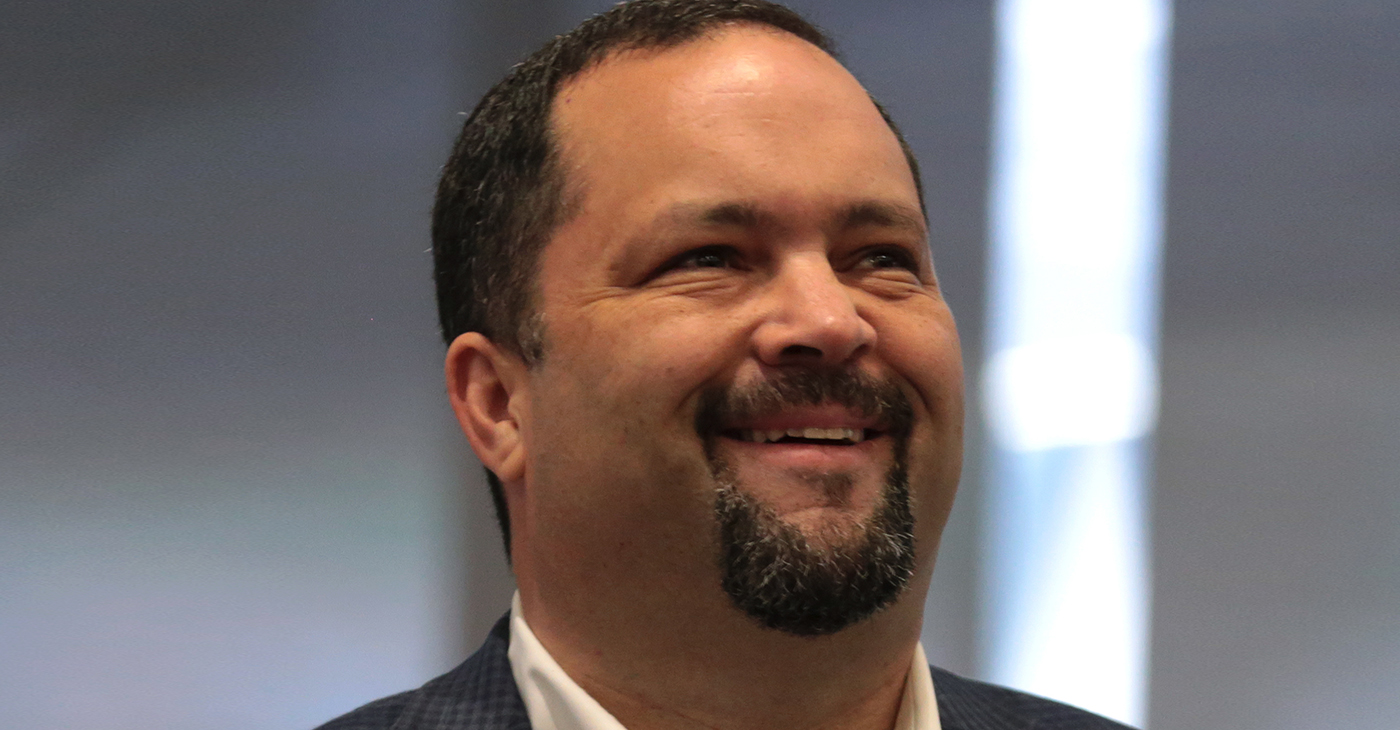
By Ben Jealous
Did you ever wonder whether elections really matter? Well, the Trump Supreme Court majority has answered that question for good.
Or, more accurately, they have answered it for bad.
In the term that has just ended, the new far right-wing majority on the Supreme Court went on a rampage. They have torn up decades of legal precedent to diminish Americans’ rights and legal protections. To justify the results they wanted, they lied in their rulings the way some of them lied to get on the court. It has been a shameful display of power politics disguised as judging.
Not surprisingly, the most attention has been paid to the Court majority overturning the 50-year-old Roe v. Wade decision. A constitutional right that has made a huge difference in the lives of generations of women was wiped away. The impact will be devastating and deadly.
Millions of individuals and couples dealing with unwanted pregnancies, the trauma of rape or incest, life-threatening pregnancy complications, or even a miscarriage that some intrusive government official decides is suspicious, will have their options severely limited or eliminated entirely.
We know that those restrictions and their consequences will fall most harshly on already vulnerable people, including Black people, LGBTQ+ people, people with disabilities, and low-income people. Already in Missouri, a major health care system will no longer treat rape victims with emergency contraception because the state abortion ban puts medical care providers at legal risk.
Anti-abortion state legislators seem to be in competition to see who can pass the most extreme, intrusive, and controlling laws. Some are even trying to limit people’s right to travel from one state to another, targeting anyone who helps a person from a state that bans abortion get care in a state that permits it. It reminds me of the old fugitive slave laws that forced free states to help slave states deny people their freedom.
Unfortunately, overturning Roe is just one of the harmful decisions handed down by the Trump Court.
The Court intervened in voting rights cases to protect gerrymandering designed to limit Black voters’ access to political power. This comes on top of other rulings gutting the Voting Rights Act.
The Trump Court went after sensible regulation of guns. The far-right justices overturned a New York law more than 100 years old that required people to show a good cause to get a permit to carry concealed firearms.
Communities that are already suffering from the effects of gun crime are likely to experience even greater violence now that the court has robbed public officials of options and given the extremist pro-gun political agenda the power of law.
The court also further dismantled the separation of church and state, which protects religious freedom and preserves equality under law for people regardless of their religious beliefs. The Trump court took a wrecking ball to this pillar of American society. It is forcing states to divert tax dollars to religious schools, like some Southern states did when they funded white evangelical segregationist academies that emerged in resistance to the Supreme Court’s Brown v. Board of Education decision outlawing racially segregated public schools.
This court has made it easier for public officials, like teachers, to coerce students into prayer or other religious practices. This is a very clear threat to anyone whose faith is different from the one dominant in their community or state.
In other words, the U.S. Supreme Court, which we counted on for generations to uphold civil rights and tear down obstacles to equality, is now acting as an arm of the increasingly aggressive far-right political movement.
How did we get here?
Simple.
Thanks to the anti-democratic Electoral College, Donald Trump was elected in 2016 even though almost 3 million more Americans voted for Hillary Clinton. Republican Senate leader Mitch McConnell prevented the Senate from even considering President Barack Obama’s Supreme Court nomination so that Trump could fill it instead—and then rushed Trump’s third justice onto the court even as voters were casting ballots to remove Trump from office.
Behind Trump and McConnell was a massively funded, decades-long campaign to build the political power to take control of the judiciary.
In other words, winning the presidency and controlling the Senate gave the far right the power to force its harmful agenda on the American public long after voters rejected Trump. Taking the Court back from the extremists who now control it will be a long-term project. It starts with this year’s elections.
Ben Jealous serves as president of People for the American Way and Professor of the Practice at the University of Pennsylvania. A New York Times best-selling author, his next book “Never Forget Our People Were Always Free” will be published by Harper Collins in December 2022.











Activism
Oakland Post: Week of September 23 – 29, 2026
The printed Weekly Edition of the Oakland Post: Week of September 23 – 29, 2026

To enlarge your view of this issue, use the slider, magnifying glass icon or full page icon in the lower right corner of the browser window.
Activism
Oakland Post: Week of September 16 – 22, 2026
The printed Weekly Edition of the Oakland Post: Week of September 16 – 22, 2026

To enlarge your view of this issue, use the slider, magnifying glass icon or full page icon in the lower right corner of the browser window.
Activism
Oakland Post: Week of September 9 – 15, 2026
The printed Weekly Edition of the Oakland Post: Week of September 9 – 15, 2026

To enlarge your view of this issue, use the slider, magnifying glass icon or full page icon in the lower right corner of the browser window.


Asm. Corey Jackson Announces Launch of 24-Hour Childcare in His District

IN MEMORIAM: The Rev. Leon “Sonny” Clark, Longtime Orange County Pastor and Community Leader, Dies at 72

Poll: Becerra Widens His Lead Over Hilton; Californians Split on Wealth Tax

From Historic Memories to New Possibilities: Oakland Celebrates Coliseum 60

County Office of Education Says OUSD Finances Are Getting Healthier, Materially Stronger

LIVE FREE Sunday Dinner Brings Faith, Fellowship and Civic Conversation to Oakland

Remembering Chauncey Bailey as Student Journalists Face Threats to Truth-Telling

BLACspace Cooperative Invites Bay Area to Experience Oakland’s Black Cultural Ecosystem Through a BLAC Map Tour + Party

In Wake of Death on Doorstep, Williams Chapel Baptist Church Calls for Better Care, Funding for Unhoused

Oakland Centenarian Nuna McKee Honored!

Caribbean Nations Produce Action Plan Calling for UK Reparations Over Slavery

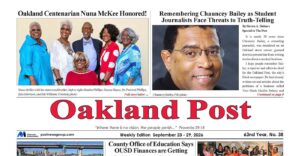
Oakland Post: Week of September 23 – 29, 2026

Doulas Are Helping Black California Moms Navigate Pregnancy–Even as High Mortality Rates Persist

Newsom Signs Addictive Social Media Law to Protect Kids

On Your November Ballot: Prop 38 Would Allocate $8.4 Billion to Immunology and Immunotherapy Funding

Standoff for Justice: Our Homes Are Worth Fighting For

Oakland Post: Week of August 26 – September 1, 2026

Frontier Airlines’ Return to Oakland Airport Brings Flights, Jobs and Opportunity

Gubernatorial Candidate Steve Hilton Blasts California New Tire Rules; Newsom Hits Back

Chef Sharon Lee Blends Culinary Excellence, Education and Empowerment

Jackie Wright Champions Bay Area Stories, Filmmakers and Cultural Institutions

Big City Mayors Ask for “Yes” Vote on Housing Bond Measure; Conservatives Say “No”

Oakland Coliseum Project Opens Door for Small Businesses to Build Bigger

Gov. Newsom’s Latest Appointees Include Sacramento Advocate for Formerly Incarcerated Students; State’s New Tech Chief

Misnamed ‘Parent’ PAC Seeks to Influence Oakland School Board Elections

Longtime BWOPA Member Brendalyn Goodall Appointed to California Workforce Development Board

Gov. Newsom Signs Law Shielding Immigration Aid Workers From Doxing Threats

Secretary of State Shirley N. Weber Urges Californians to Vote Early as Voter ID Battle Intensifies

From Palestine to Oakland: Seeds for Liberation Examines Shared Struggles for Freedom

IN MEMORIAM: Dolly Parton Dead at 80 — How She Built a Legacy of Love and Earned Her Place in Black Culture

The Conversation With Al McFarlane 6/23/26

Media Monday 6/22/26

LIVE! ASK ALMA! — TUES. 6.23.26 7PM EST

Car Buying Secrets: 4 Hidden Checks Before You Sign!

Is This 550 HP Charger Worth YOUR Money? AutoNetwork Review

Celebrating Juneteenth – Frederick Douglass on education and resistance

LIVE! — ASK ALMA! — TUES. 6.19.26 7PM EST

Hyundai Ioniq 5 Parking, Safety, and 360 View #shorts

2025 Ioniq 5 New Wiper & Powerful Performance! #shorts

Electric SUV Range: Is 259 Miles Enough? #shorts

EV Charging: How Fast Can You Charge an Electric Vehicle? #shorts

Biometric Cooling… Messaging Seats…Come on! 2025 Infiniti QX80 Autograph 4WD

Charged Up: Witness the Magic of a Fully Electric Car! #shorts

Range Rover Sport PHEV Included…: See What’s Inside This Luxury SUV! #shorts

Invisible Hood View: Perfect Parking with X-Ray Vision! #shorts
-
 Community2 weeks ago
Misnamed ‘Parent’ PAC Seeks to Influence Oakland School Board Elections
-

 Activism3 weeks ago
Oakland Post: Week of September 2 – 8, 2026
-

 Community2 weeks ago
Richmond Tiny House Village Farm & Garden Set to Open Gates on Sept. 26
-

 Black History2 weeks ago
OPINION: Nolan Wells’ Death One of Several Signifying Racial Terror Lives on in U.S. South
-

 Black History2 weeks ago
Latest Massacre in Haiti Reveals Cruelty U.S. Deportations
-

 Activism2 weeks ago
Oakland Post: Week of September 9 – 15, 2026
-

 Community2 weeks ago
Democratic Clubs Interview Candidates for Oakland School Board
-
 Featured2 weeks ago
‘Ready to See These Bills Become Law’: Sen. Weber’s Package of 15 Bills Advance to Gov. Newsom’s Desk
