
Black History
COMMENTARY: On this Solemn Anniversary; What Trump Can Learn from MLK’s Teachings about Leadership
BLACK VOICE NEWS — April 4th marked 51 years since Martin Luther King, Jr. was felled by an assassin’s bullet, yet the world continues to embrace his powerful teachings—teachings that have inspired millions everywhere who continue his fight against all forms of injustice.

S.E. Williams
April 4th marked 51 years since Martin Luther King, Jr. was felled by an assassin’s bullet, yet the world continues to embrace his powerful teachings—teachings that have inspired millions everywhere who continue his fight against all forms of injustice.
King dedicated his life to closing the fissures that continue to exist between races while encouraging the recognition of the oneness of humanity. Despite the many challenges he faced—which included constant struggles, conflicts and setbacks—he achieved meaningful progress in his quest for equality by leveraging the uncompromising power of agape love.
“ll life is interrelated,” King preached noting, “that somehow we’re caught in an inescapable network of mutuality tied in a single garment of destiny. Whatever affects one directly, affects all indirectly.”
King also believed, “Words mean something.” He encouraged people to speak up for what they believe in, while at the same time stressing when you do speak up, you should first, be very sure of what you want to say and then. . . you should say it with conviction.
Through the long years of the Civil Rights movement King challenged Americans of all races to take a stand on the issue. “here comes a time when we must take a position that is neither safe, nor politic, nor popular, but one must take it because it is right,” he encouraged.

Today, King’s words seem to resonate more powerfully than ever when considered in the context of modern-day America.
This is especially true when considered in light of the current president who continues to smash all civil and political norms and who is working aggressively, at cross-purposes from the wishes and desires of the majority of Americans, to undo progress on a myriad of issues ranging from health care to climate change, from immigration to the environment and the list goes on.
The future of this nation currently rests in the hands of a leader who is more concerned with catering to the whims of his political base than working on behalf of all Americans. This, in addition to his bizarre attentiveness to and fawning over the world’s despots, coupled with his narcissistic self-aggrandizement and relentless lying has left little room in the public square for anything beyond the constant churning of empty promises and hateful mandates.
As a leader, King succeeded in ways America’s current president never will because King understood that being a good leader, a wise leader, has little to do with popularity. Unlike the nation’s 45th President, King knew, “A man all wrapped up in himself is a mighty small package.”
This article originally appeared in Black Voice News.







Activism
Oakland Post: Week of March 18 – 24, 2026
The printed Weekly Edition of the Oakland Post: Week of March 18 – 24, 2026

To enlarge your view of this issue, use the slider, magnifying glass icon or full page icon in the lower right corner of the browser window.
Activism
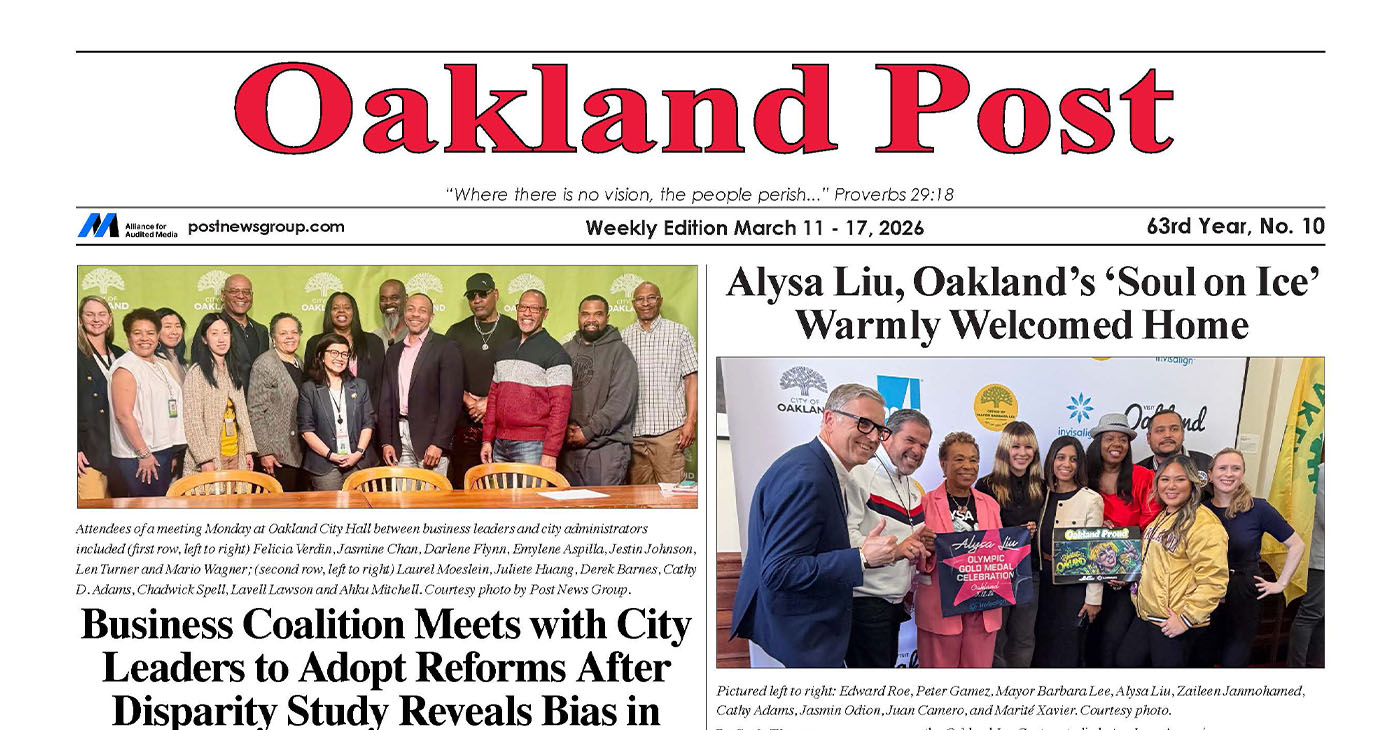
Oakland Post: Week of March 11 -17, 2026
The printed Weekly Edition of the Oakland Post: Week of March 11 – 17, 2026
To enlarge your view of this issue, use the slider, magnifying glass icon or full page icon in the lower right corner of the browser window.
Activism
Oakland Post: Week of March 4 – 10, 2026
The printed Weekly Edition of the Oakland Post: Week of March 4 – 10, 2026

To enlarge your view of this issue, use the slider, magnifying glass icon or full page icon in the lower right corner of the browser window.

WORK FROM HOME
Home-based business with potential monthly income of $10K+ per month. A proven training system and website provided to maximize business effectiveness. Perfect job to earn side and primary income. Contact Lynne for more details: Lynne4npusa@gmail.com 800-334-0540


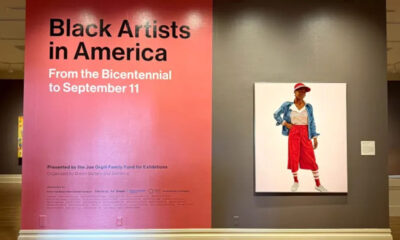
Black Artists in America, Installation Three Wraps at the Dixon Gallery and Gardens

Grief, Advocacy, and Education: A Counselor Reflects on Black Maternal Health

Future of Florida’s Black History Museum in Limbo

New Research Shows the Many Benefits of Early Learning

South Hampton K-8 Students Among Top 10 Finalists for Samsung’s ‘Solve for Tomorrow’ Competition

Cuba: No Negotiation with US on the President or Political System

Brooklyn Academy of Music Names Jamaican-Born Tamara McCaw as President

Trinidad & Tobego – U.S. Launches WhatsApp Channel for American Citizens in the Country

Oakland Post: Week of March 18 – 24, 2026

AI Innovation vs. Ethics and Environmental Impact

AI, Web3, and Digital Reparations

What If You Owned Your AI Agent?

Season 7, Episode 3 – January Reporter’s Roundtable 📱

Season 7, Episode 3 – January Reporter’s Roundtable

AI, Media, and Power | Part 2, Real-World Impacts and Tradeoffs

Discrimination in City Contracts

Oakland Post: Week of February 11 – 17, 2026

Reflecting on Black History Milestones in Birmingham AL

Rising Optimism Among Small And Middle Market Business Leaders Suggests Growth for California

CITY OF SAN LEANDRO STATE OF CALIFORNIA PUBLIC WORKS DEPARTMENT ENGINEERING DIVISION NOTICE TO BIDDERS FOR ANNUAL STREET OVERLAY/REHABILITATION 2019-21 – PHASE III

Oakland Post: Week of February 18 – 24, 2026

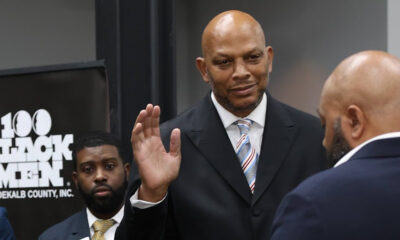
PRESS ROOM: NBA Hall of Fame Nominee Terry Cummings Joins 100 Black Men of DeKalb County to Launch Victory & Values Initiative

Oakland Post: Week of February 25 – March 3, 2026

U.S. manufacturing rebounds – how foundry services are adapting to rising demand

Trump’s MAGA Allies are Creating Executive Order Plan to Steal the 2026 Midterms

OP-ED: One Hundred Years of Black Workers Telling the Truth

Advancements in solar technology that are changing the way we power the world

Chase Oakland Community Center Hosts Alley-Oop Accelerator Building Community and Opportunity for Bay Area Entrepreneurs

PRESS ROOM: Civil Rights TV Launches in Selma as the World’s First 24/7 Civil Rights Television Network

Poll Shows Support for Policies That Help Families Afford Child Care

Hyundai Ioniq 5 Parking, Safety, and 360 View #shorts

2025 Ioniq 5 New Wiper & Powerful Performance! #shorts

Electric SUV Range: Is 259 Miles Enough? #shorts

EV Charging: How Fast Can You Charge an Electric Vehicle? #shorts

Biometric Cooling… Messaging Seats…Come on! 2025 Infiniti QX80 Autograph 4WD

Charged Up: Witness the Magic of a Fully Electric Car! #shorts

Range Rover Sport PHEV Included…: See What’s Inside This Luxury SUV! #shorts

Invisible Hood View: Perfect Parking with X-Ray Vision! #shorts

AI Is Reshaping Black Healthcare: Promise, Peril, and the Push for Improved Results in California

ESSAY: Technology and Medicine, a Primary Care Point of View

Sanctuary Cities

The RESISTANCE – FREEDOM NOW

STATE OF THE PEOPLE: Freddie

ECONOMIC BOYCOTT DAY!!!!!

I told You So
-
 #NNPA BlackPress4 weeks ago
Reflecting on Black History Milestones in Birmingham AL
-
 #NNPA BlackPress4 weeks ago
PRESS ROOM: NBA Hall of Fame Nominee Terry Cummings Joins 100 Black Men of DeKalb County to Launch Victory & Values Initiative
-
 Activism4 weeks ago
Oakland Post: Week of February 25 – March 3, 2026
-
 #NNPA BlackPress4 weeks ago
Trump’s MAGA Allies are Creating Executive Order Plan to Steal the 2026 Midterms
-
 #NNPA BlackPress4 weeks ago
OP-ED: One Hundred Years of Black Workers Telling the Truth
-
 #NNPA BlackPress4 weeks ago
Poll Shows Support for Policies That Help Families Afford Child Care
-

 Activism3 weeks ago
Oakland Post: Week of March 4 – 10, 2026
-

 #NNPA BlackPress3 weeks ago
Woman’s Search for Family’s Roots Leads to Ancestor John T. Ward – A Successful Entrepreneur and Conductor on the Underground Railroad
