
Activism
COMMENTARY: No Unity in America? Remember 9/11 Before We all Forget
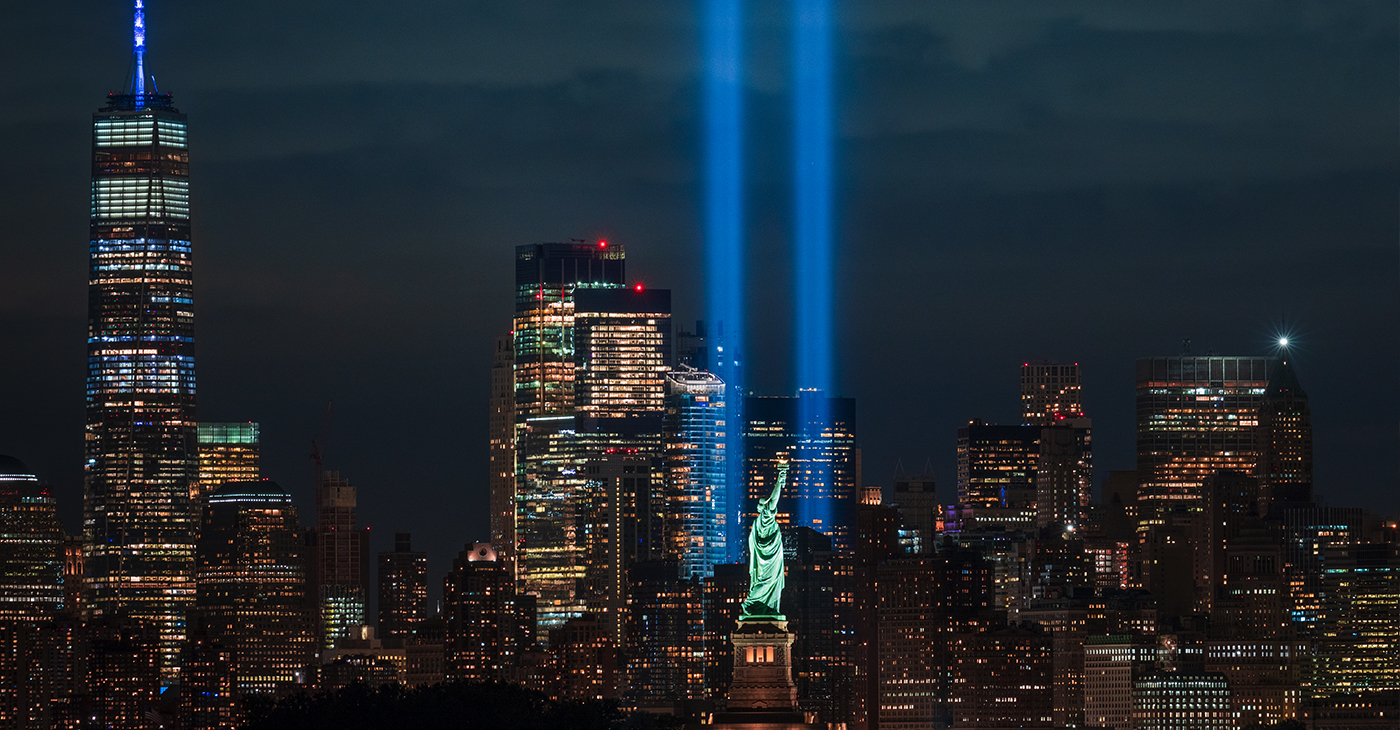
I will never be in doubt again about what to do on Sept. 11. At each time stamp of terror, mark it with a moment of silence to honor the dead and the brave. That’s what they’ve done in New York the last 22 years.

By Emil Guillermo
The politics of the week was as polarizing as it gets. President Biden spoke to the UN General assembly about defending democracy, especially when it comes to giving aide to Ukraine, a sovereign nation invaded by Russia.
That would normally happen without debate, but now polls in the U.S show more than 50% say we’ve given enough to Ukraine. And with already $60 billion given to date, fulfilling the request for another $40 billion may be in doubt.
It’s easy to say, “Gee, wouldn’t it be nice if any of that could be used to fix our local problems.” But we’re talking about a threat of a different level. Gang bangers shooting up neighborhoods and local smash-and-grabs are one thing. A superpower like Russia smash-and-grabbing a free country like Ukraine, we all need to care about.
That’s not how democracy works.
And then there is the weaponizing of government by Republicans in Congressional hearings, on full display when the GOP lead Justice Committee member badgered Attorney General Merrick Garland for hours on irrelevancies like Hunter Biden.
“…They do that at the expense of millions of Americans who need the government to stay open and want their kids safe in school, and like to see Ukraine stay in the fights that don’t help Russia,” said California District 14 Congressman Eric Swalwell, who called the hearings a clown show. “Except they actually have real responsibilities that affect real Americans.”

That hearing was on Sept. 20, nine days after the 9/11 anniversary.
When I think of an America United I like to think of that day.
Where Were You on 9/11?
I was in the San Francisco Bay Area, thinking about trading the markets, so I was up way early with CNBC at 5.46 a.m. Pacific time when the first plane flew into the North Tower.
Then the second plane at 6:03 a.m. Pacific time struck the South Tower.
And then the third plane struck the Pentagon at 6:37 a.m Pacific time.
It’s too early for all this, I recall thinking, my head spinning from the news. But then the South Tower fell at 6:59 a.m. Pacific.
OMFG wasn’t an acronym back then.
I would need something stronger at 10:03 a.m. Pacific, when a fourth plane crashed in Shanksville, Pa.
Within the half hour at 10:28 a.m. Pacific, the North Tower fell.
I will never be in doubt again about what to do on Sept. 11. At each time stamp of terror, mark it with a moment of silence to honor the dead and the brave. That’s what they’ve done in New York the last 22 years.
It’s the timeline of when the terrorists’ war came to us. It was in Lower Manhattan. But I felt it instantly via television in California while still in my pajamas.
It was also a day I lost my taste for the markets and the mindless chase of the almighty dollar. Sept. 11 made me sense something more was at stake, our sense of country, of ourselves, and of our America.
There were shattered buildings in New York, but was there ever a moment when the country was more united?
Remember that, America. Because there have been so many times since then when we forget what it’s like to be on the same side, always, together.
It shouldn’t take an act of terrorism to get back that feeling. Just think of what we did for each other when our real patriotism emerged Sept. 12, 2001.
The Last Thing I Did on Sept. 11
After 2001, my life really did take a different path. I went from television and radio to newspapers. This is not unlike saying to the modern world that you prefer communicating through cave drawings.
But I survived.
One of my friends became a big-time corporate lawyer and is now retired. Our politics are polar opposites, but we’re still buddies. We have history together. We both graduated from San Francisco’s Lowell High School. He moans about the Cal Bears.
If Sept. 11 can have a unifying effect, would it happen when I had dinner with my friend?
The answer is at least on the surface, yes. We were in New York, at, coincidentally, a Ukrainian restaurant with few vegan options. But I made do.
We disagreed on everything. Especially on affirmative action. He sided with the Supreme Court against Harvard. I didn’t. He brought up the historical discrimination against Jews. “There were some law firms that wouldn’t even talk to me when I graduated,” said my friend, who is Jewish.
We agreed that was wrong. But he couldn’t get past his belief that discrimination happens to everyone. You deal with it and get over it, he said.
Easier said than done, if you happen to be a darker shade.
But we’re friends and respect each other.
On the matter of 9/11, he told me where he was that day. His office was a few blocks from the World Trade Center. But he came to work shortly after the first tower fell.
He remembers seeing people walking up FDR Drive from Lower Manhattan covered in soot, their faces in shock.
I told him about my theory of 9/12, how it sparked a feeling of unity that is so rare these days.
He said it was still there, though admittedly, it’s gotten worse. “It doesn’t matter about your politics,” he said, adding how he didn’t care about my point of view. We went to high school together. I called him. He saw my show in New York and now we’re having dinner.
“So, you’re a crazy guy, but so what, I am too,” he said. “You’re my friend and if you need anything, you just ask me.”
Maybe that’s the best we can hope for in a polarized America.
To have a meal together. Laugh. Then fight over the check. Not politics.
But making the feeling last beyond 9/12 is getting tougher and tougher in America.
Emil Guillermo is a journalist and commentator. See his Emil Amok videos on YouTube, Instagram and Facebook.



Activism
Oakland Post: Week of March 18 – 24, 2026
The printed Weekly Edition of the Oakland Post: Week of March 18 – 24, 2026
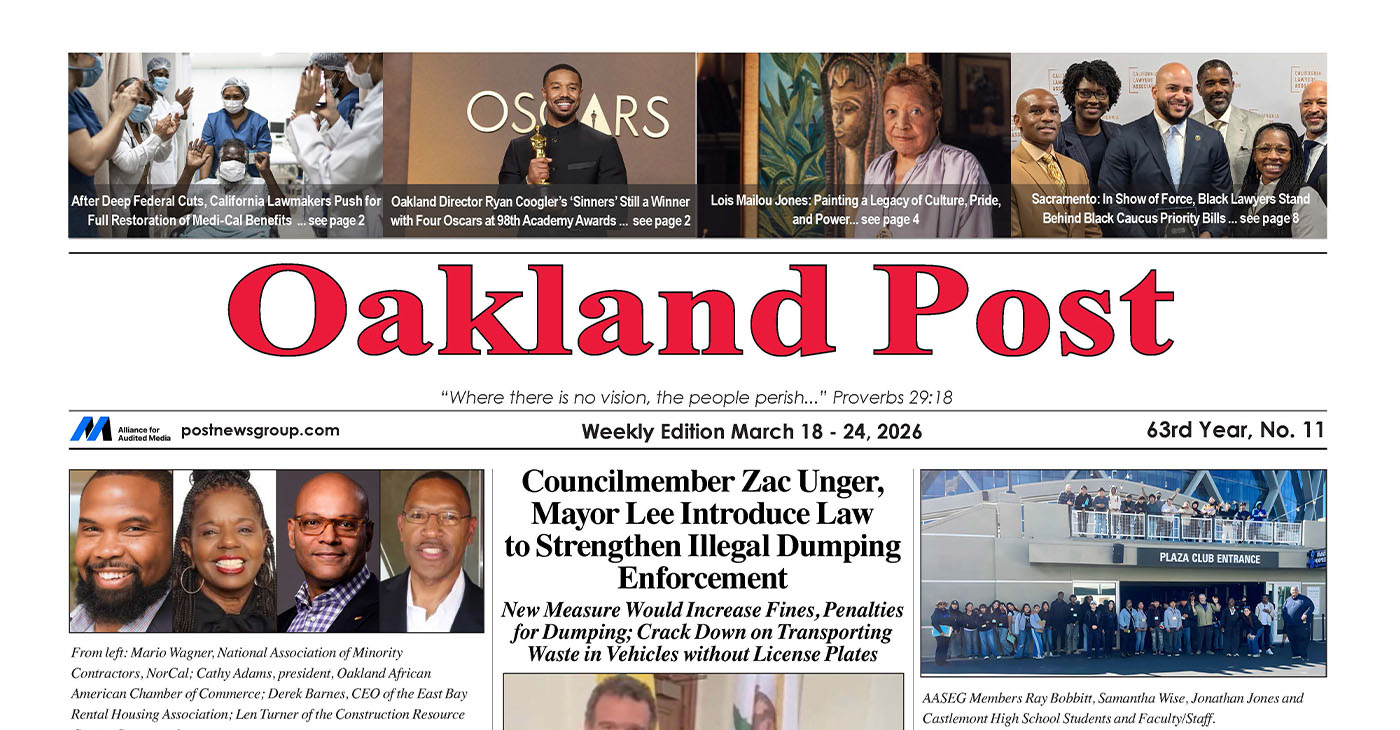
To enlarge your view of this issue, use the slider, magnifying glass icon or full page icon in the lower right corner of the browser window.
Activism
Oakland Post: Week of March 11 -17, 2026
The printed Weekly Edition of the Oakland Post: Week of March 11 – 17, 2026
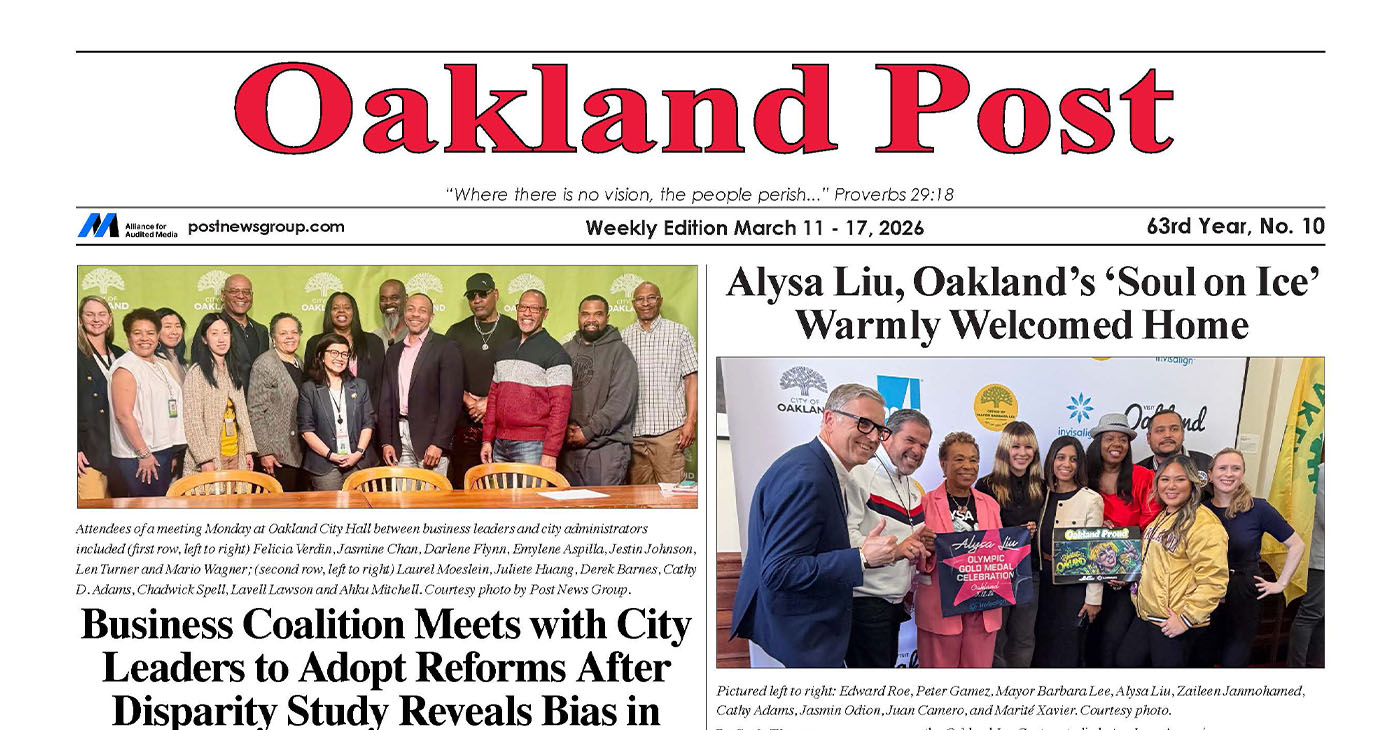
To enlarge your view of this issue, use the slider, magnifying glass icon or full page icon in the lower right corner of the browser window.
Activism
Oakland Post: Week of March 4 – 10, 2026
The printed Weekly Edition of the Oakland Post: Week of March 4 – 10, 2026
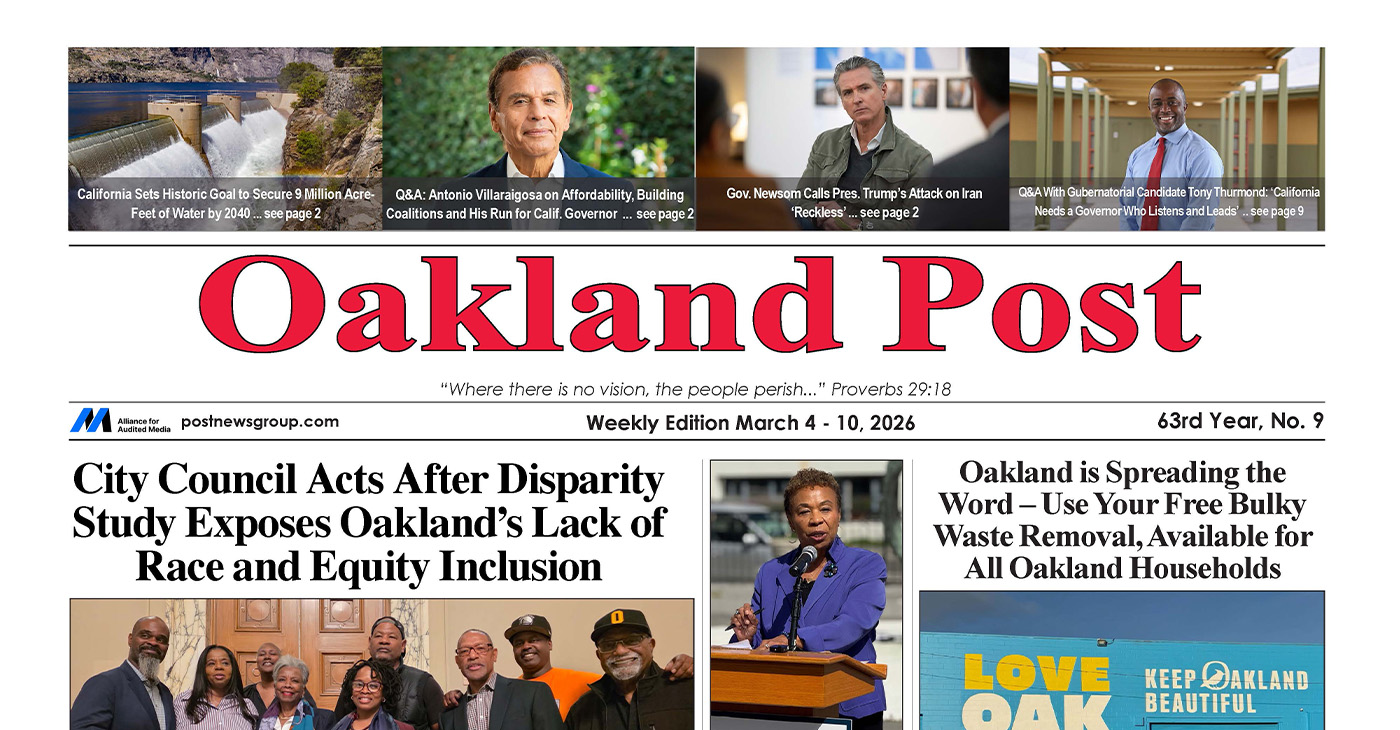
To enlarge your view of this issue, use the slider, magnifying glass icon or full page icon in the lower right corner of the browser window.

WORK FROM HOME
Home-based business with potential monthly income of $10K+ per month. A proven training system and website provided to maximize business effectiveness. Perfect job to earn side and primary income. Contact Lynne for more details: Lynne4npusa@gmail.com 800-334-0540


Black Artists in America, Installation Three Wraps at the Dixon Gallery and Gardens

Grief, Advocacy, and Education: A Counselor Reflects on Black Maternal Health

Future of Florida’s Black History Museum in Limbo

New Research Shows the Many Benefits of Early Learning

South Hampton K-8 Students Among Top 10 Finalists for Samsung’s ‘Solve for Tomorrow’ Competition

Cuba: No Negotiation with US on the President or Political System

Brooklyn Academy of Music Names Jamaican-Born Tamara McCaw as President

Trinidad & Tobego – U.S. Launches WhatsApp Channel for American Citizens in the Country

Oakland Post: Week of March 18 – 24, 2026

AI Innovation vs. Ethics and Environmental Impact

AI, Web3, and Digital Reparations

What If You Owned Your AI Agent?

Season 7, Episode 3 – January Reporter’s Roundtable 📱

Season 7, Episode 3 – January Reporter’s Roundtable

AI, Media, and Power | Part 2, Real-World Impacts and Tradeoffs

Discrimination in City Contracts

Oakland Post: Week of February 11 – 17, 2026

Reflecting on Black History Milestones in Birmingham AL

Rising Optimism Among Small And Middle Market Business Leaders Suggests Growth for California

CITY OF SAN LEANDRO STATE OF CALIFORNIA PUBLIC WORKS DEPARTMENT ENGINEERING DIVISION NOTICE TO BIDDERS FOR ANNUAL STREET OVERLAY/REHABILITATION 2019-21 – PHASE III

Oakland Post: Week of February 18 – 24, 2026

PRESS ROOM: NBA Hall of Fame Nominee Terry Cummings Joins 100 Black Men of DeKalb County to Launch Victory & Values Initiative

Oakland Post: Week of February 25 – March 3, 2026

U.S. manufacturing rebounds – how foundry services are adapting to rising demand

Trump’s MAGA Allies are Creating Executive Order Plan to Steal the 2026 Midterms

OP-ED: One Hundred Years of Black Workers Telling the Truth

Advancements in solar technology that are changing the way we power the world

Chase Oakland Community Center Hosts Alley-Oop Accelerator Building Community and Opportunity for Bay Area Entrepreneurs

Poll Shows Support for Policies That Help Families Afford Child Care

PRESS ROOM: Civil Rights TV Launches in Selma as the World’s First 24/7 Civil Rights Television Network

Hyundai Ioniq 5 Parking, Safety, and 360 View #shorts

2025 Ioniq 5 New Wiper & Powerful Performance! #shorts

Electric SUV Range: Is 259 Miles Enough? #shorts

EV Charging: How Fast Can You Charge an Electric Vehicle? #shorts

Biometric Cooling… Messaging Seats…Come on! 2025 Infiniti QX80 Autograph 4WD

Charged Up: Witness the Magic of a Fully Electric Car! #shorts

Range Rover Sport PHEV Included…: See What’s Inside This Luxury SUV! #shorts

Invisible Hood View: Perfect Parking with X-Ray Vision! #shorts

AI Is Reshaping Black Healthcare: Promise, Peril, and the Push for Improved Results in California

ESSAY: Technology and Medicine, a Primary Care Point of View

Sanctuary Cities

The RESISTANCE – FREEDOM NOW

STATE OF THE PEOPLE: Freddie

ECONOMIC BOYCOTT DAY!!!!!

I told You So

-
 #NNPA BlackPress4 weeks ago
Reflecting on Black History Milestones in Birmingham AL
-
 #NNPA BlackPress4 weeks ago
PRESS ROOM: NBA Hall of Fame Nominee Terry Cummings Joins 100 Black Men of DeKalb County to Launch Victory & Values Initiative
-
 Activism4 weeks ago
Oakland Post: Week of February 25 – March 3, 2026
-
 #NNPA BlackPress4 weeks ago
Trump’s MAGA Allies are Creating Executive Order Plan to Steal the 2026 Midterms
-
 #NNPA BlackPress4 weeks ago
Poll Shows Support for Policies That Help Families Afford Child Care
-

 Activism3 weeks ago
Oakland Post: Week of March 4 – 10, 2026
-

 #NNPA BlackPress3 weeks ago
Woman’s Search for Family’s Roots Leads to Ancestor John T. Ward – A Successful Entrepreneur and Conductor on the Underground Railroad
-

 #NNPA BlackPress3 weeks ago
OP-ED: NNPA Launches 2026 “Leadership Matters” Video Series
