
Activism
City Report Calls for End of ‘Historic, Racially Exclusive Membership’ of Construction Unions
Local data, submitted by unions in July 2020, indicate that “numerous disparities” under PLA’s currently exist in Oakland. However, data was submitted to the city by only 10 out of 28 of the building trades. Presumably these may have been the unions with better results.

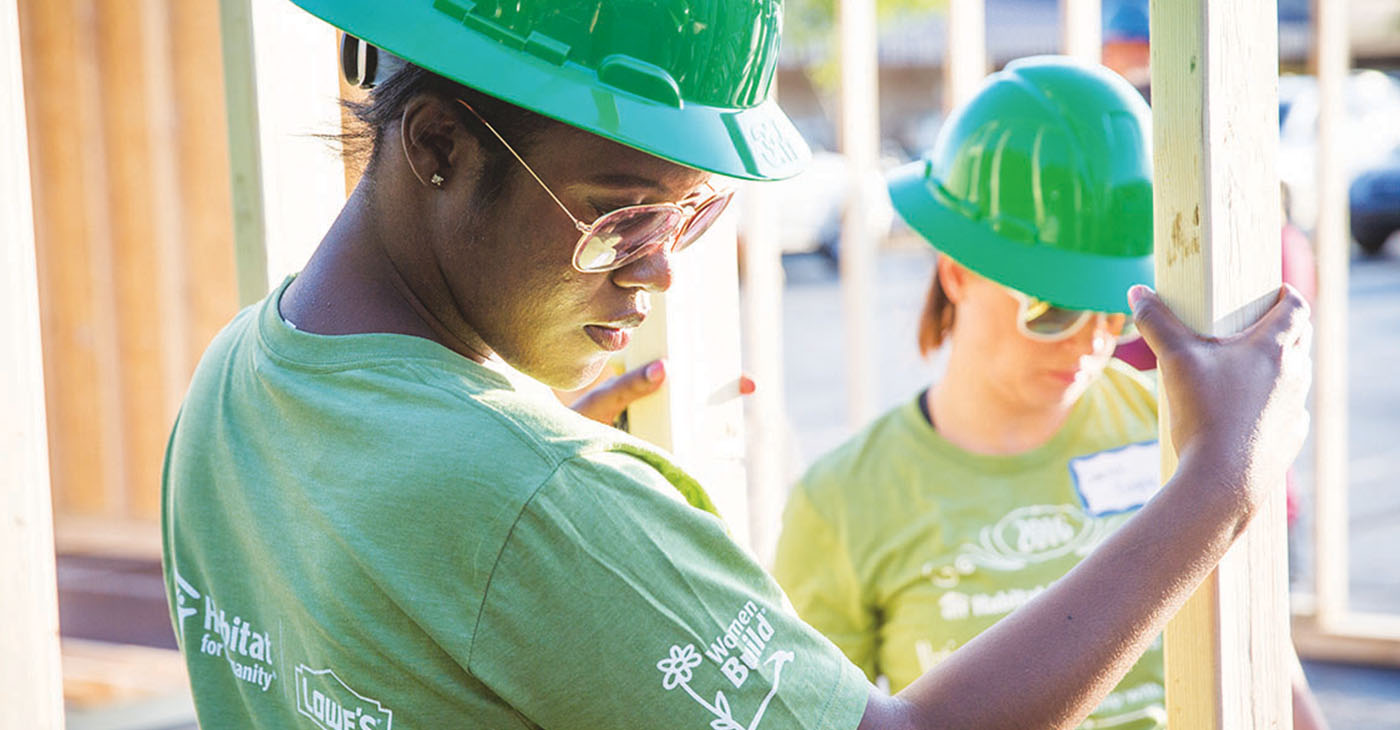
By Ken Epstein
The City of Oakland’s Department of Race & Equity recently issued a report calling for construction unions to abandon their historic, racially exclusive membership policies if they want the city to sign a contract guaranteeing the unions receive the lion’s-share of construction jobs on city-funded projects.
The City Council has been under behind-the-scenes pressure for several years from both building trades unions and their allied community groups to sign a binding contract, called a Project Labor Agreement (PLA), guaranteeing most jobs on city projects will go to union members.
Most building trades craft unions have failed to report numbers of Black and women members of their organizations. They also have not taken steps to eliminate the barriers to entry nor the sometimes-hostile work environments that keep African Americans and women out of union construction jobs.
So far, the 70-page racial equity analysis report, “Improving the Effectiveness of Project Agreements,” which examines current conditions and makes proposals for change, has been largely ignored by the media and most Oakland accountability activists.
The report was completed in in December 2020 by the Estolano Advisors and the San Francisco Foundation and submitted to the City Council by the Department of Race and Equity.
The San Francisco Foundation convened an advisory committee of representatives of public agencies, community-based organizations and the Alameda County Building Trades to examine strategies to diversify the construction workforce through PLA’s. Also supporting the study were Julian Gross of Renee Public Law Group, Junius Williams Consulting and others.
Local data, submitted by unions in July 2020, indicate that “numerous disparities” under PLA’s currently exist in Oakland. However, data was submitted to the city by only 10 out of 28 of the building trades. Presumably these may have been the unions with better results.
- 98% of current members in the data sample are male;
- 25% of building trades members lives in Alameda County (not necessarily in Oakland), and 75% do not;
- Union members in the samples were 54% white, 35% Hispanic/Latino, 5% Black, 3% Asian, and 4% other or unknown.
- Journey workers (the most skilled and highest paid) represent 79% of members, while 21% are apprentices;
These survey results confirm “that current data from the trade affiliates does not fully capture the landscape of the local construction workforce because trade affiliates do not collect data consistently and are not mandated to collect and report it,” according to the report.
The ongoing economic disparity in opportunities for women and African Americans in the building trades are national in scope and historically conditioned, according to a report to the City Council by Darlene Flynn, director of the Department of Race and Equity:
“Inequity in outcomes is the result of over 200 years of institutional policy and practice that excluded BIPOC Black, Indigenous, People of Color) groups from fair and equitable access to living wage employment and wealth building.”
“Government has a responsibility to right historical wrongs in which it participated, and the City of Oakland has made a commitment to address disparities through intentional equity strategies in all the City does,” Flynn said in her report.
One chart in the report shows that although Black workers comprise 12% of the nation’s workforce, they obtain roughly a flat 6% of the jobs in construction for 25 years, from 1995 to today.
National unemployment rates underscore the inequities. In July 2021, overall unemployment during the pandemic remained at 6.5%. White unemployment was lower at 5.1%, Black unemployment was significantly higher at 10.1% and Hispanic/Latino joblessness stood at 8.4%
The report listed some of the persistent barriers that at present maintain the underrepresentation of Black and female building trade membership:
- “Vastly different, opaque, sometimes subjective entry process for each trade (somewhat like trying to get accepted into an exclusive fraternity);
- Disparities in participation and success rates in apprenticeship programs, mainly for Black and women workers;
- BIPOC members disproportionately hired into lower-paid apprenticeship programs;
- Small and local contractors, many non-union but hire more women and African Americans, are often shut out of city contracting under PLA’s;
- Poor reporting of race and gender data for unions, and “ineffective/inconsistent monitoring of contractor obligations;”
- Poor funding for pre-apprenticeship programs;
- Unwelcoming worksite culture for under-represented groups, lack of mentorship support for underrepresented groups;
- Lack of public accountability for equity outcomes.
This is the first of a series of articles on Project Labor Agreements and racial equity analysis. Future articles will focus on concerns of Black construction workers and small contractors in Oakland and solutions that would produce more equitable outcomes.







Activism
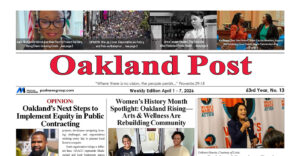
Oakland Post: Week of April 1 – 7, 2026
The printed Weekly Edition of the Oakland Post: Week of April 1 – 7, 2026
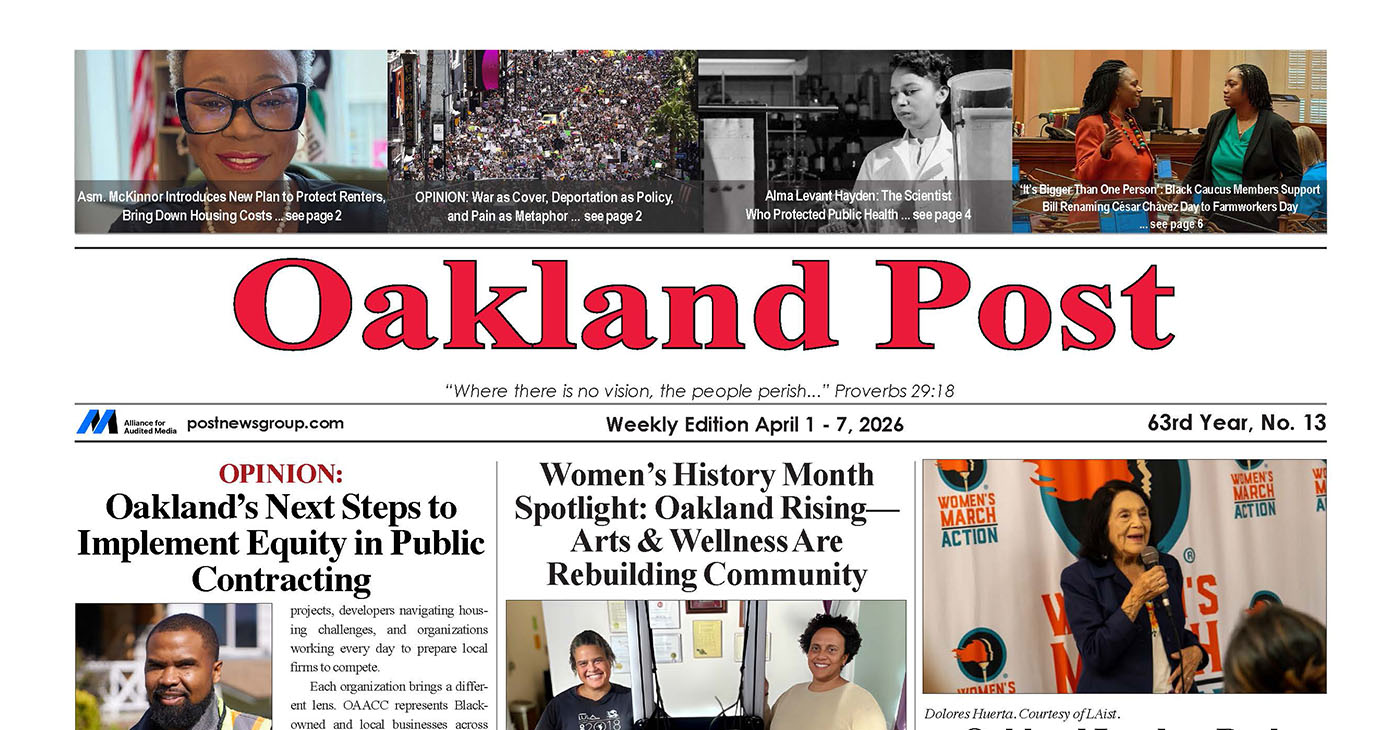
To enlarge your view of this issue, use the slider, magnifying glass icon or full page icon in the lower right corner of the browser window.
Activism
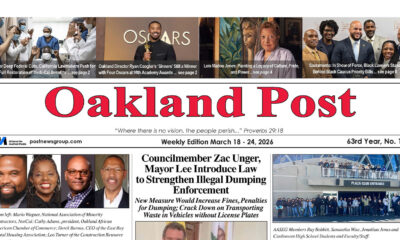
Oakland Post: Week of March 18 – 24, 2026
The printed Weekly Edition of the Oakland Post: Week of March 18 – 24, 2026
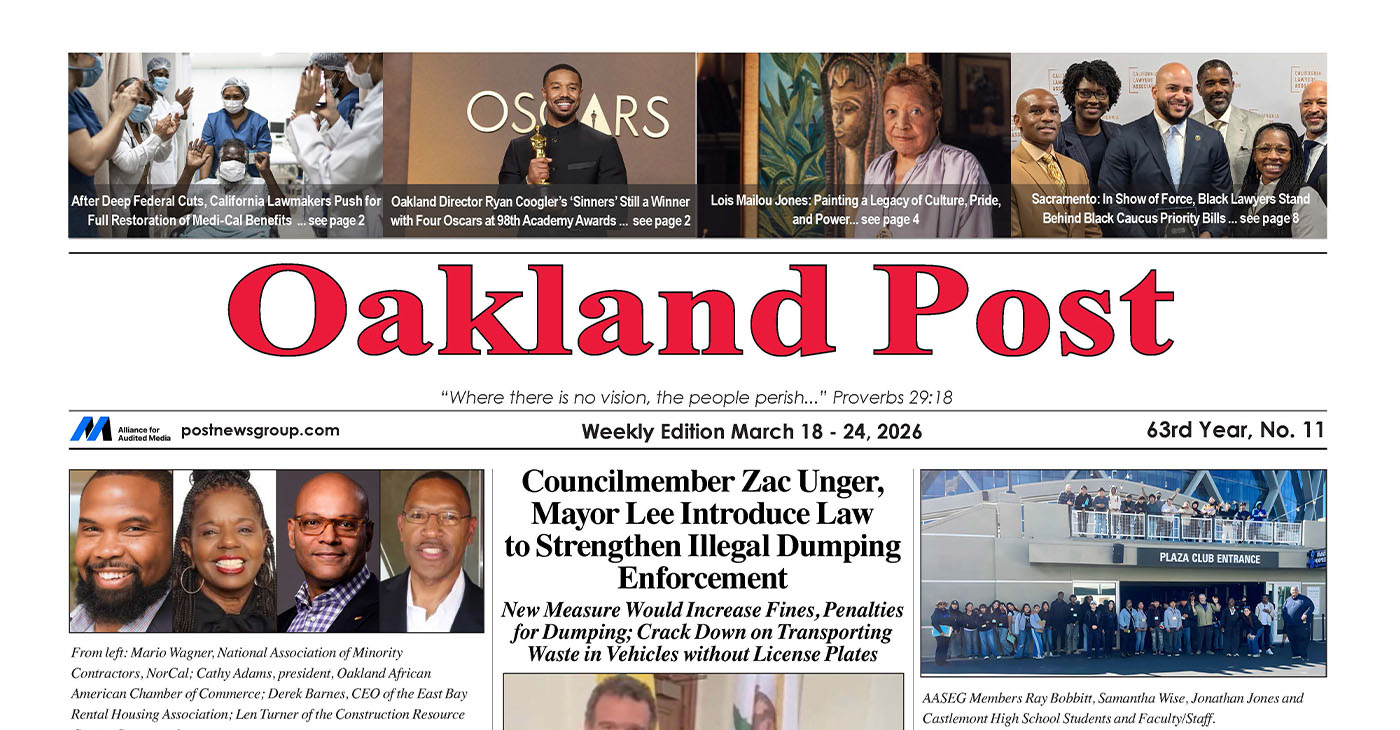
To enlarge your view of this issue, use the slider, magnifying glass icon or full page icon in the lower right corner of the browser window.
Activism
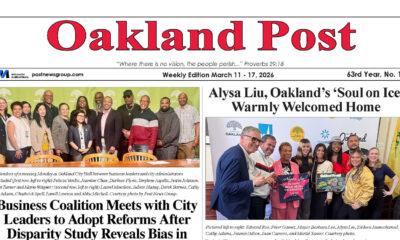
Oakland Post: Week of March 11 -17, 2026
The printed Weekly Edition of the Oakland Post: Week of March 11 – 17, 2026
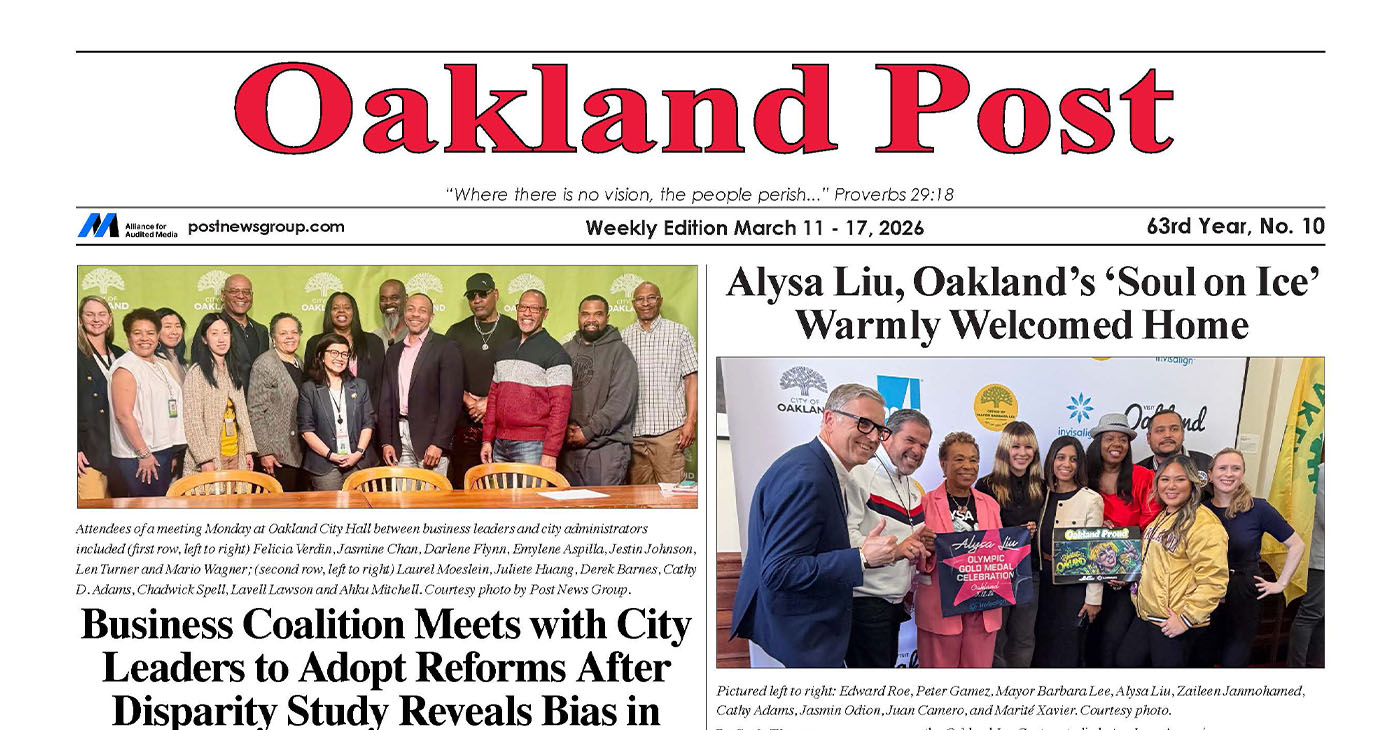
To enlarge your view of this issue, use the slider, magnifying glass icon or full page icon in the lower right corner of the browser window.
WORK FROM HOME
Home-based business with potential monthly income of $10K+ per month. A proven training system and website provided to maximize business effectiveness. Perfect job to earn side and primary income. Contact Lynne for more details: Lynne4npusa@gmail.com 800-334-0540


Oakland Post: Week of April 1 – 7, 2026

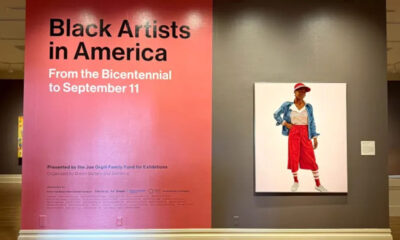
Black Artists in America, Installation Three Wraps at the Dixon Gallery and Gardens

Grief, Advocacy, and Education: A Counselor Reflects on Black Maternal Health

Future of Florida’s Black History Museum in Limbo

New Research Shows the Many Benefits of Early Learning

South Hampton K-8 Students Among Top 10 Finalists for Samsung’s ‘Solve for Tomorrow’ Competition

Cuba: No Negotiation with US on the President or Political System

Brooklyn Academy of Music Names Jamaican-Born Tamara McCaw as President

Trinidad & Tobego – U.S. Launches WhatsApp Channel for American Citizens in the Country

Oakland Post: Week of March 18 – 24, 2026

AI Innovation vs. Ethics and Environmental Impact

AI, Web3, and Digital Reparations

What If You Owned Your AI Agent?

Season 7, Episode 3 – January Reporter’s Roundtable 📱

Season 7, Episode 3 – January Reporter’s Roundtable

Reflecting on Black History Milestones in Birmingham AL

Oakland Post: Week of February 25 – March 3, 2026

PRESS ROOM: NBA Hall of Fame Nominee Terry Cummings Joins 100 Black Men of DeKalb County to Launch Victory & Values Initiative

Oakland Post: Week of March 4 – 10, 2026

Trump’s MAGA Allies are Creating Executive Order Plan to Steal the 2026 Midterms

U.S. manufacturing rebounds – how foundry services are adapting to rising demand

Poll Shows Support for Policies That Help Families Afford Child Care

Oakland Post: Week of March 11 -17, 2026

OP-ED: One Hundred Years of Black Workers Telling the Truth

Advancements in solar technology that are changing the way we power the world
Oakland Post: Week of March 18 – 24, 2026

Woman’s Search for Family’s Roots Leads to Ancestor John T. Ward – A Successful Entrepreneur and Conductor on the Underground Railroad

Financial Wellness and Mental Health: Managing Money Stress in College

COMMENTARY: Women of Color Shape Our Past and Future

PRESS ROOM: Civil Rights TV Launches in Selma as the World’s First 24/7 Civil Rights Television Network

Hyundai Ioniq 5 Parking, Safety, and 360 View #shorts

2025 Ioniq 5 New Wiper & Powerful Performance! #shorts

Electric SUV Range: Is 259 Miles Enough? #shorts

EV Charging: How Fast Can You Charge an Electric Vehicle? #shorts

Biometric Cooling… Messaging Seats…Come on! 2025 Infiniti QX80 Autograph 4WD

Charged Up: Witness the Magic of a Fully Electric Car! #shorts

Range Rover Sport PHEV Included…: See What’s Inside This Luxury SUV! #shorts

Invisible Hood View: Perfect Parking with X-Ray Vision! #shorts

AI Is Reshaping Black Healthcare: Promise, Peril, and the Push for Improved Results in California

ESSAY: Technology and Medicine, a Primary Care Point of View

Sanctuary Cities

The RESISTANCE – FREEDOM NOW

STATE OF THE PEOPLE: Freddie

ECONOMIC BOYCOTT DAY!!!!!

I told You So

-
 Activism3 weeks ago
Oakland Post: Week of March 11 -17, 2026
-
 Activism3 weeks ago
Oakland Post: Week of March 18 – 24, 2026
-
 Advice3 weeks ago
Financial Wellness and Mental Health: Managing Money Stress in College
-
 #NNPA BlackPress2 weeks ago
Brooklyn Academy of Music Names Jamaican-Born Tamara McCaw as President
-
 #NNPA BlackPress2 weeks ago
Grief, Advocacy, and Education: A Counselor Reflects on Black Maternal Health
-

 Advice4 weeks ago
Women & Wealth: Tips for Navigating Your Lifelong Financial Journey
-
 #NNPA BlackPress2 weeks ago
New Research Shows the Many Benefits of Early Learning
-
 #NNPA BlackPress2 weeks ago
Black Artists in America, Installation Three Wraps at the Dixon Gallery and Gardens
