
Op-Ed
Child Watch: End Youth Detention and Torture at Riker’s Island


By Marian Wright Edelman
NNPA Columnist
“Before I went to jail, I didn’t know about a lot of stuff, and, now that I’m aware, I’m paranoid. I feel like I was robbed of my happiness.” – Kalief Browder to Jennifer Gonnerman, staff writer for The New Yorker.
Nobody of any age should be held in jail without a trial for three years. No child or adolescent should be held in an adult jail. No child or youth should be housed in facilities where those entrusted to care for them violently assault them. Yet, Kalief Browder, a 16-year-old accused of stealing a backpack was kept in one of the most violent adult jails in the United States, Riker’s Island in New York City, for three years without a trial.
Even worse, he spent more than two years of that time in solitary confinement, locked up alone except to go to the shower, the recreation area, the visit room or the medical clinic. This was torture. The suicide of 22-year-old Kalief Browder on June 6, barely two years after his release and return home, was the final horror in his tragic and brutal journey into the depths of the adult criminal justice system in New York City and state.
At Riker’s, Kalief was cruelly beaten by juvenile gangs, and beaten by a guard as he was calmly walking from solitary confinement to the shower. This violent abuse was caught on video and made public in April by an investigative reporter from The New Yorker. Other alleged abuses were not: the cruel guards who denied him meals, medical care, trips to the shower and extended his time in solitary confinement by making up disciplinary problems.
It should surprise no one that a teenager subjected to this continuous torture; a teenager who maintained his innocence and just wanted his right to a day in court to prove it; a teenager who turned down plea deals repeatedly although it would have meant he could go home immediately; a teenager with no history of mental illness before Riker’s Island tried to commit suicide while held in solitary confinement for two of his three years there. It is beyond shameful that he was held without a trial, without being proven guilty and because he was a poor young Black male.
If New York Gov. Andrew Cuomo and state legislators act immediately before this state legislative session ends this week to raise the age of criminal responsibility, as 48 states have done, more tragedies and suffering like Kalief Browder’s might be avoided. And youths still at Riker’s might have reduced suffering and pain.
Kalief Browder’s cruel and unjust treatment began May 15, 2010, when he was picked up with a friend in the Bronx. He shared his story later with a reporter from The New Yorker to make sure this would never happen to anyone else. Kalief was stopped for allegedly stealing a backpack earlier that evening.
Kalief Browder was immediately funneled into the adult criminal justice system because of the unjust lottery of geography and poverty. New York remains one of only two states in our country that still automatically treats 16- and 17-year-olds as adults. More than a century ago, states began to legislate that children should be treated as children to prevent the inhumane, dangerous, and ineffective practice of putting them in adult jails.
Kalief Browder ended up at Riker’s Island. His family could not afford to hire an attorney or pay the $3,000 bail to keep him home to await a trial that never took place over three years.
Sean Joe, the Benjamin E. Youngdahl Professor of Social Development at the Brown School of Social Work at Washington University in St. Louis, and an authority on suicidal behavior among African American males, says that among Black Americans, Black males between the ages of 15 to 24 are most likely to commit suicide.
More than a thousand days after arriving at Riker’s Island, Kalief Browder was abruptly released four days after his 20th birthday. He had spent most of the 17 previous months in solitary confinement. The charges against him were dismissed.
His tragically short life has already made a difference. Mayor Bill de Blasio led New York City to ban solitary confinement for all juveniles after he heard Kalief’s story. But the governor and state legislature without another moment’s delay must also take action on the age at which children can be placed in adult jails as the Governor’s Commission on Youth, Public Safety and Justice recommended.
Every one of us including our elected officials must be held accountable. Only then will the cries of the prophets for justice and peace and America’s pretentions to be a just nation become a lasting reality.
Marian Wright Edelman is president of the Children’s Defense Fund whose Leave No Child Behind® mission is to ensure every child a Healthy Start, a Head Start, a Fair Start, a Safe Start and a Moral Start in life and successful passage to adulthood with the help of caring families and communities. For more information go to www.childrensdefense.org.
###







Advice
Rising Optimism Among Small And Middle Market Business Leaders Suggests Growth for California
“Business leaders across the Pacific region continue to demonstrate a unique blend of resilience and forward-thinking, even in the face of ongoing economic uncertainty,” said Brennon Crist, Managing Director and Head of the Pacific Segment, Commercial Banking, J.P. Morgan. “Their commitment to innovation and growth is evident in the way they adapt to challenges and seize new opportunities. It’s this spirit that keeps our region at the forefront of business leadership and progress. We look forward to helping our clients navigate all that’s ahead in 2026.”


Sponsored by JPMorganChase
Business optimism is returning for small and midsize business leaders at the start of 2026, fueling confidence and growth plans.
The 2026 Business Leaders Outlook survey, released in January by JPMorganChase reveals a turnaround from last June, when economic headwinds and uncertainty about shifting policies and tariffs caused some leaders to put their business plans on hold.
Midsize companies, who often find themselves more exposed to geopolitical shifts and policy changes, experienced a significant dip in business and economic confidence in June of 2025. As they have become more comfortable with the complexities of today’s environment, we are seeing optimism rebounding in the middle market nationwide – an encouraging sign for growth, hiring, and innovation. Small businesses, meanwhile, maintained steady optimism throughout 2025, but they aren’t shielded from domestic concerns. Many cited inflation and wage pressures as the top challenges for 2026 and are taking steps to ensure their businesses are prepared for what’s ahead.
“Business leaders across the Pacific region continue to demonstrate a unique blend of resilience and forward-thinking, even in the face of ongoing economic uncertainty,” said Brennon Crist, Managing Director and Head of the Pacific Segment, Commercial Banking, J.P. Morgan. “Their commitment to innovation and growth is evident in the way they adapt to challenges and seize new opportunities. It’s this spirit that keeps our region at the forefront of business leadership and progress. We look forward to helping our clients navigate all that’s ahead in 2026.”

Overall, both small and midsize business leaders are feeling more confident to pursue growth opportunities, embrace emerging technologies and, in some cases, forge new strategic partnerships. That bodes well for entrepreneurs in California. Here are a few other key findings from the Business Leaders Outlook about trends expected to drive activity this year:
- Inflation remains the top concern for small business owners. Following the 2024 U.S. presidential election, many anticipated a favorable business environment. By June 2025, however, that feeling shifted amid concerns about political dynamics, tariffs, evolving regulations and global economic headwinds.
Going into 2026, 37% of respondents cited inflation as their top concern. Rising taxes came in second at 27% and the impact of tariffs was third at 22%. Other concerns included managing cash flow, hiring and labor costs.
- For middle market leaders, uncertainty remains an issue. Almost half (49%) of all midsize business leaders surveyed cited “economic uncertainty” as their top concern – even with an improved outlook from a few months ago. Revenue and sales growth was second at 33%, while tariffs and labor both were third at 31%.
- And tariffs are impacting businesses costs. Sixty-one percent of midsize business leaders said tariffs have had a negative impact on the cost of doing business.
- Despite challenges, leaders are bullish on their own enterprises. Though the overall outlook is mixed, 74% of small business owners and 71% of middle market companies are optimistic about their company’s prospects for 2026.
- Adaption is the theme. For small business owners surveyed across the U.S., responding to continuing pressures is important in 2026. Building cash reserves (47%), renegotiating supplier terms (36%) and ramping up investments in marketing and technology are among the top priorities.
- Big plans are on the horizon. A majority midsized company leaders expect revenue growth this year, and nearly three out of five of (58%) plan to introduce new products or services in the coming year, while 53% look to expand into new domestic and/or international markets. Forty-nine percentsay they’re pursuing strategic partnerships or investments.
The bottom line
Rebounding optimism among U.S. business leaders at the start of the year is setting the stage for an active 2026. With business leaders looking to implement ambitious growth plans that position themselves for the future, momentum in California could be beneficial for leaders looking to launch, grow or scale their business this year.

#NNPA BlackPress
COMMENTARY: The National Protest Must Be Accompanied with Our Votes
Just as Trump is gathering election data like having the FBI take all the election data in Georgia from the 2020 election, so must we organize in preparation for the coming primary season to have the right people on ballots in each Republican district, so that we can regain control of the House of Representatives and by doing so, restore the separation of powers and balance that our democracy is being deprived of.
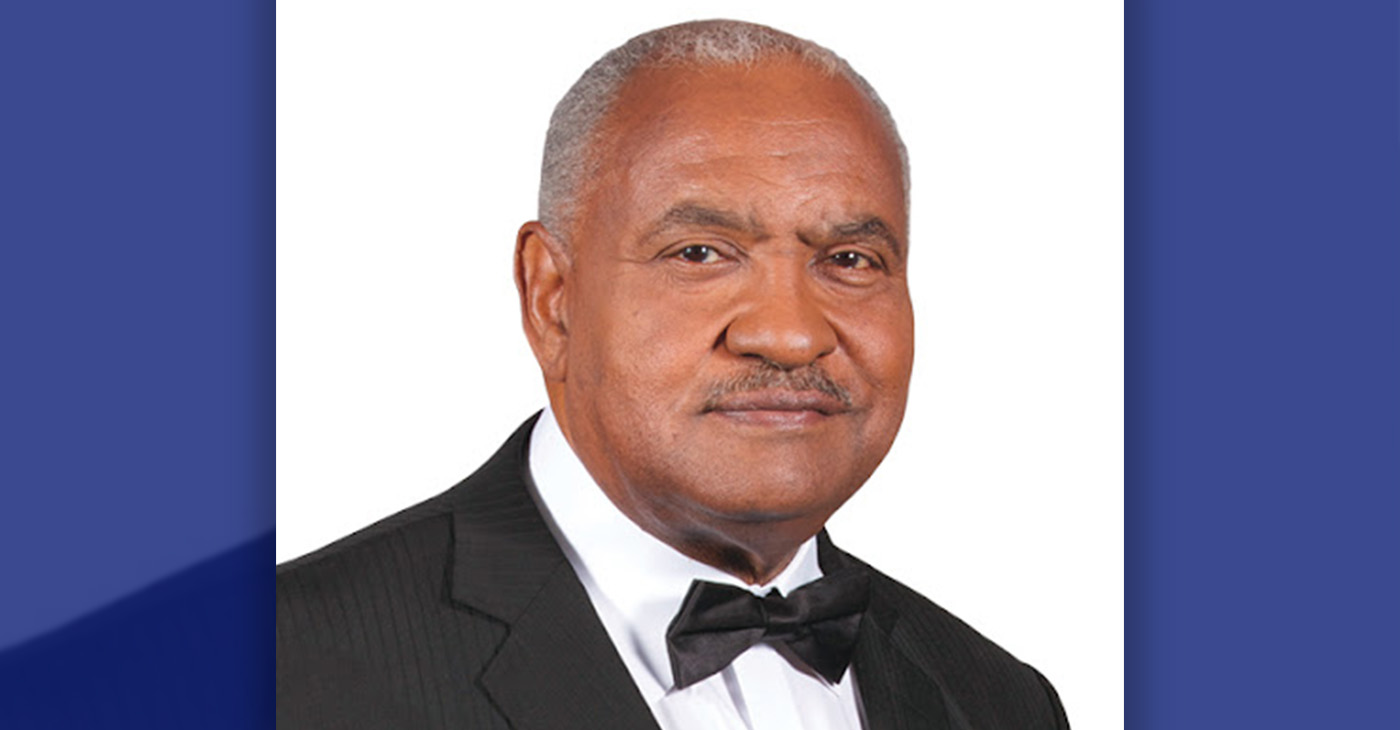
By Dr. John E. Warren, Publisher San Diego Voice & Viewpoint Newspaper
As thousands of Americans march every week in cities across this great nation, it must be remembered that the protest without the vote is of no concern to Donald Trump and his administration.
In every city, there is a personal connection to the U.S. Congress. In too many cases, the member of Congress representing the people of that city and the congressional district in which it sits, is a Republican. It is the Republicans who are giving silent support to the destructive actions of those persons like the U.S. Attorney General, the Director of Homeland Security, and the National Intelligence Director, who are carrying out the revenge campaign of the President rather than upholding the oath of office each of them took “to Defend The Constitution of the United States.”
Just as Trump is gathering election data like having the FBI take all the election data in Georgia from the 2020 election, so must we organize in preparation for the coming primary season to have the right people on ballots in each Republican district, so that we can regain control of the House of Representatives and by doing so, restore the separation of powers and balance that our democracy is being deprived of.

In California, the primary comes in June 2026. The congressional races must be a priority just as much as the local election of people has been so important in keeping ICE from acquiring facilities to build more prisons around the country.
“We the People” are winning this battle, even though it might not look like it. Each of us must get involved now, right where we are.
In this Black History month, it is important to remember that all we have accomplished in this nation has been “in spite of” and not “because of.” Frederick Douglas said, “Power concedes nothing without a struggle.”
Today, the struggle is to maintain our very institutions and history. Our strength in this struggle rests in our “collectiveness.” Our newspapers and journalists are at the greatest risk. We must not personally add to the attack by ignoring those who have been our very foundation, our Black press.
Are you spending your dollars this Black History Month with those who salute and honor contributions by supporting those who tell our stories? Remember that silence is the same as consent and support for the opposition. Where do you stand and where will your dollars go?
Activism
Post Newspaper Invites NNPA to Join Nationwide Probate Reform Initiative
The Post’s Probate Reform Group meets the first Thursday of every month via Zoom and invites the public to attend. The Post is making the initiative national and will submit information from its monthly meeting to the NNPA to educate, advocate, and inform its readers.

By Tanya Dennis
The National Newspaper Publishers Association (NNPA) represents the Black press with over 200 newspapers nationwide.
Last night the Post announced that it is actively recruiting the Black press to inform the public that there is a probate “five-alarm fire” occurring in Black communities and invited every Black newspaper starting from the Birmingham Times in Alabama to the Milwaukee Times Weekly in Wisconsin, to join the Post in our “Year of Action” for probate reform.
The Post’s Probate Reform Group meets the first Thursday of every month via Zoom and invites the public to attend. The Post is making the initiative national and will submit information from its monthly meeting to the NNPA to educate, advocate, and inform its readers.
Reporter Tanya Dennis says, “The adage that ‘When America catches a cold, Black folks catch the flu” is too true in practice; that’s why we’re engaging the Black Press to not only warn, but educate the Black community regarding the criminal actions we see in probate court: Thousands are losing generational wealth to strangers. It’s a travesty that happens daily.”
Venus Gist, a co-host of the reform group, states, “ Unfortunately, people are their own worst enemy when it comes to speaking with loved ones regarding their demise. It’s an uncomfortable subject that most avoid, but they do so at their peril. The courts rely on dissention between family members, so I encourage not only a will and trust [be created] but also videotape the reading of your documents so you can show you’re of sound mind.”
In better times, drafting a will was enough; then a trust was an added requirement to ‘iron-clad’ documents and to assure easy transference of wealth.
No longer.
As the courts became underfunded in the last 20 years, predatory behavior emerged to the extent that criminality is now occurring at alarming rates with no oversight, with courts isolating the conserved, and, I’ve heard, many times killing conservatees for profit. Plundering the assets of estates until beneficiaries are penniless is also common.”
Post Newspaper Publisher Paul Cobb says, “The simple solution is to avoid probate at all costs. If beneficiaries can’t agree, hire a private mediator and attorney to work things out. The moment you walk into court, you are vulnerable to the whims of the court. Your will and trust mean nothing.”
Zakiya Jendayi, a co-host of the Probate Reform Group and a victim herself, says, “In my case, the will and trust were clear that I am the beneficiary of the estate, but the opposing attorney said I used undue influence to make myself beneficiary. He said that without proof, and the judge upheld the attorney’s baseless assertion. In court, the will and trust is easily discounted.”
The Black press reaches out to 47 million Black Americans with one voice. The power of the press has never been so important as it is now in this national movement to save Black generational wealth from predatory attorneys, guardians and judges.
The next probate reform meeting is on March 5, from 7 – 9 p.m. PST. Zoom Details:
Meeting ID: 825 0367 1750
Passcode: 475480
All are welcome.

WORK FROM HOME
Home-based business with potential monthly income of $10K+ per month. A proven training system and website provided to maximize business effectiveness. Perfect job to earn side and primary income. Contact Lynne for more details: Lynne4npusa@gmail.com 800-334-0540


CITY OF SAN LEANDRO STATE OF CALIFORNIA PUBLIC WORKS DEPARTMENT ENGINEERING DIVISION NOTICE TO BIDDERS FOR ANNUAL STREET OVERLAY/REHABILITATION 2019-21 – PHASE III

Oakland Post: Week of February 11 = 17, 2026

Rising Optimism Among Small And Middle Market Business Leaders Suggests Growth for California

Discrimination in City Contracts

COMMENTARY: The National Protest Must Be Accompanied with Our Votes

Congresswoman Simon Votes Against Department of Homeland Security, ICE Funding

Post Newspaper Invites NNPA to Join Nationwide Probate Reform Initiative

Community Celebrates Turner Group Construction Company as Collins Drive Becomes Turner Group Drive

New Bill, the RIDER Safety Act, Would Support Transit Ambassadors and Safety on Public Transit

Trump’s White House Pushes to Control California Wildfire Recovery

Gov. Newsom, AG Bonta to Local Law Enforcement: You Have Authority to Investigate Federal Agents

Dorothy Lee Bolden: Uniting Domestic Workers

Cracking Down on Human Trafficking, California DOJ Announces 120 Arrests

COMMENTARY: The Biases We Don’t See — Preventing AI-Driven Inequality in Health Care

California Launches Study on Mileage Tax to Potentially Replace Gas Tax as Republicans Push Back

Protecting California’s Black Moms and Babies: Policies and Programs Struggle to Fix Deep-Rooted Maternal Health Inequities

Why Peace on Earth Begins with Birth, a Q&A with Midwife Nikki Helms

Life Expectancy in Marin City, a Black Community, Is 15-17 Years Less than the Rest of Marin County

Jefferson County (AL) Democrats Open Qualifying for 2026 Primary Elections

Oakland Post: Week of January 28, 2025 – February 3, 2026

Skater Emmanuel Savary Sharpens Routines for the 2026 U.S. Championships

COMMENTARY: With Gratitude and Praise for 2026

OP-ED: The Dream Cannot be Realized Without Financial Freedom

From Civil Rights to ICE Raids, Trump’s Unchecked Power Puts Every Community at Risk
California Launches Study on Mileage Tax to Potentially Replace Gas Tax as Republicans Push Back
From Civil Rights to ICE Raids, Trump’s Unchecked Power Puts Every Community at Risk
Community Celebrates Turner Group Construction Company as Collins Drive Becomes Turner Group Drive

Travis Scott Teaches Us How to Give Forward

Oakland Post: Week of January 21 – 27, 2026

Four Stolen Futures: Will H-E-B Do The Right Thing?

Hyundai Ioniq 5 Parking, Safety, and 360 View #shorts

2025 Ioniq 5 New Wiper & Powerful Performance! #shorts

Electric SUV Range: Is 259 Miles Enough? #shorts

EV Charging: How Fast Can You Charge an Electric Vehicle? #shorts

Biometric Cooling… Messaging Seats…Come on! 2025 Infiniti QX80 Autograph 4WD

Charged Up: Witness the Magic of a Fully Electric Car! #shorts

Range Rover Sport PHEV Included…: See What’s Inside This Luxury SUV! #shorts

Invisible Hood View: Perfect Parking with X-Ray Vision! #shorts

AI Is Reshaping Black Healthcare: Promise, Peril, and the Push for Improved Results in California

ESSAY: Technology and Medicine, a Primary Care Point of View

Sanctuary Cities

The RESISTANCE – FREEDOM NOW

STATE OF THE PEOPLE: Freddie

ECONOMIC BOYCOTT DAY!!!!!

I told You So
-
 Activism3 weeks ago
Life Expectancy in Marin City, a Black Community, Is 15-17 Years Less than the Rest of Marin County
-
 Activism3 weeks ago
Oakland Post: Week of January 28, 2025 – February 3, 2026
-
 Business2 weeks ago
California Launches Study on Mileage Tax to Potentially Replace Gas Tax as Republicans Push Back
-
 Activism2 weeks ago
Community Celebrates Turner Group Construction Company as Collins Drive Becomes Turner Group Drive
-
 Activism4 weeks ago
Oakland Post: Week of January 21 – 27, 2026
-

 Activism2 weeks ago
After Don Lemon’s Arrest, Black Officials Raise Concerns About Independent Black Media
-

 Activism3 weeks ago
Medi-Cal Cares for You and Your Baby Every Step of the Way
-
 Activism2 weeks ago
COMMENTARY: The Biases We Don’t See — Preventing AI-Driven Inequality in Health Care
