
Featured
Cass Tech Graduates Head to MIT, Princeton and Dartmouth
MICHIGAN CHRONICLE — This fall, Sebastian Dorn will study aerospace engineering at the Massachusetts Institute of Technology. Khloe Travis will pursue aerospace and mechanical engineering at Princeton University. Emory Jones III will attend Dartmouth College, where he plans to study humanities and creative writing while playing football and competing in track and field.



By Jasmine West | Michigan Chronicle
Three Cass Technical High School graduates are preparing to take their talents from Detroit to some of the nation’s most selective universities, carrying with them ambitions that stretch from aerospace engineering to creative writing and Division I athletics.
This fall, Sebastian Dorn will study aerospace engineering at the Massachusetts Institute of Technology. Khloe Travis will pursue aerospace and mechanical engineering at Princeton University. Emory Jones III will attend Dartmouth College, where he plans to study humanities and creative writing while playing football and competing in track and field.
Their paths are different, but each reflects the academic rigor, personal discipline and community support that helped them envision themselves at institutions where Detroit students have not always seen themselves represented.
For Dorn, the path to MIT began with a childhood fascination with space.

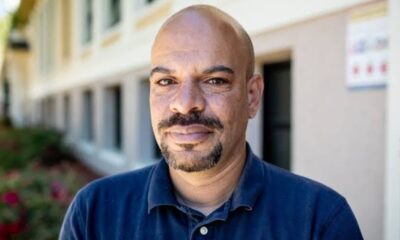
Photo: Sebastian Dorn
He was drawn to the universe, the physics behind space travel and the machines capable of traveling beyond Earth. That curiosity became a career goal after he joined Cass Tech’s solar car team and helped design and construct a working vehicle.
“My interest in aerospace engineering is really a combination of my fascination with space and the universe and my love for the engineering process,” Dorn said.

The solar car program allowed Dorn to move beyond studying scientific concepts and experience how engineers transform ideas into designs, confront problems and make those designs work.
“When I became a part of the solar car team during my high school years and worked on building and designing a vehicle, that really made me fall in love with the engineering process,” he said.
MIT had been one of Dorn’s goals for years because of its engineering programs. His interest grew after he participated in an MIT-affiliated summer program between his junior and senior years. The experience introduced him to the institution’s academic culture and convinced him that the university could be a strong fit.
“I really liked the culture of that program,” Dorn said. “So, I thought it would be a good fit for me.”
Dorn credits Cass Tech with giving him access to advanced courses, engineering experiences and students from a range of backgrounds.
“I think I had a very diverse and varied experience at Cass Tech,” he said. “I got to interact with a lot of people from a lot of different backgrounds, and I had access to opportunities that a lot of young people in the city don’t have access to because I went to Cass Tech.”
He also credits calculus teacher Mark Duhame with helping him develop the academic foundation he will need at MIT. Counselor Lisa Gooden guided him through the application process and wrote a recommendation on his behalf.
Dorn said Cass Tech Principal Lisa Phillips showed him that leadership should remain connected to community service. He recalled Phillips supporting an initiative that raised money for Detroit residents experiencing homelessness, reinforcing the idea that achievement also carries responsibility.
“My achievements are a product of the many people who are behind me,” Dorn said.
That support included his family, which provided the time, stability and encouragement he needed to study and pursue opportunities outside the classroom.
“My family has been supporting me from the very start,” he said. “They always made sure there was food on the table, made sure I had the time to study and take advantage of the opportunities that were in front of me, and gave me the resources, ability, love and support to push myself as hard as I could.”
While Dorn prepares for MIT, Travis will head to Princeton after finding a defining sense of community during her final two years at Cass Tech.
Travis transferred to the Detroit Public Schools Community District school as a junior after attending schools in the suburbs, including Cranbrook during middle school. At Cass Tech, she found ambitious Black students who made her feel welcomed, challenged and understood.

“When I transferred to Cass, I was met with such an amazing community, especially people who looked like me,” Travis said. “It was so important that I was able to get that cultural immersion before I graduated and see other young people around me who were so determined and well-rounded.”
Travis plans to study aerospace and mechanical engineering. Like Dorn, she credits Duhame’s Advanced Placement calculus course with strengthening her interest in STEM.
“He was one of the most interesting people who has ever taught me anything,” she said. “I learned so much in his class, and he really solidified my love for math and calculus, which most people don’t think is a very fun subject.”
The class also introduced Travis to friends who helped her become comfortable at a new school and more confident in her academic abilities.
“They really helped me find confidence in my own intelligence and feel so loved coming to Cass,” Travis said. “It helped me get well acclimated and adjusted, even though I was only there for a short time.”
Her aspirations were also shaped by the women in her family. Her cousin attended Stanford University, her sister graduated from the University of Michigan and her mother consistently encouraged her to perform at a high academic level.
“My mom always had confidence in me,” Travis said. “She was always my rock, inspired me and pushed me.”
Travis also participated in Leadership Enterprise for a Diverse America, a college-access and leadership program for high-achieving students. Through LEDA, she spent five weeks at Princeton and Yale and worked with a college counselor who encouraged her to apply to universities that initially seemed intimidating.
At Princeton, Travis intends to explore research, community service and social justice advocacy alongside her engineering coursework.
“I’ve always been a really big advocate for social justice issues and helping those who might not be as fortunate as me,” she said. “Princeton really emphasizes that, and I cannot wait to do more community service and social justice advocacy.”
She also plans to step outside her comfort zone. After learning about Princeton’s breakdancing club during an admitted-students event, Travis decided college should include opportunities to experiment and discover new interests.
“I definitely want to get out of my comfort zone and try some new things when I get there,” she said.
Jones will make his own history at Dartmouth as a student-athlete who spent four years refusing to choose between excellence in the classroom and achievement on the field.

He received a full scholarship to attend the Ivy League university in Hanover, New Hampshire, where he will play Division I football and compete in track and field.
“I’ve always been big on grades growing up, trying to keep a 4.0 every year of school,” Jones said. “I pride myself on being just as good off the field as I am on the field. It was the best of both worlds.”
That commitment was tested during the first semester of his junior year, when Jones earned a 4.0 grade-point average while helping Cass Tech’s football team win a state championship.
“That’s definitely the hardest school year through high school, and it was the year that we won a state championship,” he said. “Being able to balance the academic and athletic piece and still have all A’s, that was a really big moment for me.”
Jones said his guidance counselor encouraged him to consider the long-term value of an Ivy League education. Cass Tech head football coach Marvin Rushing also helped him navigate recruiting and evaluate which university would support his development as both an athlete and student.
Their guidance pushed Jones to look beyond the excitement of an athletic offer and consider the education, financial support and professional opportunities attached to each school.
Jones said Cass Tech staff members told him he is the school’s first athlete to attend an Ivy League institution. He sees the distinction as an opportunity to establish a path for students coming behind him.
“It means a lot to build that kind of status and put a light on my school so that other kids can come after me and do the same thing,” Jones said.
He is also aware of what it means to enter an Ivy League campus as a young Black man from Detroit.
“As an African American, I would say applying to an Ivy League may seem challenging or a little too complex,” Jones said. “But I think if you believe in yourself and know what you’re doing, if you are about your grades, pay attention in class and listen to your teachers, it’s not as difficult as you would at first think. Just trust yourself.”
Dorn, Travis and Jones are leaving Cass Tech with different academic interests, but each student emphasized the importance of refusing to place limits on what Detroit students can accomplish.
Travis encouraged students, particularly Black girls, to resist imposter syndrome when considering selective universities.
“When you’re applying to schools like Princeton or other top schools, you can think, ‘Do I really deserve to go somewhere like this?’” she said. “But you do.”
Dorn offered a similar message to students who may believe universities such as MIT are reserved for someone from another city, neighborhood or school.
“There’s nothing that anybody else can do that you can’t as well,” Dorn said. “You always have to remember that you can do anything that you want to do, and there’s nothing stopping you from achieving all that you wish.”
Jones encouraged students to place their education first while remaining confident and grounded.
“Being a DPSCD student means a lot, especially with the kind of city that we’re from,” he said. “I would tell students coming behind me to keep grades first, keep confidence in yourself, trust in God and just have faith.”
When they arrive in Cambridge, Princeton and Hanover, the three graduates will carry the lessons, relationships and expectations that shaped them at Cass Tech. Their achievements also leave Detroit students with three new examples of what is possible when talent is met with opportunity, preparation and a community that reinforces their right to aim high.
Based on reporting by Michigan Chronicle.









To enlarge your view of this issue, use the slider, magnifying glass icon or full page icon in the lower right corner of the browser window.

Community
Alameda County Supervisor Miley to Propose Illegal Dumping Ordinance
POST NEWS GROUP — The proposed ordinance would add Chapter 6.121 to the County’s General Ordinance Code, establishing an administrative enforcement process that would allow the County to hold more parties accountable without relying solely on criminal prosecution.
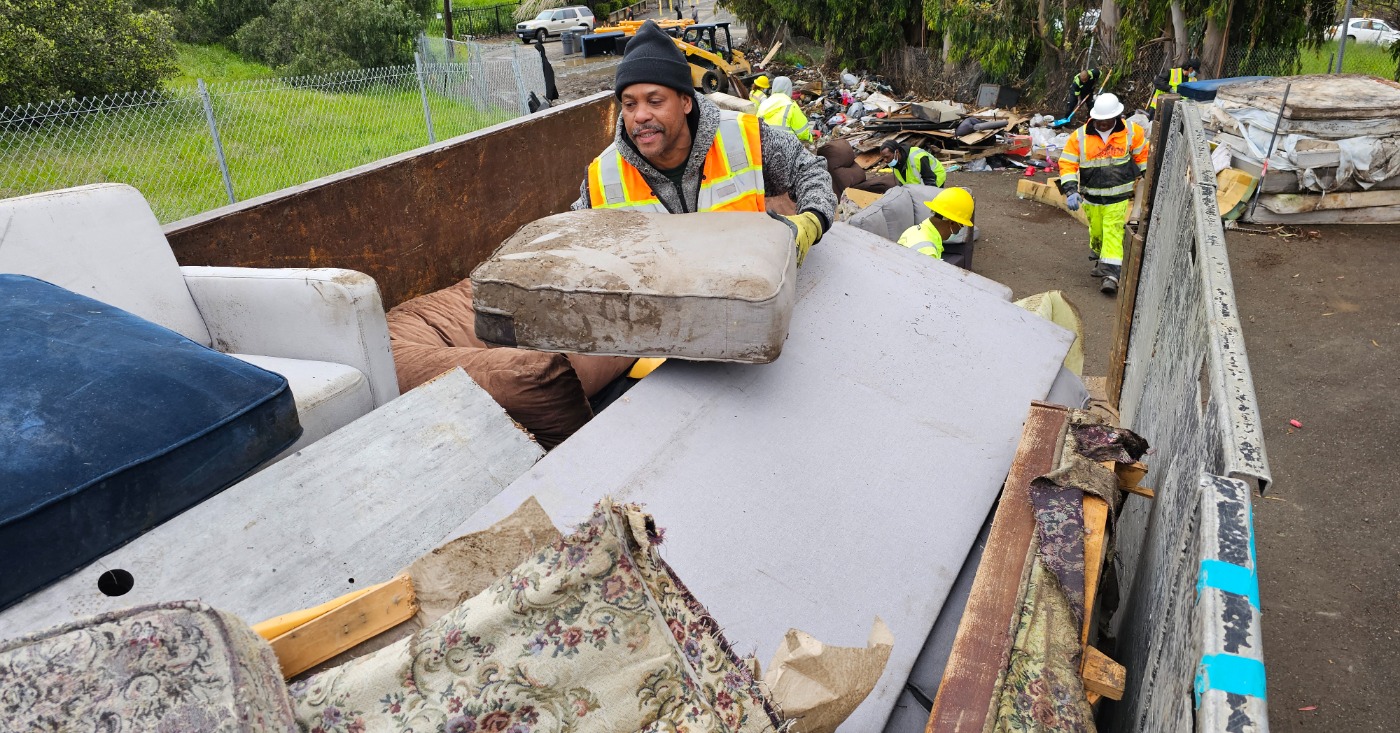
Proposal expands accountability, establishes administrative penalties, and ties fines to cleanup costs
On Tuesday, Nov. 17, the Alameda County Board of Supervisors is scheduled to consider the first reading of an ordinance proposed by Supervisor Nate Miley to strengthen enforcement against illegal dumping in unincorporated Alameda County, including Ashland, Cherryland, Castro Valley, San Lorenzo and Fairview.
Illegal dumping places a significant financial burden on residents and taxpayers. In 2024, Alameda County spent $3.8 million addressing 1,483 illegal dumping incidents, an average of approximately $2,562 per incident. Yet no illegal dumping cases from the unincorporated county were charged that year.
The proposed ordinance would add Chapter 6.121 to the County’s General Ordinance Code, establishing an administrative enforcement process that would allow the County to hold more parties accountable without relying solely on criminal prosecution.
Key provisions include:
- Expanded accountability: Penalties could apply to individuals who dump waste, those who provide waste to unlicensed haulers who illegally dispose of it, and vehicle owners who knowingly consent to their vehicles being used for illegal dumping.
- Administrative enforcement: Authorized County personnel could issue penalties and abatement orders, with opportunities for administrative hearings and judicial review.
- Penalties tied to cleanup costs: Fines would start at $2,500 for a first violation, increase to $5,000 for a second and $10,000 for a third. Enhanced penalties of up to $10,000 per violation could apply to large-scale dumping, hazardous waste, or dumping near sensitive locations such as creeks, schools and storm drains.
The ordinance includes safeguards for people acting in good faith. Residents and businesses using licensed haulers would be exempt from waste-generator liability, while vehicle owners whose vehicles were used without their consent and property owners unaware of dumping on their land would also be protected.

Cited individuals could request community service in lieu of penalties, with ability to pay among the factors considered. The proposal would also allow property owners, business improvement districts and community groups to pursue recovery of cleanup costs and authorize the Board to establish a reward fund for tips identifying illegal dumpers.
“Every mattress and every truckload of construction debris dumped in Ashland, Cherryland and Castro Valley gets paid for by the people who live there, and right now the people responsible almost never face a consequence,” Miley said. “This ordinance closes the loopholes that let people hand off their waste and walk away. It gives the County a fair and swift way to hold dumpers accountable, protects people who do the right thing, and makes the penalty match what it costs us to clean up after them.”
Modeled on Santa Cruz County’s illegal dumping ordinance, which took effect in July 2025, the proposal was recommended for approval by the Board’s Unincorporated Services Committee.
Miley is also urging cities and counties throughout the region to adopt similar standards. His office has released a Model Illegal Dumping Enforcement Ordinance developed through the Alameda County Illegal Dumping (ACID) Task Force to support coordinated regional enforcement.
If the Board conducts the first reading on Nov. 17, the ordinance will return for adoption at a subsequent meeting and take effect 30 days after adoption.
Paul Sanftner is the director of communications and special projects for the office of Alameda County Supervisor Nate Miley.
Community
On Veterans Day, U.S. Rep. Simon Demands Answers on Status of Veterans Affairs Clinic, Columbarium Project
POST NEWS GROUP — “Our veterans have served our nation with dignity and sacrificed so much for our nation – they deserve the best care and benefits possible, close to home. That’s why it is abhorrent that the Trump Administration has canceled the planned construction of a new clinic and columbarium at Alameda Point, despite years of planning and more than $395 million in federal funding already invested in the project.

On Veterans Day, Congresswoman Lateefah Simon (D-CA-12) once again called on the Trump administration to provide answers on the status of the Alameda Point Veterans Affairs Clinic and Columbarium Project. Her statement is provided below.
“Our veterans have served our nation with dignity and sacrificed so much for our nation – they deserve the best care and benefits possible, close to home. That’s why it is abhorrent that the Trump Administration has canceled the planned construction of a new clinic and columbarium at Alameda Point, despite years of planning and more than $395 million in federal funding already invested in the project.
“Last year, I demanded answers from the Secretary of Veterans Affairs, Douglas Collins, about the decision and received no response.
That’s why, earlier this year, I worked with my colleagues Speaker Emerita Nancy Pelosi and Rep. Kevin Mullin to successfully fight for and secure report language in the Fiscal Year 2027 Military Construction, Veterans Affairs, and Related Agencies Appropriations bill that would require the Trump administration to provide answers on the status of the project.
“As the Senate considers the Fiscal Year 2027 Military Construction, Veterans Affairs (MilCon-VA), and Related Agencies Appropriations bill, the report language we secured in the House must be included in any final MilCon-VA appropriations bill, so that the 27,000 veterans in my district get the answers they deserve.

“I will not stand idly by as this administration unfairly reels back healthcare services and access for our veterans, and I will continue to hold this administration’s feet to the fire and fight for our district’s previously allocated resources.”
U.S. Rep. Lateefah Simon’s media relations office is the source of this report.



Oakland Post: Week of November 11 -17, 2026

Alameda County Supervisor Miley to Propose Illegal Dumping Ordinance

Oakland City Council Extends AI Data Center Moratorium for 10 Months.

On Veterans Day, U.S. Rep. Simon Demands Answers on Status of Veterans Affairs Clinic, Columbarium Project

OPINION: Mario Juarez’s Courtroom Admissions Raise Questions About Allegations That Fueled Recall of Pamela Price

Hutchinson Concedes: Ballots Still Being Counted in Oakland Board Elections

Mayor Lee and Schools’ Supt. Saddler Issue Joint Statement on Recent ICE Activity in Oakland

Mississippi Congressman Bennie Thompson Congratulates Scott Colom on Historic Victory

Farms to Grow, Inc. Hosts the 8th Annual Sweet Potato Pie Tasting Contest

Oakland Post: Week of November 4 – 10, 2026

How the Sandwich Generation Can Help Protect Aging Parents’ Finances

As Progressive Democrats Celebrate ‘Blue Tsunami,’ Oakland Counts Victories

Golden State Valkyries Become Bay Area Legends Winning WNBA Championship on Halloween Night

IN MEMORIAM: Marcia Ann Gillespie, Editor of Essence and Ms. Magazines, Dies at 82

U.S. Rep. John Garamendi Honors local ‘Women of the Year’ at Annual Awards Ceremony

COMMENTARY: Valarie Bachelor and Jennifer Brouhard are Excellent School Board Members and Deserve to Be Reelected

OUSD Receives State Review of District Finances; Outlines Progress Since January

HISTORY MADE: Keisha Lance Bottoms Becomes First Black Woman Elected Governor in American History

SEIU Local 1000 and State of California Will Continue to Negotiate New Labor Contract

Fate of Bay Area Public Transit Hinges on Regional Transit Measure
Golden State Valkyries Become Bay Area Legends Winning WNBA Championship on Halloween Night

COMMENTARY: Your California Living Trust Could Be Next: When Evidence Isn’t Enough

Chase Launches Fraud & Scam Prevention Month

Mayor Barbara Lee Holds Special State of the City Address in Deep East Oakland

It’s Time to Lose Weight Before the Holidays

Democrats, Community Groups Back Measure EE to Change How Oakland Is Governed

Oakland Awarded More than $14 Million in State Funding

Post News Group Nov. 3 Election Endorsements

Richmond Neighbors Put Pantry Power on the Map

Oakland Post: Week of October 7 – 13, 2026

The Conversation With Al McFarlane 6/23/26

Media Monday 6/22/26

LIVE! ASK ALMA! — TUES. 6.23.26 7PM EST

Car Buying Secrets: 4 Hidden Checks Before You Sign!

Is This 550 HP Charger Worth YOUR Money? AutoNetwork Review

Celebrating Juneteenth – Frederick Douglass on education and resistance

LIVE! — ASK ALMA! — TUES. 6.19.26 7PM EST

Hyundai Ioniq 5 Parking, Safety, and 360 View #shorts

2025 Ioniq 5 New Wiper & Powerful Performance! #shorts

Electric SUV Range: Is 259 Miles Enough? #shorts

EV Charging: How Fast Can You Charge an Electric Vehicle? #shorts

Biometric Cooling… Messaging Seats…Come on! 2025 Infiniti QX80 Autograph 4WD

Charged Up: Witness the Magic of a Fully Electric Car! #shorts

Range Rover Sport PHEV Included…: See What’s Inside This Luxury SUV! #shorts

Invisible Hood View: Perfect Parking with X-Ray Vision! #shorts
-
 Commentary2 weeks ago
COMMENTARY: Valarie Bachelor and Jennifer Brouhard are Excellent School Board Members and Deserve to Be Reelected
-
 Education2 weeks ago
OUSD Receives State Review of District Finances; Outlines Progress Since January
-
 Black History2 weeks ago
HISTORY MADE: Keisha Lance Bottoms Becomes First Black Woman Elected Governor in American History
-
 Business2 weeks ago
SEIU Local 1000 and State of California Will Continue to Negotiate New Labor Contract
-
 Business3 weeks ago
Fate of Bay Area Public Transit Hinges on Regional Transit Measure
-
 Community2 weeks ago
Golden State Valkyries Become Bay Area Legends Winning WNBA Championship on Halloween Night
-
 Business2 weeks ago
COMMENTARY: Your California Living Trust Could Be Next: When Evidence Isn’t Enough
-
 Business4 weeks ago
Chase Launches Fraud & Scam Prevention Month
