
Census
‘California Complete Count — Census 2020’ Plans Education And Outreach Campaign


California’s Complete Count — Census 2020, is in full swing, laying out its comprehensive education and outreach campaign to make the public aware of activities and important dates leading up to Census Day Apr. 1, 2020.
Diana Crofts-Pelayo, its assistant deputy director for external affairs and media relations, emphasized that the California Complete Count — Census 2020 Office is not part of the U.S. Census Bureau. ”We are a state office that is primarily responsible for conducting an outreach and education campaign throughout California to get people to be aware of the census and fill out the form.”
“The Census is not new to California and it has always been very challenging to ensure an accurate count, which is why we have invested a historic $187 million that was allocated by the State Legislature to conduct this campaign.”
“We’re coordinating efforts that haven’t been done before,” continued Crofts-Pelayo. “We are working with partners, local and tribal governments, county offices of education and other regional and state organizations throughout the state to assist in our efforts.”
“Because California is so big and diverse, the allocated funds will designate a large portion of the funding to reach the state’s hard-to-count population. Some of the populations include individuals and families that live in places that may be difficult to access because of location and climate.”

“This is why our trusted messengers and partners are so important,” said David Tucker, Northern California lead regional program manager for the Complete Count Office. “They know what outreach methods will best serve their communities.”
“Some of the canvassing that needs to be done will employ people who can traverse difficult terrain and adapt to harsh weather conditions. It is hoped that our partners will deploy workers who are familiar with the population in those hard-to-reach areas,” said Crofts-Pelayo.
“The primary goal here is to educate, motivate, activate,” noted Tucker. “We need people to pay attention to the mailings that will be sent out beginning March 12. We’re hoping for self-responses from the public. For those we don’t receive a response, a follow-up with a personal contact will start in May. All responders can do so online, phone or by mail. We want to make sure all are counted, including those in encampments and at soup kitchens.”
Crofts-Pelayo reiterated that California’s partners will be doing phone-banking, canvassing and door-knocking on doors in hundreds of communities throughout California. “This awareness campaign is to ensure many responders will self-respond prior to April 30th,” she said. “However, this part of reaching out will continue through July, at which point residents can expect to have contact with a census taker.”
“The best way to help communicate our message is through conversation,” said Tucker. “Have discussions about the Census at your church, school, family gatherings, as well as social events. Stress the importance that some of the resources people are now receiving could easily be lost if the census does not have an accurate count, and how that will affect your community for the next 10 years.”
Tucker concluded that by mid-April, the Complete Count Office will have a snapshot of what areas have or have not responded and where more concentration is needed. “Throughout April, our program will be working at ground level,” said Tucker. “If, for instance, we have a low response rate along a certain tract, we can make it a high priority to send our partners to concentrate on those areas. It will then be the Bureau’s responsibility to hire the necessary enumerators and canvassers to work at focusing on and addressing those areas.”
For more information on California’s Census efforts, please visit californiacensus.org or contact the offices in Sacramento, CA at 916-852-2020.







Activism
Black Californians Among Those Discovering American Indian Lineage
The Dawes Act of 1887 gave each tribal family head 160 acres of land and each single person 80 acres. The government would hold the land title in a trust for 25 years, after which each individual would receive United States citizenship and a “fee simple” land title. Under this law, Black tribal members, known as Freedmen, were granted approximately 2 million acres of land.

By Lila Brown, California Black Media
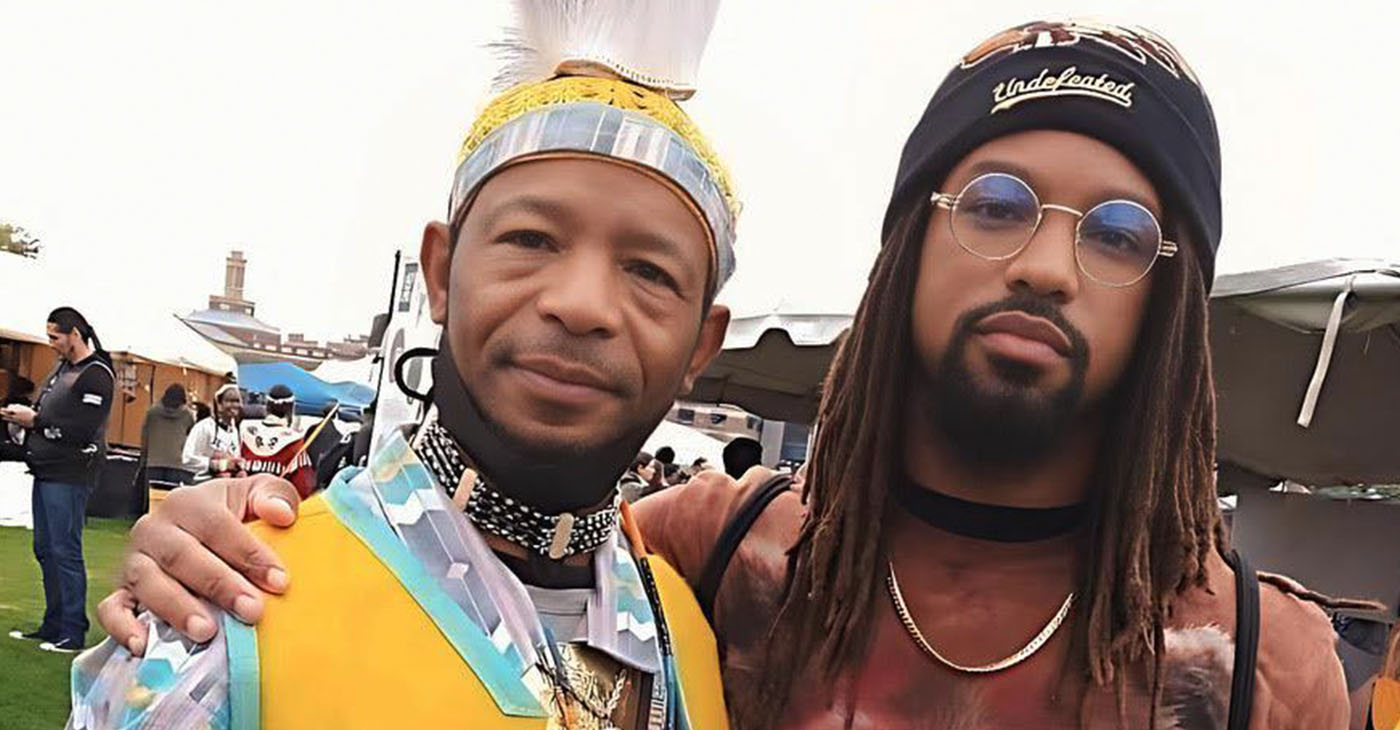
A growing number of Black Americans, relying on newly digitized federal records and other sources, are discovering direct bloodlines to Native American ancestors. These discoveries are inspiring individuals to trace and claim their Native ancestry, leading some to apply for citizenship with tribal nations.
When 32-year-old Daniel Bruce Kelly, an actor and minister, began researching his genealogy, he was sure that he would identify a family origin in Africa.
He identifies as African American and says he was determined to prove his parents wrong. They had begun discovering, exploring and embracing their European and Native American ancestry.
In his research, Kelly discovered that his great-great-great-grandfather was registered as Cherokee on the Dawes Roll, a United States government record listing individuals eligible for Indigenous tribal citizenship.
Kelly also identified other family members listed as Indian on U.S. Census Bureau records.
“At first, I was offended that my parents didn’t want to claim to be African, but then I had this awakening. You can’t talk about Native American history without talking about the Black American Indians,” Kelly said.
Similarly, Cameron Lewis, a truck driver from Sacramento, says he always heard family members talk about having “Indian in the family.” Delving into family documents, he found out that his great-great grandfather acquired land in the mid-1800s in areas of Florida inhabited by Seminoles.

“I found it hard to believe that whites would sell hundreds of acres of land to Blacks in the South during slavery,” he said. “This was when I started coming across terms I was not familiar with, describing my ancestors as ‘mulatto’ and ‘intransigent,’ and linking them to tribes such as the Yamasee, Catawba, and Creek — terms I’ve never even heard of.”
The Dawes Act of 1887 gave each tribal family head 160 acres of land and each single person 80 acres. The government would hold the land title in a trust for 25 years, after which each individual would receive United States citizenship and a “fee simple” land title. Under this law, Black tribal members, known as Freedmen, were granted approximately 2 million acres of land.
In Oklahoma’s Creek Nation, about a third of the land was Black-owned.
While the Emancipation Proclamation was signed by President Abraham Lincoln in 1863, slavery in the continental United States did not fully end as a legal institution until June 14, 1866, when the Creek Tribe agreed to abandon enslavement of African Americans. That was the day after Congress approved the Fourteenth Amendment.
Recent efforts to recognize historical injustices against Native Americans have seen progress. Last month, during Native American Heritage Month, Gov. Gavin Newsom issued a Proclamation celebrating the unveiling of a monument dedicated to California Native peoples at the State Capitol.
While this progress is appreciated, many Black Native Americans feel that the history of their Black freedman ancestors remains largely overlooked.
“We have to tell the whole of the story,” said Cherokee Nation Principal Chief Chuck Hoskin Jr. in 2022 during the 70th annual Cherokee National Holiday.
“We have to acknowledge that we enslaved African Americans under our own law. If we ignore or suppress that, we do to Freedmen and their descendants the same things that has been done to Cherokee people. Any nation is a stronger nation if they tell their whole story: the tragedy, the triumph, and the chapters that are dark and difficult,” added Hoskin.
According to the 2020 U.S. Census, approximately 1.4 million Californians identify as fully or partially American Indian and Alaskan Native. California also has the largest Native American population in the country, with close to 900,000 Native residents.
A population map commissioned by the Cherokee Nation in 2013 shows that California has the second-largest Cherokee population in the country after Oklahoma, where many displaced American Indians settled after the Trail of Tears in the 1830s.
In 2021, the Cherokee Nation Supreme Court removed the phrase “by blood” from its constitution. That change acknowledges that the descendants of Black people once enslaved by the tribe, the “Cherokee Freedmen,” have the right to citizenship, which means they are eligible to run for tribal office and to access other resources.
However, debates about who is — and who is not — Native continue.
For example, the great-great-great-grandmother of Kiori Jordan-Marquering, 46, of Santa Rosa, who was known as “Indian Julia,” was denied acceptance into the Choctaw Nation based on her appearance.
“She is visibly Negro,” the space reserved for “office use” on her application form noted.
“My ancestor’s application for citizenship was contested in court for more than three years before ultimately being denied,” says Jordan-Marquering.
Only the Cherokee Nation and the Seminole Tribe of Florida recognize Freedmen as eligible for citizenship.
This resource is supported in whole or in part by funding provided by the State of California, administered by the California State Library in partnership with the California Department of Social Services and the California Commission on Asian and Pacific Islander American Affairs as part of the Stop the Hate program. To report a hate incident or hate crime and get support, go to CA vs Hate.

#NNPA BlackPress
How Mitsubishi Will Survive – AutoNetwork Reports 365 – Auto Talk Show
Auto Talk show How Mitsubishi Will Survive – Jeremy Barnes, Sr. Director, Communications, and Events will discuss Mitsubishi now, electrification, the future, and how Mitsubishi remains relevant. Latest Automotive News and Car Reviews AutoNetwork Reports. Our panel discusses news from Toyota, Nissan, Buick, MBUSA, Ford, and more. Weekly car reviews and automotive news of interest. […]
The post How Mitsubishi Will Survive – AutoNetwork Reports 365 – Auto Talk Show appeared first on BlackPressUSA.


https://youtube.com/watch?v=1fpDYGl3tlQ&autoplay=0&cc_lang_pref=en&cc_load_policy=0&color=0&controls=1&fs=1&h1=en&loop=0&rel=0
Auto Talk show How Mitsubishi Will Survive – Jeremy Barnes, Sr. Director, Communications, and Events will discuss Mitsubishi now, electrification, the future, and how Mitsubishi remains relevant.
Latest Automotive News and Car Reviews AutoNetwork Reports. Our panel discusses news from Toyota, Nissan, Buick, MBUSA, Ford, and more. Weekly car reviews and automotive news of interest. We help you better understand and appreciate the auto industry. Find out why they would buy the vehicle or not. Join our panel of auto journalists influencers as we discuss this and simplify the latest auto industry news to help you appreciate the auto industry business. 365
The post How Mitsubishi Will Survive – AutoNetwork Reports 365 – Auto Talk Show appeared first on BlackPressUSA.

Bay Area
Bay Area Activist Seeks Congressional Seat in Newly Formed District 8
Last year, the California Black Census and Redistricting Hub pushed the California Citizens Redistricting Commission to draw a new congressional district to create consolidate the voting power of these diverse communities based on the results of the 2020 U.S. Census. (The new district now spans the I-80 corridor across Contra Costa and Solano counties, including Richmond, El Cerrito, Pittsburg, Vallejo, Fairfield, and a portion of Antioch, is the most diverse in the region.)
By Troy Finley

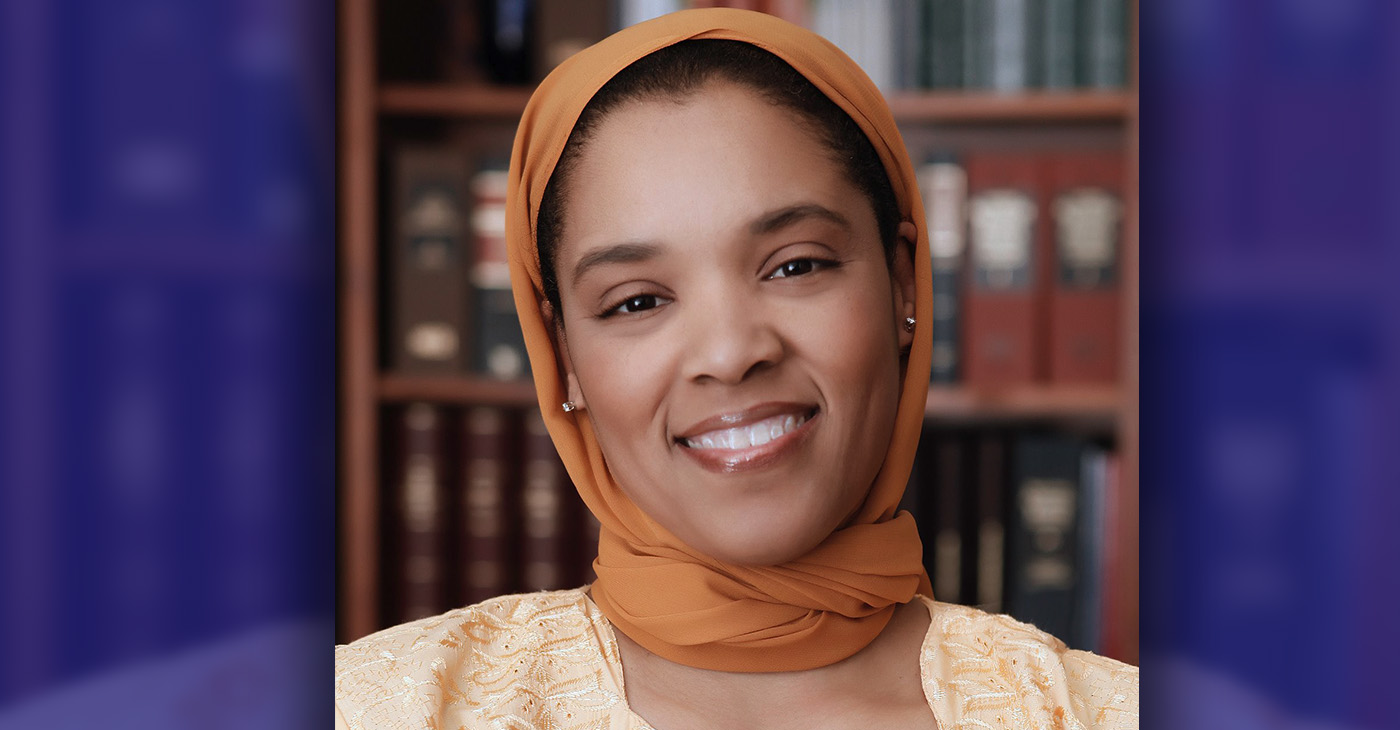
Cheryl Sudduth, a Bay Area community organizer and international negotiator, is seeking election as the first U.S. Representative for California’s new 8th Congressional district. She is challenging incumbent Democratic Congressman John Garamendi.
Last year, the California Black Census and Redistricting Hub pushed the California Citizens Redistricting Commission to draw a new congressional district to consolidate the voting power of these diverse communities based on the results of the 2020 U.S. Census.
(The new district now spans the I-80 corridor across Contra Costa and Solano counties, including Richmond, El Cerrito, Pittsburg, Vallejo, Fairfield, and a portion of Antioch, is the most diverse in the region.)
The commission agreed to the community concerns and ended up creating the only district in the entire state with at least 15% Latino, Black, white, and Asian populations. But it is also a district with areas of historically underserved and under-resourced communities and schools – where residents throughout struggle to find affordable housing, good paying jobs, public transit, and ongoing environmental hazards.
The five oil refineries located in the new district have large impacts on the local economy and public health of the local communities but can seem a world away from the Napa and Sonoma wine country. It is also a district that Garamendi believes he doesn’t have to reside in to represent it.
Once the new district was created, the next goal was to recruit a local person of color to represent it. Enter Cheryl Sudduth, a local community leader and government contracting officer… a candidate for the new seat.
As a multiethnic, multicultural, multilingual woman with disabilities, experienced in international contracting and environmental sciences, she fit the mold exactly.
“It was never in the plan to run,” said Sudduth. She was traveling back to the Bay Area from a water conference and got a call she never expected.
The campaign for Congress was a long shot from the start. “People were saying, she seems ‘fine’ but Congressman Garamendi is a veteran politician and someone who looks like me, who speaks like me, who moves like me could never get elected over him…maybe next time,” Sudduth recalls.
However, I believed then – as I do now – that the toughest fights are always worth taking on,” she said. “I’ve always been told that government only works when people, everyday people like you and me, raise our voices and demand change.
“Our communities have been so ignored,” she said, “I just feel like it’s our responsibility to show up and stand up for us against this continued effort to bring in people who do not live here yet always want to govern our communities.”
Her campaign has mostly been staffed with volunteers – Millennials, Gen Xers, lots of women. She has made a point to reject corporate donations and relies solely on small donors; nearly 70% of her campaign funds came from individual contributions under $200.
Despite Garamendi’s proclamation that it isn’t ‘legally required’ to live in the district, Sudduth believes that his perspective reflects the out-of-touch nature of the current Congress and the sort of nepotism that seems to thrive within the Democratic machine that believes it a perfectly suitable system that a community which is 70% people of color has never had a person of color represent them on the federal level.
“Our political differences are mainly on issues of economic and racial justice,” she said. “He wants to represent us but doesn’t want to live among us? That’s why he’s not effective for us. He doesn’t have a stake in the game.
“I do have the advantage of being able to connect with the people of the community,” she said. She lives in the district near industry, which gives her firsthand experience with income inequality, housing and homeless issues, educational inequities, and racial injustices. “Frankly, anyone who doesn’t live in the district, hasn’t sent his children to our schools, spent with our small businesses and pay taxes here regularly, doesn’t drink our water or breathe our air, cannot possibly represent us.”
Suddoth believes she has a gift “resolving issues. So, every position I’ve held from Sony to Siebel/Oracle and Goodwill, AbilityOne, U.S. President’s Commission for People who are Blind or Disabled and Mattson Technology and now AC Transit, my elected office and appointed commissions, creating thousands of federal jobs, building housing, establishing healthcare programs – I have consistently delivered award winning solutions and community resources by focusing on the fix and not just the fight.
She also has direct experience in international contracting, having lived and worked in over a dozen countries managing and negotiating contracts in nine languages, in water and wastewater, in the environmental sciences, in creating jobs and overseeing fair housing projects, and equity advocacy.
Suddoth and members of her campaign are grateful for the many people who have endorsed her including ILWU Local 10, PEU 1, LAAAWPAC, former San Francisco Mayor Willie Brown, former Richmond Mayor Irma Anderson, former Oakland Mayor Elihu Harris, and hundreds of elected, appointed officials and commissioners.
https://cherylsudduth.nationbuilder.com



Native American Health Center Connects 140 Community Members to Career Opportunities During Native American Heritage Month

Oakland Chamber of Commerce Faces $42,000 Ethics Fine for Campaign Violation

Attorney General Bonta Serves Investigative Subpoena on Nvidia

A Record 216 Firearms Collected at East Oakland Gun Buy-Back Event

City Council Hearing Shines a Light on Failures of City’s Prompt Payment Policy

IN MEMORIAM: Claude T. Everhart, San Francisco’s First Black Deputy Mayor, Dies at 73

UC Doctors, Nurses and Community Rally to Demand ICE Out of UC Hospitals

Hypertension and Heart Disease: Doctors, Advocates and Patients Are Tackling the Leading Cause of Death for Black Californians

Marin City Is Especially Vulnerable to El Niño High Tides, Strong Winds, Flooding and Power Outages

‘We’re Committed to Delivering the Change that the American People Deserve’

Staying Ready: What Every Californian Should Know About Preparing for El Niño

Oakland Post: Week of November 18 – 24, 2026

Oakland Post: Week of November 11 -17, 2026

Alameda County Supervisor Miley to Propose Illegal Dumping Ordinance

Oakland City Council Extends AI Data Center Moratorium for 10 Months.

COMMENTARY: Valarie Bachelor and Jennifer Brouhard are Excellent School Board Members and Deserve to Be Reelected

OUSD Receives State Review of District Finances; Outlines Progress Since January

HISTORY MADE: Keisha Lance Bottoms Becomes First Black Woman Elected Governor in American History

SEIU Local 1000 and State of California Will Continue to Negotiate New Labor Contract

Golden State Valkyries Become Bay Area Legends Winning WNBA Championship on Halloween Night

COMMENTARY: Your California Living Trust Could Be Next: When Evidence Isn’t Enough

Fate of Bay Area Public Transit Hinges on Regional Transit Measure

Chase Launches Fraud & Scam Prevention Month

Mayor Barbara Lee Holds Special State of the City Address in Deep East Oakland

Democrats, Community Groups Back Measure EE to Change How Oakland Is Governed

Post News Group Nov. 3 Election Endorsements

Richmond Neighbors Put Pantry Power on the Map

From Backyard Grilling to Jack London Square: Jamale Carlyle’s Chicken Wing Success Story

It’s Time to Lose Weight Before the Holidays

Hutchinson Concedes: Ballots Still Being Counted in Oakland Board Elections

The Conversation With Al McFarlane 6/23/26

Media Monday 6/22/26

LIVE! ASK ALMA! — TUES. 6.23.26 7PM EST

Car Buying Secrets: 4 Hidden Checks Before You Sign!

Is This 550 HP Charger Worth YOUR Money? AutoNetwork Review

Celebrating Juneteenth – Frederick Douglass on education and resistance

LIVE! — ASK ALMA! — TUES. 6.19.26 7PM EST

Hyundai Ioniq 5 Parking, Safety, and 360 View #shorts

2025 Ioniq 5 New Wiper & Powerful Performance! #shorts

Electric SUV Range: Is 259 Miles Enough? #shorts

EV Charging: How Fast Can You Charge an Electric Vehicle? #shorts

Biometric Cooling… Messaging Seats…Come on! 2025 Infiniti QX80 Autograph 4WD

Charged Up: Witness the Magic of a Fully Electric Car! #shorts

Range Rover Sport PHEV Included…: See What’s Inside This Luxury SUV! #shorts

Invisible Hood View: Perfect Parking with X-Ray Vision! #shorts
-
 Commentary3 weeks ago
COMMENTARY: Valarie Bachelor and Jennifer Brouhard are Excellent School Board Members and Deserve to Be Reelected
-
 Education3 weeks ago
OUSD Receives State Review of District Finances; Outlines Progress Since January
-
 Black History3 weeks ago
HISTORY MADE: Keisha Lance Bottoms Becomes First Black Woman Elected Governor in American History
-
 Business3 weeks ago
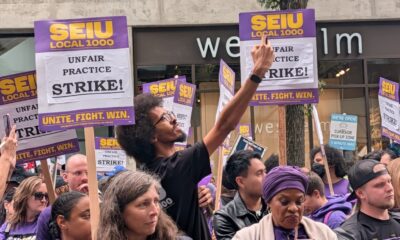
SEIU Local 1000 and State of California Will Continue to Negotiate New Labor Contract
-
 Community3 weeks ago
Golden State Valkyries Become Bay Area Legends Winning WNBA Championship on Halloween Night
-
 Business3 weeks ago
COMMENTARY: Your California Living Trust Could Be Next: When Evidence Isn’t Enough
-
 Business4 weeks ago
Fate of Bay Area Public Transit Hinges on Regional Transit Measure
-
 Business4 weeks ago
Chase Launches Fraud & Scam Prevention Month
