
Activism
California Commits $100 Million to Producing Its Own Insulin
Black Americans are slightly overrepresented in the statistics. They are 15.5% of those diagnosed with diabetes while being roughly 13% of the nation’s population, according to the United Health Foundation. Black people are also 60% more likely to be diagnosed with diabetes, are 2.3 times more likely to be hospitalized for amputations associated with the disease and are twice as likely as whites to die from it, according to the U.S. Department of Health and Human Services.

By Aldon Thomas Stiles, California Black Media
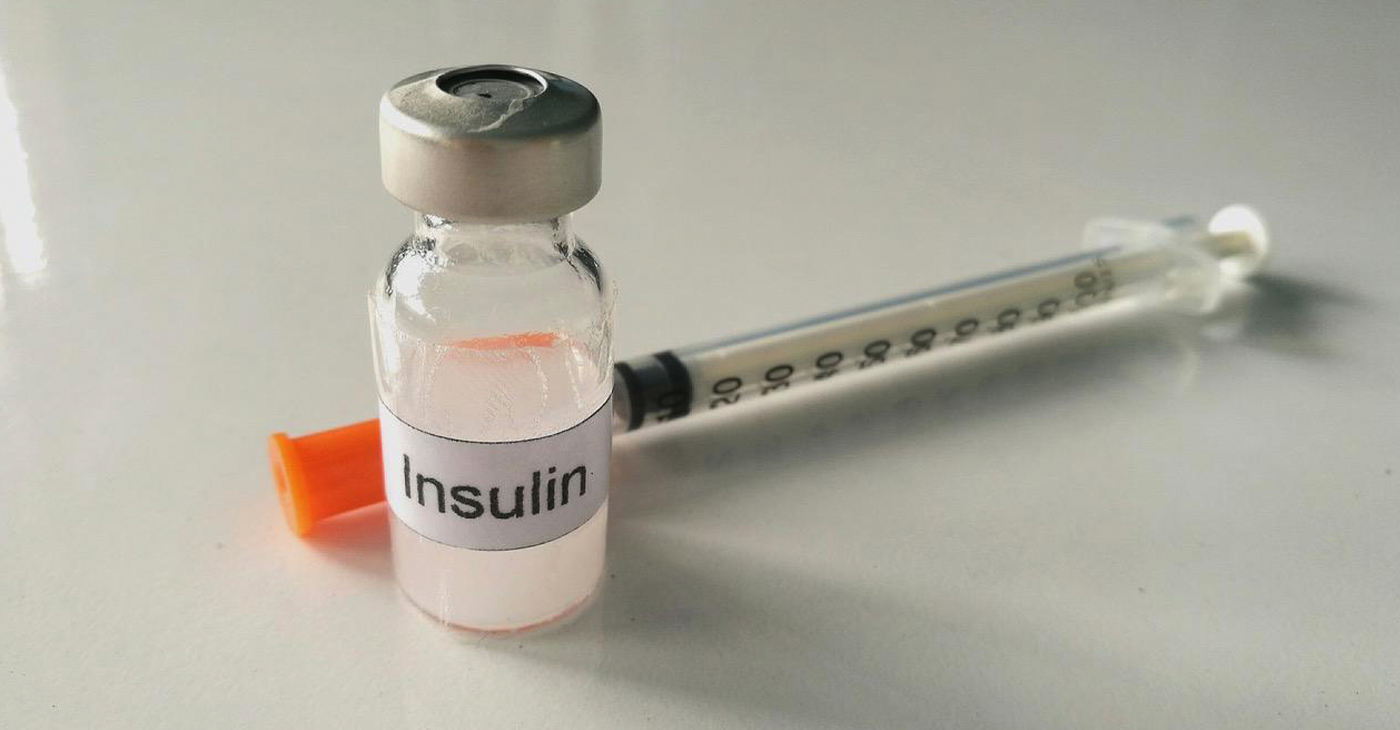
On July 7, Gov. Gavin Newsom announced that California will be the first state to produce its own insulin in an effort to drive down costs for diabetics statewide.
“On my first day in office, I signed an executive order to put California on the path towards creating our own prescription drugs. And now it’s happening. California is going to make its own insulin,” Newsom stated.
Diabetes is recognized as the most expensive chronic condition in the U.S. According to data compiled by the Centers for Disease Control and Prevention (CDC), about 1 in 10 U.S. citizens live with diabetes, which is 8.8% of the planet’s known diabetes diagnoses, despite the U.S. only accounting for 4.25% of the world’s total population.
Black Americans are slightly overrepresented in the statistics. They are 15.5% of those diagnosed with diabetes while being roughly 13% of the nation’s population, according to the United Health Foundation. Black people are also 60% more likely to be diagnosed with diabetes, are 2.3 times more likely to be hospitalized for amputations associated with the disease and are twice as likely as whites to die from it, according to the U.S. Department of Health and Human Services.
Dr. Karen Hansberger, the former chief medical officer of the Inland Empire Health Plan (IEHP), explained that one of the reasons for the higher death rate for Black people with diabetes is they sometimes receive the diagnosis later in the disease progression, so by the time they see a doctor, some organs might already be damaged.
“Oftentimes, people of color don’t go to the doctor until their symptoms are really bad,” said Hansberger. “It’s harder for them to take off work and they face more difficulties when they do take off work.”
The American Diabetes Association (ADA) reports that 10.5% of California’s adult population has been diagnosed with diabetes with 16.9% of that number comprising Black adults. Black people represent about 6.5% of the state’s total population.
Californians with diabetes have been vocal about the high cost of insulin and state officials claim that monthly out-of-pocket costs for the life-saving drug can range from $300 to $500.
In 2018, insulin in the U.S. cost over 10 times more than in 32 other similarly developed countries, according to the U.S. Department of Health and Human Services.
“Nothing epitomizes market failures more than the cost of insulin,” Newsom said. “California is now taking matters into our own hands. The budget I just signed sets aside $100 million, so we can contract and make our own insulin at a cheaper price close to at cost and to make it available to all.”
The budget is split in half with $50 million going toward developing insulin products and the other $50 million dedicated to creating an insulin manufacturing facility based in California, according to the governor.
Newsom claims that this initiative aims to cut the costs of insulin and insulin products by at least half. “It’s simple. People should not go into debt to get life-saving medication,” he said.
Dr. Hansberger agreed that this could bring costs down but has reservations about the state’s ability to produce insulin well.
“There is a shortage of insulin just in general so having more providers obviously reduces cost,” said Hansberger. “Producing it is one thing but producing it at a very high quality is the second piece of it.”
Hansberger believes that the government should invest more energy in diabetes prevention for people of color, as it can be difficult getting access to fresh food in some communities of color.
“When I was the chief medical officer in East Los Angeles, we had one area – a housing project – that had been cut off by all of these freeways,” said Hansberger. “And for them to get fresh food, they had to take a 2½ hour journey. It was ridiculous.”
Hansberger stressed the significance of success for California’s insulin production plan.
“If the state of California is going to get into that business, they have to do that business well because people’s lives depend on it.”
However, she believes, in her experience, that governments “don’t necessarily do business well.”
Two other states, Washington and Maine, have joined California in establishing state-based efforts to disrupt the U.S. pharmaceutical market and assure affordable and equitable access to essential medicines through public production. Each has passed legislation related to addressing insulin costs and access within their borders by having the state participate in manufacturing and distributing it.
On the national level, U.S. Senators Susan Collins (R-ME) and Jeanne Shaheen (D-NH) have introduced bipartisan legislation by way of the Improving Needed Safeguards for Users of Lifesaving Insulin Now (INSULIN) Act which would impose mandates on insulin providers and individual health insurance companies in the private sector to cap prices for products.
“The American Diabetes Association is proud to endorse the INSULIN Act introduced by Sens. Jeanne Shaheen and Susan Collins, legislation that stands to have a historic impact on the diabetes community by dramatically reducing the cost of insulin,” said ADA Chief Advocacy Officer Lisa Murdock during a press conference last month. “More than 37 million Americans have diabetes, and 1-in-4 insulin-dependent people with diabetes report rationing their insulin for economic reasons. We urge Congress to address the prohibitive and rising cost of insulin by passing the INSULIN Act.”










Activism
Oakland Post: Week of March 18 – 24, 2026
The printed Weekly Edition of the Oakland Post: Week of March 18 – 24, 2026

To enlarge your view of this issue, use the slider, magnifying glass icon or full page icon in the lower right corner of the browser window.
Activism
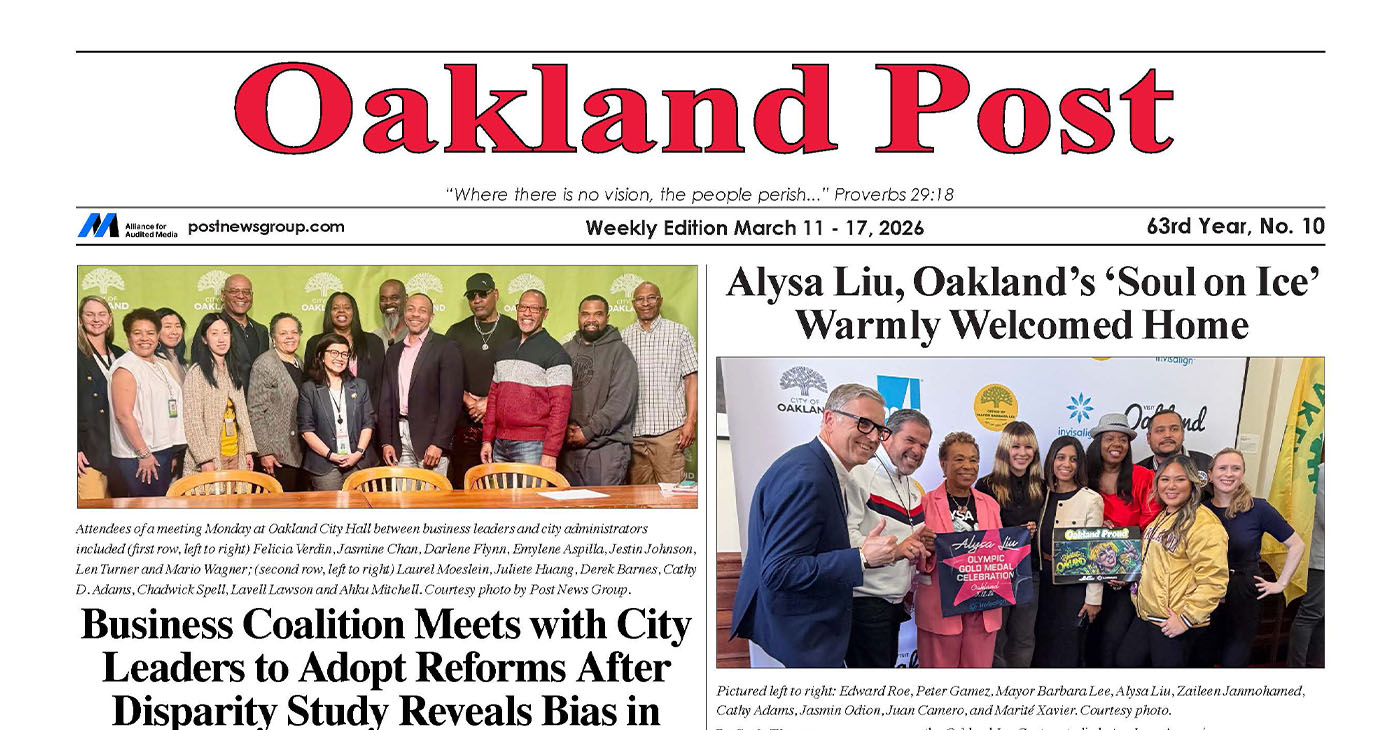
Oakland Post: Week of March 11 -17, 2026
The printed Weekly Edition of the Oakland Post: Week of March 11 – 17, 2026
To enlarge your view of this issue, use the slider, magnifying glass icon or full page icon in the lower right corner of the browser window.
Activism
Oakland Post: Week of March 4 – 10, 2026
The printed Weekly Edition of the Oakland Post: Week of March 4 – 10, 2026

To enlarge your view of this issue, use the slider, magnifying glass icon or full page icon in the lower right corner of the browser window.

WORK FROM HOME
Home-based business with potential monthly income of $10K+ per month. A proven training system and website provided to maximize business effectiveness. Perfect job to earn side and primary income. Contact Lynne for more details: Lynne4npusa@gmail.com 800-334-0540


Black Artists in America, Installation Three Wraps at the Dixon Gallery and Gardens

Grief, Advocacy, and Education: A Counselor Reflects on Black Maternal Health

Future of Florida’s Black History Museum in Limbo

New Research Shows the Many Benefits of Early Learning

South Hampton K-8 Students Among Top 10 Finalists for Samsung’s ‘Solve for Tomorrow’ Competition

Cuba: No Negotiation with US on the President or Political System

Brooklyn Academy of Music Names Jamaican-Born Tamara McCaw as President

Trinidad & Tobego – U.S. Launches WhatsApp Channel for American Citizens in the Country

Oakland Post: Week of March 18 – 24, 2026

AI Innovation vs. Ethics and Environmental Impact

AI, Web3, and Digital Reparations

What If You Owned Your AI Agent?

Season 7, Episode 3 – January Reporter’s Roundtable 📱

Season 7, Episode 3 – January Reporter’s Roundtable

AI, Media, and Power | Part 2, Real-World Impacts and Tradeoffs

Oakland Post: Week of February 11 – 17, 2026

Reflecting on Black History Milestones in Birmingham AL

CITY OF SAN LEANDRO STATE OF CALIFORNIA PUBLIC WORKS DEPARTMENT ENGINEERING DIVISION NOTICE TO BIDDERS FOR ANNUAL STREET OVERLAY/REHABILITATION 2019-21 – PHASE III

Oakland Post: Week of February 18 – 24, 2026

PRESS ROOM: NBA Hall of Fame Nominee Terry Cummings Joins 100 Black Men of DeKalb County to Launch Victory & Values Initiative

Oakland Post: Week of February 25 – March 3, 2026

Trump’s MAGA Allies are Creating Executive Order Plan to Steal the 2026 Midterms

U.S. manufacturing rebounds – how foundry services are adapting to rising demand

OP-ED: One Hundred Years of Black Workers Telling the Truth

Chase Oakland Community Center Hosts Alley-Oop Accelerator Building Community and Opportunity for Bay Area Entrepreneurs

Advancements in solar technology that are changing the way we power the world

Poll Shows Support for Policies That Help Families Afford Child Care

Oakland Post: Week of March 4 – 10, 2026

PRESS ROOM: Civil Rights TV Launches in Selma as the World’s First 24/7 Civil Rights Television Network

Woman’s Search for Family’s Roots Leads to Ancestor John T. Ward – A Successful Entrepreneur and Conductor on the Underground Railroad

Hyundai Ioniq 5 Parking, Safety, and 360 View #shorts

2025 Ioniq 5 New Wiper & Powerful Performance! #shorts

Electric SUV Range: Is 259 Miles Enough? #shorts

EV Charging: How Fast Can You Charge an Electric Vehicle? #shorts

Biometric Cooling… Messaging Seats…Come on! 2025 Infiniti QX80 Autograph 4WD

Charged Up: Witness the Magic of a Fully Electric Car! #shorts

Range Rover Sport PHEV Included…: See What’s Inside This Luxury SUV! #shorts

Invisible Hood View: Perfect Parking with X-Ray Vision! #shorts

AI Is Reshaping Black Healthcare: Promise, Peril, and the Push for Improved Results in California

ESSAY: Technology and Medicine, a Primary Care Point of View

Sanctuary Cities

The RESISTANCE – FREEDOM NOW

STATE OF THE PEOPLE: Freddie

ECONOMIC BOYCOTT DAY!!!!!

I told You So

-
 #NNPA BlackPress4 weeks ago
Poll Shows Support for Policies That Help Families Afford Child Care
-
 Activism4 weeks ago
Oakland Post: Week of March 4 – 10, 2026
-
 #NNPA BlackPress3 weeks ago
Woman’s Search for Family’s Roots Leads to Ancestor John T. Ward – A Successful Entrepreneur and Conductor on the Underground Railroad
-

 #NNPA BlackPress4 weeks ago
OP-ED: NNPA Launches 2026 “Leadership Matters” Video Series
-

 #NNPA BlackPress3 weeks ago
Advocates Raise Alarm Over ICE Operation, MOU and Detention Risks in Baltimore County
-

 #NNPA BlackPress3 weeks ago
COMMENTARY: Women of Color Shape Our Past and Future
-

 #NNPA BlackPress3 weeks ago
Pete Buttigieg to Join Mayor Randall Woodfin for Community Town Hall in Birmingham
-
 Activism2 weeks ago
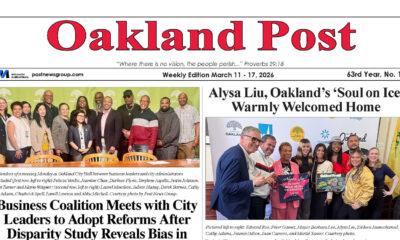
Oakland Post: Week of March 11 -17, 2026
