
City Government
Brooklyn Basin on a Fast Track, Largest Residential Development in City’s History

Media, labor groups and civic leaders were almost breathless with enthusiasm in their praise for the Brooklyn Basin development, 3,100 units of mostly market rate housing that broke ground this spring on the waterfront from Oak to 9th streets near downtown Oakland.
Investors and others gathered for the groundbreaking in March as Oakland Mayor Jean Quan hailed the project, the largest residential development in Oakland history, not just as a milestone for the developers but for the whole city.
“Our history and future is on the waterfront,” Quan said to the 200 people who showed up for the event on the strip of land between the estuary and Highway 880.
However, some of the coalition of community groups that opposed the development when it was approved by the City Council in 2006 still consider the Brooklyn Basin to be one of the worst real estate deals ever agreed to by the city and contend that it may rank among the worst in the country.
The developers behind Brooklyn Basin include Signature Development Group and Zarsion Holdings Group Ltd., a Chinese investor that bought the property from Signature and committed $1.5 billion to build out the project.
Visiting Oakland, Weixun Shan, chairman of Zarsion Holdings, said he wants to complete the 3,100-unit housing development within three to four years. Originally, the development was to be built over a six-to-eight year period.
About 1,200 units of housing will be built as part of phase one of the project, according to Shan, who hopes to start the second phase before the first units become available sometime in 2015.
Opposing the project led by Mike Ghielmetti and his Signature Development Group was a community coalition, the Oak-to-Ninth Referendum Committee.
“Over a period of a couple of years, we were engaged in three lawsuits and lobbied unsuccessfully to try to get the City Council to demand a better deal for the city and to reject some of the onerous parts of the development agreement,” said James Vann, Oakland architect and housing rights activist who was on the steering committee of the coalition.
The project is creating a whole new neighborhood for 5,000 residents, without regard for the need for a school or access for all the new car traffic coming into the area, Vann said.
When the City Council approved the project without making changes that some coalition members felt were necessary for the public good, they circulated a petition, gathering more than 25,000 signatures in less than six weeks, more than enough to qualify for the ballot. But the petition was challenged by the developer’s attorney and disqualified on a technicality.
“This was one of the worst deals the city has ever been involved in,” said Vann. The city sold the 64-acres of valuable shoreline property to Ghielmetti for $18 million, way below market value, he said.
“The developer would be responsible for toxic cleanup, so he would not pay market value for the property,” said Vann
At the same time, the city agreed to buy back two parcels of land after the cleanup, totaling 4.5 acres, from the developer for the affordable housing for a cost of $29 million, almost two-thirds more than Ghielmetti paid for the entire property.
Under state law at the time, 15 percent of the 3,100 units or 478 units would have to be affordable housing.
The terms of the deal required the city to build the affordable units at a cost of $60-80 million, not the developer. If the city cannot come up with the money, the developer has agreed to repurchase the property.
But because state redevelopment law has changed, it is unclear at this time whether state law still requires any affordable housing to be built, said Vann.
The two parcels earmarked for affordable housing are built farthest from the estuary and next to the freeway. To protect those who live in these units from freeway noise and air pollution from nearby Highway 880, sound walls will be built and the units’ windows facing the freeway will be unopenable.
In addition there is an agreement to 25 percent local hire of apprentice construction workers. “Some groups worked on this as part of community benefits, but it is not clear whether many people will be able to take advantage of the apprenticeship training,” said Vann.
After the project was approved in 2006, Ghielmetti did not have the funding to build the project, and it languished until public officials found Zarsion Holdings in China.
Seeking to speak with supporters familiar with the community benefits agreement, the Post called Mayor Jean Quan, the City Administrator’s Office and Signature Properties. None of them returned calls.
In addition to housing, mostly condominiums, Brooklyn Basin is slated to include 200,000 square feet of commercial space and more than 30 acres of parks and open space, as well as segments of the Bay trail.
Andy Nelson, who in 2006 served on the staff of Urban Strategies Council, was part of a coalition of several nonprofits that worked on community benefits.
The agreement “includes two separate deals that create community benefit for Oakland residents and folks in nearby neighborhoods, for affordable housing and job training and placement,” he said.
Under the agreement, the developer will pay $1.65 million to training 300 local residents for entry-level construction jobs, Nelson said. The development will have to pay damages if he does not honor the agreement.
In 2006, “even the strongest affordable housing advocates on the City Council were not pushing the developer to make any contributions to affordable housing,” said Nelson. In that context, his coalition was able to win a commitment for the city to create affordable housing, which would go to residents of Chinatown and the San Antonio District, he said
He said the housing agreement would be defended in court if necessary, and if the city’s 3.5 acre parcels are sold for between $20-30 million, at least some affordable housing can be built at sites around the city.
“Unfortunately, at present all that is certain is that 3,100 high cost condominiums will be built on the last large parcel of Oakland land; the construction of 468 units of critically needed affordable housing is only a pipe dream,” said Vann.










Alameda County
Ferry Fares to Increase July 1 as Ridership Hits Record Highs
The Oakland and Alameda routes will increase from $4.90 to $5.10, the South San Francisco route will go up from $7.40 to $7.60, and the Vallejo route will increase from $9.90 to $10.

By Mike Aldax, The Richmond Standard
Starting July 1, the standard adult fare for the San Francisco Bay Ferry route between Richmond and San Francisco will increase to $5.20, up from the current $4.90.
Discounted fares for eligible passengers, including youth, seniors, people with disabilities, and Clipper START users, will rise to $2.60 from the current $2.40. Children under 5 will continue to ride for free.
The Oakland and Alameda routes will increase from $4.90 to $5.10, the South San Francisco route will go up from $7.40 to $7.60, and the Vallejo route will increase from $9.90 to $10.
The adjustments are part of a systemwide fare update approved by the agency’s Board of Directors, which is moving away from a flat 3% annual increase to route-specific pricing for the 2027 and 2028 fiscal years.
This fare update arrives as San Francisco Bay Ferry celebrates a historic May, transporting 301,270 passengers. The record-breaking figure represents an 8% increase over May 2025 and marks the third consecutive month of record-setting ridership.
Furthermore, it is the sixth month in a row that passenger numbers have exceeded pre-pandemic levels. Weekend travel has been a primary driver of this growth, with average weekend ridership seeing a 56% increase compared to pre-pandemic trends.
The agency states that the fare adjustments are necessary to ensure the long-term fiscal sustainability of public ferry services. By shifting to route-specific adjustments, the agency aims to offset rising operating costs while maintaining the high levels of service frequency and reliability.
Activism
Stop the Hate Symposium Brings Oakland Together Through Dialogue, Partnership, and Community Healing
More than a meeting and panel discussion, the annual symposium serves as a powerful example of what can happen when neighbors, community leaders, and organizations choose conversation over division, and unity over silence.
By Dr. Maritony Jones, Special to The Post
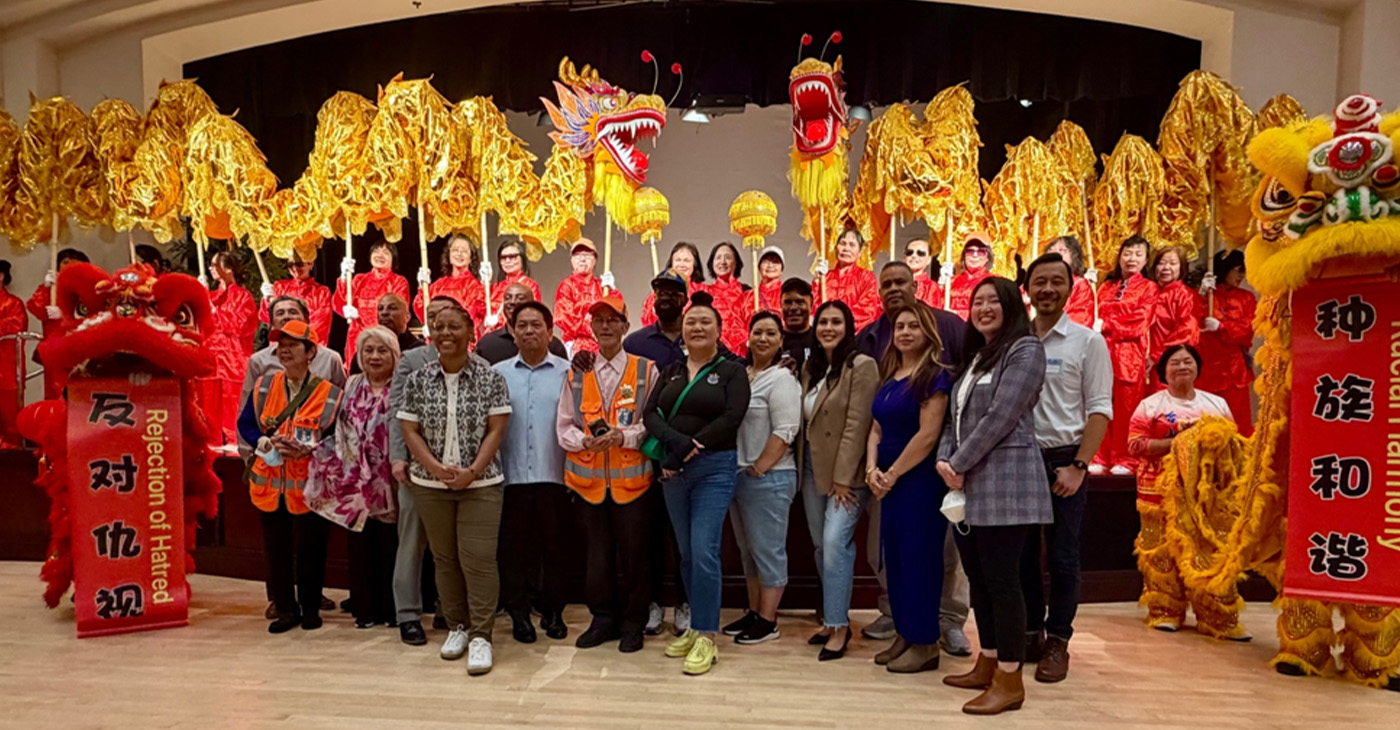
With the purpose of creating safer, stronger, and more inclusive communities, and in partnership with the Oakland Private Industry Council and other community organizations, the Oakland Chinatown Improvement Council (OCIC) hosted the ‘Stop the Hate Symposium’ on June 13 at the Oakland Asian Cultural Center.
More than a meeting and panel discussion, the annual symposium serves as a powerful example of what can happen when neighbors, community leaders, and organizations choose conversation over division, and unity over silence.
The free event featured keynote speakers, breakout sessions, cultural programming, creating a space where people from many backgrounds sat together with a shared purpose.
The turnout itself reflected the urgency and importance of the topic. The room was packed with community members eager not only to listen, but also to participate. Throughout the event, speakers shared data, personal experiences, research, and practical solutions designed to address hate, violence, social inequity, and community safety.
The keynote panel featured respected leaders and advocates, including Ray Bobbitt, founder of the African American Sports & Entertainment Group (AASEG); Ryan Takemiya from RAMA; Caheri Gutierrez from the Unity Council; honorary guest speaker Oakland City Councilmember at-Large Rowena Brown and City Councilmember Charlene Wang; representatives for Oakland Mayor Barbara Lee and U.S. Rep. Lateefah Simon, with Gia Vang of NBC serving as moderator.
The symposium also offered multiple breakout sessions that addressed issues affecting communities across Oakland and Alameda County:
- Session 1, 2, 3: Building Safer and More Inclusive Communities, led by Pastor Raymond Lankfort, CEO of Oakland Private Industry Council (OPIC), Jessica Kang, research manager for Stop AAPI Hate, Kara Guerra of The Unity Council, and Gabriela delaRiva of the Spanish Speaking Citizens Foundation
- Session 4: Talk Story: Collective Healing and Relationship Repair, presented by Ryan Takemiya, executive director of RAMA
- Session 5: Sexual Violence Prevention, presented by Tunisia Owens, interim deputy director of Realized Potential
- Session 6: Violent Attacks on Teens, presented by MaryAnn Alvarado, program manager of Youth Alive
Every session contributed to an important truth: meaningful change begins within communities, through honest dialogue and a willingness to work together.
One of the strongest themes to emerge from the day was the need to create more conversations and stronger partnerships—not just during times of crisis, but consistently and intentionally. Relationships among organizations, neighborhoods, and community leaders often operate behind the scenes but are not always highlighted or celebrated.
Bobbitt spoke powerfully about this issue, noting that partnerships and relationships often go unrecognized despite being essential to community progress. He pointed to examples such as the partnership between OPIC and OCHIC, emphasizing that these collaborations deserve more visibility, investment, and expansion.
Perhaps his most memorable message resonated deeply throughout the room. Bobbitt explained that when a grandparent is attacked or harmed, the impact extends beyond race or ethnicity because today’s families and communities are increasingly multicultural and interconnected.
“We are not going to see our grandparents as just Latino, Asian, Caucasian, or African American,” he shared in essence. “We are going to see them simply as our grandparents.”
Those words reflected the heart of the symposium. Hate may target one group, but pain and loss are felt by everyone. Likewise, healing and progress are shared responsibilities.
For more information about the Stop The Hate Program visit the website: https://www.oaklandchinatownchamber.org/stop-the-hate (or) https://oaklandpic.or
Bay Area
A Long Time Coming: School District Kicks Off Massive $97 Million Renovation of West Oakland’s McClymonds High School
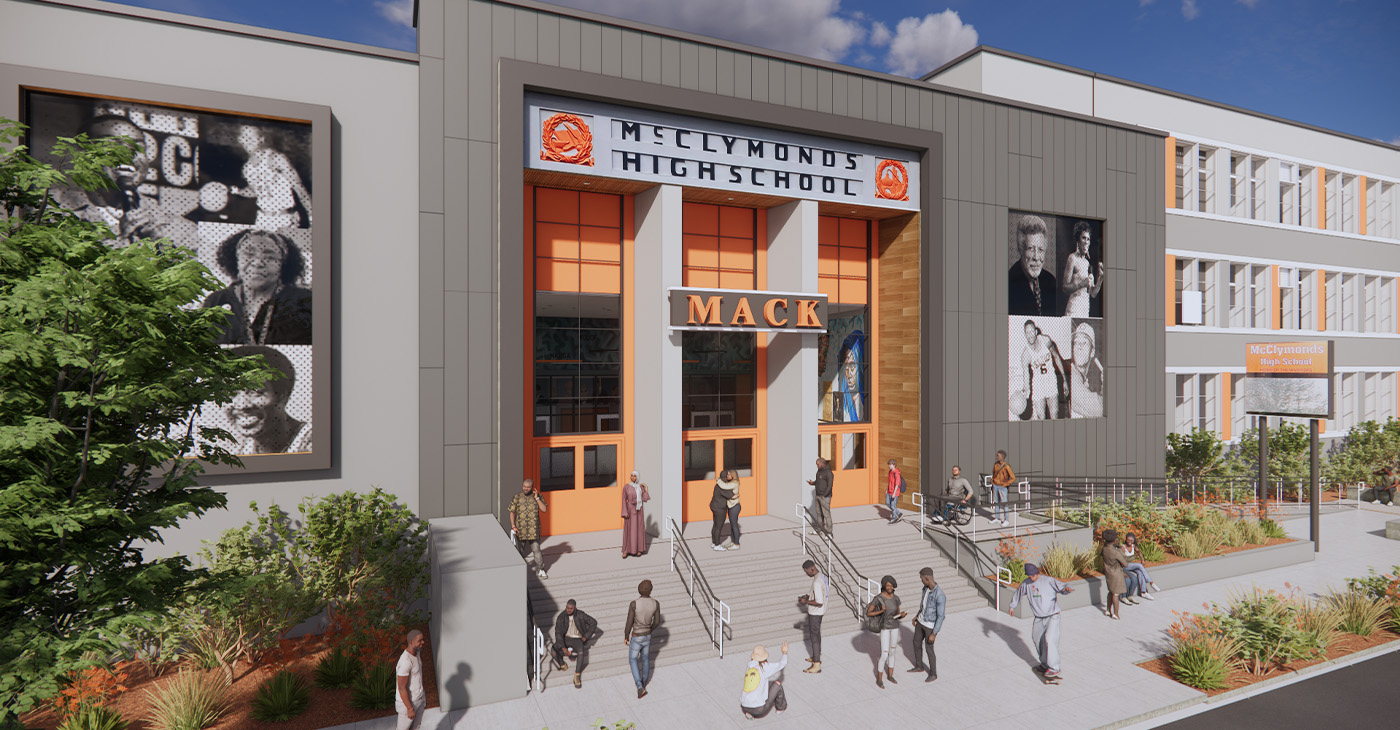
The extensive project will involve the full modernization of the campus, including essential upgrades to building systems such as plumbing replacement (with lead abatement), seismic improvements, and modernization of heating, electrical, ventilation, and air conditioning systems. Indoor spaces will be updated with new flooring, wall treatments, and upgrades to classrooms, labs, shops, and sports locker rooms.
‘We gather on sacred ground,’ said OUSD Supt. Denise Saddler
By Post Staff
After being stalled for many years, the massive $97 million renovation of McClymonds High School is finally breaking ground under the leadership of the district’s new superintendent, Dr. Denise Saddler, and backed by the unrelenting efforts of the school’s parents, students, school board members, community, and alumni.
The Oakland Unified School District (OUSD) held the groundbreaking ceremony on June 12 to kick off the three-year modernization project for McClymonds, a historic center of African American culture and educational opportunity in Oakland, located at 2607 Myrtle St. in West Oakland.
The overhaul will include seismic and environmental upgrades, a new turf field, and modernized campus facilities. The comprehensive transformation is financed by Measure Y, a $735 million general obligation bond approved by Oakland voters to renovate and upgrade aging school sites.
This renovation is considered a milestone for the West Oakland campus, which has operated in the same building since 1938 and has been in dire need of structural and plumbing safety remediation for years.
Speaking at the event, Supt. Denise Saddler said,
“We gather on sacred ground… that has shaped generations of Oakland leaders, scholars, artists, activists, entrepreneurs, educators like Mr. Herman Brown – one of our top math teachers. I also want to say it’s the historic home of the mighty Warriors (athletic teams). It’s a historic home of so many people.”

“This was, for Black people, our high school,” she continued “For more than a century, McClymonds has stood as a beacon of excellence in West Oakland and beyond. It’s not simply a school building; it’s a symbol of resilience, pride, community, and possibility.”
The superintendent said the legacy of McClymonds includes legendary alumni such as NBA player-coach Bill Russell, whose excellence transformed the game of basketball and whose courage helped transform the nation.
The school’s legacy also includes MLB players Frank ‘Judge’ Robinson and Curt Flood, basketball player Paul Silas and civic leaders including Lionel Wilson, a Superior Court judge and Oakland’s first African American mayor.
She emphasized that the groundbreaking was not only about honoring the past, but also about investing in the future.
“(It) represents Oakland’s commitment to the young people of West Oakland. It sends a powerful message that our students deserve facilities that match their brilliance, their talent and their dreams. “
The extensive project will involve the full modernization of the campus, including essential upgrades to building systems such as plumbing replacement (with lead abatement), seismic improvements, and modernization of heating, electrical, ventilation, and air conditioning systems. Indoor spaces will be updated with new flooring, wall treatments, and upgrades to classrooms, labs, shops, and sports locker rooms.
The cafeteria also will be reconfigured, and outdoor areas will feature a new grandstand, track and field upgrades, accessible field bathrooms and concessions, and updates to the plaza, garden, and outdoor gathering areas.
Mayor Barbara Lee, who attended the event, thanked Oakland voters for passing the Measure Y bond that is paying for the school’s renovation.

Renderings of McClymond High School renovation. Courtesy image.
“It’s a good day – It’s a good news day,” she said. “The voters who (approved) Measure Y care about our young people. Today, we have the opportunity on this historic day to say, well done. Thank you to the voters for the facilities our community, our students, our teachers deserve.”
School Board member VanCedric Williams, whose district includes McClymonds, said that OUSD passed repeated school bond measures for decades, promising to renovate the school, but it did not happen.
“I just want to thank all the community (who) put pressure on the district to do right, to hold school board members accountable, and to really say, ‘We’re not going to take anything less than a renovation.’”
“When I first met Dr. Saddler, she said, ‘I have a commitment to McClymonds – I’m going to make it happen.’ And she has done something in one year that has not been done in 20 years. So, I have the belief that we’re going to get it done.”
Rising senior LaTanya Nolen, praised the school for the opportunities she has received and for the dedication of its staff.
“Every student here is treated like they matter and given opportunities to grow and build onto themselves,” she said. “We’ve gotten to do things like sports, field trips, college and career excursions, networking, and more. Our futures are taken seriously, and the people around us are always pushing us so that we are prepared for it.”
Parent Brejea Colthirst said, “Thank you to everyone who had a part in this, who helped make this possible. Together, we are building something special.”
Brian McGhee, popular McClymonds staff member and alumni, pledged to build on the strength of McClymonds’ traditions. “Mack is back. We’re going to up the enrollment with this new school. We’re going to continue to know every student’s name who comes through this school. My job as a community manager is going to continue to provide resources for our families and our students, and continue to communicate with our parents, which is huge.”

WORK FROM HOME
Home-based business with potential monthly income of $10K+ per month. A proven training system and website provided to maximize business effectiveness. Perfect job to earn side and primary income. Contact Lynne for more details: Lynne4npusa@gmail.com 800-334-0540



Oakland Museum Presents Landmark Retrospective Celebrating Beloved Bay Area Artist Mildred Howard

Ferry Fares to Increase July 1 as Ridership Hits Record Highs

Stop the Hate Symposium Brings Oakland Together Through Dialogue, Partnership, and Community Healing

Six Months in, Probate Reform Coalition Marks Progress in Protecting Elders From Financial Abuse

A Long Time Coming: School District Kicks Off Massive $97 Million Renovation of West Oakland’s McClymonds High School

IN MEMORIAM: Oakland Dance Legend Reginald Ray-Savage, 67

UC Berkeley Named Top Public University in the U.S. and No. 7 in the World by ‘U.S. News’

NCBW-OBAC Champions Black Women Entrepreneurs at Business en Blaque Expo

Lock In Car Price: Avoid Dealer Payment Traps!

Sell Your Car: Get Offers BEFORE Visiting Dealerships!

The Conversation With Al McFarlane 6/23/26

Media Monday 6/22/26

LIVE! ASK ALMA! — TUES. 6.23.26 7PM EST

Car Buying Secrets: 4 Hidden Checks Before You Sign!

After 10-Year Wait, Fillmore Heritage Center Reopens in San Francisco

Oakland Post: Week of June 3 – 9, 2026

Oakland Post: Week of May 20 – 26, 2026

Oakland Post: Week of May 27 – June 2, 2026

COMMENTARY: Black Music is the Sound of Black Freedom: Let Us Reclaim Both This Juneteenth

5 Cleveland Police Officers Injured, Gunfire Erupts During East Side Pursuit

2026 World Cup is Here and Atlanta is Ready For It

Oakland Director Boots Dazzles Once Again in ‘I Love Boosters’

Oakland Post: Week of June 10 – 16, 2026

Venus Williams Calls a Sabalenka Exit a Tragedy

COMMENTARY: Using Art, Healing, And Community to Transform Mental Health Dialogue

Sale of Coliseum to African American Developers Moves Toward Completion

Study: Waiting Lists for Child Care Assistance Nearly Doubled

Oakland Post: Week of June 17 – 23, 2026
The Conversation With Al McFarlane 6/23/26
Media Monday 6/22/26
LIVE! ASK ALMA! — TUES. 6.23.26 7PM EST
Car Buying Secrets: 4 Hidden Checks Before You Sign!

Is This 550 HP Charger Worth YOUR Money? AutoNetwork Review

Celebrating Juneteenth – Frederick Douglass on education and resistance

LIVE! — ASK ALMA! — TUES. 6.19.26 7PM EST

Hyundai Ioniq 5 Parking, Safety, and 360 View #shorts

2025 Ioniq 5 New Wiper & Powerful Performance! #shorts

Electric SUV Range: Is 259 Miles Enough? #shorts

EV Charging: How Fast Can You Charge an Electric Vehicle? #shorts

Biometric Cooling… Messaging Seats…Come on! 2025 Infiniti QX80 Autograph 4WD

Charged Up: Witness the Magic of a Fully Electric Car! #shorts

Range Rover Sport PHEV Included…: See What’s Inside This Luxury SUV! #shorts

Invisible Hood View: Perfect Parking with X-Ray Vision! #shorts
-
 Art4 weeks ago
After 10-Year Wait, Fillmore Heritage Center Reopens in San Francisco
-
 Activism4 weeks ago
Oakland Post: Week of June 3 – 9, 2026
-
 Arts and Culture4 weeks ago
COMMENTARY: Black Music is the Sound of Black Freedom: Let Us Reclaim Both This Juneteenth
-
 #NNPA BlackPress4 weeks ago
5 Cleveland Police Officers Injured, Gunfire Erupts During East Side Pursuit
-
 #NNPA BlackPress4 weeks ago
2026 World Cup is Here and Atlanta is Ready For It
-
 Art4 weeks ago
Oakland Director Boots Dazzles Once Again in ‘I Love Boosters’
-
 Activism3 weeks ago
Oakland Post: Week of June 10 – 16, 2026
-
 #NNPA BlackPress4 weeks ago
Venus Williams Calls a Sabalenka Exit a Tragedy
