
City Government
Bonds for the 385 Drake Development Halted
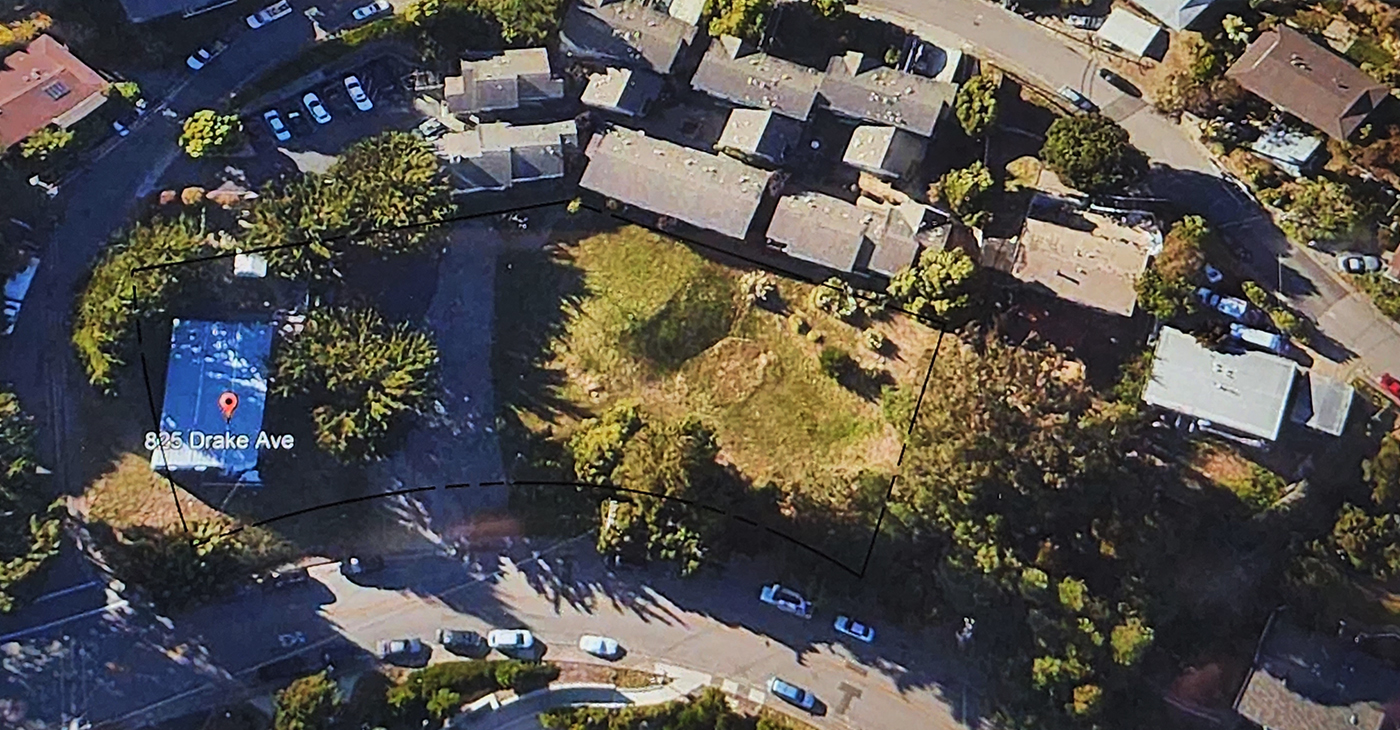
In a ruling that marks a major milestone for affirming the concerns of Marin City residents, a Marin County judge has issued a preliminary injunction to halt public funding for the construction of a 5-story, 74-unit housing development at 825 Drake Avenue in Marin City, a historically Black community that already holds a disproportionate number of public and affordable housing in the wealthy enclave of Marin County.

By Godfrey Lee
Below is a summary of the recent Save Our City press release.
In a ruling that marks a major milestone for affirming the concerns of Marin City residents, a Marin County judge has issued a preliminary injunction to halt public funding for the construction of a 5-story, 74-unit housing development at 825 Drake Avenue in Marin City, a historically Black community that already holds a disproportionate number of public and affordable housing in the wealthy enclave of Marin County.
Because the 825 Drake development was approved under SB 35, a law intended to fast-track affordable housing projects without public notice or hearings, the residents of Marin City were not given notice of the development until after it was approved by the Marin County Board of Supervisors.
While SB 35 was adopted to sideline wealthy enclaves that have historically stonewalled affordable housing projects in their communities, it has been used in Marin City to create even more housing density in the County’s most racially diverse, economically disadvantaged, and politically disempowered community.
The well-intentioned law failed to carve out adequate protections for low-income California communities that already have a grossly disproportionate share of their region’s affordable and public housing options, and it has failed to ensure that the term “affordable” takes into account low-income communities like Marin City that are embedded within regions with the highest Average Median Income levels in the state.
On Sept. 6, Marin County Superior Court Judge Stephen P. Freccero entered a Limited Preliminary Injunction on behalf of a Marin City organization, Save Our City (SOC), temporarily halting public funding approved by the Marin County Board of Supervisors (Board) for the construction of a 5-story, 74-unit housing development at 825 Drake Avenue in Marin City.
SOC had filed suit on May 18 to invalidate the Board’s approval of the bonds, arguing that the Board had improperly failed to exercise its discretion in deciding whether to approve the bonds. Transcripts of Board proceedings showed that Board members erroneously believed that a recent state law allowing expedited approval for certain housing developments had stripped the Board of the power to decide whether funding such a development was in the community and County’s best interests.
The Court agreed with SOC, finding that Board approval of the bonds did require that “the [local authority] decide the matter [at issue] after considering local residents’ views, and by clear implication requires the [local authority] to consider city priorities and housing needs, the wisdom of preferential financing for the project, and all other relevant considerations to which elected representatives normally give weight in executing their office.”
Given these considerations, the Court stated that the Board’s refusal “to consider or exercise its lawful discretion may be grounds to invalidate the resolution.”
Save Our City was formed to stop this large-scale development from being forced on the small, historically Black community of Marin City, which is already densely saturated with affordable housing and has only one park in the entire city. The proposed development would encroach on that limited open space available to Marin City residents and block sunlight, particularly from the seniors living in existing affordable housing directly next to the proposed site.
Meanwhile, the wealthy and predominantly white surrounding communities in Marin County offer little to no affordable housing options for Marin County residents and have ample open green and recreational spaces for their community.
The Marin County Board of Supervisors is responsible for overseeing affordable and public housing options in unincorporated Marin. To address the housing shortages in California, state law requires each region to supply housing to meet its Regional Housing Needs Allocation (RHNA).
The RHNA is intended to promote several objectives including: (1) increase housing supply and the mix of housing types in an equitable manner; (2) discourage housing development patterns that segment communities, (3) affirmatively further fair housing. Marin County’s approval of the 825 Drake project in Marin City violates all of these principles:
The 825 Drake Development will not be affordable for Marin City residents. Because Marin County has one of the nation’s highest Average Median Income (AMIs), the “affordable” 825 Drake housing development will not be affordable to the vast majority of the residents in Marin City and will perpetuate further gentrification of this community.
Marin County has repeatedly denied Marin City residents the courtesy of notice or an opportunity to be heard concerning the County’s approval of the 825 Drake project. During the County’s March 21 hearing to consider approval of $40 million in non-taxable bonds to support developer Caleb Roope’s construction of 825 Drake, the residents raised their concerns about inequity and the project’s impacts on the community. Upon five days posted notice for the hearing, community members scrambled to provide substantive feedback during the limited minutes of public comment. However, their comments fell upon deaf ears.
SOC co-founder Bettie Hodges observed that “The County has failed to represent Marin City throughout this process. First, we are told that they were not legally required to give us notice of 825 Drake’s approval, then in the bond hearing they tell us that they did not have discretion to consider our comments.
“We have been completely silenced at every turn. Our elected representatives could and should have given us the courtesy of notice and an opportunity to be heard, especially given the inequities in Marin City that are a direct result of Marin County’s history of discriminatory housing practices.”
Marilyn Mackel, co-founder of SOC, stated that “I was disappointed to see that even in the preliminary injunction hearing, the County stood silent. They did not defend their approval of the bonds, but also did not have the moral fortitude to concede that they failed to consider our concerns when they approved the bonds. Their repeated choice to stand silent is not just an abdication of responsibility, it is a perpetuation of economic and racial segregation in Marin County.”
Save Our City’s lawsuit seeks to preserve this small piece of open space in Marin City. Marin County is known for its green and open spaces, including hiking trails, streams, open fields and waterways. While the rest of unincorporated Marin County is characterized by these copious green spaces, Marin City has only one small park that is made of concrete and astro-turf.
For more information, please contact: Bettie Hodges at bettie@hannahprograms.org, or Marilyn Mackel at mmackel@gmail.com












Activism
Oakland Post: Week of August 12 – 18, 2026
The printed Weekly Edition of the Oakland Post: Week of August 12 – 18, 2026

To enlarge your view of this issue, use the slider, magnifying glass icon or full page icon in the lower right corner of the browser window.
Activism
Oakland Post: Week of August 5 – 11, 2026
The printed Weekly Edition of the Oakland Post: Week of August 5 – 11, 2026

To enlarge your view of this issue, use the slider, magnifying glass icon or full page icon in the lower right corner of the browser window.
Activism
Oakland Post: Week of July 29 – August 4, 2026
The printed Weekly Edition of the Oakland Post: Week of July 29 – August 4, 2026

To enlarge your view of this issue, use the slider, magnifying glass icon or full page icon in the lower right corner of the browser window.

WORK FROM HOME
Home-based business with potential monthly income of $10K+ per month. A proven training system and website provided to maximize business effectiveness. Perfect job to earn side and primary income. Contact Lynne for more details: Lynne4npusa@gmail.com 800-334-0540


Four Candidates, Including Incumbent Barbara Lee, Qualify for Oakland Mayor’s Race

Oakland Observes Black August with Block Parties, Film Showings, Workshops

Oakland Post: Week of August 12 – 18, 2026

COMMENTARY: Why Local School Tax Measure G1 Will Not Be on the November Ballot

California Hispanic Chambers of Commerce Unveils: ‘Powering the Future’ Theme for 47th Annual Statewide Convention

Returning to Its Roots, the Oakland Black-Eyed Pea Festival Partners with the Freedom Farmers Market Sept. 12

Less Affluent School Districts, Including Sacramento City, Face Threat of State Takeover

From Blueprint to Breakthrough: Tackling Affordable Housing in Oakland

NPRC Scores First Advocacy Victory: David Shaw Finally Gets His Wish to ‘Go Home’

ESSAY: California Can Close Its Colorectal Cancer Gap

Car Wash Workers Cope with Lingering Impacts of ICE Raids

Misty Copeland Shapes Ballet’s Tomorrow

As Part of Your Back-to- School Checklist, Vaccinate

As Part of Your Back-to- School Checklist, Vaccinate

Congresswoman Simon Demands Investigation into Trump’s Abuse of Emergency Powers for Coal Export Terminal in West Oakland

Department of Homeland Security Demands California Secretary of State Shirley N. Weber Scrub Voter Rolls

New Judge Could Decide if Karmelo Anthony Gets a New Trial

Oakland Children’s Hospital Workers and Patients Rally for Pediatric Medical Care

“The Power to See Threats Sooner”: Gov. Newsom, Safety Officials Showcase California’s Investments in Hi-Tech Wildfire Prevention

Alpha Kappa Alpha Sorority, Inc. Celebrates New North Atlantic Regional Director

Surveillance Pricing Fight: State Senate Debates Bill Banning Retailers from Using AI to Set Prices Based on a Buyer’s Profile

Mount Zion MBC, Church of Jesus Christ of Latter-day Saints Partner to Bring 29,000 Meals to Alameda County

California Sen. Padilla Joins Colleagues to Introduce Bill Imposing Term Limits on Supreme Court Justices
Less Affluent School Districts, Including Sacramento City, Face Threat of State Takeover

Starting This Summer, California Car Buyers Can Get an Instant $3500 Off the Cost of Electric Vehicles

COMMENTARY: You Are Already Paying for the AI Boom
Car Wash Workers Cope with Lingering Impacts of ICE Raids

California Bill Would Let Abuse Victims Use Trauma as Legal Defense for Violent Crime

Fed Court to Decide Landmark First Amendment Case

Gov. Gavin Newsom Signs Law Streamlining Affordable Housing Rules

The Conversation With Al McFarlane 6/23/26

Media Monday 6/22/26

LIVE! ASK ALMA! — TUES. 6.23.26 7PM EST

Car Buying Secrets: 4 Hidden Checks Before You Sign!

Is This 550 HP Charger Worth YOUR Money? AutoNetwork Review

Celebrating Juneteenth – Frederick Douglass on education and resistance

LIVE! — ASK ALMA! — TUES. 6.19.26 7PM EST

Hyundai Ioniq 5 Parking, Safety, and 360 View #shorts

2025 Ioniq 5 New Wiper & Powerful Performance! #shorts

Electric SUV Range: Is 259 Miles Enough? #shorts

EV Charging: How Fast Can You Charge an Electric Vehicle? #shorts

Biometric Cooling… Messaging Seats…Come on! 2025 Infiniti QX80 Autograph 4WD

Charged Up: Witness the Magic of a Fully Electric Car! #shorts

Range Rover Sport PHEV Included…: See What’s Inside This Luxury SUV! #shorts

Invisible Hood View: Perfect Parking with X-Ray Vision! #shorts
-
 Featured1 week ago
Department of Homeland Security Demands California Secretary of State Shirley N. Weber Scrub Voter Rolls
-
 #NNPA BlackPress3 weeks ago
New Judge Could Decide if Karmelo Anthony Gets a New Trial
-
 Business3 weeks ago
Oakland Children’s Hospital Workers and Patients Rally for Pediatric Medical Care
-
 Environment1 week ago
“The Power to See Threats Sooner”: Gov. Newsom, Safety Officials Showcase California’s Investments in Hi-Tech Wildfire Prevention
-
 Black History2 weeks ago
Alpha Kappa Alpha Sorority, Inc. Celebrates New North Atlantic Regional Director
-
 Business3 weeks ago
Surveillance Pricing Fight: State Senate Debates Bill Banning Retailers from Using AI to Set Prices Based on a Buyer’s Profile
-
 Business3 weeks ago
Mount Zion MBC, Church of Jesus Christ of Latter-day Saints Partner to Bring 29,000 Meals to Alameda County
-
 Featured1 week ago
California Sen. Padilla Joins Colleagues to Introduce Bill Imposing Term Limits on Supreme Court Justices
