Activism
Black Women Revolt: Bay Area Org Gets to Grassroots of Domestic Violence
Considering itself a grassroots community activist movement, Black Women Revolt was founded in 2020. The group’s founders, Geoffrea Morris and Lyn-Tise Jones — who are sisters — say they both felt a strong desire to set up an organization in San Francisco offering help to Black women dealing with the suffering and setbacks domestic violence can cause.
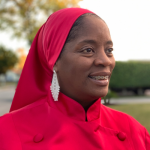
By Charlene Muhammad | Special to the Oakland Post
In the San Francisco Bay Area, the Black Women Revolt Resource Center is dedicated to creating awareness about domestic violence and solving it — with a specific focus on women of color.
Considering itself a grassroots community activist movement, Black Women Revolt was founded in 2020. The group’s founders, Geoffrea Morris and Lyn-Tise Jones — who are sisters — say they both felt a strong desire to set up an organization in San Francisco offering help to Black women dealing with the suffering and setbacks domestic violence can cause.
“I think that Black women and Black families in particular really suffer in silence,” said Black Women Revolt Resource Center’s executive director Paméla Tate, an author and domestic abuse awareness advocate.
“And that’s not to say that other Brown families don’t. Latino families do, as well as Asian families. But, particularly, African Americans here in the U.S. have suffered with domestic abuse and intimate partner violence, since we were brought to this continent,” Tate continued.
Morris was inspired to step in the gap after she found out that there were no organizations providing treatment, care, counseling, and other social and health services to Black women dealing with domestic violence. Jones, her younger sister, also felt moved to create a program that would help Black mothers and children dealing with trauma.
So, the sisters teamed up to create what is now known as The Black Women Revolt Resource Center in San Francisco.
According to Morris and Jones, the organization serves its clients and community in several ways, including increasing awareness about the impact of intergenerational violence in the Black community; removing barriers for Black women who have experienced domestic abuse to receive access to culturally sensitive resources; and providing a designated space with resources specifically for Black women in San Francisco to help educate and heal as they recover from abuse.
Tate has trained over 100 community members and domestic abuse agency staff, preparing them to work as advocates throughout California, according to the agency.
The San Francisco Family Violence Council’s 2020 report cites clear racial disparities across all three forms of family violence. It disproportionately impacts African American and Latinx populations: 4 out of 10 substantiated child abuse cases involved Black children and 1 in 3 involved Latino children; 28 % of dependent adult abuse victims were Black; and more than half of domestic violence victims were Black or Latino.
“The lack of choices around marrying a partner, mating with a partner, and how they were treated on a daily basis, in terms of work expectations, sexual ideation, has all been put upon Black women, and I think, because we had to take it, when we got here, and centuries later, we’re still kind of taking it,” said Tate.
Part of the problem, observes Tate, is that there is a culture of secrecy in the Black community. Many Black women live in households where problems aren’t discussed outside of the family unit. There are also unspoken rules that encourage silence around mental health issues and physical abuse.
“We just don’t talk about it. So, we function in these isolated silos, and then once someone shares that something has happened to them, people are not necessarily always supportive.” Said Tate.
“One, because they don’t know that there are resources available to assist; two, because again, you’ve broken the code of silence; three, because this is kind of how we’ve been conditioned to live and respond. And four, I think, would just be because it’s not normal to talk about,” Tate went on, adding that the Black Women’s Revolt Resource Center is not yet fully operational and still awaiting funding to expand its work.
Tate says one class at the center trains batterer intervention staff, arming them with information about anger management techniques they can share with clients.
Recently, the center launched another class exclusively for advocates, who will answer crisis lines and work directly with domestic abuse survivors. Soon, it plans to start training outreach staff, who will be working on launching a youth advisory council. The aim is to get some teens to jump start conversations with teenagers, who represent a rising population of people encountering intimate partner violence and domestic violence, according to Tate.
While there is much work to be done to lower the startling number of DV cases in the Bay Area, the founders and director of the resource center say they are making a difference in the lives of survivors of domestic abuse.
To solve domestic violence, talk about it, said Tate.
“A lot of people don’t discuss domestic violence. A lot of people don’t even know the actual definition of domestic violence, meaning it’s more than just hitting. I think conversations and a lack of judgment would be a great start,” she said.
