
Bay Area
Black, Red & Ready: African-American Republicans Want to Turn Deep Blue California Purple

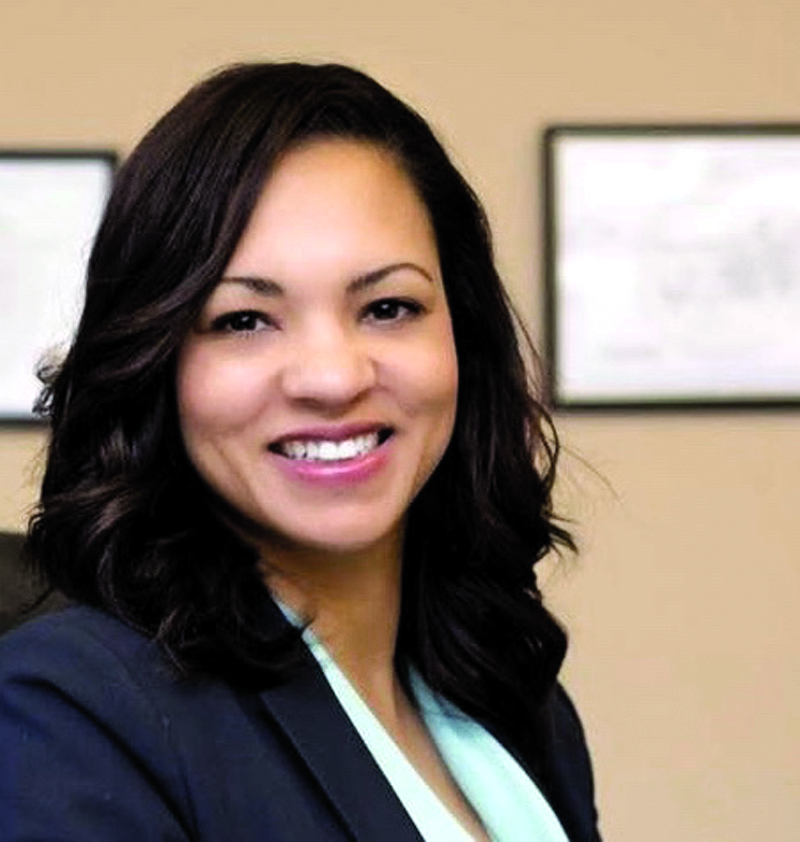
Black Republicans in California are focused and organizing.
They want to “reintroduce” African Americans in the state to the GOP, Black Republican leaders and activists say.
By increasing the number of Black Republicans holding political office in the state and inspiring more Black Californians to vote red, they believe their efforts will purple the deep blue African-American vote in the fourth-bluest of blue states in the country, according to a ranking by The Hill, a Wash., D.C.-based website that covers the U.S. Congress, presidency and national politics.
“We are Black first, then Republican,” says Corrin Rankin, 45, a GOP activist and delegate who splits her time between homes in San Mateo and San Joaquin counties.
“We believe Republican policies are more in line with our values as Black Americans than democratic policies,” says Rankin. “We believe in low taxes, small and efficiently-run governments, and limited regulation. The more regulations you have, the less people – especially people from economically disadvantaged backgrounds – are able to get involved in any industry.”
Last February, at the state Republican convention, Rankin says she and other African-American conservatives who attended decided to organize themselves and form an association called the Legacy Republican Alliance (LRA), a political action committee, after they found out the California Republican Party had a directive to not reach out to Black voters.

“We understand from a business perspective that the number of Black Republicans in the state is relatively small, but that was not the right way to go for the party,” she says. “There were other ethnic organizations at the convention. That’s why we decided to create the LRA, to increase our numbers and make our voices heard so that we can have a seat at the table.”
California has the fifth-largest Black population in the country, according to the U.S. Census Bureau. African Americans account for about 6.5% of the state’s total population of nearly 40 million people.
Democrats in California make up 72% of Black registered voters, according to the Public Policy Institute of California. Six percent of those African-American likely voters are Republican. Independents account for about 20%.
And there are no Black Republicans who are members of the state Legislature or among California’s delegations to the U.S. Congress.
But some African-American leaders in the California Democratic Party are concerned that their party has not done a good job empowering Blacks when it comes to things like organizing voter registrations and encouraging voter participation.
Many point out, too, that fellow Democrats at the state, county and local levels often overlook issues important to African Americans like failing schools and the high cost of housing, and they sometimes advance public policies that disproportionally impact Blacks as well as middle class and lower-income families.
Those Black Democratic leaders – two of them spoke with California Black Media off the record for this article – say those missteps by their party cause them to work harder to ensure that their party remains the first choice for Black Californians.
Since the LRA was formed, Rankin says the group has launched a website and focused on informing Black Californians that Republican policies on employment, business, education, taxation, criminal justice reform, community- police relations and criminal justice reform are better for their families and communities.
They have also been actively raising money to support Black Republican candidates and LRA members, including Navy veteran Joe Collins who is running for U.S. Congress against Rep. Maxine Waters in the 43rd district, which covers the Los Angeles area; Aja Smith, an Air Force vet, also running for U.S. Congress against Democratic Rep. Mark Takano in the 41st district in the Inland Empire; Tamika Hamilton, another Air Force vet running for Congress against Democratic Rep. John Garamendi in the 3rdCongressional district west of Sacramento; and Major Williams who is running for mayor of Pasadena.
Another member of the LRA, Jonathan Madison, has been elected Regional Vice Chair of the Bay Area GOP.
In April of this year, the California Republican Assembly (CRA), a statewide conservative activist group former U.S. President Ronald Reagan called “the conscience of the Republican Party,” elected Johnnie Morgan, 68, as its first African-American president for a three-year term.
Morgan says one of his main goals as CRA president is to recruit more African Americans and Independents to join the California Republican Party.
“African Americans place a high value on family as does the Republican Party,” Morgan told California Black Media.






Activism
Oakland Post: Week of September 23 – 29, 2026
The printed Weekly Edition of the Oakland Post: Week of September 23 – 29, 2026

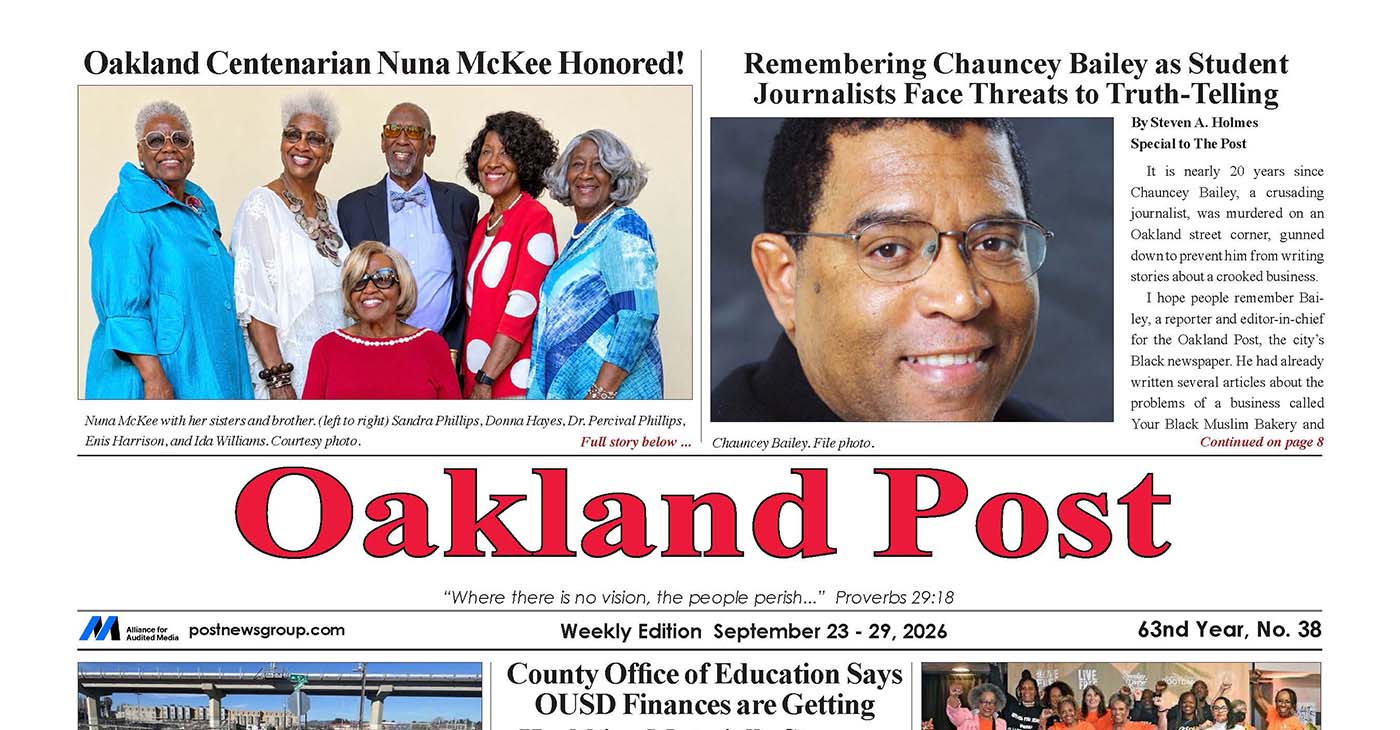
To enlarge your view of this issue, use the slider, magnifying glass icon or full page icon in the lower right corner of the browser window.

Activism
Oakland Post: Week of September 16 – 22, 2026
The printed Weekly Edition of the Oakland Post: Week of September 16 – 22, 2026
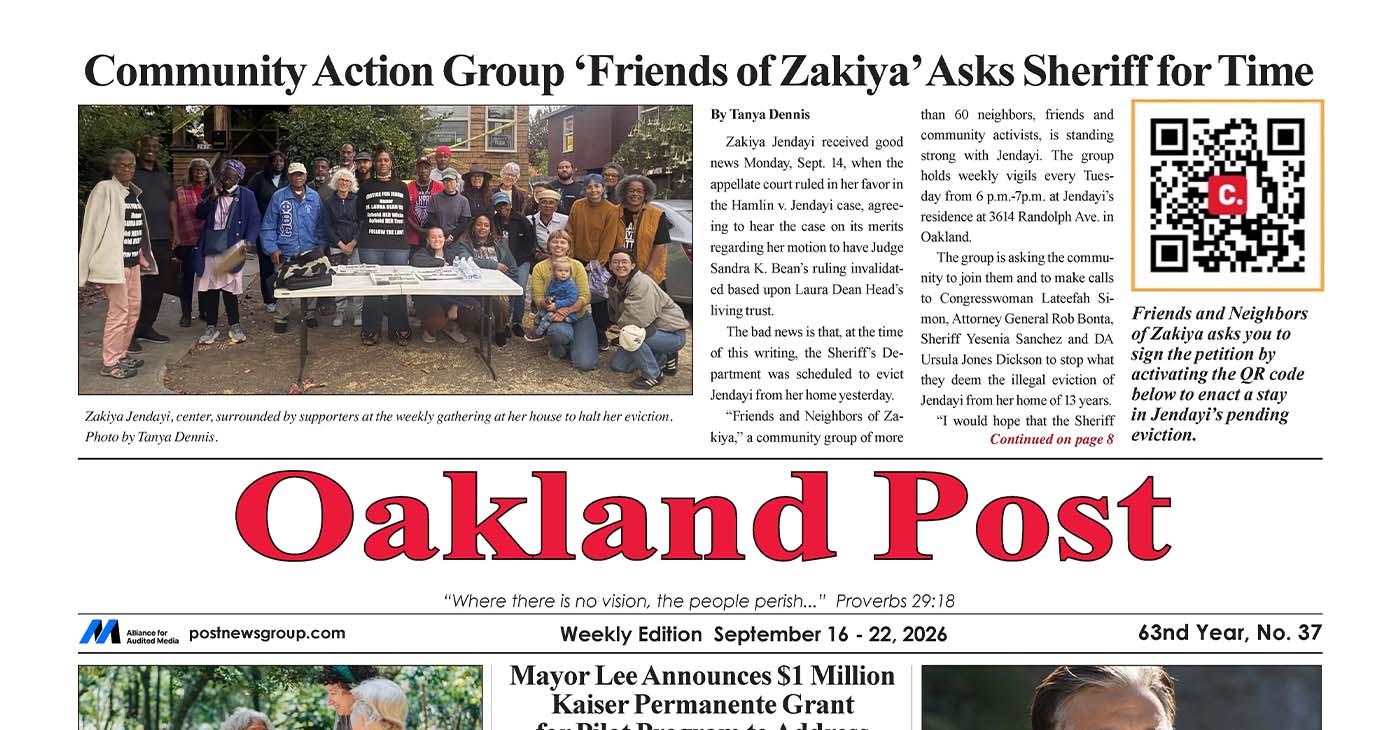
To enlarge your view of this issue, use the slider, magnifying glass icon or full page icon in the lower right corner of the browser window.
Activism
Oakland Post: Week of September 9 – 15, 2026
The printed Weekly Edition of the Oakland Post: Week of September 9 – 15, 2026

To enlarge your view of this issue, use the slider, magnifying glass icon or full page icon in the lower right corner of the browser window.



Asm. Corey Jackson Announces Launch of 24-Hour Childcare in His District

IN MEMORIAM: The Rev. Leon “Sonny” Clark, Longtime Orange County Pastor and Community Leader, Dies at 72

Poll: Becerra Widens His Lead Over Hilton; Californians Split on Wealth Tax

From Historic Memories to New Possibilities: Oakland Celebrates Coliseum 60

County Office of Education Says OUSD Finances Are Getting Healthier, Materially Stronger

LIVE FREE Sunday Dinner Brings Faith, Fellowship and Civic Conversation to Oakland

Remembering Chauncey Bailey as Student Journalists Face Threats to Truth-Telling

BLACspace Cooperative Invites Bay Area to Experience Oakland’s Black Cultural Ecosystem Through a BLAC Map Tour + Party

In Wake of Death on Doorstep, Williams Chapel Baptist Church Calls for Better Care, Funding for Unhoused

Oakland Centenarian Nuna McKee Honored!

Caribbean Nations Produce Action Plan Calling for UK Reparations Over Slavery

Oakland Post: Week of September 23 – 29, 2026

Doulas Are Helping Black California Moms Navigate Pregnancy–Even as High Mortality Rates Persist

Newsom Signs Addictive Social Media Law to Protect Kids

On Your November Ballot: Prop 38 Would Allocate $8.4 Billion to Immunology and Immunotherapy Funding

Less Affluent School Districts, Including Sacramento City, Face Threat of State Takeover

ESSAY: California Can Close Its Colorectal Cancer Gap

California Hispanic Chambers of Commerce Unveils: ‘Powering the Future’ Theme for 47th Annual Statewide Convention

Four Candidates, Including Incumbent Barbara Lee, Qualify for Oakland Mayor’s Race

Oakland Post: Week of August 12 – 18, 2026

From Blueprint to Breakthrough: Tackling Affordable Housing in Oakland

Oakland Observes Black August with Block Parties, Film Showings, Workshops

COMMENTARY: Why Local School Tax Measure G1 Will Not Be on the November Ballot

Standoff for Justice: Our Homes Are Worth Fighting For

Returning to Its Roots, the Oakland Black-Eyed Pea Festival Partners with the Freedom Farmers Market Sept. 12

Oakland Post: Week of August 26 – September 1, 2026

NPRC Scores First Advocacy Victory: David Shaw Finally Gets His Wish to ‘Go Home’

Frontier Airlines’ Return to Oakland Airport Brings Flights, Jobs and Opportunity

Gubernatorial Candidate Steve Hilton Blasts California New Tire Rules; Newsom Hits Back

Chef Sharon Lee Blends Culinary Excellence, Education and Empowerment

The Conversation With Al McFarlane 6/23/26

Media Monday 6/22/26

LIVE! ASK ALMA! — TUES. 6.23.26 7PM EST

Car Buying Secrets: 4 Hidden Checks Before You Sign!

Is This 550 HP Charger Worth YOUR Money? AutoNetwork Review

Celebrating Juneteenth – Frederick Douglass on education and resistance

LIVE! — ASK ALMA! — TUES. 6.19.26 7PM EST

Hyundai Ioniq 5 Parking, Safety, and 360 View #shorts

2025 Ioniq 5 New Wiper & Powerful Performance! #shorts

Electric SUV Range: Is 259 Miles Enough? #shorts

EV Charging: How Fast Can You Charge an Electric Vehicle? #shorts

Biometric Cooling… Messaging Seats…Come on! 2025 Infiniti QX80 Autograph 4WD

Charged Up: Witness the Magic of a Fully Electric Car! #shorts

Range Rover Sport PHEV Included…: See What’s Inside This Luxury SUV! #shorts

Invisible Hood View: Perfect Parking with X-Ray Vision! #shorts
-
 Business4 weeks ago
Frontier Airlines’ Return to Oakland Airport Brings Flights, Jobs and Opportunity
-
 Business4 weeks ago
Gubernatorial Candidate Steve Hilton Blasts California New Tire Rules; Newsom Hits Back
-
 Business4 weeks ago
Chef Sharon Lee Blends Culinary Excellence, Education and Empowerment
-

 Black History4 weeks ago
Jackie Wright Champions Bay Area Stories, Filmmakers and Cultural Institutions
-

 Community4 weeks ago
Big City Mayors Ask for “Yes” Vote on Housing Bond Measure; Conservatives Say “No”
-

 Education4 weeks ago
Gov. Newsom’s Latest Appointees Include Sacramento Advocate for Formerly Incarcerated Students; State’s New Tech Chief
-

 Business4 weeks ago
Oakland Coliseum Project Opens Door for Small Businesses to Build Bigger
-

 Community2 weeks ago
Misnamed ‘Parent’ PAC Seeks to Influence Oakland School Board Elections
