
Black History
Black History Month:
NEW ORLEANS DATA NEWS WEEKLY — Again, we are in the month of February which is Black History Month, where the nation observes and celebrates the achievements of African-Americans.

By Data News Staff
Again, we are in the month of February which is Black History Month, where the nation observes and celebrates the achievements of African-Americans.
Data News Weekly, in our role as The People’s Paper in Commemoration with of Black History Month, is doing a 4-part series on the history and legacy of the Historically Black Colleges and Universities (HBCU’s) in New Orleans and the State of Louisiana.
Our 4-Part Series focus on the Southern University System, Xavier University and Dillard University. It will highlight the schools, their rich history, educations they offer distinguished graduates and their impact on the community of New Orleans and the nation.
We believe that spotlighting these beacons on Black Excellence is important in an age where the relevance of these great institutions is of pressing importance. They have been and are where many movements of African-American uplift have taken place. Additionally, they have given opportunities to countless African-Americans to receive quality educations and to be able to compete and be successful in many fields of endeavor.
This is but a snapshot of our series:
Southern University of Louisiana
What began as a dream more than 136 years ago is today a living legacy of determination, commitment, and success. The Southern University and A&M College System is the only Historically Black University System in the United States.

Southern University is a Historically Black University with a main campus located in Baton Rouge, Louisiana. Originally founded in 1880 in New Orleans as Southern University in New Orleans, it began its mission of providing post-secondary education for African-Americans with 12 students and 5 faculty members. In 1890 the school’s name was changed to Southern University, and in 1892 it was recognized as a land grant college. In 1912 the school awarded its first baccalaureate degree, and in 1914 the campus was moved to the State Capitol in Baton Rouge.
The Southern University System also includes another four-year campus in New Orleans, a two-year campus in Shreveport, and a law school in Baton Rouge. The four campuses were united as a system in 1975 by the state legislature, creating the largest Historically Black University in the United States.
Xavier University of Louisiana
Over its nine-decade history Xavier University is recognized as a national leader in the sciences and the liberal arts. It also carries the distinction as being the only Historically Black and Catholic University in the United States.
In a survey of students conducted for The Wall Street Journal/Times Higher Education College Rankings, based on students’ opinions on how well their college or university is preparing them for their career, Xavier received the highest score of any school in the South – in fact, it received the highest score of any of the more than 1,000 schools that were included in the 2017 WSJ/THE rankings.
• Ranked #1 in the nation in awarding bachelor’s degrees to African-American students in the biological and biomedical sciences, the physical sciences, and physics.
• Ranked #1 in the nation in the number of African-American graduates who go on to complete medical school.
• Among the nation’s top four colleges of pharmacy in graduating African-Americans with Doctor of Pharmacy (Pharm D) degrees.
• Ranked#3 in the nation in the number of African-American graduates who go on to earn a Ph.D. in science and engineering disciplines.
• The Department of Physics is #1 in the nation for awarding African-Americans baccalaureate degrees in physics and the physical sciences, according to the latest report from the American Institute of Physics (AIP). Xavier is consistently ranked by the American Chemical Society as one of the top 25 universities in the nation in awarding bachelor’s degrees in chemistry.
• U. S News “Best Colleges” Guide 2018 rates Xavier as the #1 “best value” among southern regional colleges and universities. The same report ranked Xavier No. 5 spot among 70 Historically Black Colleges and Universities and No. 25 among 140 schools in its grouping of the Best Regional Colleges – South. Schools are considered Regional Universities if they offer a full range of undergraduate programs and some master’s programs but few doctoral programs.
• College Consensus, a unique college ratings website that aggregates publisher rankings and student reviews, ranks Xavier as the nation’s #2 HBCU (Historically Black Colleges and Universities) in its newly released publication, Best HBCUs for 2018. It also ranks Xavier as #3 among all Louisiana colleges.
Dillard University
Celebrating its 150th Anniversary this year Dillard University has a rich heritage that will be on full display this year as they commemorate a century and a half of Black Excellence in Education. This is a short history of the early years of Dillard University.
In 1869, with support from the American Missionary Association of the Congregational Church (now the United Church of Christ) and the Freedmen’s Aid Society of the Methodist Episcopal Church (now the United Methodist Church), Straight University and the Union Normal School were founded. They were subsequently renamed Straight College and New Orleans University, respectively. Gilbert Academy, a secondary school, was a unit of New Orleans University.
In 1889, New Orleans University opened a medical department, including a school of pharmacy and a school of nursing. The medical department was named Flint Medical College and the affiliated facility was named the Sarah Goodridge Hospital and Nurse Training School. The medical college was discontinued in 1911, but the hospital, including the nursing school, was continued under the name Flint-Goodridge Hospital. Straight College operated a law department from 1874 to 1886.
In 1935, New Orleans University and Straight College merged to form Dillard University. The trustees of the new university called for the implementation of a co-educational, interracial school, serving a predominantly African-American student body adhering to Christian principles and values. The university was named in honor of James Hardy Dillard, a distinguished academician dedicated to educating African-Americans.
Dillard trustees elected to continue the work of the hospital but not that of Gilbert Academy. The latter continued operation as a separate institution under the sponsorship of the Board of Education of the Methodist Church until 1949. The university operated Flint-Goodridge Hospital of Dillard University from 1932 until 1983.
Will W. Alexander was chosen to be the acting president of Dillard University. He served from 1935 to 1936. At the time of his appointment, he was Director of the Commission on Interracial Cooperation (CIC), which actively campaigned against lynching and conducted research studies of issues pertaining to “Negro Welfare” and other Southern “problems.”
We at Data News Weekly look forward to bringing you this series on HBCU’s in Louisiana in the Month of February as we celebrate Black History Month.










Black History
Doulas Are Helping Black California Moms Navigate Pregnancy–Even as High Mortality Rates Persist
In California, Black women experience the highest pregnancy-related mortality rate — about four times greater than other women, according to statistics. From 2021 to 2023, the leading causes of pregnancy-related deaths included cardiovascular disease, COVID-19, hemorrhage, sepsis, amniotic fluid embolism, and pulmonary embolism.

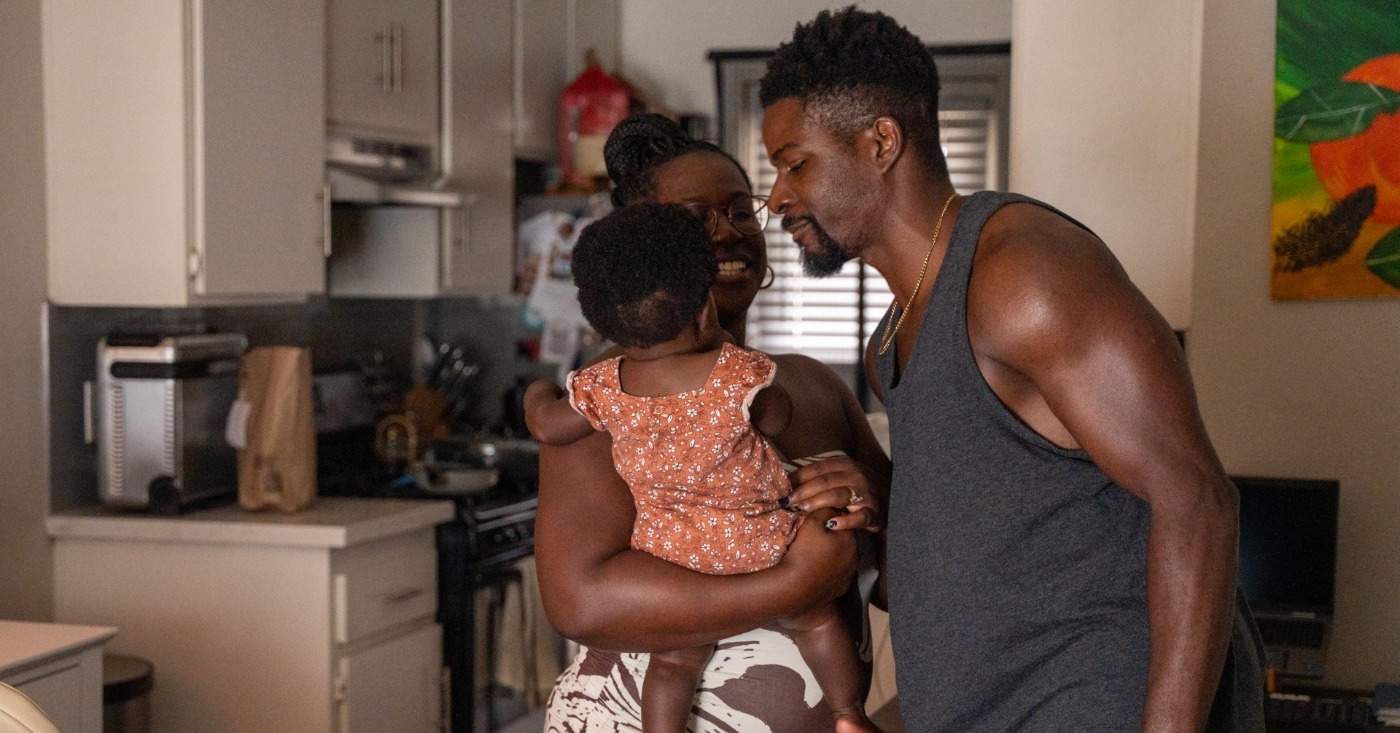
After losing twins, Long Beach resident Cassandra Carter approached the birth of her daughter, Nyomi, last November with anxiety. She wanted support for herself and her husband, Adewole, that extended beyond routine medical care.
“Getting pregnant as a Black woman, I wanted a team around me that made me feel safe,” she said. “I know all about the mishaps that Black women experience.”
Carter, a therapist and self-described hippie, hired Yvette Perry, a doula and co-founder of Divine Birthing Services LLC in Lancaster. Perry helped Cassandra craft a detailed birth plan.
“I was worried about postpartum depression. Mrs. Yvette knows a lot about how postpartum affects men as well,” Carter explained.
Perry was present the day Nyomi was born. She held the baby when Carter or her husband needed a moment and even set up candles in the birthing suite.
“Whatever I needed for my comfort, she was there,” Carter said of Perry. “She was there as an advocate and voice. I had a really serene birthing experience because I had someone extra who wasn’t tied to me as my family.”
Perry, a doula for nearly six years, said preexisting conditions, poor communication and dismissive hospital care heighten health risks for Black mothers.
“Sometimes, Black mommies are not being heard. They don’t know they have rights. They don’t know they can say, ‘no,’” Perry explained. “Doulas empower them. We are there to educate them.”
Perry’s concerns reflect a broader public health crisis. According to the Centers for Disease Control and Prevention’s 2024 maternal mortality report, non-Hispanic Black women in the U.S. died from pregnancy-related causes at a rate of 44.8 deaths per 100,000 live births.
In California, Black women experience the highest pregnancy-related mortality rate — about four times greater than other women, according to statistics. From 2021 to 2023, the leading causes of pregnancy-related deaths included cardiovascular disease, COVID-19, hemorrhage, sepsis, amniotic fluid embolism, and pulmonary embolism.
The Centering Black Mothers in California report found that structural racism — including barriers to high-quality health care, and chronic stress— disproportionately harms Black women.
In a statement to California Black Media (CBM), the California Department of Public Health (CDPH) said maternal mortality disparities stem from multiple factors. The department said addressing structural racism, listening to Black women’s experiences and reducing provider bias are key to closing the gap.
California began covering doula care as a Medi-Cal benefit in 2023, providing eligible patients with support during pregnancy, childbirth and the postpartum period, according to CDPH.
Whitney Dotson of Inglewood wanted an expert on pregnancy, labor, and delivery to guide her and her husband, Anthony, through the birth of their son, Anthony III. So, she hired Perry for doula support.
“It’s always more comfortable when you can have a second opinion,” she said. “Knowing she was better versed in what the options were, made me more comfortable.”
Dotson, 39, had a healthy pregnancy but faced recommendations common for expectant mothers over 35. Her doctor advised inducing labor at 39 weeks, but she hoped to carry to full term.
“I wasn’t comfortable with that,” she admitted.
Perry provided Dotson with information about induction guidelines and alternatives, helping her understand her options and communicate her preferences.
Then, Dotson returned to her doctor.
“I said, ‘I don’t want to — and this is why,’” she recalled. “He agreed and pushed the induction date back a week.”
Perry also advised Anthony on how he could support his wife during and after the pregnancy and during Anthony III’s birth. She also reminded Dotson to change birthing positions — from her back to her hands and knees.
Before Saveneh Martinez became a doula with Fierce Advocates in Contra Costa County, she was a new mom, uneducated on aspects of birth, which led to her first child, Colton, being placed in a Neonatal Intensive Care Unit.
“I didn’t know my choices,” she said.
Martinez called it “lifesaving” for expecting moms to have a doula.
“It should be a medical right,” she said.
California Perinatal Quality Care Collaborative (CPQCC) Senior Associate Medical Director Kimberly D. Gregory said research suggests that doulas decrease the pre-term birth rate and the likelihood of a C-section.
“Having a doula is a proactive thing to do,” she said.
Efforts are being made across the state to reduce maternal deaths.
CDPH’s Title V Action Plan aims to reduce pregnancy-related deaths among Black birthing mothers from 49.7 to 42.3 per 100,000 live births by 2030 through improvements in patient-centered care, expanding community-based perinatal teams, and addressing the social factors that contribute to poor maternal health outcomes.
CDPH’s Black Infant Health (BIH) Program and Perinatal Equity Initiative (PEI) have already begun to make headway.
“BIH’s prenatal group model improves key intermediate outcomes for participants, including increased social support and empowerment, better stress management, reduced depressive symptoms and gains in health knowledge and behaviors such as safe sleep practices and reduced smoking,” the CDPH told CBM.
“PEI’s early implementation results show progress across several participant-reported areas, such as improved birth experiences, breastfeeding initiation, and coparenting skills among fathers and partners,” the CDPH statement continued.
Gregory said the California Pregnancy Associated Review Committee examines maternal deaths and develops guidelines to help hospitals improve care. One of its main recommendations focuses on how hospitals respond to hemorrhaging, a leading cause of pregnancy-related deaths.
Gregory said CMQCC also created standard clinic care practices for cardiovascular disease and sepsis, two more drivers of maternal mortality, but widespread implementation across the state is pending.
She noted that although there are 800 maternal deaths a year in the U.S., there are also 3.6 million births.
“Most people will do well,” she said. “But you should know about complications like preterm birth. You should know about complications like diabetes, preeclampsia and postpartum depression.”
Martinez said doulas help to make birthing the transformative experience that it is, instead of a routine clinical transaction.
“Being able to feel heard, seen, safe, respected, and just being able to create spaces for them to be held as well,” she said.
Supported by the California Health Care Foundation (CHCF), which works to ensure that people have access to the care they need, when they need it, at a price they can afford. Visit www.chcf.org to learn more.

Black History
Passing for White, Fighting for Black America: The Courage of Walter White
White personally investigated 41 lynchings and eight race riots. On several occasions, his identity was discovered, forcing him to flee for his life. The evidence he collected helped the NAACP expose the brutality of lynching to Americans and strengthen its campaign for federal anti-lynching legislation. His experiences also influenced his 1929 book, “Rope and Faggot: A Biography of Judge Lynch.”

Walter Francis White was one of the most important civil rights leaders of the first half of the 20th century. For more than three decades, he helped transform the National Association for the Advancement of Colored People (NAACP) into one of the nation’s most powerful organizations fighting racial discrimination, segregation, and violence against African Americans.
Walter White was born in Atlanta, Georgia, in 1893 and grew up in a middle-class African American family. His parents, George and Madeline White, had been born into slavery. Although Walter had blond hair, blue eyes, very light skin and could easily have passed as white, he firmly identified as Black. As a teenager, he witnessed the Atlanta Race Massacre of 1906, when white mobs attacked African Americans throughout the city. The experience strengthened his determination to fight racial hatred and injustice.
After graduating from Atlanta University in 1916, White worked in insurance and became active in the Atlanta branch of the NAACP. His abilities caught the attention of NAACP leader James Weldon Johnson, who recruited him to the organization’s national staff in 1918.
He soon became known for his extraordinarily dangerous investigations of lynchings. Because many white Southerners assumed he was white, he was able to enter communities where Black investigators would have faced immediate danger. He spoke with witnesses, law enforcement officials, and even members of lynch mobs, often pretending to share their racial attitudes so they would reveal information.
White personally investigated 41 lynchings and eight race riots. On several occasions, his identity was discovered, forcing him to flee for his life. The evidence he collected helped the NAACP expose the brutality of lynching to Americans and strengthen its campaign for federal anti-lynching legislation. His experiences also influenced his 1929 book, “Rope and Faggot: A Biography of Judge Lynch.”
By the early 1930s, Walter had risen to the NAACP’s top administrative position. As executive secretary, he helped build the organization into a major national political and legal force. Under his leadership, the NAACP challenged discrimination in voting, employment, education, transportation, the military, and other areas of American life.
White also recruited attorney Charles Hamilton Houston to lead the NAACP’s legal strategy. Houston and his protégé, Thurgood Marshall, developed the courtroom campaign that eventually helped produce the Supreme Court’s historic 1954 decision in Brown v. Board of Education, declaring racial segregation in public schools unconstitutional.
White used his relationships with national political leaders as another weapon against discrimination. He worked with First Lady Eleanor Roosevelt, President Franklin D. Roosevelt, and President Harry S. Truman. He supported efforts to end employment discrimination and encouraged Truman to establish the President’s Committee on Civil Rights.
Walter White remained an NAACP leader until his death in 1955. His courage, political skill, investigative work, and relentless commitment to equality helped establish the foundation upon which the modern Civil Rights Movement would build.
Black History
Tradition Comes to the Streets in 11th Annual Black-Eyed Pea Festival at the Freedom Farmers Market
Mayor Barbara Lee stops by to support vendors, Winky Dinky Dogs owner Tyranny Allen A streamlined Oakland Black-Eyed Pea Festival took place on Sat. Sept. 12 in the lower Temescal neighborhood on the blocked off street that connect Shattuck and Telegraph avenues. An early start b
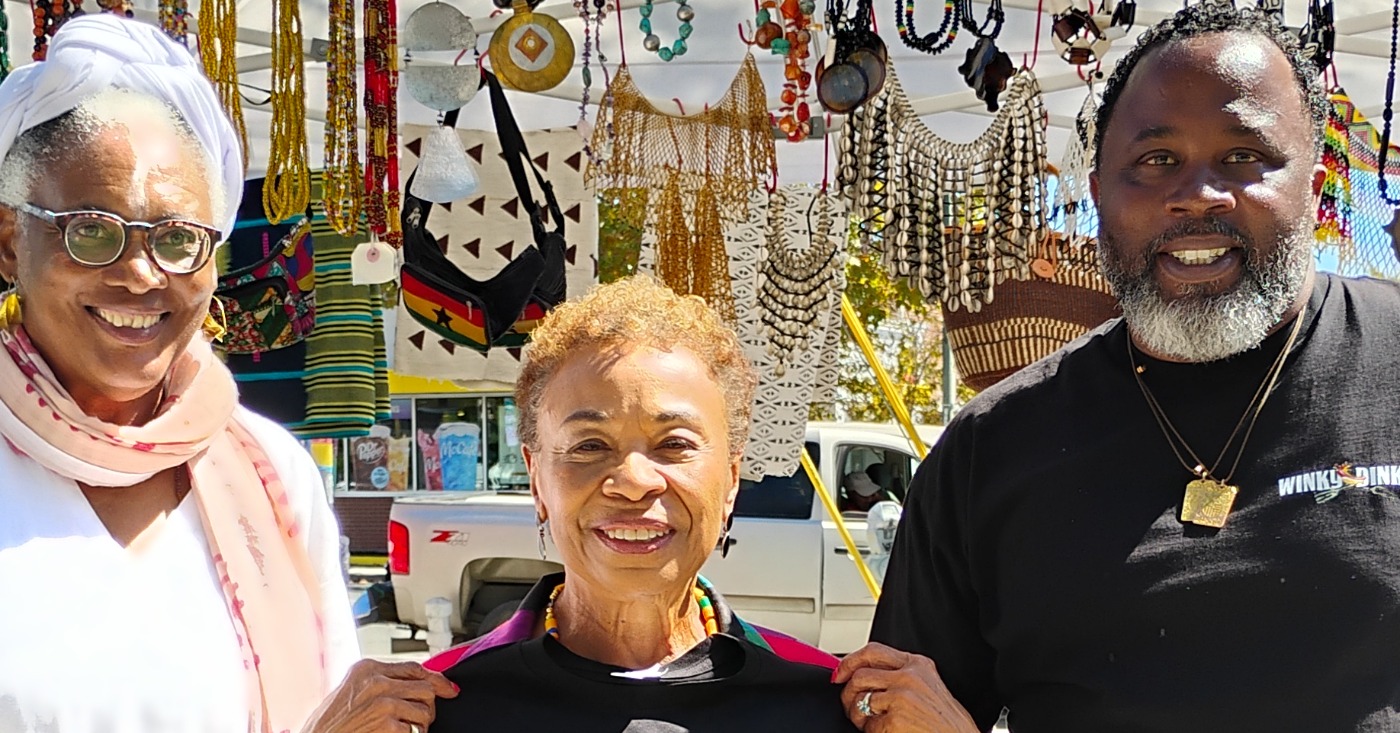
Mayor Barbara Lee stops by to support vendors, Winky Dinky Dogs owner Tyranny Allen
A streamlined Oakland Black-Eyed Pea Festival took place on Sat. Sept. 12 in the lower Temescal neighborhood on the blocked off street that connect Shattuck and Telegraph avenues.
An early start brought together vendor regulars from festival partner, the Freedom Farmers’ Market, and vendors who have supported the festival at its previous location at Marston Campbell Park.
Wanda Ravernell, the festival producer/director was on the verge of cancelling the festival because of funding limitations in May before reaching out to Elaine Smith, president of Farms to grow, Inc., which supervisors the market.
From its start in 2014, the festival has focused on the traditions of African American culture through music, food and art. That emphasis included fresh food vendors, particularly growers of African American legacy crops like black-eyed peas, yams, watermelon, collard greens and okra, which all originate in Africa.
To Fresno farmer Will Scott of Scott Family Farms, the Freedom Farmers’ Market allows him to bring those crops to the inner city – and support the nutrition of African Americans.
Shortly after the festival opened Saturday morning with prayers and salutes to the ancestors by Wakan Wiya Two-Spirit Drum and Awon Ohun Omnira, led M. Zamora and Otobaji Stewart respectively, 86-year-old Scott, the son of a sharecropper, announced that he will put other endeavors aside to dedicate the rest of his life to raise those foods.
Smith shared that Farms to Grow assists Black farmers in helping them overcome one of their main impediments to success – distribution – while creating alliances to help Black people maintain farmland and make it prosperous for younger generations to keep farming and farmland in the family.
As the morning progressed to afternoon, a steady stream of visitors drifted from booth to booth, chatting with vendors and each other.
Scott noted that a market day like this was what he was accustomed to in his youth, where the market was not just about buying things but also a place for valuable social exchange.
The social aspect became even pronounced shortly after midday when Oakland Mayor Barbara Lee stopped by to shop and visit with some of the vendors, including Ellen Bimpeh of Sankofa, and Ravernell who was selling T-shirts designed by Stewart.
Lee is also a fan of Winky Dinky Dogs, an eatery owned by Tyranny Allen whose second brick-and-mortar venture further anchors a hub of businesses at that corner.
As he has in previous years, Andre Thierry of Accordion Soul, closed the festival with a 90-minute set that brought young and the young-at-heart on their feet to dance in a line or as impromptu couples.
And, surprisingly, the man Allen refers to as the mayor of 45th Street, came out on cane and chair to sit by the curb in the sun and listen to music reminiscent of his Louisiana roots. His appearance seemed to echo Scott’s observance about the market: to bring people together.
The Freedom Farmers’ Market is located at 4521 Telegraph Avenue in Oakland and is open on the second and fourth Saturdays of each month until Nov. 14. For more information and to apply to be a vendor, go to https://www.farmstogrow.org/freedomfarmersmarket



Doulas Are Helping Black California Moms Navigate Pregnancy–Even as High Mortality Rates Persist

Newsom Signs Addictive Social Media Law to Protect Kids

On Your November Ballot: Prop 38 Would Allocate $8.4 Billion to Immunology and Immunotherapy Funding

Ask California: Golden State Releases New AI Chatbot

Asm. Isaac Bryan’s Bill Banning California Police From ICE Side Jobs Reaches Newsom’s Desk

Assemblymember LaShae Sharp-Collins’s Bill Would Pause Law Enforcement’s Use of Shock Gloves Pending Study

BOOK REVIEW: ‘Laws of Solomon’ Reveals Tender Heart of Former Child Soldier

OPINION: The New American Fear – From 9-11 to AI

Passing for White, Fighting for Black America: The Courage of Walter White

Oakland People’s Arms Embargo Coalition Demands End to Military Shipments Thru Oakland

Barbara Lee Mourns Gloria Steinem, Remembers a Friendship Rooted in Equality

Event Preview: ‘Fashion v. Fascism’ – A Runway Revolution Is Coming to the Bay Area

Two Looming Threats Every Alameda County Elder Should Know About

Oakland Mayor Reads to Children at Bookout Block Party at Marcus Books Store

Tradition Comes to the Streets in 11th Annual Black-Eyed Pea Festival at the Freedom Farmers Market

Less Affluent School Districts, Including Sacramento City, Face Threat of State Takeover

ESSAY: California Can Close Its Colorectal Cancer Gap

California Hispanic Chambers of Commerce Unveils: ‘Powering the Future’ Theme for 47th Annual Statewide Convention

Four Candidates, Including Incumbent Barbara Lee, Qualify for Oakland Mayor’s Race

Oakland Post: Week of August 12 – 18, 2026

From Blueprint to Breakthrough: Tackling Affordable Housing in Oakland

Oakland Observes Black August with Block Parties, Film Showings, Workshops

COMMENTARY: Why Local School Tax Measure G1 Will Not Be on the November Ballot

Standoff for Justice: Our Homes Are Worth Fighting For

Returning to Its Roots, the Oakland Black-Eyed Pea Festival Partners with the Freedom Farmers Market Sept. 12

Oakland Post: Week of August 26 – September 1, 2026

NPRC Scores First Advocacy Victory: David Shaw Finally Gets His Wish to ‘Go Home’

Frontier Airlines’ Return to Oakland Airport Brings Flights, Jobs and Opportunity

Gubernatorial Candidate Steve Hilton Blasts California New Tire Rules; Newsom Hits Back

Chef Sharon Lee Blends Culinary Excellence, Education and Empowerment

The Conversation With Al McFarlane 6/23/26

Media Monday 6/22/26

LIVE! ASK ALMA! — TUES. 6.23.26 7PM EST

Car Buying Secrets: 4 Hidden Checks Before You Sign!

Is This 550 HP Charger Worth YOUR Money? AutoNetwork Review

Celebrating Juneteenth – Frederick Douglass on education and resistance

LIVE! — ASK ALMA! — TUES. 6.19.26 7PM EST

Hyundai Ioniq 5 Parking, Safety, and 360 View #shorts

2025 Ioniq 5 New Wiper & Powerful Performance! #shorts

Electric SUV Range: Is 259 Miles Enough? #shorts

EV Charging: How Fast Can You Charge an Electric Vehicle? #shorts

Biometric Cooling… Messaging Seats…Come on! 2025 Infiniti QX80 Autograph 4WD

Charged Up: Witness the Magic of a Fully Electric Car! #shorts

Range Rover Sport PHEV Included…: See What’s Inside This Luxury SUV! #shorts

Invisible Hood View: Perfect Parking with X-Ray Vision! #shorts
-
 Commentary4 weeks ago
Standoff for Justice: Our Homes Are Worth Fighting For
-
 Activism4 weeks ago
Oakland Post: Week of August 26 – September 1, 2026
-
 Business4 weeks ago
Frontier Airlines’ Return to Oakland Airport Brings Flights, Jobs and Opportunity
-
 Business4 weeks ago
Gubernatorial Candidate Steve Hilton Blasts California New Tire Rules; Newsom Hits Back
-
 Business4 weeks ago
Chef Sharon Lee Blends Culinary Excellence, Education and Empowerment
-

 Community4 weeks ago
Big City Mayors Ask for “Yes” Vote on Housing Bond Measure; Conservatives Say “No”
-
 Black History4 weeks ago
Jackie Wright Champions Bay Area Stories, Filmmakers and Cultural Institutions
-

 Education4 weeks ago
Gov. Newsom’s Latest Appointees Include Sacramento Advocate for Formerly Incarcerated Students; State’s New Tech Chief
