
News
Black Folks Get Depressed Too!
CHICAGO CRUSADER — According to the National Alliance on Mental Health “an estimated 16 million American adults—almost 7% of the population—had at least one major depressive episode in the past year. People of all ages and all racial, ethnic and socioeconomic backgrounds experience depression…” Yes, that includes Black people!

By Natalie Graves
Whenever I discuss mental health and wellness in the Black community, I always highlight the topic of depression. The clinical term as stated in the Diagnostic and Statistical Manual (DSM) is “Major Depressive Disorder.” This topic is very important to me because just like every other community, Black folks get depressed too! Yet in 2019, there is still a lot of stigma and shame around this topic. Concepts like the “Black Super Woman Syndrome” and “Real Black men don’t cry” are keeping many of us from getting the mental support we need. Similarly, beliefs such as “you don’t have enough faith” or “you are saved enough” are preached in many of our churches. Well-meaning saints are creating shame and guilt for those who continue to suffer in silence. We must get more informed about mental illness, mental health and depression.
According to the National Alliance on Mental Health “an estimated 16 million American adults—almost 7% of the population—had at least one major depressive episode in the past year. People of all ages and all racial, ethnic and socioeconomic backgrounds experience depression…” Yes, that includes Black people!
May I set the record straight? Depression is not weakness or failure but rather a medical condition and disease. As we begin to understand it better, we can then recognize the signs and encourage our families and friends to seek treatment when required.

Let’s start with the most common question, “What causes depression?” According to the Mayo Clinic, it’s not exactly known what causes depression. As with many mental disorders, a variety of factors may be involved including the following:
- Biological differences. People with depression appear to have physical changes in their brains. The significance of these changes is still uncertain but may eventually help pinpoint causes.
- Brain chemistry. Neurotransmitters are naturally occurring brain chemicals that likely play a role in depression. Recent research indicates that changes in the function and effect of these neurotransmitters and how they interact with neurocircuits involved in maintaining mood stability may play a significant role in depression and its treatment.
- Hormones. Changes in the body’s balance of hormones may be involved in causing or triggering depression. Hormone changes can result with pregnancy and during the weeks or months after delivery (postpartum) and from thyroid problems, menopause or several other conditions.
- Inherited traits. Depression is more common in people whose blood relatives also have this condition. Researchers are trying to find genes that may be involved in causing depression.
The next question is, “What are the Symptoms of Depression?” The Mayo Clinic also explains that depressive symptoms are more than just “the blues.” It is two weeks or more of the following:
- Feelings of sadness, tearfulness, emptiness or hopelessness
- Angry outbursts, irritability or frustration, even over small matters
- Loss of interest or pleasure in most or all normal activities, such as sex, hobbies or sports
- Sleep disturbances, including insomnia or sleeping too much
- Tiredness and lack of energy, with even small tasks taking extra effort
- Reduced appetite and weight loss or increased cravings for food and weight gain
- Anxiety, agitation or restlessness
- Slowed thinking, speaking or body movements
- Feelings of worthlessness or guilt, fixating on past failures or self-blame
- Trouble thinking, concentrating, making decisions and remembering things
- Frequent or recurrent thoughts of death, suicidal thoughts, suicide attempts or suicide
- Unexplained physical problems, such as back pain or headaches
As we begin to understand that major depressive disorder is a medical condition, we can allow ourselves to get professional help. We can no longer suffer in silence but instead get the treatment to help us thrive and create our best selves.
Resources:
- Call your doctor or mental health professional.
- Call a suicide hotline number — in the U.S., call the National Suicide Prevention Lifeline at 1-800-273-TALK (1-800-273-8255). Use that same number and press “1” to reach the Veterans Crisis Line.
- Text CONNECT to 741441
- Therapy for Black Girls Directory https://www.therapyforblackgirls.com/therapist-directory/?
- Therapy for Black Men Directory https://therapyforblackmen.org/find-a-therapist/
Natalie Graves is a licensed clinical social worker and an expert in the area of mental health and wellness for athletes. Graves owns a private practice (Natalie Graves Athletic Counseling) specializing in this discipline. To book Graves for media interviews or speaking engagements, call 773-294-3903 or send an email to socialworkandsports@gmail.com. For more information, visit www.nataliegraves.com.
This article originally appeared in the Chicago Crusader.












Activism
Oakland Post: Week of August 12 – 18, 2026
The printed Weekly Edition of the Oakland Post: Week of August 12 – 18, 2026

To enlarge your view of this issue, use the slider, magnifying glass icon or full page icon in the lower right corner of the browser window.
Business
Car Wash Workers Cope with Lingering Impacts of ICE Raids
WAVE COMMUNITY NEWSPAPERS — Hundreds of car wash workers across Southern California have been detained in federal immigration raids, leaving lingering impacts on families and communities. Mario, a 33-year U.S. resident and father of three, was arrested at a Santa Ana car wash last August and held for two months.


LOS ANGELES — Mario relied on his job in the car wash industry to raise his three children. It was during a shift at a Santa Ana car wash last August that he was arrested by federal agents, taken to a U.S. Immigration and Customs Enforcement detention center and held for two months.
“They made me sleep on the cold floor for a week without a blanket, a toothbrush or basic medical care for the injured man next to me,” Mario, a 33-year resident of the United States, said at a news conference earlier this summer at Inglewood’s Crenshaw Imperial Car Wash, which is now closed after being raided by federal agents.
Mario, who is being identified only by his first name for safety reasons, is among hundreds of car wash workers detained across Southern California in the year since the Trump administration began an aggressive immigration crackdown in the region, according to the CLEAN Carwash Worker Center.
News of raids by masked agents has faded from the headlines, but the effects still linger for those caught in the crosshairs. Family members have been deported or left to languish in detention, and many who remain live with the fear of being hunted down by immigration officers.
At least 373 car wash workers have been detained at car washes across Southern California since the raids began last summer, according to figures compiled by CLEAN. The group’s data also shows federal agents raided or attempted to raid at least 106 car washes in communities across Los Angeles, Orange County and surrounding areas, including Inglewood, Culver City, Westchester, Bell and Whittier.
CLEAN, an advocacy group founded in 2007, has been fighting to protect car wash workers from exploitation and unsafe conditions. When the raids began last year, the group sprang into action, working around the clock to help detained workers and provide their families with legal and financial support.
“We gathered our information from workers, managers, and owners of the car washes that were being raided,” CLEAN Deputy Director Andrea Gonzalez said. “We also gathered information from rapid response teams who were on the ground responding to the raids.”
The Department of Homeland Security did not respond to a request for comment on the group’s findings.
Mario said he was one of seven workers at the Harbor Blvd Car Wash detained on the same day last August, but the only one who has been released. He said he refused to sign deportation papers and is fighting to stay in the United States, a process that has drained his family emotionally and financially.
“Being released is not the same as being free,” he said.
During Mario’s detention at the Adelanto ICE Processing Center, his wife and children struggled to cope with his sudden absence while fighting for his release, his wife Alejandra said.
“The employer gave us a video showing my husband being taken away under arrest, treated worse than a common criminal, with chains binding his legs, arms and waist,” Alejandra said. “It wasn’t right.”
The experience of a car wash worker named José was recounted at the news conference by the Rev. Andy Schwiebert of Immanuel Presbyterian Church in Los Angeles, who said agents “took him” from the La Cienega Car Wash last August.
José’s wife is a U.S. citizen, Schwiebert said, and José had a pathway to gaining citizenship before he was detained. By the time a judge ordered his release on bond, the car wash had shut down, Schwiebert said, leaving José without a job.
“These raids did not just target workers; they destabilized families, congregations, workplaces and entire communities,” Schwiebert said.
The administration’s aggressive enforcement operations have continued across the nation in the months since José’s and Mario’s detention, with ICE arrests in July surging to their highest rate so far under President Donald Trump.
Last month, ICE agents shot and killed Lorenzo Salgado Araujo, a 52-year-old father of three in Houston. Less than a week later, an immigration officer fatally shot 26-year-old Johan Sebastián Duran Guerrero in Biddeford, Maine.
Back in Inglewood, Mario said he was grateful to share his story and that, even though he was released, his experience in detention stays with him.
“I still feel frustrated and traumatized,” Mario said, “because my life is no longer the same as it used to be.”
Ernesto Ureño is a Loyola Marymount University journalism major and intern at Capital & Main, a nonprofit publication focused on inequality. It is published here with permission.
Based on reporting by Wave Community Newspapers.

Art
Misty Copeland Shapes Ballet’s Tomorrow
THE POSITIVE COMMUNITY — Misty Copeland will curate the 2026 Joyce Ballet Festival, a two-week event in New York City from August 4-16. This role allows her to influence the future of ballet by showcasing a wide range of dancers, choreographers, and companies. The festival will present both established and contemporary works, blending classical traditions with new artistic expressions.

This summer, Misty Copeland will step into a different kind of spotlight. Instead of taking center stage as a dancer, she will help determine what audiences see onstage as curator of the 2026 Joyce Ballet Festival. Taking place August 4 through August 16 at The Joyce Theater in New York City, the two-week celebration will bring together dancers, choreographers and companies representing a broad spectrum of ballet. The festival gives Copeland an opportunity to share not only her appreciation for ballet’s traditions, but also her vision for its future.
Copeland understands better than most how powerful a ballet stage can be. Her historic career with American Ballet Theatre changed the conversation about representation in one of the world’s most traditional performing arts. When she became the company’s first Black woman to reach the rank of principal dancer, her achievement carried significance far beyond a personal milestone. It gave young dancers of color a new image of what was possible and challenged the industry to reconsider who belonged at the center of ballet.
That history informs the perspective she brings to the festival. Copeland has spent much of her career moving between performance, mentorship, advocacy and storytelling. Her curatorial role allows her to bring those interests together by creating a program that does not treat ballet as a museum piece. Instead, the festival presents dance as an evolving language capable of carrying classical traditions into new cultural and artistic territory.

Audiences will encounter a mixture of established works and contemporary creations during the festival. Classical ballet vocabulary will share space with choreography that pushes dancers toward different physical, emotional and theatrical possibilities. The result is intended to give audiences a broader understanding of the art form while demonstrating that tradition and innovation do not have to be competing forces.
The lineup also provides an opportunity to see dancers from different artistic environments. Performers connected to organizations including American Ballet Theatre, New York City Ballet, Paris Opera Ballet, Houston Ballet, Dance Theatre of Harlem and Complexions Contemporary Ballet are among those represented in the festival. Each company carries its own history and artistic identity, making their participation part of a larger conversation about the many ways ballet can be performed and interpreted.
The presence of Dance Theatre of Harlem is particularly meaningful within the larger story of Copeland’s career and the evolution of Black representation in ballet. Founded during a period when opportunities for Black dancers were severely limited, the company helped demonstrate that excellence and classical training could flourish in a Black cultural environment. Its legacy continues to influence dancers and audiences, making its connection to a festival curated by Copeland especially resonant.
The program also reaches beyond a single definition of contemporary ballet. Choreographers with different backgrounds and artistic philosophies contribute to an evening that can move from recognizable classical structures to works shaped by modern dance, theater, popular culture and new approaches to movement. That diversity reflects a generation of artists who increasingly see ballet not as a rigid vocabulary but as a foundation from which they can explore.
For New York audiences, the festival offers something that is increasingly valuable: the opportunity to experience outstanding dancers in an intimate setting. The Joyce is known for presenting dance in a theater where audiences can see movement and artistry up close. That environment can make a familiar ballet work feel newly personal while allowing experimental pieces to communicate with unusual immediacy.
Copeland’s role as curator also sends a message about the importance of artistic leadership. The people who select performers and choreography help determine which stories receive attention and which artists receive opportunities. By bringing a range of voices into the festival, Copeland is using that responsibility to broaden the conversation around ballet. Her choices can introduce audiences to artists they may not otherwise encounter while encouraging longtime ballet followers to look at the form from a different perspective.
The 2026 Joyce Ballet Festival ultimately arrives at an important moment for the art form. Ballet is carrying centuries of tradition into an era defined by changing audiences, broader representation and increasingly adventurous choreography. Copeland’s festival reflects that transition. For two weeks in August, The Joyce will become a meeting place for the familiar and the unexpected—a celebration of where ballet came from and a preview of where it may be going. And with Misty Copeland helping shape the conversation, the future of ballet promises to be as expansive as the dancers who are defining it.
Based on reporting by The Positive Community.

WORK FROM HOME
Home-based business with potential monthly income of $10K+ per month. A proven training system and website provided to maximize business effectiveness. Perfect job to earn side and primary income. Contact Lynne for more details: Lynne4npusa@gmail.com 800-334-0540


Four Candidates, Including Incumbent Barbara Lee, Qualify for Oakland Mayor’s Race

Oakland Observes Black August with Block Parties, Film Showings, Workshops

Oakland Post: Week of August 12 – 18, 2026

COMMENTARY: Why Local School Tax Measure G1 Will Not Be on the November Ballot

California Hispanic Chambers of Commerce Unveils: ‘Powering the Future’ Theme for 47th Annual Statewide Convention

Returning to Its Roots, the Oakland Black-Eyed Pea Festival Partners with the Freedom Farmers Market Sept. 12

Less Affluent School Districts, Including Sacramento City, Face Threat of State Takeover

From Blueprint to Breakthrough: Tackling Affordable Housing in Oakland

NPRC Scores First Advocacy Victory: David Shaw Finally Gets His Wish to ‘Go Home’

ESSAY: California Can Close Its Colorectal Cancer Gap

Car Wash Workers Cope with Lingering Impacts of ICE Raids

Misty Copeland Shapes Ballet’s Tomorrow

As Part of Your Back-to- School Checklist, Vaccinate

As Part of Your Back-to- School Checklist, Vaccinate

Congresswoman Simon Demands Investigation into Trump’s Abuse of Emergency Powers for Coal Export Terminal in West Oakland

Department of Homeland Security Demands California Secretary of State Shirley N. Weber Scrub Voter Rolls

Oakland Children’s Hospital Workers and Patients Rally for Pediatric Medical Care

New Judge Could Decide if Karmelo Anthony Gets a New Trial

“The Power to See Threats Sooner”: Gov. Newsom, Safety Officials Showcase California’s Investments in Hi-Tech Wildfire Prevention

Alpha Kappa Alpha Sorority, Inc. Celebrates New North Atlantic Regional Director

Surveillance Pricing Fight: State Senate Debates Bill Banning Retailers from Using AI to Set Prices Based on a Buyer’s Profile

Mount Zion MBC, Church of Jesus Christ of Latter-day Saints Partner to Bring 29,000 Meals to Alameda County

California Sen. Padilla Joins Colleagues to Introduce Bill Imposing Term Limits on Supreme Court Justices

Starting This Summer, California Car Buyers Can Get an Instant $3500 Off the Cost of Electric Vehicles

COMMENTARY: You Are Already Paying for the AI Boom

California Bill Would Let Abuse Victims Use Trauma as Legal Defense for Violent Crime
Less Affluent School Districts, Including Sacramento City, Face Threat of State Takeover
Car Wash Workers Cope with Lingering Impacts of ICE Raids

Fed Court to Decide Landmark First Amendment Case

Gov. Gavin Newsom Signs Law Streamlining Affordable Housing Rules

The Conversation With Al McFarlane 6/23/26

Media Monday 6/22/26

LIVE! ASK ALMA! — TUES. 6.23.26 7PM EST

Car Buying Secrets: 4 Hidden Checks Before You Sign!

Is This 550 HP Charger Worth YOUR Money? AutoNetwork Review

Celebrating Juneteenth – Frederick Douglass on education and resistance

LIVE! — ASK ALMA! — TUES. 6.19.26 7PM EST

Hyundai Ioniq 5 Parking, Safety, and 360 View #shorts

2025 Ioniq 5 New Wiper & Powerful Performance! #shorts

Electric SUV Range: Is 259 Miles Enough? #shorts

EV Charging: How Fast Can You Charge an Electric Vehicle? #shorts

Biometric Cooling… Messaging Seats…Come on! 2025 Infiniti QX80 Autograph 4WD

Charged Up: Witness the Magic of a Fully Electric Car! #shorts

Range Rover Sport PHEV Included…: See What’s Inside This Luxury SUV! #shorts

Invisible Hood View: Perfect Parking with X-Ray Vision! #shorts
-
 Featured1 week ago
Department of Homeland Security Demands California Secretary of State Shirley N. Weber Scrub Voter Rolls
-
 Business3 weeks ago
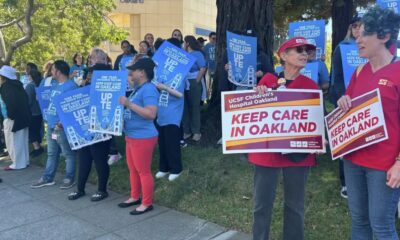
Oakland Children’s Hospital Workers and Patients Rally for Pediatric Medical Care
-
 #NNPA BlackPress2 weeks ago
New Judge Could Decide if Karmelo Anthony Gets a New Trial
-
 Environment1 week ago
“The Power to See Threats Sooner”: Gov. Newsom, Safety Officials Showcase California’s Investments in Hi-Tech Wildfire Prevention
-
 Black History2 weeks ago
Alpha Kappa Alpha Sorority, Inc. Celebrates New North Atlantic Regional Director
-
 Business3 weeks ago
Surveillance Pricing Fight: State Senate Debates Bill Banning Retailers from Using AI to Set Prices Based on a Buyer’s Profile
-
 Business3 weeks ago
Mount Zion MBC, Church of Jesus Christ of Latter-day Saints Partner to Bring 29,000 Meals to Alameda County
-
 Featured1 week ago
California Sen. Padilla Joins Colleagues to Introduce Bill Imposing Term Limits on Supreme Court Justices

1 Comment