
#NNPA BlackPress
Black Americans Face Unequal Burden as U.S. Inches Closer to War
BLACKPRESSUSA NEWSWIRE — As the United States edges closer to possible military action against Iran, history signals a familiar reality for Black Americans


By Stacy M. Brown
Black Press USA Senior National Correspondent
As the United States edges closer to possible military action against Iran, history signals a familiar reality for Black Americans: disproportionate risk, unequal support, and a long legacy of being asked to sacrifice more while receiving less. From World War I through Iraq and Afghanistan, Black servicemembers have routinely been overrepresented in combat roles and underrepresented in decision-making positions. Today, although Black Americans make up just over 13% of the U.S. population, they account for nearly 19% of active-duty Army personnel. “When the U.S. goes to war, Black Americans, whether as civilians, enlisted personnel, or military families, often carry a disproportionate share of the burden,” Liscah R. Isaboke, Esq., Managing Partner at Isaboke Law Firm, PLLC, told Black Press USA.
“Historically, Black service members have been overrepresented in frontline and high-risk roles while underrepresented in officer ranks,” Isaboke said. “This exposure results not only in increased physical danger, but also long-term disparities in access to VA benefits, career advancement, and mental health care upon return.” That overrepresentation is linked to greater economic inequality. Recruitment data shows the military draws heavily from low-income communities, and Black Americans—more likely to face systemic barriers to college and employment—are disproportionately represented among enlistees seeking stability, education, or opportunity. Once enlisted, they are less likely to be promoted into leadership roles, often due to bias in evaluation and selection processes. According to the VA’s National Health Study, 21.9% of deployed Black veterans screened positive for PTSD, compared to 14.1% of white veterans. Studies have shown that Black veterans are less likely to receive long-term, culturally competent mental health care and face more barriers to follow-up treatment. Military justice records also reveal that Black service members are more likely to face court-martial than their white counterparts.
“Black Americans have historically been overrepresented in the U.S. military while being under-protected both at home and abroad,” Cazoshay Marie, a disability advocate, artist, and writer, wrote in an email to Black Press USA. “From the disproportionate impact of PTSD and other invisible war wounds among Black veterans to the lack of adequate support upon returning home, the psychological and socioeconomic costs of war weigh heavily.” “Increased military spending often coincides with the defunding of essential programs—education, healthcare, and community infrastructure—which are lifelines in our communities,” Marie said. Those federal divestments have long-term consequences. During the post-9/11 wars in Iraq and Afghanistan, it’s estimated that the U.S. spent over $6 trillion on military operations, interest payments, and veteran care. As those expenses ballooned, domestic programs—including housing subsidies, public education investment, and job training—faced cutbacks. Black Americans, already on the receiving end of wealth gaps and institutional neglect, felt those losses acutely.
In their February 2024 essay “The Race Gap That Shapes American Views of War,” published in Foreign Affairs, Naima Green-Riley of Princeton University and Andrew Leber of Tulane University wrote that Black Americans have consistently been less likely than white Americans to support U.S. wars abroad. The authors cited not only political and moral skepticism but also a deeply rooted sense that these wars are carried out in the name of democracy while offering little tangible benefit to Black communities. “Black Americans are more inclined to ask: Is this war just? Will our people gain anything from it? And what are we sacrificing for a country that so often withholds justice at home?” Green-Riley and Leber wrote.
The article pointed to cultural responses, including KRS-One’s 2008 track “Our Soldiers,” which critiques the Iraq War and opens with a siren that initially evokes U.S. policing. The song’s hook, “Frontline of the political war,” highlights a dual consciousness: the experience of fighting abroad while being targeted and marginalized at home. “As a historian of public health and policy, I can say that when the U.S. goes to war, Black Americans often shoulder a disproportionate share of both the burden and the consequences—on the battlefield and at home,” Dr. Zachary W. Schulz, of the Department of History at Auburn University, told Black Press USA. “Historically, military service has been a double-edged sword for Black Americans,” Schulz said. “From the Civil War through Iraq and Afghanistan, Black soldiers have fought for freedoms abroad they were denied at home. Military service offered mobility, education, and sometimes even a pathway to civil rights advocacy—as in the case of the Double V campaign during WWII—but it also exposed Black personnel to racism within the ranks, limited advancement opportunities, and post-service disparities in veteran care.”
“Civilians are also deeply affected,” Schulz said. “Wars often fuel economic shifts and labor demands that open up jobs for Black workers—only to see those gains reversed when the war ends. Wartime policing and surveillance disproportionately target Black communities, and anti-war protest movements led by Black activists—think Muhammad Ali or Martin Luther King Jr.’s ‘Beyond Vietnam’ speech—have historically met with state suppression and public backlash.” “The impact is layered,” Schulz added. “Black Americans are overrepresented among the fighters, under-resourced in the aftermath, and frequently erased from the national narrative of sacrifice.” “We must tell the full truth,” Isaboke concluded. “Black Americans have always shown up for this country, even when this country has not always shown up for them, especially in times of war.”











#NNPA BlackPress
COMMENTARY: Jim Crow 2.0 at the Pentagon
BLACKPRESSUSA NEWSWIRE — The American people are expected to believe that one extraordinary officer after another suddenly fails to meet some undefined standard of excellence. We are expected to ignore impeccable service records while accepting that political appointees alone possess the wisdom to determine who is worthy of advancement.


Pete Hegseth insists that he is restoring “merit” to the United States military. But after months of dismissals, blocked promotions, and ideological purges, the evidence tells a different story. His campaign against so-called “diversity, equity, and inclusion” has become something far more dangerous: an assault on equal opportunity that falls with particular force on African Americans, while also targeting women, Latinos, gay Americans, and transgender service members.
The latest example is both troubling and infuriating.
Once again, Defense Secretary Pete Hegseth has reportedly blocked the promotion of an exceptionally qualified woman—Rear Admiral Amy Bauernschmidt. Bauernschmidt is no ordinary officer. She became the Navy’s first woman to command a nuclear-powered aircraft carrier, one of the most demanding leadership assignments in the world. Her career reflects decades of exemplary performance, operational excellence, and leadership under extraordinary pressure.
Yet once again, a distinguished military career appears to have been subordinated to an ideological agenda masquerading as “merit.”
I call BS!
The American people are expected to believe that one extraordinary officer after another suddenly fails to meet some undefined standard of excellence. We are expected to ignore impeccable service records while accepting that political appointees alone possess the wisdom to determine who is worthy of advancement.
The pattern has become impossible to ignore.
General Charles Q. Brown Jr., only the second African American to serve as Chairman of the Joint Chiefs of Staff, was dismissed despite a career that placed him among the most accomplished military leaders of his generation.
Admiral Lisa Franchetti, the first woman ever to serve as Chief of Naval Operations, was removed despite decades of distinguished command experience.
Reports have documented interventions that blocked or delayed the promotions of Black officers and women selected through the military’s rigorous promotion system.
Now Rear Admiral Amy Bauernschmidt joins the growing list of highly accomplished officers whose careers have been derailed for reasons that have never been persuasively explained.
Where is Congress?
Its silence has become deafening.
Congress has an independent constitutional responsibility to oversee the armed forces. Instead, too many lawmakers have watched silently while one of the nation’s most respected institutions is subjected to ideological litmus tests and political interference.
This is not military reform. It is testosterone-fueled performative masculinity disguised as a philosophy of military excellence.
The irony is impossible to miss. Hegseth repeatedly invokes “merit,” yet his rhetoric begins with the assumption that Black officers, women, and other historically excluded Americans must somehow justify their achievements in ways that white male officers are rarely required to do.
That is not meritocracy. It is prejudice wrapped in patriotic language.
No one is asking that anyone be promoted because of race or gender. Americans simply expect that promotions be based on demonstrated competence, leadership, integrity, and service. The officers being targeted have already proven themselves repeatedly under one of the world’s most demanding evaluation systems.
Their records speak for themselves.
The attack on African American military leadership has been especially pernicious.
For generations, Black Americans fought in segregated units, earned decorations while denied equal treatment, and repeatedly demonstrated loyalty to a nation that often failed to extend them full citizenship. They broke barriers not because standards were lowered but because excellence finally overcame institutional discrimination.
Today’s campaign against “diversity” threatens to revive old assumptions under new slogans.
The implication that Black generals and admirals somehow owe their success to affirmative action rather than extraordinary performance echoes some of the ugliest stereotypes of the Jim Crow era. Yesterday’s segregationists claimed Black Americans were inherently less qualified. Today’s culture warriors simply employ more politically acceptable language while inviting the same suspicion about Black achievement.
That is why Hegseth’s campaign increasingly resembles Jim Crow 2.0.
The targets may now wear stars on their shoulders instead of military patches on segregated uniforms, but the underlying message is hauntingly familiar: Black excellence is presumed suspect, while white excellence is presumed earned.
America’s military became the finest fighting force in history because it opened its doors to talent wherever it could be found. It grew stronger after President Truman desegregated the armed forces. It became stronger when women assumed greater command responsibilities. It became stronger when every qualified American was given the opportunity to serve to the fullest extent of their abilities.
Diversity is not a concession. It is a strategic advantage.
The nation’s adversaries do not fear an American military because it is racially homogeneous. They fear it because it draws upon the talents of more than 340 million Americans whose diverse experiences, perspectives, and abilities make our armed forces unmatched anywhere in the world.
Every politically motivated dismissal of a distinguished officer sends a chilling message throughout the ranks: excellence alone may no longer be enough if you belong to the wrong demographic group.
That weakens morale. It weakens recruitment. It weakens retention.
And ultimately, it weakens national security.
Pete Hegseth has every right to pursue military readiness. He has no right to redefine merit in ways that repeatedly cast suspicion upon the accomplishments of Black officers, women, and others who have devoted their lives to defending this nation.
America deserves better. The men and women who wear the uniform deserve better. The Constitution deserves better.
And unless Congress finds the courage to exercise meaningful oversight, history may well remember this period not as a restoration of military excellence, but as the moment political ideology attempted to resurrect, in modern form, the old poison of exclusion.
Jim Crow did not strengthen America. Jim Crow 2.0 will not strengthen America’s military. It will only diminish it
Wade Henderson
Strategic Advisor
Civil and Human Rights
wade@wadejhenderson.com

#NNPA BlackPress
New Judge Could Decide if Karmelo Anthony Gets a New Trial
By Emilie St. John (Contributor) Karmelo Anthony will return to court next month in his first step to overturn his murder conviction. Anthony was found guilty last month in the stabbing death of Austin Metcalf and sentenced to 35 years in prison. His new legal team has filed motions seeking the recusal of State District […]
The post New Judge Could Decide if Karmelo Anthony Gets a New Trial appeared first on BlackPressUSA.


By Emilie St. John
(Contributor)
Karmelo Anthony will return to court next month in his first step to overturn his murder conviction.
Anthony was found guilty last month in the stabbing death of Austin Metcalf and sentenced to 35 years in prison. His new legal team has filed motions seeking the recusal of State District Judge John Roach Jr. from overseeing the appeals process.
Two hearings have been scheduled on the motion for Aug. 9 and 10 in the Collin County Courthouse in McKinney, Texas, according to Fox4 News.
On July 14, Senior Judge Sid L. Harle of the 226th District Court was assigned to preside over the defense’s motion to recuse Collin County Judge John Roach. The assignment took effect immediately and authorized Harle to handle all matters related to the recusal request, the filing read.
The Collin County District Attorney’s Office continues to defend its handling of the case by issuing a statement to NBC 5 DFW.
“The defendant’s new lawyers have filed a motion containing several inaccurate characterizations of the trial proceedings. The entire prosecution team and I conducted this trial ethically and in full compliance with the Court’s rulings and any agreements with defense counsel. We look forward to addressing these claims thoroughly in a Court of law in the coming weeks. The jury heard extensive evidence over the course of the trial and returned a unanimous verdict. We remain confident in that verdict and the fairness of the proceedings.”

Anthony’s new legal team, made up of appellate, civil rights, and criminal defense attorneys, was retained following Anthony’s conviction.
“Our responsibility is to determine whether a legal error occurred and to ensure that every issue supported by the record is fully and vigorously presented on appeal,” the team said in a statement.
“We recognize the profound loss suffered by one young man’s family and the uncertainty facing another, and we extend our respect to everyone whose lives have been forever changed by these events,” the release reads.
Anthony was charged with the stabbing death of Austin Metcalf during a track meet in Frisco, Texas, April 2, 2025. Anthony has long maintained it was an act of self-defense.
The attorneys are representing Anthony pro bono. The nearly 200-page notice of appeal seeks a new trial because his Sixth Amendment right to a public trial was violated.
“The cumulative and practical effect of these provisions was to exclude members of the public from proceedings at every stage,” the filing reads.
The filing also focused on an alleged “handshake deal” that kept Anthony from taking the stand in his defense.
The defense filing said the agreement was that the jury would not hear that Metcalf and his twin brother had been accused of racism and bullying in the past. In exchange, they also would not see Anthony’s cellphone records or his school disciplinary record, according to court documents reported by the Dallas Morning News.
Anthony’s former defense attorney, Mike Howard, said the defense relied heavily on that deal. The team chose not to ask certain questions of witnesses or call on a separate expert witness based on that agreement. It also abandoned plans to introduce testimony and evidence about the allegations against Metcalf and his brother.
Appellate attorney Russell Wilson is now handling post-trial proceedings and Anthony’s appeal. He recently sat down for an interview, stating, “The court committed multiple errors during the June murder trial, preventing him from receiving a fair trial.”
“You know, we file motions that we expect to prevail on, but we understand that there’s two sides to every story. And at the end of the day, it’ll be a judge that has to make these decisions, but we feel confident in the positions that we’re taking,” Wilson said during an interview with WFAA. “There were substantial issues that we thought a reviewing court needed to look at. We thought these were constitutional irregularities, and we could have them addressed now. And so, we put them into a motion for a new trial.”
Bree West, a former Dallas County Assistant District Attorney, found it startling that so little time was given to Anthony’s team for such a serious “life or death” situation.
“I do think that it’s really challenging that potentially a court decided that you have 10 minutes to make that level of decision when it has the potential of being life-altering,” said West during an interview with Fox 4 News.
Judge Harle is no stranger to high-profile cases, having presided over the prosecution of a police officer charged in connection with the 2022 mass shooting at Robb Elementary School in Uvalde.
Anthony was convicted on June 9 of the murder of Austin Metcalf and sentenced to 35 years in prison.
The post New Judge Could Decide if Karmelo Anthony Gets a New Trial appeared first on BlackPressUSA.

#NNPA BlackPress
COMMENTARY: LSMFT! Lord Save Me from Trump!
WESTSIDE GAZETTE — The author criticizes Donald Trump’s rhetoric, noting his use of terms like “Dumbocrats” and “Communist” to describe Democrats and democracy. The column asserts that Trump’s current strategy involves creating doubt about midterm elections due to a lack of Republican agenda.
The post COMMENTARY: LSMFT! Lord Save Me from Trump! appeared first on BlackPressUSA.

Frankly Speaking
Wow! Wow! Wow! The swamp drainers have truly stepped down to new levels of stupidity. You remember Weapons of Mass Destruction? We now have Weapons of Mass Distraction. Trump has introduced Dumbocrats and Communists into the conversation about Democrats and Democracy.
Trump lies so much, and his current strategy is to set up doubt about midterm elections because he and Republicans have no agenda!
He has no “Trump “ card, but Iran has a strait! He called it a skirmish; it’s now a War. He said five days; now it’s five months. He said few casualties; now it’s 18 deaths. He knew nothing about Project 2025 but hired its architects! Trump lies about the lies and often forgets these little inventions called cameras and phones
We see and hear and then see and hear the inconsistencies.
I didn’t like 45 and dislike 47 even more!
The post LSMFT! Lord Save Me From Trump! appeared first on The Westside Gazette.
Based on reporting by Westside Gazette.
The post COMMENTARY: LSMFT! Lord Save Me from Trump! appeared first on BlackPressUSA.
WORK FROM HOME
Home-based business with potential monthly income of $10K+ per month. A proven training system and website provided to maximize business effectiveness. Perfect job to earn side and primary income. Contact Lynne for more details: Lynne4npusa@gmail.com 800-334-0540


Car Wash Workers Cope with Lingering Impacts of ICE Raids

Misty Copeland Shapes Ballet’s Tomorrow

As Part of Your Back-to- School Checklist, Vaccinate

As Part of Your Back-to- School Checklist, Vaccinate

Congresswoman Simon Demands Investigation into Trump’s Abuse of Emergency Powers for Coal Export Terminal in West Oakland

OPINION: The Philippines Isn’t Foreign When Your Family Still Lives There

Asm. McKinnor’s Bill Banning Drones Above Outdoor Entertainment Events Awaits Senate Decision

California Sen. Padilla Joins Colleagues to Introduce Bill Imposing Term Limits on Supreme Court Justices

Department of Homeland Security Demands California Secretary of State Shirley N. Weber Scrub Voter Rolls

George Cook: The Inventor Who Made Fishing Smarter

Gov. Newsom Announces $109.6 Million in Funding for 278 Supportive Homes in Bakersfield, Contra Costa, Sacramento and Fresno

Rep. Kamlager Dove Demands Care, Justice for Man Shot by ICE

“The Power to See Threats Sooner”: Gov. Newsom, Safety Officials Showcase California’s Investments in Hi-Tech Wildfire Prevention

100 Black Wings’ Team Oakland Youth Athletes Heading to Taiwan for 2026 International Children’s Games

Oakland ‘Port Serves as a Powerful Engine for Good Jobs and Economic Development
Department of Homeland Security Demands California Secretary of State Shirley N. Weber Scrub Voter Rolls

Oakland Children’s Hospital Workers and Patients Rally for Pediatric Medical Care
“The Power to See Threats Sooner”: Gov. Newsom, Safety Officials Showcase California’s Investments in Hi-Tech Wildfire Prevention

New Judge Could Decide if Karmelo Anthony Gets a New Trial

Surveillance Pricing Fight: State Senate Debates Bill Banning Retailers from Using AI to Set Prices Based on a Buyer’s Profile

Alpha Kappa Alpha Sorority, Inc. Celebrates New North Atlantic Regional Director

Mount Zion MBC, Church of Jesus Christ of Latter-day Saints Partner to Bring 29,000 Meals to Alameda County
California Sen. Padilla Joins Colleagues to Introduce Bill Imposing Term Limits on Supreme Court Justices

Starting This Summer, California Car Buyers Can Get an Instant $3500 Off the Cost of Electric Vehicles

COMMENTARY: You Are Already Paying for the AI Boom

California Bill Would Let Abuse Victims Use Trauma as Legal Defense for Violent Crime

Fed Court to Decide Landmark First Amendment Case

Gov. Gavin Newsom Signs Law Streamlining Affordable Housing Rules

Oakland Celebrates $125 Million Coliseum Sale

Saving Black Mothers Starts Outside the Hospital

The Conversation With Al McFarlane 6/23/26

Media Monday 6/22/26

LIVE! ASK ALMA! — TUES. 6.23.26 7PM EST

Car Buying Secrets: 4 Hidden Checks Before You Sign!

Is This 550 HP Charger Worth YOUR Money? AutoNetwork Review

Celebrating Juneteenth – Frederick Douglass on education and resistance

LIVE! — ASK ALMA! — TUES. 6.19.26 7PM EST

Hyundai Ioniq 5 Parking, Safety, and 360 View #shorts

2025 Ioniq 5 New Wiper & Powerful Performance! #shorts

Electric SUV Range: Is 259 Miles Enough? #shorts

EV Charging: How Fast Can You Charge an Electric Vehicle? #shorts

Biometric Cooling… Messaging Seats…Come on! 2025 Infiniti QX80 Autograph 4WD

Charged Up: Witness the Magic of a Fully Electric Car! #shorts

Range Rover Sport PHEV Included…: See What’s Inside This Luxury SUV! #shorts

Invisible Hood View: Perfect Parking with X-Ray Vision! #shorts
-
 Featured4 days ago
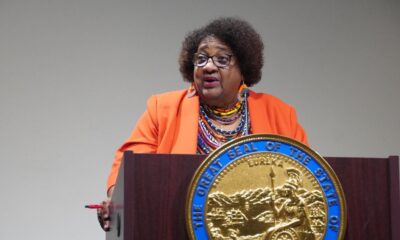
Department of Homeland Security Demands California Secretary of State Shirley N. Weber Scrub Voter Rolls
-
 Business3 weeks ago
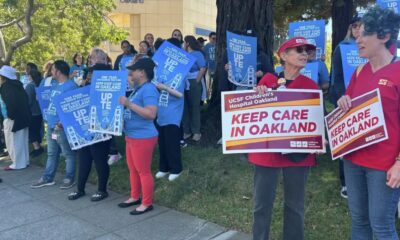
Oakland Children’s Hospital Workers and Patients Rally for Pediatric Medical Care
-
 Environment4 days ago
“The Power to See Threats Sooner”: Gov. Newsom, Safety Officials Showcase California’s Investments in Hi-Tech Wildfire Prevention
-
 #NNPA BlackPress2 weeks ago
New Judge Could Decide if Karmelo Anthony Gets a New Trial
-
 Business3 weeks ago
Surveillance Pricing Fight: State Senate Debates Bill Banning Retailers from Using AI to Set Prices Based on a Buyer’s Profile
-
 Black History1 week ago
Alpha Kappa Alpha Sorority, Inc. Celebrates New North Atlantic Regional Director
-
 Business3 weeks ago
Mount Zion MBC, Church of Jesus Christ of Latter-day Saints Partner to Bring 29,000 Meals to Alameda County
-
 Featured4 days ago
California Sen. Padilla Joins Colleagues to Introduce Bill Imposing Term Limits on Supreme Court Justices
