
Commentary
“Big Sister” Barbara Lee’s Advice for the New Women of Color in Congress
NNPA NEWSWIRE — “…there have been vocal women of color pushing for progressive change in Congress for a long time. California Rep. Barbara Lee, who Pressley called a ‘big sister & mentor’ in her tweet, is one of them.”

“You have to break through all of that sexism and racism. You have to really confront that all of the time.”
By Christina Cauteruci
There’s a crew of new women in Congress who’ve become fast friends since the election. Reps. Rashida Tlaib, Ayanna Pressley, Ilhan Omar, and Alexandria Ocasio-Cortez have become instant progressive icons and visible markers of a long-overdue shift in legislative demographics. They’ve posted loads of selfies together, called themselves a “squad,” tweeted support for each other’s policy ideas, and defended each other from right-wing detractors. Their fans have seen them as harbingers of hope in a dark time descending on a stalled-out Congress to help save America from itself.
It’s important to remember, though, as Pressley told her Twitter followers over the weekend, that there have been vocal women of color pushing for progressive change in Congress for a long time. California Rep. Barbara Lee, who Pressley called a “big sister & mentor” in her tweet, is one of them. In a phone conversation earlier this month, I spoke to Lee about her role in the new, more progressive Congress, what it was like to be one of the few black women in national office in the 1990s, and what it might mean to have a “critical mass” in the legislature. Our conversation has been condensed and edited for clarity.
Christina Cauterucci: I was looking through all the pictures you and other Democratic women posed for on the first day of the new Congress, and there was a palpable feeling of celebration. What was that day like for you?
Barbara Lee: It was exciting. The younger and new members of Congress are very smart, they’re authentic, they’re passionate, they’re committed to their constituencies and to the country, to the world. And it’s just been wonderful being with them. I hope to be able to help them find their paths.
But also, I have to say, just as a progressive African-American woman, they give me a lot of hope. They strengthen me. They really formed that bond that means a heck of a lot when you’re in a Congress where—for example, in 1998, I was only the 20th African-American woman ever elected to Congress since 1789. So this is really quite a happy moment and a really profound and positive development for the country.
There seems to be an incredible camaraderie among this new class of congresswomen—they’re hugging each other in photos, calling each other sisters in their tweets. Is there always such a strong feeling of solidarity among new progressive members of Congress?
There’s always solidarity. But I think this year is unique because you have so many women of color, and women from diverse backgrounds, and women who have broken so many glass ceilings. For example, Pennsylvania did not have one single woman in their delegation. Now we have—I believe it’s four. This is amazing. This is groundbreaking. It really tells me there’s no way we can ever go back. I think the excitement and the joy and the hope that this election brought was really a special and unique moment in history.
I’ve been thinking a lot about power in numbers when it comes to race and gender representation in Congress. Some studies of women in business leadership suggest that there needs to be a critical mass of people from underrepresented groups to make a tangible difference, because one person alone can be more easily ignored or tokenized. Does that resonate with your experience in Congress?
Absolutely. You know, it’s really good to have allies. And coming to Congress then, as a progressive African-American woman, it took a while to build the level of collegiality that others have, especially white men, because there were so few of us.
In terms of speaking out in a meeting or at a hearing with new ideas—folks would shake their heads and say “Great,” or whatever. Then 10 minutes later they would reiterate the same thing I just said, as if it were new. [Laughs.] It’s just like being invisible. You know what that’s like, being invisible? But let me tell you: I wasn’t gonna let that happen. I was working for former Congressman Ron Dellums, who passed away in July. And when I started working as a chief of staff on Capitol Hill, there were maybe two African-American women as chiefs of staff, OK? Maybe three, but I think it was two. I had to represent Ron at meetings with Cabinet officials. And I’d walk into those meetings, and primarily white men were there, and I would engage in the meeting, and it was almost like I just wasn’t there. Or they didn’t recognize me as a chief of staff, or they would never call on me to ask my question or make my point. Or they sometimes didn’t know that I was a chief of staff, they thought I was another staffer just taking notes to take back to the congressman. You know, it was very ugly and demeaning, disrespectful.
So I remember those days, and we’ve made a lot of progress, but let me tell you, we have a long way to go. You still have institutional biases, you have to break through all of that sexism and racism. You have to really confront that all of the time, whether it’s subconscious or conscious.
[Congress is] still just a microcosm of America. It takes a while. But I think that we’re moving forward, we’re making progress. With this new Congress, you know, it’ll never go back to the days of long ago, when Shirley Chisholm, the first African-American congresswoman, was elected in the late ’60s.
You know what it’s like to stand alone on an issue—I’m thinking specifically of your vote against the Authorization for Use of Military Force in 2001. [Ed. note: Lee was the only member of Congress to vote against the broad, still-active authorization of war.] What advice are you giving new members of Congress on speaking up, even if they’re alone?
I think they all are very courageous and all have to know their bottom lines, what they bring to Congress, their values, who they are, and what they stand for. And it may not be the same thing, but you have to know how far to go for compromise, or how far you will allow yourself to go on any given issue. For me, as a daughter of veteran and someone whose dad was in World War II, Korea, and who was raised in a military family, I know that the use of force should only be the last option, recognizing that we have to make sure that our national security is secure. So for me, that’s a bottom line.
For me, another bottom line is you do not cut public assistance and food stamps. I had a very difficult period in my life—I was a single mother with two young sons. And I was on welfare and food stamps and Medicaid. And I knew what it was like, and it was really hard. But in that moment because I had this bridge over troubled waters, like a lifeline, I’m not gonna allow, on my watch, my involvement in cutting any of this basic support for people and families and children who need it. And I’m gonna look out for others who may be in similar circumstances. So that’s a bottom line for me.
[The new members of Congress] come with a lot of courage. Just to get here took a lot of courage—to break through, given the fundraising barriers and everything that you have to deal with. But now they’re here, and they’ve demonstrated how courageous they are. They just have to know how far they’re willing to compromise and what they stand for. And I think most of them know that.
How do you see your role in this wave of new progressive women, especially women of color, taking seats in Congress?
I hope I am a supportive peer who can really help them navigate the legislative process, and do exactly what they want to do in their congressional career—serving their constituents and how they want to go, what path they want to take. And now as a co-chair of the Steering and Policy Committee, I want to make sure they’re able to get to the committees that they want—to carve out what issues they want to address. In terms of the seniority system and how you navigate that—I’ve had a lot of experience … [with] ways to think out of the box and be creative in what I want to do when there are systemic and institutional kinds of roadblocks.
So I want to help [new members of Congress] figure those out. But also, I have to tell you: They encourage me, and they give me a lot of insight, and I learn a heck of a lot from them. It goes both ways.





Activism
Oakland Post: Week of April 8 – 14, 2026
The printed Weekly Edition of the Oakland Post: Week of April 8 – 14, 2026
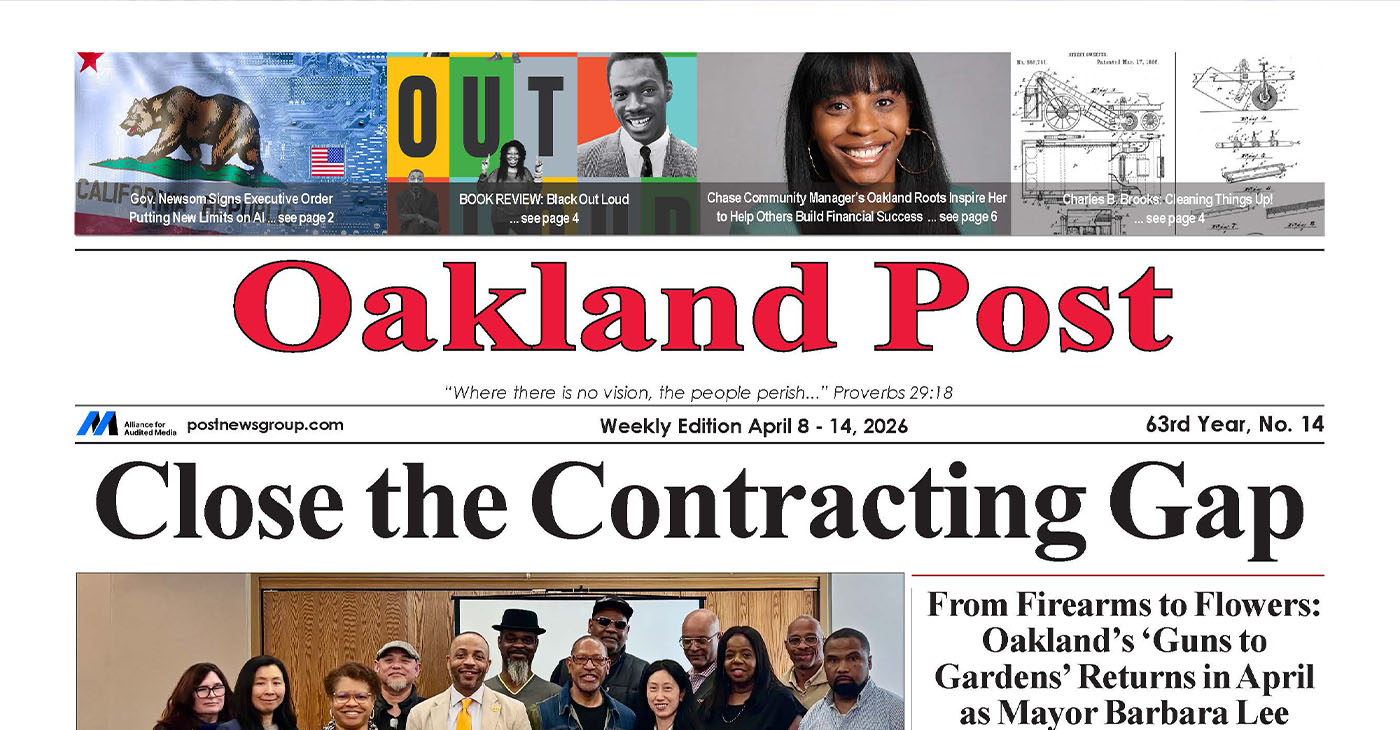
To enlarge your view of this issue, use the slider, magnifying glass icon or full page icon in the lower right corner of the browser window.
Activism
Oakland Post: Week of April 1 – 7, 2026
The printed Weekly Edition of the Oakland Post: Week of April 1 – 7, 2026
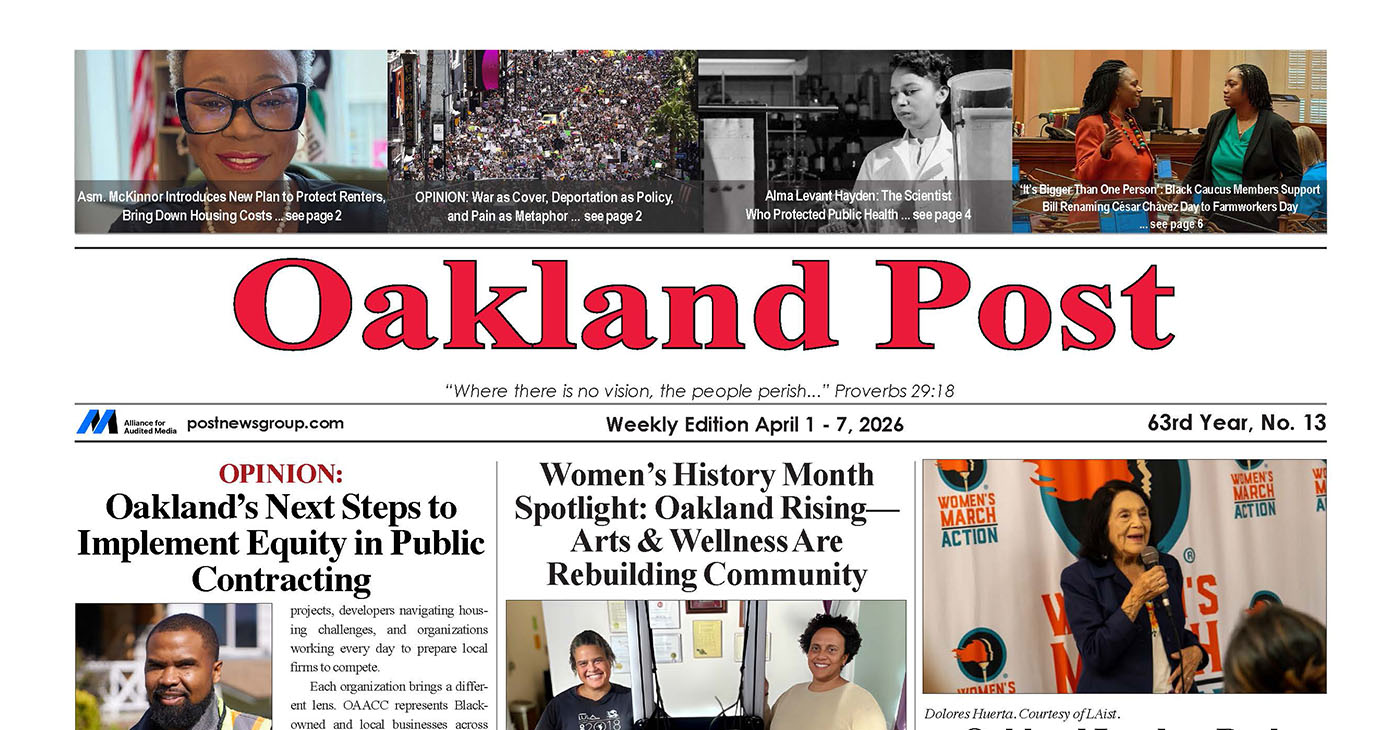
To enlarge your view of this issue, use the slider, magnifying glass icon or full page icon in the lower right corner of the browser window.
Activism
Oakland Post: Week of March 18 – 24, 2026
The printed Weekly Edition of the Oakland Post: Week of March 18 – 24, 2026
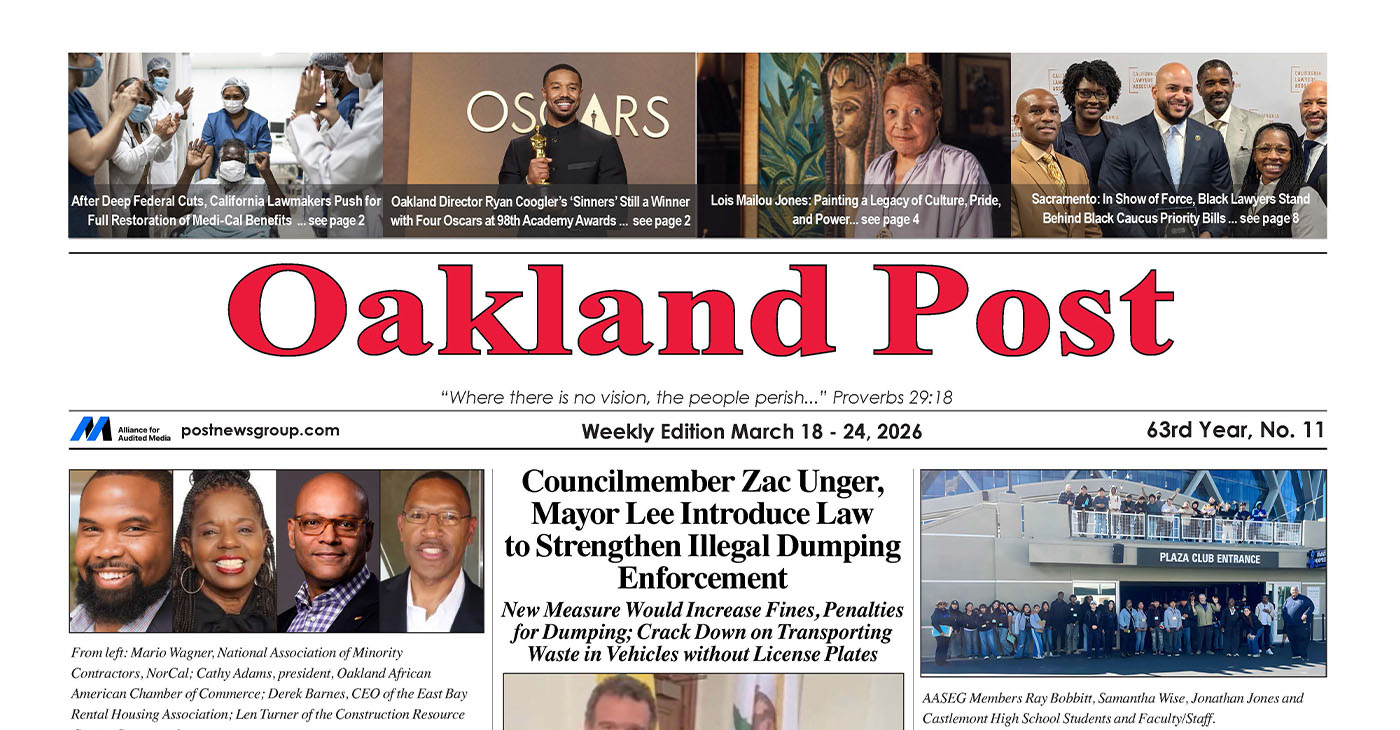
To enlarge your view of this issue, use the slider, magnifying glass icon or full page icon in the lower right corner of the browser window.
WORK FROM HOME
Home-based business with potential monthly income of $10K+ per month. A proven training system and website provided to maximize business effectiveness. Perfect job to earn side and primary income. Contact Lynne for more details: Lynne4npusa@gmail.com 800-334-0540


Oakland Post: Week of April 8 – 14, 2026

Oakland Post: Week of April 1 – 7, 2026

Black Artists in America, Installation Three Wraps at the Dixon Gallery and Gardens

Grief, Advocacy, and Education: A Counselor Reflects on Black Maternal Health

Future of Florida’s Black History Museum in Limbo

New Research Shows the Many Benefits of Early Learning

South Hampton K-8 Students Among Top 10 Finalists for Samsung’s ‘Solve for Tomorrow’ Competition

Cuba: No Negotiation with US on the President or Political System

Brooklyn Academy of Music Names Jamaican-Born Tamara McCaw as President

Trinidad & Tobego – U.S. Launches WhatsApp Channel for American Citizens in the Country

Oakland Post: Week of March 18 – 24, 2026

AI Innovation vs. Ethics and Environmental Impact

AI, Web3, and Digital Reparations

What If You Owned Your AI Agent?

Season 7, Episode 3 – January Reporter’s Roundtable 📱

Reflecting on Black History Milestones in Birmingham AL

Oakland Post: Week of February 25 – March 3, 2026

Oakland Post: Week of March 4 – 10, 2026

PRESS ROOM: NBA Hall of Fame Nominee Terry Cummings Joins 100 Black Men of DeKalb County to Launch Victory & Values Initiative

Trump’s MAGA Allies are Creating Executive Order Plan to Steal the 2026 Midterms
Oakland Post: Week of March 18 – 24, 2026

U.S. manufacturing rebounds – how foundry services are adapting to rising demand

Oakland Post: Week of March 11 -17, 2026

Poll Shows Support for Policies That Help Families Afford Child Care

OP-ED: One Hundred Years of Black Workers Telling the Truth

Advancements in solar technology that are changing the way we power the world

Financial Wellness and Mental Health: Managing Money Stress in College

Woman’s Search for Family’s Roots Leads to Ancestor John T. Ward – A Successful Entrepreneur and Conductor on the Underground Railroad

COMMENTARY: Women of Color Shape Our Past and Future

PRESS ROOM: Civil Rights TV Launches in Selma as the World’s First 24/7 Civil Rights Television Network

Hyundai Ioniq 5 Parking, Safety, and 360 View #shorts

2025 Ioniq 5 New Wiper & Powerful Performance! #shorts

Electric SUV Range: Is 259 Miles Enough? #shorts

EV Charging: How Fast Can You Charge an Electric Vehicle? #shorts

Biometric Cooling… Messaging Seats…Come on! 2025 Infiniti QX80 Autograph 4WD

Charged Up: Witness the Magic of a Fully Electric Car! #shorts

Range Rover Sport PHEV Included…: See What’s Inside This Luxury SUV! #shorts

Invisible Hood View: Perfect Parking with X-Ray Vision! #shorts

AI Is Reshaping Black Healthcare: Promise, Peril, and the Push for Improved Results in California

ESSAY: Technology and Medicine, a Primary Care Point of View

Sanctuary Cities

The RESISTANCE – FREEDOM NOW

STATE OF THE PEOPLE: Freddie

ECONOMIC BOYCOTT DAY!!!!!

I told You So
-
 Activism3 weeks ago
Oakland Post: Week of March 18 – 24, 2026
-
 Activism3 weeks ago
Oakland Post: Week of March 11 -17, 2026
-
 Advice3 weeks ago
Financial Wellness and Mental Health: Managing Money Stress in College
-
 #NNPA BlackPress3 weeks ago
Brooklyn Academy of Music Names Jamaican-Born Tamara McCaw as President
-
 #NNPA BlackPress2 weeks ago
Grief, Advocacy, and Education: A Counselor Reflects on Black Maternal Health
-
 #NNPA BlackPress2 weeks ago
New Research Shows the Many Benefits of Early Learning
-
 #NNPA BlackPress2 weeks ago
Black Artists in America, Installation Three Wraps at the Dixon Gallery and Gardens
-

 Advice4 weeks ago
Women & Wealth: Tips for Navigating Your Lifelong Financial Journey
