
Black History
COMMENTARY: Baltimore Must Change
THE AFRO — The United States of America was birthed in White supremacy, which, for the greater part of U.S. history, was affirmed again and again through law and custom. That contradiction – “land of the free, home of the enslaved” – was also evident in Baltimore, a city – like the rest of the country – of racial disparities.

By A. Adar Ayira, Special to AFRO
“… [people of African ancestry]…are not included, and were not intended to be included, under the word ‘citizens’ in the Constitution, and can therefore claim none of the rights and privileges which that instrument provides for and secures to citizens of the United States. On the contrary, they were at that time considered as a subordinate and inferior class of beings, who had been subjugated by the dominant race, and, whether emancipated or not, yet remained subject to their authority, and had no rights or privileges but such as those who held the power and the Government might choose to grant them.”
~ Roger B. Taney, Chief Justice, United States Supreme Court, March 1857, Dred Scott vs. Sanford
The United States of America was birthed in White supremacy, which, for the greater part of U.S. history, was affirmed again and again through law and custom.
That contradiction – “land of the free, home of the enslaved” – was also evident in Baltimore, a city – like the rest of the country – of racial disparities, including:
African-American citizens being disproportionately victims of traffic stops, jail sentences, and use of force by police; African Americans carrying disproportionately more debt, including school loan debt; Housing segregation – and development to affordable housing – remains a seemingly intractable issue, stifling opportunities for asset development in Baltimore’s African American communities.

It is almost cliché at this point to continue sharing racialized disparities – because so many people either know or live them – or to offer theories of change. Many Baltimoreans are jaded, having seen change efforts come and go.
Along with jadedness, however, there is also hope and resolve. That is what Associated Black Charities continues to see in its partners and within Baltimore communities. ABC works with individuals and institutions that refuse to accept less than a vision of a Baltimore that includes everyone; where everyone has equitable opportunities to thrive; and where all our communities are not only valued but invested.
Because of this, ABC’s agenda incorporates both transactional and transformational strategies.
Many agencies and nonprofits focus on transactional strategies: those that meet immediate and concrete needs of individuals, families, and communities. These are the strategies that are funded by foundations and donors; the types of strategies that are well-understood and easily explainable and that offer “proof of works” (“..we fed 3,000 people this year…”; “we provided housing for 1,200 families…”; or “we trained 600 people who now have jobs…”).
Transactional strategies are fundable because donors can immediately see the impacts and outcomes of their financial support.
However, transactional strategies often bypass the transformational by maintaining and sustaining the status quo: current structures and systems and money and services. Transactional strategies serve a variety of purposes: meeting the basic needs of enough individuals to keep citizens from even more social unrest; giving financial supporters an outlet for charitable giving (and tax write-offs); and keeping social justice movements within the prescribed parameters of comfort of the monied class in exchange for grants/donations.
They keep a lid on social movements that look to address root causes; that serve to disrupt the way things are to create a more inclusive vision of equity that would essentially decrease the need for transactional programs.
ABC, while recognizing the need for transactional strategies that assist individuals and communities with current needs, also realizes that in order to achieve a more equitable society, we must address the root causes that create racialized inequities. Because of this, ABC also focuses on transformational strategies, using a Racial Equity Lens that acknowledges the structural and institutional race-based barriers that continue to operate in American society. We recognize that “silver rights” are just as important as Civil Rights and pursue an agenda to stabilize and expand economic viability in African-American communities in Baltimore. This includes:
Educational advocacy regarding the use of a Racial Equity Lens in policy. ABC understands that policy has never been “universalist” – assuming that everyone has equal access and opportunity – but has always been race-based, damaging not only those specific racial groups for whom policy has erected barriers, but also racial majority populations by generating losses on economic and material productivity,
Institutional support regarding the use of a Racial Equity Lens. The workforce in Maryland for workers 40 and under is now close to “majority-minority.” For businesses to thrive in Maryland, they must have more of an understanding of barriers facing workers of color, as well as opportunities for growth and productivity that those workers can afford them.
ABC’s charge is to change the future. Transactional strategies alone will only serve to support our present. Baltimore – and the state — must look ahead to transform our policies and practices if our children are going to thrive in the 21st Century, and ABC is there to lead and assist in those conversations and that work.
Disclaimer: The views and opinions expressed in this article do not necessarily reflect the official policy or position of The Afro-American Newspapers.
This article originally appeared in The Afro.











Black History
IN MEMORIAM: Marcia Ann Gillespie, Editor of Essence and Ms. Magazines, Dies at 82
Marcia Ann Gillespie, the trailblazing journalist who served as the first editor-in-chief of Essence magazine, has died at age 82. After joining the publication at its inception in 1970, Gillespie spent a decade elevating the beauty and voices of Black women during a pivotal era of self-love and cultural revolution. She later broke barriers as the first Black woman to lead Ms. magazine, further solidifying her status as a titan of the publishing industry. Her expansive career also included authorship and teaching, leaving a profound impact on American media. Read more.

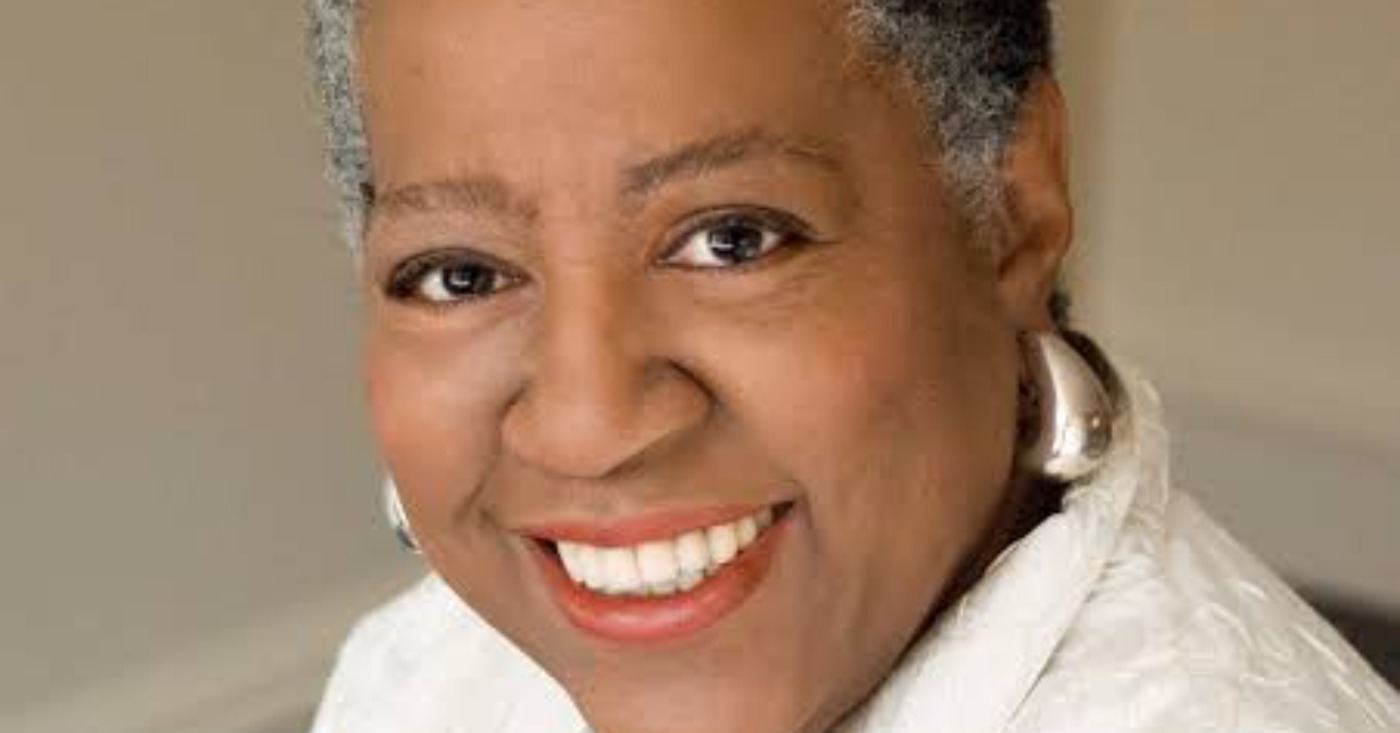
Marcia Anna Gillespie, the first editor in chief of Essence magazine, has died. She was 82.
Born in Rockville Centre, New York, in 1944. The daughter of a church sexton/small business owner and domestic worker/caterer, Gillespie parlayed her degree in American studies from Illinois’s Lake Forest College into a research job at Time-Life Books, Inc. in New York.
There she advocated for fairness and inclusion of Black life in its publications. When the owners of the standard bearer of Black life, Ebony magazine, ventured into creating a special publication for young, Black women, Gillespie was hired as managing editor in 1970, and became editor-in-chief a year later at the young age of 26.
At the time, the venture by the Johnson family – the owners of Ebony magazine and Jet – into creating a publication for young Black women met the growing revolution of self-love in the Black community.
In other words, the battle cry of the late 1960s, “Black is Beautiful,” had a place to be seen and not just heard.
Thousands of young women who had already abandoned straightening combs and European aesthetics learned more ways to wear their natural hair from Afros to cornrows. Young Black designers got a place in the spotlight not just in clothing but jewelry that expressed neo-African ideals. But one of the most important impacts was the magazine’s unapologetic elevation of the beauty of the dark-skinned Black female to the status she deserved.
Under Gillepie’s tenure, Essence championed storytelling that celebrated Black women’s identities, experiences, and contributions at a time when their voices were often overlooked in mainstream media,” Essence wrote in a statement posted to Instagram
For 10 years she steered the fledgling publication before joining Ms. Magazine as a contributor in 1980 later becoming the first Black woman to edit a mainstream American magazine when she took charge in 1992.
In 1998, she helped secure the publication’s future through a women-led ownership group. She stayed at Ms. In various capacities until 2001, during which time the magazine had the most diverse readership in its history.
She also mentored future Essence editor Susan L. Taylor and taught young journalists at SUNY Old Westbury.
Emmy-winning actor Sheryl Lee Ralph took to social media to honor Gillespie’s life.
“Rest in peace, dear Marcia Gillespie,” she wrote on Threads. “Your voice, your brilliance, and your commitment to lifting up Black women leaves a legacy that will continue to inspire me and so many others.”
A professor at SUNY Old Westbury and Bennett College, she also co-authored the authorized biography “Maya Angelou: A Glorious Celebration” in 2008.
According to Wikipedia, she also served on various boards as a director or advisor, including: “…the Arthur Ashe Institute of Urban Health, the Black & Jewish Women of New York, the Violence Policy Center in Washington, D.C., Aspen Institute, …and the Studio Museum of Harlem. Gillespie is a member of the National Council of Negro Women and the American Association of Magazine Editors.”
She was the recipient of several awards, including: the Lake Forest College Outstanding Alumni Award (1973), the New York Women in Communications Matrix Award (1978); a Lifetime Achievement Award from the New York Association of Black Journalists for print journalism (1982); a ‘Top Ten Outstanding Women in Magazine Publishing’ recognition by the March of Dimes.
In later years she was inducted into the American Society of Magazine Editors’ Hall of Fame (2002); the NAACP President’s Award (2006) and the Barbara Graves Legacy Award at the Black Enterprise Women of Power Summit in 2017.
The conclusion for her online obituary reads: “She leaves behind a legacy written not just in the pages she edited, but in every editor, journalist, and reader who found themselves — finally — in the stories she chose to tell.”
Online sources for this report include “The History Makers,” The Washington Informer, Wikipedia, Essence magazine, Ms. Magazine and her obituary.

Black History
U.S. Rep. John Garamendi Honors local ‘Women of the Year’ at Annual Awards Ceremony
Congressman John Garamendi recently honored 52 remarkable women during his 13th annual Women of the Year ceremony in Benicia. The event recognized leaders from California’s 8th District for their significant contributions to public service, education, business, and community life. The honorees, including 16 women from West Contra Costa County, were officially commemorated in the Congressional Record for their dedication to the region. The diverse group includes veterans, educators, and community advocates who have shaped the local landscape through decades of service. Read more about these influential leaders.
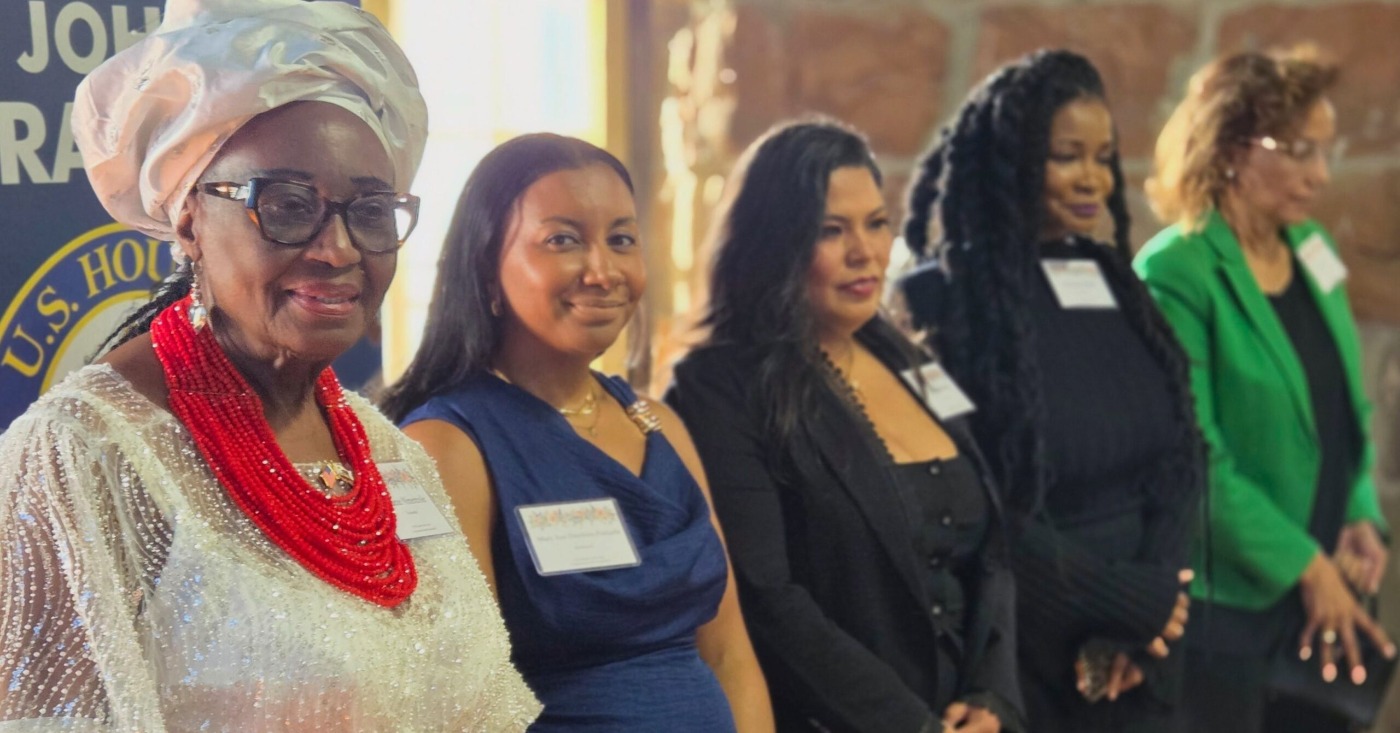
Sixteen women from West Contra Costa County were among 52 honorees recognized by Congressman John Garamendi (D-CA-08) at his 13th annual Women of the Year ceremony in Benicia on Oct. 23.
The 2026 honorees from Solano and Contra Costa counties were recognized for contributions to public service, education, business and community life.
“Every year, I’m honored to recognize the remarkable women of California’s Eighth District who serve as the backbone of our community,” Garamendi said.
Their contributions were also recognized in the Congressional Record. The following profiles summarize the ceremony remarks and supporting biographies.
Richmond
King-Meredith was honored for six decades of community service. An engineer and project manager whose professional career included defense-industry work, she has served organizations including the North Richmond Municipal Advisory Council and Shields-Reid Neighborhood Council. Her contributions also include environmental justice advocacy and artwork addressing social injustice.
Bolds was recognized for supporting Richmond youth and families and organizing community events. She established the annual “Put the Guns Down” event about 20 years ago in response to neighborhood violence. Through her organization, Visions of Hope, she brings together families, service providers, community leaders and public safety partners to address bullying and violence prevention.
Martinez Luna was honored for her work supporting businesses and families along Richmond’s 23rd Street corridor. Born in Guadalajara, Mexico, she became the first person in her family to graduate from high school. A longtime Rigo’s Auto Sales employee and secretary of the 23rd Street Merchants Association, she helps organize community events, supports immigration information forums and works with local partners on neighborhood concerns.
Dawkins-Padigela was recognized for her professional and community leadership. A U.S. Air Force veteran who served seven years as an aircraft mechanic, she later pursued graduate studies in marriage and family therapy and professional clinical counseling. As president of East Bay CAMFT, she supports professional education, networking and collaboration among mental health practitioners.
Padilla, a dean at Contra Costa College, was honored for advancing educational equity and student success. A Richmond High School graduate, she began her higher education at Contra Costa College before earning a bachelor’s degree in applied physics from UC Davis and a doctorate in neuroscience from UC Berkeley. She later returned to CCC to lead initiatives expanding opportunities for students pursuing STEM careers.
Milam was recognized for a public service career that began as a teenager with the East Bay Public Safety Corridor Partnership. As crime prevention manager for the Richmond Police Department, she has worked with government and community partners on violence prevention and homelessness response. Her congressional tribute credits her with helping secure nearly $30 million for outreach, shelter, treatment, encampment resolution and pathways to housing.
Nmereole was honored for supporting immigrant communities, young people and elderly residents throughout Contra Costa County and the greater Bay Area. Her volunteer work includes GED tutoring, vocational nursing exam preparation, computer instruction and youth mentorship. She also helps immigrants navigate services and assists elderly residents with transportation, prescriptions and groceries.
Curl was recognized for more than two decades of service to Richmond, beginning with the city’s redevelopment agency. She became interim city manager in November 2021 and permanent city manager in April 2022 before retiring in 2026. Garamendi credited her with helping secure more than $300 million in grants for infrastructure, housing and education, strengthening city finances and helping Richmond exit the state auditor’s high-risk designation.
Black History
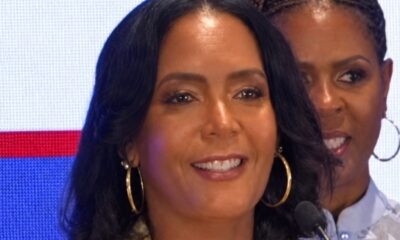
HISTORY MADE: Keisha Lance Bottoms Becomes First Black Woman Elected Governor in American History
ATLANTA DAILY WORLD — History has been made in Georgia. Keisha Lance Bottoms, the former mayor of Atlanta, has been elected governor of Georgia, becoming the first Black woman in American history to win the highest executive office in any state.
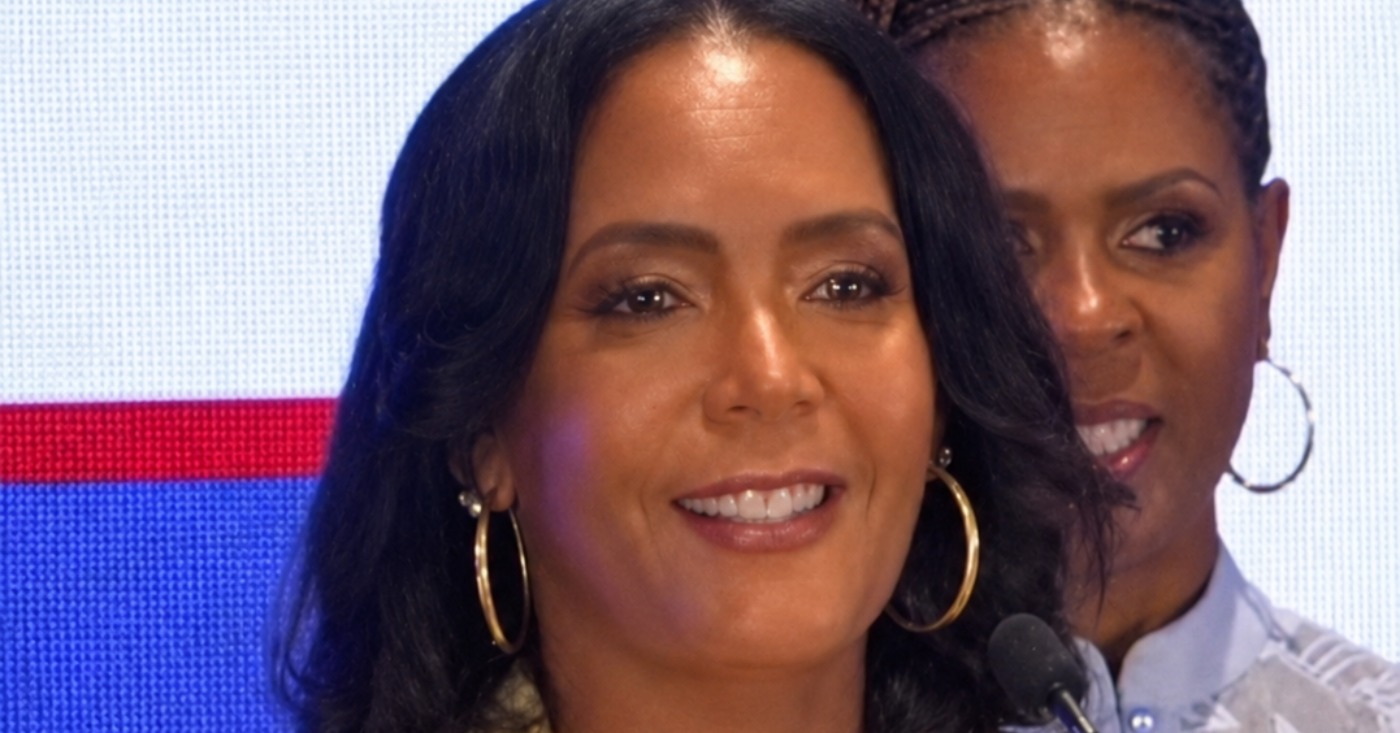
History has been made in Georgia. Keisha Lance Bottoms, the former mayor of Atlanta, has been elected governor of Georgia, becoming the first Black woman in American history to win the highest executive office in any state.
Bottoms’ victory over Republican businessman Rick Jackson represents a defining moment in American politics, breaking a barrier that has stood since the nation’s founding and placing Georgia at the center of a historic political transformation.
For generations, Black women have played a critical role in American democracy, organizing communities, leading movements, mobilizing voters and shaping public policy. Yet despite their contributions, no Black woman had ever been elected governor of a U.S. state.
Until now.
Bottoms’ election also makes her the first woman and first Black person elected governor of Georgia, a state whose political history has been deeply shaped by slavery, segregation, the civil rights movement and the long struggle for equal representation.
Her victory carries particular significance in a state where Black women have been among the most influential forces in voter registration, political organizing and Democratic electoral success.
A fifth-generation Georgian, Bottoms previously served as Atlanta’s 60th mayor from 2018 to 2022. During her administration, she led the city through the COVID-19 pandemic, nationwide protests over racial injustice and a period of significant economic and population growth.

Following her time as mayor, Bottoms served as a senior adviser in President Joe Biden’s administration before returning to Georgia politics to pursue the governorship.
Her campaign focused on expanding access to health care, strengthening public education, increasing wages and addressing the rising cost of living. She also advocated for expanding Medicaid, raising Georgia’s minimum wage to $15 an hour and increasing compensation for teachers and other public employees.
Bottoms faced Jackson, a wealthy health care executive who invested heavily in his campaign and positioned himself as a political outsider. The contest drew national attention as Democrats sought to reclaim the Georgia governor’s office after more than two decades of Republican control.
The historic nature of Bottoms’ victory extends well beyond party politics.
Georgia, once at the center of some of America’s most consequential civil rights battles, has now elected a Black woman to lead its state government. It is a milestone that reflects generations of political participation, organizing and leadership by Black Georgians.
For Atlanta, the moment is especially significant. A former mayor of the city that helped shape the modern civil rights movement will now lead the entire state.
Bottoms’ election opens a new chapter in Georgia’s political history and establishes a milestone that will be remembered far beyond the 2026 election.
For continuing election coverage and results, visit AtlantaDailyWorld.com/election26.



How the Sandwich Generation Can Help Protect Aging Parents’ Finances

As Progressive Democrats Celebrate ‘Blue Tsunami,’ Oakland Counts Victories

Golden State Valkyries Become Bay Area Legends Winning WNBA Championship on Halloween Night

IN MEMORIAM: Marcia Ann Gillespie, Editor of Essence and Ms. Magazines, Dies at 82

U.S. Rep. John Garamendi Honors local ‘Women of the Year’ at Annual Awards Ceremony

Richmond Neighbors Put Pantry Power on the Map

Oakland Latino Chamber of Commerce Hosts Statewide Convention, Generating $3 Million in Economic Impact

HISTORY MADE: Keisha Lance Bottoms Becomes First Black Woman Elected Governor in American History

HISTORY MADE: Keisha Lance Bottoms Becomes First Black Woman Elected Governor in American History

Five Hospitals Said No! Who Will Help Annette Henry Recover?

Oakland NAACP, BWOPA Speak Out Against Alleged Harassment of Black Women Political Leaders

COMMENTARY: Oakland’s Black Students Have Gained Ground: We Shouldn’t Stop Now

From Backyard Grilling to Jack London Square: Jamale Carlyle’s Chicken Wing Success Story

SEIU Local 1000 and State of California Will Continue to Negotiate New Labor Contract

OPINION: We Can Restore Checks and Balances on Trump

COMMENTARY: Valarie Bachelor and Jennifer Brouhard are Excellent School Board Members and Deserve to Be Reelected

Listening as a Lifeline: A Doula’s Witness to Black Maternal Health

OUSD Receives State Review of District Finances; Outlines Progress Since January
HISTORY MADE: Keisha Lance Bottoms Becomes First Black Woman Elected Governor in American History

Zakiya Jendayi Arrested, Locked Out of Home by Sheriff’s Deputies
SEIU Local 1000 and State of California Will Continue to Negotiate New Labor Contract
Golden State Valkyries Become Bay Area Legends Winning WNBA Championship on Halloween Night

COMMENTARY: Your California Living Trust Could Be Next: When Evidence Isn’t Enough

Fate of Bay Area Public Transit Hinges on Regional Transit Measure

Oakland Post: Week of September 30 – October 6, 2026

It’s Time to Lose Weight Before the Holidays

Mayor Barbara Lee Holds Special State of the City Address in Deep East Oakland

Democrats, Community Groups Back Measure EE to Change How Oakland Is Governed

Oakland Awarded More than $14 Million in State Funding

OP-ED: Proposition 44 Would Put a Price on Trust

The Conversation With Al McFarlane 6/23/26

Media Monday 6/22/26

LIVE! ASK ALMA! — TUES. 6.23.26 7PM EST

Car Buying Secrets: 4 Hidden Checks Before You Sign!

Is This 550 HP Charger Worth YOUR Money? AutoNetwork Review

Celebrating Juneteenth – Frederick Douglass on education and resistance

LIVE! — ASK ALMA! — TUES. 6.19.26 7PM EST

Hyundai Ioniq 5 Parking, Safety, and 360 View #shorts

2025 Ioniq 5 New Wiper & Powerful Performance! #shorts

Electric SUV Range: Is 259 Miles Enough? #shorts

EV Charging: How Fast Can You Charge an Electric Vehicle? #shorts

Biometric Cooling… Messaging Seats…Come on! 2025 Infiniti QX80 Autograph 4WD

Charged Up: Witness the Magic of a Fully Electric Car! #shorts

Range Rover Sport PHEV Included…: See What’s Inside This Luxury SUV! #shorts

Invisible Hood View: Perfect Parking with X-Ray Vision! #shorts
-
 Commentary2 weeks ago
COMMENTARY: Valarie Bachelor and Jennifer Brouhard are Excellent School Board Members and Deserve to Be Reelected
-
 Education2 weeks ago
OUSD Receives State Review of District Finances; Outlines Progress Since January
-
 Black History1 week ago
HISTORY MADE: Keisha Lance Bottoms Becomes First Black Woman Elected Governor in American History
-
 Business2 weeks ago
SEIU Local 1000 and State of California Will Continue to Negotiate New Labor Contract
-
 Community1 week ago
Golden State Valkyries Become Bay Area Legends Winning WNBA Championship on Halloween Night
-
 Business2 weeks ago
COMMENTARY: Your California Living Trust Could Be Next: When Evidence Isn’t Enough
-
 Business3 weeks ago
Fate of Bay Area Public Transit Hinges on Regional Transit Measure
-
 Community4 weeks ago
It’s Time to Lose Weight Before the Holidays
