
Black History
COMMENTARY: Baltimore Must Change
THE AFRO — The United States of America was birthed in White supremacy, which, for the greater part of U.S. history, was affirmed again and again through law and custom. That contradiction – “land of the free, home of the enslaved” – was also evident in Baltimore, a city – like the rest of the country – of racial disparities.

By A. Adar Ayira, Special to AFRO
“… [people of African ancestry]…are not included, and were not intended to be included, under the word ‘citizens’ in the Constitution, and can therefore claim none of the rights and privileges which that instrument provides for and secures to citizens of the United States. On the contrary, they were at that time considered as a subordinate and inferior class of beings, who had been subjugated by the dominant race, and, whether emancipated or not, yet remained subject to their authority, and had no rights or privileges but such as those who held the power and the Government might choose to grant them.”
~ Roger B. Taney, Chief Justice, United States Supreme Court, March 1857, Dred Scott vs. Sanford
The United States of America was birthed in White supremacy, which, for the greater part of U.S. history, was affirmed again and again through law and custom.
That contradiction – “land of the free, home of the enslaved” – was also evident in Baltimore, a city – like the rest of the country – of racial disparities, including:
African-American citizens being disproportionately victims of traffic stops, jail sentences, and use of force by police; African Americans carrying disproportionately more debt, including school loan debt; Housing segregation – and development to affordable housing – remains a seemingly intractable issue, stifling opportunities for asset development in Baltimore’s African American communities.
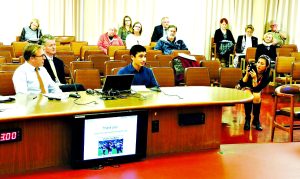
It is almost cliché at this point to continue sharing racialized disparities – because so many people either know or live them – or to offer theories of change. Many Baltimoreans are jaded, having seen change efforts come and go.
Along with jadedness, however, there is also hope and resolve. That is what Associated Black Charities continues to see in its partners and within Baltimore communities. ABC works with individuals and institutions that refuse to accept less than a vision of a Baltimore that includes everyone; where everyone has equitable opportunities to thrive; and where all our communities are not only valued but invested.
Because of this, ABC’s agenda incorporates both transactional and transformational strategies.
Many agencies and nonprofits focus on transactional strategies: those that meet immediate and concrete needs of individuals, families, and communities. These are the strategies that are funded by foundations and donors; the types of strategies that are well-understood and easily explainable and that offer “proof of works” (“..we fed 3,000 people this year…”; “we provided housing for 1,200 families…”; or “we trained 600 people who now have jobs…”).
Transactional strategies are fundable because donors can immediately see the impacts and outcomes of their financial support.
However, transactional strategies often bypass the transformational by maintaining and sustaining the status quo: current structures and systems and money and services. Transactional strategies serve a variety of purposes: meeting the basic needs of enough individuals to keep citizens from even more social unrest; giving financial supporters an outlet for charitable giving (and tax write-offs); and keeping social justice movements within the prescribed parameters of comfort of the monied class in exchange for grants/donations.
They keep a lid on social movements that look to address root causes; that serve to disrupt the way things are to create a more inclusive vision of equity that would essentially decrease the need for transactional programs.
ABC, while recognizing the need for transactional strategies that assist individuals and communities with current needs, also realizes that in order to achieve a more equitable society, we must address the root causes that create racialized inequities. Because of this, ABC also focuses on transformational strategies, using a Racial Equity Lens that acknowledges the structural and institutional race-based barriers that continue to operate in American society. We recognize that “silver rights” are just as important as Civil Rights and pursue an agenda to stabilize and expand economic viability in African-American communities in Baltimore. This includes:
Educational advocacy regarding the use of a Racial Equity Lens in policy. ABC understands that policy has never been “universalist” – assuming that everyone has equal access and opportunity – but has always been race-based, damaging not only those specific racial groups for whom policy has erected barriers, but also racial majority populations by generating losses on economic and material productivity,
Institutional support regarding the use of a Racial Equity Lens. The workforce in Maryland for workers 40 and under is now close to “majority-minority.” For businesses to thrive in Maryland, they must have more of an understanding of barriers facing workers of color, as well as opportunities for growth and productivity that those workers can afford them.
ABC’s charge is to change the future. Transactional strategies alone will only serve to support our present. Baltimore – and the state — must look ahead to transform our policies and practices if our children are going to thrive in the 21st Century, and ABC is there to lead and assist in those conversations and that work.
Disclaimer: The views and opinions expressed in this article do not necessarily reflect the official policy or position of The Afro-American Newspapers.
This article originally appeared in The Afro.





Activism
Oakland Post: Week of March 18 – 24, 2026
The printed Weekly Edition of the Oakland Post: Week of March 18 – 24, 2026
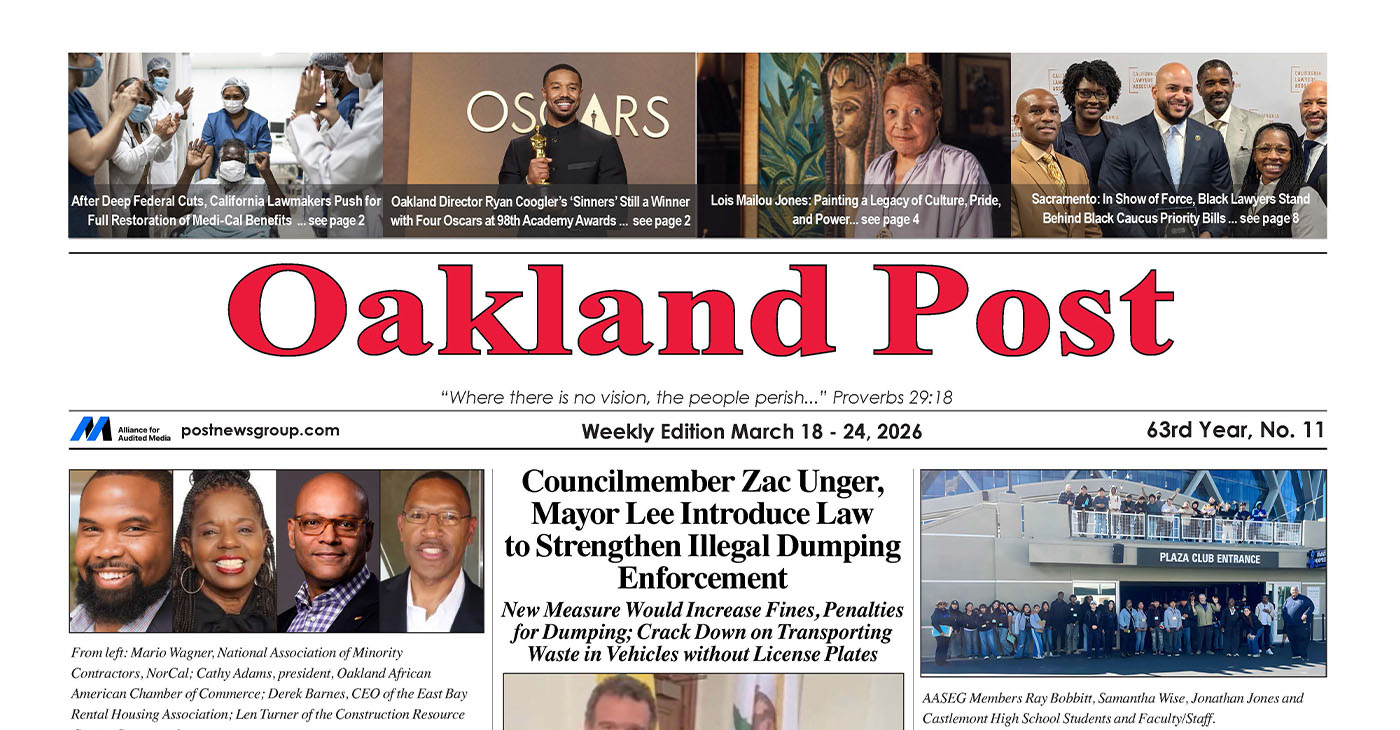
To enlarge your view of this issue, use the slider, magnifying glass icon or full page icon in the lower right corner of the browser window.
Activism
Oakland Post: Week of March 11 -17, 2026
The printed Weekly Edition of the Oakland Post: Week of March 11 – 17, 2026
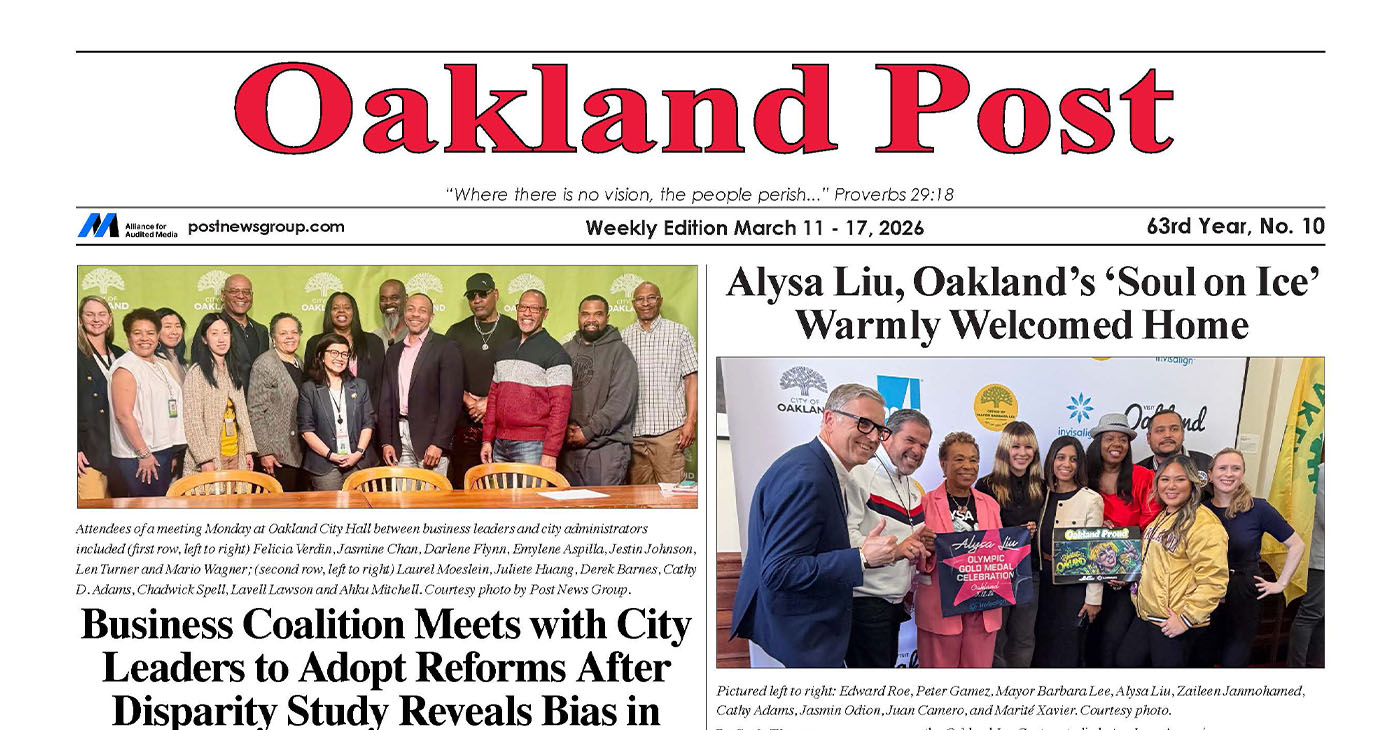
To enlarge your view of this issue, use the slider, magnifying glass icon or full page icon in the lower right corner of the browser window.
Activism
Oakland Post: Week of March 4 – 10, 2026
The printed Weekly Edition of the Oakland Post: Week of March 4 – 10, 2026
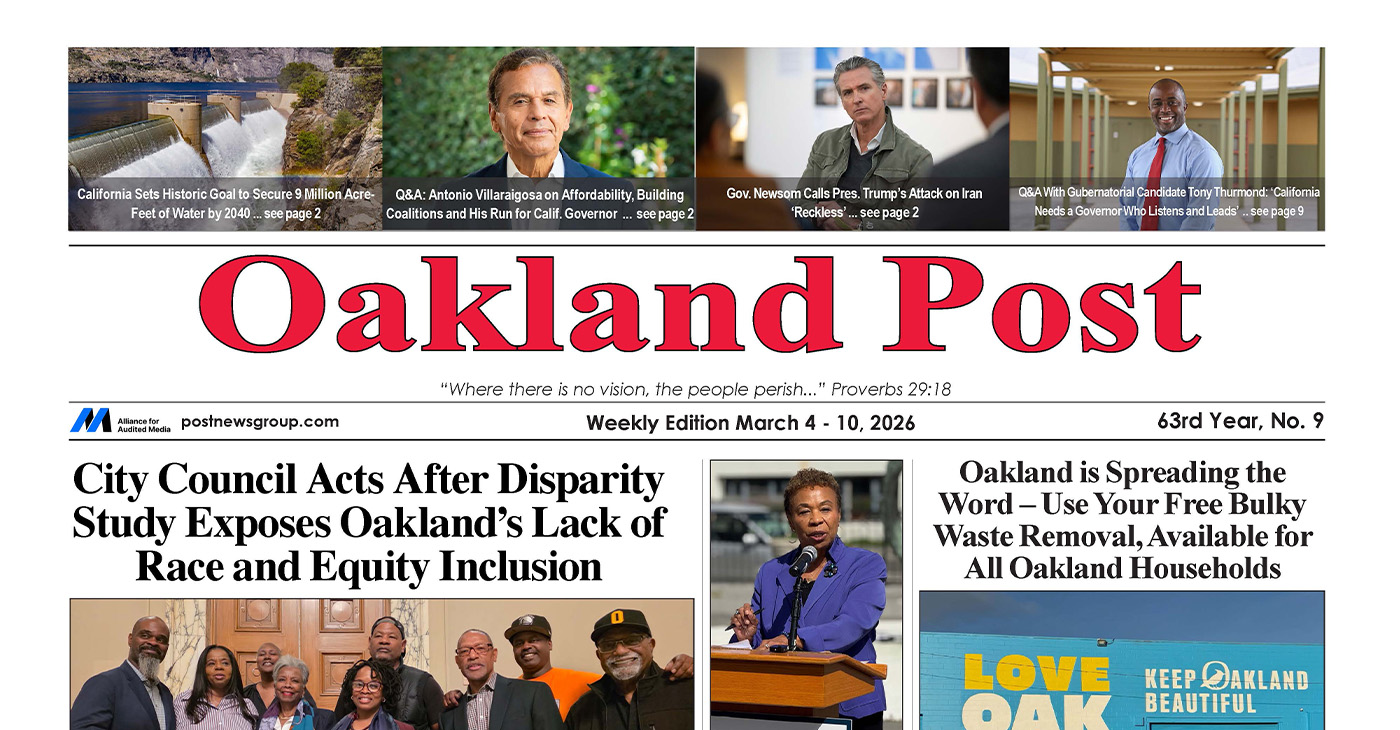
To enlarge your view of this issue, use the slider, magnifying glass icon or full page icon in the lower right corner of the browser window.


WORK FROM HOME
Home-based business with potential monthly income of $10K+ per month. A proven training system and website provided to maximize business effectiveness. Perfect job to earn side and primary income. Contact Lynne for more details: Lynne4npusa@gmail.com 800-334-0540


Black Artists in America, Installation Three Wraps at the Dixon Gallery and Gardens

Grief, Advocacy, and Education: A Counselor Reflects on Black Maternal Health

Future of Florida’s Black History Museum in Limbo

New Research Shows the Many Benefits of Early Learning

South Hampton K-8 Students Among Top 10 Finalists for Samsung’s ‘Solve for Tomorrow’ Competition

Cuba: No Negotiation with US on the President or Political System

Brooklyn Academy of Music Names Jamaican-Born Tamara McCaw as President

Trinidad & Tobego – U.S. Launches WhatsApp Channel for American Citizens in the Country

Oakland Post: Week of March 18 – 24, 2026

AI Innovation vs. Ethics and Environmental Impact

AI, Web3, and Digital Reparations

What If You Owned Your AI Agent?

Season 7, Episode 3 – January Reporter’s Roundtable 📱

Season 7, Episode 3 – January Reporter’s Roundtable

AI, Media, and Power | Part 2, Real-World Impacts and Tradeoffs

Oakland Post: Week of February 11 – 17, 2026

Reflecting on Black History Milestones in Birmingham AL

CITY OF SAN LEANDRO STATE OF CALIFORNIA PUBLIC WORKS DEPARTMENT ENGINEERING DIVISION NOTICE TO BIDDERS FOR ANNUAL STREET OVERLAY/REHABILITATION 2019-21 – PHASE III

Oakland Post: Week of February 18 – 24, 2026

Oakland Post: Week of February 25 – March 3, 2026

PRESS ROOM: NBA Hall of Fame Nominee Terry Cummings Joins 100 Black Men of DeKalb County to Launch Victory & Values Initiative

Trump’s MAGA Allies are Creating Executive Order Plan to Steal the 2026 Midterms

U.S. manufacturing rebounds – how foundry services are adapting to rising demand

Chase Oakland Community Center Hosts Alley-Oop Accelerator Building Community and Opportunity for Bay Area Entrepreneurs

Oakland Post: Week of March 4 – 10, 2026

OP-ED: One Hundred Years of Black Workers Telling the Truth

Poll Shows Support for Policies That Help Families Afford Child Care

Advancements in solar technology that are changing the way we power the world

PRESS ROOM: Civil Rights TV Launches in Selma as the World’s First 24/7 Civil Rights Television Network

Woman’s Search for Family’s Roots Leads to Ancestor John T. Ward – A Successful Entrepreneur and Conductor on the Underground Railroad

Hyundai Ioniq 5 Parking, Safety, and 360 View #shorts

2025 Ioniq 5 New Wiper & Powerful Performance! #shorts

Electric SUV Range: Is 259 Miles Enough? #shorts

EV Charging: How Fast Can You Charge an Electric Vehicle? #shorts

Biometric Cooling… Messaging Seats…Come on! 2025 Infiniti QX80 Autograph 4WD

Charged Up: Witness the Magic of a Fully Electric Car! #shorts

Range Rover Sport PHEV Included…: See What’s Inside This Luxury SUV! #shorts

Invisible Hood View: Perfect Parking with X-Ray Vision! #shorts

AI Is Reshaping Black Healthcare: Promise, Peril, and the Push for Improved Results in California

ESSAY: Technology and Medicine, a Primary Care Point of View

Sanctuary Cities

The RESISTANCE – FREEDOM NOW

STATE OF THE PEOPLE: Freddie

ECONOMIC BOYCOTT DAY!!!!!

I told You So
-
 Activism4 weeks ago
Oakland Post: Week of March 4 – 10, 2026
-
 #NNPA BlackPress3 weeks ago
Woman’s Search for Family’s Roots Leads to Ancestor John T. Ward – A Successful Entrepreneur and Conductor on the Underground Railroad
-

 #NNPA BlackPress4 weeks ago
OP-ED: NNPA Launches 2026 “Leadership Matters” Video Series
-

 #NNPA BlackPress3 weeks ago
Advocates Raise Alarm Over ICE Operation, MOU and Detention Risks in Baltimore County
-

 #NNPA BlackPress3 weeks ago
COMMENTARY: Women of Color Shape Our Past and Future
-

 #NNPA BlackPress3 weeks ago
Pete Buttigieg to Join Mayor Randall Woodfin for Community Town Hall in Birmingham
-
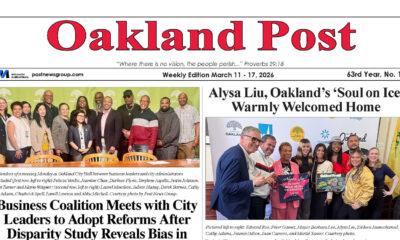
 Activism2 weeks ago
Oakland Post: Week of March 11 -17, 2026
-

 Advice2 weeks ago
Financial Wellness and Mental Health: Managing Money Stress in College
