
#NNPA BlackPress
Ask Dr. Kevin: Clinical Trials are the Foundation for Scientific Innovation
NNPA NEWSWIRE — As you may have heard, my team at Pfizer recently experienced a significant disappointment. Our phase 3 trial for rivipansel, a potential treatment for the debilitating vaso-occlusive crises (VOCs) endured by virtually every person with sickle cell disease (SCD), did not meet its study endpoints. Both professionally and personally, this news was hard to hear, especially knowing that people with SCD have such limited treatment options available to them. However, even though the study didn’t turn out as we had hoped, the good news is that the rivipansel program greatly advanced our understanding of SCD and VOCs, which will be important for future SCD research programs and drug development.

By Dr. Kevin Williams, Chief Medical Officer for Rare Disease at Pfizer

The “Ask Dr. Kevin” series is brought to you by Pfizer Rare Disease in collaboration with the National Newspaper Publishers Association (NNPA) to increase understanding of sickle cell disease.
Dr. Kevin Williams is the Chief Medical Officer for Rare Disease at Pfizer where he leads a Medical Affairs organization of approximately 150 medical colleagues around the globe. He pursued medicine after being inspired by his father’s work as a general practitioner in his hometown of Baton Rouge, Louisiana. Dr. Kevin is passionate about raising awareness and increasing understanding of rare diseases, such as sickle cell disease, in the African American community.
As you may have heard, my team at Pfizer recently experienced a significant disappointment. Our phase 3 trial for rivipansel, a potential treatment for the debilitating vaso-occlusive crises (VOCs) endured by virtually every person with sickle cell disease (SCD), did not meet its study endpoints. Both professionally and personally, this news was hard to hear, especially knowing that people with SCD have such limited treatment options available to them. However, even though the study didn’t turn out as we had hoped, the good news is that the rivipansel program greatly advanced our understanding of SCD and VOCs, which will be important for future SCD research programs and drug development.
As I’ve written about before, SCD is the most common inherited blood disorder, and it disproportionately affects people of African descent[i]. VOCs, one of the most common complications of SCD, are marked by extreme pain resulting from sickle-shaped red blood cells clumping together in the bloodstream[ii]. The standard of care for patients experiencing these pain crises has remained largely unchanged since the first report of SCD in 1910, and is restricted mostly to treating disease symptoms, like the use of opioids for pain management. Just last month, Novartis was granted FDA approval for a treatment to reduce the frequency of VOCs experienced by patients; however, there still stands a greater need for therapies that target the root cause of these painful episodes.
The clinical trial for rivipansel may have come to an end; however, the one thing that working in SCD and collaborating with the NNPA and SCD-focused patient groups over the last several years has taught me is that this community is strong. Their strength inspires me and my team every day and fuels our passion for our work in advancing the scientific research of rare diseases like SCD.
In this article, I’d like to share a little more about the importance of innovation in rare diseases and answer some common questions about the role clinical trials play as the foundation for moving medical innovation forward.
Why are clinical trials important?
Cutting-edge research and clinical trials are key to making an impact for patients and are essential to the development of new treatments. These studies also deepen our understanding of diseases, especially rare diseases, such as SCD, where few advances have been made. For rare diseases in particular, only 5% of diseases have an FDA-approved treatment[iii], so there is a lot of work to be done in this area.
At their core, clinical trials are designed to produce high-quality data that will translate into a better understanding of the treatments that work best for certain diseases and people. Given their crucial role in medical science, clinical trials are highly regulated and conducted using high-quality scientific and ethical standards to ensure the safety of participating patients.
Are there potential challenges associated with clinical trials?
The biggest challenge is that a clinical trial may fail, even after decades of research aimed at uncovering a treatment breakthrough. While no one likes to hear a clinical trial didn’t meet its goals, especially people in need of new treatment options, researchers are unfortunately unable to anticipate the end results of these studies in advance.
However, even though we can’t be sure of the results, it’s still critical for this research to happen to bring new treatment advances to those in need. Did you know that for every approved medicine, there are countless others that don’t pass through the grueling clinical trial and regulatory processes? A recent report found that the likelihood of drugs moving from clinical phase to approval is only 9.6%[iv]. Moreover, even if an investigational therapy is backed by promising data, it can take around 12 years or longer for it to gain approval.
Another challenge can be enrollment of volunteers to participate in clinical trials. Historically, recruitment obstacles have been a barrier in SCD research. However, a poll conducted, as a part of Pfizer and the NNPA’s collaboration, found that a majority of respondents had positive or neutral attitudes toward SCD clinical trials, and furthermore, they indicated a willingness to participate in them if provided the appropriate information. These results are encouraging and suggest people are becoming more inclined to participate in clinical trials for hard-to-treat diseases like SCD.
What have you learned about clinical trials during your time at Pfizer?
Pfizer strives to accelerate the development and delivery of groundbreaking medicines and the dedication, talent and resources that support our clinical trials can’t be captured in a few words. However, as I’ve said earlier, advancing research and conducting clinical trials comes with the unfortunate reality of not always being successful.
The news that our trial for rivipansel didn’t achieve its goals was disappointing, especially for the SCD community who is eagerly awaiting new therapies for VOCs. That said, we are channeling this loss into renewed energy and making it our purpose to learn from it. We are in the process of reviewing the trial data closely to ensure our findings can help inform and shape future SCD programs.
Regardless of the outcomes, I want to stress again that more trials in the rare disease space, particularly for SCD, are desperately needed. I am confident in saying our steadfast commitment to this community will continue, as we work tirelessly to look for new ways to continue advancing care.
About Dr. Kevin Williams
Dr. Kevin Williams is the Chief Medical Officer (CMO) for Pfizer Rare Disease. In this role, he leads a Medical Affairs organization of approximately 150 medical colleagues around the globe supporting Pfizer’s efforts and portfolio in Rare Disease. Dr. Kevin joined Pfizer in January 2004 as a Director of Regional Medical & Research Specialist working in the HIV disease area. After moving into a Team Leader position in July 2005, he served in various leadership roles during his career at Pfizer. Dr. Kevin moved into his current Rare Disease CMO position in May 2016.
Dr. Kevin received his medical degree from the UCLA School of Medicine and is board certified in Internal Medicine. Following a 2-year fellowship in Health Services Research at UCLA and a brief academic career as an Instructor of Medicine at the UCLA School of Medicine, he spent 8 years in private practice caring for HIV-positive patients while maintaining an academic appointment at the UCLA School of Medicine as an Assistant Clinical Professor of Medicine. In addition to his medical degree, Dr. Kevin has a Master’s in Public Health from the UCLA School of Public Health and a Juris Doctorate from Harvard Law School.
Keep up to date on Pfizer’s Rare Disease efforts by visiting our page here. You can also follow Pfizer on Facebook and Twitter.
[i] Serjeant GR. One hundred years of sickle cell disease. Br J Haematol. 2010;151(5):425-429.
[ii] American Family Physician. “Approach to the Vaso-occlusive Crisis in Adults with Sickle Cell Disease.” https://www.aafp.org/afp/2000/0301/p1349.html.
[iii] Global Genes. “Rare Disease: Facts and Statistics.” https://globalgenes.org/rare-diseases-facts-statistics/
[iv] Biotechnology Innovation Organization (BIO). “Clinical Development Success Rates 2006-2015.” https://www.bio.org/sites/default/files/Clinical%20Development%20Success%20Rates%202006-2015%20-%20BIO,%20Biomedtracker,%20Amplion%202016.pdf.














#NNPA BlackPress
Smooth Ride! Car Suspension & Comfort Tested #shorts
Smooth suspension meets surprisingly spacious legroom. Experience true comfort on any road!

 Watch the full video: https://youtu.be/l9Z571za5Gc
#NNPA BlackPress
61 years since Selma, Houston leaders say the bridge remains to be crossed
61 years after Selma, Houston leaders say the fight for equality continues. The issues that sparked the marches still impact Black Americans today.
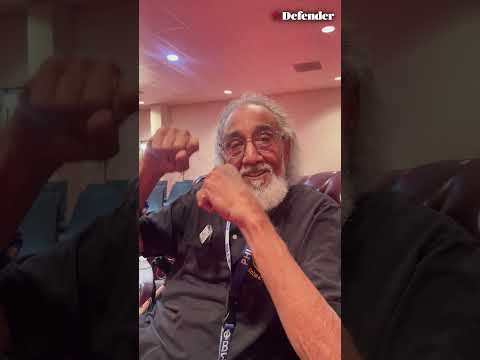
It has been 61 years since the Selma marches. But political leaders in Houston say that the issues protesters were marching for still plague the lives of Black Americans.
Visit Our Website
Read more stories by our team
https://defendernetwork.com/category/news/opinion/
Sign-up for the Top 5 newsletter
Donate/ Support Our Work
#NNPA BlackPress
Here is what you need to know about finding unique white elephant gift ideas that everyone wants to steal
The best white elephant gift ideas are funny enough to get a reaction but useful enough that people actually want to steal them. Look for gifts with a surprise factor, broad appeal, an inside joke, and just enough personality to spark some friendly competition. The wrapping paper comes off, the room goes quiet for half […]

The best white elephant gift ideas are funny enough to get a reaction but useful enough that people actually want to steal them. Look for gifts with a surprise factor, broad appeal, an inside joke, and just enough personality to spark some friendly competition.
The wrapping paper comes off, the room goes quiet for half a second, and suddenly everyone wants the same gift. That is the sweet spot. A great white elephant pick should make people laugh, lean in, and start plotting their next steal before the turn is even over.
Should a White Elephant Gift Be Funny or Useful?
A white elephant gift can be funny or useful, but the strongest choices usually give people a reason to laugh and a reason to keep the item. A practical gift with an odd design, unexpected feature, or playful theme can get a reaction without becoming something the recipient immediately wants to give away.
The right balance depends on the group. Close friends and family members may enjoy a ridiculous gag gift because they already understand one another’s sense of humor.

A workplace exchange, neighborhood party, or mixed-age gathering usually calls for something with broader appeal. In those settings, humor works better when it is built into an item people could still use afterward.
It also helps to think about how quickly the gift will make sense once it is opened. A strangely shaped kitchen tool, oversized mug, quirky desk accessory, or unexpectedly fancy everyday item can create an immediate reaction. Guests understand the joke right away, while the item still has enough practical value to attract a steal.
Pure gag gifts can be harder to pull off. Something that exists only for the punchline may get a big laugh during the reveal and then sit untouched for the rest of the game. If the goal is to bring one of the gifts everyone keeps fighting over, usefulness gives the joke staying power.
Memorable Present Ideas: Creating Inside Joke Gifts
Inside joke gifts can make a white elephant exchange feel much more personal, especially when most of the group shares the same stories. The trick is choosing a reference that people will recognize quickly instead of building the entire joke around something only two guests understand.
You can turn a memorable vacation mishap, office catchphrase, family story, or long-running group joke into the theme of the gift. A personalized comic book can work especially well when it turns familiar people or a ridiculous shared moment into part of the story.
Think carefully about who the joke involves before ordering anything permanent. The gift should make the person feel included in the fun, not singled out for the wrong reason.
Can You Bring Something You Already Own?
Holiday gift exchanges can be a good place to re-gift something you never used, especially if it is unopened and clean.
The following can all work if they still look presentable:
- A duplicate kitchen gadget
- An untouched game
- A decorative item
- A sealed gift set
- An unopened candle
- A new travel accessory
The goal is to give the item a second chance, not use the exchange as an excuse to clear out damaged or unwanted clutter.
Take a close look at the packaging before wrapping it. Faded boxes, missing pieces, visible wear, or anything that looks obviously used can make the gift feel careless.
Wrapping Budget-Friendly Gifts
Wrapping can make gifts more entertaining before anyone even knows what’s inside.
Misdirection works especially well for fun party games. Put a small gift inside a much larger box. Use packaging from an unrelated household item.
Add harmless weight so guests cannot guess what they are holding. The reveal becomes part of the joke without changing the gift itself.
You can also lean into the theme of the exchange. Bright paper, oversized bows, reusable bags, or deliberately over-the-top wrapping can make an ordinary item feel more memorable. If the gift itself is already funny, simple wrapping may work better so the surprise stays hidden until the last second.
Frequently Asked Questions
Is Picking Last an Advantage in White Elephant?
Picking last can be an advantage because you get to see almost every gift before making your move. Instead of choosing blindly from the remaining wrapped presents, you can steal something that has already caught your attention if the rules still allow it.
That advantage depends on the house rules. Some games limit how many times a gift can be stolen.
Others lock an item once it reaches a certain number of steals. If the most popular gifts are already unavailable, the final player may have fewer strong options than expected.
The first player can also get another turn at the end in some versions of the game. That rule can balance things out, since the person who started with the least information may get one final chance to steal.
How Do You Plan White Elephant for a Large Group?
For a large white elephant exchange, set a firm spending limit and establish the stealing rules in advance.
Create a clear turn order before the game begins. Drawing numbers as guests arrive can save time once everyone is ready to start.
Keep the number of steals per gift limited so the game does not drag on. It also helps to have one person track which creative holiday presents have been stolen and when they are locked, especially if dozens of people are participating.
Can You Play White Elephant Virtually?
A virtual white elephant exchange can work over a video call, with one person keeping track of the turn order and each steal. Guests can either mail physical gifts ahead of time or use digital gifts that can be delivered once the game ends.
Set the spending limit and stealing rules before everyone joins. It also helps to decide how gifts will be revealed and who is responsible for sending each one afterward so the exchange does not become confusing.
Choose a Perfect White Elephant Gift in a Snap
Look for a white elephant gift that fits some of these criteria, and everyone will be trying to grab it at your next celebration.
Do you need more gift-giving tips and tricks? Make sure you read some of our other posts.



Oakland Post: Week of November 18 – 24, 2026

Oakland Post: Week of November 11 -17, 2026

Alameda County Supervisor Miley to Propose Illegal Dumping Ordinance

Oakland City Council Extends AI Data Center Moratorium for 10 Months.

On Veterans Day, U.S. Rep. Simon Demands Answers on Status of Veterans Affairs Clinic, Columbarium Project

OPINION: Mario Juarez’s Courtroom Admissions Raise Questions About Allegations That Fueled Recall of Pamela Price

Hutchinson Concedes: Ballots Still Being Counted in Oakland Board Elections

Mayor Lee and Schools’ Supt. Saddler Issue Joint Statement on Recent ICE Activity in Oakland

Mississippi Congressman Bennie Thompson Congratulates Scott Colom on Historic Victory

Farms to Grow, Inc. Hosts the 8th Annual Sweet Potato Pie Tasting Contest

Oakland Post: Week of November 4 – 10, 2026

How the Sandwich Generation Can Help Protect Aging Parents’ Finances

As Progressive Democrats Celebrate ‘Blue Tsunami,’ Oakland Counts Victories

Golden State Valkyries Become Bay Area Legends Winning WNBA Championship on Halloween Night

IN MEMORIAM: Marcia Ann Gillespie, Editor of Essence and Ms. Magazines, Dies at 82

COMMENTARY: Valarie Bachelor and Jennifer Brouhard are Excellent School Board Members and Deserve to Be Reelected

OUSD Receives State Review of District Finances; Outlines Progress Since January

HISTORY MADE: Keisha Lance Bottoms Becomes First Black Woman Elected Governor in American History

SEIU Local 1000 and State of California Will Continue to Negotiate New Labor Contract
Golden State Valkyries Become Bay Area Legends Winning WNBA Championship on Halloween Night

Fate of Bay Area Public Transit Hinges on Regional Transit Measure

COMMENTARY: Your California Living Trust Could Be Next: When Evidence Isn’t Enough

Chase Launches Fraud & Scam Prevention Month

Mayor Barbara Lee Holds Special State of the City Address in Deep East Oakland

It’s Time to Lose Weight Before the Holidays

Democrats, Community Groups Back Measure EE to Change How Oakland Is Governed

Post News Group Nov. 3 Election Endorsements

Oakland Awarded More than $14 Million in State Funding

Richmond Neighbors Put Pantry Power on the Map

Oakland Post: Week of October 7 – 13, 2026

The Conversation With Al McFarlane 6/23/26

Media Monday 6/22/26

LIVE! ASK ALMA! — TUES. 6.23.26 7PM EST

Car Buying Secrets: 4 Hidden Checks Before You Sign!

Is This 550 HP Charger Worth YOUR Money? AutoNetwork Review

Celebrating Juneteenth – Frederick Douglass on education and resistance

LIVE! — ASK ALMA! — TUES. 6.19.26 7PM EST

Hyundai Ioniq 5 Parking, Safety, and 360 View #shorts

2025 Ioniq 5 New Wiper & Powerful Performance! #shorts

Electric SUV Range: Is 259 Miles Enough? #shorts

EV Charging: How Fast Can You Charge an Electric Vehicle? #shorts

Biometric Cooling… Messaging Seats…Come on! 2025 Infiniti QX80 Autograph 4WD

Charged Up: Witness the Magic of a Fully Electric Car! #shorts

Range Rover Sport PHEV Included…: See What’s Inside This Luxury SUV! #shorts

Invisible Hood View: Perfect Parking with X-Ray Vision! #shorts
-
 Commentary3 weeks ago
COMMENTARY: Valarie Bachelor and Jennifer Brouhard are Excellent School Board Members and Deserve to Be Reelected
-
 Education3 weeks ago
OUSD Receives State Review of District Finances; Outlines Progress Since January
-
 Black History2 weeks ago
HISTORY MADE: Keisha Lance Bottoms Becomes First Black Woman Elected Governor in American History
-
 Business3 weeks ago
SEIU Local 1000 and State of California Will Continue to Negotiate New Labor Contract
-
 Community2 weeks ago
Golden State Valkyries Become Bay Area Legends Winning WNBA Championship on Halloween Night
-
 Business3 weeks ago
Fate of Bay Area Public Transit Hinges on Regional Transit Measure
-
 Business3 weeks ago
COMMENTARY: Your California Living Trust Could Be Next: When Evidence Isn’t Enough
-
 Business4 weeks ago
Chase Launches Fraud & Scam Prevention Month
