
Politics
As Republican Infighting Grows, Donors Call for Calm


Republican presidential candidate Donald Trump arrives at a fundraising event at a golf course in the Bronx borough of New York, Monday, July 6, 2015. (AP Photo/Seth Wenig)
STEVE PEOPLES, Associated Press
JULIE BYKOWICZ, Associated Press
WASHINGTON (AP) — Worried about “Republican-on-Republican violence,” top party donors are taking action, with one firing off a letter calling for more civility and another seeking to block businessman Donald Trump from the debate stage altogether.
Foster Friess, a Wyoming-based investor and one of the party’s top 20 donors in the last presidential contest, issued a letter to 16 White House prospects and the Republican National Committee late last week calling for candidates to stay on the “civility reservation.”
“Our candidates will benefit if they all submit to Ronald Reagan’s 11th Commandment, ‘Thou shall not speak ill of a fellow Republican,'” Friess wrote in a letter sent to Republican National Committee chairman Reince Priebus. A copy was obtained by The Associated Press.
In the dispatch, Friess cites the backing of casino magnate Sheldon Adelson and Chicago Cubs co-owner Todd Ricketts. “Would you join the effort to inspire a more civil way of making their points?” Friess wrote. “If they drift off the ‘civility reservation,’ let’s all immediately communicate that to them.”

The call for calm comes as the sprawling Republican field shows signs it could tip into a bare-knuckles struggle for the nomination — a scenario that the party’s elite donors see as a distressing echo of four years ago.
New Jersey Gov. Chris Christie on Monday charged that Republicans don’t need Texas Sen. Ted Cruz’s “lectures.” Wisconsin Gov. Scott Walker repeatedly dismisses Republicans in Congress as doing little. And Kentucky Sen. Rand Paul regularly jabs his Republican opponents by name.
Yet no candidate has injected more provocation into the 2016 Republican presidential primary than Trump.
While few party officials see the reality television star as a credible candidate, he has lashed out at a growing number of Republican critics who have condemned his recent description of Mexican immigrants as criminals and rapists. Trump over the weekend posted a message from another user on his Twitter account charging that former Florida Gov. Jeb Bush “has to like the Mexican illegals because of his wife,” Columba, who was born in Mexico.
Campaigning in New Hampshire over the weekend, Bush said he “absolutely” took the remark personally. Trump has not apologized, but said Monday evening “somebody else” retweeted the message and “I don’t know anything about it” even though it was under his account.
Trump stood firm on his comments about immigrants, saying earlier Monday “the Mexican government is forcing their most unwanted people into the United States,” and “criminals, drug dealers, rapists” are among them. He said “many fabulous people” come from Mexico and the U.S. is better for them, but this country is “a dumping ground for Mexico.”
Republican donor John Jordan said Monday that GOP leaders should take steps to block Trump’s access to the first presidential debate in early August.
Debate organizers at Fox News Channel, backed by the Republican National Committee, have released guidelines saying the top 10 candidates in national polling will be allowed to participate. Trump would qualify under the current terms, while contenders such as Ohio’s two-term Gov. John Kasich would not.
“Someone in the party ought to start some sort of petition saying, ‘If Trump’s going to be on the stage, I’m not going to be on there with him,'” Jordan told the AP on Monday. “I’m toying with the idea of it.”
“It’s something I feel strongly about as somebody who not only cares about the Republican Party, but also Latinos,” Jordan said.
Even as the other candidates say they’re trying to avoid intraparty backbiting, however, they can’t seem to avoid it.
In an interview Sunday on NBC’s “Meet the Press,” Cruz refused to condemn Trump’s comments, saying he’s not going to perpetrate “Republican-on-Republican violence.” Christie, who entered the presidential race last week, wasn’t having it.
“I find it ironic, right, that Ted Cruz is giving lectures on Republican-on-Republican violence,” Christie said on Fox News, accusing the Texan of sponsoring hardball ads against Republican Sen. Lamar Alexander in the 2014 primaries. “I mean, all due respect, I don’t need to be lectured by Ted Cruz.”
The Republican National Committee has dramatically reduced the number of primary debates before the 2016 contest largely to avoid the kind of attacks that bloodied their 2012 nominee, Mitt Romney.
As the last GOP nomination heated up in January 2012, Romney and former House Speaker Newt Gingrich got particularly nasty. Gingrich joined Obama supporters in attacking Romney’s business background, calling him a “vulture capitalist.”
Donors remember those exchanges well and fear a repeat of primary vitriol would lead to another general election loss. “Ninety-nine percent of leading donors saw the candidates carve each other up in the 2012 primaries and come out weaker for it and are determined not to let that happen again,” said Fred Malek, who has helped raise money for GOP presidential candidates for four decades.
Responding to Friess’ letter, former Arkansas Gov. Mike Huckabee wrote he plans on “becoming the nominee by playing a better game, not by breaking the legs of my rivals.”
“I hope that we don’t commit fratricide again as a party,” Huckabee wrote, according to a copy of his response obtained by the AP.
___
Associated Press writer Jonathan Lemire in New York City contributed to this report.
Copyright 2015 The Associated Press. All rights reserved. This material may not be published, broadcast, rewritten or redistributed.












Economy
Poll: Becerra Widens His Lead Over Hilton; Californians Split on Wealth Tax
A new Public Policy Institute of California poll shows Democrat Xavier Becerra leads Republican Steve Hilton by 22 points in California’s governor’s race, with 60% of likely voters supporting Becerra compared to 38% for Hilton. The September survey also reveals Californians are closely divided on a proposed one-time tax on billionaires, with 52% of likely voters in favor of Proposition 40. Affordability issues are a major factor for voters. Read more to learn about the poll’s additional findings on voter sentiment.

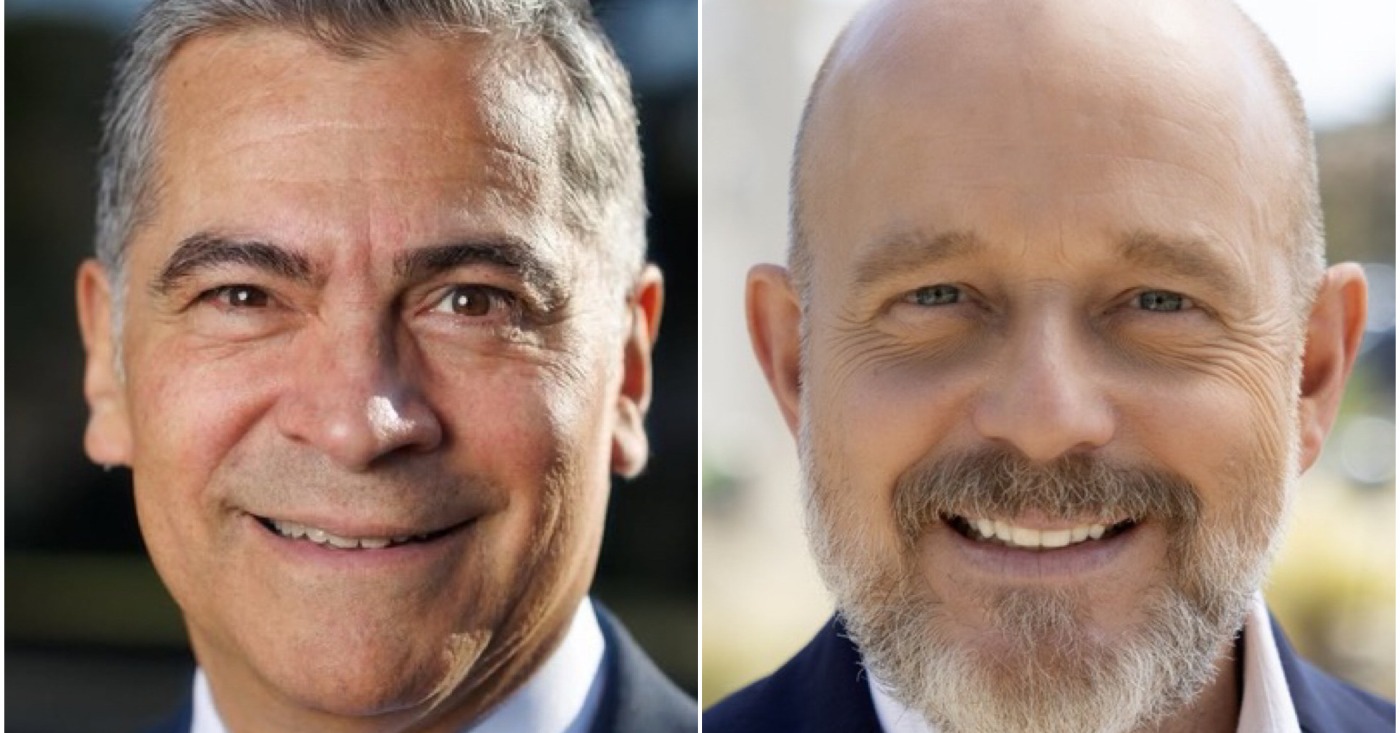
Democrat Xavier Becerra holds a 22-point lead over Republican Steve Hilton in California’s governor’s race, while voters remain closely divided over a proposed one-time tax on billionaires, according to a new Public Policy Institute of California poll.
The September PPIC survey found that 60% of likely voters support Becerra, compared with 38% for Hilton. His lead is actually narrower than it was in July, when he led Hilton 61% to 36%.
Becerra leads among independent voters, with 57% supporting him compared with 38% for Hilton. Party loyalty remains strong, with 93% of Democratic likely voters backing Becerra and 92% of Republicans supporting Hilton.
Hilton leads in the Central Valley, where 52% of likely voters support him compared with 46% for Becerra.
Affordability remains a major factor: 65% of likely voters say candidates’ plans to address cost-of-living issues are “very important” to their vote.
“Affordability continues to be top of mind for Californians when considering their choice for governor,” said Mark Baldassare, PPIC Statewide Survey director and Miller Chair in Public Policy.
The poll also found a narrow split over Proposition 40, a proposed one-time tax of up to 5% on taxpayers with assets exceeding $1 billion. Fifty-two percent of likely voters said they would vote yes, while 46% said they would vote no.
Support for the wealth tax varies sharply by party. Seventy-two percent of Democrats favor Proposition 40, compared with 46% of independents and 21% of Republicans.
Two competing measures also drew majority support. Fifty-one percent back Proposition 41, while 54% support Proposition 42, both of which could affect the wealth-tax proposal.
The findings come as Californians express broader frustration with the state’s political direction. Seventy-one percent of likely voters expect bad economic times in California over the next year.
“Californians are clearly grumpy and aren’t enamored with any particular political party or movement,” Baldassare said.
The survey interviewed 1,745 California adults, including 1,103 likely voters, from Sept. 4-10. The margin of error for likely voters is plus or minus 3.8 percentage points.

Community
LIVE FREE Sunday Dinner Brings Faith, Fellowship and Civic Conversation to Oakland
Approximately 50 members and guests gathered at Imani Community Church for a LIVE FREE Sunday Dinner, sharing a meal with Pastor Michael McBride. The event, hosted by Imani Community Church Pastor Jeremy McCants, focused on faith, community preparedness, and civic participation. Participants discussed “sacred resistance” and how communities can collectively respond to challenges, including practical suggestions for emergencies. The conversation also touched upon the importance of civic engagement and voting in the upcoming election. Read more to learn about the specific actions discussed.
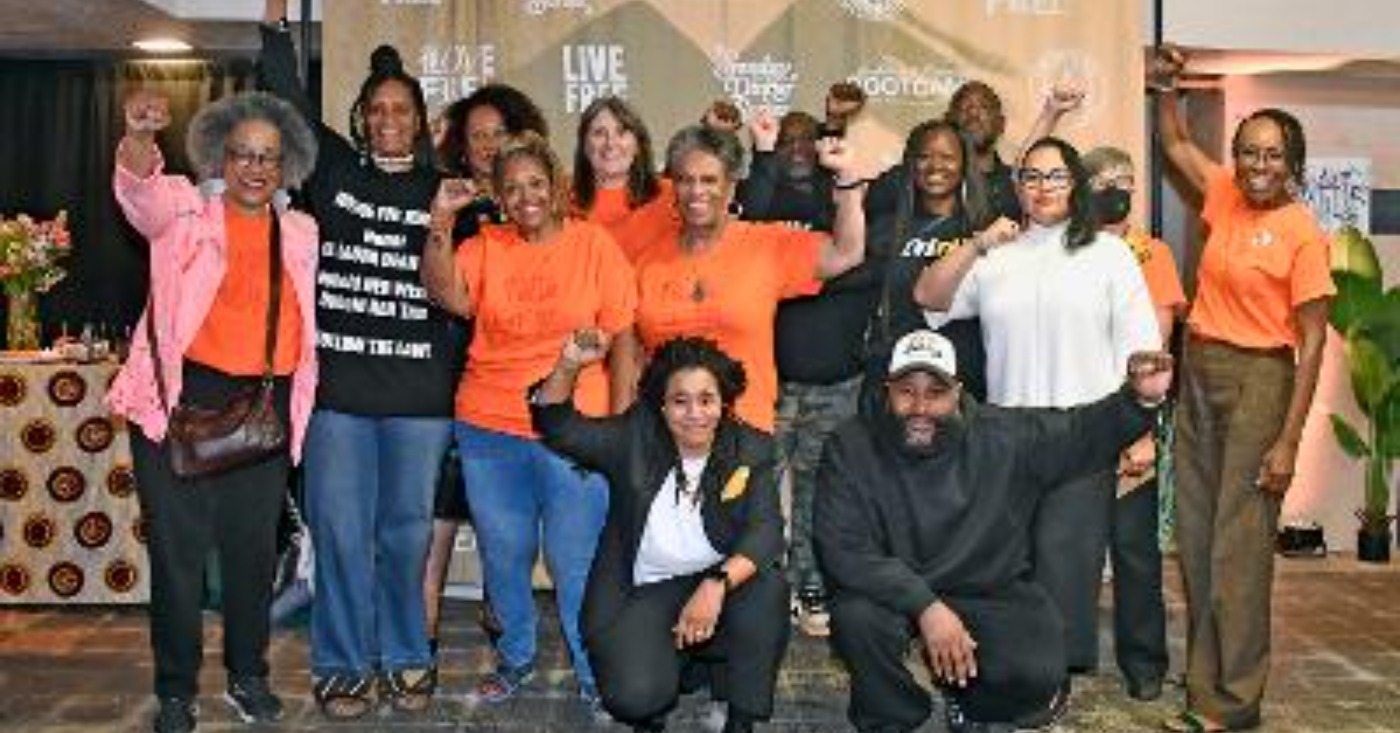
Pastor Michael McBride joins Imani Community Church Members for Food, Faith and Conversation about Community Action
Approximately 50 members and guests of Imani Community Church gathered Sunday afternoon for a LIVE FREE Sunday Dinner, sharing a meal with Pastor Michael McBride while discussing faith, community preparedness and civic participation.
Hosted by Imani Community Church Pastor Jeremy McCants, the Sept. 20 gathering was part of LIVE FREE’s Sunday Dinner initiative, which draws upon the tradition of families, neighbors and faith communities gathering around the Sunday dinner table to break bread and discuss issues affecting their lives.
McBride is founder of LIVE FREE and lead pastor of The Way Christian Center on University Avenue in Berkeley. His Bay Area ministry has deep roots. The congregation traces its history to a church planted by McBride’s grandmother in 1969. McBride returned to the Bay Area in 2005 and became its fourth pastor.
His ministry later expanded into community organizing and national advocacy. McBride founded LIVE FREE in 2011 following organizing work in Oakland and has been involved in efforts addressing gun violence, mass incarceration and civic engagement.

At Imani, the Sunday dinner concept was simple: sit down together, eat together and talk.
McBride recalled a time when Sunday dinner provided families and neighbors an opportunity to discuss what was happening in their communities. LIVE FREE has adapted that tradition into gatherings where faith communities and neighbors can meet, communicate, and consider how to respond collectively to current challenges.
Much of Sunday’s conversation centered on what McBride described as “sacred resistance,” bringing faith into discussions about how communities respond during difficult and uncertain times.
Participants considered a fundamental question: How do we make sense of what is happening around us, and how do we move forward?
The conversation was grounded in faith and prayer, but participants also discussed action and preparation. Attendees talked about not assuming that institutions and everyday systems will always function as expected.
Practical suggestions included keeping basic food staples such as rice and beans available during emergencies. Participants cited the water crisis in Flint, Michigan, as an example as they discussed communities that have experienced disruptions to essential services.
The broader message was one of preparedness and connection: neighbors should know and support one another before a crisis occurs.
The conversation also turned to civic participation and the upcoming election.
McBride’s message was brief: “Vote. We must vote.”
Participants were encouraged to register to vote, verify that their registration is current, and learn what will appear on their ballots. The discussion included researching candidates and ballot measures, voting early, and making a voting plan.
An Oct. 3 workshop was announced as another opportunity for community members to learn more about candidates, volunteer phone banking, ballot measures, and issues before voters.
For Imani’s Social Justice Team, the gathering provided another opportunity to share information with the congregation and surrounding community regarding Imani member Zakiya Jendayi, fighting for her home, and how the community can support her by attending a vigil at her Oakland home every Tuesday from 6-7 p.m. at 3614 Randolph Ave. 94610.
Black History
Caribbean Nations Produce Action Plan Calling for UK Reparations Over Slavery
Caribbean nations are developing an action plan with legal options to press the United Kingdom for negotiations regarding slavery reparations. Officials at a recent conference indicated that regional leaders hope for targeted talks at upcoming Commonwealth and UN summits. However, if diplomatic efforts are resisted, the Caribbean nations are prepared to pursue international court action. A spokesperson for the British government recently reiterated its long-held position against paying reparations. Read more about the unified strategy being pursued.

Caribbean nations are producing an “action plan” with legal options to push the United Kingdom (UK) into negotiating a decades-long slavery reparations deal, according to officials at a reparations conference.
Leaders in the region are hoping the UK would agree to targeted and constructive negotiation talks at upcoming Commonwealth and UN summits, but they are ready to take the matter to international courts if Britain continues to resist diplomatic options, according to the Guardian.
Earlier this month, a spokesperson reiterated the British government’s long‑held position that “the UK does not and will not pay reparations”.
Ralph Gonsalves, the former prime minister of St. Vincent and the Grenadines, said the Caricom Regional Conference on Reparations, which was hosted last week by Barbados with the Caricom Reparations Commission (CRC), was key for agreeing to a unified strategy to bring Britain to the negotiating table. Gonsalves is now an elder and adviser for the Repair Campaign, a social movement for reparatory justice.
He said that slavery happened over centuries and reparations had to be realistic and set over decades. “We need a concrete, multigenerational plan,” he said.
On the legal options available to the Caribbean, Gonsalves challenged arguments that Britain did not violate historical laws during transatlantic slavery, adding that the UK’s signature on contemporary UN conventions had established a binding legal obligation for reparative justice.
“The fact is that the consequences of slavery fall squarely under the Committee on the Elimination of Racial Discrimination, which obliges states to help address the consequences of native genocide and slavery,” Gonsalves said.



Asm. Corey Jackson Announces Launch of 24-Hour Childcare in His District

IN MEMORIAM: The Rev. Leon “Sonny” Clark, Longtime Orange County Pastor and Community Leader, Dies at 72

Poll: Becerra Widens His Lead Over Hilton; Californians Split on Wealth Tax

From Historic Memories to New Possibilities: Oakland Celebrates Coliseum 60

County Office of Education Says OUSD Finances Are Getting Healthier, Materially Stronger

LIVE FREE Sunday Dinner Brings Faith, Fellowship and Civic Conversation to Oakland

Remembering Chauncey Bailey as Student Journalists Face Threats to Truth-Telling

BLACspace Cooperative Invites Bay Area to Experience Oakland’s Black Cultural Ecosystem Through a BLAC Map Tour + Party

In Wake of Death on Doorstep, Williams Chapel Baptist Church Calls for Better Care, Funding for Unhoused

Oakland Centenarian Nuna McKee Honored!

Caribbean Nations Produce Action Plan Calling for UK Reparations Over Slavery

Oakland Post: Week of September 23 – 29, 2026

Doulas Are Helping Black California Moms Navigate Pregnancy–Even as High Mortality Rates Persist

Newsom Signs Addictive Social Media Law to Protect Kids

On Your November Ballot: Prop 38 Would Allocate $8.4 Billion to Immunology and Immunotherapy Funding

Less Affluent School Districts, Including Sacramento City, Face Threat of State Takeover

ESSAY: California Can Close Its Colorectal Cancer Gap

California Hispanic Chambers of Commerce Unveils: ‘Powering the Future’ Theme for 47th Annual Statewide Convention

Four Candidates, Including Incumbent Barbara Lee, Qualify for Oakland Mayor’s Race

Oakland Post: Week of August 12 – 18, 2026

From Blueprint to Breakthrough: Tackling Affordable Housing in Oakland

Oakland Observes Black August with Block Parties, Film Showings, Workshops

COMMENTARY: Why Local School Tax Measure G1 Will Not Be on the November Ballot

Standoff for Justice: Our Homes Are Worth Fighting For

Returning to Its Roots, the Oakland Black-Eyed Pea Festival Partners with the Freedom Farmers Market Sept. 12

Oakland Post: Week of August 26 – September 1, 2026

NPRC Scores First Advocacy Victory: David Shaw Finally Gets His Wish to ‘Go Home’

Frontier Airlines’ Return to Oakland Airport Brings Flights, Jobs and Opportunity

Gubernatorial Candidate Steve Hilton Blasts California New Tire Rules; Newsom Hits Back

Chef Sharon Lee Blends Culinary Excellence, Education and Empowerment

The Conversation With Al McFarlane 6/23/26

Media Monday 6/22/26

LIVE! ASK ALMA! — TUES. 6.23.26 7PM EST

Car Buying Secrets: 4 Hidden Checks Before You Sign!

Is This 550 HP Charger Worth YOUR Money? AutoNetwork Review

Celebrating Juneteenth – Frederick Douglass on education and resistance

LIVE! — ASK ALMA! — TUES. 6.19.26 7PM EST

Hyundai Ioniq 5 Parking, Safety, and 360 View #shorts

2025 Ioniq 5 New Wiper & Powerful Performance! #shorts

Electric SUV Range: Is 259 Miles Enough? #shorts

EV Charging: How Fast Can You Charge an Electric Vehicle? #shorts

Biometric Cooling… Messaging Seats…Come on! 2025 Infiniti QX80 Autograph 4WD

Charged Up: Witness the Magic of a Fully Electric Car! #shorts

Range Rover Sport PHEV Included…: See What’s Inside This Luxury SUV! #shorts

Invisible Hood View: Perfect Parking with X-Ray Vision! #shorts
-
 Commentary4 weeks ago
Standoff for Justice: Our Homes Are Worth Fighting For
-
 Activism4 weeks ago
Oakland Post: Week of August 26 – September 1, 2026
-
 Business4 weeks ago
Frontier Airlines’ Return to Oakland Airport Brings Flights, Jobs and Opportunity
-
 Business4 weeks ago
Gubernatorial Candidate Steve Hilton Blasts California New Tire Rules; Newsom Hits Back
-
 Business4 weeks ago
Chef Sharon Lee Blends Culinary Excellence, Education and Empowerment
-

 Community4 weeks ago
Big City Mayors Ask for “Yes” Vote on Housing Bond Measure; Conservatives Say “No”
-

 Black History4 weeks ago
Jackie Wright Champions Bay Area Stories, Filmmakers and Cultural Institutions
-

 Education4 weeks ago
Gov. Newsom’s Latest Appointees Include Sacramento Advocate for Formerly Incarcerated Students; State’s New Tech Chief
