
California Black Media
Apply Now: Sept. 3 Is Financial Aid Deadline for California Community Colleges
Diablo Valley College student Ivan Hernandez realized his family didn’t have enough money to support his dream to go to college. However, he has been able to successfully apply for financial aid and is currently enrolled in community college. “I have been very lucky that financial aid has been such a big factor in my education,” said Hernandez, a double major in Business Administration and Computer Science. “Without financial aid, I don’t think I could be in the education system like I am now.” The California Community Colleges education system (CCS) enrolls 2.1 million students. Fifty-five percent of those students at the system’s 116 colleges receive financial aid.


By McKenzie Jackson, California Black Media
Diablo Valley College student Ivan Hernandez realized his family didn’t have enough money to support his dream to go to college. However, he has been able to successfully apply for financial aid and is currently enrolled in community college.
“I have been very lucky that financial aid has been such a big factor in my education,” said Hernandez, a double major in Business Administration and Computer Science. “Without financial aid, I don’t think I could be in the education system like I am now.”
The California Community Colleges education system (CCS) enrolls 2.1 million students. Fifty-five percent of those students at the system’s 116 colleges receive financial aid.
According to CCS, 5%, or about 10,500 of its students are Black. Asians account for 11%, Whites, 23%, and Hispanics make up 48% of the student body.
Hernandez was among the speakers during an Aug. 15 press conference hosted by Ethic Media Services, California Black Media, and the California Student Aid Commission, geared at highlighting the Sept. 3 deadline for community college students to apply for financial aid for the 2024-25 school year through the Free Application for Federal Student Aid (FAFSA) or California Dream Act Application.
CSAC Executive Director Dr. Daisy Gonzales said financial aid makes education beyond high school financial possible for all students.
“Financial aid is the most important ingredient in student success in higher education,” said Gonzales, who noted she was a foster youth who used financial aid to attend community college and went on to earn her master’s degree and Ph.D. “I have walked the path of many students in California. Stories like mine do not happen by accident or luck.”
FAFSA is federal aid for students.
The application process for this school year requires students and parents to report their income from 2022.
Funds from FAFSA and the Dream Act help the state’s community colleges serve a substantial percentage of students who qualify as low-income students — with annual income $40,000 — and those who are undocumented or from immigrant families.
“Students regardless of their documentation status or the status of their family members can quality to have their tuition coved as well as aid to help cover costs like rent, food, transportation, and books,” she said. “There is even additional aid to help cover childcare for student parents.”
The amounts in aid packages vary, but for example the Chafee Grant for Foster Youth provides students with up to $5,000 an academic year for up to five years, while the Dreamer Service Incentive Grant awards up to $4,5000 per school year to undocumented students who do volunteer services with an approved organization. The Cal Grant Students with Dependents Grant gives up to $6,000 a year to student-parents to help cover costs associated with being a parent and student.
Applying for financial aid has been a challenge this year for many students due to delays and technical issues complicating the online form caused by the rollout of the FAFSA Simplification Act, which seeks to make federal student aid more gainable by widening Pell Grant eligibility and simplifying the form.
For more information or to apply, visit Better FAFSA, Better CADAA or call 1-888-224-7368.







Activism
Oakland Post: Week of April 1 – 7, 2026
The printed Weekly Edition of the Oakland Post: Week of April 1 – 7, 2026
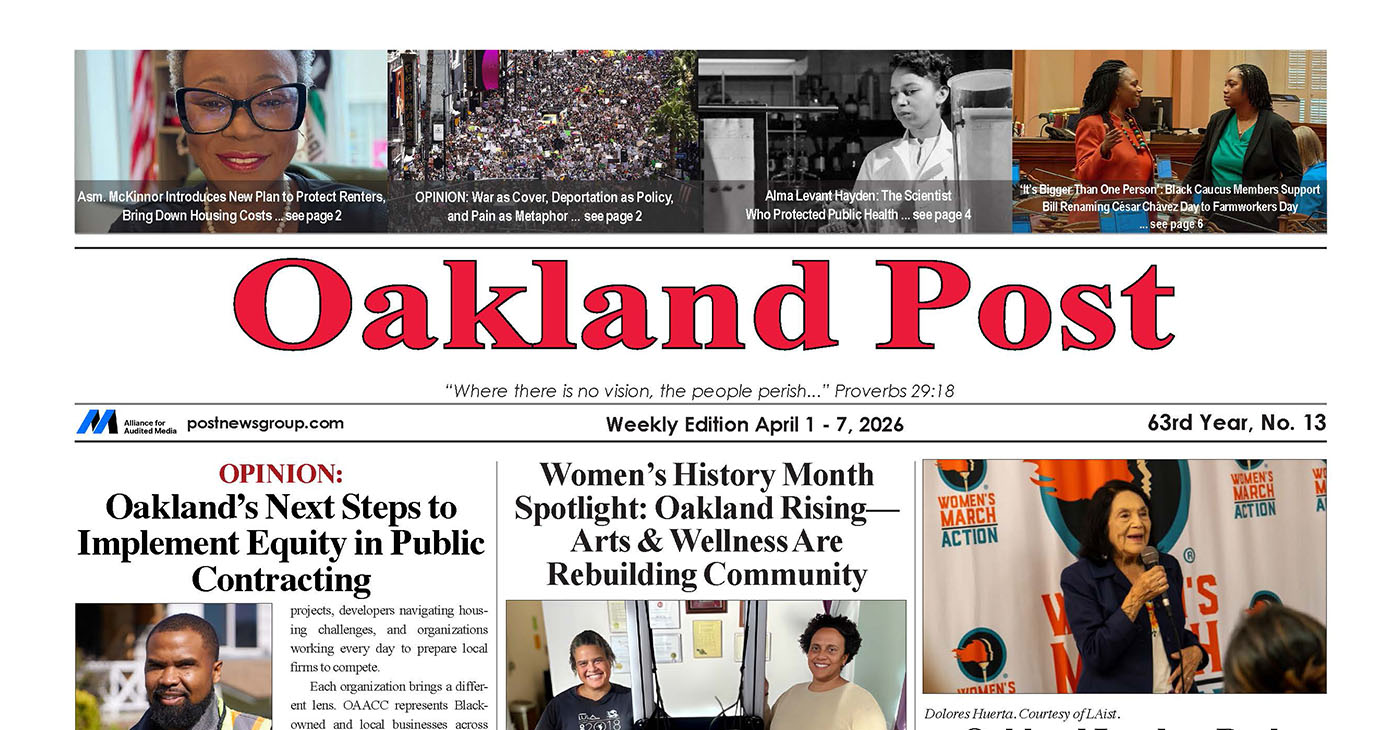
To enlarge your view of this issue, use the slider, magnifying glass icon or full page icon in the lower right corner of the browser window.
Activism
Oakland Post: Week of March 18 – 24, 2026
The printed Weekly Edition of the Oakland Post: Week of March 18 – 24, 2026

To enlarge your view of this issue, use the slider, magnifying glass icon or full page icon in the lower right corner of the browser window.
Activism
Oakland Post: Week of March 11 -17, 2026
The printed Weekly Edition of the Oakland Post: Week of March 11 – 17, 2026
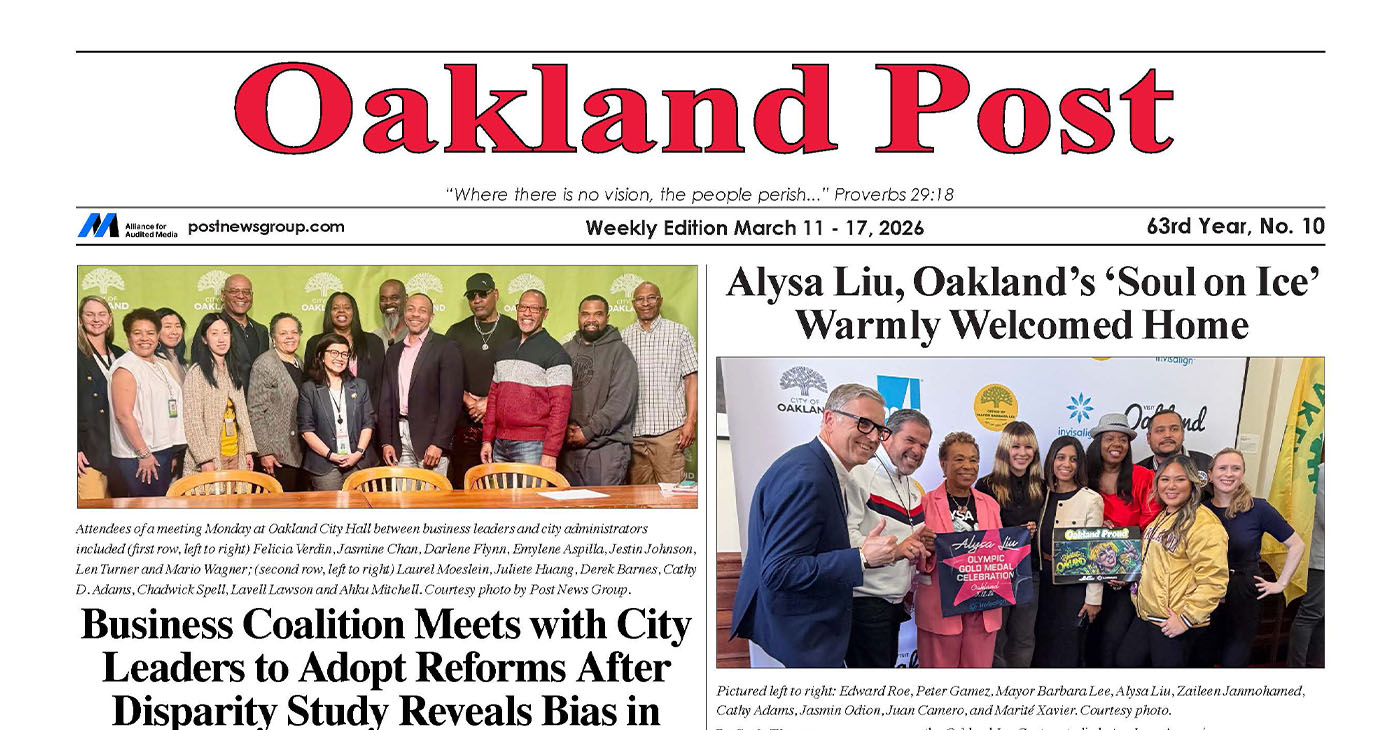
To enlarge your view of this issue, use the slider, magnifying glass icon or full page icon in the lower right corner of the browser window.

WORK FROM HOME
Home-based business with potential monthly income of $10K+ per month. A proven training system and website provided to maximize business effectiveness. Perfect job to earn side and primary income. Contact Lynne for more details: Lynne4npusa@gmail.com 800-334-0540


Oakland Post: Week of April 1 – 7, 2026

Black Artists in America, Installation Three Wraps at the Dixon Gallery and Gardens

Grief, Advocacy, and Education: A Counselor Reflects on Black Maternal Health

Future of Florida’s Black History Museum in Limbo

New Research Shows the Many Benefits of Early Learning

South Hampton K-8 Students Among Top 10 Finalists for Samsung’s ‘Solve for Tomorrow’ Competition

Cuba: No Negotiation with US on the President or Political System

Brooklyn Academy of Music Names Jamaican-Born Tamara McCaw as President

Trinidad & Tobego – U.S. Launches WhatsApp Channel for American Citizens in the Country

Oakland Post: Week of March 18 – 24, 2026

AI Innovation vs. Ethics and Environmental Impact

AI, Web3, and Digital Reparations

What If You Owned Your AI Agent?

Season 7, Episode 3 – January Reporter’s Roundtable 📱

Season 7, Episode 3 – January Reporter’s Roundtable

Reflecting on Black History Milestones in Birmingham AL

Oakland Post: Week of February 25 – March 3, 2026

PRESS ROOM: NBA Hall of Fame Nominee Terry Cummings Joins 100 Black Men of DeKalb County to Launch Victory & Values Initiative

Oakland Post: Week of March 4 – 10, 2026

Trump’s MAGA Allies are Creating Executive Order Plan to Steal the 2026 Midterms

U.S. manufacturing rebounds – how foundry services are adapting to rising demand

Poll Shows Support for Policies That Help Families Afford Child Care

Oakland Post: Week of March 11 -17, 2026

OP-ED: One Hundred Years of Black Workers Telling the Truth

Advancements in solar technology that are changing the way we power the world
Oakland Post: Week of March 18 – 24, 2026

Woman’s Search for Family’s Roots Leads to Ancestor John T. Ward – A Successful Entrepreneur and Conductor on the Underground Railroad

Financial Wellness and Mental Health: Managing Money Stress in College

COMMENTARY: Women of Color Shape Our Past and Future

PRESS ROOM: Civil Rights TV Launches in Selma as the World’s First 24/7 Civil Rights Television Network

Hyundai Ioniq 5 Parking, Safety, and 360 View #shorts

2025 Ioniq 5 New Wiper & Powerful Performance! #shorts

Electric SUV Range: Is 259 Miles Enough? #shorts

EV Charging: How Fast Can You Charge an Electric Vehicle? #shorts

Biometric Cooling… Messaging Seats…Come on! 2025 Infiniti QX80 Autograph 4WD

Charged Up: Witness the Magic of a Fully Electric Car! #shorts

Range Rover Sport PHEV Included…: See What’s Inside This Luxury SUV! #shorts

Invisible Hood View: Perfect Parking with X-Ray Vision! #shorts

AI Is Reshaping Black Healthcare: Promise, Peril, and the Push for Improved Results in California

ESSAY: Technology and Medicine, a Primary Care Point of View

Sanctuary Cities

The RESISTANCE – FREEDOM NOW

STATE OF THE PEOPLE: Freddie

ECONOMIC BOYCOTT DAY!!!!!

I told You So

-
 Activism3 weeks ago
Oakland Post: Week of March 11 -17, 2026
-
 Activism2 weeks ago
Oakland Post: Week of March 18 – 24, 2026
-
 Advice3 weeks ago
Financial Wellness and Mental Health: Managing Money Stress in College
-
 #NNPA BlackPress2 weeks ago
Brooklyn Academy of Music Names Jamaican-Born Tamara McCaw as President
-

 Advice3 weeks ago
Women & Wealth: Tips for Navigating Your Lifelong Financial Journey
-
 #NNPA BlackPress2 weeks ago
Grief, Advocacy, and Education: A Counselor Reflects on Black Maternal Health
-
 #NNPA BlackPress2 weeks ago
New Research Shows the Many Benefits of Early Learning
-
 #NNPA BlackPress2 weeks ago
Black Artists in America, Installation Three Wraps at the Dixon Gallery and Gardens
