
Technology
Apple’s Mac is Selling Strong, iPad Not So Much


In this Sept 19, 2014 file photo, a customer shows off the new Apple iPhone 6, right, and 6 Plus at a store in Tokyo. Apple sold 61 million iPhones in the first three months of 2015, or 40 percent more than in the same period a year ago. That represented about two-thirds of its $58 billion in revenue. (AP Photo/Shizuo Kambayashi, File)
BRANDON BAILEY, AP Technology Writer
SAN FRANCISCO (AP) — Apple’s iPhone was again the company’s star in the first three months of the year. The tech giant sold 61 million iPhones, or 40 percent more than in the same period a year ago. That represented about two-thirds of its $58 billion in revenue.
But executives also shed some light on other well-known Apple products in interviews and a conference call with analysts Monday evening.

___
iPAD SALES DOWN
Apple’s tablet computing device, once a red-hot consumer gadget, has suffered from a steady decline in sales over the last year. Apple sold 12.6 million iPads in the latest quarter, for about $5.4 billion in revenue. That’s down from 16.3 million iPads sold in the same period a year earlier.
Analysts say consumers are realizing tablets aren’t as useful for some tasks, and they’re also waiting longer to buy new models. Apple CEO Tim Cook said Monday that some potential iPad users are opting instead for the company’s new lightweight MacBook computers, or even the newer iPhone models that have larger screens.
But Cook said he sees a future for the iPad in business settings, where workers can use specialized iPad apps created by IBM and other commercial software developers. “I believe the iPad is an extremely good business over the long term,” Cook said. “Precisely when it begins to grow again, I wouldn’t want to predict. But I strongly believe that it will.”
___
MAC SALES UP
At a time when market researchers say the personal computer market is shrinking, Apple is actually increasing its sales of Macs. The company sold 4.6 million Mac desktops and notebook computers in the last quarter.
That’s a lot fewer than the estimated 13.4 million PCs sold by leading PC-maker Lenovo in the same period. But the Mac contributed $5.6 billion of Apple’s revenue last quarter and saw unit sales grow 10 percent, while market researchers at International Data Corp. estimate total PC sales by all vendors shrank nearly 7 percent.
The growth in Mac sales was led by Apple’s MacBook portables, said Chief Financial Officer Luca Maestri, although he did not break out desktop or laptop figures.
___
WATCH SALES UNDISCLOSED
Despite repeated questions, Cook and Maestri declined to reveal any sales figures for the Apple Watch, which went on sale this month. The company is currently only accepting orders online and Cook said, “right now, demand is greater than the supply.”
But he said Apple is working to fill orders and expedite deliveries that have been delayed for several weeks, while increasing supplies to the point where Apple will begin selling the watch in more countries by late June. Currently, the watch is being sold in the United States, Australia, Canada, China, France, Germany, Hong Kong, Japan and the United Kingdom.
Maestri also said the watch will contribute to a slight dip in the company’s profit margins during the first quarter that it’s on sale. Cook, however, said that’s typical for a new product when manufacturing and supply chains are still being refined, and he declined to offer any estimate for the watch’s profitability over the long term.
Copyright 2015 The Associated Press. All rights reserved. This material may not be published, broadcast, rewritten or redistributed.










Education
Gov. Newsom’s Latest Appointees Include Sacramento Advocate for Formerly Incarcerated Students; State’s New Tech Chief
Ayushi Roy, of San Francisco, was appointed state chief technology officer at the California Department of Technology. Roy has taught at Harvard Kennedy School since 2022 and previously held technology and policy roles with New America, the U.S. General Services Administration, and the U.S. Office of Management and Budget

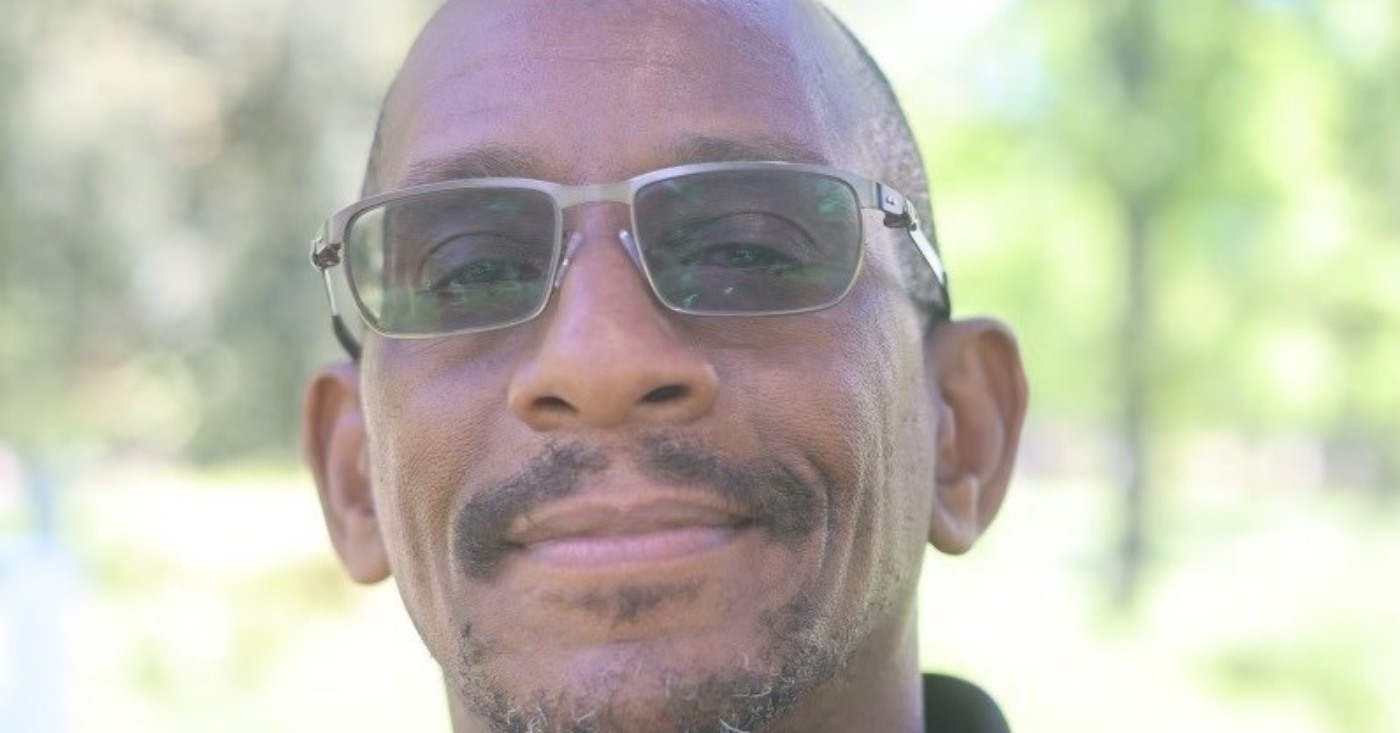
Gov. Gavin Newsom announced eight appointments Aug. 19, including a new state chief technology officer and the reappointment of a Sacramento State outreach coordinator who works with formerly incarcerated students.
Ayushi Roy, of San Francisco, was appointed state chief technology officer at the California Department of Technology. Roy has taught at Harvard Kennedy School since 2022 and previously held technology and policy roles with New America, the U.S. General Services Administration, and the U.S. Office of Management and Budget
Roy’s policy work has focused on the gap between government programs and the people they are intended to serve. In a Harvard course inspired by Beyoncé’s “Cowboy Carter,” she teaches students to examine how administrative and implementation barriers can undermine social safety-net programs.
“I do know as a practitioner, having served in the government for over a dozen years, that the building of technology is the easy part; managing the political feasibility and the implementation is the hard part,” Roy said.
Roy’s appointment requires Senate confirmation and carries compensation of $214,692.
Newsom also reappointed Michael Love, of Sacramento, to the State Rehabilitation Council, where he has served since 2025. Love has been an outreach coordinator at California State University, Sacramento since 2024 and previously held several roles at the university, including administrative services coordinator for Project Rebound and teacher’s associate.
Project Rebound supports formerly incarcerated students as they pursue higher education, making Love’s appointment relevant to the council’s work involving vocational rehabilitation services.
Love earned bachelor’s and master’s degrees in communication studies from Sacramento State. He is a Democrat.
Newsom also appointed Eric De La Cruz of Sacramento as executive director of the Racial Equity Commission. De La Cruz has served as chief of the Office of Civil Rights at the Department of Toxic Substances Control since 2022. The position pays $146,220 and does not require Senate confirmation.
The governor additionally appointed Christine Aurigemma to the State Rehabilitation Council and reappointed Lisa Weiler, Michelle Bello and Matthew Asner. The council positions are unpaid and do not require Senate confirmation.

Black History
George Cook: The Inventor Who Made Fishing Smarter
George Cook was a Black American inventor from Louisville, Kentucky. He was born in 1863, during a time when Black Americans faced unfair laws, limited opportunities, and many barriers to education, jobs, and recognition. Even with these challenges, he became known for his intell
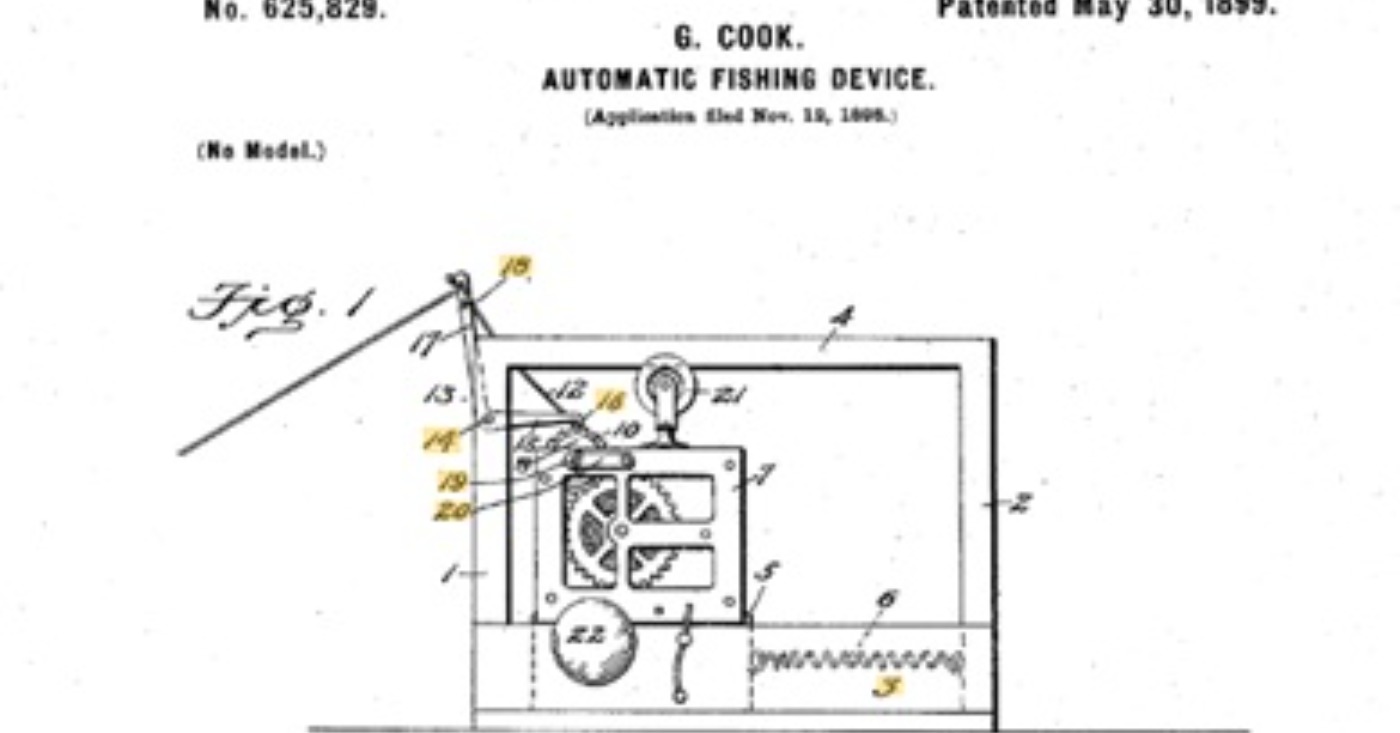
George Cook was a Black American inventor from Louisville, Kentucky. He was born in 1863, during a time when Black Americans faced unfair laws, limited opportunities, and many barriers to education, jobs, and recognition. Even with these challenges, he became known for his intelligence, honesty, and ability to think in practical ways. Some records say he worked as a cook for Buffalo Bill Cody and later as a chef on a private dining car for the Louisville and Nashville Railroad. He was even known by the nickname “Honest Mister Cook.”
As with many Black American inventors and scientists of that era, there is little biographical information about Mr. Cook.
Cook’s most famous invention was the Automatic Fishing Device. He received U.S. Patent No. 625,829 for it on May 30, 1899. His patent shows that he was not just someone with an idea, but someone who made it happen.
So, what did the Automatic Fishing Device do? Imagine fishing with a line in the water. Usually, you have to watch carefully and pull the line at just the right moment when a fish bites. Cook wanted to make that process easier. His device was designed to react when a fish pulled on the line. The tension from the fish would trigger a lever. That lever would release a spring-loaded part of the device, causing it to move quickly and help pull in the line. The device also had an alarm gong that would ring to let the fisher know something was happening.
This invention was important because it used simple mechanical ideas in a clever way. Springs, levers, rails, and alarms were not new by themselves, but Cook combined them to solve a real problem. His device showed how inventors often take familiar parts and arrange them in a new way to make life easier.
Cook looked at fishing and asked, “How can this be improved?” Then, he created a device that could respond automatically when a fish tugged on the line. His invention let fishermen relax instead of watching the line for hours, trusting the alarm to alert them.
Cook may not be as famous as some inventors, but his Automatic Fishing Device shows that creativity and innovation can be applied anywhere. His legacy lives on as part of the larger story of Black innovation in America.
Environment
“The Power to See Threats Sooner”: Gov. Newsom, Safety Officials Showcase California’s Investments in Hi-Tech Wildfire Prevention
On July 21, Gov. Gavin Newsom held a presentation in Sacramento, alongside state emergency officials, to showcase California’s major investments in cutting-edge firefighting technology and wildfire prevention. The media event took place at McClellan Airport in Sacramento County,

On July 21, Gov. Gavin Newsom held a presentation in Sacramento, alongside state emergency officials, to showcase California’s major investments in cutting-edge firefighting technology and wildfire prevention.
The media event took place at McClellan Airport in Sacramento County, a primary hub for state aerial firefighting operations. Newsom used the presentation to highlight the state’s modern, tech-driven strategy to combat increasingly severe wildfires.
“California leads with science, innovation, and grit. We are meeting this moment with urgency and building 21st-century solutions for a 21st-century crisis,” Newsom stated. “And through it all, our extraordinary firefighters continue to step up, stand in harm’s way, and protect our communities.”
California Natural Resources Agency Secretary Wade Crowfoot, CAL FIRE Chief Joe Tyler, and California Governor’s Office of Emergency Services Director Caroline Thomas Jacobs appeared with Newsom and provided updates about their respective agencies.
Under the Newsom administration, California’s fire protection budget has nearly doubled since 2019 — from $2 billion to $3.8 billion, including more than $2.5 billion in wildfire resilience and forest health projects.

Newsom detailed the expansion of artificial intelligence (AI) programs, predictive analytics, and sophisticated software used to detect fires at their earliest stages. He also highlighted the launch of FireSat satellites, a dedicated space network designed to dramatically improve early wildfire detection and tracking.
“Every innovation we adopt supports our people on the front lines who work tirelessly to protect our communities when wildfire strikes,” Tyler stated. “Technology and innovation help us do our jobs more quickly and safely; however, we still need all Californians to stay vigilant, support our firefighters, and work together to build a safer, more resilient California.”
In addition, CAL Fire showcased a fleet of more than 100 AI-guided firefighting drones positioned strategically across California to provide real-time mapping and aerial monitoring.
The presentation stated that California operates the nation’s largest state-owned aerial firefighting fleet, including the impending addition of two more C-130 aircraft by the end of the year, alongside a workforce of over 11,000 personnel.
“Technology is transforming how California prepares for wildfire, giving us the power to see threats sooner, position resources before fires start and move mutual aid faster when every second counts,” Thomas Jacobs said. “Governor Newsom’s investments are helping us turn real-time intelligence into action, so firefighters and local communities have the people, equipment and information needed to save lives and keep fires from becoming major disasters.”



Prostate Cancer is Twice as Likely to Kill Black Men. Talking to Your Doctor Could Help Save Your Life

Oakland Post: Week of September 2 – 8, 2026

Longtime BWOPA Member Brendalyn Goodall Appointed to California Workforce Development Board

Jackie Wright Champions Bay Area Stories, Filmmakers and Cultural Institutions

Chef Sharon Lee Blends Culinary Excellence, Education and Empowerment

‘Passing a Law Isn’t The Finish Line’: California Assembly Evaluates Implementation, Results

OPINION: Angie Nixon Will Turn You Into a Democratic Socialist If Donald Trump Hasn’t Already

Gov. Newsom Signs Law Shielding Immigration Aid Workers From Doxing Threats

BOOK REVIEW: Every Inch of a Lady

Big City Mayors Ask for “Yes” Vote on Housing Bond Measure; Conservatives Say “No”

Madeline M. Turner: The Inventor Who Made Juicing Easier

Gubernatorial Candidate Steve Hilton Blasts California New Tire Rules; Newsom Hits Back

Frontier Airlines’ Return to Oakland Airport Brings Flights, Jobs and Opportunity

Secretary of State Shirley N. Weber Urges Californians to Vote Early as Voter ID Battle Intensifies

Gov. Newsom’s Latest Appointees Include Sacramento Advocate for Formerly Incarcerated Students; State’s New Tech Chief

Department of Homeland Security Demands California Secretary of State Shirley N. Weber Scrub Voter Rolls

New Judge Could Decide if Karmelo Anthony Gets a New Trial

“The Power to See Threats Sooner”: Gov. Newsom, Safety Officials Showcase California’s Investments in Hi-Tech Wildfire Prevention

Alpha Kappa Alpha Sorority, Inc. Celebrates New North Atlantic Regional Director

California Sen. Padilla Joins Colleagues to Introduce Bill Imposing Term Limits on Supreme Court Justices

Less Affluent School Districts, Including Sacramento City, Face Threat of State Takeover

Car Wash Workers Cope with Lingering Impacts of ICE Raids

COMMENTARY: You Are Already Paying for the AI Boom

California Bill Would Let Abuse Victims Use Trauma as Legal Defense for Violent Crime

Oakland Post: Week of July 29 – August 4, 2026

OP-ED: ‘The Trusted Messenger’ and the Black Vote

How Oakland’s Courtsmith is Scaling its Business and Local Impact

ESSAY: California Can Close Its Colorectal Cancer Gap

As Part of Your Back-to- School Checklist, Vaccinate

Oakland Post: Week of August 5 – 11, 2026

The Conversation With Al McFarlane 6/23/26

Media Monday 6/22/26

LIVE! ASK ALMA! — TUES. 6.23.26 7PM EST

Car Buying Secrets: 4 Hidden Checks Before You Sign!

Is This 550 HP Charger Worth YOUR Money? AutoNetwork Review

Celebrating Juneteenth – Frederick Douglass on education and resistance

LIVE! — ASK ALMA! — TUES. 6.19.26 7PM EST

Hyundai Ioniq 5 Parking, Safety, and 360 View #shorts

2025 Ioniq 5 New Wiper & Powerful Performance! #shorts

Electric SUV Range: Is 259 Miles Enough? #shorts

EV Charging: How Fast Can You Charge an Electric Vehicle? #shorts

Biometric Cooling… Messaging Seats…Come on! 2025 Infiniti QX80 Autograph 4WD

Charged Up: Witness the Magic of a Fully Electric Car! #shorts

Range Rover Sport PHEV Included…: See What’s Inside This Luxury SUV! #shorts

Invisible Hood View: Perfect Parking with X-Ray Vision! #shorts
-
 Community4 weeks ago
Less Affluent School Districts, Including Sacramento City, Face Threat of State Takeover
-
 Commentary4 weeks ago
ESSAY: California Can Close Its Colorectal Cancer Gap
-

 Business4 weeks ago
California Hispanic Chambers of Commerce Unveils: ‘Powering the Future’ Theme for 47th Annual Statewide Convention
-

 Community4 weeks ago
Four Candidates, Including Incumbent Barbara Lee, Qualify for Oakland Mayor’s Race
-

 Business4 weeks ago
From Blueprint to Breakthrough: Tackling Affordable Housing in Oakland
-

 Black History4 weeks ago
Oakland Observes Black August with Block Parties, Film Showings, Workshops
-

 Activism4 weeks ago
Oakland Post: Week of August 12 – 18, 2026
-

 Commentary4 weeks ago
COMMENTARY: Why Local School Tax Measure G1 Will Not Be on the November Ballot
