
Business
AmEx Troubles: Some Cardholders Can Leave Home Without It


In this Jan. 20, 2010 file photo, American Express cards are posed for a photograph in Phoenix. Amex’s stock is down 11 percent this year, making it the second-biggest decliner on the Dow Jones industrial average. (AP Photo/Ross D. Franklin, File)
KEN SWEET, AP Business Writer
NEW YORK (AP) — For decades, American Express was the undisputed credit card of choice among corporate road warriors, the wealthy and the well-traveled, who lived by the company’s slogan, “Don’t leave home without it.”
But changing consumer habits, extremely aggressive competition and increased pushback from its merchants are putting heavy pressure on AmEx.
Rivals are trying to steal away business and are succeeding in some cases. Costco, for example, is ending its 15-year relationship with AmEx and defecting to Citigroup and Visa starting next March. And airlines that used to give VIP lounge access to AmEx cardholders have been switching in recent years to other credit card companies.
Compounding its troubles, AmEx recently lost a major government antitrust lawsuit, a verdict that could damage its ability to compete.
“The competitive environment for AmEx is very challenging,” said Jason Arnold, a Wall Street analyst who covers AmEx for RBS Securities. “Major competitors have all directed their efforts to take chunks away from their business. They’ve got serious problems.”
As a result, American Express stock is down 12 percent this year. Analysts, on average, have cut their 2015 profit forecast from $6.2 billion to $5.6 billion. AmEx recently announced 4,000 layoffs, or about 6 percent of its workforce. And CEO Kenneth Chenault will face a skeptical Wall Street audience Wednesday at the company’s annual investor day.
One of the biggest threats to AmEx is the slew of competing cards aimed at the well-to-do, sometimes with lower annual fees. Card issuers have energetically courted merchants who used to accept only American Express. Merchants who once coveted AmEx’s high-net-worth cardholders are discovering they can find the same customers elsewhere.
Citigroup, in particular, has been going after AmEx’s core customer. Citigroup has hired executives away from AmEx over the past few years to help it overhaul its credit cards and revamp its loyalty program, known as ThankYou. Citi Cards CEO Jud Linville, for example, worked at AmEx for nearly 20 years.
The capture of Costco by Citigroup and Visa was the biggest blow to AmEx. The warehouse-club chain accounted for $80 billion of spending on AmEx’s network last year and 10 percent of AmEx’s cards.
“Costco was a real punch in the gut,” said David Robertson, publisher of the Nilson Report, a major trade journal for the credit card industry.
Citi also recently created a card called Citi Prestige, a high-annual-fee card aimed at AmEx Platinum Card holders.
“Citi’s ThankYou program, a year and a half ago, was pretty much worthless,” said Brian Kelly, editor in chief of thepointsguy.com, a travel and credit card rewards tracking website. “But over the past year Citi has really started to get into the game. They are not at a Chase or AmEx level yet, but based on where they have gone in a short amount of time, they’re becoming quite formidable.”
JPMorgan Chase introduced its own reward cards in 2009 with a program similar to AmEx’s. It is called Chase Ultimate Rewards.
Airport lounge access was once a perk basically guaranteed by AmEx. But American Airlines switched allegiance last year, turning over exclusive access to lounges to Citi cardholders. AmEx cardholders lost access to United Continental’s lounges in 2011 and lost the ability to transfer their points to United in 2012.
Even Discover Financial has gotten into the game. Last month, it introduced a credit card focused on building up miles that can be redeemed for travel.
AmEx hasn’t sat idle. To generate revenue, it has raised annual fees and interest rates on some products. It has also added perks for its customers, such as waiving foreign transaction fees and giving a $100 credit for incidental airline expenses for Gold Card members.
And when AmEx parted ways with United Continental, it went ahead and opened its own airport lounges. It has 13 worldwide so far, with plans to open more this year.
“American Express is still the gold standard when it comes to their rewards program, but lately it seems like all they’re doing is playing catch-up,” Kelly said.
While competitors have been moving upmarket, AmEx in response has been moving in the opposite direction. It now has two pre-paid debit cards, one of them with Wal-Mart. Pre-paid debit cards are typically aimed at low-income consumers who may not have checking accounts. The company also launched a no-annual-fee credit card last year aimed at “everyday” purchases — not the travel-heavy, corporate-expense-account business AmEx is known for.
AmEx isn’t going to let Citi walk away with its Costco card customers without a fight, either. It plans to spend aggressively to try to keep some of them because roughly 70 percent of spending on those cards was done outside the stores, according to AmEx.
“I don’t think there’s anything structurally wrong at AmEx,” said Sanjay Sakhrani, an analyst at Keefe, Bruyette & Woods. “They’re going to get in front of the revenue they are going to lose next year when the Costco relationship ends.”
Along with increased competition, AmEx is facing heavier regulatory pressure. Last month, the Justice Department won an antitrust lawsuit against American Express over its practice of making merchants sign agreements not to express a preference for one card over another.
If AmEx loses on appeal, merchants will be free to express their preferences, and that could force the company to lower the percent it charges them to process cards. That would be a drastic hit to AmEx’s bottom line, and company executives have acknowledged as much.
During the trial last summer, AmEx’s Chenault said the company would be “fighting for our survival” if it lost the case.
Copyright 2015 The Associated Press. All rights reserved. This material may not be published, broadcast, rewritten or redistributed.




Activism
Oakland Post: Week of April 1 – 7, 2026
The printed Weekly Edition of the Oakland Post: Week of April 1 – 7, 2026
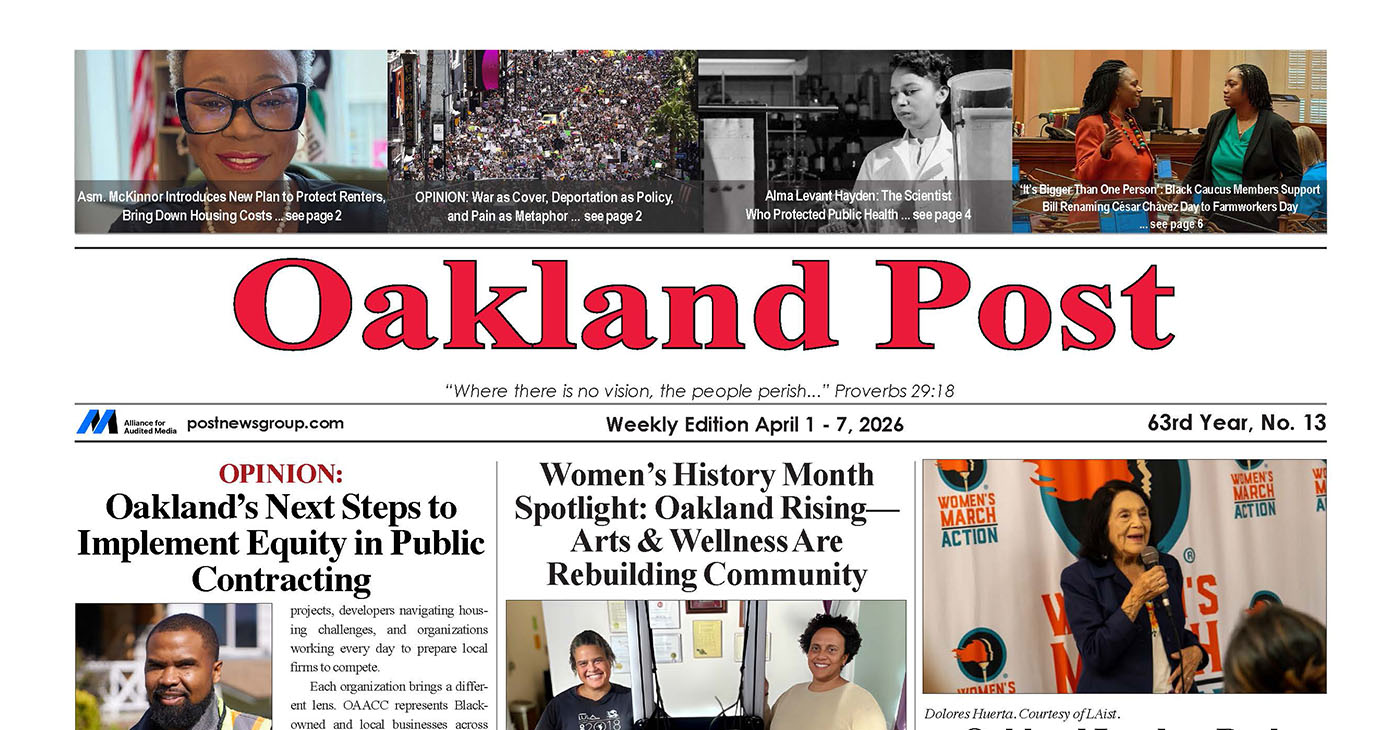
To enlarge your view of this issue, use the slider, magnifying glass icon or full page icon in the lower right corner of the browser window.
Activism
Oakland Post: Week of March 18 – 24, 2026
The printed Weekly Edition of the Oakland Post: Week of March 18 – 24, 2026

To enlarge your view of this issue, use the slider, magnifying glass icon or full page icon in the lower right corner of the browser window.
Advice
Financial Wellness and Mental Health: Managing Money Stress in College
While everyone’s financial situation is unique, several common sources of stress have the potential to strain your financial health. These include financial and economic uncertainty, existing debts, unexpected expenses, and mental or physical health changes. Financial stress may differ from situation to situation, but understanding the factors contributing to yours may help you begin to craft a plan for your unique circumstances.

Sponsored by JPMorganChase
As a college student, managing financial responsibilities can be stressful.
If you’ve found yourself staying up late thinking about your finances or just feeling anxious overall about your financial future, you’re not alone. In one survey, 78% of college students who reported financial stress had negative impacts on their mental health, and 59% considered dropping out. While finances can impact overall stress, taking steps to manage your finances can support your mental, emotional and physical well-being.
When it comes to money, the sources of stress may look different for each student, but identifying the underlying causes and setting goals accordingly may help you feel more confident about your financial future.
Consider these strategies to help improve your financial wellness and reduce stress.
Understand what causes financial stress
While everyone’s financial situation is unique, several common sources of stress have the potential to strain your financial health. These include financial and economic uncertainty, existing debts, unexpected expenses, and mental or physical health changes. Financial stress may differ from situation to situation, but understanding the factors contributing to yours may help you begin to craft a plan for your unique circumstances.
2. Determine your financial priorities
Start by reflecting on your financial priorities. For students this often includes paying for school or paying off student loans, studying abroad, saving for spring break, building an emergency fund, paying down credit card debt or buying a car. Name the milestones that are most important to you, and plan accordingly.
3. Create a plan and stick to it
While setting actionable goals starts you on the journey to better financial health, it’s essential to craft a plan to follow through. Identifying and committing to a savings plan may give you a greater sense of control over your finances, which may help reduce your stress. Creating and sticking to a budget allows you to better track where your money is going so you may spend less and save more.
4. Pay down debt
Many students have some form of debt and want to make progress toward reducing their debt obligations. One option is the debt avalanche method, which focuses on paying off your debt with the highest interest rate first, then moving on to the debt with the next-highest interest rate. Another is the debt snowball method, which builds momentum by paying off your smallest debt balance, and then working your way up to the largest amounts.
5. Build your financial resilience
Some financial stress may be inevitable, but building financial resilience may allow you to overcome obstacles more easily. The more you learn about managing your money, for instance, the more prepared you’ll feel if the unexpected happens. Growing your emergency savings also may increase resilience since you’ll be more financially prepared to cover unexpected expenses or pay your living expenses.
6. Seek help and support
Many colleges have resources to help students experiencing financial stress, like financial literacy courses or funds that provide some assistance for students in need. Talk to your admissions counselor or advisor about your concerns, and they can direct you to sources of support. Your school’s counseling center can also be a great resource for mental health assistance if you’re struggling with financial stress.
The bottom line
Financial stress can affect college students’ health and wellbeing, but it doesn’t have to derail your dreams. Setting smart financial goals and developing simple plans to achieve them may help ease your stress. Revisit and adjust your plan as needed to ensure it continues to work for you, and seek additional support on campus as needed to help keep you on track.
JPMorgan Chase Bank, N.A. Member FDIC
© 2026 JPMorgan Chase & Co.

WORK FROM HOME
Home-based business with potential monthly income of $10K+ per month. A proven training system and website provided to maximize business effectiveness. Perfect job to earn side and primary income. Contact Lynne for more details: Lynne4npusa@gmail.com 800-334-0540


Oakland Post: Week of April 1 – 7, 2026

Black Artists in America, Installation Three Wraps at the Dixon Gallery and Gardens

Grief, Advocacy, and Education: A Counselor Reflects on Black Maternal Health

Future of Florida’s Black History Museum in Limbo

New Research Shows the Many Benefits of Early Learning

South Hampton K-8 Students Among Top 10 Finalists for Samsung’s ‘Solve for Tomorrow’ Competition

Cuba: No Negotiation with US on the President or Political System

Brooklyn Academy of Music Names Jamaican-Born Tamara McCaw as President

Trinidad & Tobego – U.S. Launches WhatsApp Channel for American Citizens in the Country

Oakland Post: Week of March 18 – 24, 2026

AI Innovation vs. Ethics and Environmental Impact

AI, Web3, and Digital Reparations

What If You Owned Your AI Agent?

Season 7, Episode 3 – January Reporter’s Roundtable 📱

Season 7, Episode 3 – January Reporter’s Roundtable

Reflecting on Black History Milestones in Birmingham AL

Oakland Post: Week of February 25 – March 3, 2026

Oakland Post: Week of March 4 – 10, 2026

PRESS ROOM: NBA Hall of Fame Nominee Terry Cummings Joins 100 Black Men of DeKalb County to Launch Victory & Values Initiative

Trump’s MAGA Allies are Creating Executive Order Plan to Steal the 2026 Midterms

U.S. manufacturing rebounds – how foundry services are adapting to rising demand

Poll Shows Support for Policies That Help Families Afford Child Care

Oakland Post: Week of March 11 -17, 2026
Oakland Post: Week of March 18 – 24, 2026

OP-ED: One Hundred Years of Black Workers Telling the Truth

Advancements in solar technology that are changing the way we power the world

Financial Wellness and Mental Health: Managing Money Stress in College

Woman’s Search for Family’s Roots Leads to Ancestor John T. Ward – A Successful Entrepreneur and Conductor on the Underground Railroad

COMMENTARY: Women of Color Shape Our Past and Future

PRESS ROOM: Civil Rights TV Launches in Selma as the World’s First 24/7 Civil Rights Television Network

Hyundai Ioniq 5 Parking, Safety, and 360 View #shorts

2025 Ioniq 5 New Wiper & Powerful Performance! #shorts

Electric SUV Range: Is 259 Miles Enough? #shorts

EV Charging: How Fast Can You Charge an Electric Vehicle? #shorts

Biometric Cooling… Messaging Seats…Come on! 2025 Infiniti QX80 Autograph 4WD

Charged Up: Witness the Magic of a Fully Electric Car! #shorts

Range Rover Sport PHEV Included…: See What’s Inside This Luxury SUV! #shorts

Invisible Hood View: Perfect Parking with X-Ray Vision! #shorts

AI Is Reshaping Black Healthcare: Promise, Peril, and the Push for Improved Results in California

ESSAY: Technology and Medicine, a Primary Care Point of View

Sanctuary Cities

The RESISTANCE – FREEDOM NOW

STATE OF THE PEOPLE: Freddie

ECONOMIC BOYCOTT DAY!!!!!

I told You So

-
 Activism3 weeks ago
Oakland Post: Week of March 11 -17, 2026
-
 Activism3 weeks ago
Oakland Post: Week of March 18 – 24, 2026
-
 Advice3 weeks ago
Financial Wellness and Mental Health: Managing Money Stress in College
-
 #NNPA BlackPress2 weeks ago
Brooklyn Academy of Music Names Jamaican-Born Tamara McCaw as President
-
 #NNPA BlackPress2 weeks ago
Grief, Advocacy, and Education: A Counselor Reflects on Black Maternal Health
-
 #NNPA BlackPress2 weeks ago
New Research Shows the Many Benefits of Early Learning
-

 Advice4 weeks ago
Women & Wealth: Tips for Navigating Your Lifelong Financial Journey
-
 #NNPA BlackPress2 weeks ago
Black Artists in America, Installation Three Wraps at the Dixon Gallery and Gardens
