
Black History
Amenhotep III: A Peaceful Reign in Ancient Egypt
Amenhotep suffered from severe dental problems, arthritis, and possibly obesity in his later years. After ruling Egypt for 38 years, he died in 1353 BCE.

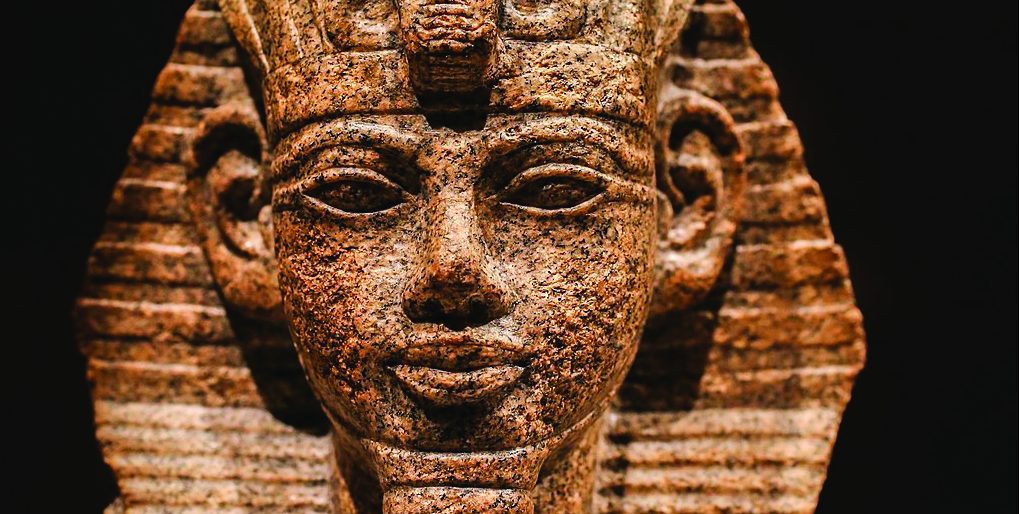
Tuthmosis IV left his son an empire of immense size, wealth, and power: the 18th Dynasty of Egypt.
At 12 years old, Amenhotep III (c. 1386–1353 BCE) came to the throne and married Tiye in a royal ceremony. Tiye, who was among several of Amenhotep’s wives, would bear seven children. However, immediately after the marriage she became the one—the great royal wife, an honor that her own mother-in-law never held. Tiye could then outrank her in courtly matters.
Although Amenhotep and Tiye were by today’s standards still in their youth, Egypt’s wealthy and powerful often ruled at an early age. According to Egyptologist Zahi Hawass, “Amenhotep III was born into a world where Egypt reigned supreme. Its coffers were filled with gold, and its vassals bowed down before the mighty rulers of the Two Lands [Egypt].”
After his marriage to Tiye, Amenhotep continued his father’s work in implementing new building programs throughout Egypt. During his reign, he ordered the construction of more than 250 buildings, temples, and stone slabs erected as monuments. All were immense in size and boasted intricate details. Today, the statues known as the Colossi of Memnon, are all that is left of Amenhotep III’s mortuary temple. According to historians, Amenhotep envisioned an “Egypt so splendid that it would leave one in awe.”

A master of diplomacy, Amenhotep placed surrounding nations in his debt by giving them gold. Doing so encouraged loyalty and made them followers. These relationships soon grew profitable and his generosity to friendly kings became well established.
Amenhotep was known for his hunting skills which were noted in inscriptions: “the total number of lions killed by His Majesty with his own arrows, from the first to the tenth year [of his reign] was 102 wild lions.” He was also an adept military leader. Some historians say that he “probably fought, or directed his military commanders, in one campaign in Nubia and he had inscriptions made to commemorate that expedition.”
Many foreign rulers wanted Amenhotep to provide them Egyptian wives. Respecting the women of his land, he swore that “no daughter of Egypt had ever been sent to a foreign land and would not be sent under his reign.”
Amenhotep was also humble in his practice of the ancient Egyptian religion, which proved to be the foundation for his interest in the arts as well as construction. His greatest contribution to Egyptian culture was his ability to maintain peace and prosperity, which enabled him to devote his time to the arts.
Amenhotep suffered from severe dental problems, arthritis, and possibly obesity in his later years. After ruling Egypt for 38 years, he died in 1353 BCE.
Letters penned by foreign rulers expressed their grief and condolences to Queen Tiye. The letters confirmed that these monarchs hoped to continue the same good relations with Egypt under the new king as they had with Amenhotep III. With Amenhotep’s passing, his son, then called Amenhotep IV, began his reign.










Activism
Oakland Post: Week of March 18 – 24, 2026
The printed Weekly Edition of the Oakland Post: Week of March 18 – 24, 2026


To enlarge your view of this issue, use the slider, magnifying glass icon or full page icon in the lower right corner of the browser window.

Activism
Oakland Post: Week of March 11 -17, 2026
The printed Weekly Edition of the Oakland Post: Week of March 11 – 17, 2026

To enlarge your view of this issue, use the slider, magnifying glass icon or full page icon in the lower right corner of the browser window.
Activism
Oakland Post: Week of March 4 – 10, 2026
The printed Weekly Edition of the Oakland Post: Week of March 4 – 10, 2026

To enlarge your view of this issue, use the slider, magnifying glass icon or full page icon in the lower right corner of the browser window.

WORK FROM HOME
Home-based business with potential monthly income of $10K+ per month. A proven training system and website provided to maximize business effectiveness. Perfect job to earn side and primary income. Contact Lynne for more details: Lynne4npusa@gmail.com 800-334-0540


Black Artists in America, Installation Three Wraps at the Dixon Gallery and Gardens

Grief, Advocacy, and Education: A Counselor Reflects on Black Maternal Health

Future of Florida’s Black History Museum in Limbo

New Research Shows the Many Benefits of Early Learning

South Hampton K-8 Students Among Top 10 Finalists for Samsung’s ‘Solve for Tomorrow’ Competition

Cuba: No Negotiation with US on the President or Political System

Brooklyn Academy of Music Names Jamaican-Born Tamara McCaw as President

Trinidad & Tobego – U.S. Launches WhatsApp Channel for American Citizens in the Country

Oakland Post: Week of March 18 – 24, 2026

AI Innovation vs. Ethics and Environmental Impact

AI, Web3, and Digital Reparations

What If You Owned Your AI Agent?

Season 7, Episode 3 – January Reporter’s Roundtable 📱

Season 7, Episode 3 – January Reporter’s Roundtable

AI, Media, and Power | Part 2, Real-World Impacts and Tradeoffs

Oakland Post: Week of February 11 – 17, 2026

Reflecting on Black History Milestones in Birmingham AL

CITY OF SAN LEANDRO STATE OF CALIFORNIA PUBLIC WORKS DEPARTMENT ENGINEERING DIVISION NOTICE TO BIDDERS FOR ANNUAL STREET OVERLAY/REHABILITATION 2019-21 – PHASE III

Oakland Post: Week of February 18 – 24, 2026

PRESS ROOM: NBA Hall of Fame Nominee Terry Cummings Joins 100 Black Men of DeKalb County to Launch Victory & Values Initiative

Oakland Post: Week of February 25 – March 3, 2026

Trump’s MAGA Allies are Creating Executive Order Plan to Steal the 2026 Midterms

U.S. manufacturing rebounds – how foundry services are adapting to rising demand

OP-ED: One Hundred Years of Black Workers Telling the Truth

Advancements in solar technology that are changing the way we power the world

Chase Oakland Community Center Hosts Alley-Oop Accelerator Building Community and Opportunity for Bay Area Entrepreneurs

Poll Shows Support for Policies That Help Families Afford Child Care

Oakland Post: Week of March 4 – 10, 2026

PRESS ROOM: Civil Rights TV Launches in Selma as the World’s First 24/7 Civil Rights Television Network

Woman’s Search for Family’s Roots Leads to Ancestor John T. Ward – A Successful Entrepreneur and Conductor on the Underground Railroad

Hyundai Ioniq 5 Parking, Safety, and 360 View #shorts

2025 Ioniq 5 New Wiper & Powerful Performance! #shorts

Electric SUV Range: Is 259 Miles Enough? #shorts

EV Charging: How Fast Can You Charge an Electric Vehicle? #shorts

Biometric Cooling… Messaging Seats…Come on! 2025 Infiniti QX80 Autograph 4WD

Charged Up: Witness the Magic of a Fully Electric Car! #shorts

Range Rover Sport PHEV Included…: See What’s Inside This Luxury SUV! #shorts

Invisible Hood View: Perfect Parking with X-Ray Vision! #shorts

AI Is Reshaping Black Healthcare: Promise, Peril, and the Push for Improved Results in California

ESSAY: Technology and Medicine, a Primary Care Point of View

Sanctuary Cities

The RESISTANCE – FREEDOM NOW

STATE OF THE PEOPLE: Freddie

ECONOMIC BOYCOTT DAY!!!!!

I told You So

-
 #NNPA BlackPress4 weeks ago
Poll Shows Support for Policies That Help Families Afford Child Care
-
 Activism4 weeks ago
Oakland Post: Week of March 4 – 10, 2026
-
 #NNPA BlackPress3 weeks ago
Woman’s Search for Family’s Roots Leads to Ancestor John T. Ward – A Successful Entrepreneur and Conductor on the Underground Railroad
-

 #NNPA BlackPress4 weeks ago
OP-ED: NNPA Launches 2026 “Leadership Matters” Video Series
-

 #NNPA BlackPress3 weeks ago
Advocates Raise Alarm Over ICE Operation, MOU and Detention Risks in Baltimore County
-

 #NNPA BlackPress3 weeks ago
COMMENTARY: Women of Color Shape Our Past and Future
-

 #NNPA BlackPress3 weeks ago
Pete Buttigieg to Join Mayor Randall Woodfin for Community Town Hall in Birmingham
-

 Activism2 weeks ago
Oakland Post: Week of March 11 -17, 2026
