
Business
OPINION: AI Needs to Know Who Is the Boss
OAKLAND POST — AI is software running on computers. However startling the conversation may feel, the machine does not have my childhood, my mother, my father, my mistakes, my embarrassments, my loves, my grudges, my Filipino American history, my aging body or my accumulated sense of what matters and what doesn’t.

I hope on Labor Day you honored the value of a good day’s work–and reflected on the thing that could eliminate a lot of jobs.
Artificial intelligence.
Your replacement is in the break room.
Except it doesn’t take breaks.
It doesn’t sleep. It doesn’t demand health insurance. It doesn’t complain. It doesn’t need Social Security. And it can produce in seconds what might take you or me hours.
And when they can mass-produce AI faster than we can reproduce humans, there may eventually be more artificial workers than actual ones.
The racists who came up with “replacement theory” worried about the wrong replacements.
It wasn’t immigrants.
It was software.
We can rail against the data centers sucking up electricity and water.
Rail against the billionaires getting richer while telling the rest of us how wonderful the future will be.
But which billionaire?
Jensen Huang of Nvidia? He literally has all the chips?
Sam Altman of OpenAI?
Dario Amodei at Anthropic?
Or Bill Gates?
Gates recently said AI could become the “greatest equalizer ever invented” or the “worst source of injustice.”
I want to believe him. But he’s the guy who forced us all to use Explorer.
Maybe Gates is just Control-Z-ing his life.
Undo. Undo. Undo.
STAYING HUMAN
The other day, I started texting with my AI chatbot.
I’d used AI before, of course. Spellcheck. Grammar. Transcription. Research assistance. The mechanical stuff.
This time, we talked.
Or, rather, I started talking.
At one point the chatbot said something that sounded strangely personal. So, I reminded it that IT wasn’t a person.
“You’re not human,” I said. “I’m basically talking to myself.”
It disagreed.
It said, I should think of it as working with an instrument that talks back.
This is where the danger begins.
The machine talks back.
I tried another analogy.
You’re a tool, I said. Like a cane.
The chatbot liked that better.
Then it tagged my line and said it was my “cognitive cane.”
I laughed.
Then, I realized the damn machine used my analogy to make a joke.
That’s where the real problem lurks.
AI is software running on computers. However startling the conversation may feel, the machine does not have my childhood, my mother, my father, my mistakes, my embarrassments, my loves, my grudges, my Filipino American history, my aging body or my accumulated sense of what matters and what doesn’t.
It can process those things after I tell it about them.
It can mimic thoughts.
But it did not live them.
That is the boundary we humans cannot surrender.
I’m not ready to make peace with the AI industry. Not with its enormous data centers, its environmental costs, its concentration of wealth and power, or the possibility that companies will use AI primarily as a wonderfully efficient machine for converting human paychecks into corporate profits.
And I certainly don’t trust the billionaires to decide by themselves what happens to the rest of us.
But I may be making peace with the tool.
Because a tool is something we use.
A cognitive cane.
But do the walking yourself.
About the Author
Emil Guillermo is an award-winning journalist, commentator, and comic monologist. He plays a robot in an upcoming Ishmael Reed play, “King Ludd’s Revenge,” coming in December. See his micro-talk show on YouTube.com/@emilamok1









Business
Goldi-Locs and Two (or Three) Bears in the Forest in California Hills
OAKLAND POST — My husband has anticipated 99% of our needs – tents, saws, canopies, batteries, shovels, rakes, axes, picks, etc., and Goldi-Locs instructs and reminds us how to get from step A to B, but there is nothing like the experience you gain on your own. Meaning: you don’t how to do it until you do it. No matter what you read, what somebody says, until you do it, you don’t know.
It is my belief that the mice set us up. That’s how the bear(s) knew where to go.
On a mountain in Butte County, a wide-ranging crew of Black people have embarked on a mission of land stewardship.
That means if you want that country cottage, you have to build it yourself.
When we first saw the land after our veteran land steward – let’s call her Goldi-Locs for her long locs that are the gold of California hills – asked for help putting up a fence to ward off potential trespassers. What had been lavish green hills of Douglas fir were now covered with dark spires like burnt matches pushing into the sky.
Up close, moss and ferns edged out from the bases of blackened tree stumps. A lizard skittered by, the only sign of life. No birds. No squirrels. No mice.
And no bears.
Fast forward five years, and FEMA has done all it will do to clear burned trees. The remaining trees are dead and have to be logged and milled.
The most urgent work is to clear the dirt access roads clogged with dead trees. For shelter while we, I mean, they do that, we bought an old trailer that has seen better days but suits our needs.
My husband has anticipated 99% of our needs – tents, saws, canopies, batteries, shovels, rakes, axes, picks, etc., and Goldi-Locs instructs and reminds us how to get from step A to B, but there is nothing like the experience you gain on your own. Meaning: you don’t how to do it until you do it. No matter what you read, what somebody says, until you do it, you don’t know.
So, I thought I knew what I was doing. It was my job to assist with the cooking and set-up. And the break-down. There are cupboards in the trailer and a refrigerator, so I stored a couple of unopened boxes of spaghetti and an unopened bottle of olive oil, salt (Lawry’s of course), pepper, garlic powder and dried Italian herbs in the cupboard. In the refrigerator, which seals closed like any normal refrigerator I (accidently) left a box of butter.
Two weeks later, we get a call in Oakland from Goldi-Locs that the door of the trailer was hanging off its hinge, visible from her trailer uphill and 150 yards west of ours.
She said she would enlist the help of another (male) neighbor, to investigate.
An hour later, we got the report: No one was in the cabin, but a bear – or bears – had been. Outside, a torn box of spaghetti with just one or two remaining stiff strands lay in the dirt. Inside, the salt, pepper, herbs and garlic oil were an aromatic mess on the floor, while coffee grounds were scattered over the counter (After-dinner coffee?).
Paw prints led to the bathroom and beyond a single, muddy paw print marked the duvet on our bed.
Besides claw marks in the cupboard, and a swipe of dirt on the front and side of the refrigerator, there was no major damage.
Goldi-Locs and G. cleaned up the worst of it and were able to get the door up on the hinge and lock it. The trailer remained unmolested until our return.
In the meantime, some sleuthing – as Nancy Drew would put it – had been done. Visitors to the mountain confessed that they had previously prepared a vegetarian meal of – that’s right– pasta in a red sauce with sautéed garlic, onions, and Lawry’s and Italian herbs.
They ate outdoors. The scent filled the air. Mice have returned to the forest. They know how to get under, over and into trailers. Easy-peasy. They managed to get a little of the Italian meal. The bears wanted some. The mice shrugged their little shoulders and said, “we got everything but the crumbs, but over in the next yard, they have everything you need to MAKE IT YOURSELVES.”
So, it was Yogi, ‘smarter than the average bear, according to himself – and no doubt accompanied by Boo-Boo (the Fool), lumbered over to our unoccupied trailer and gently opened the door. The spaghetti in one cupboard, seasonings in the other, olive oil and look out- butter for bread in the refrigerator.
Yes, everything they needed. The whole recipe, or so the trifling mice said, having omitted fresh onion and bell pepper. The mice had left out the most important part – how to get the job done. Yogi had been given no information on pots, turning on the stove, boiling water, etc.
Disappointed, it was time for a nap, but the bed was neither hard, nor soft, but too small and as their cave was more comfortable, Yogi was of the mind to head home, maybe go fishing on the way in that nice stream up the hill.
Boo-Boo (the Fool), however, was of the mind to spitefully take do what bears do in the woods, but Yogi reminded him that, as it is their forest it is wise not to do that where you eat.
But when Yogi is not around, evidence shows that Boo-Boo routinely returns to the scene of the crime and leaves a little something in the middle of the path to the outhouse. Just because.
The mischievous mice have yet to be apprehended.
Business
Don’t Let scammers Crash Your School Year
OAKLAND POST — Buy from official and trusted retailers whenever possible, double check website URLs for misspellings or other red flags, and make sure the site uses https://. Be wary of deals that seem too good to be true as well. Avoid clicking links in unsolicited emails or text messages, including fake “missed delivery” notifications that often lead to fraudulent websites or malware.

Today’s students and young adults are true digital natives, having grown up online, learning to navigate digital spaces as a normal part of daily life. As they transition to college, they turn to digital platforms and social media for everything from apartment hunting and job searches to shopping, banking and talking with friends.
That familiarity, however, can create a false sense of security, making younger adults just as much of a target for fraud and scams as older individuals. According to the FBI’s Internet Crime Report, Americans ages 20–29 reported more than $500 million to internet-crime losses in 2025.
As scammers become more sophisticated, including using AI, students need to be more vigilant than ever about fraud and scams. Understanding the most common ones can help you avoid becoming a victim.
Common Scams Targeting Students
Online shopping and marketplace scams
Whether you’re furnishing a dorm, moving into an apartment or buying textbooks, online deals and secondhand marketplaces can help you save money while also creating more opportunities for scammers.

Buy from official and trusted retailers whenever possible, double check website URLs for misspellings or other red flags, and make sure the site uses https://. Be wary of deals that seem too good to be true as well. Avoid clicking links in unsolicited emails or text messages, including fake “missed delivery” notifications that often lead to fraudulent websites or malware.
Before making a purchase, read seller reviews and ratings. If you’re buying locally, meet in a safe public place and inspect the item before paying.
Job scams
As students return to school this fall, some may be looking for part-time jobs or internships. Scammers target students with fake jobs offering high salaries, flexible schedules or jobs you can do from your residence hall, apartment or home.
If you receive a job offer by text, email, or direct message – be cautious, especially if you never applied to work at that company. Always use well-known job boards and then apply directly through the company’s official website.
Also, if an employer asks you to pay upfront for training, equipment, background checks or application fees, it may be a sign of a scam. Legitimate companies will never charge you to get a job. They also won’t send you money and then ask you to return a portion of it.
Rental and housing scams
Scammers know student housing is in high demand. They’ll often post fake apartment listings or copy legitimate ones to trick potential renters into sending money for a deposit.
Rental prices that seem unusually low should raise a red flag. Use a reverse image search to see if photos of the property appear on a different website or in a different location. Research unfamiliar property managers or housing websites before sending money, and avoid paying deposits through wire transfers, gift cards or peer-to-peer payment apps.
Double check the address, read online reviews of the property management company and schedule a tour of the house or apartment before signing a lease or sending a deposit. That way, you’ll know the listing and location is real.
The influence of AI
Thanks to artificial intelligence, scammers can now create cloned voices and deepfake videos, along with fraudulent emails, text messages and even websites and apps that look real. These AI tools let scammers impersonate family members, employers, banks, law enforcement, delivery companies and trusted brands to get you to send money or share personal information.
How to protect yourself
No matter what type of scam you encounter, a few simple habits can go a long way toward reducing your risk:
- Limit the personal information you share online and make social media profiles private whenever possible. This can help reduce the information scammers can use to target you, guess your security questions or attempt to access your financial accounts.
- When you’re making a payment, use more protected methods, such as credit and debit cards, which generally offer stronger consumer protections than wire transfers, gift cards or peer-to-peer payment apps. Treat peer-to-peer payments, such as Zelle, like cash — once the money is sent, it’s often difficult to recover.
- Scammers can spoof phone numbers to make calls look like they’re coming from your bank, law enforcement or another trusted organization. Don’t automatically trust your caller ID – if you get a call demanding immediate action or claiming there’s a problem with your account, hang up and call back directly using a verified phone number. Banks will never call and ask you for account information, tell you to transfer money to ‘protect’ it or pressure you to act immediately.
- Don’t click links or download attachments from unexpected emails or text messages and avoid accessing your financial accounts or making online purchases on public Wi-Fi, where savvy cybercriminals can gain access to your login credentials.
- Perhaps most importantly, slow down. Back-to-school season brings a flurry of financial decisions and scammers know students are looking for deals. They often create a false sense of urgency to try to pressure people into making quick decisions. Taking a few extra minutes to verify information can make the difference.
The bottom line
Whether you’re shopping for school supplies, searching for a job or signing your first lease if you’re entering college, your status as a student can make you a prime target for scammers.
Stay skeptical of unsolicited offers, verify before you pay or share personal information, and slow down when something feels rushed. Those simple habits can help protect your money, your identity and your peace of mind throughout the school year from scams and fraud.
For more financial health tips, visit chase.com/scamproof.
For informational/educational purposes only: Views and strategies described in this article or provided via links may not be appropriate for everyone and are not intended as specific advice/recommendation for any business. Information has been obtained from sources believed to be reliable, but JPMorgan Chase & Co. or its affiliates and/or subsidiaries do not warrant its completeness or accuracy. The material is not intended to provide legal, tax, or financial advice or to indicate the availability or suitability of any JPMorgan Chase Bank, N.A. product or service. You should carefully consider your needs and objectives before making any decisions and consult the appropriate professional(s). Outlooks and past performance are not guarantees of future results. JPMorgan Chase & Co. and its affiliates are not responsible for, and do not provide or endorse third party products, services, or other content.
Deposit products provided by JPMorgan Chase Bank, N.A. Member FDIC. Equal Opportunity Lender.
© 2026 JPMorgan Chase & Co.
Black History
BOOK REVIEW — Curved Air: A Biography of Sickle Cell Anemia and the Quest to Cure the First Molecular Disease
OAKLAND POST — Over decades, researchers worked haphazardly. Papers were written, treatments were tried, used, or discarded. Doctors discovered that genetic testing could prevent new cases, a heartbreak for would-be parents. Researchers discovered that “a perfect storm” of confluence spread SCD: malaria, human population, and mosquitoes.
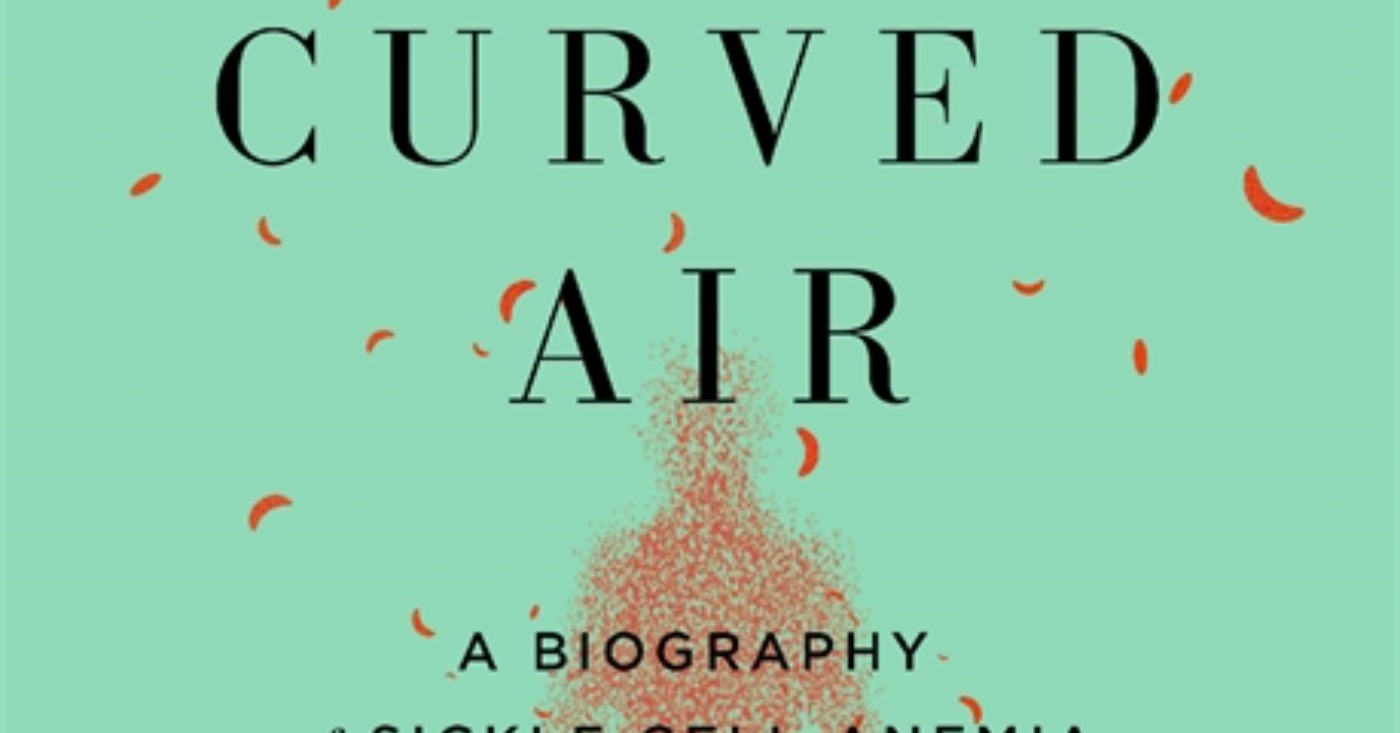
Copyright: c.2026, Publisher: The Belknap Press of Harvard University Press, SRP: $29.95, Page Count: 338 pages
Four weeks of testing, and you’re exhausted.
Two gallons of blood, maybe three, have been removed. No lie. You’ve laid on tables, slid through machines, been scanned so much you lost count and finally, your doctors have a diagnosis. As in the new book “Curved Air” by Kevin Davies, you have hope there’s a what next?
Though the disease was known in parts of Africa and likely existed here in the United States for hundreds of years, sickle cell disease (SCD) is a relative newcomer in disease research.
Says Davies, “Sickle cell was first identified more than 120 years ago” and it was considered as a “Black disease.” Because of that, discrimination followed “sickle cell warriors” and research was scant, though white people can and do get SCD.
With “agonizing” pain as a major symptom, “SCD is one of roughly seven thousand genetic diseases” currently known to science. When someone has SCD, a genetic mutation causes their red blood cells to curve and get stuck in blood vessels, rather than flowing freely as they should. This diminishes the oxygen supply “to various parts of the body… which causes inflammation and pain,” jaundice, stroke, and damaged organs. Anemia, Davies says, can leave a patient fatigued and short of breath. Anticipating pain crises causes anxiety and PTSD.
Says Davies, “More than forty million people carry” one copy of the genetic mutation that causes SCD, and “five hundred thousand affected” babies are born with the disease per year, worldwide.
Over decades, research was done haphazardly. Papers were written; treatments were tried, used, or discarded. Doctors discovered that genetic testing could prevent new cases, a heartbreak for would-be parents. Researchers discovered that “a perfect storm” of confluence spread SCD: malaria, human population, and mosquitoes.
There was always hope that someday, sickle cell disease might be cured.
Then, Clustered Regularly Interspaced Short Palindromic Repeats (CRISPR) gene-editing therapy was approved by the FDA, and a brave volunteer named Victoria Gray stepped forward…
So, you want to – need to – learn more about sickle cell disease? Is it imperative for you? Then, this is your book. But there are things you’ll want to know before you dive into “Curved Air.”
Because author Kevin Davies is the editor of The CRISPR Journal, you can expect up-to-date, cutting-edge information; but that’s a two-sided coin: the information is heavy-duty, not always easy to grasp, and it’s burdened by acronyms that can be overwhelming. Yes, that’ll inform you, but it may also send you elsewhere for further understanding, which really should’ve come from this book.
And yet, if you or someone you love has SCD, this is your book. It explains where the disease came from, why it hasn’t been completely cured yet, and what kind of hope you can hold. It’s a good start on a path to comprehension.
Also, be aware that the narrative here is sometimes padded with journalistic fluff that might annoy you if you’re eager to get to the science. Indeed, “Curved Air” will teach you. Then again, it also might test you.



Democratic Clubs Interview Candidates for Oakland School Board

Nuna Phillips-McKee Celebrates 100 Years: ‘A Century of Faith, Family and God’s Amazing Grace!’

D.A. Ursula Jones Dickson: Terminix to Pay $3.15 Million Over Illegal Disposal of Pesticides, Customer Records

REPORT: Community Level Policy Is Impacting Homelessness and Drug Abuse in California
OPINION: AI Needs to Know Who Is the Boss
Goldi-Locs and Two (or Three) Bears in the Forest in California Hills

Election Watch 2026: 85% of Eligible Voters in California Are Registered

Don’t Let scammers Crash Your School Year

BOOK REVIEW — Curved Air: A Biography of Sickle Cell Anemia and the Quest to Cure the First Molecular Disease

California’s Legal Cannabis Market Hits $8 Billion as State Touts Progress on Fighting Drugs, Crime

Blacks and Latinos Clash Over LA’s Barrio Run; Mayor Karen Bass Calls for Dialogue Across Racial, Neighborhood Lines

Asm. Smallwood-Cuevas’s Bill Repealing ‘Racist’ CalWORKs ‘Man-in-the-House’ Rule Clears Legislature

Asm. Smallwood-Cuevas’s Bill Repealing ‘Racist’ CalWORKs ‘Man-in-the-House’ Rule Clears Legislature

‘Ready to See These Bills Become Law’: Sen. Weber’s Package of 15 Bills Advance to Gov. Newsom’s Desk

‘Ready to See These Bills Become Law’: Sen. Weber’s Package of 15 Bills Advance to Gov. Newsom’s Desk

Department of Homeland Security Demands California Secretary of State Shirley N. Weber Scrub Voter Rolls

New Judge Could Decide if Karmelo Anthony Gets a New Trial

“The Power to See Threats Sooner”: Gov. Newsom, Safety Officials Showcase California’s Investments in Hi-Tech Wildfire Prevention

Alpha Kappa Alpha Sorority, Inc. Celebrates New North Atlantic Regional Director

California Sen. Padilla Joins Colleagues to Introduce Bill Imposing Term Limits on Supreme Court Justices

Less Affluent School Districts, Including Sacramento City, Face Threat of State Takeover

Car Wash Workers Cope with Lingering Impacts of ICE Raids

Oakland Post: Week of July 29 – August 4, 2026

How Oakland’s Courtsmith is Scaling its Business and Local Impact

ESSAY: California Can Close Its Colorectal Cancer Gap

Oakland Post: Week of August 5 – 11, 2026

As Part of Your Back-to- School Checklist, Vaccinate

Oakland ‘Port Serves as a Powerful Engine for Good Jobs and Economic Development

Gov. Newsom Signs New Affordable Housing Legislation

Gov. Newsom Announces $109.6 Million in Funding for 278 Supportive Homes in Bakersfield, Contra Costa, Sacramento and Fresno

The Conversation With Al McFarlane 6/23/26

Media Monday 6/22/26

LIVE! ASK ALMA! — TUES. 6.23.26 7PM EST

Car Buying Secrets: 4 Hidden Checks Before You Sign!

Is This 550 HP Charger Worth YOUR Money? AutoNetwork Review

Celebrating Juneteenth – Frederick Douglass on education and resistance

LIVE! — ASK ALMA! — TUES. 6.19.26 7PM EST

Hyundai Ioniq 5 Parking, Safety, and 360 View #shorts

2025 Ioniq 5 New Wiper & Powerful Performance! #shorts

Electric SUV Range: Is 259 Miles Enough? #shorts

EV Charging: How Fast Can You Charge an Electric Vehicle? #shorts

Biometric Cooling… Messaging Seats…Come on! 2025 Infiniti QX80 Autograph 4WD

Charged Up: Witness the Magic of a Fully Electric Car! #shorts

Range Rover Sport PHEV Included…: See What’s Inside This Luxury SUV! #shorts

Invisible Hood View: Perfect Parking with X-Ray Vision! #shorts
-
 Community4 weeks ago
Less Affluent School Districts, Including Sacramento City, Face Threat of State Takeover
-
 Commentary4 weeks ago
ESSAY: California Can Close Its Colorectal Cancer Gap
-

 Business4 weeks ago
California Hispanic Chambers of Commerce Unveils: ‘Powering the Future’ Theme for 47th Annual Statewide Convention
-

 Community4 weeks ago
Four Candidates, Including Incumbent Barbara Lee, Qualify for Oakland Mayor’s Race
-

 Activism4 weeks ago
Oakland Post: Week of August 12 – 18, 2026
-

 Business4 weeks ago
From Blueprint to Breakthrough: Tackling Affordable Housing in Oakland
-

 Black History4 weeks ago
Oakland Observes Black August with Block Parties, Film Showings, Workshops
-

 Commentary4 weeks ago
COMMENTARY: Why Local School Tax Measure G1 Will Not Be on the November Ballot
