
Featured
Community Feedback at Chevron Richmond Town Halls Drives Changes
OAKLAND POST — Over the past two years, public input has produced changes across transparency, communication, safety, and local funding. To improve transparency, Chevron Richmond expanded public air monitoring access with downloadable records and quarterly reports, updated their website, posted regular notices on Facebook to keep residents informed about operations, and attended six Neighborhood Council meetings to answer community questions directly.

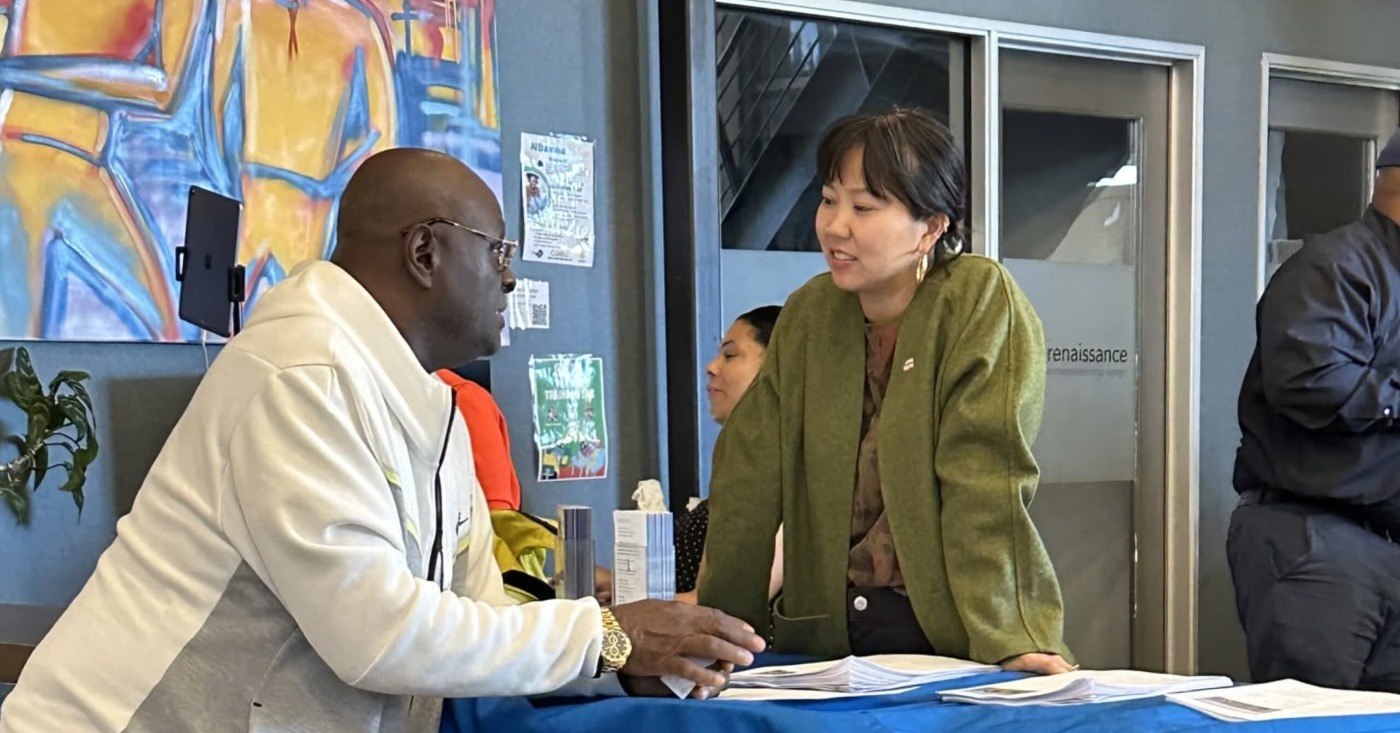
A town hall on Wednesday, Sept. 16, will review two years of community-driven changes at Chevron Richmond, including expanded air monitoring information, improved emergency preparedness, and new investments in neighborhood health and safety programs.
The Community Action Plan (CAP) Town Hall, hosted by CERES Policy Research and Chevron Richmond, takes place from 6 to 8:30 p.m. at CoBiz Richmond, 1503 Macdonald Ave., Suite A. The CAP process stems from a 2024 agreement between Chevron Richmond and the Bay Area Air District over Regulation 6, Rule 5, providing an ongoing public forum on operations, air quality, flaring, and safety.
A centerpiece of the meeting will be a “You Asked, We Listened” presentation highlighting community requests, resulting actions, and future plans.
Over the past two years, public input has produced changes across transparency, communication, safety, and local funding. To improve transparency, Chevron Richmond expanded public air monitoring access with downloadable records and quarterly reports, updated their website, posted regular notices on Facebook to keep residents informed about operations, and attended six Neighborhood Council meetings to answer community questions directly.
Communication improvements include expanded Spanish translation for mailed newsletters, meetings, and flaring information; the air monitoring website, richmondairmonitoring.org, can now be changed to Spanish using the toggle in the upper right corner. On that same website, Chevron Richmond simplified complex air data using plain-language explanations of chemicals and health effects, color-coded charts, video guides, workshops, and wider promotion across local media and neighborhood groups.
Emergency readiness efforts led Chevron Richmond to partner with Contra Costa County and Community Awareness and Emergency Response (CAER) to boost sign-ups for the Community Warning System, and to bring CAER staff to community events to walk residents through alert tools.
Resident input also directed money into local neighborhoods via a dedicated Community Resilience Funding stream. Grants have supported LifeLong Medical Care health promoters for in-home asthma assessments, MCE Home Energy Savings home retrofits to improve indoor air quality, and the American Red Cross Sound the Alarm program to install smoke alarms near the facility.
The Sept. 16 agenda also feature a “Flaring 101” presentation, an emergency response briefing, Chevron Richmond updates, and an open public question-and-answer session.
The event is free and open to the public, with free food available beginning at 6 p.m. Residents can register through Eventbrite. Spanish and American Sign Language services are available upon request; email klynch@cerespolicyresearch.com at least 72 hours before the event. Chevron Richmond has more information available.



Commentary
Alameda County DA Sees Gun Violence Greatest Threat to Black Community
OAKLAND POST — “One person can affect policy that changes the office,” Jones Dickson said. For her, one of the most urgent priorities is gun violence, an issue she says has deeply affected Black communities for generations. “Gun violence has always been a (concern) in the Black community,” she said. “We all have a visceral reaction to a helicopter because it often means there has been a chase or gun violence.”

Victims’ rights are also a priority for Ursula Jones Dickson
“I don’t like it when people say ‘my office.’ It doesn’t belong to me. It belongs to the people.”
That philosophy is at the heart of Ursula Jones Dickson’s approach to leading the Alameda County District Attorney’s Office. Asked whether one person can rebuild an office that has experienced years of change, disruption and a massive backlog of cases, she said the answer is ‘yes,’ but only with time, focus and a willingness to change priorities.
“One person can affect policy that changes the office,” Jones Dickson said.
For her, one of the most urgent priorities is gun violence, an issue she says has deeply affected Black communities for generations.
“Gun violence has always been a concern in the Black community,” she said. “We all have a visceral reaction to a helicopter because it often means there has been a chase or gun violence.”
Jones Dickson said gun violence is personal to her because it has hurt both her and her community. “I take it personally,” she said.
She worries that America, and particularly its young people, are becoming desensitized to violence. School shootings and repeated lockdowns are leaving children with experiences previous generations never imagined.
“We can’t act like this isn’t affecting our children,” she said. “When schools become places where shootings take place, they are affected in a different way.”
She believes the community has become dangerously accustomed to guns and violence.
“We have to stop normalizing guns,” she said. “We have so many guns and so many people with guns.”
Perhaps one of the most disturbing changes she sees is the way ordinary disagreements can now become deadly.
“Nobody fights anymore,” she said. “They kill.”
Jones Dickson said the question communities must ask themselves is: “When gun violence becomes a part of the community, how many vigils and how many marches can we stand?”
At the same time, she is determined that victims’ voices will not be lost in the criminal justice system.
“I sit with victims on a regular basis,” she said. “There isn’t a week that goes by that I don’t sit down with a victim’s family and hear them ask why a case has not been charged.”
Victims often need far more than updates about a court case. They need assistance navigating the criminal justice system, counseling, burial assistance and, sometimes, simply someone to sit with them during one of the most painful moments of their lives.
“Victims’ rights have been pushed aside,” Jones Dickson said. “What I want to leave to this office is that victims’ voices will be heard. I don’t care whose toes I step on. Victims will be heard.”
The challenge, however, is enormous. Her legacy is to help victims feel seen and protected.
The office is working through a significant backlog of serious cases while trying to rebuild an experienced, well-trained staff. Jones Dickson said years of disruption, including the impact of COVID and frequent leadership changes, left attorneys needing additional training and contributed to delays.
“There have been three district attorneys in four years,” she said. “Every district attorney wants to build their own culture.”
Her goal is to create a stable office with skilled prosecutors who understand their responsibilities and can move cases through the courts. She emphasized that the work is not simply about winning cases.
“It is our job to prove a case beyond a reasonable doubt,” she said. “Just because law enforcement brings us a case doesn’t mean we can prove it.”
Jones Dickson also believes rebuilding public safety requires rebuilding relationships between law enforcement and the community.
Residents have told her they sometimes see police cars drive through their neighborhoods without officers getting out and speaking to residents.
“When police are in neighborhoods and stop and talk to kids, there is a connection,” she said. “We need more community-based relationships.”
Community
Richmond Tiny House Village Farm & Garden Set to Open Gates on Sept. 26
OAKLAND POST — “It’s going to be a real celebration of hope and what we can do together when we come together to do something to care for the least of us,” Hindman said. “The grand opening program is youth-led, so that will be, and the ribbon cutting will be youth-led, so it’s going to have the strong presence of young people leading, as it should.”
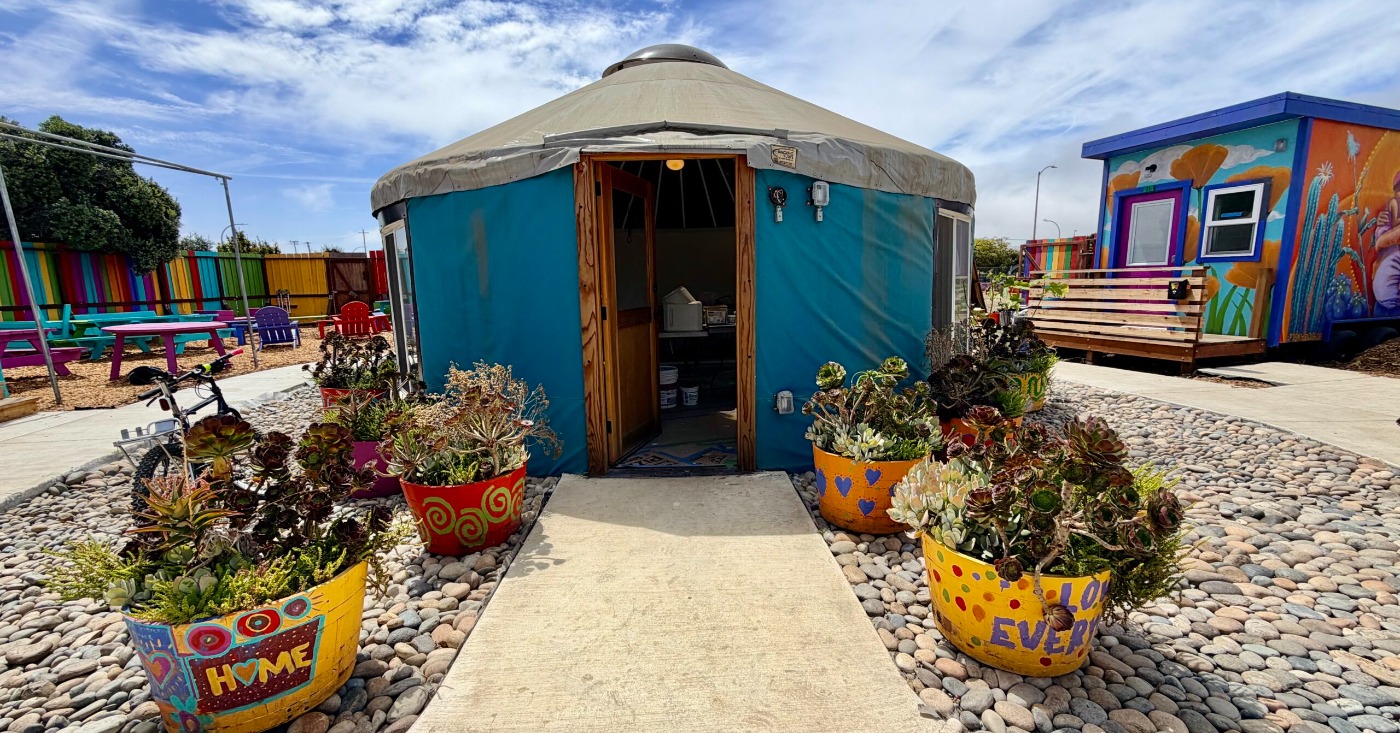
It takes a village to raise a village—especially when that village is made of tiny houses, big-hearted volunteers and a plan to shelter Richmond youth.
Now, after three years of planning, building and community muscle, the village is ready for its public debut.
The Richmond Tiny House Village Farm & Garden will mark its “Grand Opening” Saturday, Sept. 26 onsite at 2200 Bissell Ave. in Richmond, also accessible via 175 23rd St. The celebration will spotlight the new emergency housing community for unhoused Richmond youth ages 18 to 24, with a youth-powered program and ribbon cutting, clergy from multiple faith traditions offering prayers, an Indigenous prayer, an appearance by Richmond Mayor Eduardo Martinez, Councilmember Doria Robinson, leaders from partner organizations, food and live music by Benja Soul.
For Sally Hindman, executive director of the nonprofit Tiny Village Spirit, which is the project’s developer, the grand opening event is a public exhale after three years of planning, building, fundraising, listening and showing up.
“It’s going to be a real celebration of hope and what we can do together when we come together to do something to care for the least of us,” Hindman said. “The grand opening program is youth-led, so that will be, and the ribbon cutting will be youth-led, so it’s going to have the strong presence of young people leading, as it should.”
The vibrantly mural-decorated village will include 13 emergency housing units when complete, one of them for an on-site resident assistant. In keeping with neighborhood agreements, the project will open with about half of the homes occupied, then pause, evaluate and return to local Richmond Neighborhood Councils for input before adding six more youth the following year.
Hope Solutions will operate the village from day one, with staff including a resident assistant, a village manager/social worker and a housing navigator to help residents move toward affordable housing. Youth will be selected through Contra Costa County’s Coordinated Entry System, with a focus on Richmond young adults.
Hindman was clear about who the village is for: “This is a village that is for unhoused Richmond youth, ages 18 to 24, and it’s specifically for Richmond young people.” She added that the project is particularly concerned with young people pushed out by gentrification and displacement, including black and brown youth who grew up in Richmond, as well as LGBTQ young people who “really need our support.”
Each tiny house is designed as a small bedroom with the essentials: A Murphy bed that becomes a desk during the day, a chair, table, wardrobe and, in some designs, a closet. Shared community spaces include a kitchen/dining yurt, a living room/maker space yurt and a shared bathroom building with three private units, each containing a shower, sink and toilet.
The “Farm & Garden” part of the name is no add-on. Hindman said the garden will connect with Richmond Police Activities League’s (RPAL’s) Culinary Club, a program with a farm-to-table approach that uses produce grown on-site. The space will also offer education, picnics, volunteer opportunities and stipend/paid work for village residents, doubling as a job-training ground rooted in food, land and community.
“The farm and garden is going to play a really cool role in the project as a whole,” Hindman underscored.
If the village sounds stitched together by many hands, that is because it was. Hindman described the project as involving more than 3,000 volunteers (“probably 4,000,” she estimated, noting she had “kind of lost count”) from 83-plus organizations, schools, congregations, businesses and nonprofits.
Those partners and helpers include Tiny Village Spirit, RPAL, Hope Solutions, SOS Richmond, GRIP, USF Architecture, City of Richmond YouthWORKS, Rebuilding Together, Richmond Neighborhood Councils—including Richmore Village/Metro Square, North & East, Belding Woods, Coronado and Pullman—Richmond youth, Richmond High School students, Kennedy High School, Salesian High School, Richmond Indivisible, Reimagine Richmond, East Bay Heritage Quilters, First Congregational Church of Berkeley members, Strawberry Creek Friends Meeting, Temple Beth El, Ashby Village, NIAD, artist Jimmy Evans, Williams Sonoma and many individual volunteers, donors, congregations and private foundations.
Tiny Village Spirit raised most of the funding through individuals and private foundations, according to Hindman, who shared that similar villages funded primarily with government dollars can cost around $14 million. She said this village is expected to come in under $1 million because nearly all the labor was volunteer.
For more information about the Richmond Tiny House Village Farm & Garden, text 510-282-0396 or visit Tiny Village Spirit’s Richmond project page.
Community
Misnamed ‘Parent’ PAC Seeks to Influence Oakland School Board Elections
OAKLAND POST — The majority of this ‘parent’ PAC money came from two sources: a San Francisco billionaire named Michelle Boyers and the “Champions for Quality Education,” a PAC run by two long-time charter industry advocates in Oakland, Kimi Kean and Hae-Sin Thomas.
Earlier this year, two Oakland parents formed a new Political Action Committee (PAC), which they describe as an “Oakland parent-led effort working towards better public schools” focused on electing new leaders in Oakland Unified School District (OUSD) Districts 2 and 6, opposing progressive incumbents.
So far, the Parent PAC has donated to Arielle Fleisher in District 2 and Alexandra Williams in District 6.
According to the latest filing with the City of Oakland, the PAC raised a total of $45,540 but received just 12 individual contributions from Oaklanders who appear to be OUSD parents, totaling $2,100, less than 5% of the total.
Most of this ‘parent’ PAC money came from two sources: San Francisco billionaire Michelle Boyers and the “Champions for Quality Education,” a PAC run by two long-time charter industry advocates in Oakland, Kimi Kean and Hae-Sin Thomas.
Besides charter advocates, the Champions PAC was funded by real estate developers and crypto executives and was active in the 2024 District 3 election. These two contributions totaled $37,120 and, together with a $5,000 contribution from former Oakland Mayor Libby Schaaf’s failed state treasurer campaign, make up 92% of the total contributions received by this PAC.
Candidates running against the incumbents and supported by the Champions PAC favor closing more schools in Oakland, claiming in public meetings that this is the only way to balance the budget permanently. However, they have provided no evidence that school closings over the past 20 years have strengthened OUSD’s financial position or improved educational and budget conditions in other districts that have gone that route.
The current school board majority, including the incumbents in District 2, Jennifer Brouhard, and District 6, Valarie Bachelor, strongly oppose school closings.
Importantly, while many advocates of reducing the number of schools maintain that closing more schools is the road to fiscal health, almost as an article of faith, they do not examine nor even mention the consequences that follow as a result of the many schools that OUSD has already closed over the years.
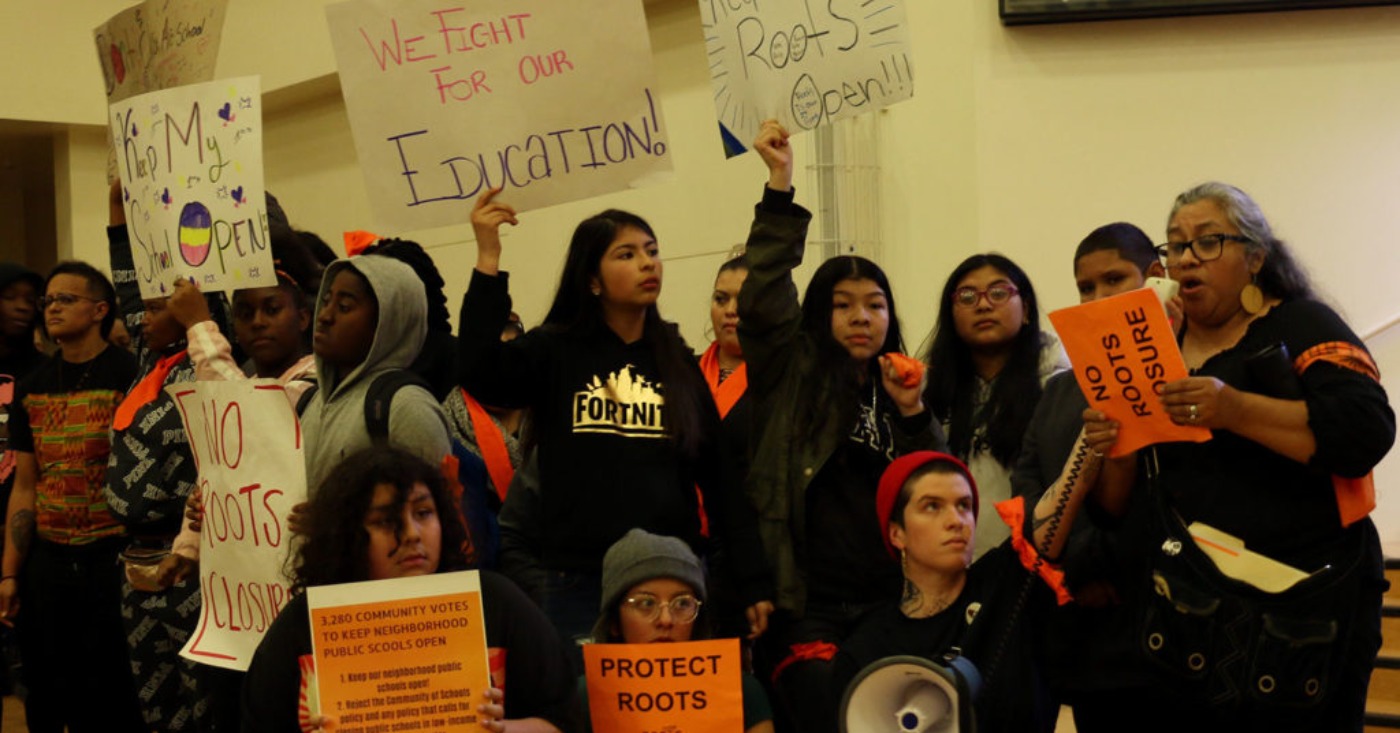
To name only a few, Oakland has lost Roots International Academy, an East Oakland middle school that was closed over broad community opposition in 2019; Lakeview Elementary School near Lake Merritt, which, despite protests, was closed in 2012; and Santa Fe Elementary in West Oakland, also closed in 2012.
Several Oakland parents have expressed concerns over the new Champions PAC and the misleading name it gave itself.
“It’s pretty disheartening to see a PAC branding itself as ‘parent-led’ when over 95% of its funding came from wealthy non-parent donors and charter-aligned PACs — before most Oakland parents even had a chance to weigh in,” said Journey Meadows.
“Our schools deserve advocates who reflect our community and truly care about our children, not a well-funded campaign to reshape the board from the outside,” she said.
Stefanie Parrott also had harsh words for PACs that push to close schools.
“It is upsetting and insulting when a parent group lobbies for the closure of someone else’s schools, especially without ever engaging actual families of the schools they want to close and without a true understanding of, or with a cruel indifference to, the devastation school closures have on poor Black and Brown communities,” she said.
“This is especially true when the parent group is funded by outside interests like charter industry leaders and out-of-town billionaires,” she continued.
“Instead of dismissing the impacted students and families, they might actually talk to us in West and East Oakland before their ‘advocacy’ harms our communities. I am an OUSD parent, and they don’t speak for me,” Parrott said.



NBA All-Star Damian Lillard Returns Home for 15th Annual Backpack Giveaway

Alameda County DA Sees Gun Violence Greatest Threat to Black Community

Richmond Tiny House Village Farm & Garden Set to Open Gates on Sept. 26

Community Feedback at Chevron Richmond Town Halls Drives Changes

Misnamed ‘Parent’ PAC Seeks to Influence Oakland School Board Elections

Revitalized East Oakland Park Honors the Legacy of Tyrone Carney, Killed in Vietnam War

Latest Massacre in Haiti Reveals Cruelty U.S. Deportations

OPINION: Nolan Wells’ Death One of Several Signifying Racial Terror Lives on in U.S. South

Oakland Post: Week of September 9 – 15, 2026

Prostate Cancer is Twice as Likely to Kill Black Men. Talking to Your Doctor Could Help Save Your Life

Oakland Post: Week of September 2 – 8, 2026

Longtime BWOPA Member Brendalyn Goodall Appointed to California Workforce Development Board

Jackie Wright Champions Bay Area Stories, Filmmakers and Cultural Institutions

Chef Sharon Lee Blends Culinary Excellence, Education and Empowerment

‘Passing a Law Isn’t The Finish Line’: California Assembly Evaluates Implementation, Results

Department of Homeland Security Demands California Secretary of State Shirley N. Weber Scrub Voter Rolls

New Judge Could Decide if Karmelo Anthony Gets a New Trial

“The Power to See Threats Sooner”: Gov. Newsom, Safety Officials Showcase California’s Investments in Hi-Tech Wildfire Prevention

Alpha Kappa Alpha Sorority, Inc. Celebrates New North Atlantic Regional Director

California Sen. Padilla Joins Colleagues to Introduce Bill Imposing Term Limits on Supreme Court Justices

Less Affluent School Districts, Including Sacramento City, Face Threat of State Takeover

Car Wash Workers Cope with Lingering Impacts of ICE Raids

COMMENTARY: You Are Already Paying for the AI Boom

California Bill Would Let Abuse Victims Use Trauma as Legal Defense for Violent Crime

Oakland Post: Week of July 29 – August 4, 2026

How Oakland’s Courtsmith is Scaling its Business and Local Impact

ESSAY: California Can Close Its Colorectal Cancer Gap

Oakland Post: Week of August 5 – 11, 2026

As Part of Your Back-to- School Checklist, Vaccinate

Oakland ‘Port Serves as a Powerful Engine for Good Jobs and Economic Development

The Conversation With Al McFarlane 6/23/26

Media Monday 6/22/26

LIVE! ASK ALMA! — TUES. 6.23.26 7PM EST

Car Buying Secrets: 4 Hidden Checks Before You Sign!

Is This 550 HP Charger Worth YOUR Money? AutoNetwork Review

Celebrating Juneteenth – Frederick Douglass on education and resistance

LIVE! — ASK ALMA! — TUES. 6.19.26 7PM EST

Hyundai Ioniq 5 Parking, Safety, and 360 View #shorts

2025 Ioniq 5 New Wiper & Powerful Performance! #shorts

Electric SUV Range: Is 259 Miles Enough? #shorts

EV Charging: How Fast Can You Charge an Electric Vehicle? #shorts

Biometric Cooling… Messaging Seats…Come on! 2025 Infiniti QX80 Autograph 4WD

Charged Up: Witness the Magic of a Fully Electric Car! #shorts

Range Rover Sport PHEV Included…: See What’s Inside This Luxury SUV! #shorts

Invisible Hood View: Perfect Parking with X-Ray Vision! #shorts
-
 Community4 weeks ago
Less Affluent School Districts, Including Sacramento City, Face Threat of State Takeover
-
 Commentary4 weeks ago
ESSAY: California Can Close Its Colorectal Cancer Gap
-
 Business4 weeks ago
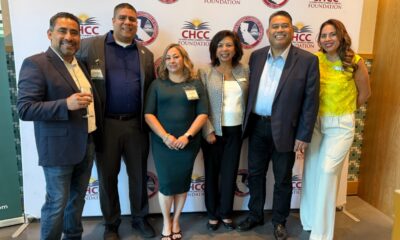
California Hispanic Chambers of Commerce Unveils: ‘Powering the Future’ Theme for 47th Annual Statewide Convention
-

 Community4 weeks ago
Four Candidates, Including Incumbent Barbara Lee, Qualify for Oakland Mayor’s Race
-

 Activism4 weeks ago
Oakland Post: Week of August 12 – 18, 2026
-

 Business4 weeks ago
From Blueprint to Breakthrough: Tackling Affordable Housing in Oakland
-

 Black History4 weeks ago
Oakland Observes Black August with Block Parties, Film Showings, Workshops
-

 Commentary4 weeks ago
COMMENTARY: Why Local School Tax Measure G1 Will Not Be on the November Ballot
