
Business
Car Wash Workers Cope with Lingering Impacts of ICE Raids
WAVE COMMUNITY NEWSPAPERS — Hundreds of car wash workers across Southern California have been detained in federal immigration raids, leaving lingering impacts on families and communities. Mario, a 33-year U.S. resident and father of three, was arrested at a Santa Ana car wash last August and held for two months.


LOS ANGELES — Mario relied on his job in the car wash industry to raise his three children. It was during a shift at a Santa Ana car wash last August that he was arrested by federal agents, taken to a U.S. Immigration and Customs Enforcement detention center and held for two months.
“They made me sleep on the cold floor for a week without a blanket, a toothbrush or basic medical care for the injured man next to me,” Mario, a 33-year resident of the United States, said at a news conference earlier this summer at Inglewood’s Crenshaw Imperial Car Wash, which is now closed after being raided by federal agents.
Mario, who is being identified only by his first name for safety reasons, is among hundreds of car wash workers detained across Southern California in the year since the Trump administration began an aggressive immigration crackdown in the region, according to the CLEAN Carwash Worker Center.
News of raids by masked agents has faded from the headlines, but the effects still linger for those caught in the crosshairs. Family members have been deported or left to languish in detention, and many who remain live with the fear of being hunted down by immigration officers.

At least 373 car wash workers have been detained at car washes across Southern California since the raids began last summer, according to figures compiled by CLEAN. The group’s data also shows federal agents raided or attempted to raid at least 106 car washes in communities across Los Angeles, Orange County and surrounding areas, including Inglewood, Culver City, Westchester, Bell and Whittier.
CLEAN, an advocacy group founded in 2007, has been fighting to protect car wash workers from exploitation and unsafe conditions. When the raids began last year, the group sprang into action, working around the clock to help detained workers and provide their families with legal and financial support.
“We gathered our information from workers, managers, and owners of the car washes that were being raided,” CLEAN Deputy Director Andrea Gonzalez said. “We also gathered information from rapid response teams who were on the ground responding to the raids.”
The Department of Homeland Security did not respond to a request for comment on the group’s findings.
Mario said he was one of seven workers at the Harbor Blvd Car Wash detained on the same day last August, but the only one who has been released. He said he refused to sign deportation papers and is fighting to stay in the United States, a process that has drained his family emotionally and financially.
“Being released is not the same as being free,” he said.
During Mario’s detention at the Adelanto ICE Processing Center, his wife and children struggled to cope with his sudden absence while fighting for his release, his wife Alejandra said.
“The employer gave us a video showing my husband being taken away under arrest, treated worse than a common criminal, with chains binding his legs, arms and waist,” Alejandra said. “It wasn’t right.”
The experience of a car wash worker named José was recounted at the news conference by the Rev. Andy Schwiebert of Immanuel Presbyterian Church in Los Angeles, who said agents “took him” from the La Cienega Car Wash last August.
José’s wife is a U.S. citizen, Schwiebert said, and José had a pathway to gaining citizenship before he was detained. By the time a judge ordered his release on bond, the car wash had shut down, Schwiebert said, leaving José without a job.
“These raids did not just target workers; they destabilized families, congregations, workplaces and entire communities,” Schwiebert said.
The administration’s aggressive enforcement operations have continued across the nation in the months since José’s and Mario’s detention, with ICE arrests in July surging to their highest rate so far under President Donald Trump.
Last month, ICE agents shot and killed Lorenzo Salgado Araujo, a 52-year-old father of three in Houston. Less than a week later, an immigration officer fatally shot 26-year-old Johan Sebastián Duran Guerrero in Biddeford, Maine.
Back in Inglewood, Mario said he was grateful to share his story and that, even though he was released, his experience in detention stays with him.
“I still feel frustrated and traumatized,” Mario said, “because my life is no longer the same as it used to be.”
Ernesto Ureño is a Loyola Marymount University journalism major and intern at Capital & Main, a nonprofit publication focused on inequality. It is published here with permission.
Based on reporting by Wave Community Newspapers.










Business
Newsom Signs Addictive Social Media Law to Protect Kids
Newsom said California’s approach focuses on the features that can encourage excessive social media use rather than taking the broader step of banning teenagers from the platforms altogether. He contrasted the measure with restrictions adopted in Australia and Malaysia that prevent teenagers from accessing social media or creating accounts.

Word Count: 391
Gov. Gavin Newsom has signed a new California law targeting addictive social media features that can keep children scrolling, giving the state new authority to restrict how platforms engage young users.
AB 1709, authored by Assemblymember Josh Lowenthal (D-Long Beach) prohibits social media companies from giving children under 16 access to personalized feeds, including “For You” pages, as well as other features designed to maximize screen time, such as infinite scrolling and video autoplay.
The law does not prevent children under 16 from using social media. Instead, platforms must deactivate the covered features for those users.
“This is about actually addressing the problem, the scrolling, the algorithms,” Newsom said Sept. 10 during a bill-signing event in the San Francisco Bay Area.
Newsom said California’s approach focuses on the features that can encourage excessive social media use rather than taking the broader step of banning teenagers from the platforms altogether. He contrasted the measure with restrictions adopted in Australia and Malaysia that prevent teenagers from accessing social media or creating accounts.
The law comes amid growing concerns about the impact of social media on children’s mental health and well-being. California lawmakers have increasingly focused on the design and business practices of technology platforms as part of efforts to protect young users.
AB 1709 is one of 13 youth online safety and privacy laws Newsom signed Sept.10. The package also includes measures regulating AI chatbots, increasing potential penalties for technology companies and establishing additional protections for children using digital services.
Lowenthal said the new rules represent a shift toward greater accountability for technology companies.
“We want oversight. We want accountability. We’re done asking nicely, and we’re demanding that there is a duty of care across these platforms — a duty that puts the wellness of our children ahead of profits,” Lowenthal said.
The law builds on California’s broader effort to regulate children’s online experiences. A separate law, AB 1043, will require users to provide their birth dates when setting up new phones or laptops beginning in January, with device manufacturers required to share users’ ages with apps.
Some youth online safety advocates have supported AB 1709 as a more targeted alternative to outright social media bans. Others have warned that the restrictions could make it harder for some LGBTQ+ young people to find support online and questioned how effectively age requirements can be enforced.
Black History
Passing for White, Fighting for Black America: The Courage of Walter White
White personally investigated 41 lynchings and eight race riots. On several occasions, his identity was discovered, forcing him to flee for his life. The evidence he collected helped the NAACP expose the brutality of lynching to Americans and strengthen its campaign for federal anti-lynching legislation. His experiences also influenced his 1929 book, “Rope and Faggot: A Biography of Judge Lynch.”
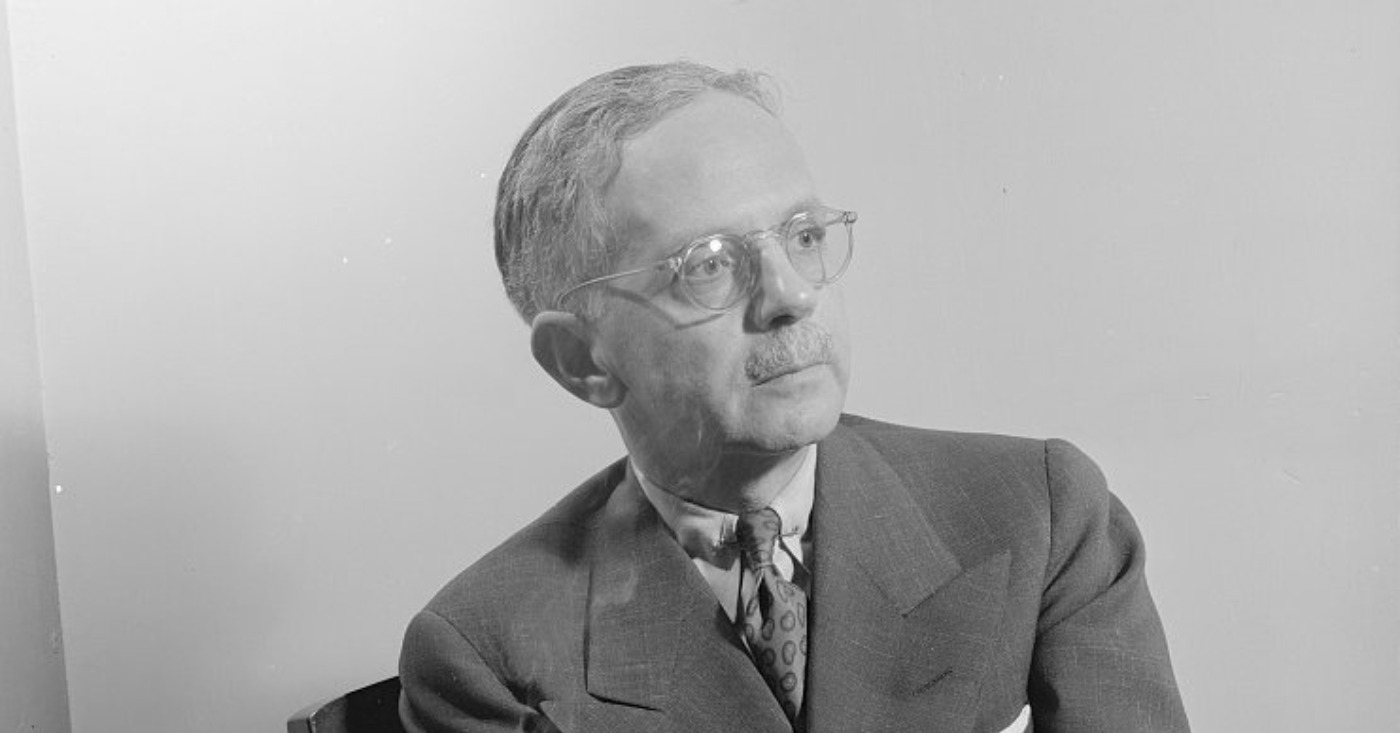
Walter Francis White was one of the most important civil rights leaders of the first half of the 20th century. For more than three decades, he helped transform the National Association for the Advancement of Colored People (NAACP) into one of the nation’s most powerful organizations fighting racial discrimination, segregation, and violence against African Americans.
Walter White was born in Atlanta, Georgia, in 1893 and grew up in a middle-class African American family. His parents, George and Madeline White, had been born into slavery. Although Walter had blond hair, blue eyes, very light skin and could easily have passed as white, he firmly identified as Black. As a teenager, he witnessed the Atlanta Race Massacre of 1906, when white mobs attacked African Americans throughout the city. The experience strengthened his determination to fight racial hatred and injustice.
After graduating from Atlanta University in 1916, White worked in insurance and became active in the Atlanta branch of the NAACP. His abilities caught the attention of NAACP leader James Weldon Johnson, who recruited him to the organization’s national staff in 1918.
He soon became known for his extraordinarily dangerous investigations of lynchings. Because many white Southerners assumed he was white, he was able to enter communities where Black investigators would have faced immediate danger. He spoke with witnesses, law enforcement officials, and even members of lynch mobs, often pretending to share their racial attitudes so they would reveal information.
White personally investigated 41 lynchings and eight race riots. On several occasions, his identity was discovered, forcing him to flee for his life. The evidence he collected helped the NAACP expose the brutality of lynching to Americans and strengthen its campaign for federal anti-lynching legislation. His experiences also influenced his 1929 book, “Rope and Faggot: A Biography of Judge Lynch.”
By the early 1930s, Walter had risen to the NAACP’s top administrative position. As executive secretary, he helped build the organization into a major national political and legal force. Under his leadership, the NAACP challenged discrimination in voting, employment, education, transportation, the military, and other areas of American life.
White also recruited attorney Charles Hamilton Houston to lead the NAACP’s legal strategy. Houston and his protégé, Thurgood Marshall, developed the courtroom campaign that eventually helped produce the Supreme Court’s historic 1954 decision in Brown v. Board of Education, declaring racial segregation in public schools unconstitutional.
White used his relationships with national political leaders as another weapon against discrimination. He worked with First Lady Eleanor Roosevelt, President Franklin D. Roosevelt, and President Harry S. Truman. He supported efforts to end employment discrimination and encouraged Truman to establish the President’s Committee on Civil Rights.
Walter White remained an NAACP leader until his death in 1955. His courage, political skill, investigative work, and relentless commitment to equality helped establish the foundation upon which the modern Civil Rights Movement would build.
Art
Event Preview: ‘Fashion v. Fascism’ – A Runway Revolution Is Coming to the Bay Area
“Every piece on this runway translates what is happening under fascism into a feeling,” explains Erica Furlong, the FVF creative director. “One designer’s trench coat is covered in pockets stamped ‘TRUTH,’ ‘MEMORY,’ ‘HOPE,’ ‘VOTE,’ ‘FUTURE,’ because that’s literally what gets seized first, pocket by pocket, under fascist decline. Fashion can hold grief and hope in the same silhouette, and that tension is exactly what this moment needs.”
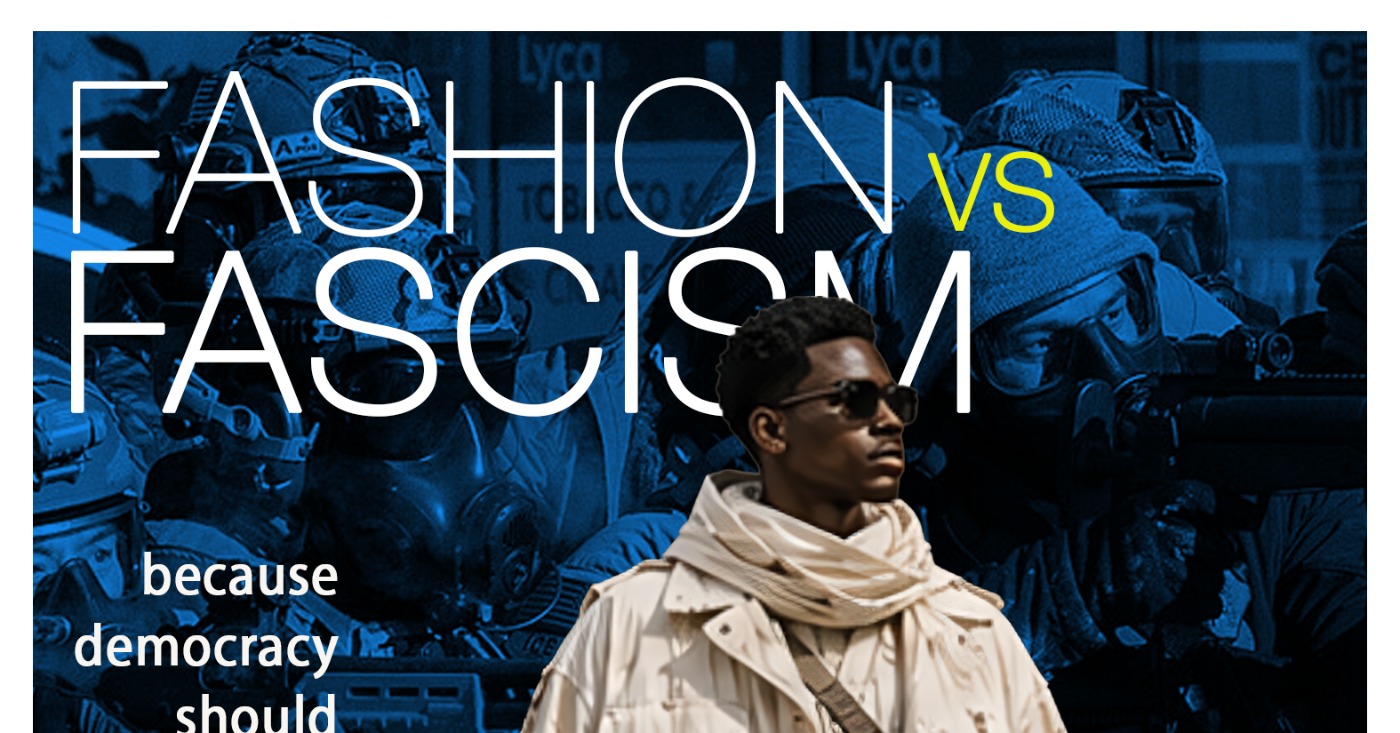
“Fashion vs. Fascism” (FVF) is a visually immersive evening of fashion, music and political theater exposing the rise of fascism in the U.S. and the need to resist. Democracy is under siege, and culture is one of our most potent defenses, organizers say.
Called a live “runway revolution,” FvF premieres Oct. 3 at The Rotunda, 300 Frank Ogawa Plaza in downtown Oakland.
A play that is part fashion show, part protest, part performance art, FvF stages five runway collections spotlighting the pillars of contemporary fascist politics and the urgent need to resist: the myth of a “glorious past,” the manufactured emergencies used to justify surveillance and crackdowns, and the oligarchs and grifters profiting from it all. Runway fashion shares the stage with political theater and live music, with a closing call to action.
“We need lawsuits, ballots and mass protests, but none of it lands if we’re not also fighting for people’s imagination,” says Linda Burnham, co-producer of the show. “People are exhausted and scared. FvF will expose the absurdities of fascist mythology and ideology in ways a news headline cannot and spark new ideas about how to resist.”
“Fascism doesn’t win by policy alone. It wins by telling a story. A myth about a ‘Golden Age.’ A permanent emergency that makes cruelty seem necessary. That’s not an accident, it’s a strategy, and it works on the same terrain as culture: image, spectacle, emotion,” says Aya De León, the show’s playwright.
“Every piece on this runway translates what is happening under fascism into a feeling,” explains Erica Furlong, the FVF creative director. “One designer’s trench coat is covered in pockets stamped ‘TRUTH,’ ‘MEMORY,’ ‘HOPE,’ ‘VOTE,’ ‘FUTURE,’ because that’s literally what gets seized first, pocket by pocket, under fascist decline. Fashion can hold grief and hope in the same silhouette, and that tension is exactly what this moment needs.”
At its best, fashion is about creativity, diversity, innovation, experimentation and the free exchange of ideas. Fascism, by contrast, demands conformity and control, while suppressing dissent.
FVF was created, organizers say, because democracy should always be in style.
Featured designers include Erica Varize, Rickie Lee, Tianna Charity, Julie Wong, and Maria Flores. The evening features a script by lead playwright Aya De León, musical performances by Mindeullae Project and DJ Emancipation, and other special guests.
FvF is designed to travel. Following the Oakland premiere, FvF will extend its reach through a documentary short, a curriculum on contemporary fascism in the U.S., and a full replication playbook — design templates, script, and curriculum — so organizers in other cities can stage their own version of the show.
Get more details at www.fashionvfascism.org.



Doulas Are Helping Black California Moms Navigate Pregnancy–Even as High Mortality Rates Persist

Newsom Signs Addictive Social Media Law to Protect Kids

On Your November Ballot: Prop 38 Would Allocate $8.4 Billion to Immunology and Immunotherapy Funding

Ask California: Golden State Releases New AI Chatbot

Asm. Isaac Bryan’s Bill Banning California Police From ICE Side Jobs Reaches Newsom’s Desk

Assemblymember LaShae Sharp-Collins’s Bill Would Pause Law Enforcement’s Use of Shock Gloves Pending Study

BOOK REVIEW: ‘Laws of Solomon’ Reveals Tender Heart of Former Child Soldier

OPINION: The New American Fear – From 9-11 to AI

Passing for White, Fighting for Black America: The Courage of Walter White

Oakland People’s Arms Embargo Coalition Demands End to Military Shipments Thru Oakland

Barbara Lee Mourns Gloria Steinem, Remembers a Friendship Rooted in Equality

Event Preview: ‘Fashion v. Fascism’ – A Runway Revolution Is Coming to the Bay Area

Two Looming Threats Every Alameda County Elder Should Know About

Oakland Mayor Reads to Children at Bookout Block Party at Marcus Books Store

Tradition Comes to the Streets in 11th Annual Black-Eyed Pea Festival at the Freedom Farmers Market

Less Affluent School Districts, Including Sacramento City, Face Threat of State Takeover

ESSAY: California Can Close Its Colorectal Cancer Gap

California Hispanic Chambers of Commerce Unveils: ‘Powering the Future’ Theme for 47th Annual Statewide Convention

Four Candidates, Including Incumbent Barbara Lee, Qualify for Oakland Mayor’s Race

Oakland Post: Week of August 12 – 18, 2026

From Blueprint to Breakthrough: Tackling Affordable Housing in Oakland

Oakland Observes Black August with Block Parties, Film Showings, Workshops

COMMENTARY: Why Local School Tax Measure G1 Will Not Be on the November Ballot

Standoff for Justice: Our Homes Are Worth Fighting For

Returning to Its Roots, the Oakland Black-Eyed Pea Festival Partners with the Freedom Farmers Market Sept. 12

Oakland Post: Week of August 26 – September 1, 2026

NPRC Scores First Advocacy Victory: David Shaw Finally Gets His Wish to ‘Go Home’

Frontier Airlines’ Return to Oakland Airport Brings Flights, Jobs and Opportunity

Gubernatorial Candidate Steve Hilton Blasts California New Tire Rules; Newsom Hits Back

Chef Sharon Lee Blends Culinary Excellence, Education and Empowerment

The Conversation With Al McFarlane 6/23/26

Media Monday 6/22/26

LIVE! ASK ALMA! — TUES. 6.23.26 7PM EST

Car Buying Secrets: 4 Hidden Checks Before You Sign!

Is This 550 HP Charger Worth YOUR Money? AutoNetwork Review

Celebrating Juneteenth – Frederick Douglass on education and resistance

LIVE! — ASK ALMA! — TUES. 6.19.26 7PM EST

Hyundai Ioniq 5 Parking, Safety, and 360 View #shorts

2025 Ioniq 5 New Wiper & Powerful Performance! #shorts

Electric SUV Range: Is 259 Miles Enough? #shorts

EV Charging: How Fast Can You Charge an Electric Vehicle? #shorts

Biometric Cooling… Messaging Seats…Come on! 2025 Infiniti QX80 Autograph 4WD

Charged Up: Witness the Magic of a Fully Electric Car! #shorts

Range Rover Sport PHEV Included…: See What’s Inside This Luxury SUV! #shorts

Invisible Hood View: Perfect Parking with X-Ray Vision! #shorts
-
 Commentary4 weeks ago
Standoff for Justice: Our Homes Are Worth Fighting For
-
 Activism4 weeks ago
Oakland Post: Week of August 26 – September 1, 2026
-
 Business4 weeks ago
Frontier Airlines’ Return to Oakland Airport Brings Flights, Jobs and Opportunity
-
 Business4 weeks ago
Gubernatorial Candidate Steve Hilton Blasts California New Tire Rules; Newsom Hits Back
-
 Business4 weeks ago
Chef Sharon Lee Blends Culinary Excellence, Education and Empowerment
-

 Education4 weeks ago
Gov. Newsom’s Latest Appointees Include Sacramento Advocate for Formerly Incarcerated Students; State’s New Tech Chief
-

 Community4 weeks ago
Big City Mayors Ask for “Yes” Vote on Housing Bond Measure; Conservatives Say “No”
-

 Business4 weeks ago
Oakland Coliseum Project Opens Door for Small Businesses to Build Bigger
