
Books
Book Review: Something We Said: Richard Pryor, A Notorious Word, and Me
Though sticks and stones and words are weapons, as in the new memoir, “Something We Said” by Elizabeth Stordeur Pryor, they can also hold people together.


By Terri Schlichenmeyer
Author: Elizabeth Stordeur Pryor, Copyright: c.2026, Publisher: Simon & Schuster, SRP: $29.00, Page Count: 304 pages
Sticks and stones may break my bones.
You know the rest of that childhood rhyme, and you know it’s not true: words have meaning, and they can cut like a knife. And yet, though sticks and stones and words are weapons, as in the new memoir, “Something We Said” by Elizabeth Stordeur Pryor, they can also hold people together.
The college lecture was supposed to have been about the 1850 Fugitive Slave Act.
It was supposed to be a lively discussion, but unintentionally it quickly veered off course. When a White student quoted a movie line featuring the “n-word,” the room went quiet, and Professor Elizabeth Stordeur Pryor panicked.
She’d grown up hearing that word, and seeing it, and she’d experienced the painful feelings attached to it. She knew who wrote that movie line. It was her father, Richard Pryor.
In her first few years, Pryor spent most of her time in a White world, hearing her mother’s tales of her larger-than-life father, and trying to grasp meaning in her father’s albums, peppered as they were with a word that was off-limits to her.
When she was six, she met her father for the first time. She began to visit him regularly.
It was fun at her Dad’s house; though he was sometimes moody, he taught her to fish and play dominoes. She became close with her siblings, fearful of her great-grandmother, and confused about a word that her father’s uncles threw around like a beach ball. It was a forbidden word at her mother’s house, but her father used it. Differently. Often.
The word hurt. She knew first-hand that it did.
“The word became a degrading slur that shackled all Black people together into a single, inescapable tribe,” she says.
So why was it okay for certain people to say it?
Knowing that, in the years since Richard Pryor’s accident and his death from multiple sclerosis, he’s become somewhat of a legend. It is a very satisfying thing, isn’t it? So is reading about him, especially from the viewpoint of one of his seven children. But his is not the only story you get inside “Something We Said.”
Wrapped around the life of Richard Pryor is the life of a word that straddles a line between danger and provocation, a word that author Elizabeth Stordeur Pryor refuses to say or even print. As she tells readers about her father and her loving-but-difficult relationship with him, she warily circles that word, as if it might bite. You may cringe, but she weighs it carefully, helping readers see it as a chameleon before always bringing us back to her father, his work, and his life before and after her and that word.
It’s a push-pull balance that holds readers fast, and keeps them there. It’s perfect for fans of this genre, or Richard Pryor, or of language – and it’s going to make you think. If you want a good memoir this week, one that may send you to your old album collection, “Something We Said” is rock-solid.












Black History
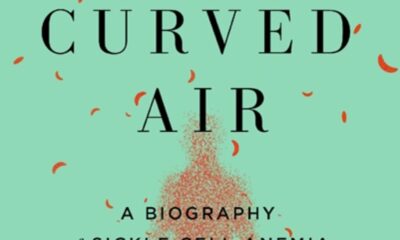
BOOK REVIEW — Curved Air: A Biography of Sickle Cell Anemia and the Quest to Cure the First Molecular Disease
OAKLAND POST — Over decades, researchers worked haphazardly. Papers were written, treatments were tried, used, or discarded. Doctors discovered that genetic testing could prevent new cases, a heartbreak for would-be parents. Researchers discovered that “a perfect storm” of confluence spread SCD: malaria, human population, and mosquitoes.
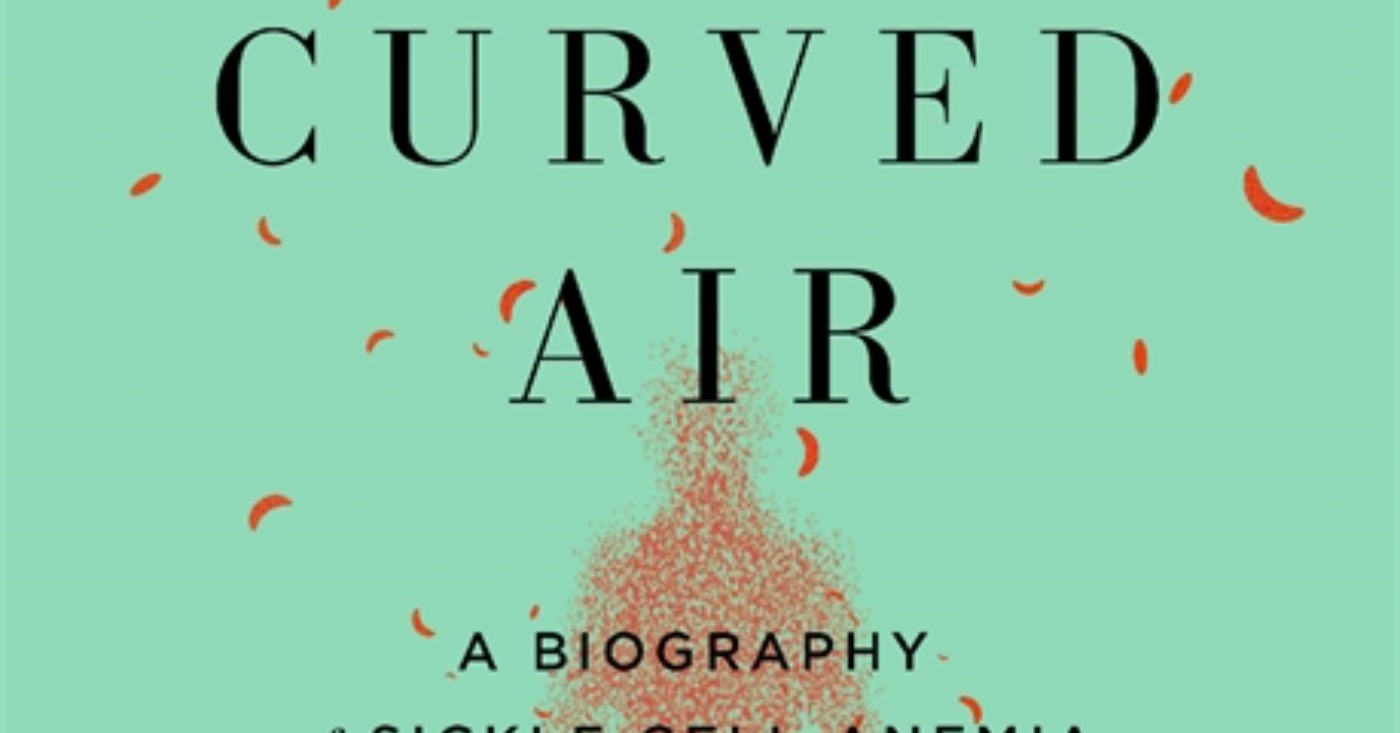
Copyright: c.2026, Publisher: The Belknap Press of Harvard University Press, SRP: $29.95, Page Count: 338 pages
Four weeks of testing, and you’re exhausted.
Two gallons of blood, maybe three, have been removed. No lie. You’ve laid on tables, slid through machines, been scanned so much you lost count and finally, your doctors have a diagnosis. As in the new book “Curved Air” by Kevin Davies, you have hope there’s a what next?
Though the disease was known in parts of Africa and likely existed here in the United States for hundreds of years, sickle cell disease (SCD) is a relative newcomer in disease research.
Says Davies, “Sickle cell was first identified more than 120 years ago” and it was considered as a “Black disease.” Because of that, discrimination followed “sickle cell warriors” and research was scant, though white people can and do get SCD.
With “agonizing” pain as a major symptom, “SCD is one of roughly seven thousand genetic diseases” currently known to science. When someone has SCD, a genetic mutation causes their red blood cells to curve and get stuck in blood vessels, rather than flowing freely as they should. This diminishes the oxygen supply “to various parts of the body… which causes inflammation and pain,” jaundice, stroke, and damaged organs. Anemia, Davies says, can leave a patient fatigued and short of breath. Anticipating pain crises causes anxiety and PTSD.
Says Davies, “More than forty million people carry” one copy of the genetic mutation that causes SCD, and “five hundred thousand affected” babies are born with the disease per year, worldwide.
Over decades, research was done haphazardly. Papers were written; treatments were tried, used, or discarded. Doctors discovered that genetic testing could prevent new cases, a heartbreak for would-be parents. Researchers discovered that “a perfect storm” of confluence spread SCD: malaria, human population, and mosquitoes.
There was always hope that someday, sickle cell disease might be cured.
Then, Clustered Regularly Interspaced Short Palindromic Repeats (CRISPR) gene-editing therapy was approved by the FDA, and a brave volunteer named Victoria Gray stepped forward…
So, you want to – need to – learn more about sickle cell disease? Is it imperative for you? Then, this is your book. But there are things you’ll want to know before you dive into “Curved Air.”
Because author Kevin Davies is the editor of The CRISPR Journal, you can expect up-to-date, cutting-edge information; but that’s a two-sided coin: the information is heavy-duty, not always easy to grasp, and it’s burdened by acronyms that can be overwhelming. Yes, that’ll inform you, but it may also send you elsewhere for further understanding, which really should’ve come from this book.
And yet, if you or someone you love has SCD, this is your book. It explains where the disease came from, why it hasn’t been completely cured yet, and what kind of hope you can hold. It’s a good start on a path to comprehension.
Also, be aware that the narrative here is sometimes padded with journalistic fluff that might annoy you if you’re eager to get to the science. Indeed, “Curved Air” will teach you. Then again, it also might test you.
Books
Tarsha Jordan’s Bonita the Bumble Bee Brings STEAM Learning to Life
OAKLAND POST — In “Bonita The Bumble Bee and the Quarantine,” Jordan helped young readers process the uncertainty and isolation surrounding the COVID-19 pandemic. In a later book about returning to school, Bonita guided children through changing routines, expectations and emotions. Designed to promote social-emotional development and mental health awareness, the book was made available in English, Spanish, and Mandarin.
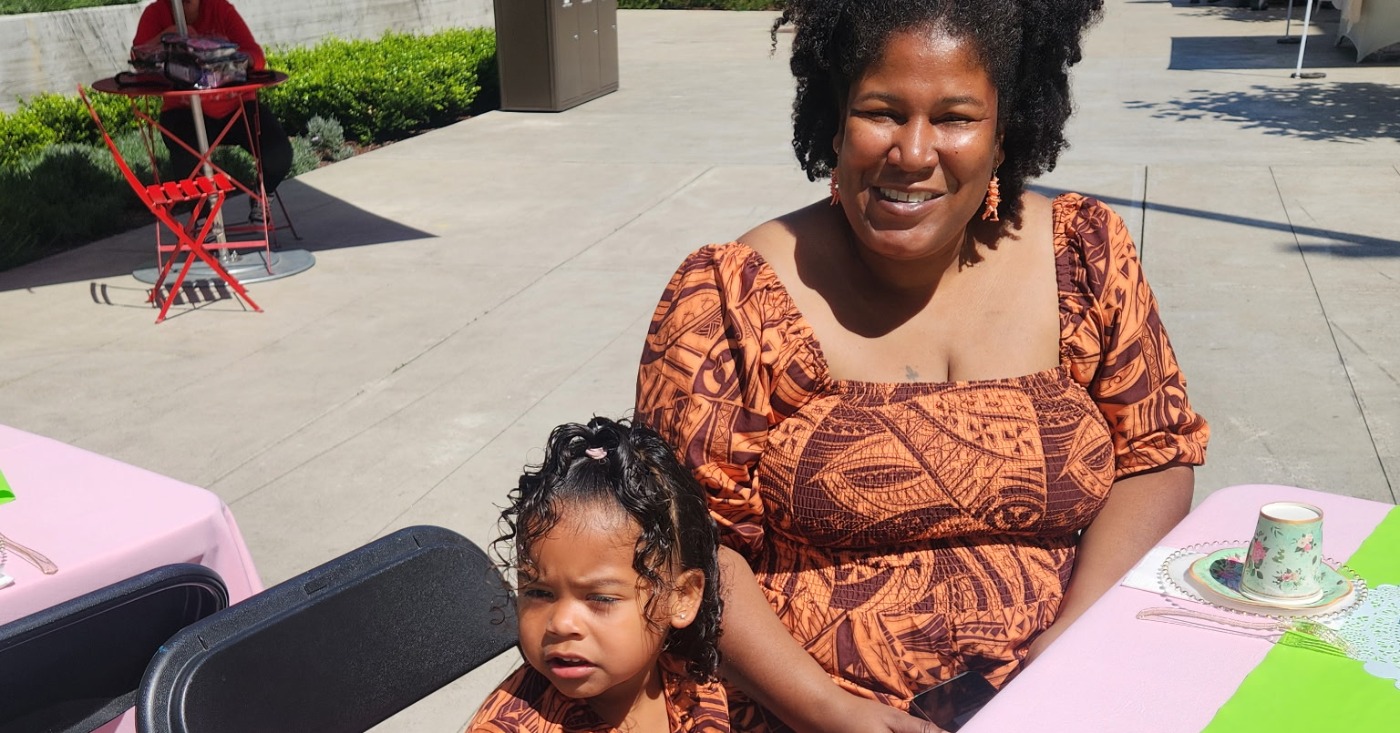
For educator, childcare provider and children’s author Tarsha Jordan, Bonita the Bumble Bee is much more than a colorful storybook character. The cheerful bee has become a teaching tool, a comforting friend and a creative way for children to explore their emotions, navigate life changes and discover the world around them.
Jordan’s inspiration for Bonita grew from her lifelong commitment to children and education. With more than 30 years of experience as an educator and administrator, she operates Kindergarten Readiness Academy, a licensed family childcare program in Oakland’s Longfellow neighborhood. The academy prepares young children socially, emotionally and academically for school.
Her firsthand experience has given Jordan a deep understanding of how children communicate, what captures their attention, and how stories can open conversations young readers may not otherwise know how to begin.
Jordan describes her mission as developing lifelong learners who love reading while introducing children to relatable characters. Bonita fulfills that mission by addressing real-life experiences in language children can understand.
In “Bonita The Bumble Bee and the Quarantine,” Jordan helped young readers process the uncertainty and isolation surrounding the COVID-19 pandemic. In a later book about returning to school, Bonita guided children through changing routines, expectations and emotions. Designed to promote social-emotional development and mental health awareness, editions were made available in English, Spanish and Mandarin.

Bonita’s impact becomes even more immediate when children meet the character in person. Jordan recently hosted a Mommy and Me children’s tea party at Bay Street Emeryville, where Bonita buzzed around the event, greeted young guests and brought the literary character to life.
“The children can interact with the character, experience the excitement of seeing a familiar literary friend come to life and develop an even stronger connection with reading,” Jordan said.
For children of color, that connection carries another important dimension: representation. Children benefit from seeing themselves reflected in books, educational environments, imaginative characters and the people creating those stories.
Jordan also believes Bonita expands children’s imaginations and encourages them to envision new possibilities.
“When children of color see authors that look like them creating books, building educational programs and bringing original characters into their communities, they are exposed to the possibilities beyond the story itself,” Jordan said. “They can begin to imagine themselves as writers, educators, entrepreneurs, artists and creators.”
Founded to introduce STEAM, (science, technology, engineering, the arts and mathematics) to children in transitional kindergarten through third grade, Bonita The Bumble Bee also addresses neurodivergent behaviors.
Known to young learners as “Teacher Tarsha,” Jordan combines Bonita’s whimsical personality with hands-on experiments and activities for children ages 3 to 8. The experiences promote early literacy, strengthen problem-solving skills and give children tools for managing their emotional health.
Jordan holds master’s degrees in education and public administration and is pursuing a doctorate in education. Her academic preparation and extensive classroom experience help her create programs that are both engaging and developmentally meaningful.
“We’re hoping to take Bonita to the next level and welcome new partnerships,” Jordan said.
Visit BonitaTheBumbleBee.com
Activism
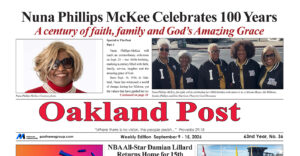
Oakland Post: Week of September 9 – 15, 2026
The printed Weekly Edition of the Oakland Post: Week of September 9 – 15, 2026


To enlarge your view of this issue, use the slider, magnifying glass icon or full page icon in the lower right corner of the browser window.



Port of Oakland, Army Corps Sign Historic Harbor Design Agreement

Democratic Clubs Interview Candidates for Oakland School Board

Nuna Phillips-McKee Celebrates 100 Years: ‘A Century of Faith, Family and God’s Amazing Grace!’

D.A. Ursula Jones Dickson: Terminix to Pay $3.15 Million Over Illegal Disposal of Pesticides, Customer Records

REPORT: Community Level Policy Is Impacting Homelessness and Drug Abuse in California

OPINION: AI Needs to Know Who Is the Boss
Goldi-Locs and Two (or Three) Bears in the Forest in California Hills

Election Watch 2026: 85% of Eligible Voters in California Are Registered

Don’t Let scammers Crash Your School Year

BOOK REVIEW — Curved Air: A Biography of Sickle Cell Anemia and the Quest to Cure the First Molecular Disease

California’s Legal Cannabis Market Hits $8 Billion as State Touts Progress on Fighting Drugs, Crime

Blacks and Latinos Clash Over LA’s Barrio Run; Mayor Karen Bass Calls for Dialogue Across Racial, Neighborhood Lines

Asm. Smallwood-Cuevas’s Bill Repealing ‘Racist’ CalWORKs ‘Man-in-the-House’ Rule Clears Legislature

Asm. Smallwood-Cuevas’s Bill Repealing ‘Racist’ CalWORKs ‘Man-in-the-House’ Rule Clears Legislature

‘Ready to See These Bills Become Law’: Sen. Weber’s Package of 15 Bills Advance to Gov. Newsom’s Desk

Department of Homeland Security Demands California Secretary of State Shirley N. Weber Scrub Voter Rolls

“The Power to See Threats Sooner”: Gov. Newsom, Safety Officials Showcase California’s Investments in Hi-Tech Wildfire Prevention

Alpha Kappa Alpha Sorority, Inc. Celebrates New North Atlantic Regional Director

California Sen. Padilla Joins Colleagues to Introduce Bill Imposing Term Limits on Supreme Court Justices

Less Affluent School Districts, Including Sacramento City, Face Threat of State Takeover

Car Wash Workers Cope with Lingering Impacts of ICE Raids

ESSAY: California Can Close Its Colorectal Cancer Gap

Oakland Post: Week of August 5 – 11, 2026

As Part of Your Back-to- School Checklist, Vaccinate

Oakland ‘Port Serves as a Powerful Engine for Good Jobs and Economic Development

Gov. Newsom Signs New Affordable Housing Legislation

Gov. Newsom Announces $109.6 Million in Funding for 278 Supportive Homes in Bakersfield, Contra Costa, Sacramento and Fresno

California Hispanic Chambers of Commerce Unveils: ‘Powering the Future’ Theme for 47th Annual Statewide Convention

Closing the Gap: What the Data and Frontline Experiences Reveal About Cancer in Black California

Congresswoman Simon Demands Investigation into Trump’s Abuse of Emergency Powers for Coal Export Terminal in West Oakland

The Conversation With Al McFarlane 6/23/26

Media Monday 6/22/26

LIVE! ASK ALMA! — TUES. 6.23.26 7PM EST

Car Buying Secrets: 4 Hidden Checks Before You Sign!

Is This 550 HP Charger Worth YOUR Money? AutoNetwork Review

Celebrating Juneteenth – Frederick Douglass on education and resistance

LIVE! — ASK ALMA! — TUES. 6.19.26 7PM EST

Hyundai Ioniq 5 Parking, Safety, and 360 View #shorts

2025 Ioniq 5 New Wiper & Powerful Performance! #shorts

Electric SUV Range: Is 259 Miles Enough? #shorts

EV Charging: How Fast Can You Charge an Electric Vehicle? #shorts

Biometric Cooling… Messaging Seats…Come on! 2025 Infiniti QX80 Autograph 4WD

Charged Up: Witness the Magic of a Fully Electric Car! #shorts

Range Rover Sport PHEV Included…: See What’s Inside This Luxury SUV! #shorts

Invisible Hood View: Perfect Parking with X-Ray Vision! #shorts
-

 Commentary2 weeks ago
Standoff for Justice: Our Homes Are Worth Fighting For
-

 Business2 weeks ago
Gubernatorial Candidate Steve Hilton Blasts California New Tire Rules; Newsom Hits Back
-

 Activism2 weeks ago
Oakland Post: Week of August 26 – September 1, 2026
-

 Education2 weeks ago
Gov. Newsom’s Latest Appointees Include Sacramento Advocate for Formerly Incarcerated Students; State’s New Tech Chief
-

 Business2 weeks ago
Frontier Airlines’ Return to Oakland Airport Brings Flights, Jobs and Opportunity
-

 Business2 weeks ago
Oakland Coliseum Project Opens Door for Small Businesses to Build Bigger
-

 Business2 weeks ago
Chef Sharon Lee Blends Culinary Excellence, Education and Empowerment
-

 Community2 weeks ago
Big City Mayors Ask for “Yes” Vote on Housing Bond Measure; Conservatives Say “No”
