
Business
Sale of Coliseum to African American Developers Moves Toward Completion
The deal includes the sale of the Oakland Arena to an unidentified third-party buyer for no less than $100 million, which Bobbitt said was one of the most important aspects of the site’s future redevelopment.

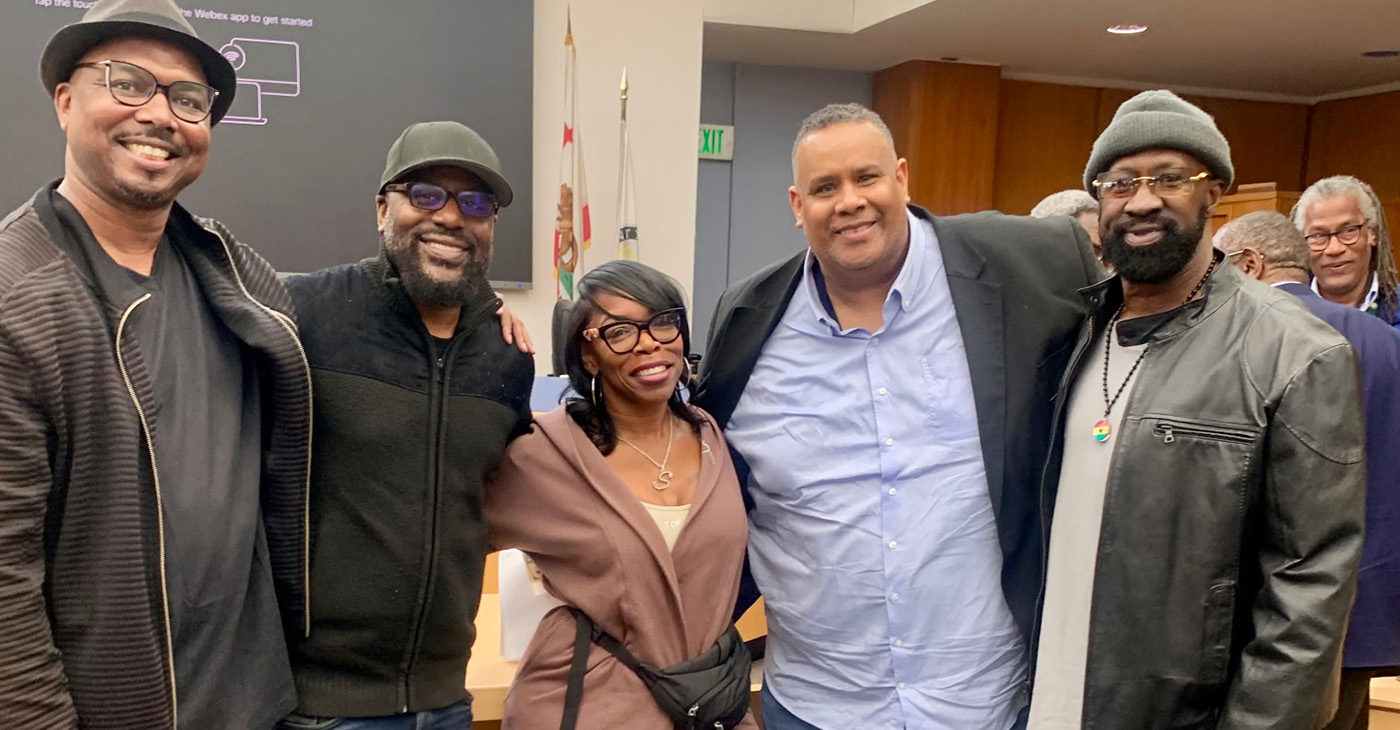
‘This is on the precipice of actually occurring,’ said Ray Bobbitt, buyers’ representative
By Post Staff
After many months of complex negotiations, the Oakland Coliseum development deal is finally nearing an agreement that will open the way for new owners – the African Americans Sports and Entertainment Group (AASEG) – to revitalize the sports complex and the Hegenberger Corridor in East Oakland.
On May 28, the Alameda County Board of Supervisors unanimously approved a non-binding agreement to dispose of the County’s portion of the complex for $115 million in a deal with AASEG, with a closing date set for June 30.
“People are seeing that this is on the precipice of actually occurring,” said Ray Bobbitt, founder of the AASEG and an East Oakland native. “People feel that this needs to happen for Oakland, for East Oakland in particular,” Bobbitt said, as reported in the East Bay Times.
The agreement would transfer ownership of the 112-acre Coliseum complex property, which was owned 50-50 by Alameda County and the City of Oakland, to Oakland Acquisition Company, which is AASEG’s real estate wing.

The County’s approval marks an important step in the sale of the property, even though concerns about environmental liability remain. Under the terms of the non-binding agreement, the county will pay $115 million to Coliseum Way Partners, the corporate entity of the Oakland Athletics that had previously purchased the county’s half of the property for $85 million.
AASEG will then pay $115 million to the County in three annual payments, with 5% annual interest paid on any outstanding balance, according to the term sheet.
AASEG already negotiated a purchase of the city’s half of the property for $125 million in 2025, awaiting the sale of the county’s half.
A strong supporter of the sale, Supervisor Nate Miley said he was not “breaking out the champagne” until the sale was final. This is not perfect, but it is good.
“It’s good because the County ends up with more money,” Miley continued. “It’s good because an African American team takes ownership of the property, and they’ve got a lot of potential in terms of what they want to do with the property.”
A remaining disagreement between Alameda County and the AASEG involves environmental concerns.
AASEG wanted a “carve-out” for environmental concerns so that it would not face liability for the release of groundwater into San Francisco Bay without a permit. Obtaining a permit could be time-consuming and expensive, requiring the need for consultants, studies, and an oversight process by the San Francisco Bay Regional Water Quality Control Board.
County supervisors unanimously supported the non-binding agreement without the carve-out, though Bobbitt said delaying or excluding the carve-out creates timing risks for the project.
“The motion is to accept the terms as presented, excluding the carve-out,” Board of Supervisors President David Haubert said. “Noting that it’s a non-binding term sheet and terms can always be discussed going forward. It’s been pointed out that that could affect the deal, timing, which we’ve been at this for nine years, but what’s a little more time?”
The deal includes the sale of the Oakland Arena to an unidentified third-party buyer for no less than $100 million, which Bobbitt said was one of the most important aspects of the site’s future redevelopment.
“The arena represents an anchor of the site,” said Babbitt. “This arena … has become a pop culture mecca, and the opportunity to enhance that and expand that is critical to the overall process.”
Speaking at the Board of Supervisors meeting, Miley explained the County’s reasoning behind some of the complex negotiations. He asked interim County Counsel Andrea Weddle:
“In layman’s term’s who’s on the hook for the environmental (cleanup)” under the current deal with the Oakland A’s?
“When the county with a former board entered in the deal with the (A’s), we took on all of the environmental obligations,” Miley said. “Since then, we’ve learned a lot more about the environmental conditions of the Coliseum.”
“If we do a deal with Coliseum Way Partners (the A’s), we remain on the hook,” she said. “If we do a deal as we’ve currently structured with OAC (AASEG), we have eliminated some or hopefully all (or) as much as we can of that liability and aligned our deal with the terms of the city.”
Bobbitt, despite his concerns, supported the nonbinding agreement. He said the public has waited nearly a decade to come to this point.
“The community support has been overwhelming,” he said. “We’ve used a lot of P-words: patience, perseverance, persistence. And we’ve just had to do it, and we understand how complex this has been.”








Business
How Oakland’s Courtsmith is Scaling its Business and Local Impact
OAKLAND POST — “As Courtsmith grew, scaling wasn’t just about selling more—it was about building the infrastructure to deliver consistently, with a strong supply chain and production process,” said Courtney Smith, founder of Courtsmith. “We needed the right kind of capital and partners to help us expand without losing the Oakland authenticity that made us who we are.”
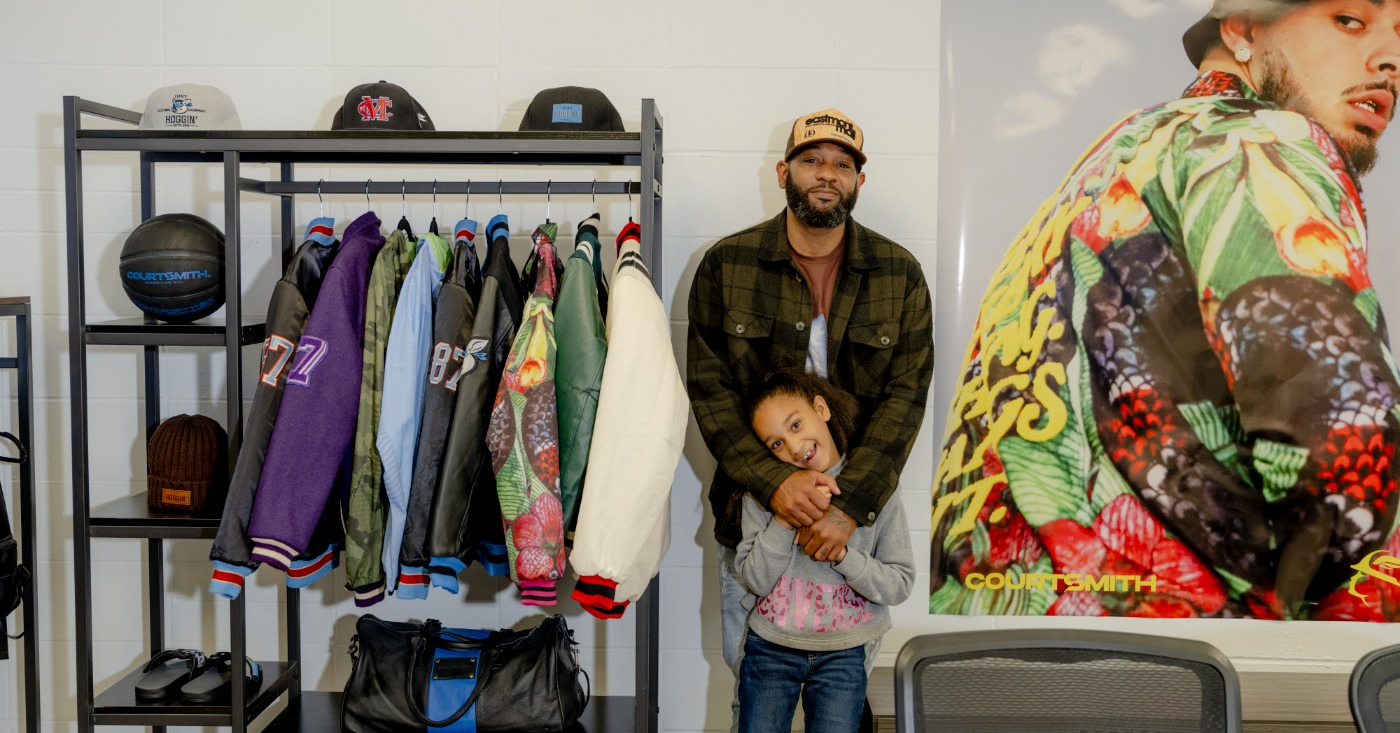
With support from ICA Fund and JPMorganChase, founder Courtney Smith is strengthening his supply chain, creating jobs and expanding local production, and positioning the Oakland-born brand for long-term growth
When Courtney Smith founded Courtsmith in Oakland in 2014, he was building more than an athletic apparel company. A lifelong basketball enthusiast, Smith saw an opportunity to create performance wear that reflected the culture of the game—its style, community and sense of belonging.
From the beginning, Courtsmith was rooted in the idea that basketball is not just a sport, but a lifestyle and a community. The brand set out to make athletes look and feel good on and off the court while building partnerships that give athletes a stake in the products and stories they help shape.
“As Courtsmith grew, scaling wasn’t just about selling more—it was about building the infrastructure to deliver consistently, with a strong supply chain and production process,” said Courtney Smith, founder of Courtsmith. “We needed the right kind of capital and partners to help us expand without losing the Oakland authenticity that made us who we are.”
As the company grew, Smith faced a common challenge for small businesses: maintaining quality, reliability and authenticity of products while scaling—and having the resources to do so. The next move was not simply about expansion; it was about building the infrastructure to last.
That is where ICA Fund—a Bay Area impact investor, small business support organization and long-time partner to Courtsmith—came in. ICA’s relationship with Smith began in 2017 through its Growth Strategies advising program, and over time, the organization paired mentorship, technical assistance and capital to help the company grow with intention. More recently, philanthropic support from JPMorganChase helped ICA expand the range of capital products it can offer entrepreneurs like Smith, including options designed for companies that are ready to scale but may not be a fit for traditional debt products or equity investments.
“Too many great businesses stay stuck small without access to fair and flexible capital— ICA Fund’s role is to change that,” said Allison Kelly, CEO of ICA Fund. “With support from JPMorganChase, we’re able to provide founder-friendly financing alongside long-term partnership, giving entrepreneurs the tools they need to grow stronger businesses that create opportunity in their communities.”
The right kind of capital for a new stage of growth
ICA recently provided Courtsmith with a loan to help it buy a local manufacturing business, a major step toward bringing more of its production process closer to home, strengthening its supply chain, reducing costs, continuing its growth and creating local jobs.
The transaction also marked a milestone for ICA: the first time the organization approved capital for a merger-and-acquisition transaction. It reflects a broader expansion of the financing options it offers, supported by JPMorganChase’s American Dream Initiative, which aims, in part, to help power 10 million small businesses—up from seven million today—over the next several years with the capital, coaching, tools and practical policy support they need to thrive. It’s also an example of the kind of tailored support—delivered through trusted local pathways and the firm’s own relationships—that JPMorganChase provides to small businesses in the Bay Area, including our more than 295,000 small business clients.
“Small businesses are the backbone of our economy, and Courtsmith’s story shows how access to the right capital at the right time can unlock growth,” said Gwyneth Galbraith, Vice President for Global Philanthropy at JPMorganChase. “By supporting organizations like ICA Fund, we’re helping expand access to the kinds of financing and guidance entrepreneurs need to strengthen operations, create jobs and build lasting businesses across the Bay Area.”
Building with staying power
For small businesses, access to financing that fits their stage of growth can determine whether expansion is sustainable. A one-size-fits-all approach does not always work for companies with distinct cash-flow cycles, customer demand and operational needs. In Courtsmith’s case, the ICA loan gave the company a path to invest in its future while preserving the founder’s vision and control—and reflected the kind of flexible financing JPMorganChase is helping expand through its support of local community and mission-driven lenders.
Courtsmith’s trajectory reflects that momentum. The company reports that revenue grew 259% from 2021 to 2025, while its workforce expanded from four employees in 2017 to 13 in 2025, including growth in full-time roles from one to 11.
Behind those numbers is a company deepening its roots in Oakland through local partnerships, community presence and a model built to last.
“Courtsmith is about Oakland, representing the culture that raised us and creating opportunity for the next generation,” said Smith. “With ICA Fund and JPMorganChase in our corner, we can keep turning that mission into something people can see and feel in our community.”
Courtsmith’s next chapter is still being written, but the path is clearer: a founder-led brand with deeper local production capacity, a stronger supply chain, and a larger role in Oakland’s small business economy.
Activism
Oakland Post: Week of July 29 – August 4, 2026
The printed Weekly Edition of the Oakland Post: Week of July 29 – August 4, 2026


To enlarge your view of this issue, use the slider, magnifying glass icon or full page icon in the lower right corner of the browser window.

Activism
Oakland Post: Week of July 22 – 28, 2026
The printed Weekly Edition of the Oakland Post: Week of July 22 – 28, 2026

To enlarge your view of this issue, use the slider, magnifying glass icon or full page icon in the lower right corner of the browser window.

WORK FROM HOME
Home-based business with potential monthly income of $10K+ per month. A proven training system and website provided to maximize business effectiveness. Perfect job to earn side and primary income. Contact Lynne for more details: Lynne4npusa@gmail.com 800-334-0540


How Oakland’s Courtsmith is Scaling its Business and Local Impact

Oakland Post: Week of July 29 – August 4, 2026

OP-ED: ‘The Trusted Messenger’ and the Black Vote

Oakland Post: Week of July 22 – 28, 2026

Fed Court to Decide Landmark First Amendment Case

Jordan Walker Leads Call for More Black Youth in Baseball

How Black WNBA Players Became Collateral Damage in the Caitlin Clark Culture War

NAACP Announces $20m Voter Registration Drive at National Convention in Chicago

Starting This Summer, California Car Buyers Can Get an Instant $3500 Off the Cost of Electric Vehicles

Surveillance Pricing Fight: State Senate Debates Bill Banning Retailers from Using AI to Set Prices Based on a Buyer’s Profile

Oakland Children’s Hospital Workers and Patients Rally for Pediatric Medical Care

Opinion: When Politicians Start Sanitizing One Chapter of History, They’re Coming After The Whole Book

Beyond Politics: California Legislators Across Party Lines Celebrate Lori Wilson at 50

NPRC to Meet with California Attorney General’s Office on to Urge Guardianship Reform

Mount Zion MBC, Church of Jesus Christ of Latter-day Saints Partner to Bring 29,000 Meals to Alameda County
Oakland Children’s Hospital Workers and Patients Rally for Pediatric Medical Care
Mount Zion MBC, Church of Jesus Christ of Latter-day Saints Partner to Bring 29,000 Meals to Alameda County
Surveillance Pricing Fight: State Senate Debates Bill Banning Retailers from Using AI to Set Prices Based on a Buyer’s Profile
Starting This Summer, California Car Buyers Can Get an Instant $3500 Off the Cost of Electric Vehicles

Gov. Gavin Newsom Signs Law Streamlining Affordable Housing Rules

NPRC Heads to Washington to Elevate Adult Guardianship Reform at National Whistleblower Summit

Saving Black Mothers Starts Outside the Hospital

IN MEMORIAM: Oakland Dance Legend Reginald Ray-Savage, 67

Oakland Celebrates $125 Million Coliseum Sale
Fed Court to Decide Landmark First Amendment Case

Agricultural Engineer Effie Gant Plans Bay Area Farmers Market Initiative


The Part of Buying a Home That No Real Estate Show Ever Prepares You For

Council Gives Approval for $125 Million Oakland Coliseum Sale to AASEG

Oakland Post: Week of July 1 – 7, 2026

The Conversation With Al McFarlane 6/23/26

Media Monday 6/22/26

LIVE! ASK ALMA! — TUES. 6.23.26 7PM EST

Car Buying Secrets: 4 Hidden Checks Before You Sign!

Is This 550 HP Charger Worth YOUR Money? AutoNetwork Review

Celebrating Juneteenth – Frederick Douglass on education and resistance

LIVE! — ASK ALMA! — TUES. 6.19.26 7PM EST

Hyundai Ioniq 5 Parking, Safety, and 360 View #shorts

2025 Ioniq 5 New Wiper & Powerful Performance! #shorts

Electric SUV Range: Is 259 Miles Enough? #shorts

EV Charging: How Fast Can You Charge an Electric Vehicle? #shorts

Biometric Cooling… Messaging Seats…Come on! 2025 Infiniti QX80 Autograph 4WD

Charged Up: Witness the Magic of a Fully Electric Car! #shorts

Range Rover Sport PHEV Included…: See What’s Inside This Luxury SUV! #shorts

Invisible Hood View: Perfect Parking with X-Ray Vision! #shorts
-
 Business6 days ago
Oakland Children’s Hospital Workers and Patients Rally for Pediatric Medical Care
-
 Business6 days ago
Mount Zion MBC, Church of Jesus Christ of Latter-day Saints Partner to Bring 29,000 Meals to Alameda County
-
 Business6 days ago
Surveillance Pricing Fight: State Senate Debates Bill Banning Retailers from Using AI to Set Prices Based on a Buyer’s Profile
-
 Business6 days ago
Starting This Summer, California Car Buyers Can Get an Instant $3500 Off the Cost of Electric Vehicles
-
 Business1 week ago
Gov. Gavin Newsom Signs Law Streamlining Affordable Housing Rules
-
 Community2 weeks ago
NPRC Heads to Washington to Elevate Adult Guardianship Reform at National Whistleblower Summit
-
 Black History1 week ago
Saving Black Mothers Starts Outside the Hospital
-
 Black History2 weeks ago
Oakland Celebrates $125 Million Coliseum Sale
