
Black History
Opinion: Sha’Carri, H.E.R., and Kamala’s Olympian Dash to the Presidency
I know the Olympics are over. Consider this me just running through the tape. You know, the one at the finish line. (Remember as the 100-meter gold medalist Noah Lyles found out, a leg can beat you, but it’s the first torso to cross that counts). I’m still savoring all of the Olympics highlights.


By Emil Guillermo
I know the Olympics are over. Consider this me just running through the tape. You know, the one at the finish line.
(Remember as the 100-meter gold medalist Noah Lyles found out, a leg can beat you, but it’s the first torso to cross that counts).
I’m still savoring all of the Olympics highlights.
My favorite moment — even more than the wild Stephen Curry three that nailed the gold in men’s basketball–was the Women’s 4×100 relay and Sha’Carri Richardson. Far behind, as she got the baton for the anchor leg, Richardson was magic in motion. With a phenomenal burst of speed, she made up the lost ground in seconds. But it was her glance back at the smoked competition as she crossed the finished line that got me.
Unforgettable.
To top it off was the closing ceremony that included H.E.R., singing the “Star Spangled Banner,” our country’s national anthem. It was H.E.R. representing all of us — the Asian American Filipino/African American pop star a/k/a Gabriella Sarmiento Wilson of Vallejo, Calif.
She was the face of America, welcoming the next games to our nation where in 2028, the entire country will be closer to what California already is, a minority-majority state. Seeing the multiracial singer was the extension of an ideal theme that a world where people have a love interest in one another, will get along with each other.
It’s the hope of a world at peace beyond the Olympic zone.
KAMALA IN THE BAY AREA FOR $13 MILLION
As the closing ceremonies were relayed from Paris, another biracial icon was continuing her Olympian sprint to the presidency. Kamala Harris was back in the Bay Area to share her campaign joy with rich homies.
At the Fairmount in San Francisco, the tickets ranged from $3,300 to up to $500,000 — a sliding scale for the well-heeled. Far from the $5 dollar internet pitches that end up in your inbox daily.
There were some who gladly paid at the low-end forgoing a vacation to support a historic run to save democracy. Nearly 700 attendees offering up more than $13 million were reported on the inside, including high tech folks and politicos like attorney general Rob Bonta.
Outside of the event, Harris also drew the same type of Pro-Gaza protestors who have dogged her at events in Las Vegas and Detroit. “Killer Kamala, you can’t hide, we charge you with genocide,” was the chant, according to reports.
The protestors accuse Israel of genocide against the Palestinians but hold the Biden/Harris administration just as accountable for the tens of thousands who have died in Gaza.
Harris never saw the protestors on Nob Hill. But she saw them in Detroit, where she let the protestors have their First Amendment right, and then spoke directly them.
“If you want Donald Trump to win, then say that, otherwise, I’m speaking,” Harris said to cheers from supporters who drowned out the protestors.
It was as tough and as candid as Harris has been on any issue since she began her campaign.
For now, she is the joyful, feelgood Kamala, raising millions, staying on message, and “moving forward not backward.”
About the Author
Emil Guillermo is a journalist and commentator. See him on YouTube.com/@emilamok1. Or at www.amok.com











Activism
Oakland Post: Week of September 16 – 22, 2026
The printed Weekly Edition of the Oakland Post: Week of September 16 – 22, 2026

To enlarge your view of this issue, use the slider, magnifying glass icon or full page icon in the lower right corner of the browser window.
Black History
Nuna Phillips-McKee Celebrates 100 Years: ‘A Century of Faith, Family and God’s Amazing Grace!’
OAKLAND POST — Nuna’s life has been one of Christian service. A longtime member of Wings of Love Maranatha Ministries, now Incredible Church, she serves as director of Community Services and is actively involved in the church’s Food Ministries.


Nuna Phillips-McKee will reach an extraordinary milestone on Sept. 24 —her 100th
birthday, marking a century filled with faith, family, service, laughter and the amazing grace of God.
Born Sept. 14, 1926, in Oakland, Nuna has witnessed a world of change during her lifetime, yet the values that have guided her remain constant: a deep faith in God, devotion to family, a strong work ethic and a heart for serving others.
She enjoyed a distinguished career as a civil servant for more than 40 years, demonstrating the dedication, dependability and strength that have characterized so much of her life.
Nuna’s life has been one of Christian service. A longtime member of Wings of Love Maranatha Ministries, now Incredible Church, she serves as director of Community Services and is actively involved in the church’s Food Ministries.
Through the years, she has continued to help meet the needs of others—not merely with food, but with kindness, compassion and a genuine desire to serve. Her ministry reflects a simple principle by which she lives: when God blesses you, you bless others.
Nuna is the proud mother of one son, whose memory she carries in her heart, and the beloved grandmother of three grandchildren, as well as six great-grandchildren and one great-great-grandchild.
At 100, she has the rare blessing of seeing several generations of her family carrying forward a legacy that began long ago.
She remains the loving, intelligent, witty, and, when the occasion calls for it, delightfully sassy Nuna that her family and friends know so well. Her contagious laugh, quick wit and youthful spirit have endeared her to generations of relatives, church members and friends.
Nuna was born into the large and loving Phillips family of seven sisters and one brother, with bonds that formed in childhood and have remained precious throughout the decades. Their shared love, faith, and family traditions have continued to be a source of joy, strength and countless treasured memories.
As family and friends gather for this special occasion, they will celebrate far more than a number. They will celebrate 100 years of prayers prayed and answered; 100 years of lessons learned and wisdom shared; 100 years of family, faith, laughter and love; 100 years of serving God and serving others.
Most of all, they will celebrate a life that stands as a testimony to God’s faithfulness through every season.
Nuna’s century-long journey can be summed up in the words chosen to commemorate this remarkable occasion: “100 years of God’s amazing grace.”

Black History
BOOK REVIEW — Curved Air: A Biography of Sickle Cell Anemia and the Quest to Cure the First Molecular Disease
OAKLAND POST — Over decades, researchers worked haphazardly. Papers were written, treatments were tried, used, or discarded. Doctors discovered that genetic testing could prevent new cases, a heartbreak for would-be parents. Researchers discovered that “a perfect storm” of confluence spread SCD: malaria, human population, and mosquitoes.
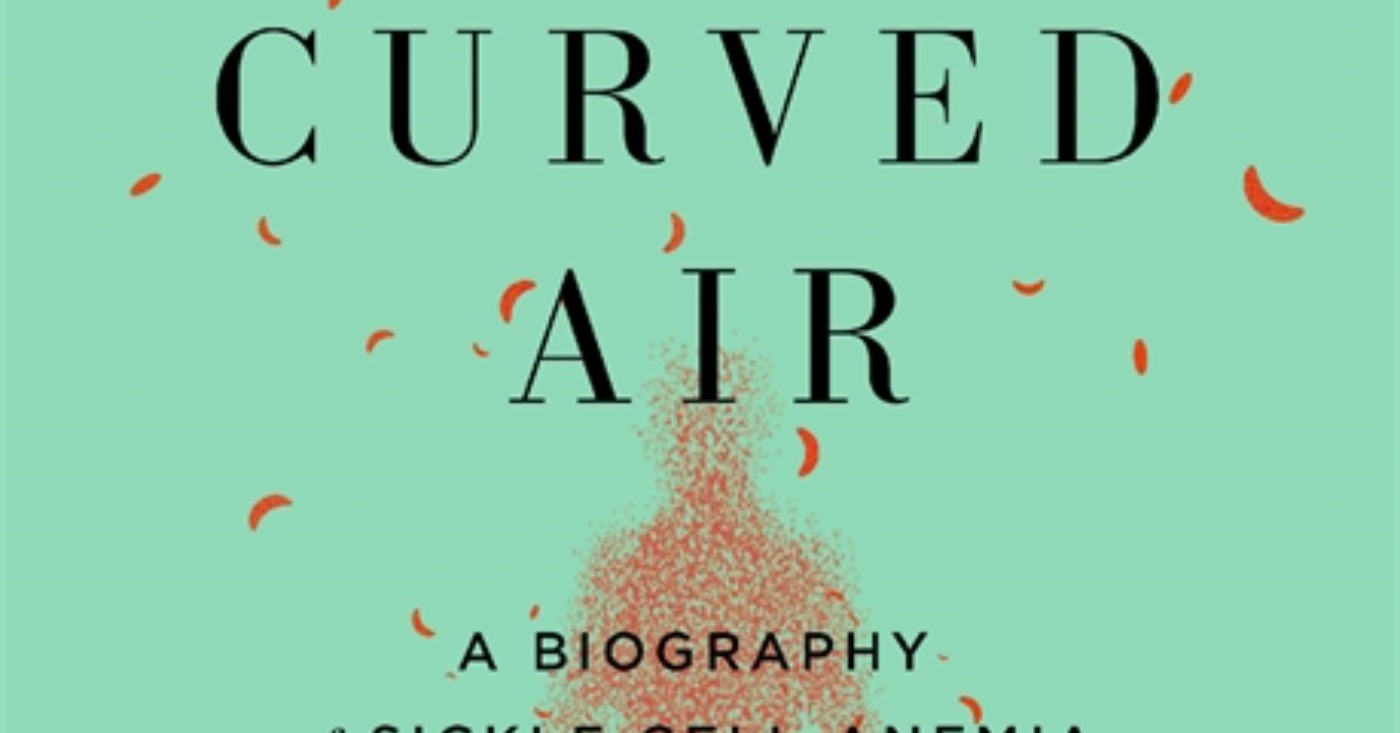
Copyright: c.2026, Publisher: The Belknap Press of Harvard University Press, SRP: $29.95, Page Count: 338 pages
Four weeks of testing, and you’re exhausted.
Two gallons of blood, maybe three, have been removed. No lie. You’ve laid on tables, slid through machines, been scanned so much you lost count and finally, your doctors have a diagnosis. As in the new book “Curved Air” by Kevin Davies, you have hope there’s a what next?
Though the disease was known in parts of Africa and likely existed here in the United States for hundreds of years, sickle cell disease (SCD) is a relative newcomer in disease research.
Says Davies, “Sickle cell was first identified more than 120 years ago” and it was considered as a “Black disease.” Because of that, discrimination followed “sickle cell warriors” and research was scant, though white people can and do get SCD.
With “agonizing” pain as a major symptom, “SCD is one of roughly seven thousand genetic diseases” currently known to science. When someone has SCD, a genetic mutation causes their red blood cells to curve and get stuck in blood vessels, rather than flowing freely as they should. This diminishes the oxygen supply “to various parts of the body… which causes inflammation and pain,” jaundice, stroke, and damaged organs. Anemia, Davies says, can leave a patient fatigued and short of breath. Anticipating pain crises causes anxiety and PTSD.

Says Davies, “More than forty million people carry” one copy of the genetic mutation that causes SCD, and “five hundred thousand affected” babies are born with the disease per year, worldwide.
Over decades, research was done haphazardly. Papers were written; treatments were tried, used, or discarded. Doctors discovered that genetic testing could prevent new cases, a heartbreak for would-be parents. Researchers discovered that “a perfect storm” of confluence spread SCD: malaria, human population, and mosquitoes.
There was always hope that someday, sickle cell disease might be cured.
Then, Clustered Regularly Interspaced Short Palindromic Repeats (CRISPR) gene-editing therapy was approved by the FDA, and a brave volunteer named Victoria Gray stepped forward…
So, you want to – need to – learn more about sickle cell disease? Is it imperative for you? Then, this is your book. But there are things you’ll want to know before you dive into “Curved Air.”
Because author Kevin Davies is the editor of The CRISPR Journal, you can expect up-to-date, cutting-edge information; but that’s a two-sided coin: the information is heavy-duty, not always easy to grasp, and it’s burdened by acronyms that can be overwhelming. Yes, that’ll inform you, but it may also send you elsewhere for further understanding, which really should’ve come from this book.
And yet, if you or someone you love has SCD, this is your book. It explains where the disease came from, why it hasn’t been completely cured yet, and what kind of hope you can hold. It’s a good start on a path to comprehension.
Also, be aware that the narrative here is sometimes padded with journalistic fluff that might annoy you if you’re eager to get to the science. Indeed, “Curved Air” will teach you. Then again, it also might test you.



Oakland Launches Aerbits Program to Identify, Report Abandoned Trash

Mayor Lee Announces $1 Million Kaiser Permanente Grant for Pilot Program to Address Homelessness, Clean Up Public Spaces throughout Oakland

Alameda County DA Ursula Jones Dickson Says Key to Optimal Use of DA’s Office Is Knowledge

Oakland Post: Week of September 16 – 22, 2026

NFL: Week Two Recap | Jalen Hurts did not fold; Caleb Williams exits game with injury

The Complete Negotiation Framework — Every Stage, Every Tactic, Every Win

Mazda CX-90 Luxury: Heated Seats & Premium Comfort! #shorts

Car Dashboard Glare: Avoid This Distraction! #shorts

Mazda CX-90 Safety: All Driver Assistance Features Explained #shorts

Subaru Outback: 19-Inch Wheels & 8.8″ Ground Clearance! #shorts

Unlock Car Deals: Avoid Hidden Costs & Negotiate Smarter #shorts

Event Preview: ‘Fashion v. Fascism’ – A Runway Revolution Is Coming to the Bay Area

Live from CBC 📱

Live from CBC

5 Easy Car Checks Before You Sign! #shorts

Department of Homeland Security Demands California Secretary of State Shirley N. Weber Scrub Voter Rolls

“The Power to See Threats Sooner”: Gov. Newsom, Safety Officials Showcase California’s Investments in Hi-Tech Wildfire Prevention

California Sen. Padilla Joins Colleagues to Introduce Bill Imposing Term Limits on Supreme Court Justices

Less Affluent School Districts, Including Sacramento City, Face Threat of State Takeover

Car Wash Workers Cope with Lingering Impacts of ICE Raids

ESSAY: California Can Close Its Colorectal Cancer Gap

As Part of Your Back-to- School Checklist, Vaccinate

Oakland ‘Port Serves as a Powerful Engine for Good Jobs and Economic Development

Gov. Newsom Announces $109.6 Million in Funding for 278 Supportive Homes in Bakersfield, Contra Costa, Sacramento and Fresno

California Hispanic Chambers of Commerce Unveils: ‘Powering the Future’ Theme for 47th Annual Statewide Convention

Congresswoman Simon Demands Investigation into Trump’s Abuse of Emergency Powers for Coal Export Terminal in West Oakland

Four Candidates, Including Incumbent Barbara Lee, Qualify for Oakland Mayor’s Race

Oakland Post: Week of August 12 – 18, 2026

From Blueprint to Breakthrough: Tackling Affordable Housing in Oakland

Oakland Observes Black August with Block Parties, Film Showings, Workshops

The Conversation With Al McFarlane 6/23/26

Media Monday 6/22/26

LIVE! ASK ALMA! — TUES. 6.23.26 7PM EST

Car Buying Secrets: 4 Hidden Checks Before You Sign!

Is This 550 HP Charger Worth YOUR Money? AutoNetwork Review

Celebrating Juneteenth – Frederick Douglass on education and resistance

LIVE! — ASK ALMA! — TUES. 6.19.26 7PM EST

Hyundai Ioniq 5 Parking, Safety, and 360 View #shorts

2025 Ioniq 5 New Wiper & Powerful Performance! #shorts

Electric SUV Range: Is 259 Miles Enough? #shorts

EV Charging: How Fast Can You Charge an Electric Vehicle? #shorts

Biometric Cooling… Messaging Seats…Come on! 2025 Infiniti QX80 Autograph 4WD

Charged Up: Witness the Magic of a Fully Electric Car! #shorts

Range Rover Sport PHEV Included…: See What’s Inside This Luxury SUV! #shorts

Invisible Hood View: Perfect Parking with X-Ray Vision! #shorts
-

 Commentary3 weeks ago
Standoff for Justice: Our Homes Are Worth Fighting For
-

 Activism3 weeks ago
Oakland Post: Week of August 26 – September 1, 2026
-

 Business3 weeks ago
Gubernatorial Candidate Steve Hilton Blasts California New Tire Rules; Newsom Hits Back
-

 Business3 weeks ago
Frontier Airlines’ Return to Oakland Airport Brings Flights, Jobs and Opportunity
-

 Business3 weeks ago
Chef Sharon Lee Blends Culinary Excellence, Education and Empowerment
-

 Education3 weeks ago
Gov. Newsom’s Latest Appointees Include Sacramento Advocate for Formerly Incarcerated Students; State’s New Tech Chief
-

 Business3 weeks ago
Oakland Coliseum Project Opens Door for Small Businesses to Build Bigger
-

 Community3 weeks ago
Big City Mayors Ask for “Yes” Vote on Housing Bond Measure; Conservatives Say “No”
