Connect with us

California Black Media

Sen. Padilla Blasts Supreme Court’s Decision Giving Trump Partial Immunity

U.S. Senator Alex Padilla (D-Calif.) condemned the United States Supreme Court Justices 6-3 decision last week granting former President Donald Trump partial immunity from criminal prosecution in his federal election subversion case. The recent court ruling makes Trump less likely to face trial before this year’s presidential election. The Supreme Court Justices’ decision delays the trial proceedings challenging the legal viability of the case overall.

Published

on

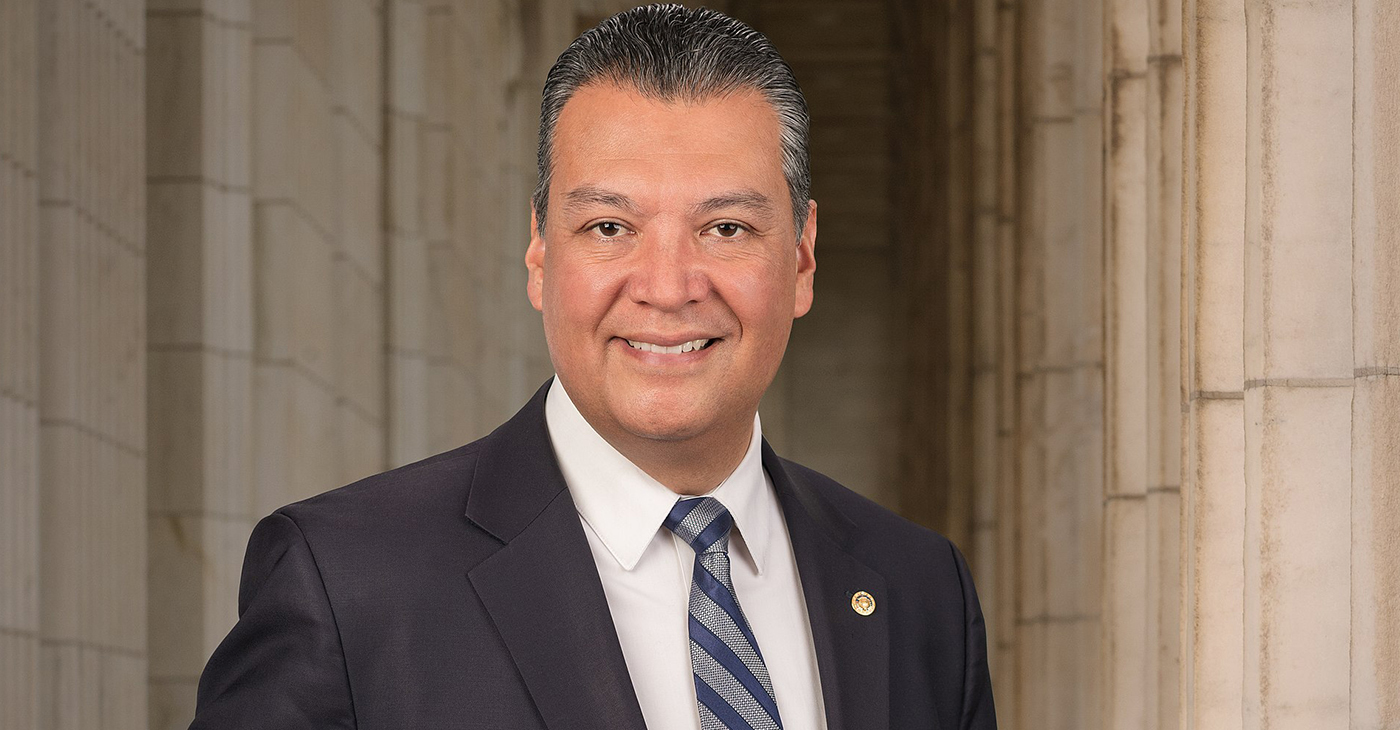
Sen. Alex Padilla (D-Calif.)

By Bo Tefu, California Black Media

U.S. Senator Alex Padilla (D-Calif.) condemned the United States Supreme Court Justices 6-3 decision last week granting former President Donald Trump partial immunity from criminal prosecution in his federal election subversion case.

The recent court ruling makes Trump less likely to face trial before this year’s presidential election. The Supreme Court Justices’ decision delays the trial proceedings challenging the legal viability of the case overall. In the court decision, Chief Justice John Roberts wrote that a president’s motive is irrelevant to the assessment nor is the fact that an action would have allegedly violated a generally applicable law.

Padilla denounced the court ruling accusing former President Trump of using handpicked justices to abuse the power of the executive and judicial offices for personal and political gain.

“Before today, America’s judicial system was rooted in the simple but fundamental principle that no one is above the law. Not Congress, not the courts, and not even the President of the United States. Today’s decision turns that most fundamental principle on its head,” said Padilla.

Law experts warned that the court ruling alters the possibility of consequences, allowing presidential powers to go unchecked except in the case of a possible impeachment.

Justice Sonia Sotomayor wrote a dissenting opinion arguing that the ruling reshapes the presidency and makes the president above the law. The court’s decision is a blow to the foundation of the U.S. Constitution and government system establishing that, no man is above the law.

“The President of the United States is the most powerful person in the country, and possibly the world. When he uses his official powers in any way, under the majority’s reasoning, he now will be insulated from criminal prosecution,” Sotomayor in her statement of dissent.

Continue Reading
Click to comment

Leave a Reply

Your email address will not be published. Required fields are marked *

Activism

On the Frontlines of Hate: NAACP Links Victims to Critical Support

The NAACP CA/HI has a long and well-established record of supporting victims of discrimination and hate crimes — providing critical referrals and, when necessary, direct assistance through legal advocacy and other forms of support. Beyond responding to incidents, the organization continues to advocate on broader civil rights issues, including voting rights and legal protections. It has also worked to counter efforts at the state and federal levels that could weaken the voting power of communities of color.

Published

on

NAACP members at a recent advocacy day in Sacramento urging lawmakers to protect voting rights. Photo courtesy of California Black Media.

By Joe Kocurek
California Black Media

The California/Hawaii State Conference of the NAACP (CA/HI NAACP) has expanded its efforts to respond to rising hate incidents and civil rights complaints across California, supported in part by funding from California’s Stop the Hate Program

Through that grant, NAACP CA/HI has strengthened its ability to connect individuals experiencing hate or discrimination with critical resources. This includes referring those who file complaints to the CA vs Hate hotline, a statewide, non-emergency hate crime and incident reporting hotline and online portal created to help counter a more than 50% increase in reported hate crimes in California between 2020 and 2024. The system helps ensure incidents are documented, and victims are guided toward appropriate support.

LaJuana Bivens says the work of NAACP is as urgent as ever. Photo by Regina Wilson, California Black Media.

LaJuana Bivens says the work of NAACP is as urgent as ever. Photo by Regina Wilson, California Black Media.

LaJuana Bivens, who has served in a number of roles within the NAACP, said California has seen an increase in civil rights violations and hate-related incidents.

“We have 52 branches, and they are constantly receiving complaints,” she said. “So, without the Stop the Hate, we would not be able to refer those cases up to attorneys at the state level. A lot of the people would not have had an opportunity to be heard.”

Carmen-Nicole Cox helps survivors of hate with their legal options. Photo courtesy of Carmen-Nicole Cox.

Carmen-Nicole Cox helps survivors of hate with their legal options. Photo courtesy of Carmen-Nicole Cox.

Carmen-Nicole Cox, an attorney who works with NAACP CA/HI – as a part of California’s Stop the Hate Program – provides legal consultation to victims of hate incidents and discrimination through her legal practice, the Cox Firm for Law and Policy.

She said the complaints she receives span a wide range of issues.

“People are having home builders and landlords refusing to provide repairs, a student was denied promotion in an academic program, and targeted scrutiny at work,” she said. “It’s typically employment; it’s housing; it’s education.

“We’ll meet and they’ll share their experiences,” she said. “And then I make assessments about possible legal claims.”

According to the California Civil Rights Department (CRD), nearly 1,200 reports of hate against minority groups were submitted in 2024 through the CA vs Hate hotline and online portal for non-emergency incidents.

While the California/Hawaii State Conference of the NAACP, which has tens of thousands of members, does not directly investigate hate incidents or crimes, it plays a key role in connecting victims to the state’s reporting systems and support services.

The NAACP CA/HI has a long and well-established record of supporting victims of discrimination and hate crimes — providing critical referrals and, when necessary, direct assistance through legal advocacy and other forms of support.

Beyond responding to incidents, the organization continues to advocate on broader civil rights issues, including voting rights and legal protections. It has also worked to counter efforts at the state and federal levels that could weaken the voting power of communities of color.

Bivens recently traveled to Sacramento to speak with state lawmakers about voting rights during an advocacy day event hosted by the organization.

“It’s just so hard for communities of color to be up to date because of all of the confusing information coming from the federal level,” she said. “I love our great state of California because here it is possible to vote by mail and to vote early.

“And I’m seeing that trying to be eroded. So, I’m here to urge continued support for vote by mail and early voting.”

When Texas moved to redraw congressional districts in ways critics said would dilute minority voting strength, NAACP CA/HI supported the passage of Proposition 50 in California. The organization also intervened in United States v. Shirley Weber, where federal officials sought access to unredacted California voter records, including Social Security numbers, raising concerns about misuse and voter intimidation.

Cultivating the advocacy and leaderships of young people is central to NAACP’s mission to fight racism and dismantle inequality. Photo courtesy of California Black Media.

Cultivating the advocacy and leaderships of young people is central to NAACP’s mission to fight racism and dismantle inequality. Photo courtesy of California Black Media.

A federal district court dismissed that case in January 2026.

The organization’s current work builds on a long history of civil rights advocacy. Today, Bivens says, the organization’s mission remains as urgent as ever.

“We are the oldest, boldest, most feared Civil Rights organization,” Bivens said. “What we do every day is fight for better housing, education, economic development and political inclusion. We take it on because there are just so many people who need that support.

“You would be amazed that our phones ring every single day.”

Get Support After Hate:

California vs Hate is a non-emergency, multilingual hotline and online portal offering confidential support for hate crimes and incidents. Victims and witnesses can get help anonymously by calling 833-8-NO-HATE (833-866-4283), Monday to Friday, 9 a.m.–6 p.m. PT, or online at any time. Anonymous. Confidential. No Police. No ICE.

This story was produced in partnership with CA vs Hate. Join them for the first-ever CA Civil Rights Summit on May 11. More information at www.cavshate.org/summit.

https://youtu.be/_k7UVhI-sN8

Continue Reading

Activism

Up to the Job: How San Francisco’s PRC Is Providing Work Opportunities That Turn Into Lasting Stability

Each year, PRC serves more than 5,000 clients through a wide range of programs. These include housing navigation, legal advocacy to ensure access to health and public benefits, supportive housing, job and life-skills training, and residential treatment programs. 

Published

on

Black Leadership Council (BLC) Advocacy Day in Sacramento. BLC works to advance meaningful change through policy engagement to unlock the full potential of Black and low-income communities. Photo courtesy of PRC.

By Joe Kocurek, California Black Media

Seville Christian arrived in San Francisco in the 1990s from Kansas City, Mo., a transgender woman coming from a time and place still hostile to who she was.

San Francisco offered a deeper LGBTQ+ history and a more visible community of people like her, but even in a city known for acceptance, building a stable life from scratch was no small task.

After arriving in the city, she turned to Positive Resource Center (PRC) looking for work — and for a foothold — in a new place.

“PRC gave me my first job,” Christian said. “A simple gig — passing out magazines at the San Francisco Pride Parade.”

That first opportunity marked the beginning of a decades-long relationship with PRC, one that has seen Christian grow from client to valued employee, and eventually to policy fellow.

“Today, I’ve been with PRC for 27 years, going on 28,” she said.

Seville Christian’s decades-long relationship with PRC includes as a client, fellow and beloved employee. Photo courtesy of PRC.

Seville Christian’s decades-long relationship with PRC includes as a client, fellow and beloved employee. Photo courtesy of PRC.

Helping people access employment and build sustainable careers has been a cornerstone of PRC’s mission since its inception nearly four decades ago. In its most recent annual impact report, PRC served 443 clients through workforce development services, including career counseling, educational programs, hands-on training, and job search assistance. The average wage earned by PRC clients is $26.48 per hour — approximately 38% above San Francisco’s minimum wage.

To advance this work, organizations like PRC have benefited from funding through California’s Stop the Hate Program, which provides direct support to community-based organizations leading anti-hate initiatives.

Christian’s path was not without challenges. During some rocky years, she experienced periods of housing instability and struggled with addiction. Through PRC, she enrolled in a life-skills program that emphasized using her own lived experience as a means of helping others. The program helped set her on a path toward completing an associate’s degree and ultimately launching a career in case management.

“Today, whether someone is new to the city or has lived here their whole life, I know how to help them navigate to where they need to be,” Christian said.

Each year, PRC serves more than 5,000 clients through a wide range of programs. These include housing navigation, legal advocacy to ensure access to health and public benefits, supportive housing, job and life-skills training, and residential treatment programs.

Members of PRC’s Black Leadership Council meet with a lawmaker in Sacramento. Photo courtesy of PRC.

Members of PRC’s Black Leadership Council meet with a lawmaker in Sacramento. Photo courtesy of PRC.

While PRC was founded to serve people living with HIV, its mission has expanded over the decades to meet the needs of people with disabilities, individuals experiencing homelessness, and those facing mental health and substance use challenges.

According to PRC’s Chief of Public Policy and Public Affairs, Tasha Henneman, some of the organization’s earliest programs remain as vital today as they were at the start.

“Our emergency financial assistance program helped more than 1,200 people this year pay rent, cover medical bills, and keep the lights on,” Henneman said. “And over 1,400 people reached out for legal advocacy, resulting in more than $2.5 million in retroactive benefits unlocked.”

Beyond direct services, PRC is deeply committed to community empowerment and policy change. Programs such as the Black Leadership Council support community leaders in advocating for systemic reform, while the Black Trans Initiative focuses on addressing the unique challenges faced by Black transgender individuals.

A recent study from the Williams Institute highlighted findings that 71% of transgender homicide victims in the U.S. between 2010 and 2021 were Black and that nearly a third of the transgender homicides during that period were confirmed or suspected hate crimes.

PRC’s direct and indirect services can be a lifeline for people experiencing hate and are an example of the resources people can get connected with through the state’s CA vs Hate hotline.

PRC is now also producing a film project that centers the lived experiences of Black trans clients, including individuals like Christian.

PRC welcomed guests to their annual Open House in April, an evening dedicated to connection, reflection, and learning more about the programs and people working every day to support San Franciscans experiencing housing instability, unemployment, and behavioral health challenges. Photo courtesy of PRC.

PRC welcomed guests to their annual Open House in April, an evening dedicated to connection, reflection, and learning more about the programs and people working every day to support San Franciscans experiencing housing instability, unemployment, and behavioral health challenges. Photo courtesy of PRC.

“Our film highlights the health journeys and lived experiences of some of PRC’s Black trans clients,” Henneman said. “Our goal is to give voice, visibility, and agency to the participants — and to bring their stories, both harrowing and inspirational, to policymakers and the broader public.”

The film, expected to be released later this year, is directed by Yule Caise, with assistant director Zarina Codes, a Black transgender San Francisco resident.

Today, Christian continues her relationship with PRC as an ambassador, reflecting on a journey that began with a single job opportunity and grew into a lifelong commitment to service.

“Sometimes I’ll be riding the bus or standing in a grocery store, and someone will come up to me from a women’s shelter,” she said. “They’ll say, ‘Oh, Miss Seville, I just want to thank you. You really helped me with what I was dealing with.’”

She paused, smiling.

“And in those moments,” Christian said, “I think to myself, “Well!.”

A single word that sums up pride in a journey to find the best in herself.

Get Support After Hate:

California vs Hate is a non-emergency, multilingual hotline and online portal offering confidential support for hate crimes and incidents. Victims and witnesses can get help anonymously by calling 833-8-NO-HATE (833-866-4283), Monday to Friday, 9 a.m.–6 p.m. PT, or online at any time. Anonymous. Confidential. No Police. No ICE.

This story was produced in partnership with CA vs Hate. Join them for the first-ever CA Civil Rights Summit on May 11, 2026. More information at www.cavshate.org/summit.

Continue Reading

Activism

Oakland Post: Week of April 22 – 28, 2026

The printed Weekly Edition of the Oakland Post: Week of April 22 – 28, 2026

Published

on

To enlarge your view of this issue, use the slider, magnifying glass icon or full page icon in the lower right corner of the browser window.

Continue Reading

Subscribe to receive news and updates from the Oakland Post

* indicates required

CHECK OUT THE LATEST ISSUE OF THE OAKLAND POST

ADVERTISEMENT

WORK FROM HOME

Home-based business with potential monthly income of $10K+ per month. A proven training system and website provided to maximize business effectiveness. Perfect job to earn side and primary income. Contact Lynne for more details: Lynne4npusa@gmail.com 800-334-0540

Facebook

Trending

Copyright ©2021 Post News Group, Inc. All Rights Reserved.