
#NNPA BlackPress
Howard University Homecoming: Elders of The Mecca reflect on homecoming traditions
By: Amber D. DoddSpecial to the AFRO adodd@afro.com Homecoming may be a longstanding tradition at all universities, but Howard University’s homecoming is like no other. From all walks of life, alumni, students, friends and family, all gather in Washington D.C. to celebrate the lifelong bonds that Howard University has fortified. But, surviving the latest pandemic and […]
The post Howard University Homecoming: Elders of The Mecca reflect on homecoming traditions first appeared on BlackPressUSA.


By: Amber D. Dodd
Special to the AFRO
adodd@afro.com
Homecoming may be a longstanding tradition at all universities, but Howard University’s homecoming is like no other.
From all walks of life, alumni, students, friends and family, all gather in Washington D.C. to celebrate the lifelong bonds that Howard University has fortified. But, surviving the latest pandemic and the everchanging dangers of being Black in America, these reunions and long-time-no-sees hugs resonate harder for older alum.
“This is going to be with you forever, take advantage of your time, even when the worldbeats you up, you can always come home. This is a safe haven from all the riff raff in the world.”
Elder alums spoke to the AFRO about the magic of Homecoming and how reconnecting with old friends, supporting their community and returning to Howard reignites their spirits.
Saturday morning, tailgaters and members of the Beta chapter of Alpha Phi Alpha set up their tents in the parking lot across from Starbucks and food as they chatted after the homecoming parade. 2023 marks 47 years in the Alpha fold for Jonathan Johnson of Mt. Vernon, N.Y., 70, who graduated with a political science degree in 1974. “Because of Howard, I was prepared for the world,” he said.
“Howard has been great to me, I got a great education. I worked downtown at the White House and the folks from Harvard or Yale could tell me nothing because I went to Howard,” Johnson said. “My degree took me all over the world, in every continent except Antarctica.”
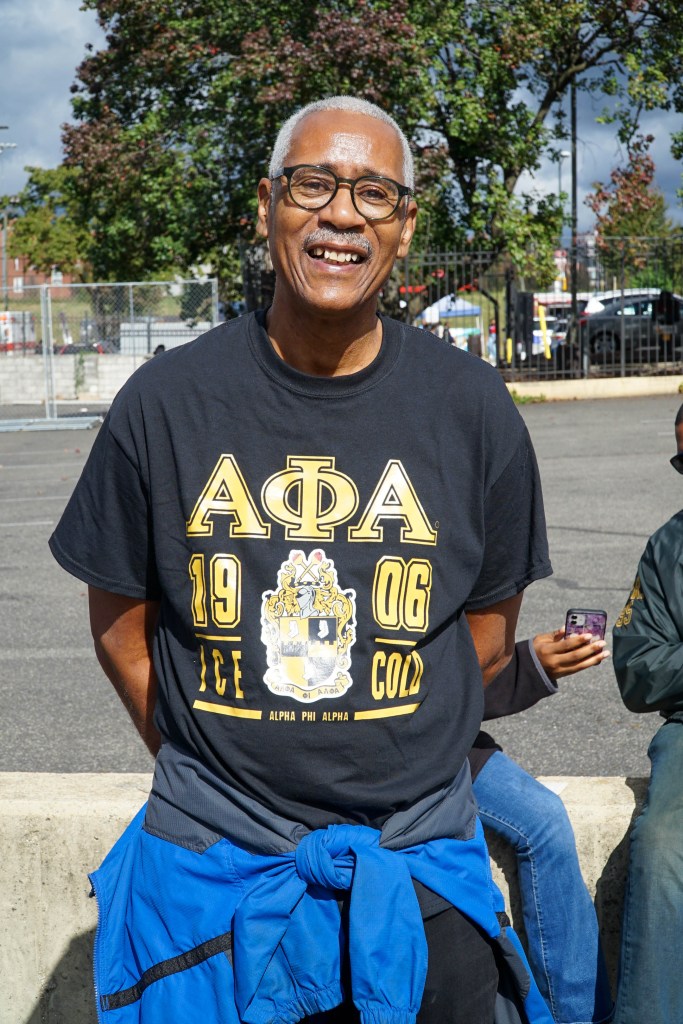
One of the eldest members present from the Beta chapter, Johnson said he returned to enjoy the festivities and boasted about the Alpha’s Homecoming Greek Step Show win on Friday night. He visited his old dorm room in Cook Hall Room 129 and found landmarks where he met his wife of 47 years, Bonny, on campus.
“It’s good to see Howard has grown, it’s good to see that Howard is still the Black Mecca and the leader of HBCUs.” Johnson said.
Brian Watkins, another Beta chapter member and 1990 graduate, called Howard the “best four years of my life.”

“Homecoming is home, it’s reconnecting, it’s reenergizing, it’s just so welcoming to be back, I want everyone to experience this.” He said.
Watkins says that the biggest difference in the Howard experience today is DC’s cost of living and the definition of fellowship.
“HBCUs have to compete for the best Black minds now, and I think Howard’s doing pretty well, but I am concerned about the cost of tuition and housing,” Watkins said. “This is all great, but students can’t afford to live here. I talk to parents and they’re talking about paying $1,500 a month for housing. Plus, college is competing with so many other things for these kids’ attention. All we had to do was leave the dorm and that was our whole day right there.”
Saturday’s biggest draw was the football game against Norfolk State University. This year, football alum Richard McGee, a 71-year-old Washington D.C. native, returned to William H. Greene Stadium 43 years after his last game as a offensive lineman in 1980.
McGee said that there was a “collective understanding” about the importance of education for Black men and general feelings at the time.
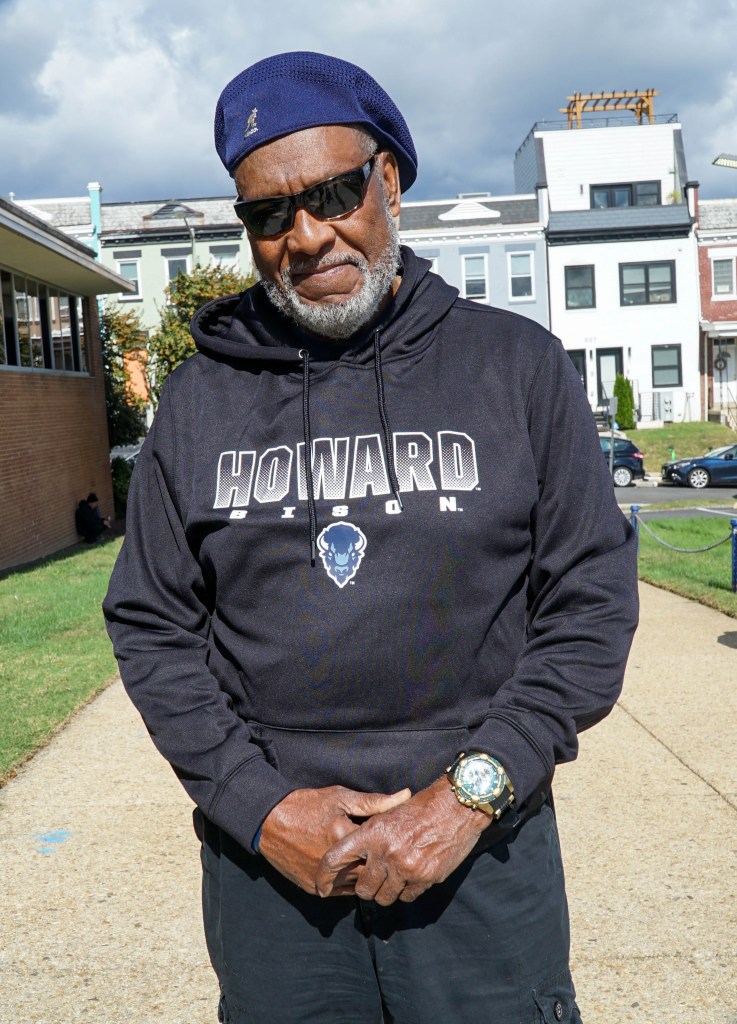
“We all felt that we were all in a serious time, because the Vietnam War was going on at that time, and the one thing that brought you to reality is to know that you can be sent to the war at any time,” McGee recalled. “You flunked out, you were in the jungle the next year.”
In high school, he integrated the Bladensburg High School football team. While alone in that experience, his fellow Howard teammates also broke the color barrier at their respective schools too.
McGee is a member of the Howard University Football Hall of Fame 2005 class and said that, with Howard’s long standing traditions still honored at the best Homecoming of all time, it shows the consistent Black excellence that the University produces.
“This is going to be with you forever, take advantage of your time, even when the world beats you up, you can always come home. This is a safe haven from all the riff raff in the world.” McGee said.

While patrons filtered into the stadium for the Howard Bison’s homecoming battle against Norfolk State University, many ignited old flames and friendships with familiar faces. This was the case for a trio of Howard women from the Class of 1987, Yolanda Rowell, Felicia Carpenter and Deitre Epps. They reflected on Howard’s political landscape in the 80s and how daughters of Black revolutions around the world were flocking to the Mecca.
“We were here with Stevie Wonder, and we marched right up to Washington to make Martin Luther King’s birthday a [federal] holiday,“ Rowell said. Epps also mentioned students being arrested for protesting the apartheid at the South African embassy.
“Jesse Jackson was running for president, and that was one of our first Black men on the ticket,” Rowell said. “Boogie Down Productions, Public Enemy, they were my favorite groups. At the time, our radicalism was perfect. It spoke volumes to me.” Rowell said.
Now at homecoming this year, they chatted about the goals they’ve accomplished, the everyday whereabouts and the children they’ve raised. With these new updates, it’s true that with distance, Epps said, the heart does grow fonder.
“Imagine how that felt after 40 years,” Epps said. “It felt like a belonging, home, family, remembered, cherished, all of those things. Some of this stuff doesn’t come back immediately, but what does come back is that feeling.”
“Yesterday, Felicia said that we’re going to meet up with Yolanda, I said I don’t remember her until she started describing her and then I had this “ding!” moment, asking ‘Wait, Yolanda with her hair like that?! Who curled it under with a bump curl? An image of her 40 years ago popped in my head.”
Rowell beamed with pride for another one of their classmates: United States Vice President Kamala Harris.
“We’ve got the vice president from here, and just to see her hold it down, I just see ‘truth and service’ all in it,” Rowell said of Howard’s motto. “I think there was a torch being passed from Thurgood Marshall being the first Black Supreme Court Justice. She’s not sitting in the seat, Kamala is working and that’s the beauty of it.”
In a thriller Homecoming game against the Norfolk State Spartans, Howard University battled for a 27-23 victory in Greene Stadium Saturday afternoon.
At halftime, the 1993 football team were honored for their 30-year anniversary. Under head coach Steve Wilson, the team went undefeated in that season, winning the 1993 MEAC conference title. Doug Morency was an offensive lineman at that time, and beamed with pride at the stadium-wide recognition.
“Coming back 30 years later, seeing how Howard has progressed and how the team has progressed, it warms [my] heart because I was part of this foundation,” Morency said. “It’s really beyond football. Football was just a catalyst.”
Morency recalled the love he shared with his teammates, calling them brothers that “never lost touch.” He said that Howard’s homecoming festivities are a testament to the University’s ability to build lifelong friendships throughout the Black community.
“We bled together, cried together, won together, fought together, and DC was a different time back then, we had to stick together to survive,” Morency said. “Thirty years later, we’re still close. We have lawyers, doctors, vice presidents, Olympians, congress people, you name it. It’s about life after football as a Howard man.”
The post Howard University Homecoming: Elders of The Mecca reflect on homecoming traditions appeared first on AFRO American Newspapers .
This article originally appeared in The Afro.
The post Howard University Homecoming: Elders of The Mecca reflect on homecoming traditions first appeared on BlackPressUSA.





#NNPA BlackPress
2026 Lucid Air Grand Touring Review — Is This $136K EV Sedan Worth It?
AUTONETWORK ON BLACKPRESSUSA — Finished in Stellar White Metallic with the Tahoe Grand Touring interior, this Lucid makes a strong first impression. The shape is sleek and low, but it still feels elegant instead of trying too hard. Features like soft-close doors, powered illuminated door handles, 20-inch Aero Lite wheels, and the Glass Canopy Roof help the car feel expensive before you even start it.

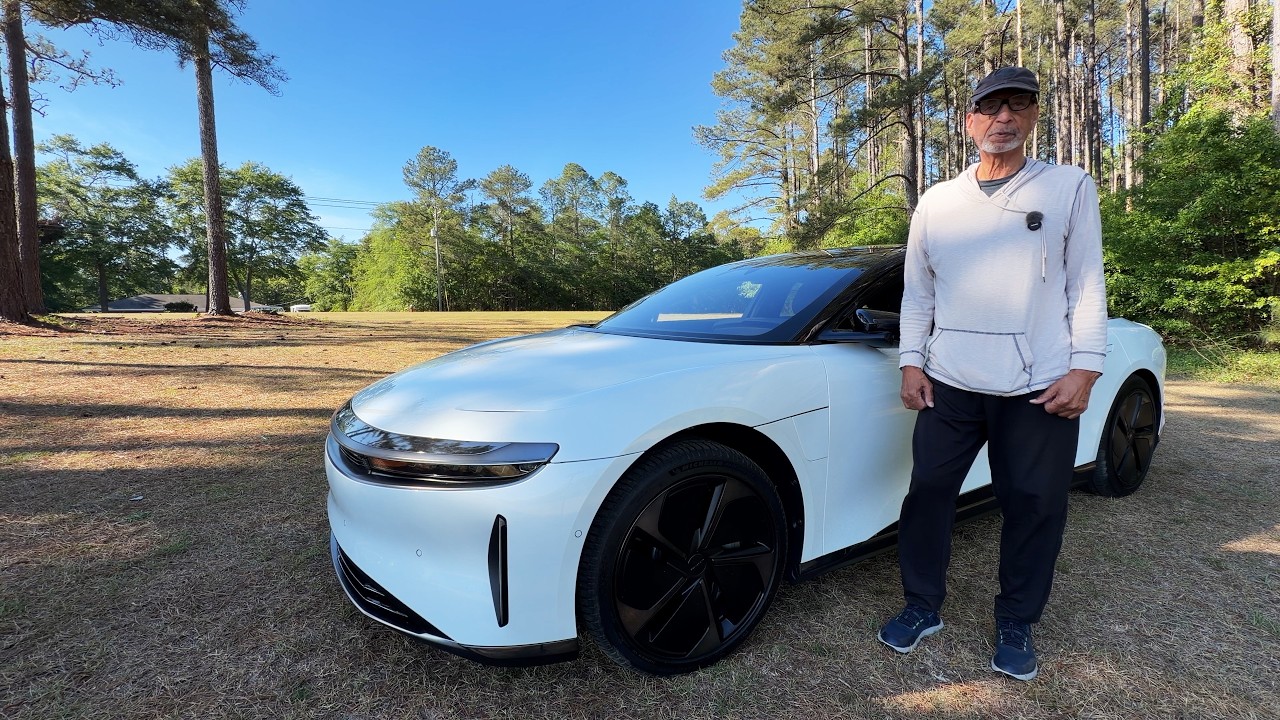
The 2026 Lucid Air Grand Touring is the kind of luxury EV that makes people stop and ask a simple question: Is this really better than a Tesla Model S, Mercedes EQS, or BMW i7? At $136,150, it has to do more than look futuristic. It has to feel special every time you get in it.
Finished in Stellar White Metallic with the Tahoe Grand Touring interior, this Lucid makes a strong first impression. The shape is sleek and low, yet it still feels elegant rather than trying too hard. Features like soft-close doors, powered illuminated door handles, 20-inch Aero Lite wheels, and the Glass Canopy Roof help the car feel expensive before you even start it.
Inside is where the Air Grand Touring really makes its case. The 34-inch Glass Cockpit Display and retractable Pilot Panel screen give the cabin a clean, modern look that still feels different from other EVs. The Tahoe Extended Leather and Lucid Black Alcantara headliner lifts the sense of occasion, and the front seats are a highlight. They are 20-way power-adjustable, heated, ventilated, and include massage. That matters because luxury buyers at this price expect comfort first.

Rear passengers are not ignored either. You get 5-zone heated rear seating, a rear center console display, and power rear and rear side window sunshades. Add in the Surreal Sound Pro system with 21 speakers, and the Air feels like a true long-distance luxury sedan.
Lucid also gives this car serious EV hardware. The dual-motor all-wheel-drive system, 900V+ charging architecture, and Wunderbox onboard charger are big talking points. Buyers in this segment care about range, charging speed, and everyday ease, not just raw performance. That is where the Lucid continues to stand out.
On the technology side, the Air Grand Touring includes DreamDrive Premium, with 3D Surround View Monitoring, Blind Spot Warning, Automatic Park In and Out, Automatic Emergency Braking, and a Driver Monitoring System with distracted and drowsy driver alerts. This one also has DreamDrive Pro, which adds future-capable ADAS hardware.
There are still some real-world annoyances. Based on your notes, the windshield wiper control is hard to find and use, and that matters more than people think in a high-tech car. When controls become less intuitive, even a beautiful interior can feel frustrating.
Still, the 2026 Lucid Air Grand Touring succeeds where it matters most. It feels luxurious, advanced, comfortable, and thoughtfully engineered. For buyers who want an EV sedan that feels truly premium and less common than the usual choices, this Lucid makes a very strong case.
AutoNetwork helps serious car shoppers inspect any new vehicle online before walking into a dealership. I’m Roosevelt — I’ve been reviewing cars and shaping digital car buying and credit union auto leasing since before YouTube car reviews existed.
You’ll find detailed walkaround reviews, POV test drives, and buyer-focused breakdowns covering comfort, space, features, and real-world value.
How to use the channel:
Watch the walkaround of the car you’re considering
Visit AutoNetwork.com for the full review
Check CouponsOffersAndDeals.com for current dealer specials
Walk in already knowing what you want — and what it should cost
Live talk show “AutoNetwork Reports” — Thursdays 3:00 PM ET.
 AutoNetwork.com
 CouponsOffersAndDeals.com
Affiliate disclosure: some links earn a small commission at no cost to you and help support the channel. Insta360 is one of those partners.

#NNPA BlackPress
Snoop Dogg Celebrates 10 Til’ Midnight at the Compound
LOS ANGELES SENTINEL — The album is paired with a film that stars Snoop Dogg, Hitta J3, G Perico, and Ray Vaughn, and one of the strongest elements of the whole project is that the production stayed rooted right here in Los Angeles.

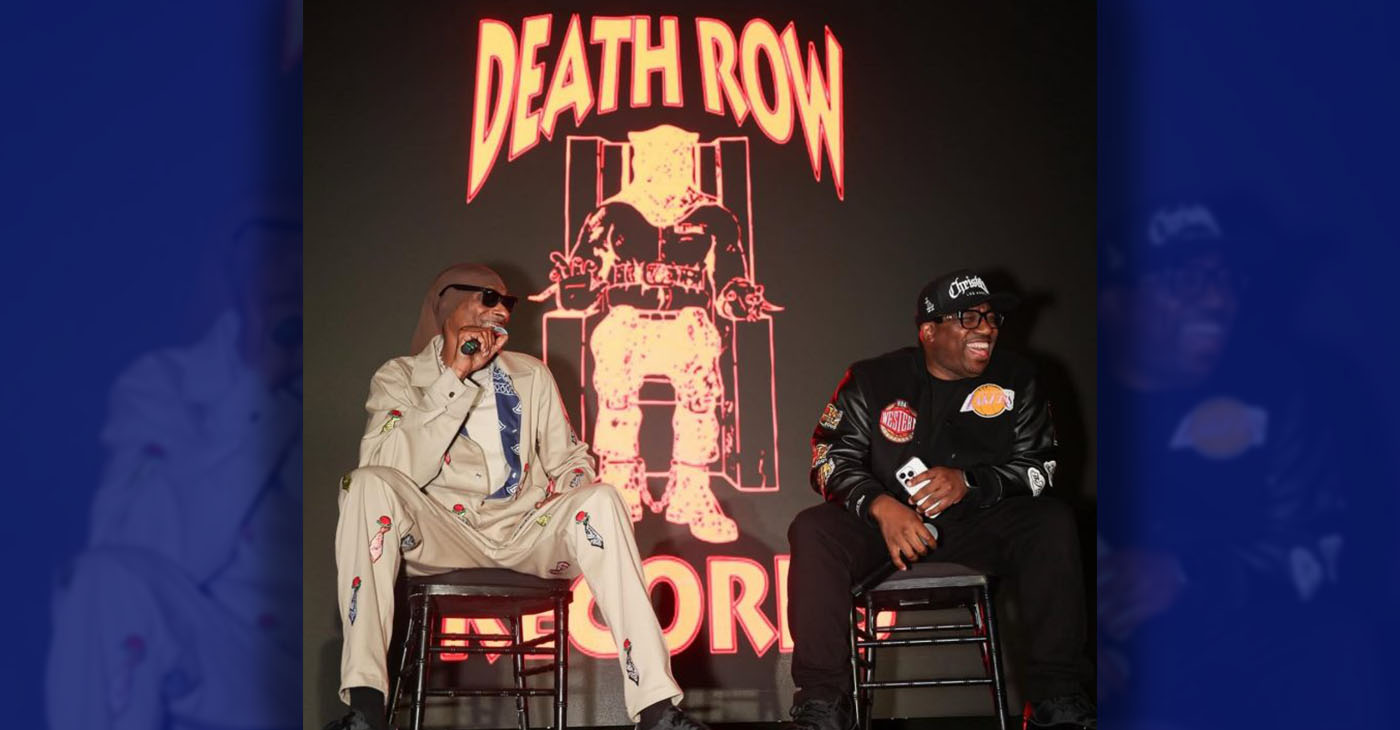
Snoop Dogg celebrated the premiere of 10 Til’ Midnight at his Inglewood recording studio & multipurpose facility, The Compound, but the night felt like much more than an album release. It felt like Los Angeles. It felt like legacy. And it felt like another major move from one of the city’s greatest cultural architects as he continues to prove that he is not just dropping music — he is building moments, shaping narratives, and pushing the culture forward in real time.
What made the event so powerful was the clarity behind the vision. During a panel conversation with DJ Hed, Snoop opened up about the heart behind 10 Til’ Midnight, explaining that the project was created to help bridge older and younger generations while also speaking to the long-standing divisions between Bloods and Crips in a unique way through film. That alone gave the project a different kind of weight. This was not just about songs. This was about using creativity as a tool for connection. This was about taking a story rooted in Los Angeles and telling it in a way that could bring people together.
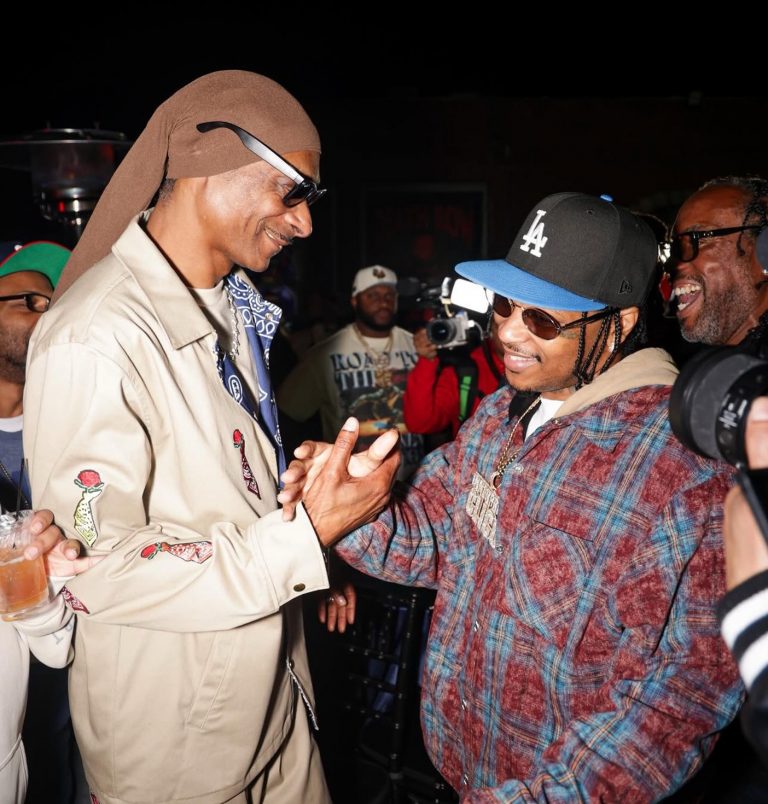
Snoop Congratulated By Rapper & Fellow 10 Til Midnight Cast Member G Perico (CreativeLB/KreativeKapturez)
The album is paired with a film that stars Snoop Dogg, Hitta J3, G Perico, and Ray Vaughn, and one of the strongest elements of the whole project is that the production stayed rooted right here in Los Angeles. The film was shot in the city, including at WePlay Studios in Inglewood, which gave the entire project an even deeper hometown feel. It was not just a West Coast story in content — it was a Los Angeles-made production from the ground up.
That matters because, in a city like this, authenticity still carries weight. Snoop understands how to make sure that what he creates does not just represent Los Angeles on the surface, but actually comes from it.
What also makes 10 Til’ Midnight significant is that it represents another major step in Snoop’s evolution as both an artist and executive. Public reporting around the project identifies it as his 22nd studio album, but the bigger story is what it represents in this season of his life. This is one of several consecutive moves he has made in his 50s that show he is still building, still expanding, and still finding new ways to reinvent what the next chapter looks like.
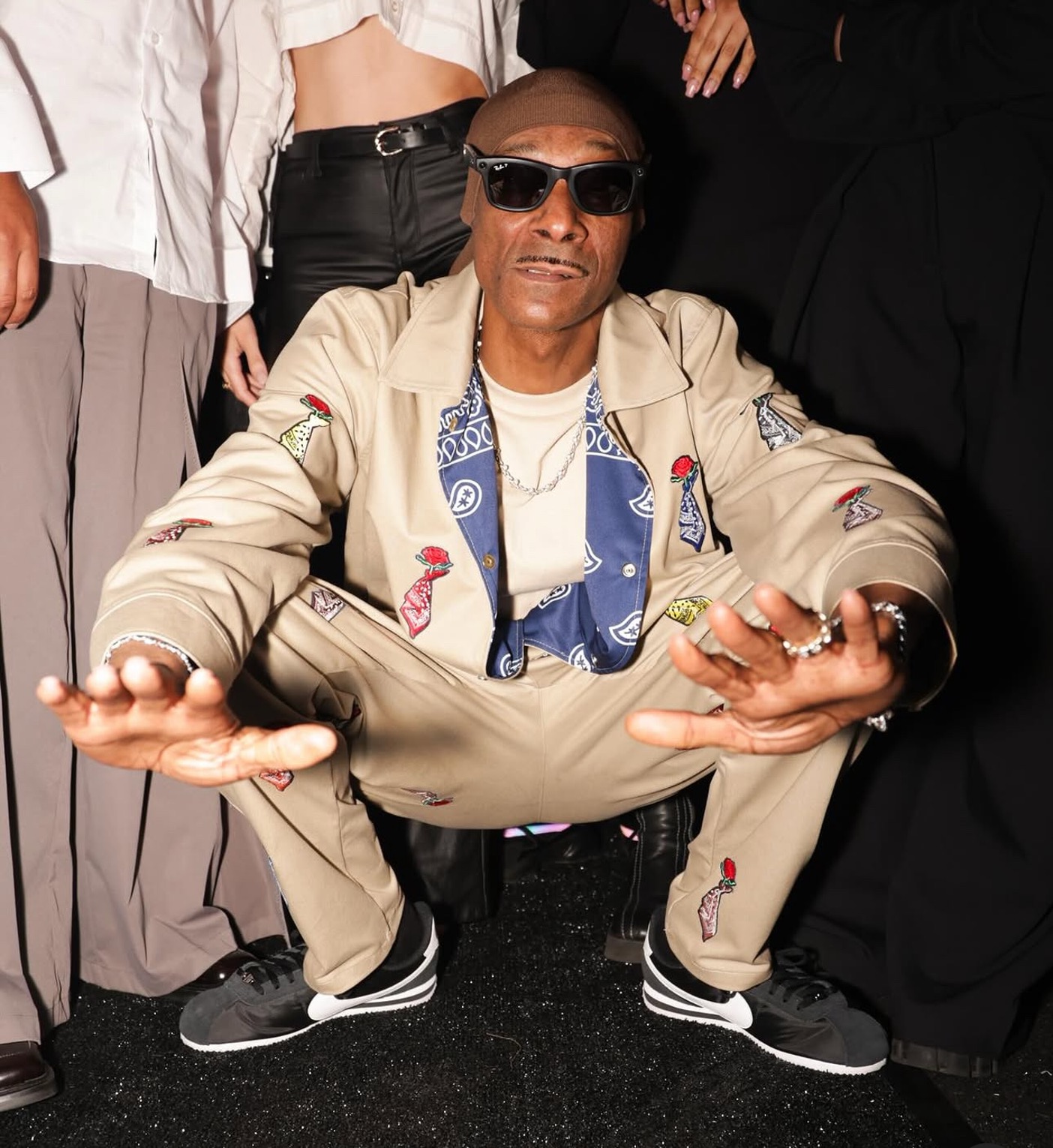
Snoop Dogg at the Premiere of 10 Til Midnight (CreativeLB/KreativeKapturez)
Now, as the head of Death Row Records and the newly aligned leader of Death Row Pictures, he is taking the brand into a new dimension. That is what made this moment feel bigger than music. Snoop is not just protecting the legacy of Death Row — he is stretching it. He is expanding it beyond records and into film, visual storytelling, and larger creative worlds that can continue carrying the label’s impact forward. Public reporting has noted that this project arrives as part of that broader cinematic push.
That is a major Los Angeles move because the city has always been built on the intersection of music, film, neighborhood identity, and cultural storytelling. With 10 Til’ Midnight, Snoop is leaning all the way into that intersection.
The room at The Compound reflected that. It felt like a private premiere, but it also felt like a statement — a reminder that Snoop Dogg’s staying power has never been based only on nostalgia. It comes from his ability to remain connected, remain visionary, and remain in tune with how to move the culture without losing the essence of who he is.
That is why this premiere mattered. It was not just about celebrating another album. It was about witnessing a Los Angeles legend continue to evolve, continue to unify, and continue to use art to tell stories that hit deeper than entertainment alone.
In that sense, 10 Til’ Midnight became more than a project launch. It became another example of how Snoop Dogg is still taking Los Angeles to the next level — using music, film, and legacy together to build something bigger than a moment.

#NNPA BlackPress
OP-ED: Small Businesses Need Minnesota to Act on Pass-Through Tax Policy
MINNESOTA SPOKESMAN RECORDER — A Twin Cities immigrant entrepreneur who built several businesses including grocery stores in underserved neighborhoods is calling on Minnesota lawmakers to extend the Pass-Through Entity tax option before it expires, warning that its loss would hit small businesses already recovering from Operation Metro Surge with higher federal tax bills.
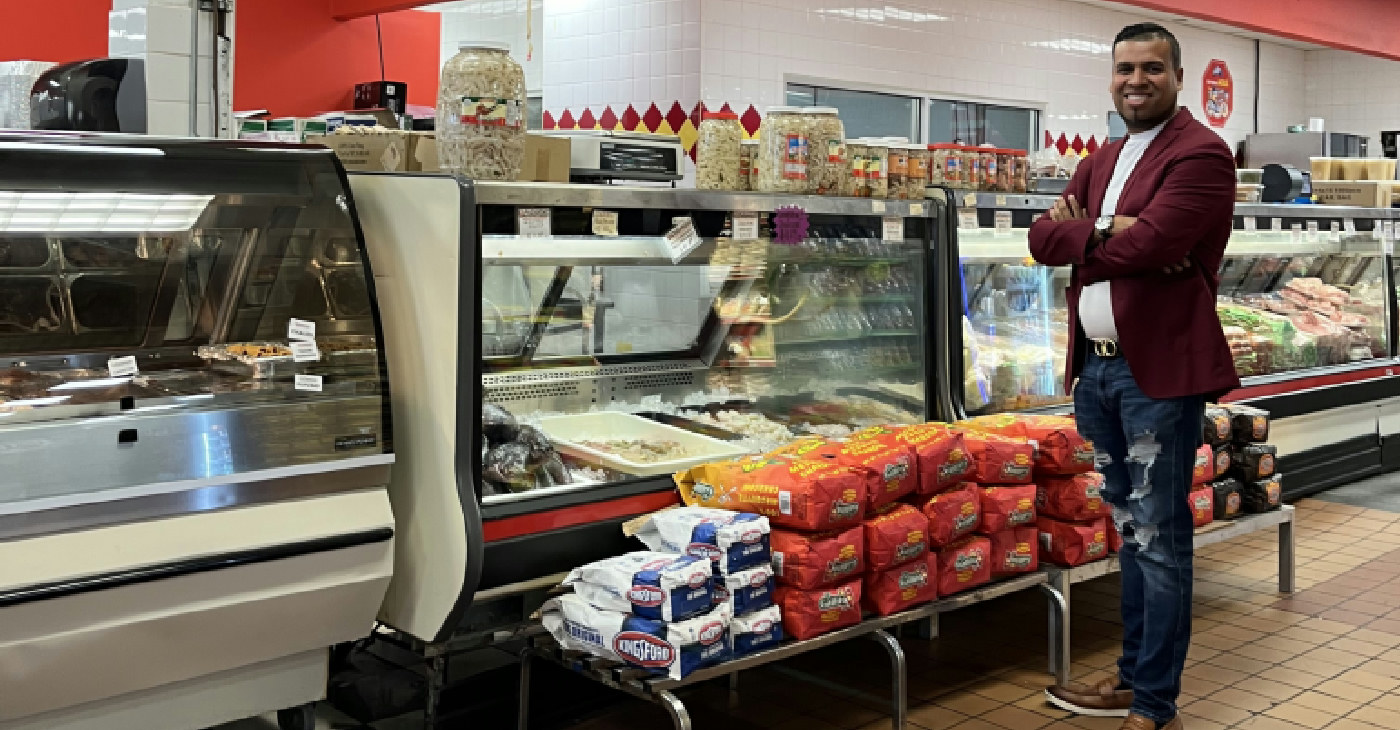
A Twin Cities Small Business Owner Is Urging Minnesota to Extend a Tax Policy That Could Save Thousands of Businesses
By Daniel Hernandez | Minnesota Spokesman Recorder
I came to the United States as a teenager with a clear goal: to build something meaningful through hard work. I put in long days in construction, restaurants, and landscaping; doing whatever it took to learn, save, and eventually start my own business.
Over time, I built and ran several successful ventures, including an event photography company, a magazine, a tax and accounting firm, and now grocery stores serving neighborhoods across the Twin Cities where other retailers chose not to invest. I’ve created jobs, supported families, and committed to communities that deserve stability and opportunity.
That’s why I’m speaking out now.
Small business owners in Minneapolis and the communities we serve are recovering from serious disruptions, including the impacts of Operation Metro Surge. That event hit immigrant communities especially hard. In my own case, I lost nearly half of my 60 employees and saw revenue drop by about 85%. While I worked to provide competitive wages, health benefits, and paid time off, the real hardship fell on the people who lost their jobs and income.

Even as we rebuild, small businesses are facing another challenge. The Minnesota Legislature is considering letting an important tax policy expire: the Pass-Through Entity tax option.
Here’s what that means in plain terms.
Many small businesses, including mine, are pass-through businesses. That means the business itself doesn’t pay income tax. Instead, the owners report the income on their personal tax returns. But under current federal rules, there’s a limit on how much state tax we can deduct. That often leads to higher federal tax bills.
The Pass-Through Entity option fixes that. It allows the business to pay the state tax directly, which means the business can fully deduct those taxes on its federal return and lower the total amount of income taxed federally. The result is straightforward: small business owners pay less in federal taxes, without reducing what the state collects.
This policy is not new or controversial. Thirty-six states already offer it. It doesn’t cost Minnesota anything, it’s revenue neutral. And it benefits more than 66,000 businesses across the state.
In a state where the cost of doing business is already high, it’s hard to understand why we wouldn’t offer the same basic tax treatment as states like California and Illinois.
Small businesses have carried a heavy load in recent years, through a pandemic, rising costs and public safety disruptions. We’ve adapted, reinvested and stayed committed to our communities. What we need now are practical policies that support that work, not make it harder.
If the Minnesota House does not act soon, many businesses will face significantly higher federal tax bills. That’s money that could otherwise be used to hire workers, raise wages or reinvest in local neighborhoods.
I urge Gov. Tim Walz and members of the House Tax Committee to pass House File 3127 and extend the Pass-Through Entity election.
Small businesses are the backbone of our communities. We’ve proven our resilience. Now we need our state leaders to show the same commitment to us.
Daniel Hernandez is the owner of Colonial Market located at 2100 E. Lake St.
Excerpt:
Photo Captions:
Website Tags and SEO Keywords:
Twitter (X) Tags and Handles:


WORK FROM HOME
Home-based business with potential monthly income of $10K+ per month. A proven training system and website provided to maximize business effectiveness. Perfect job to earn side and primary income. Contact Lynne for more details: Lynne4npusa@gmail.com 800-334-0540


Oakland Mayor Pushes Charter Overhaul to Clarify Roles in City Government, Increase Accountability and Improve Service Delivery

The Ladies of Delta Sigma Theta Hold Day of Advocacy at the Capitol in Sacramento

Rep. Kamlager-Dove Introduces Bill to Protect Women in Custody After Reports Detailing Miscarriages and Neglect

Q&A with Steven Bradford: Why He Wants Your Vote for California Insurance Commissioner

OPINION: The Fire of Oakland’s Justin Jones

How Is AI Affecting California? The State Wants You to Share Your Story

California Launches Free Diaper Program for Newborns Statewide

Book Review: Books for College-Bound Students

Asm. Jackson Bill Requiring Anti-Hate Speech Training for Calif. Public Officials Sent to “Suspense File”

More and More, Black Californians Are Worried About Rising Costs of Housing, Energy, Food and Gas

Advocates Rally at State Capitol to Demand Heat Protections for Incarcerated People; More Funding for DV Survivors

Coming to Orinda: A Lecture on Finding the Strength to Heal and Move Past Fear With Divine Love

EBMUD Enshrines the Legacy of its First Black Board Member William ‘Bill’ Patterson

Against All Odds: Mary Jackson’s Journey to NASA Engineer

Supreme Court Voting Rights Ruling Reverberates From the South to California

Stanford Health Care Collaborates with Alameda Health System Affiliate, Expanding Access to Care in East Bay

Oakland Post: Week of April 15 – 21, 2026

Mayor Barbara Lee Proclaims April 9 as ‘100 Black Men of the Bay Area Day’

Up to the Job: How San Francisco’s PRC Is Providing Work Opportunities That Turn Into Lasting Stability

Oakland Post: Week of April 22 – 28, 2026

Building Bridges of Support: How AAPI Equity Alliance Is Strengthening California’s Anti-Hate Network

Up to the Job: How San Francisco’s PRC Is Providing Work Opportunities That Turn Into Lasting Stability

2026 Mazda CX‑90 PHEV Premium Plus — Luxury SUV or Overpriced Plug‑In? | Walkaround Review

OP-ED: Small Businesses Need Minnesota to Act on Pass-Through Tax Policy

Snoop Dogg Celebrates 10 Til’ Midnight at the Compound

2026 Lucid Air Grand Touring Review — Is This $136K EV Sedan Worth It?

LA28 Olympic Tickets: Register by July

Marin City Public Housing Residents Demand a Voice in County’s Renovation Plans
Book Review: Books for College-Bound Students
Against All Odds: Mary Jackson’s Journey to NASA Engineer

Hyundai Ioniq 5 Parking, Safety, and 360 View #shorts

2025 Ioniq 5 New Wiper & Powerful Performance! #shorts

Electric SUV Range: Is 259 Miles Enough? #shorts

EV Charging: How Fast Can You Charge an Electric Vehicle? #shorts

Biometric Cooling… Messaging Seats…Come on! 2025 Infiniti QX80 Autograph 4WD

Charged Up: Witness the Magic of a Fully Electric Car! #shorts

Range Rover Sport PHEV Included…: See What’s Inside This Luxury SUV! #shorts

Invisible Hood View: Perfect Parking with X-Ray Vision! #shorts

AI Is Reshaping Black Healthcare: Promise, Peril, and the Push for Improved Results in California

ESSAY: Technology and Medicine, a Primary Care Point of View

Sanctuary Cities

The RESISTANCE – FREEDOM NOW

STATE OF THE PEOPLE: Freddie

ECONOMIC BOYCOTT DAY!!!!!

I told You So
-
 #NNPA BlackPress4 weeks ago
OP-ED: Small Businesses Need Minnesota to Act on Pass-Through Tax Policy
-
 #NNPA BlackPress4 weeks ago
Snoop Dogg Celebrates 10 Til’ Midnight at the Compound
-
 #NNPA BlackPress4 weeks ago
2026 Lucid Air Grand Touring Review — Is This $136K EV Sedan Worth It?
-
 #NNPA BlackPress4 weeks ago
LA28 Olympic Tickets: Register by July
-
 Activism3 weeks ago
Marin City Public Housing Residents Demand a Voice in County’s Renovation Plans
-
 Advice2 weeks ago
Book Review: Books for College-Bound Students
-
 Arts and Culture2 weeks ago
Against All Odds: Mary Jackson’s Journey to NASA Engineer
-

 Alameda County2 weeks ago
The Marin City Flea Market Is Back
