
#NNPA BlackPress
FCC Hammered for Scuttling Standard General-TEGNA Deal
NNPA NEWSWIRE — Kim, who is also Standard General’s Chief Investment Officer, said he is at a loss as to why the process played out the way it did. “We are well over a year. There’s never been a ruling-conforming TV acquisition. It’s never taken 180 days, which is the guideline the FCC uses,”
The post PRESS ROOM: FCC Hammered for Scuttling Standard General-TEGNA Deal first appeared on BlackPressUSA.

By Barrington M. Salmon
NNPA Newswire
In February last year, TEGNA – which owns 64 television stations in 51 US markets –agreed to be acquired by Standard General for $8.6 billion, including debt. The deal was expected to close in late 2022. But an unanticipated hurdle came in the form of Federal Communications Commission Chair Jessica Rosenworcel who instructed the FCC’s Media Bureau to designate the deal for a hearing in front of an administrative law judge. “As part of the FCC’s mission, we are responsible for determining whether the grant of the applications constituting this transaction serves the public interest,” said Rosenworcel. “That’s why we’re asking for closer review to ensure that this transaction does not anti-competitively raise prices or put local newsrooms at risk.”
She said the judge needed to weigh in on “material concerns in the record related to how the proposed transaction could artificially raise prices for consumers and result in job losses.” At the time, observers and experts said if Rosenworcel’s decision did not kill the deal –as it had in other instances – it would delay a decision for months. In the end, the FCC left Standard General hanging for more than 420 days, never offering any reasons for the delay, ultimately opting not to bring the deal up for a vote and allowing the May 22 deadline to pass without comment. In the weeks and months before the May 22 financial deadline, Standard General’s founding and management partner Soo Kim, said in an exclusive interview, that Standard General fully expected “the FCC to come back and give updates, status reports and answer its remaining questions.” Indeed, he explained, when the deal came before the FCC, the expectation was that commissioners would study the details of the deal and schedule a straight up-and-down vote.

Kim, who is also Standard General’s Chief Investment Officer, said he is at a loss as to why the process played out the way it did. “We are well over a year. There’s never been a ruling-conforming TV acquisition. It’s never taken 180 days, which is the guideline the FCC uses,” said Kim, who was born in Seoul, South Korea, and moved with his family to New York City when he was five. “The presumption is that if the government is taking a long time, it’s because of weighty issues but we don’t know.”
Kim – an independent director of Bally’s Corporation and the preceding entity Twin River Worldwide Holdings, Inc. since 2016 – said the FCC hadn’t reached out or spoken to Standard General for six months. “It feels like a delay tactic. It’s pretty nuts. The presumption is that dealing with the government means there should be some response. There’s no precedent for no response at all,” he said. “It’s one thing if they said the deal is faulty. There’s nowhere to go. No recourse. We’ve answered every question the FCC posed. We can’t go to court. It’s sort of an interesting situation. There’s no analogy to this happening.”
Supporters of the deal agreed with Kim, who in a statement said, “The FCC Media Bureau’s unprecedented move to scuttle the Standard General-TEGNA transaction jeopardized a historic strengthening of local news and expansion of diversity in the ownership of local broadcast television stations, despite the transaction having widespread support and being consistent with all FCC regulations and precedent.” Former FCC Commissioner Mignon Clyburn agreed, saying she was one of those supporters pushing the FCC to schedule and take a straight up-and-down vote before the expiration of the deadline.
“It’s not like this applicant is a stranger. We can look at what they’ve done to see what they do. Full consideration by this full administrative body to vote on this issue could be game-changing,” said Clyburn, who was the publisher and general manager of The Coastal Times, a Charleston-based family-founded newspaper for 14 years. “He is making unprecedented promises that we all say we want and need, such as freezing employee numbers for three years, and $5 million to train employees.” “Soo agreed to freeze layoffs and develop pathways for different opportunities for employees. He signed MOUs and agreements. Then to be stuck in limbo by regulatory procedures, not even having a path to consideration, is harmful to the applicants. We’re hoping for a pathway not an exercise in futility.”
Clyburn, who served her two terms on the FCC from August 3, 2009, to February 19, 2013, said despite the challenges, she was hopeful the issue could be resolved. Some who opposed the deal include media mogul Byron Allen who came in second bidding for TEGNA, some labor union reps, and Common Cause, which takes issue with a hedge fund controlling television stations and other media outlets. The deal also drew opposition from House Speaker Emeritus Nancy Pelosi, Rep. Frank Pallone, Jr., and Sen. Elizabeth Warren who pressed Rosenworcel to very carefully vet certain aspects of the deal. Warren expressed concerns about the deal being an anti-competitive consolidation that might have led to increased retransmission-consent fees, layoffs, and reduced competition for ads.
But there were others, including Sen. Ted Cruz and Rep. Cathy MacMasters Rogers, who sided with Kim and Standard General and excoriated Rosenworcel in letters and hearings this summer. “Faced with a 2-2 Commission and a lawful transaction she wanted to kill, she skipped a Commission-level vote on the Standard General-TEGNA transaction and directed the FCC’s Media Bureau to do her bidding,” Cruz said. “And to top it off, there is widespread suspicion that the Chairwoman quashed the deal to benefit a longtime Democrat donor. (Her actions) “seriously damaged the FCC’s reputation and damaged broadcasters’ ability “to compete against big tech companies and provide local journalism.”
“The opposition has changed constantly,” said Kim. “They say that we’d raise rates for consumers and fire a lot of employees. They also told us they don’t like hedge funds or private equity in the media. It is another misconception – state pension funds, retirees, large institutional investors – that’s our base.” Kim said the FCC’s decision puts a chill on the prospect of future minority investment in broadcasting and sets the stage for unfair treatment from bureaucrats towards future parties with transactions before the commission. FCC Commissioner Brendan Carr told a reporter after an April FCC hearing he was deeply concerned about the delay because it went against the FCC’s publicly stated support for diversity.
“I believe the application deserves a straight up-and-down vote. Diversity is important. The FCC should remove any impediments,” said Carr, the senior Republican on the FCC who once served as the agency’s general counsel. “It’s been a year-long process. Local news is sputtering by the moment.” With that reality, Carr said, the FCC needs to create incentives adding that the deal – if approved – would represent “a really break-glass moment.”
“Hundreds of local newspapers have shut down over the last few years alone. This trend is part of a broader decline in the investments necessary to sustain the journalists and reporters that are vital to communities across the country,” Carr said in a Feb 24, 2023, joint statement with Commissioner Nathan Simington after the public review. “Many of the nation’s local TV stations are trying to step up and expand their newsgathering operations. At this moment, the FCC should be working to encourage more of the investment necessary for these local broadcasters to innovate and thrive. It does the opposite today. After a protracted, nearly yearlong review, the commission should be providing the parties with a decision on the merits – not an uncertain future.”
The post PRESS ROOM: FCC Hammered for Scuttling Standard General-TEGNA Deal first appeared on BlackPressUSA.












#NNPA BlackPress
NFL: Week Two Recap | Jalen Hurts did not fold; Caleb Williams exits game with injury
Philadelphia Eagles quarterback Jalen Hurts found Darius Cooper with nine seconds left for the game winning touchdown as his team beat the Tennessee Titans 24-20 in Nashville. Hurts finished the day 26/37 for 264 yards. He threw for two touchdowns and two interceptions. Prior to the final drive, the Eagles ran 25 plays for 45 […]
The post NFL: Week Two Recap | Jalen Hurts did not fold; Caleb Williams exits game with injury appeared first on BlackPressUSA.
Philadelphia Eagles quarterback Jalen Hurts found Darius Cooper with nine seconds left for the game winning touchdown as his team beat the Tennessee Titans 24-20 in Nashville. Hurts finished the day 26/37 for 264 yards. He threw for two touchdowns and two interceptions.
Prior to the final drive, the Eagles ran 25 plays for 45 yards. During the final drive Hurts went 6-8 with 61 passing yards and the touchdown. Titans defensive tackle — and team captain — Jeffery Simmons said this week that the way to defend Jalen Hurts is to make him “play quarterback.”
Hurts said to Simmons after today’s game: “You started that sh**. I had to finish it.”
Running back Saquon Barkley suffered a stinger in the first half but he ultimately finished the game. He had four carries and nine yards and one catch for eleven yards. He will get an MRI for his injury, but admitted to Cameron Wolfe of the NFL Network he was fine.
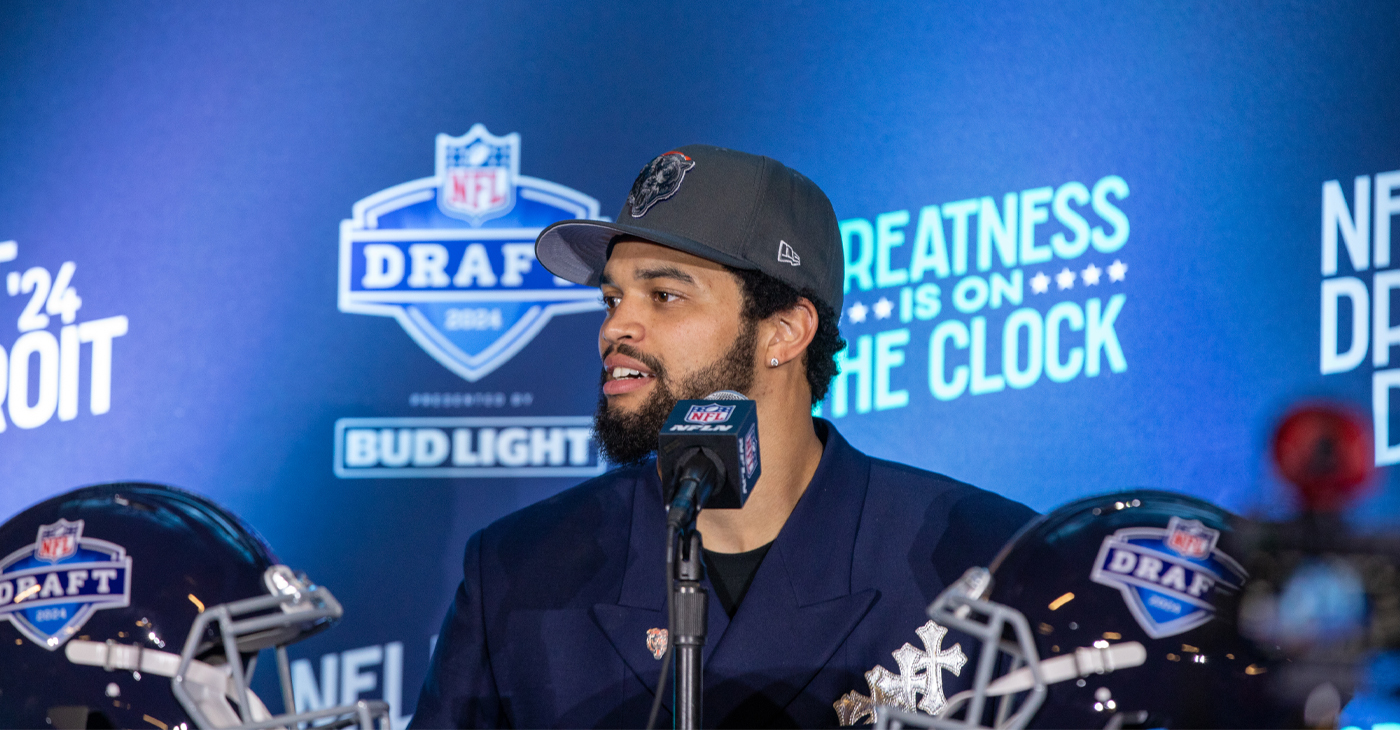
Caleb Williams leaves game against Vikings with apparent lower-body injury
Chicago Bears quarterback Caleb Williams was helped off the field with a right leg injury with 7:42 remaining in the fourth quarter. Williams was down, writhing in pain after scrambling to his left. After departing the injury tent, Williams raised his right fist, acknowledging the crowd while expressing his frustration. Testing will commence on Monday to find out more details about his injury.
“We’ll know tomorrow,” Johnson admitted regarding Williams’ injury. “He’s in good spirits. He’s a team player.”
Williams finished the day with 138 passing yards and one interception.
“I’m actually happy it’s nothing with the knee — that was my first inclination,” Johnson said. “But, a hamstring could be pretty damaging as well. So, we’ll see. We’ll see how bad it is tomorrow and we’ll go from there.”
Bryce Young once again dominated the Falcons
Carolina Panthers quarterback Bryce Young is 5-1 against the Atlanta Falcons and is undefeated at Mercedes-Benz Stadium. Today, Young threw for 287 yards and three touchdowns as he led the Panthers to a 34-3 dismembering of the Atlanta Falcons. Georgia Tech alumnus Darren Waller caught two touchdowns and linebacker Devin Lloyd returned one of his two interceptions for a touchdown.
Cooper Rush started his second straight game for the Falcons and it did not go well. The partisan crowd voiced their displeasure after Rush completed 10/17 passes for 86 yards and two interceptions. Jack Strand entered the game for Rush prompting cheers from the Falcons fans. The rookie threw a pick-six on his first career pass attempt. Strand was the first QB to accomplish that feat since Sam Darnold in 2018 and is the first Falcons player to do that since Brett Favre in 1991. Strand finished the day with 59 passing yards and 16 rushing yards.
According to reports, quarterback Michael Penix, Jr. is expected to make his season debut this Thursday at the Green Bay Packers. His return should help the Falcons. They are the first team since the 2008 Rams to not run any plays in the red zone after the first two games to open a season.
The bright spots for the Falcons today were the Spelman College Jaguarettes performing with the Falcons cheerleaders and Florida A&M’s marching band, The Marching 100, also performed during halftime!
Jayden Daniels gets carted off after apparent arm injury
Washington Commanders quarterback Jayden Daniels appeared to injure his left elbow on the final play of the first half in his game against the Dallas Cowboys. During the play, Daniels got stepped on, braced himself for the fall, and his elbow bent the wrong way. Daniels draped a towel over his head as he exited the field on the cart.
He was later ruled out.
Daniels suffered a dislocated elbow to the same arm during week nine of last season against the Washington Commanders, which led to him being shut down for the remainder of the season.
The post NFL: Week Two Recap | Jalen Hurts did not fold; Caleb Williams exits game with injury appeared first on BlackPressUSA.
#NNPA BlackPress
The Complete Negotiation Framework — Every Stage, Every Tactic, Every Win
Master the complete vehicle-purchase negotiation framework with Roosevelt Gist and Roosevelt. Learn every stage, tactic, and win!
The post The Complete Negotiation Framework — Every Stage, Every Tactic, Every Win appeared first on BlackPressUSA.

Roosevelt Gist and Roosevelt deliver the complete vehicle-purchase negotiation framework in Episode 8 of The Color of Our Money Is Green. This episode covers the three foundations of every effective negotiation, the full seven-stage negotiation sequence with exact language for every stage, and five of the most common dealership tactics with the specific response each one requires.
What You Learn in This Episode:
The three foundations that make every negotiation tactic work
The complete seven-stage car-buying negotiation sequence
Exact language for every stage of the dealership conversation
Five common dealership tactics — the turnover, the four-square, the packed payment, spot delivery, and forced add-ons — and how to counter each one
Why signing preliminary paperwork isn’t the same as signing the final contract
___________________________________________________________________
“The Color of Our Money Is Green: A Buyer’s Guide to What Cars Actually Cost” — stan.store/RGist
____________________________________________________________________
AutoNetwork helps serious car shoppers inspect any new vehicle online before walking into a dealership. I’m Roosevelt — I’ve been reviewing cars and shaping digital car buying and credit union auto leasing since before YouTube car reviews existed.
You’ll find detailed walkaround reviews, POV test drives, and buyer-focused breakdowns covering comfort, space, features, and real-world value.
How to use the channel:
Watch the walkaround of the car you’re considering
Visit AutoNetwork.com for the full review
Check CouponsOffersAndDeals.com for current dealer specials
Walk in already knowing what you want — and what it should cost
 AutoNetwork.com
 CouponsOffersAndDeals.com
Affiliate disclosure: some links earn a small commission at no cost to you and help support the channel. Insta360 is one of those partners.
The post The Complete Negotiation Framework — Every Stage, Every Tactic, Every Win appeared first on BlackPressUSA.
#NNPA BlackPress
Mazda CX-90 Luxury: Heated Seats & Premium Comfort! #shorts
Stay toasty in the CX-90! Plush Nappa leather, heated/ventilated seats, and a memory-equipped heated steering wheel deliver ultimate luxury.
The post Mazda CX-90 Luxury: Heated Seats & Premium Comfort! #shorts appeared first on BlackPressUSA.
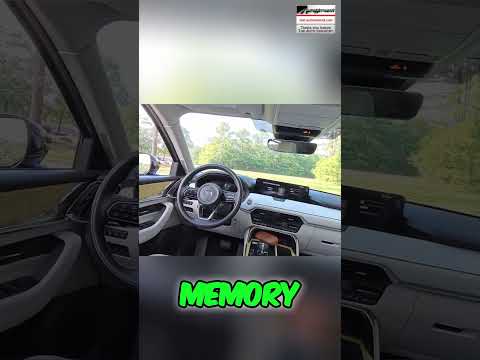
Experience ultimate comfort in the CX-90. Nappa leather, heated/ventilated seats, 8-way power adjustments, and memory settings for both front passengers. The heated steering wheel with memory tilt/telescope adds premium convenience.
 Watch the full video: https://youtu.be/EH5A4eQ4ipY
#AutoNetwork
The post Mazda CX-90 Luxury: Heated Seats & Premium Comfort! #shorts appeared first on BlackPressUSA.



Doulas Are Helping Black California Moms Navigate Pregnancy–Even as High Mortality Rates Persist

Newsom Signs Addictive Social Media Law to Protect Kids

On Your November Ballot: Prop 38 Would Allocate $8.4 Billion to Immunology and Immunotherapy Funding

Ask California: Golden State Releases New AI Chatbot

Asm. Isaac Bryan’s Bill Banning California Police From ICE Side Jobs Reaches Newsom’s Desk

Assemblymember LaShae Sharp-Collins’s Bill Would Pause Law Enforcement’s Use of Shock Gloves Pending Study

BOOK REVIEW: ‘Laws of Solomon’ Reveals Tender Heart of Former Child Soldier

OPINION: The New American Fear – From 9-11 to AI

Passing for White, Fighting for Black America: The Courage of Walter White

Oakland People’s Arms Embargo Coalition Demands End to Military Shipments Thru Oakland

Barbara Lee Mourns Gloria Steinem, Remembers a Friendship Rooted in Equality

Event Preview: ‘Fashion v. Fascism’ – A Runway Revolution Is Coming to the Bay Area

Two Looming Threats Every Alameda County Elder Should Know About

Oakland Mayor Reads to Children at Bookout Block Party at Marcus Books Store

Tradition Comes to the Streets in 11th Annual Black-Eyed Pea Festival at the Freedom Farmers Market

Less Affluent School Districts, Including Sacramento City, Face Threat of State Takeover

ESSAY: California Can Close Its Colorectal Cancer Gap

California Hispanic Chambers of Commerce Unveils: ‘Powering the Future’ Theme for 47th Annual Statewide Convention

Four Candidates, Including Incumbent Barbara Lee, Qualify for Oakland Mayor’s Race

Oakland Post: Week of August 12 – 18, 2026

From Blueprint to Breakthrough: Tackling Affordable Housing in Oakland

Oakland Observes Black August with Block Parties, Film Showings, Workshops

COMMENTARY: Why Local School Tax Measure G1 Will Not Be on the November Ballot

Standoff for Justice: Our Homes Are Worth Fighting For

Returning to Its Roots, the Oakland Black-Eyed Pea Festival Partners with the Freedom Farmers Market Sept. 12

Oakland Post: Week of August 26 – September 1, 2026

NPRC Scores First Advocacy Victory: David Shaw Finally Gets His Wish to ‘Go Home’

Frontier Airlines’ Return to Oakland Airport Brings Flights, Jobs and Opportunity

Gubernatorial Candidate Steve Hilton Blasts California New Tire Rules; Newsom Hits Back

Chef Sharon Lee Blends Culinary Excellence, Education and Empowerment

The Conversation With Al McFarlane 6/23/26

Media Monday 6/22/26

LIVE! ASK ALMA! — TUES. 6.23.26 7PM EST

Car Buying Secrets: 4 Hidden Checks Before You Sign!

Is This 550 HP Charger Worth YOUR Money? AutoNetwork Review

Celebrating Juneteenth – Frederick Douglass on education and resistance

LIVE! — ASK ALMA! — TUES. 6.19.26 7PM EST

Hyundai Ioniq 5 Parking, Safety, and 360 View #shorts

2025 Ioniq 5 New Wiper & Powerful Performance! #shorts

Electric SUV Range: Is 259 Miles Enough? #shorts

EV Charging: How Fast Can You Charge an Electric Vehicle? #shorts

Biometric Cooling… Messaging Seats…Come on! 2025 Infiniti QX80 Autograph 4WD

Charged Up: Witness the Magic of a Fully Electric Car! #shorts

Range Rover Sport PHEV Included…: See What’s Inside This Luxury SUV! #shorts

Invisible Hood View: Perfect Parking with X-Ray Vision! #shorts
-
 Commentary4 weeks ago
Standoff for Justice: Our Homes Are Worth Fighting For
-
 Activism4 weeks ago
Oakland Post: Week of August 26 – September 1, 2026
-
 Business4 weeks ago
Frontier Airlines’ Return to Oakland Airport Brings Flights, Jobs and Opportunity
-
 Business4 weeks ago
Gubernatorial Candidate Steve Hilton Blasts California New Tire Rules; Newsom Hits Back
-
 Business4 weeks ago
Chef Sharon Lee Blends Culinary Excellence, Education and Empowerment
-

 Community4 weeks ago
Big City Mayors Ask for “Yes” Vote on Housing Bond Measure; Conservatives Say “No”
-

 Black History4 weeks ago
Jackie Wright Champions Bay Area Stories, Filmmakers and Cultural Institutions
-

 Education4 weeks ago
Gov. Newsom’s Latest Appointees Include Sacramento Advocate for Formerly Incarcerated Students; State’s New Tech Chief
