
California Black Media
Reparations: Experts Compute Hundreds of Billions Owed to Black Californians
Economists advising The California Task Force to Study and Develop Reparations Proposals for African Americans have developed economic formulas that project the reparations owed to Black Californians who are descendants of people enslaved in the United States are likely to exceed $800 billion.

By Antonio Ray Harvey
California Black Media
Economists advising The California Task Force to Study and Develop Reparations Proposals for African Americans have developed economic formulas that project the reparations owed to Black Californians who are descendants of people enslaved in the United States are likely to exceed $800 billion.
Three of five harms were used in the calculations conducted by a five-member panel of economic experts: health, disproportionate housing discrimination, Black mass incarceration and over-policing are “from a long list of harms” the state “is a least partially responsible for,” said Dr. Thomas Craemer, a professor of public policy at the University of Connecticut and one of the experts involved in the assessment.
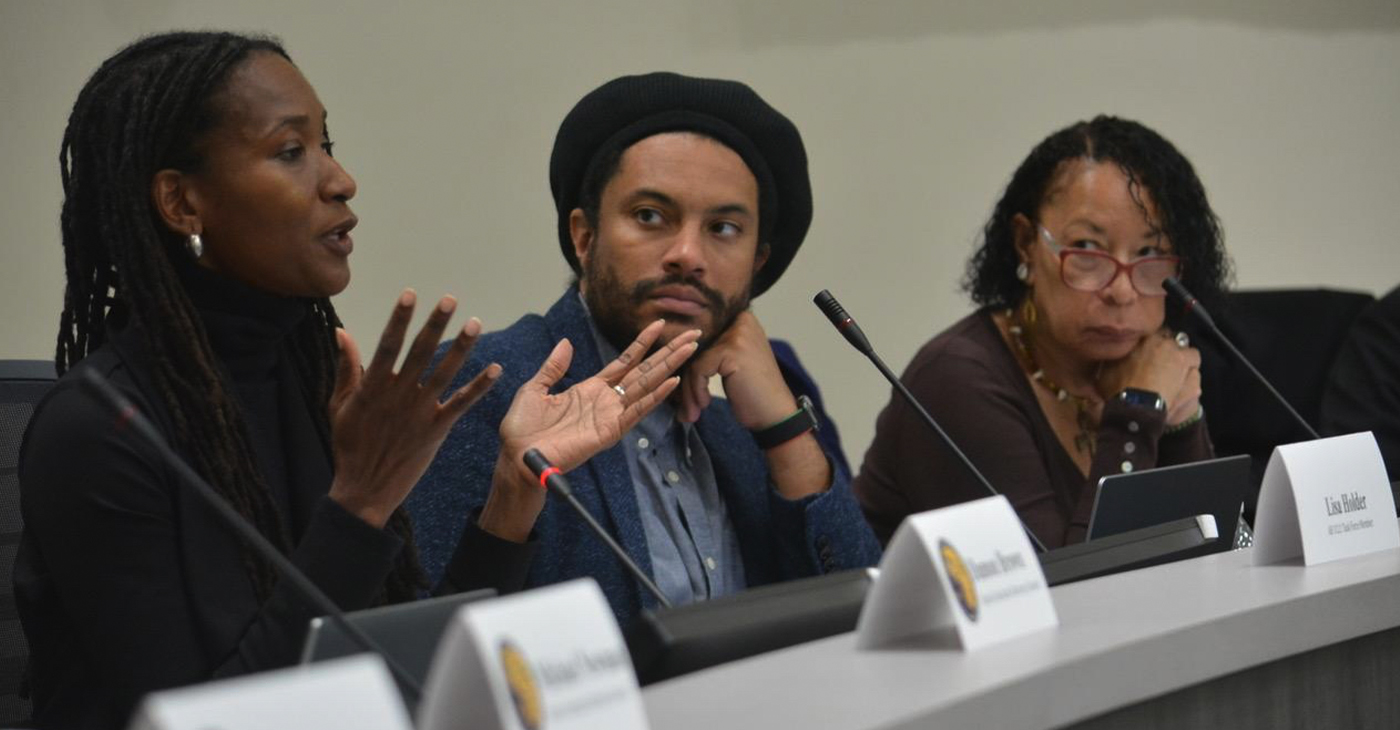
Craemer spoke last week at the task force’s 14th meeting held in Sacramento on March 29 and 30. The figures also applies to forebears who survived legal segregation, Jim Crow discrimination and other social and economic injustices.
“These are harms for which we thought that we’d have data, that’s one criterion,” said Craemer. “The other is that they are closely related to the actions of the state of California to make our estimates more defensible in the face of challenges that will undoubtedly arrive once the proposal is made public.”
The economic experts’ analysis and final recommendations for the Task Force regarding calculations of reparations and forms of compensation and restitution were presented by Craemer and Dr. William Spriggs.
Spriggs appeared remotely in front of the task force. He is the former chair of the Department of Economics at Howard University. He now serves as chief economist to the AFL-CIO.
The health harm calculations were determined by the annual loss to “Black, non-Hispanic Californians” from health disparities by computing the 7.6 year-life expectancy gap based on the Value of Statistical Life in the United States.
“That is what statisticians use to evaluate how much each individual places value on their life,” Craemer said. “We then divide the value associated with the gap by the average Black, non-Hispanic Californian expectancy of 71 years to obtain an annual estimate of the loss to Black, non-Hispanic Californians from health disparities.”
The experts use the Black non-Hispanic Californian category because they didn’t have a U.S. Census count available for Black Californians who can trace their ancestors back to slavery in the United States.
Black mass incarceration and over-policing calculations were derived from how many Black, non-Hispanic Californians were arrested for drug felonies above the population percentage during the “War on Drugs” from 1970 to 2020.
It was multiplied by the average prison term for drug offenses and by the average annual California State employee wages to arrive at the estimated total owed to Black Californians who qualify for reparation payments.
Housing discrimination was determined by calculating the average of the Black non-Hispanic Californian wage gap for 1930, 1980, 2019. The amount gave the experts the wealth disparity from all forms of housing discrimination, Craemer said.
“I should mention that what we are estimating is not reparations. What we are estimating are losses to the African American descendants of slaves in the United States,” Craemer said. “Our calculations could be used to come up with determinations of reparations but it’s not necessarily identical. The task force can go above and beyond because how some losses are framed (is) difficult to estimate. (Such as) pain and suffering.”
The last two atrocities – unjust property taken by eminent domain and devaluation of Black businesses — are not readily available in the calculation model because of lack of data, Craemer said. The 1980 amount minus the 1930 amount provides an estimate of the effect of redlining only.
Task Force chairperson and Los Angeles attorney Kamilah V. Moore said some published news headlines have put out misinformed information about the experts’ final calculations.
“The task force has yet to determine a final amount,” Moore said.
The numbers are not concrete, leaving room for the members of the task force to evaluate, modify, or eliminate any of the experts’ findings. Spriggs said the experts are still in “deliberations.”
“I think it’s improper to prejudge what precise number we may recommend, but we’re only giving you expert advice on these specific harms. The task force has full latitude to ignore it, to add it, or take into consideration addressing tangible harms,” Spriggs added.













Activism
Oakland Post: Week of September 23 – 29, 2026
The printed Weekly Edition of the Oakland Post: Week of September 23 – 29, 2026

To enlarge your view of this issue, use the slider, magnifying glass icon or full page icon in the lower right corner of the browser window.
Activism
Oakland Post: Week of September 16 – 22, 2026
The printed Weekly Edition of the Oakland Post: Week of September 16 – 22, 2026

To enlarge your view of this issue, use the slider, magnifying glass icon or full page icon in the lower right corner of the browser window.
Activism
Oakland Post: Week of September 9 – 15, 2026
The printed Weekly Edition of the Oakland Post: Week of September 9 – 15, 2026

To enlarge your view of this issue, use the slider, magnifying glass icon or full page icon in the lower right corner of the browser window.



Asm. Corey Jackson Announces Launch of 24-Hour Childcare in His District

IN MEMORIAM: The Rev. Leon “Sonny” Clark, Longtime Orange County Pastor and Community Leader, Dies at 72

Poll: Becerra Widens His Lead Over Hilton; Californians Split on Wealth Tax

From Historic Memories to New Possibilities: Oakland Celebrates Coliseum 60

County Office of Education Says OUSD Finances Are Getting Healthier, Materially Stronger

LIVE FREE Sunday Dinner Brings Faith, Fellowship and Civic Conversation to Oakland

Remembering Chauncey Bailey as Student Journalists Face Threats to Truth-Telling

BLACspace Cooperative Invites Bay Area to Experience Oakland’s Black Cultural Ecosystem Through a BLAC Map Tour + Party

In Wake of Death on Doorstep, Williams Chapel Baptist Church Calls for Better Care, Funding for Unhoused

Oakland Centenarian Nuna McKee Honored!

Caribbean Nations Produce Action Plan Calling for UK Reparations Over Slavery

Oakland Post: Week of September 23 – 29, 2026

Doulas Are Helping Black California Moms Navigate Pregnancy–Even as High Mortality Rates Persist

Newsom Signs Addictive Social Media Law to Protect Kids

On Your November Ballot: Prop 38 Would Allocate $8.4 Billion to Immunology and Immunotherapy Funding

Standoff for Justice: Our Homes Are Worth Fighting For

Oakland Post: Week of August 26 – September 1, 2026

Frontier Airlines’ Return to Oakland Airport Brings Flights, Jobs and Opportunity

Gubernatorial Candidate Steve Hilton Blasts California New Tire Rules; Newsom Hits Back

Chef Sharon Lee Blends Culinary Excellence, Education and Empowerment

Jackie Wright Champions Bay Area Stories, Filmmakers and Cultural Institutions

Big City Mayors Ask for “Yes” Vote on Housing Bond Measure; Conservatives Say “No”

Oakland Coliseum Project Opens Door for Small Businesses to Build Bigger

Gov. Newsom’s Latest Appointees Include Sacramento Advocate for Formerly Incarcerated Students; State’s New Tech Chief

Misnamed ‘Parent’ PAC Seeks to Influence Oakland School Board Elections

Longtime BWOPA Member Brendalyn Goodall Appointed to California Workforce Development Board

Gov. Newsom Signs Law Shielding Immigration Aid Workers From Doxing Threats

Secretary of State Shirley N. Weber Urges Californians to Vote Early as Voter ID Battle Intensifies

From Palestine to Oakland: Seeds for Liberation Examines Shared Struggles for Freedom

IN MEMORIAM: Dolly Parton Dead at 80 — How She Built a Legacy of Love and Earned Her Place in Black Culture

The Conversation With Al McFarlane 6/23/26

Media Monday 6/22/26

LIVE! ASK ALMA! — TUES. 6.23.26 7PM EST

Car Buying Secrets: 4 Hidden Checks Before You Sign!

Is This 550 HP Charger Worth YOUR Money? AutoNetwork Review

Celebrating Juneteenth – Frederick Douglass on education and resistance

LIVE! — ASK ALMA! — TUES. 6.19.26 7PM EST

Hyundai Ioniq 5 Parking, Safety, and 360 View #shorts

2025 Ioniq 5 New Wiper & Powerful Performance! #shorts

Electric SUV Range: Is 259 Miles Enough? #shorts

EV Charging: How Fast Can You Charge an Electric Vehicle? #shorts

Biometric Cooling… Messaging Seats…Come on! 2025 Infiniti QX80 Autograph 4WD

Charged Up: Witness the Magic of a Fully Electric Car! #shorts

Range Rover Sport PHEV Included…: See What’s Inside This Luxury SUV! #shorts

Invisible Hood View: Perfect Parking with X-Ray Vision! #shorts
-
 Community2 weeks ago
Misnamed ‘Parent’ PAC Seeks to Influence Oakland School Board Elections
-

 Activism3 weeks ago
Oakland Post: Week of September 2 – 8, 2026
-

 Community2 weeks ago
Richmond Tiny House Village Farm & Garden Set to Open Gates on Sept. 26
-

 Black History2 weeks ago
Latest Massacre in Haiti Reveals Cruelty U.S. Deportations
-

 Black History2 weeks ago
OPINION: Nolan Wells’ Death One of Several Signifying Racial Terror Lives on in U.S. South
-

 Activism2 weeks ago
Oakland Post: Week of September 9 – 15, 2026
-

 Community2 weeks ago
Democratic Clubs Interview Candidates for Oakland School Board
-

 Featured2 weeks ago
‘Ready to See These Bills Become Law’: Sen. Weber’s Package of 15 Bills Advance to Gov. Newsom’s Desk
