
Activism
Oakland City Council Deals Blow to Emerald New Deal –
“The Emerald New Deal is a historic ordinance that will fulfill some of the promises made when we first legalized marijuana and established the cannabis program. We are doing this not just for those who have suffered, but also for those who continue to deal with the effects of broken families and trauma, and for our future generations,” said Gamila Abdelhahim. “We now turn to all other City Council representatives and ask them to acknowledge the harm that has been caused, be in this monumental moment with us, and vote to lift our future generations.”

Rejects Plan to Bring $160M Into Black, Brown Communities
By Post Staff

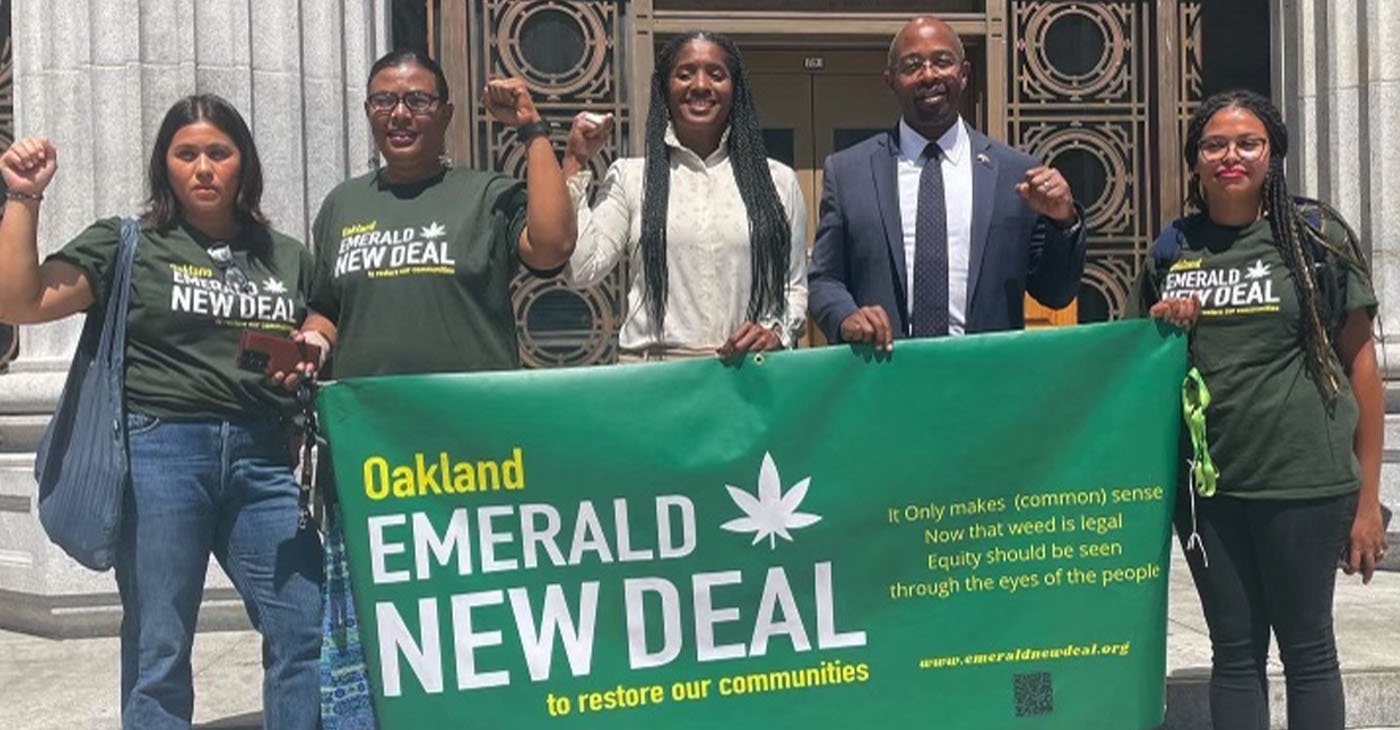
The Oakland City Council voted Tuesday to deny placing the community-driven Emerald New Deal (END) on the upcoming November ballot. The proposed ballot measure was designed to funnel 100% of the city’s cannabis tax revenue to Black and Brown communities in East and West Oakland.
According to councilmembers Noel Gallo, Treva Reid and Loren Taylor, who all supported it, END’s plan would help repair the damage caused by the War on Drugs. Gallo, who grew up in Oakland, also urged the Council to make a serious commitment to supporting jobs, affordable housing and support for the formerly incarcerated residents.
Despite all councilmembers claiming to be progressive and supportive of the Black and Brown community, only three of them voted in support of this community-led initiative. “No” votes came from Councilmembers Sheng Thao and Carroll Fife, while Dan Kalb and Nikki Fortunato Bas abstained.
In a response to the City Council’s denial of the Emerald New Deal proposal the supporters held a press conference at City Hall to express their frustration. Over the next 20 years, the Emerald New Deal, funded by an estimated $160 million in cannabis taxes, could have improved the lives of thousands of Oakland residents by supporting affordable housing, re-entry services, workforce development, and other restitution efforts.
“This temporary setback does not mean our work is done,” declared Taylor during Wednesday’s press conference. “There is no excuse for rejecting the Emerald New Deal except a desire to maintain the status quo and keep Black people oppressed. Having a pool of $160 million in cannabis tax revenue over the next 20 years could have healed a lot of lives, housed a lot of people, and righted a lot of wrongs – especially in the Black community.”
One community group supporting the amendment is Emerald New Deal Healing And Reparations Measure or END HARM.
“The END HARM community coalition’s call to action will rise beyond the five Council votes needed to advance the Emerald New Deal ballot measure,” said Councilmember Treva Reid, who represents District 7. “The community will remain actively involved with us to organize and mobilize support to overcome the racially inequitable impacts of the War on Drugs and decades of devastating outcomes in East and West Oakland communities
Reid said city leaders must increase targeted and intentional measures to restore communities from the “crippling effect of disinvestment, systemic injustice, and racial disparities. City Council must prioritize well-funded measures that help to deliver a just, equitable, and resilient recovery for all Oaklanders.”
END HARM organizer Charles Reed is a returning family member who saw a need in his community but left his “first fight of shaping public policy battered and bruised from baseless accusations.
“For me, this was an education in Oakland politics,” Reed continued. “Now, I understand why normal people steer clear of politics. The thing is…I’m not a normal person, I’m a community organizer who believes that the people’s voices should be heard!”
END HARM’s goal is to register 5,000 returning family members to vote in the November election. “We need to register and express the power to affect policy for the People!” said Reed.
Emerald New Deal supporters announced that they will continue to fight to get placed on the ballot.
Councilmembers Taylor and Reid joined community advocates Deacon Hellen Harvey, Gamila Abdelhahim, and John Jones III, to demonstrate their full support of END HARM charter amendment. They note that the War on Drugs, which, in Oakland, led to over 12,655 individual arrests for cannabis offenses between 1995 and 2015 with 77% of those incarcerated being Black and 15% being LatinX. Supporters of END HARM anticipate more than $12 million being allocated to support social equity investments, including but not limited to:
- Reentry programs and support for the formerly incarcerated;
- Community-based mental health services;
- Affordable and transitional housing access; and,
- Workforce development and training.
- Cannabis Equity Program participants (business owners impacted by the war on drugs)
Reid said that END grew out of community organizing in Sobrante Park in District 7, which has a population of 65,000 people, 80% of which are Black and Brown neighbors struggling under the weight of decades of racism, disparities, inequities, and disinvestment.
“As national support rises for the decriminalization of cannabis use, we must ensure the Cannabis Business Tax revenue is dedicated to benefitting historically impacted Black and Brown communities,” Reid said.
The Emerald New Deal is already endorsed by more than 40 local organizations, including the Black Cultural Zone, Ella Baker Center for Human Rights, Urban Strategies Council, Spiritwurx and West Oakland Environmental Indicators Project. Community advocates who are leading the effort to mobilize city wide support, emphasize how significant the impact it will have on Oaklanders who are healing from the War on Drugs.
“The Emerald New Deal is a historic ordinance that will fulfill some of the promises made when we first legalized marijuana and established the cannabis program. We are doing this not just for those who have suffered, but also for those who continue to deal with the effects of broken families and trauma, and for our future generations,” said Gamila Abdelhahim. “We now turn to all other City Council representatives and ask them to acknowledge the harm that has been caused, be in this monumental moment with us, and vote to lift our future generations.”
Community organizer John Jones III asserted, “As it relates to the War on Drugs, it is not enough to simply acknowledge and/or apologize, but rather provide restitution and reparations for the harm inflicted upon the Black and Brown community”
“…Now that marijuana is legalized, it is only right that the very system that over-criminalized cannabis usage in certain areas, gives back to those same communities,” said Taylor. “I am grateful for Councilmembers Reid and Gallo who agree and have joined me in uplifting this legislation. I look forward to seeing the transformational impact it has on our community.”













Activism
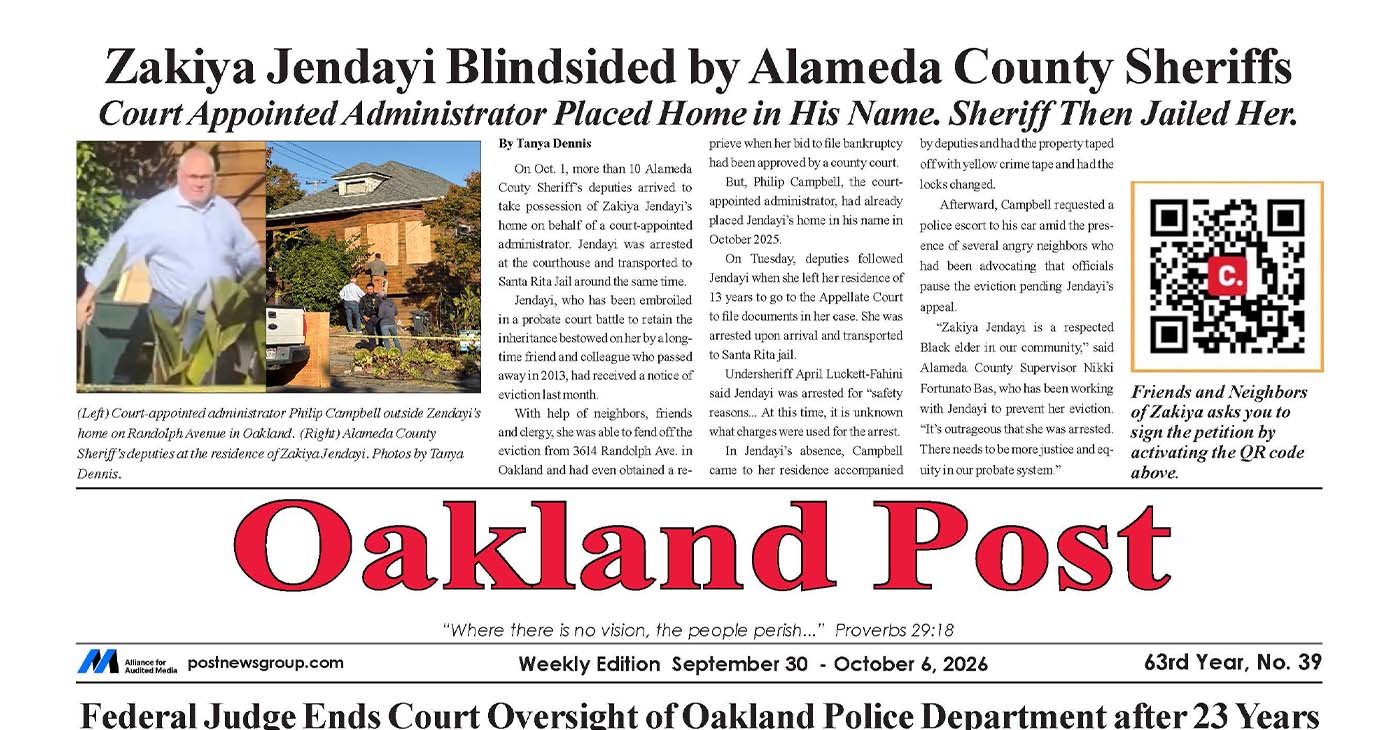
Oakland Post: Week of September 30 – October 6, 2026
The printed Weekly Edition of the Oakland Post: Week of September 30 – October 6, 2026
To enlarge your view of this issue, use the slider, magnifying glass icon or full page icon in the lower right corner of the browser window.
Activism
Oakland Post: Week of September 23 – 29, 2026
The printed Weekly Edition of the Oakland Post: Week of September 23 – 29, 2026

To enlarge your view of this issue, use the slider, magnifying glass icon or full page icon in the lower right corner of the browser window.
Activism
Oakland Post: Week of September 16 – 22, 2026
The printed Weekly Edition of the Oakland Post: Week of September 16 – 22, 2026

To enlarge your view of this issue, use the slider, magnifying glass icon or full page icon in the lower right corner of the browser window.


Listening as a Lifeline: A Doula’s Witness to Black Maternal Health

New Protections for Ticket Buyers: Gov. Newsom Signs Assemblymember Isaac Bryan’s Bill

‘We Don’t Talk Trash — We Pick Up Trash!’

Zakiya Jendayi Arrested, Locked Out of Home by Sheriff’s Deputies

Oakland Post: Week of September 30 – October 6, 2026

Asm. Corey Jackson Announces Launch of 24-Hour Childcare in His District

IN MEMORIAM: The Rev. Leon “Sonny” Clark, Longtime Orange County Pastor and Community Leader, Dies at 72

Poll: Becerra Widens His Lead Over Hilton; Californians Split on Wealth Tax

From Historic Memories to New Possibilities: Oakland Celebrates Coliseum 60

County Office of Education Says OUSD Finances Are Getting Healthier, Materially Stronger

LIVE FREE Sunday Dinner Brings Faith, Fellowship and Civic Conversation to Oakland

Remembering Chauncey Bailey as Student Journalists Face Threats to Truth-Telling

BLACspace Cooperative Invites Bay Area to Experience Oakland’s Black Cultural Ecosystem Through a BLAC Map Tour + Party

In Wake of Death on Doorstep, Williams Chapel Baptist Church Calls for Better Care, Funding for Unhoused

Oakland Centenarian Nuna McKee Honored!

Standoff for Justice: Our Homes Are Worth Fighting For

Oakland Post: Week of August 26 – September 1, 2026

Frontier Airlines’ Return to Oakland Airport Brings Flights, Jobs and Opportunity

Gubernatorial Candidate Steve Hilton Blasts California New Tire Rules; Newsom Hits Back

Chef Sharon Lee Blends Culinary Excellence, Education and Empowerment

Jackie Wright Champions Bay Area Stories, Filmmakers and Cultural Institutions

Misnamed ‘Parent’ PAC Seeks to Influence Oakland School Board Elections

Oakland Coliseum Project Opens Door for Small Businesses to Build Bigger

Big City Mayors Ask for “Yes” Vote on Housing Bond Measure; Conservatives Say “No”

Gov. Newsom’s Latest Appointees Include Sacramento Advocate for Formerly Incarcerated Students; State’s New Tech Chief

Longtime BWOPA Member Brendalyn Goodall Appointed to California Workforce Development Board

Gov. Newsom Signs Law Shielding Immigration Aid Workers From Doxing Threats

Secretary of State Shirley N. Weber Urges Californians to Vote Early as Voter ID Battle Intensifies

Oakland Post: Week of September 2 – 8, 2026

IN MEMORIAM: Dolly Parton Dead at 80 — How She Built a Legacy of Love and Earned Her Place in Black Culture

The Conversation With Al McFarlane 6/23/26

Media Monday 6/22/26

LIVE! ASK ALMA! — TUES. 6.23.26 7PM EST

Car Buying Secrets: 4 Hidden Checks Before You Sign!

Is This 550 HP Charger Worth YOUR Money? AutoNetwork Review

Celebrating Juneteenth – Frederick Douglass on education and resistance

LIVE! — ASK ALMA! — TUES. 6.19.26 7PM EST

Hyundai Ioniq 5 Parking, Safety, and 360 View #shorts

2025 Ioniq 5 New Wiper & Powerful Performance! #shorts

Electric SUV Range: Is 259 Miles Enough? #shorts

EV Charging: How Fast Can You Charge an Electric Vehicle? #shorts

Biometric Cooling… Messaging Seats…Come on! 2025 Infiniti QX80 Autograph 4WD

Charged Up: Witness the Magic of a Fully Electric Car! #shorts

Range Rover Sport PHEV Included…: See What’s Inside This Luxury SUV! #shorts

Invisible Hood View: Perfect Parking with X-Ray Vision! #shorts
-
 Community3 weeks ago
Misnamed ‘Parent’ PAC Seeks to Influence Oakland School Board Elections
-
 Activism4 weeks ago
Oakland Post: Week of September 2 – 8, 2026
-

 Activism3 weeks ago
Oakland Post: Week of September 9 – 15, 2026
-

 Community3 weeks ago
Richmond Tiny House Village Farm & Garden Set to Open Gates on Sept. 26
-

 Black History3 weeks ago
Latest Massacre in Haiti Reveals Cruelty U.S. Deportations
-

 Black History3 weeks ago
OPINION: Nolan Wells’ Death One of Several Signifying Racial Terror Lives on in U.S. South
-

 Business2 weeks ago
Mayor Lee Announces $1 Million Kaiser Permanente Grant for Pilot Program to Address Homelessness, Clean Up Public Spaces throughout Oakland
-

 Community3 weeks ago
Democratic Clubs Interview Candidates for Oakland School Board
