
#NNPA BlackPress
Black Businesses Matter, But Will They Get Fair Share Of COVID-19 Aid Money?
NNPA NEWSWIRE — “African Americans never really recovered from the housing crash and economic meltdown and that reality is going to be a very important factor for Black people, especially since the U.S. may be going into some form of depression,” said Bill Fletcher Jr., former president of TransAfrica Forum and a senior scholar with the Institute for Policy Studies. “I saw a report last week that shows the Washington metropolitan area could lose 35 percent of small businesses. Add a layer of race onto that—lower savings rates and profit margins and most small biz not able to sustain themselves for three months and the problem becomes clear.”

By Barrington M. Salmon, Contributing Writer, The Final Call
@bsalmondc
President Donald Trump and Congressional leaders announced the $2 trillion economic stimulus package—the Coronavirus Aid, Relief, and Economic Security (CARES) Act to great fanfare, touting the deliverables of different aspects of the provisions and their belief in its ability to slow the economic tsunami exacerbated by the novel coronavirus pandemic. One of the major selling points is a $1,200 one-time payment to adults.
The pandemic has cut a wide and deadly swathe through communities across the country, overwhelmed the medical infrastructures of places like New York City, Detroit and New Orleans, and brought much of America’s economic activity to a standstill. At press time the grisly tally in the U.S. stood at 356,942 confirmed cases and more than 10,524 deaths. New York is still the epicenter with more than 122,031 confirmed cases and almost 4,159 deaths.
In a desperate effort to blunt the spread of Covid-19, state governors have ordered as many as 230 million people to stay home, which has brought commerce to a virtual standstill. Along with the sudden and brutal decline of the much vaunted, record-setting stock market, the economy began a freefall dragging with it jobs, businesses—large and small—and the destinies and fortunes of tens of millions of American workers.

Compared to other small business owners, African Americans have generally had to face more daunting challenges such as smaller cash reserves to draw from, difficulty in securing bank loans and other financing and being sole proprietors or “mom and pop” establishments that are ineligible for most small business loans.
Businesses, big and small, have been savaged, with the hardest hit sectors being the travel and hospitality industries and the retail sector.
Financial planner and wealth manager Ivory J. Johnson acknowledged that Covid-19 has shaken up U.S. businesses and hit Black customers hard.
“It’s having a tremendous effect,” he said. “Cash flow just stops. Ten percent retail, 10 percent of restaurants, 20 percent of the population just stopped. This is the end of the business cycle, we’re at peak employment where wages go up, corporate money gets squeezed and they fire Bob,” he explained.
“People didn’t have time to pivot. For Black business, access to capital may not be there and Black customers are going to be hit very hard. It’s going to be a challenge for all businesses. You have to figure what you need to do now.”
He characterized the relief package as, “keep the light on money,” likened the U.S. economy to a Ponzi scheme with the U.S. government printing money “out of thin air,” and said now that corporations—who are carrying between $4 trillion and $10 trillion worth of debt—face an economic reckoning, the realization is dawning that the way they’ve been doing business is untenable.
“They are now seeing that this isn’t sustainable,” said Mr. Johnson, who for the past two decades has helped families and small businesses create and protect wealth, and who has guided them to see the benefits of developing a financial game-plan. “Nobody ever shoots Santa. People don’t care and weren’t complaining when they were making money.”
Mr. Johnson said the Covid-19 pandemic merely accelerated what has been happening to the economy, just at a slower rate.
“Here’s the reality: what happened is that they are creating money out of thin air, buying assets, feeding the Ponzi scheme,” he said. “They were rigging earnings, strip-mining stocks and buying back stocks, while the Federal Reserve pushed down interest rates and have been buying bonds and assets.”
Mr. Johnson, who founded Delancey Wealth Management. LLC in 2012, said 35 percent of small businesses couldn’t sustain a three-month shutdown, while 70 percent wouldn’t survive past six months.
He said the country is staring at the abyss. The unemployment rate during the Great Depression was 25 percent and financial experts are predicting that unemployment figures could reach that figure before all this is done. In late March and early April, about 10 million Americans filed for unemployment. The next jobs figures are expected to be considerably higher.
Veteran labor organizer Bill Fletcher, Jr. said there are a couple of layers to consider when contemplating the effect coronavirus will have on African Americans.
“One is the question of the impact of the crisis on Black America and Black businesses. One of the things that we’re going to have to deal with in this country, irrespective of race, is going to be trauma,” he said. “I think that it will have a particular type of impact on Black America—looking at illnesses and a further elimination of wealth, along the lines of 2008 crash,” added Mr. Fletcher.
“African Americans never really recovered from the housing crash and economic meltdown and that reality is going to be a very important factor for Black people, especially since the U.S. may be going into some form of depression,” said Mr. Fletcher, former president of TransAfrica Forum and a senior scholar with the Institute for Policy Studies. “I saw a report last week that shows the Washington metropolitan area could lose 35 percent of small businesses. Add a layer of race onto that—lower savings rates and profit margins and most small biz not able to sustain themselves for three months and the problem becomes clear.”
What comes out of this crisis will be equivalent to the aftermath of a war, he said.
“It’s not like coming out of a recession with the infrastructure intact. Even if the number of people who die isn’t as high, we’re looking at high levels of devastation economically,” Mr. Fletcher explained.
Marc Morial is one of a number of critics who don’t believe the package goes far enough and said he and others in the Civil Rights and business communities will have to push just as hard as they have to ensure that more is done for African American businesses. He said he doesn’t have to look too far to see the impact of the pandemic on small Black businesses owners in New York, where he lives.
“My barber is closed down. That’s where three people work. It’s their livelihood,” he said soberly. “Every barber shop, every hair salon has been closed down.”
Mr. Morial, president and CEO of the National Urban League, said he, other Civil Rights organizations and their allies fought fiercely to ensure that Congress wouldn’t pass a bill that completely ignored African American businesses at perhaps their time of greatest need.
“The $2.2 trillion recovery relief plan is a down payment,” Mr. Morial told The Final Call. “In the best case scenario, it will offer two months relief for small business owners and four months relief for unemployed worker. There is a need for them to go back. We fought hard in discussions, along with the Congressional Black Caucus (CBC), to ensure, for example that lending platforms would be open to non-profits, sole proprietors and mom and pop stores.”
“The language is broad and inclusive, and the execution may take a while. We have to lean in on this opportunity hard. African American business owners shouldn’t sit around and wonder if they should apply. Apply! We have to put pressure on the process for it to serve us.”
Mr. Morial said, “There will definitely be a need for more money and we’re working with Rep. Karen Bass to see what the next package will look like.” President Trump signed the bill March 27.
Ron Busby, President and CEO of the U.S. Black Chambers, Inc. (USBC), played a similar role as Mr. Morial pressing lawmakers to include provisions favorable to African American businesses.
“I want readers to understand that in the 700-plus page bill, nowhere was the word, ‘Black,’” said Mr. Busby, who serves on the Pfizer Small Business Council, National Newspapers Publishers Association Foundation Board of Directors, and White House African American Leadership Council. “It is a race-neutral bill, has nothing to do with Black people. The U.S. Chamber advocated to keep it race neutral to ensure that the bill would get support. Congress felt it would be easier to get passed that way.”
Mr. Busby said while $2 trillion seems like a great deal of money, $349 million will go towards the Small Business Administration’s Payment Protection Program (PPP).
“That also seems like a great deal of money but it’s not enough funding,” he said. “It will be very difficult for Black and small businesses. We fought for small, Black-owned businesses, fought for a couple of things—to ensure that businesses wouldn’t be cancelled because of supply chain issues and problems with developing products and widgets because of the epidemic. We also fought to get a ‘front-pay’ program where businesses would get paid in the next 15 days.”
“The federal government is notorious for slow payments of 60, 90, 120 days— and most Black-owned businesses are more interested in and dependent on cash-flow. They (negotiators) pulled it out at the last minute but they said they will continue to pay businesses through the disruption.”
Mr. Busby and other observers say most Black businesses have small payrolls and use what is called 1099 workers and contract employees, but if business owners apply for the PPP, it will pay 100 percent of their payroll for the next three months. Some aspects of the plan are still vague, saying he’s not sure how the wording will be received at banks, he added.
Ohio Congresswoman Joyce Beatty and Rep. Dwight Evans of Pennsylvania told The Final Call that the good news is that small businesses including those who work as 1099 employees, beauty and nail salons, painters and others who are self-employed will have an opportunity to participate.
“April is when they can first apply,” she said. “The good news is that dollars are available. It’s first come, first serve. It was important for us to make sure that individuals who work as contractors weren’t left out. We can’t make a commitment that everyone will get in but people should prepare their packages, go to the Treasury website and download the application package.”
Rep. Beatty, who is vice chairman of the Small Business Committee and serves on the Committee on Financial Services and the Consumer Protection and Financial Institutions subcommittee among others, said she has worked very closely with Chairman Nadya Velasquez and other committee members.
“CBC members have stepped up. We’re teaming up and working together but there are a lot of devils in the details, especially those not in the traditional SBA,” said Rep. Beatty, who has served in Congress since 2013.
She said she and some of her colleagues met with Civil Rights leaders and will continue to do so as all of them try to stay ahead of this crisis. Congressman Evans said providing economic distress loans, the PPP and $10 million for minority development agencies is very important and underscores the importance of small businesses.
“Small businesses are the backbone of our economy and it’s very important in terms of what these programs will mean,” he said. “We will probably need more money and jobs as ways to build wealth. Closing the income and wage gap and stabilizing and building Black businesses is a priority for Rep. Karen Bass.”
Rep. Beatty agreed with Mr. Morial and Mr. Busby that there’s much more that needs to be done to make sure that African Americans have a safety net during these calamitous times.
“The old adage is that when America gets a cold, African Americans get pneumonia,” she said. “What’s happening with coronavirus has exposed so many disparities. Disparities are being shown by the media. In Detroit, for example, 14 percent of the population is African American but 40 percent of those dying are African American. The increasing numbers of people who are incarcerated, homeless. We need to look at the total picture of disparities.”
Zeville Preston, a member of New York City’s Black Business Empowerment Committee (BBE) was scathing in her criticism of the relief package.
“This bill is D.O.A. (dead on arrival). We need something of value. Black blood and bodies built this country and as usual, once again, we find ourselves at the back of the line,” she said. “We’re 22 percent of New York City’s population but we are less than two percent of business and get less than two percent of the contracts, numbers which have declined over a five-year period. Black businesses dying on the vine and the governor cares not at all.”
“This is to put CBC on notice. They want people to think they did something, and they did nothing.”
A March 20, 2020 letter sent to the CBC points to 94 proposals to help African Americans that the body sent to Senate Minority Leader Chuck Schumer and House Speaker Nancy Pelosi, with only three speaking directly to Black people and only money allocated to Historically Black Universities and Minority Serving Institutions has a dollar amount attached to it: $450 billion. In their letter, the BBE expresses frustration and dismay: “The CBC’s 94 initiatives totaling $459 million basically leaves the Black business community with nothing, especially in New York state where all other ethnic groups and White-women’s participation far exceeds Black participation,” it states. “BBE is most disappointed that the CBC saw fit to argue the case for minorities, women and small businesses while neglecting to propose funding specifically for Black businesses. Harlem’s BBE finds this unacceptable!”
Ms. Preston said BBE is reaching out across American cities to see if business owners and others in the Black community are having the same issues.
“We’re figuring strategically to speak in one voice,” she said.








#NNPA BlackPress
Smooth Ride! Car Suspension & Comfort Tested #shorts
Smooth suspension meets surprisingly spacious legroom. Experience true comfort on any road!

 Watch the full video: https://youtu.be/l9Z571za5Gc
#NNPA BlackPress
61 years since Selma, Houston leaders say the bridge remains to be crossed
61 years after Selma, Houston leaders say the fight for equality continues. The issues that sparked the marches still impact Black Americans today.
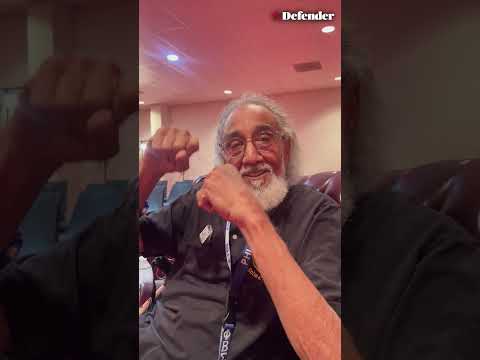
It has been 61 years since the Selma marches. But political leaders in Houston say that the issues protesters were marching for still plague the lives of Black Americans.
Visit Our Website
Read more stories by our team
https://defendernetwork.com/category/news/opinion/
Sign-up for the Top 5 newsletter
Donate/ Support Our Work
#NNPA BlackPress
Here is what you need to know about finding unique white elephant gift ideas that everyone wants to steal
The best white elephant gift ideas are funny enough to get a reaction but useful enough that people actually want to steal them. Look for gifts with a surprise factor, broad appeal, an inside joke, and just enough personality to spark some friendly competition. The wrapping paper comes off, the room goes quiet for half […]
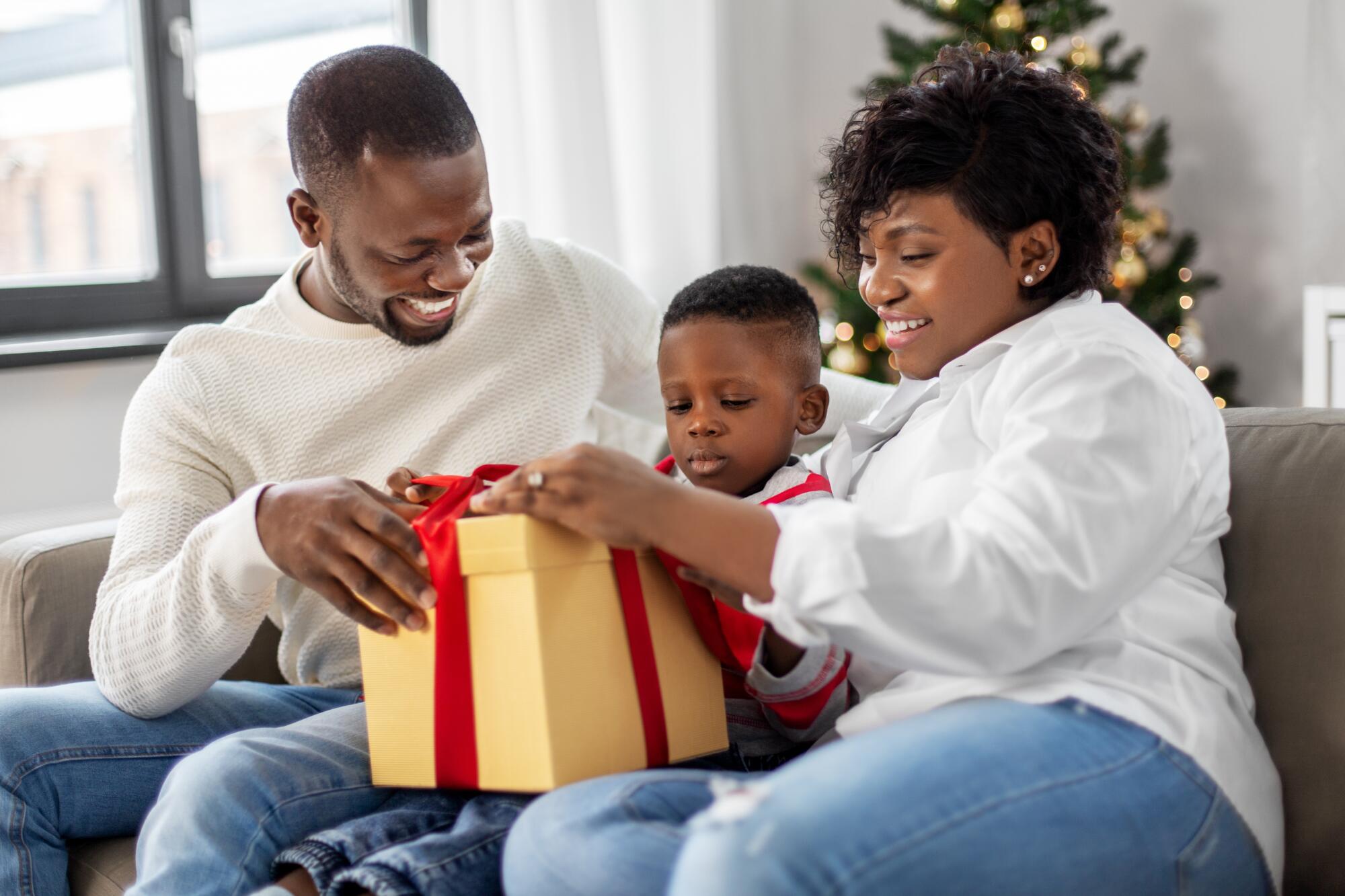
The best white elephant gift ideas are funny enough to get a reaction but useful enough that people actually want to steal them. Look for gifts with a surprise factor, broad appeal, an inside joke, and just enough personality to spark some friendly competition.
The wrapping paper comes off, the room goes quiet for half a second, and suddenly everyone wants the same gift. That is the sweet spot. A great white elephant pick should make people laugh, lean in, and start plotting their next steal before the turn is even over.
Should a White Elephant Gift Be Funny or Useful?
A white elephant gift can be funny or useful, but the strongest choices usually give people a reason to laugh and a reason to keep the item. A practical gift with an odd design, unexpected feature, or playful theme can get a reaction without becoming something the recipient immediately wants to give away.
The right balance depends on the group. Close friends and family members may enjoy a ridiculous gag gift because they already understand one another’s sense of humor.
A workplace exchange, neighborhood party, or mixed-age gathering usually calls for something with broader appeal. In those settings, humor works better when it is built into an item people could still use afterward.
It also helps to think about how quickly the gift will make sense once it is opened. A strangely shaped kitchen tool, oversized mug, quirky desk accessory, or unexpectedly fancy everyday item can create an immediate reaction. Guests understand the joke right away, while the item still has enough practical value to attract a steal.
Pure gag gifts can be harder to pull off. Something that exists only for the punchline may get a big laugh during the reveal and then sit untouched for the rest of the game. If the goal is to bring one of the gifts everyone keeps fighting over, usefulness gives the joke staying power.
Memorable Present Ideas: Creating Inside Joke Gifts
Inside joke gifts can make a white elephant exchange feel much more personal, especially when most of the group shares the same stories. The trick is choosing a reference that people will recognize quickly instead of building the entire joke around something only two guests understand.
You can turn a memorable vacation mishap, office catchphrase, family story, or long-running group joke into the theme of the gift. A personalized comic book can work especially well when it turns familiar people or a ridiculous shared moment into part of the story.
Think carefully about who the joke involves before ordering anything permanent. The gift should make the person feel included in the fun, not singled out for the wrong reason.
Can You Bring Something You Already Own?
Holiday gift exchanges can be a good place to re-gift something you never used, especially if it is unopened and clean.
The following can all work if they still look presentable:
- A duplicate kitchen gadget
- An untouched game
- A decorative item
- A sealed gift set
- An unopened candle
- A new travel accessory
The goal is to give the item a second chance, not use the exchange as an excuse to clear out damaged or unwanted clutter.
Take a close look at the packaging before wrapping it. Faded boxes, missing pieces, visible wear, or anything that looks obviously used can make the gift feel careless.
Wrapping Budget-Friendly Gifts
Wrapping can make gifts more entertaining before anyone even knows what’s inside.
Misdirection works especially well for fun party games. Put a small gift inside a much larger box. Use packaging from an unrelated household item.
Add harmless weight so guests cannot guess what they are holding. The reveal becomes part of the joke without changing the gift itself.
You can also lean into the theme of the exchange. Bright paper, oversized bows, reusable bags, or deliberately over-the-top wrapping can make an ordinary item feel more memorable. If the gift itself is already funny, simple wrapping may work better so the surprise stays hidden until the last second.
Frequently Asked Questions
Is Picking Last an Advantage in White Elephant?
Picking last can be an advantage because you get to see almost every gift before making your move. Instead of choosing blindly from the remaining wrapped presents, you can steal something that has already caught your attention if the rules still allow it.
That advantage depends on the house rules. Some games limit how many times a gift can be stolen.
Others lock an item once it reaches a certain number of steals. If the most popular gifts are already unavailable, the final player may have fewer strong options than expected.
The first player can also get another turn at the end in some versions of the game. That rule can balance things out, since the person who started with the least information may get one final chance to steal.
How Do You Plan White Elephant for a Large Group?
For a large white elephant exchange, set a firm spending limit and establish the stealing rules in advance.
Create a clear turn order before the game begins. Drawing numbers as guests arrive can save time once everyone is ready to start.
Keep the number of steals per gift limited so the game does not drag on. It also helps to have one person track which creative holiday presents have been stolen and when they are locked, especially if dozens of people are participating.
Can You Play White Elephant Virtually?
A virtual white elephant exchange can work over a video call, with one person keeping track of the turn order and each steal. Guests can either mail physical gifts ahead of time or use digital gifts that can be delivered once the game ends.
Set the spending limit and stealing rules before everyone joins. It also helps to decide how gifts will be revealed and who is responsible for sending each one afterward so the exchange does not become confusing.
Choose a Perfect White Elephant Gift in a Snap
Look for a white elephant gift that fits some of these criteria, and everyone will be trying to grab it at your next celebration.
Do you need more gift-giving tips and tricks? Make sure you read some of our other posts.


Mayor Barbara Lee Holds Special State of the City Address in Deep East Oakland

Practitioners of African Traditional Spirituality Offer Ancestral Reverence Ritual Oct. 31

It’s Time to Lose Weight Before the Holidays

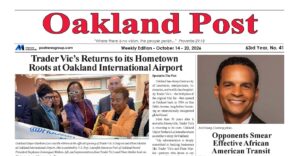
Trader Vic’s Returns to Its Oakland Roots

Oakland Coal Terminal Backed by Trump Would Be Bigger, Dirtier Than Promised, Says Report

Opponents Smear Effective African American Transit Director as Election Nears

Oakland Post: Week of October 14 – 20, 2026

OP-ED: The Black Church Writes AI’s Next Chapter

OP-ED: The Black Church Writes AI’s Next Chapter

WCCUSD Joins Statewide Organic School Food Purchasing Cooperative

Democrats, Community Groups Back Measure EE to Change How Oakland Is Governed

Four Tips to Help You Plan a Holiday “Staycation”

Veterans Housing Project Proposed for South Richmond
PRESS ROOM: Transformative Justice Coalition 2026 Voting Rights Champion Awards Reception ‘Yesterday Is Today: The Battle For Voting Rights

Mayor Lee Delivers 2026 State of the City Address: ‘Oakland Continues to Be on the Move’

Misnamed ‘Parent’ PAC Seeks to Influence Oakland School Board Elections

Poll: Becerra Widens His Lead Over Hilton; Californians Split on Wealth Tax

Oakland Post: Week of September 9 – 15, 2026

Listening as a Lifeline: A Doula’s Witness to Black Maternal Health

County Office of Education Says OUSD Finances Are Getting Healthier, Materially Stronger

Richmond Tiny House Village Farm & Garden Set to Open Gates on Sept. 26

Mayor Lee Announces $1 Million Kaiser Permanente Grant for Pilot Program to Address Homelessness, Clean Up Public Spaces throughout Oakland

Latest Massacre in Haiti Reveals Cruelty U.S. Deportations

OPINION: Nolan Wells’ Death One of Several Signifying Racial Terror Lives on in U.S. South

Zakiya Jendayi Arrested, Locked Out of Home by Sheriff’s Deputies

BLACspace Cooperative Invites Bay Area to Experience Oakland’s Black Cultural Ecosystem Through a BLAC Map Tour + Party

Doulas Are Helping Black California Moms Navigate Pregnancy–Even as High Mortality Rates Persist

Oakland Post: Week of September 16 – 22, 2026

Oakland People’s Arms Embargo Coalition Demands End to Military Shipments Thru Oakland

Democratic Clubs Interview Candidates for Oakland School Board

The Conversation With Al McFarlane 6/23/26

Media Monday 6/22/26

LIVE! ASK ALMA! — TUES. 6.23.26 7PM EST

Car Buying Secrets: 4 Hidden Checks Before You Sign!

Is This 550 HP Charger Worth YOUR Money? AutoNetwork Review

Celebrating Juneteenth – Frederick Douglass on education and resistance

LIVE! — ASK ALMA! — TUES. 6.19.26 7PM EST

Hyundai Ioniq 5 Parking, Safety, and 360 View #shorts

2025 Ioniq 5 New Wiper & Powerful Performance! #shorts

Electric SUV Range: Is 259 Miles Enough? #shorts

EV Charging: How Fast Can You Charge an Electric Vehicle? #shorts

Biometric Cooling… Messaging Seats…Come on! 2025 Infiniti QX80 Autograph 4WD

Charged Up: Witness the Magic of a Fully Electric Car! #shorts

Range Rover Sport PHEV Included…: See What’s Inside This Luxury SUV! #shorts

Invisible Hood View: Perfect Parking with X-Ray Vision! #shorts
-
 Economy4 weeks ago
Poll: Becerra Widens His Lead Over Hilton; Californians Split on Wealth Tax
-
 Black History3 weeks ago
Listening as a Lifeline: A Doula’s Witness to Black Maternal Health
-
 Business4 weeks ago
County Office of Education Says OUSD Finances Are Getting Healthier, Materially Stronger
-
 Lead Story3 weeks ago
Zakiya Jendayi Arrested, Locked Out of Home by Sheriff’s Deputies
-
 Art4 weeks ago
BLACspace Cooperative Invites Bay Area to Experience Oakland’s Black Cultural Ecosystem Through a BLAC Map Tour + Party
-
 Black History4 weeks ago
Doulas Are Helping Black California Moms Navigate Pregnancy–Even as High Mortality Rates Persist
-
 Business4 weeks ago
From Historic Memories to New Possibilities: Oakland Celebrates Coliseum 60
-
 Community4 weeks ago
Asm. Corey Jackson Announces Launch of 24-Hour Childcare in His District
