
#NNPA BlackPress
EXCLUSIVE OP-ED — Sen. Chuck Schumer and Stacy Abrams, ‘It’s Time to Fight Back!’
NNPA NEWSWIRE — This Saturday marks the 55th anniversary of one of the most significant moments in the history of our democracy. On the morning of March 7, 1965, nonviolent activists, including a young John Lewis, set out on a 54-mile march from Selma, Alabama, to the state capital of Montgomery to bring national attention to the plight of African-American citizens who were being denied their constitutional right to vote by the racial terror of the Jim Crow South. At the foot of the Edmund Pettus Bridge, marchers were met by state troopers and county possemen who hurled tear gas and attacked them with billy clubs and police dogs. Spectators cheered. The horrific events of this day, which came to be known as “Bloody Sunday,” shocked the conscience of the nation, and compelled President Lyndon Johnson and a bipartisan majority in Congress to enact the Voting Rights Act (VRA) less than five months later.

Voting Rights are Under Attack
By Senator Chuck Schumer (D-NY), Senate Minority Leader, and Stacey Abrams, founder of Fair Fight, an initiative to ensure every American has a voice in our election system
This year’s presidential election will propel many issues into the spotlight: the economy, health care, foreign policy, our education system and much more. One issue that gets far too little attention, often mentioned as just another item on a long list of priorities, is voting rights. We write to argue that voting rights in America should be at the top of that list in this election. It is from the right to vote that all our other rights as Americans derive. And today, in 2020, that fundamental right to exercise the franchise is being challenged and, in many cases, eroded, in states across the country.
It’s time to fight back.
This Saturday marks the 55th anniversary of one of the most significant moments in the history of our democracy. On the morning of March 7, 1965, nonviolent activists, including a young John Lewis, set out on a 54-mile march from Selma, Alabama, to the state capital of Montgomery to bring national attention to the plight of African-American citizens who were being denied their constitutional right to vote by the racial terror of the Jim Crow South. At the foot of the Edmund Pettus Bridge, marchers were met by state troopers and county possemen who hurled tear gas and attacked them with billy clubs and police dogs. Spectators cheered. The horrific events of this day, which came to be known as “Bloody Sunday,” shocked the conscience of the nation, and compelled President Lyndon Johnson and a bipartisan majority in Congress to enact the Voting Rights Act (VRA) less than five months later.

The VRA provided the federal government with the tools to finally uphold the 15th Amendment’s guarantee that no citizen can be denied the right to vote because of the color of their skin. For half a century, the law stood as a powerful force to prevent the type of racial discrimination in voting that plagued our nation’s history for generations. In the decades after the VRA, both parties in Congress worked to defend voting rights. The law originally passed with leadership from both the Republican and Democratic parties and was reauthorized under Republican presidents on four separate occasions: President Nixon in 1970, President Ford in 1975, President Reagan in 1982, and President Bush in 2006.
Only in the past few years has that bipartisan consensus around voting rights collapsed. In 2013, in a 5-4 decision, the Supreme Court’s conservative majority in Shelby County v. Holder gutted critical provisions in the VRA that until then had allowed the federal government to prevent states with a history of discrimination from implementing changes to their voting rules without pre-approval.
The response to Shelby was sharp and immediate. Republican-led state legislatures rushed to pass new laws and drew new legislative districts with the explicit purpose of disenfranchising minority voters. Texas legislators immediately re-imposed the strictest voter-ID requirement in the United States. North Carolina’s Republican-led legislature passed a wave of new laws designed to limit access to the ballot box, including a new photo-ID requirement, drastic cuts to early voting, and the end of same-day registration. Federal courts deemed these laws intentionally discriminatory, finding that, in North Carolina, the GOP efforts “targeted African Americans with almost surgical precision.”
In Georgia, then-Secretary of State Brian Kemp oversaw the closure of 214 voting precincts across the state from 2012-2018. According to an analysis by the Atlanta Journal-Constitution, these closures, most of which occurred after the Shelby decision, likely prevented an estimated 54,000 to 85,000 voters from casting ballots in the 2018 election. The AJC found that the impact was greater on black voters, who were 20% more likely than white voters to miss elections as a result of these closures.
Today, in state after state, Republicans are working to purge voter rolls, draw partisan district lines, and limit the impact of minority voters. Democrats have to fight back in every possible way. We must challenge these insidious attacks on our democracy in the courts and in Congress and out in the country.
The Democratic House has already passed H.R. 4, the Voting Rights Advancement Act, which restores federal oversight of voting changes in states with a demonstrated recent history of repeated voting rights violations. Senate Democrats are advocating for the implementation of nationwide voter registration and an end to voter roll purges, and continue to pressure the Republican Leader of the Senate, Mitch McConnell, to bring the Voting Rights Advancement Act up for a vote in the Senate. If Democrats retake the majority in the Senate this fall, voting rights legislation will be one of our first priorities. Outside of Congress, non-profit groups like Fair Fight (led by one of the authors of this piece), are signing up new voters, educating voters, and fighting voter suppression whenever and wherever it rears its ugly head.
This is a fight that must be waged on many fronts. It is a moral travesty that support for voting rights has become a partisan issue. The ability to participate in free and fair elections is a birthright given to all Americans, something that generations of Americans have marched and fought and died to exercise, expand, and ultimately guarantee. Efforts to protect that birthright should be embraced by both of America’s major political parties. Voting rights are not a Democratic issue or a Republican issue. But until that day comes, candidates up-and-down the ticket, leaders at every level of government, and above all, the American people, must make voting rights a priority in this election.









#NNPA BlackPress
NFL: Week Two Recap | Jalen Hurts did not fold; Caleb Williams exits game with injury
Philadelphia Eagles quarterback Jalen Hurts found Darius Cooper with nine seconds left for the game winning touchdown as his team beat the Tennessee Titans 24-20 in Nashville. Hurts finished the day 26/37 for 264 yards. He threw for two touchdowns and two interceptions. Prior to the final drive, the Eagles ran 25 plays for 45 […]
The post NFL: Week Two Recap | Jalen Hurts did not fold; Caleb Williams exits game with injury appeared first on BlackPressUSA.
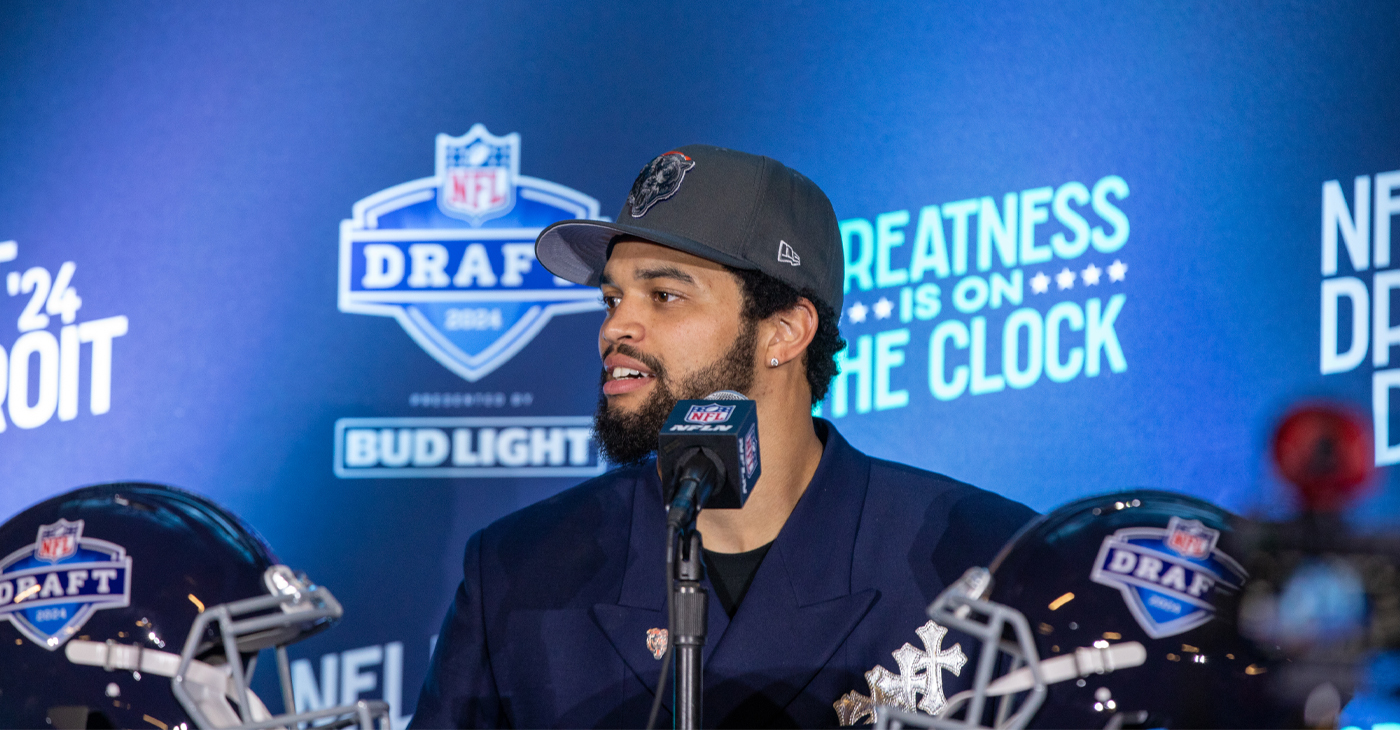
Philadelphia Eagles quarterback Jalen Hurts found Darius Cooper with nine seconds left for the game winning touchdown as his team beat the Tennessee Titans 24-20 in Nashville. Hurts finished the day 26/37 for 264 yards. He threw for two touchdowns and two interceptions.
Prior to the final drive, the Eagles ran 25 plays for 45 yards. During the final drive Hurts went 6-8 with 61 passing yards and the touchdown. Titans defensive tackle — and team captain — Jeffery Simmons said this week that the way to defend Jalen Hurts is to make him “play quarterback.”
Hurts said to Simmons after today’s game: “You started that sh**. I had to finish it.”
Running back Saquon Barkley suffered a stinger in the first half but he ultimately finished the game. He had four carries and nine yards and one catch for eleven yards. He will get an MRI for his injury, but admitted to Cameron Wolfe of the NFL Network he was fine.
Caleb Williams leaves game against Vikings with apparent lower-body injury
Chicago Bears quarterback Caleb Williams was helped off the field with a right leg injury with 7:42 remaining in the fourth quarter. Williams was down, writhing in pain after scrambling to his left. After departing the injury tent, Williams raised his right fist, acknowledging the crowd while expressing his frustration. Testing will commence on Monday to find out more details about his injury.
“We’ll know tomorrow,” Johnson admitted regarding Williams’ injury. “He’s in good spirits. He’s a team player.”
Williams finished the day with 138 passing yards and one interception.
“I’m actually happy it’s nothing with the knee — that was my first inclination,” Johnson said. “But, a hamstring could be pretty damaging as well. So, we’ll see. We’ll see how bad it is tomorrow and we’ll go from there.”
Bryce Young once again dominated the Falcons
Carolina Panthers quarterback Bryce Young is 5-1 against the Atlanta Falcons and is undefeated at Mercedes-Benz Stadium. Today, Young threw for 287 yards and three touchdowns as he led the Panthers to a 34-3 dismembering of the Atlanta Falcons. Georgia Tech alumnus Darren Waller caught two touchdowns and linebacker Devin Lloyd returned one of his two interceptions for a touchdown.
Cooper Rush started his second straight game for the Falcons and it did not go well. The partisan crowd voiced their displeasure after Rush completed 10/17 passes for 86 yards and two interceptions. Jack Strand entered the game for Rush prompting cheers from the Falcons fans. The rookie threw a pick-six on his first career pass attempt. Strand was the first QB to accomplish that feat since Sam Darnold in 2018 and is the first Falcons player to do that since Brett Favre in 1991. Strand finished the day with 59 passing yards and 16 rushing yards.
According to reports, quarterback Michael Penix, Jr. is expected to make his season debut this Thursday at the Green Bay Packers. His return should help the Falcons. They are the first team since the 2008 Rams to not run any plays in the red zone after the first two games to open a season.
The bright spots for the Falcons today were the Spelman College Jaguarettes performing with the Falcons cheerleaders and Florida A&M’s marching band, The Marching 100, also performed during halftime!
Jayden Daniels gets carted off after apparent arm injury
Washington Commanders quarterback Jayden Daniels appeared to injure his left elbow on the final play of the first half in his game against the Dallas Cowboys. During the play, Daniels got stepped on, braced himself for the fall, and his elbow bent the wrong way. Daniels draped a towel over his head as he exited the field on the cart.
He was later ruled out.
Daniels suffered a dislocated elbow to the same arm during week nine of last season against the Washington Commanders, which led to him being shut down for the remainder of the season.
The post NFL: Week Two Recap | Jalen Hurts did not fold; Caleb Williams exits game with injury appeared first on BlackPressUSA.
#NNPA BlackPress
The Complete Negotiation Framework — Every Stage, Every Tactic, Every Win
Master the complete vehicle-purchase negotiation framework with Roosevelt Gist and Roosevelt. Learn every stage, tactic, and win!
The post The Complete Negotiation Framework — Every Stage, Every Tactic, Every Win appeared first on BlackPressUSA.

Roosevelt Gist and Roosevelt deliver the complete vehicle-purchase negotiation framework in Episode 8 of The Color of Our Money Is Green. This episode covers the three foundations of every effective negotiation, the full seven-stage negotiation sequence with exact language for every stage, and five of the most common dealership tactics with the specific response each one requires.
What You Learn in This Episode:
The three foundations that make every negotiation tactic work
The complete seven-stage car-buying negotiation sequence
Exact language for every stage of the dealership conversation
Five common dealership tactics — the turnover, the four-square, the packed payment, spot delivery, and forced add-ons — and how to counter each one
Why signing preliminary paperwork isn’t the same as signing the final contract
___________________________________________________________________
“The Color of Our Money Is Green: A Buyer’s Guide to What Cars Actually Cost” — stan.store/RGist
____________________________________________________________________
AutoNetwork helps serious car shoppers inspect any new vehicle online before walking into a dealership. I’m Roosevelt — I’ve been reviewing cars and shaping digital car buying and credit union auto leasing since before YouTube car reviews existed.
You’ll find detailed walkaround reviews, POV test drives, and buyer-focused breakdowns covering comfort, space, features, and real-world value.
How to use the channel:
Watch the walkaround of the car you’re considering
Visit AutoNetwork.com for the full review
Check CouponsOffersAndDeals.com for current dealer specials
Walk in already knowing what you want — and what it should cost
 AutoNetwork.com
 CouponsOffersAndDeals.com
Affiliate disclosure: some links earn a small commission at no cost to you and help support the channel. Insta360 is one of those partners.
The post The Complete Negotiation Framework — Every Stage, Every Tactic, Every Win appeared first on BlackPressUSA.
#NNPA BlackPress
Mazda CX-90 Luxury: Heated Seats & Premium Comfort! #shorts
Stay toasty in the CX-90! Plush Nappa leather, heated/ventilated seats, and a memory-equipped heated steering wheel deliver ultimate luxury.
The post Mazda CX-90 Luxury: Heated Seats & Premium Comfort! #shorts appeared first on BlackPressUSA.

Experience ultimate comfort in the CX-90. Nappa leather, heated/ventilated seats, 8-way power adjustments, and memory settings for both front passengers. The heated steering wheel with memory tilt/telescope adds premium convenience.
 Watch the full video: https://youtu.be/EH5A4eQ4ipY
#AutoNetwork
The post Mazda CX-90 Luxury: Heated Seats & Premium Comfort! #shorts appeared first on BlackPressUSA.


Doulas Are Helping Black California Moms Navigate Pregnancy–Even as High Mortality Rates Persist

Newsom Signs Addictive Social Media Law to Protect Kids

On Your November Ballot: Prop 38 Would Allocate $8.4 Billion to Immunology and Immunotherapy Funding

Ask California: Golden State Releases New AI Chatbot

Asm. Isaac Bryan’s Bill Banning California Police From ICE Side Jobs Reaches Newsom’s Desk

Assemblymember LaShae Sharp-Collins’s Bill Would Pause Law Enforcement’s Use of Shock Gloves Pending Study

BOOK REVIEW: ‘Laws of Solomon’ Reveals Tender Heart of Former Child Soldier

OPINION: The New American Fear – From 9-11 to AI

Passing for White, Fighting for Black America: The Courage of Walter White

Oakland People’s Arms Embargo Coalition Demands End to Military Shipments Thru Oakland

Barbara Lee Mourns Gloria Steinem, Remembers a Friendship Rooted in Equality

Event Preview: ‘Fashion v. Fascism’ – A Runway Revolution Is Coming to the Bay Area

Two Looming Threats Every Alameda County Elder Should Know About

Oakland Mayor Reads to Children at Bookout Block Party at Marcus Books Store

Tradition Comes to the Streets in 11th Annual Black-Eyed Pea Festival at the Freedom Farmers Market

Less Affluent School Districts, Including Sacramento City, Face Threat of State Takeover

ESSAY: California Can Close Its Colorectal Cancer Gap

California Hispanic Chambers of Commerce Unveils: ‘Powering the Future’ Theme for 47th Annual Statewide Convention

Four Candidates, Including Incumbent Barbara Lee, Qualify for Oakland Mayor’s Race

Oakland Post: Week of August 12 – 18, 2026

From Blueprint to Breakthrough: Tackling Affordable Housing in Oakland

Oakland Observes Black August with Block Parties, Film Showings, Workshops

COMMENTARY: Why Local School Tax Measure G1 Will Not Be on the November Ballot

Standoff for Justice: Our Homes Are Worth Fighting For

Returning to Its Roots, the Oakland Black-Eyed Pea Festival Partners with the Freedom Farmers Market Sept. 12

Oakland Post: Week of August 26 – September 1, 2026

NPRC Scores First Advocacy Victory: David Shaw Finally Gets His Wish to ‘Go Home’

Frontier Airlines’ Return to Oakland Airport Brings Flights, Jobs and Opportunity

Gubernatorial Candidate Steve Hilton Blasts California New Tire Rules; Newsom Hits Back

Chef Sharon Lee Blends Culinary Excellence, Education and Empowerment

The Conversation With Al McFarlane 6/23/26

Media Monday 6/22/26

LIVE! ASK ALMA! — TUES. 6.23.26 7PM EST

Car Buying Secrets: 4 Hidden Checks Before You Sign!

Is This 550 HP Charger Worth YOUR Money? AutoNetwork Review

Celebrating Juneteenth – Frederick Douglass on education and resistance

LIVE! — ASK ALMA! — TUES. 6.19.26 7PM EST

Hyundai Ioniq 5 Parking, Safety, and 360 View #shorts

2025 Ioniq 5 New Wiper & Powerful Performance! #shorts

Electric SUV Range: Is 259 Miles Enough? #shorts

EV Charging: How Fast Can You Charge an Electric Vehicle? #shorts

Biometric Cooling… Messaging Seats…Come on! 2025 Infiniti QX80 Autograph 4WD

Charged Up: Witness the Magic of a Fully Electric Car! #shorts

Range Rover Sport PHEV Included…: See What’s Inside This Luxury SUV! #shorts

Invisible Hood View: Perfect Parking with X-Ray Vision! #shorts
-
 Commentary4 weeks ago
Standoff for Justice: Our Homes Are Worth Fighting For
-
 Activism4 weeks ago
Oakland Post: Week of August 26 – September 1, 2026
-
 Business4 weeks ago
Frontier Airlines’ Return to Oakland Airport Brings Flights, Jobs and Opportunity
-
 Business4 weeks ago
Gubernatorial Candidate Steve Hilton Blasts California New Tire Rules; Newsom Hits Back
-
 Business4 weeks ago
Chef Sharon Lee Blends Culinary Excellence, Education and Empowerment
-

 Community4 weeks ago
Big City Mayors Ask for “Yes” Vote on Housing Bond Measure; Conservatives Say “No”
-
 Black History4 weeks ago
Jackie Wright Champions Bay Area Stories, Filmmakers and Cultural Institutions
-

 Education4 weeks ago
Gov. Newsom’s Latest Appointees Include Sacramento Advocate for Formerly Incarcerated Students; State’s New Tech Chief
