Connect with us

Bay Area

Clara McBride Hale: Saint-like Qualities – Learning Black History Year Round

Published

on

She was selfless in her caring for newborns, knowing that the life that welcomed them was threatened by devastation with mothers living in poor neighborhoods and addicted to any number of hard drugs.

Clara Hale (1905–1992), dubbed “a pioneer in self-help efforts in poor neighborhoods” by ‘New York Times’ writer Bruce Lambert, “came to symbolize the untapped potential of disadvantaged groups taking care of their own.”

Later earning the name “Mother Hale” from those under her care, she would start Hale House, the only institution of its kind in the U.S. to house and care for infants born to mothers suffering  from drug addictions.

Born in Elizabeth City, N.C., Hale was raised in Philadelphia. Her family life held a troubled history. After the death of her father, Hale’s mother was forced to take in boarders to support the family. After high school, Clara (McBride) married Thomas Hale. The couple relocated to New York City’s Harlem neighborhood where their two children were born and a third was adopted. Thomas Hale died soon after, leaving Clara Hale to support the family alone on wages earned as a domestic.

But this work, Hale decided, caused her to be away from her children more than she was comfortable with. In the 1940s she began taking care of other people’s children during the day at her own home. Without knowing, Hale had discovered her calling.

She also offered lessons in parenting skills and found permanent homes for the children who were homeless. Hale became a licensed foster parent in 1960. This allowed her to provide care for hundreds of children in her home.

Hale’s daycare operation became a full-time job. Children would live with her during the week and parents only saw them on weekends.

“The parents paid me,” Hale told ‘Parade’ magazine during a 1984 interview. “I didn’t make a whole lot, but I wasn’t starving. And the kids must’ve liked it, because once they got there, they didn’t want to go home.”

In 1969, Hale began to foster an infant addicted to cocaine; she was 64 at the time. This marked the founding of Hale House, a place that boasted unique programs focused on strengthening the community. Mothers took up residence while being educated in child care, and were required to attend a drug rehabilitation program.

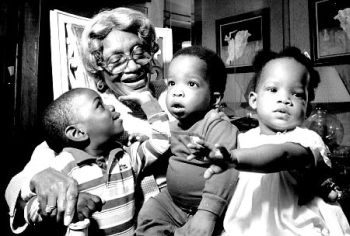
Mother Hale’s career started when she offered child care for working parents in Harlem. WordPress.com photo.

During the 1980s, when the HIV/AIDS epidemic was in the forefront of many communities, Hale expanded the program to care for infants born with the virus as well as those who lost parents to AIDS-related illnesses.

By 1991, Hale House had cared for approximately 1,000 infants and toddlers.

Hale continued to care for children until a few months before she died. At the time,  she was still caring for at least one child in her home. The New York Times quoted Hale as saying: “I’m not an American hero—I’m simply a person who loves children.”
Tamara Shiloh

Tamara Shiloh


About Tamara Shiloh


Tamara Shiloh has published the first two books in her historical fiction chapter book series, Just Imagine…What If There Were No Black People in the World is about African American inventors, scientists and other notable Black people in history. The two books are Jaxon’s Magical Adventure with Black Inventors and Scientists and Jaxon and Kevin’s Black History Trip Downtown. Tamara Shiloh has also written a book a picture book for Scholastic, Cameron Teaches Black History, that will be available in June, 2022.

Tamara Shiloh’s other writing experiences include: writing the Black History column for the Post Newspaper in the Bay area, Creator and Instruction of the black History Class for Educators a professional development class for teachers and her non-profit offers a free Black History literacy/STEM/Podcast class for kids 3d – 8th grade which also includes the Let’s Go Learn Reading and Essence and tutorial program.   She is also the owner of the Multicultural Bookstore and Gifts, in Richmond, California,

Previously in her early life she was the /Editor-in-Chief of Desert Diamonds Magazine, highlighting the accomplishments of minority women in Nevada; assisting with the creation, design and writing of a Los Angeles-based, herbal magazine entitled Herbal Essence; editorial contribution to Homes of Color; Editor-in-Chief of Black Insight Magazine, the first digital, interactive magazine for African Americans; profile creations for sports figures on the now defunct PublicFigure.com; newsletters for various businesses and organizations; and her own Las Vegas community newsletter, Tween Time News, a monthly publication highlighting music entertainment in the various venues of Las Vegas.

She is a member of:

  • Society of Children’s Book Writers and Illustrators (SCBWI)

  • Richmond Chamber of Commerce

  • Point Richmond Business Association

  • National Association of Professional Women (NAPW)

  • Independent Book Publishers Association (IPBA)

  • California Writers Club-Berkeley & Marin

  • Richmond CA Kiwanis

  • Richmond CA Rotary

  • Bay Area Girls Club


Tamara Shiloh, a native of Northern California, has two adult children, one grandson and four great-grand sons. She resides in Point Richmond, CA with her husband, Ernest.

www.multiculturalbookstore.com

About Tamara Shiloh

Tamara Shiloh has published the first two books in her historical fiction chapter book series, Just Imagine…What If There Were No Black People in the World is about African American inventors, scientists and other notable Black people in history. The two books are Jaxon’s Magical Adventure with Black Inventors and Scientists and Jaxon and Kevin’s Black History Trip Downtown. Tamara Shiloh has also written a book a picture book for Scholastic, Cameron Teaches Black History, that will be available in June, 2022. Tamara Shiloh’s other writing experiences include: writing the Black History column for the Post Newspaper in the Bay area, Creator and Instruction of the black History Class for Educators a professional development class for teachers and her non-profit offers a free Black History literacy/STEM/Podcast class for kids 3d – 8th grade which also includes the Let’s Go Learn Reading and Essence and tutorial program.   She is also the owner of the Multicultural Bookstore and Gifts, in Richmond, California, Previously in her early life she was the /Editor-in-Chief of Desert Diamonds Magazine, highlighting the accomplishments of minority women in Nevada; assisting with the creation, design and writing of a Los Angeles-based, herbal magazine entitled Herbal Essence; editorial contribution to Homes of Color; Editor-in-Chief of Black Insight Magazine, the first digital, interactive magazine for African Americans; profile creations for sports figures on the now defunct PublicFigure.com; newsletters for various businesses and organizations; and her own Las Vegas community newsletter, Tween Time News, a monthly publication highlighting music entertainment in the various venues of Las Vegas. She is a member of:
  • Society of Children’s Book Writers and Illustrators (SCBWI)
  • Richmond Chamber of Commerce
  • Point Richmond Business Association
  • National Association of Professional Women (NAPW)
  • Independent Book Publishers Association (IPBA)
  • California Writers Club-Berkeley & Marin
  • Richmond CA Kiwanis
  • Richmond CA Rotary
  • Bay Area Girls Club
Tamara Shiloh, a native of Northern California, has two adult children, one grandson and four great-grand sons. She resides in Point Richmond, CA with her husband, Ernest. www.multiculturalbookstore.com
Activism

Oakland Post: Week of December 24 – 30, 2025

The printed Weekly Edition of the Oakland Post: Week of – December 24 – 30, 2025

Published

on

To enlarge your view of this issue, use the slider, magnifying glass icon or full page icon in the lower right corner of the browser window.

Continue Reading

Alameda County

Bling It On: Holiday Lights Brighten Dark Nights All Around the Bay

On the block where I grew up in the 1960s, it was an unwritten agreement among the owners of those row homes to put up holiday lights: around the front window and door, along the porch banister, etc. Some put the Christmas tree in the window, and you could see it through the open slats of the blinds.

Published

on

Christmas lights on a house near the writer’s residence in Oakland. Photo by Joseph Shangosola.

By Wanda Ravernell

I have always liked Christmas lights.

From my desk at my front window, I feel a quiet joy when the lights on the house across the street come on just as night falls.

On the block where I grew up in the 1960s, it was an unwritten agreement among the owners of those row homes to put up holiday lights: around the front window and door, along the porch banister, etc. Some put the Christmas tree in the window, and you could see it through the open slats of the blinds.

My father, the renegade of the block, made no effort with lights, so my mother hung a wreath with two bells in the window. Just enough to let you know someone was at home.

Two doors down was a different story. Mr. King, the overachiever of the block, went all out for Christmas: The tree in the window, the lights along the roof and a Santa on his sleigh on the porch roof.

There are a few ‘Mr. Kings’ in my neighborhood.

In particular is the gentleman down the street. For Halloween, they erected a 10-foot skeleton in the yard, placed ‘shrunken heads’ on fence poles, pumpkins on steps and swooping bat wings from the porch roof. They have not held back for Christmas.

The skeleton stayed up this year, this time swathed in lights, as is every other inch of the house front. It is a light show that rivals the one in the old Wanamaker’s department store in Philadelphia.

I would hate to see their light bill…

As the shortest day of the year approaches, make Mr. King’s spirit happy and get out and see the lights in your own neighborhood, shopping plazas and merchant areas.

Here are some places recommended by 510 Families and Johnny FunCheap.

Oakland

Oakland’s Temple Hill Holiday Lights and Gardens is the place to go for a drive-by or a leisurely stroll for a religious holiday experience. Wear a jacket, because it’s chilly outside the Church of Jesus Christ of Latter-day Saints, at 4220 Lincoln Ave., particularly after dark. The gardens are open all day from 9 a.m. to 9 p.m. with the lights on from dusk until closing.

Alameda

Just across the High Street Bridge from Oakland, you’ll find Christmas Tree Lane in Alameda.

On Thompson Avenue between High Street and Fernside drive, displays range from classic trees and blow-ups to a comedic response to the film “The Nightmare Before Christmas.” Lights turn on at dusk and can be seen through the first week in January.

Berkeley

The Fourth Street business district from University Avenue to Virginia Street in Berkeley comes alive with lights beginning at 5 p.m. through Jan. 1, 2026.

There’s also a display at one house at 928 Arlington St., and, for children, the Tilden Park Carousel Winter Wonderland runs through Jan. 4, 2026. Closed Christmas Day. For more information and tickets, call (510) 559-1004.

Richmond

The Sundar Shadi Holiday Display, featuring a recreation of the town of Bethlehem with life-size figures, is open through Dec. 26 at 7501 Moeser Lane in El Cerrito.

Marin County

In Marin, the go-to spot for ‘oohs and ahhs’ is the Holiday Light Spectacular from 4-9 p.m. through Jan. 4, 2026, at Marin Center Fairgrounds at 10 Ave of the Flags in San Rafael through Jan. 4. Displays dazzle, with lighted walkways and activities almost daily. For more info, go to: www.marincounty.gov/departments/cultural-services/department-sponsored-events/holiday-light-spectacular

The arches at Marin County Civic Center at 3501 Civic Center Dr. will also be illuminated nightly.

San Francisco

Look for light installations in Golden Gate Park, chocolate and cheer at Ghirardelli Square, and downtown, the ice rink in Union Square and the holiday tree in Civic Center Plaza are enchanting spots day and night. For neighborhoods, you can’t beat the streets in Noe Valley, Pacific Heights, and Bernal Heights. For glee and over-the-top glitz there’s the Castro, particularly at 68 Castro Street.

Livermore

The winner of the 2024 Great Light Flight award, Deacon Dave has set up his display with a group of creative volunteers at 352 Hillcrest Avenue since 1982. See it through Jan. 1, 2026. For more info, go to https://www.casadelpomba.com

Fremont

Crippsmas Place is a community of over 90 decorated homes with candy canes passed out nightly through Dec. 31. A tradition since 1967, the event features visits by Mr. and Mrs. Claus on Dec. 18 and Dec. 23 and entertainment by the Tri-M Honor Society at 6 p.m. on Dec. 22. Chrippsmas Place is located on: Cripps PlaceAsquith PlaceNicolet CourtWellington Place, Perkins Street, and the stretch of Nicolet Avenue between Gibraltar Drive and Perkins Street.

Continue Reading

Alameda County

Oakland Council Expands Citywide Security Cameras Despite Major Opposition

In a 7-1 vote in favor of the contract, with only District 3 Councilmember Carroll Fife voting no, the Council agreed to maintain its existing network of 291 cameras and add 40 new “pan-tilt-zoom cameras.”

Published

on

At the International Association of Chiefs of Police Conference, Flock Safety introduces new public safety technology – Amplified Intelligence, a suite of AI-powered tools designed to improve law enforcement investigations. Courtesy photo.

By Post Staff

The Oakland City Council this week approved a $2.25 million contract with Flock Safety for a mass surveillance network of hundreds of security cameras to track vehicles in the city.

In a 7-1 vote in favor of the contract, with only District 3 Councilmember Carroll Fife voting no, the Council agreed to maintain its existing network of 291 cameras and add 40 new “pan-tilt-zoom cameras.”

In recent weeks hundreds of local residents have spoken against the camera system, raising concerns that data will be shared with immigration authorities and other federal agencies at a time when mass surveillance is growing across the country with little regard for individual rights.

The Flock network, supported by the Oakland Police Department, has the backing of residents and councilmembers who see it as an important tool to protect public safety.

“This system makes the Department more efficient as it allows for information related to disruptive/violent criminal activities to be captured … and allows for precise and focused enforcement,” OPD wrote in its proposal to City Council.

According to OPD, police made 232 arrests using data from Flock cameras between July 2024 and November of this year.

Based on the data, police say they recovered 68 guns, and utilizing the countywide system, they have found 1,100 stolen vehicles.

However, Flock’s cameras cast a wide net. The company’s cameras in Oakland last month captured license plate numbers and other information from about 1.4 million vehicles.

Speaking at Tuesday’s Council meeting, Fife was critical of her colleagues for signing a contract with a company that has been in the national spotlight for sharing data with federal agencies.

Flock’s cameras – which are automated license plate readers – have been used in tracking people who have had abortions, monitoring protesters, and aiding in deportation roundups.

“I don’t know how we get up and have several press conferences talking about how we are supportive of a sanctuary city status but then use a vendor that has been shown to have a direct relationship with (the U.S.) Border Control,” she said. “It doesn’t make sense to me.”

Several councilmembers who voted in favor of the contract said they supported the deal as long as some safeguards were written into the Council’s resolution.

“We’re not aiming for perfection,” said District 1 Councilmember Zac Unger. “This is not Orwellian facial recognition technology — that’s prohibited in Oakland. The road forward here is to add as many amendments as we can.”

Amendments passed by the Council prohibit OPD from sharing camera data with any other agencies for the purpose of “criminalizing reproductive or gender affirming healthcare” or for federal immigration enforcement. California state law also prohibits the sharing of license plate reader data with the federal government, and because Oakland’s sanctuary city status, OPD is not allowed to cooperate with immigration authorities.

A former member of Oakland’s Privacy Advisory Commission has sued OPD, alleging that it has violated its own rules around data sharing.

So far, OPD has shared Flock data with 50 other law enforcement agencies.

Continue Reading

Subscribe to receive news and updates from the Oakland Post

* indicates required

CHECK OUT THE LATEST ISSUE OF THE OAKLAND POST

ADVERTISEMENT

WORK FROM HOME

Home-based business with potential monthly income of $10K+ per month. A proven training system and website provided to maximize business effectiveness. Perfect job to earn side and primary income. Contact Lynne for more details: Lynne4npusa@gmail.com 800-334-0540

Facebook

Trending

Copyright ©2021 Post News Group, Inc. All Rights Reserved.