
Business
Judge Approves RadioShack Sale to Standard General


This Tuesday, Feb. 3, 2015 file photo shows a RadioShack store in Dallas. A bankruptcy judge on Tuesday, March 31, 2015 approved the sale of more than 1,740 RadioShack stores to hedge fund Standard General, preserving some 7,500 jobs. (AP Photo/Tony Gutierrez, File)
RANDALL CHASE, AP Business Writer
DOVER, Del. (AP) — A bankruptcy judge has approved the sale of more than 1,740 RadioShack stores to hedge fund Standard General, preserving some 7,500 jobs.
RadioShack’s bankruptcy plan calls for Sprint, the No. 3 U.S. wireless carrier, to operate dedicated “store within a store” shops in most of the locations acquired by acquired by General Wireless, a newly formed affiliate of Standard General LP.
The ruling by Judge Brendan Shannon in Wilmington, Delaware, comes after a court hearing that stretched over four days following a disputed auction process that lasted almost as long last week.
Shannon said Standard General’s bid, valued at about $160 million, was clearly “economically superior” to an alternative liquidation proposal by another bidding group, even before accounting for the preservation of jobs and “a century-old American retailing icon.”
The chain has already shrunk substantially. Roughly 2,000 RadioShack stores have closed or are closing.
In granting the sale, Shannon overruled an objection by Salus Capital Partners, a pre-bankruptcy lender whose $150 million claim made its one of the electronics retailer’s largest creditors.
Salus had called Standard General’s offer a “sham” and offered to pay about $271 million for RadioShack’s assets, combining the liquidation proposal with $129 million that was contingent on winning future litigation in the case.
Salus also had challenged Standard General’s right to bid using $112 million of credit on debt it is owed, and only a small amount of cash.
In last-minute revisions to its initial offer, Standard General agreed among other things that intellectual property and customer data would not be part of the sale. The planned inclusion of personally identifiable information on 117 million consumers had prompted objections from government authorities in several states.
The sale agreement gives Standard General a six-month, royalty free license to use the RadioShack trademark, which would either have to be purchased later or replaced with a new name.
RadioShack, which has not turned a profit since 2011, sought bankruptcy protection in February after years of financial struggles.
The company, founded in Boston in 1921, began as a distributor of mail-order ship radios, ham radios and parts. In postwar era, it made a name for itself selling high-fidelity audio components, calculators, early personal computer systems and mobile phones, and the computer industry’s first laptop.
Copyright 2015 The Associated Press. All rights reserved. This material may not be published, broadcast, rewritten or redistributed.












Art
After 10-Year Wait, Fillmore Heritage Center Reopens in San Francisco
After serving as the economic and cultural hub of the Fillmore’s historically Black community for more than a decade, the center’s closure ended what was called the “Rebirth of the Cool,” referring to the neighborhood’s role during the height of Black Jazz in the United States.

By Linda Parker Pennington, Special to The Post
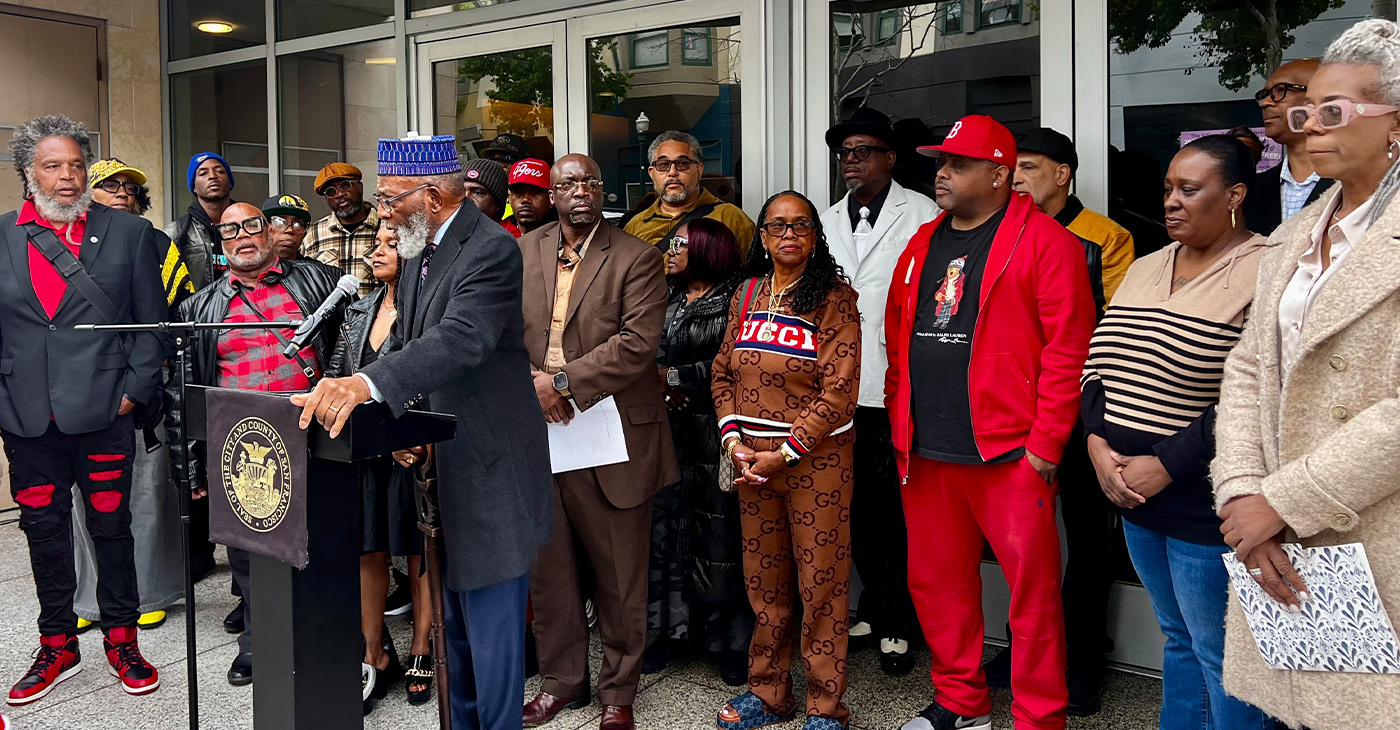
Last Saturday morning, the cloudy skies cleared just as the highly anticipated ribbon-cutting ceremony began, marking the reopening of the Fillmore Heritage Center at 1330 Fillmore and Eddy.
The complex – which had once included Yoshi’s Jazz Club, the Lush Life Art Gallery, the Koret Heritage Lobby, a 54-seat microcinema, and the Black-owned 1300 On Fillmore restaurant – shuttered in 2015.
After serving as the economic and cultural hub of the Fillmore’s historically Black community for more than a decade, the center’s closure ended what was called the “Rebirth of the Cool,” referring to the neighborhood’s role during the height of Black Jazz in the United States.
San Francisco Mayor Daniel Lurie announcing the reopening of the Fillmore Heritage Center. Erika Scott, owner of Honey Art Studio, looks on with pride. Photo by Linda Parker Pennington.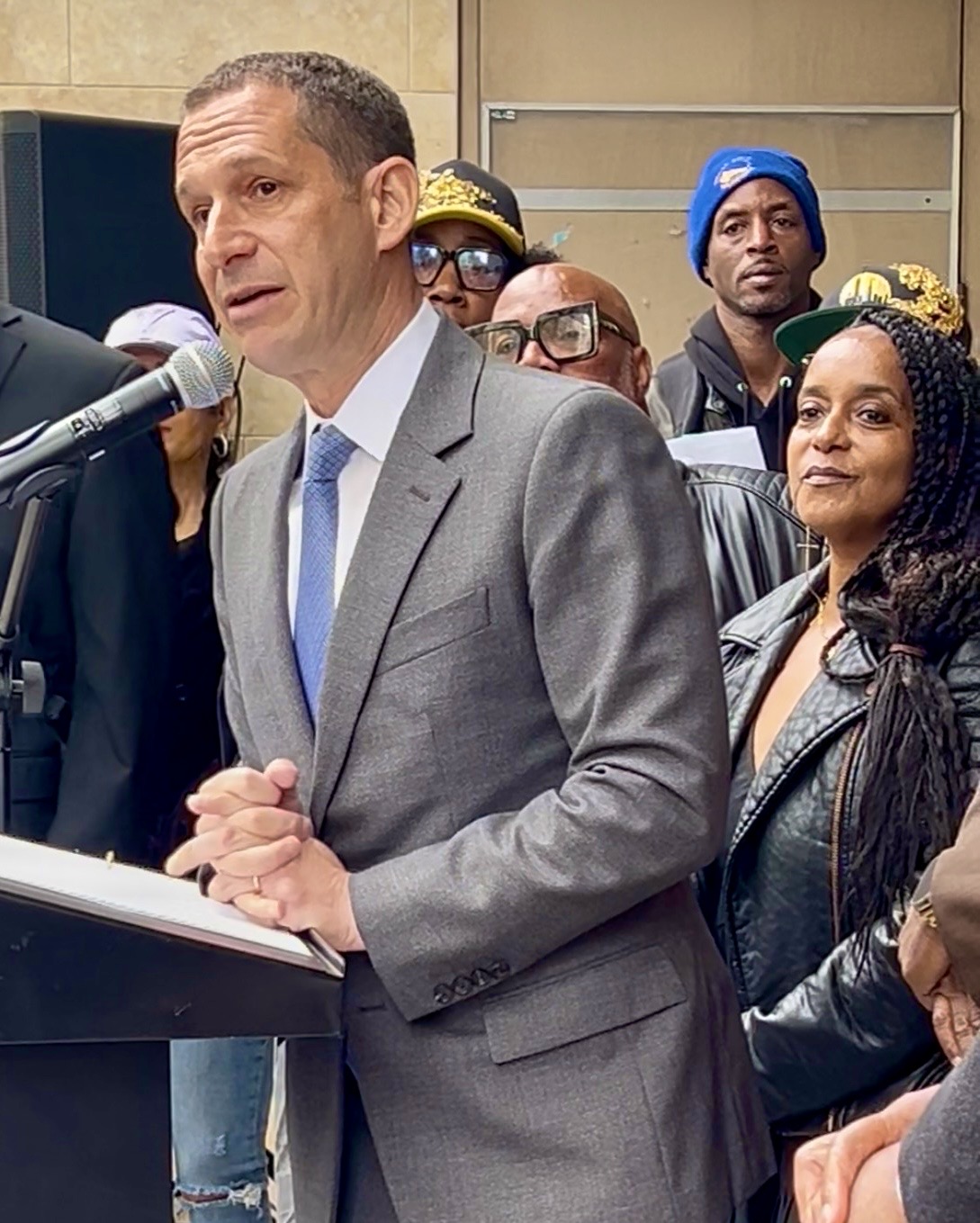
“The Fillmore is the most important neighborhood in San Francisco’s history for centering Black culture, music, business, and community, and has shaped this City and influenced the entire country,” said San Francisco Mayor Daniel Lurie to the gathering of more than 100 community leaders, business owners, and public officials. “This building reflects the deep roots of the Fillmore. Urban renewal left deep scars that are still felt today. This Center celebrates a strong Black community that continues to shape San Francisco. I am proud to join the community as we reopen the Fillmore Heritage Center.”
Although the previous stakeholders will not be returning to the center, spaces are available for nonprofit organizations and ventures, such as Fillmore native Ericka Johnson’s Honey Art Studio.
“This Center will be an economic engine and a thriving venue that shines a light on the Black-owned businesses in this neighborhood and lifts the entire district,” Lurie continued. “Our City is committed to this community for the long term.”
“We’re excited to collaborate with the City to finally reopen these doors,” said Ken Johnson, a videographer and community leader who’d been lobbying for the reopening of the center. “It’s an opportunity to showcase the entrepreneurship and creative spirit of this ‘Harlem of the West’ and the ‘Rebirth of the Cool,’ grounded in our uniquely gifted Fillmore community.”
This month, through its Office of Economic and Workforce Development, the city will begin renting the building’s noncommercial spaces for pop-up events celebrating local talent, arts, and entertainment primarily centered in the Fillmore.

Activism
Oakland Post: Week of June 3 – 9, 2026
The printed Weekly Edition of the Oakland Post: Week of June 3 – 9, 2026

To enlarge your view of this issue, use the slider, magnifying glass icon or full page icon in the lower right corner of the browser window.
Activism
Oakland Post: Week of May 27 – June 2, 2026
The printed Weekly Edition of the Oakland Post: Week of May 27 – June 2, 2026

To enlarge your view of this issue, use the slider, magnifying glass icon or full page icon in the lower right corner of the browser window.

WORK FROM HOME
Home-based business with potential monthly income of $10K+ per month. A proven training system and website provided to maximize business effectiveness. Perfect job to earn side and primary income. Contact Lynne for more details: Lynne4npusa@gmail.com 800-334-0540


After 10-Year Wait, Fillmore Heritage Center Reopens in San Francisco

COMMENTARY: Black Music is the Sound of Black Freedom: Let Us Reclaim Both This Juneteenth

Oakland Post: Week of June 3 – 9, 2026

Study: Waiting Lists for Child Care Assistance Nearly Doubled

Venus Williams Calls a Sabalenka Exit a Tragedy

COMMENTARY: Using Art, Healing, And Community to Transform Mental Health Dialogue

Uptown Music Theatre Summer Camp Returns to Inspire the Next Generation of Performers

5 Cleveland Police Officers Injured, Gunfire Erupts During East Side Pursuit

15-YEAR-OLD COLUMBUS GIRL DIES, Community Mourns as Authorities Urge Water Safety Awareness

Let’s Talk Karmelo Anthony!

2026 World Cup is Here and Atlanta is Ready For It

COMMENTARY: What Andrew Young Reminded Me About Baltimore

COMMENTARY: When Politics Intersects with Professional Sports

K4: Crucial Driving Advice BEFORE You Buy! #shorts
The Conversation with Al McFarlane – MINNESOTANS ORGANIZING FOR CHANGE

Book Review: Books for College-Bound Students

Against All Odds: Mary Jackson’s Journey to NASA Engineer

Q&A with Steven Bradford: Why He Wants Your Vote for California Insurance Commissioner

Up to the Job: How San Francisco’s PRC Is Providing Work Opportunities That Turn Into Lasting Stability

OPINION: The Fire of Oakland’s Justin Jones

The Marin City Flea Market Is Back

California Launches Free Diaper Program for Newborns Statewide

The Ladies of Delta Sigma Theta Hold Day of Advocacy at the Capitol in Sacramento

EBMUD Enshrines the Legacy of its First Black Board Member William ‘Bill’ Patterson

OP-ED: Small Businesses Need Minnesota to Act on Pass-Through Tax Policy

Oakland Post: Week of May 6 – 12, 2026

Snoop Dogg Celebrates 10 Til’ Midnight at the Compound

2026 Lucid Air Grand Touring Review — Is This $136K EV Sedan Worth It?

Oakland Mayor Pushes Charter Overhaul to Clarify Roles in City Government, Increase Accountability and Improve Service Delivery

Marin City Public Housing Residents Demand a Voice in County’s Renovation Plans

Hyundai Ioniq 5 Parking, Safety, and 360 View #shorts

2025 Ioniq 5 New Wiper & Powerful Performance! #shorts

Electric SUV Range: Is 259 Miles Enough? #shorts

EV Charging: How Fast Can You Charge an Electric Vehicle? #shorts

Biometric Cooling… Messaging Seats…Come on! 2025 Infiniti QX80 Autograph 4WD

Charged Up: Witness the Magic of a Fully Electric Car! #shorts

Range Rover Sport PHEV Included…: See What’s Inside This Luxury SUV! #shorts

Invisible Hood View: Perfect Parking with X-Ray Vision! #shorts

AI Is Reshaping Black Healthcare: Promise, Peril, and the Push for Improved Results in California

ESSAY: Technology and Medicine, a Primary Care Point of View

Sanctuary Cities

The RESISTANCE – FREEDOM NOW

STATE OF THE PEOPLE: Freddie

ECONOMIC BOYCOTT DAY!!!!!

I told You So
-
 Advice3 weeks ago
Book Review: Books for College-Bound Students
-
 Arts and Culture4 weeks ago
Against All Odds: Mary Jackson’s Journey to NASA Engineer
-
 Bay Area3 weeks ago
Q&A with Steven Bradford: Why He Wants Your Vote for California Insurance Commissioner
-
 Activism3 weeks ago
OPINION: The Fire of Oakland’s Justin Jones
-
 Alameda County4 weeks ago
The Marin City Flea Market Is Back
-
 Activism3 weeks ago
California Launches Free Diaper Program for Newborns Statewide
-
 Activism3 weeks ago
The Ladies of Delta Sigma Theta Hold Day of Advocacy at the Capitol in Sacramento
-
 Activism4 weeks ago
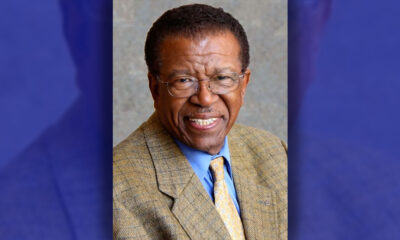
EBMUD Enshrines the Legacy of its First Black Board Member William ‘Bill’ Patterson
